Category: Food & Drink in Korea

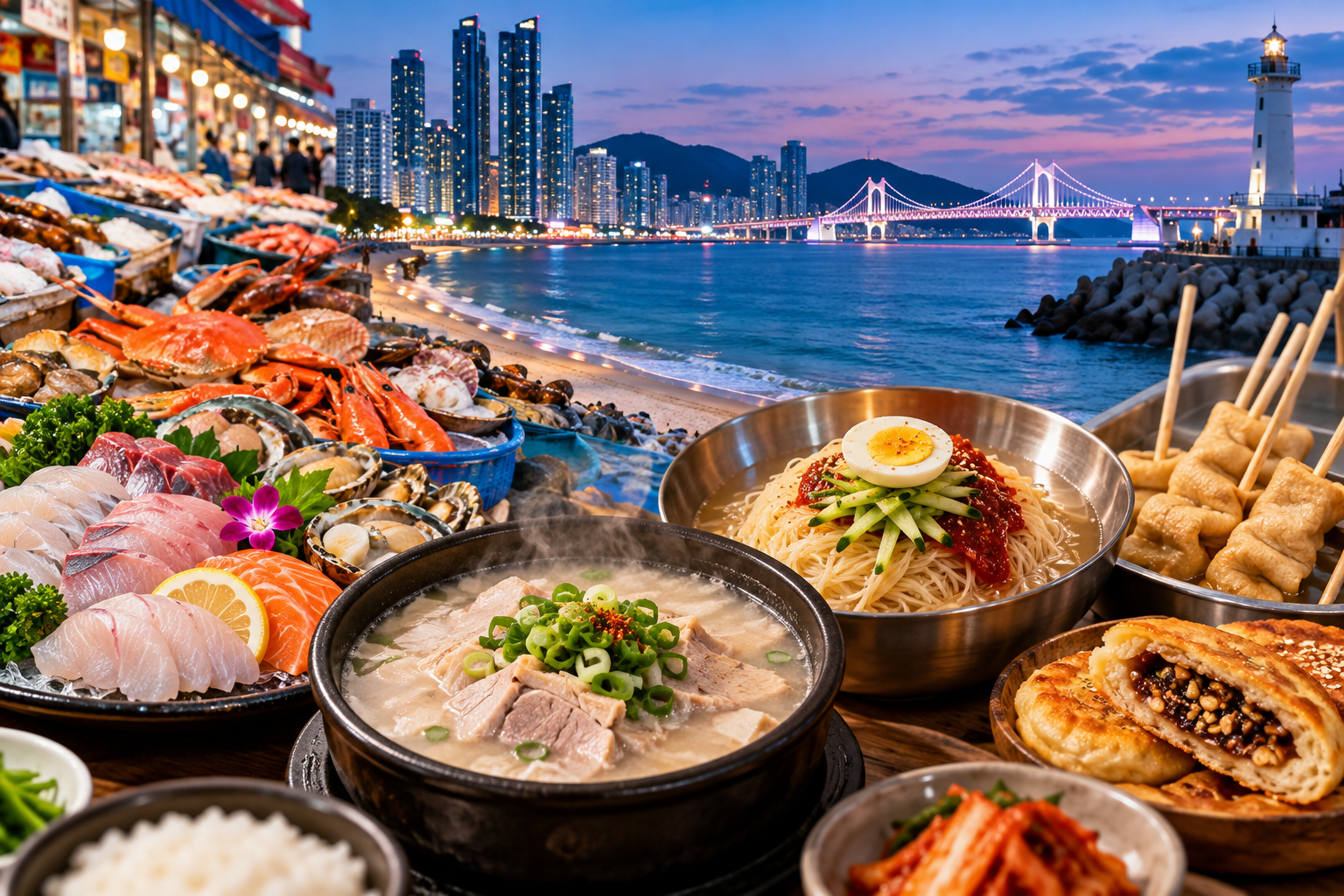
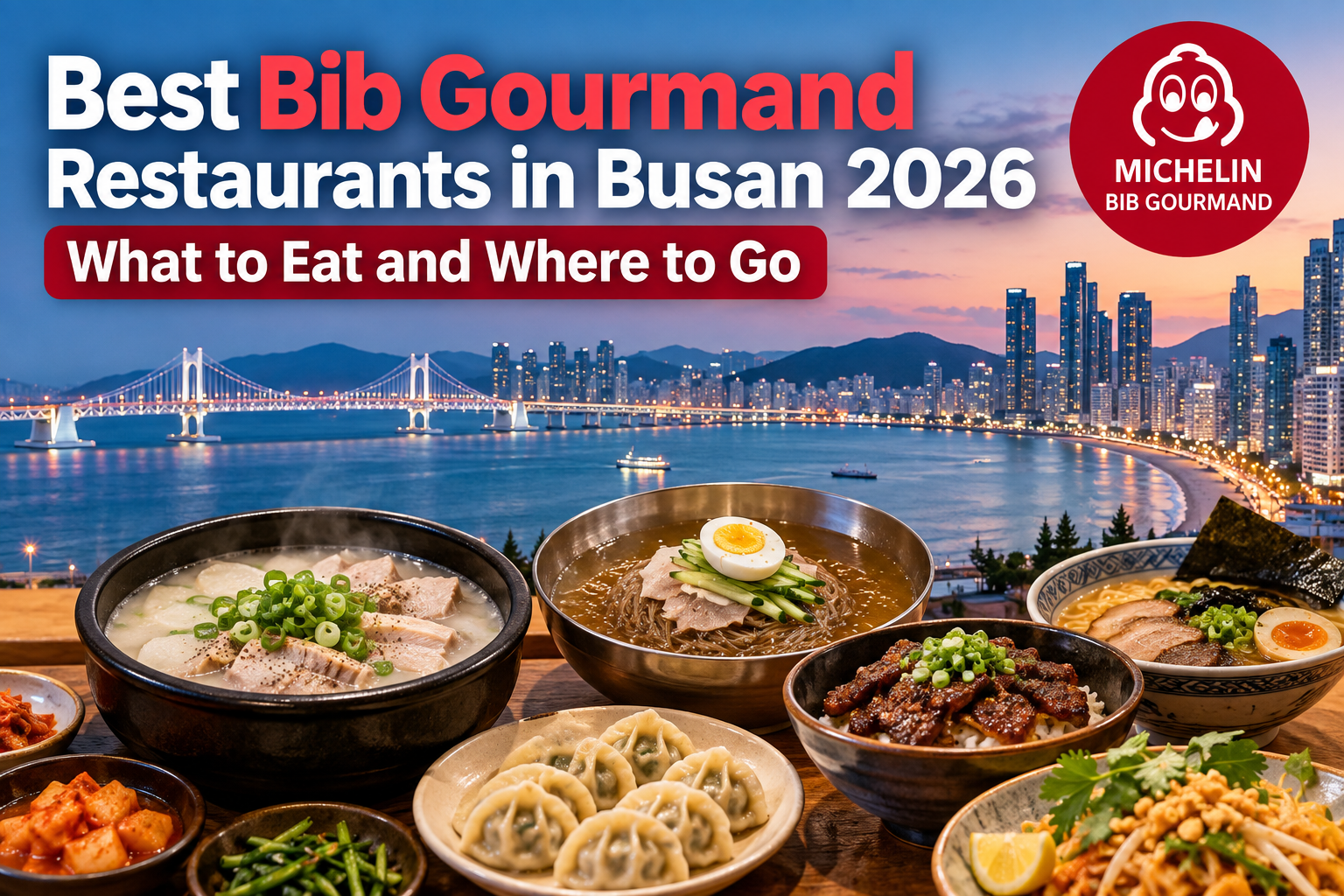
  • Best Bib Gourmand Restaurants in Busan 2026: What to Eat and Where to Go

    Best Bib Gourmand Restaurants in Busan 2026: What to Eat and Where to Go

    Busan has 20 Bib Gourmand restaurants in the 2026 Michelin Guide, but most travelers do not need a list of all 20.

    They need to know which ones actually fit their trip.

    If this is your first visit to Busan, start with the food you want to experience and the neighborhood already on your itinerary. A bowl of dwaeji-gukbap can make more sense than crossing the city for another highly rated restaurant, while travelers staying around Haeundae or Gwangalli have good Michelin-recognized options much closer to them.

    Quick answer: For a distinctly Busan meal, start with one of the Bib Gourmand restaurants specializing in dwaeji-gukbap. If you are staying around Haeundae, Buda Myeonoak or Haemok can be easier to work into your day. Around Gwangalli and Suyeong, Hanwolgwan, Anmok and other nearby selections give you several choices without a long detour. Travelers who want something other than Korean food can also find Taiwanese, Japanese, Thai, Italian and other cuisines in the 2026 selection.

    The goal of this guide is not to rank every Michelin Bib Gourmand restaurant from 1 to 20.

    It is to help you choose the right one for your Busan trip.

    Busan Bib Gourmand 2026: Quick Picks

    If you want…Start with…Why
    A classic Busan experienceDwaeji-gukbapOne of Busan’s signature local foods
    A meal around Gwangalli/SuyeongHanwolgwan or AnmokEasier to combine with the Gwangalli area
    A meal around HaeundaeBuda Myeonoak or HaemokUseful if Haeundae is already on your itinerary
    Something new in the 2026 GuideMoemiljip, Songheonjip or PyeongyangjipAll three are new Busan Bib Gourmand additions for 2026
    NoodlesMoemiljip, Buda Myeonoak or 100.1.PyeongnaengDifferent styles rather than one generic noodle choice
    Something other than Korean foodChoose by cuisine and neighborhoodThe list includes Japanese, Taiwanese, Thai and Italian options
    A vegetarian-friendly searchCheck the vegan/vegetarian selections firstThe Michelin selection includes vegan and vegetarian options
    A solo mealPrioritize simple meal-focused restaurantsOften easier than building your day around a formal dining experience

    The most important thing to notice is that “Bib Gourmand” does not describe one type of restaurant.

    Busan’s 2026 selection ranges from local soup and noodle shops to Japanese, Taiwanese, Thai, Italian and vegan restaurants.

    So choosing by Michelin status alone does not narrow the decision enough.

    What Does Bib Gourmand Mean in Busan?

    Bib Gourmand is Michelin’s recognition for restaurants offering good-quality cooking at good value.

    It is different from a Michelin Star.

    For travelers, that difference is useful.

    A Michelin-starred restaurant may become the centerpiece of an evening. A Bib Gourmand restaurant can often work much more naturally into an ordinary sightseeing day.

    That makes the category particularly useful in Busan, where you may be moving between areas such as Haeundae, Gwangalli, Seomyeon, Nampo and Yeongdo.

    In the 2026 Michelin Guide, Busan has 20 Bib Gourmand restaurants. Nineteen are placed in Michelin’s lower price category, while only one is shown in the next price category.

    This is why Bib Gourmand can be a good place to start if you want a recognized restaurant without turning every meal into a special-occasion expense.

    First Time in Busan? Start With Dwaeji-Gukbap

    If you only have time for one Michelin Bib Gourmand meal and want it to feel specifically connected to Busan, dwaeji-gukbap deserves serious consideration.

    Dwaeji-gukbap is pork soup served with rice and is one of the foods most strongly associated with Busan.

    The 2026 Michelin Bib Gourmand selection includes several restaurants specializing in it.

    That is actually more useful than having one obvious “winner.”

    Your best choice can depend on where you are staying.

    Anmok

    Anmok is in Suyeong-gu, making it a practical option if your day already includes the Gwangalli or Suyeong area.

    Choose it when you want a local Busan meal without adding a cross-city restaurant trip to your schedule.

    Jeongjitgan

    Jeongjitgan specializes in dwaeji-gukbap but is located in Saha-gu.

    That makes it more attractive when your itinerary takes you toward western Busan rather than when you are spending the entire day around Haeundae.

    Hapcheon Gukbapjip

    Another Bib Gourmand option for travelers specifically looking for Busan-style pork soup.

    The important decision here is not which restaurant has the most impressive label.

    It is which one fits the part of Busan you are actually visiting.

    Best Bib Gourmand Choices Around Gwangalli and Suyeong

    Gwangalli is one of the easiest areas for travelers to combine sightseeing with a Bib Gourmand meal.

    You can visit the beach, see Gwangan Bridge and build lunch or dinner into the same part of the day rather than traveling across Busan just for a restaurant.

    Hanwolgwan

    Hanwolgwan specializes in gomtang.

    This is a good option if you want a comforting Korean soup but would prefer something other than dwaeji-gukbap.

    It also works particularly well when Gwangalli is already part of your itinerary.

    Anmok

    Anmok is another strong choice in this part of the city if your priority is a more distinctly Busan meal.

    Choose Anmok over Hanwolgwan if dwaeji-gukbap itself is something you specifically want to try.

    Choose Hanwolgwan if you would rather have gomtang.

    That is a more useful distinction than simply asking which restaurant is “better.”

    100.1.Pyeongnaeng

    If you want noodles instead of soup with rice, this gives you another direction.

    Cold noodles can also be a welcome change if you have already eaten several heavier Korean meals during your trip.

    The larger point is that travelers staying near Gwangalli do not need to cross Busan simply because another Michelin restaurant appears higher on somebody’s ranking.

    You already have meaningful choices nearby.

    Best Bib Gourmand Choices Around Haeundae

    Haeundae is one of the most common bases for first-time Busan visitors, so location matters here.

    Buda Myeonoak

    Buda Myeonoak specializes in naengmyeon.

    It is a useful choice if you want a relatively straightforward meal that can fit between Haeundae sightseeing stops rather than planning an entire evening around dining.

    Haemok

    Haemok offers a different experience and is particularly relevant if you want Japanese cuisine rather than another Korean soup or noodle meal.

    It is also the exception travelers should notice when thinking about Bib Gourmand as uniformly inexpensive: Michelin currently places it in a higher price category than the other 19 Busan Bib Gourmand restaurants.

    So check the current menu before assuming every Bib Gourmand meal will cost roughly the same.

    Should You Stay in Haeundae Just to Eat at a Bib Gourmand?

    No.

    Choose Haeundae because it fits your overall Busan itinerary, not simply because it contains Michelin-listed restaurants.

    But if you are already staying there, using a nearby Bib Gourmand is often smarter than spending a large part of your afternoon traveling across the city for a restaurant with a similar level of recognition.

    Three New Busan Bib Gourmand Restaurants for 2026

    Three Busan restaurants joined the Bib Gourmand selection in 2026:

    Moemiljip, Songheonjip and Pyeongyangjip.

    These are particularly interesting for repeat visitors who have already tried some of Busan’s better-known Michelin selections.

    Moemiljip

    Moemiljip focuses on buckwheat noodles made with 100% Korean buckwheat.

    Its dishes include different preparations such as spicy mixed buckwheat noodles and perilla-oil or broth-based versions.

    Choose it if noodles are the main reason for your meal rather than simply looking for the newest Michelin restaurant.

    Songheonjip

    Songheonjip centers its meal around thick charcoal-grilled tteokgalbi served with rice, side dishes and doenjang-jjigae.

    This is the new 2026 addition I would look at if you want a fuller Korean meal rather than a noodle-focused stop.

    Pyeongyangjip

    Pyeongyangjip specializes in northern Korean-style mandu and also serves dishes such as mung-bean pancakes.

    It gives travelers another useful choice when they want Korean food but have already eaten gukbap, barbecue and noodles elsewhere on the trip.

    The “new for 2026” label is useful, but it should not be the only reason to choose one.

    Pick the food first.

    What If You Do Not Want Korean Food?

    One strength of Busan’s Bib Gourmand selection is its variety.

    The 2026 list is not limited to traditional Korean restaurants.

    Michelin currently categorizes restaurants in the Busan Bib Gourmand selection across cuisines including Japanese, Taiwanese, Thai, Italian, ramen, yakitori and freshwater eel.

    This can be useful on a longer Korea trip.

    After several days of Korean meals, you may simply want something different.

    For example, travelers spending time around Seomyeon can consider Bib Gourmand options in Busanjin-gu rather than automatically heading toward the beach districts for every notable meal.

    This is another reason to choose by neighborhood + cuisine, not by a universal ranking.

    Vegetarian or Vegan Travelers: Check the Restaurant, Not Just the Michelin Label

    Busan’s 2026 Bib Gourmand selection includes vegan and vegetarian-friendly options, but this is one area where travelers should check carefully before going.

    Michelin’s current filters show vegan and vegetarian options within the selection.

    However, “vegetarian options” does not necessarily mean every dish is vegetarian, and Korean broths, sauces and side dishes can contain ingredients that are not obvious from the menu name.

    If this matters to you, verify the current menu before visiting.

    A Michelin designation tells you about the restaurant’s cooking and value.

    It does not replace checking dietary requirements.

    Solo Travelers: Bib Gourmand Can Be Easier Than Fine Dining

    Solo travelers in Korea sometimes worry about restaurants that are designed around shared dishes.

    Bib Gourmand can be useful because several of the Busan selections revolve around individual meals such as soup, noodles or rice dishes.

    Michelin itself currently identifies several Busan Bib Gourmand restaurants as suitable for solo dining.

    Still, do not assume every restaurant operates the same way.

    If you are traveling alone, restaurants centered on gukbap, gomtang, naengmyeon, ramen or similar individual dishes are generally the easiest places to investigate first.

    Should You Travel Across Busan for a Michelin Bib Gourmand Restaurant?

    Usually, no.

    This is probably the most important practical advice in this guide.

    Busan is geographically spread out.

    A restaurant that looks close on a city map can require a substantial subway or bus journey from your sightseeing area.

    If two restaurants both interest you, choose the one that fits your route.

    For example:

    If you are spending the afternoon at Gwangalli, eat around Suyeong or Gwangalli.

    If you are staying around Haeundae, start with the Haeundae selections.

    If you are exploring Seomyeon, look at Busanjin-gu options.

    Only make a dedicated restaurant trip when the specific dish or restaurant itself is something you particularly want to experience.

    Michelin recognition alone is rarely a good reason to lose two hours of a short Busan itinerary.

    Lunch or Dinner: Which Is Better?

    For Bib Gourmand restaurants, lunch can often be easier to fit into a sightseeing itinerary.

    But opening days and service hours vary considerably.

    Do not build your schedule around the assumption that a restaurant serves continuously from lunch through dinner.

    Some restaurants have a break between services, some close on particular weekdays, and popular places may involve a wait.

    Check the restaurant’s current opening hours on the day you plan to visit.

    This is especially important if you are traveling across Busan specifically for that meal.

    Do You Need a Reservation?

    It depends on the restaurant.

    Bib Gourmand covers everything from casual meal-focused establishments to restaurants where planning ahead can be more useful.

    Do not assume that Michelin recognition automatically means formal reservations are required.

    Likewise, do not assume you can walk into every popular restaurant immediately at peak lunch or dinner time.

    For casual restaurants, arriving slightly outside the busiest meal period can sometimes be more useful than trying to build a complicated reservation strategy.

    For restaurants that accept bookings, check the restaurant’s current booking method before your trip.

    How I Would Choose a Busan Bib Gourmand Restaurant

    For a first Busan trip, use this order:

    1. Decide which neighborhood I will already be in.

    Avoid unnecessary cross-city travel.

    2. Decide whether I want a specifically Busan dish.

    If yes, dwaeji-gukbap is an obvious place to start.

    3. Check what I have already eaten on the trip.

    If you have already had several soup and rice meals, noodles, mandu or another cuisine may make the next meal more enjoyable.

    4. Check opening hours and current menu.

    Restaurant details change more quickly than Michelin selections.

    5. Only then compare individual restaurants.

    This reverses the way many “best restaurant” lists work, but it produces a much more practical travel plan.

    Bib Gourmand or Michelin-Starred Restaurant in Busan?

    Choose Bib Gourmand when you want a good meal to fit naturally into your sightseeing day.

    Choose a Michelin-starred restaurant when the dining experience itself is one of the major activities of your trip.

    Neither is automatically better.

    They solve different travel needs.

    A three-day first visit to Busan might easily include both: a casual local Bib Gourmand lunch one day and a planned fine-dining experience on another.

    Final Recommendation

    Busan’s 20 Bib Gourmand restaurants give travelers much more choice than a simple “best restaurants” ranking suggests.

    For a first visit, I would not try to collect Michelin restaurants.

    I would use the guide to improve meals that already fit the trip.

    Start with dwaeji-gukbap if you want a distinctly Busan experience.

    Choose Gwangalli/Suyeong or Haeundae options when those neighborhoods are already part of your sightseeing route.

    Look at Moemiljip, Songheonjip and Pyeongyangjip if you specifically want to explore the new 2026 additions.

    And if you have already eaten plenty of Korean food, use the broader Bib Gourmand selection to try something different rather than forcing another “must-eat” dish into the itinerary.

    The best Bib Gourmand restaurant in Busan is not necessarily the restaurant with the longest queue or the most recommendations.

    It is the one that gives you a meal you actually want without making the rest of your Busan trip worse.
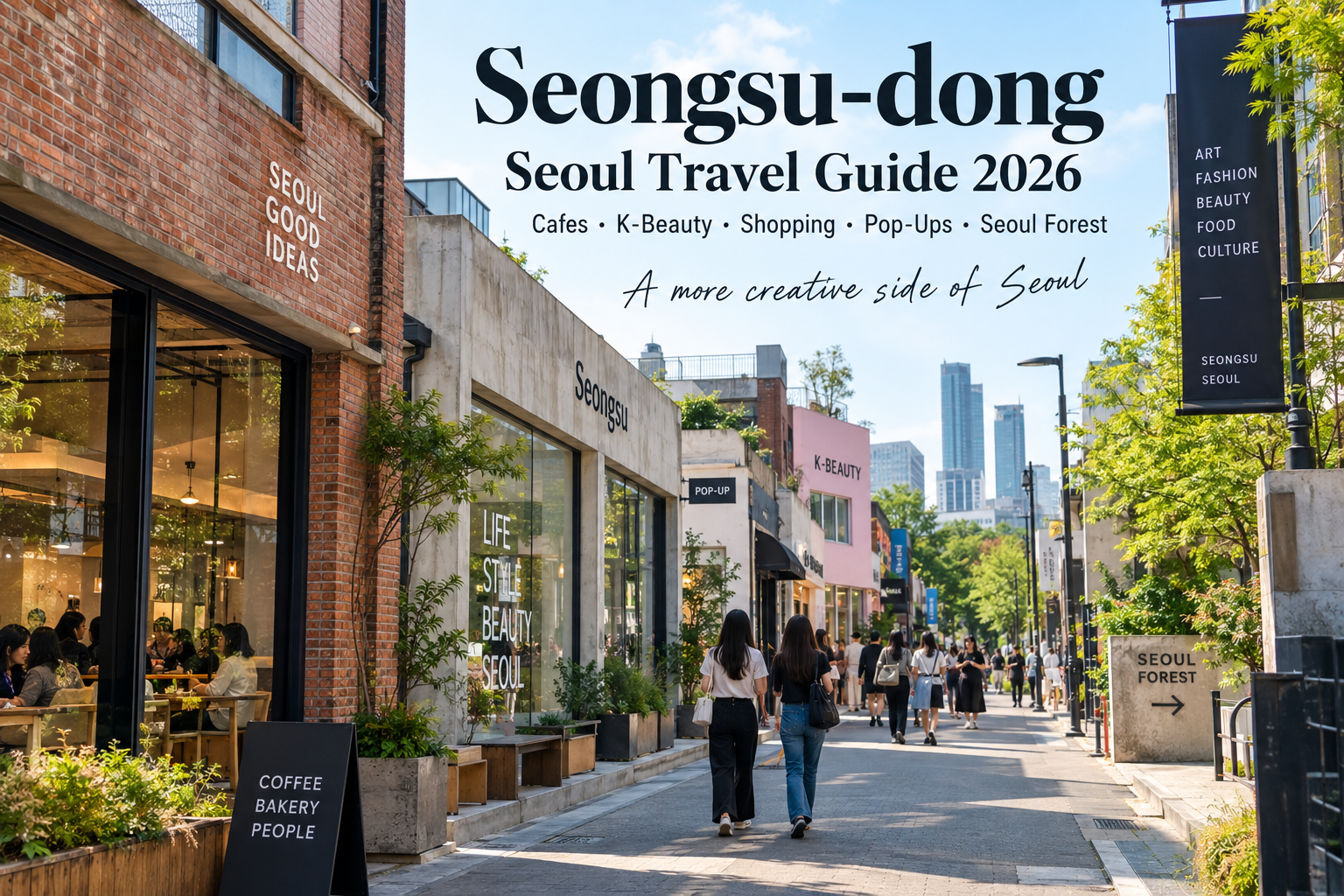
  • Seongsu-dong Seoul Travel Guide 2026: Cafes, K-Beauty, Shopping, Pop-Ups and Seoul Forest

    Seongsu-dong Seoul Travel Guide 2026: Cafes, K-Beauty, Shopping, Pop-Ups and Seoul Forest

    Introduction

    Seoul is famous for palaces, traditional markets, K-pop, and late-night shopping, but one neighborhood has become especially popular with travelers looking for a more contemporary side of the city: Seongsu-dong.

    Once known for warehouses, factories, and handmade shoe workshops, Seongsu has evolved into one of Seoul’s most creative neighborhoods. Old industrial buildings now house specialty coffee shops, fashion boutiques, art spaces, K-beauty stores, restaurants, and constantly changing pop-up shops.

    What makes Seongsu particularly interesting is that it offers more than shopping. You can spend the morning exploring cafes and local streets, discover Korean beauty and fashion brands in the afternoon, and then walk to Seoul Forest for a relaxing break from the city.

    For international visitors—especially travelers returning to Seoul after already seeing major attractions such as Gyeongbokgung Palace, Myeongdong, and N Seoul Tower—Seongsu offers a different way to experience everyday Seoul.

    In this Seongsu-dong Seoul travel guide for 2026, you’ll learn what to see, where to explore, how to get there, when to visit, and how to combine Seongsu’s cafes, K-beauty, shopping, pop-ups, and Seoul Forest into an easy half-day or full-day itinerary.

    Why Is Seongsu-dong So Popular?

    Seongsu-dong is often described as one of Seoul’s most creative neighborhoods because it combines the area’s industrial past with Korea’s fast-moving fashion, beauty, cafe, and pop-up culture.

    Instead of replacing every old building with something new, many businesses have transformed former factories and warehouses into stylish cafes, showrooms, galleries, restaurants, and retail spaces. The contrast between exposed brick buildings and modern Korean brands gives Seongsu a distinctive atmosphere that feels different from more traditional shopping districts.

    Cafes and Industrial Spaces

    Seongsu is especially famous for its cafe culture. Large warehouse-style cafes, small specialty coffee shops, bakeries, and dessert cafes are scattered throughout the neighborhood.

    Rather than visiting Seongsu for one specific attraction, many travelers simply walk through the streets, stop at a cafe that catches their attention, and continue exploring.

    Pop-Up Stores and Korean Brands

    Pop-up stores are another major reason people visit Seongsu. Korean fashion, beauty, food, entertainment, and lifestyle brands frequently use the neighborhood for temporary exhibitions, product launches, and interactive experiences.

    Because pop-ups change regularly, the neighborhood can feel different each time you visit.

    K-Beauty and Shopping

    Seongsu has also developed into an important destination for travelers interested in K-beauty and Korean fashion. Flagship stores and brand experience spaces allow visitors to explore products in a more immersive setting than a conventional shopping mall.

    Seoul Forest

    One of Seongsu’s biggest advantages is its proximity to Seoul Forest, one of the city’s most popular urban green spaces.

    After spending several hours exploring busy shopping streets and cafes, visitors can walk toward the park and enjoy a quieter side of Seoul.

    This combination of cafes, shopping, K-beauty, pop-ups, creative spaces, and nature is what makes Seongsu particularly appealing to travelers who want to experience contemporary Seoul beyond the city’s traditional sightseeing route.

    How to Get to Seongsu-dong

    Seongsu is easy to reach by Seoul’s subway system, but there are two useful stations depending on which part of the neighborhood you want to explore.

    Seongsu Station

    Seongsu Station (Line 2) is usually the most convenient starting point if your main goal is to explore Seongsu’s cafes, shops, pop-up stores, restaurants, and creative spaces.

    After leaving the station, you can explore the neighborhood on foot. Many of Seongsu’s popular streets and businesses are spread across several blocks, so comfortable walking shoes are recommended.

    Seoul Forest Station

    Seoul Forest Station (Suin-Bundang Line) is more convenient if you want to begin your visit near Seoul Forest and then walk toward the main Seongsu shopping and cafe areas.

    This can be a good option for travelers who want to combine nature, shopping, and cafes in one route.

    Which Station Should You Use?

    A simple rule is:

    • Start at Seongsu Station if cafes, shopping, K-beauty, and pop-ups are your priorities.
    • Start at Seoul Forest Station if Seoul Forest is your first destination.

    For a half-day or full-day trip, you do not necessarily need to return to the station where you started. One convenient strategy is to enter the neighborhood through one station, explore Seongsu on foot, and leave through the other.

    Getting There From Popular Areas of Seoul

    From neighborhoods such as Myeongdong, Hongdae, or Gangnam, the subway is generally the easiest option. Depending on where you start, you may need to transfer lines.

    Instead of relying on a fixed travel time, check your route shortly before leaving because transfer combinations and travel times vary by starting location.

    For navigation in Korea, travelers may also find Korean map apps useful when locating individual cafes, stores, and pop-up venues.

    Best Things to Do in Seongsu-dong

    Seongsu is best explored on foot rather than by rushing from one famous attraction to another. Part of the experience is discovering new stores, cafes, and pop-ups as you walk through the neighborhood.

    Here are some of the best ways to experience Seongsu in 2026.

    1. Explore Seongsu’s Cafe Streets

    Cafe hopping is one of the most popular things to do in Seongsu.

    The neighborhood is known for transforming former factories, warehouses, and industrial buildings into distinctive coffee shops and bakeries. Some are large destination cafes, while others are smaller specialty coffee shops hidden along side streets.

    Instead of planning every cafe in advance, consider choosing one or two places that interest you and leaving time to discover others while walking.

    Weekends and afternoons can be particularly busy, so visiting earlier in the day can provide a more relaxed experience.

    2. Discover the Latest Pop-Up Stores

    Seongsu has become one of Seoul’s best-known neighborhoods for pop-up stores and temporary brand experiences.

    Beauty companies, fashion labels, food brands, entertainment companies, and lifestyle brands regularly open short-term spaces where visitors can see new products, take photos, participate in events, or receive samples.

    The important thing to remember is that Seongsu pop-ups change constantly. A store mentioned in an older travel guide may already be closed by the time you arrive.

    For that reason, check current pop-up information shortly before your visit rather than building your itinerary around an old list.

    3. Explore K-Beauty Flagship Stores

    If you are interested in Korean skincare and cosmetics, Seongsu is becoming much more than a cafe neighborhood.

    Beauty brands increasingly use Seongsu for flagship stores and experience-focused spaces where visitors can test products, discover new releases, and experience the brand beyond a traditional cosmetics counter.

    One of the neighborhood’s major beauty destinations is Olive Young N Seongsu, a large beauty-focused space designed around products, trends, and brand experiences.

    Even travelers who already plan to shop for K-beauty in Myeongdong may find Seongsu worthwhile because the experience here is often more focused on discovering brands and trends rather than simply purchasing products.

    4. Shop Korean Fashion and Lifestyle Brands

    Seongsu is one of the best neighborhoods in Seoul for discovering contemporary Korean fashion and lifestyle brands.

    Rather than concentrating everything inside a large department store, Seongsu is filled with flagship stores, showrooms, concept shops, and smaller boutiques spread throughout the neighborhood. This makes shopping feel like part of exploring the area itself.

    You may find Korean clothing, shoes, accessories, fragrances, home goods, stationery, and design products that are less visible in Seoul’s traditional tourist shopping districts.

    New stores also open frequently, so it is worth leaving some flexibility in your itinerary rather than planning every stop in advance.

    5. Take a Break at Seoul Forest

    After exploring Seongsu’s busy streets, Seoul Forest provides a completely different atmosphere.

    The large urban park includes walking paths, lawns, trees, gardens, and spaces where visitors can slow down and take a break from shopping and cafe hopping.

    Spring and autumn are particularly pleasant seasons for walking, but the park can be enjoyed throughout much of the year.

    Combining Seongsu with Seoul Forest also makes the neighborhood suitable for travelers who do not want to spend an entire day shopping.

    A convenient itinerary is to explore Seongsu’s cafes and shops first and then finish the afternoon with a walk through Seoul Forest.

    6. Walk Through Seongsu’s Industrial Streets

    Do not limit your visit to the newest flagship stores.

    Part of Seongsu’s character comes from the contrast between its industrial history and its modern transformation. Older workshops, brick buildings, warehouses, small factories, and narrow streets still exist alongside fashionable cafes and contemporary retail spaces.

    Walking between these different areas helps explain why Seongsu feels different from purpose-built shopping districts.

    For photographers and travelers interested in urban neighborhoods, simply exploring the streets can be one of the most memorable parts of visiting Seongsu.

    Where to Eat and Drink in Seongsu

    Seongsu’s food scene is almost as varied as its shopping. Alongside its famous cafes, the neighborhood has Korean restaurants, bakeries, casual dining spots, dessert shops, and restaurants serving international cuisine.

    Coffee and Desserts

    Cafe hopping is part of the Seongsu experience, but you do not need to visit every famous cafe you see on social media.

    Choose a cafe based on what matters most to you—specialty coffee, baked goods, unusual architecture, outdoor seating, or simply a convenient break during your walk.

    Because popular cafes can become crowded on weekends, having one or two backup options nearby can save time.

    Korean Food

    If you want a proper meal between shopping stops, explore the streets beyond the busiest cafe areas. You can find Korean dishes ranging from casual everyday meals to more contemporary interpretations of Korean cuisine.

    Looking a few streets away from the most crowded shopping areas can also lead to a quieter dining experience.

    Bakeries and Quick Snacks

    Seongsu is also a good neighborhood for travelers who prefer to eat smaller meals throughout the day. Bakeries, dessert shops, and takeaway snacks make it easy to combine eating with sightseeing rather than planning a long restaurant stop.

    Half-Day Seongsu Itinerary

    If you have around four to five hours, try this route:

    Seongsu Station → Cafe → Pop-Up Stores → K-Beauty & Shopping → Lunch or Snack → Seoul Forest

    Start at Seongsu Station and explore the cafe and shopping streets while your energy is high. Check any current pop-ups you want to visit, browse Korean beauty and fashion stores, and then gradually walk toward Seoul Forest.

    Finish with a relaxed walk through the park and leave from Seoul Forest Station.

    Full-Day Seongsu Itinerary

    With a full day, you can explore at a slower pace:

    Morning: Arrive at Seongsu Station and have coffee or brunch.

    Late Morning: Explore industrial streets, boutiques, and Korean fashion stores.

    Afternoon: Visit K-beauty spaces and current pop-ups, followed by lunch and another cafe.

    Late Afternoon: Walk toward Seoul Forest and spend time exploring the park.

    Evening: Return toward Seongsu for dinner or continue to another nearby Seoul neighborhood.

    A full day works particularly well for travelers interested in shopping, photography, cafes, Korean brands, and contemporary Seoul culture.

    Best Time to Visit Seongsu

    Seongsu can be visited throughout the year, but the experience changes depending on the day and time.

    Weekdays vs. Weekends

    If your schedule allows, a weekday visit is usually more comfortable. Popular cafes, flagship stores, and pop-up spaces can become crowded on weekends, particularly in the afternoon.

    For travelers visiting on Saturday or Sunday, arriving earlier in the day can make it easier to explore before the busiest period.

    Spring and Autumn

    Spring and autumn are especially pleasant if you plan to combine Seongsu with Seoul Forest. Mild temperatures make walking between the neighborhood’s shops, cafes, and the park more enjoyable.

    Summer can be hot and humid, while winter temperatures can make long outdoor walks less comfortable. Fortunately, Seongsu has plenty of indoor cafes and shops where you can take breaks.

    Practical Tips for International Travelers

    Check Pop-Ups Shortly Before Your Visit

    Pop-up stores are temporary by nature. Do not rely entirely on a travel article or social media post published months earlier.

    Search for current Seongsu pop-ups shortly before your visit and confirm dates and operating hours.

    Save Places on Your Map

    Seongsu is spread across many streets rather than concentrated inside one shopping complex. Save the places you most want to visit before arriving, but leave room for spontaneous discoveries.

    Wear Comfortable Shoes

    Expect to walk considerably more than you might think. Cafes, shops, pop-ups, and Seoul Forest are spread across the neighborhood, so comfortable shoes will make the day much easier.

    Carry a Payment Backup

    Cards are widely accepted in Seoul, but carrying more than one payment option can be useful when traveling. A small amount of Korean won can also be helpful for occasional situations where cash is more convenient.

    Check Tax Refund Eligibility

    International visitors shopping for Korean beauty, fashion, and other products may encounter stores participating in Korea’s tax-refund system. Eligibility and procedures can vary, so look for tax-refund information at the store and keep your passport available when required.

    Do Not Overplan

    Seongsu changes quickly. New stores appear, pop-ups rotate, and unexpected places are often part of the experience.

    Plan a few priority stops, but leave enough time simply to walk around and see what you find.

    Frequently Asked Questions About Seongsu-dong

    Is Seongsu-dong worth visiting?

    Yes, especially if you are interested in contemporary Seoul culture. Seongsu combines cafes, Korean fashion and beauty brands, pop-up stores, creative spaces, industrial architecture, and Seoul Forest in one walkable area.

    It can be particularly interesting for repeat visitors who have already explored Seoul’s major historical attractions.

    How much time do you need in Seongsu?

    Allow at least four to five hours if you want to visit cafes, browse shops, explore pop-ups, and walk through Seoul Forest without rushing.

    Travelers interested in shopping, photography, K-beauty, and cafe hopping can easily spend most of a day in the neighborhood.

    Is Seongsu better on weekdays or weekends?

    Weekdays are generally more comfortable for travelers who want to avoid the largest crowds. Weekends can be lively, but popular cafes, stores, and pop-ups may have longer waits.

    What is Seongsu famous for?

    Seongsu is best known for its warehouse-style cafes, Korean fashion and lifestyle brands, K-beauty stores, temporary pop-ups, creative spaces, and its proximity to Seoul Forest.

    Is Seongsu good for K-beauty shopping?

    Yes. Seongsu has become an increasingly important destination for Korean beauty brands, flagship stores, and brand experience spaces. It offers a different experience from traditional cosmetics shopping areas such as Myeongdong.

    Should I use Seongsu Station or Seoul Forest Station?

    Use Seongsu Station on Line 2 if you want to begin with cafes, shopping, and pop-ups. Seoul Forest Station on the Suin-Bundang Line is convenient if you want to start near the park.

    A good strategy is to enter through one station and leave through the other.

    Can I visit Seongsu and Seoul Forest on the same day?

    Absolutely. They are close enough to combine naturally, which is one reason Seongsu works so well as a half-day or full-day Seoul itinerary.

    Final Thoughts

    Seongsu represents a side of Seoul that is constantly changing.

    Its appeal does not come from one famous landmark. Instead, it comes from the combination of old industrial streets, creative cafes, Korean fashion and beauty brands, temporary pop-ups, restaurants, and the greenery of Seoul Forest.

    For first-time visitors, Seongsu can add contemporary Korean culture to a traditional Seoul itinerary. For repeat visitors, it offers a reason to explore beyond the city’s most familiar tourist districts.

    Most importantly, do not try to schedule every minute. Choose a few places you genuinely want to visit, check the latest pop-ups before you go, and leave time to explore.

    Seongsu is one of those Seoul neighborhoods where discovering something you did not plan can become the best part of the day.

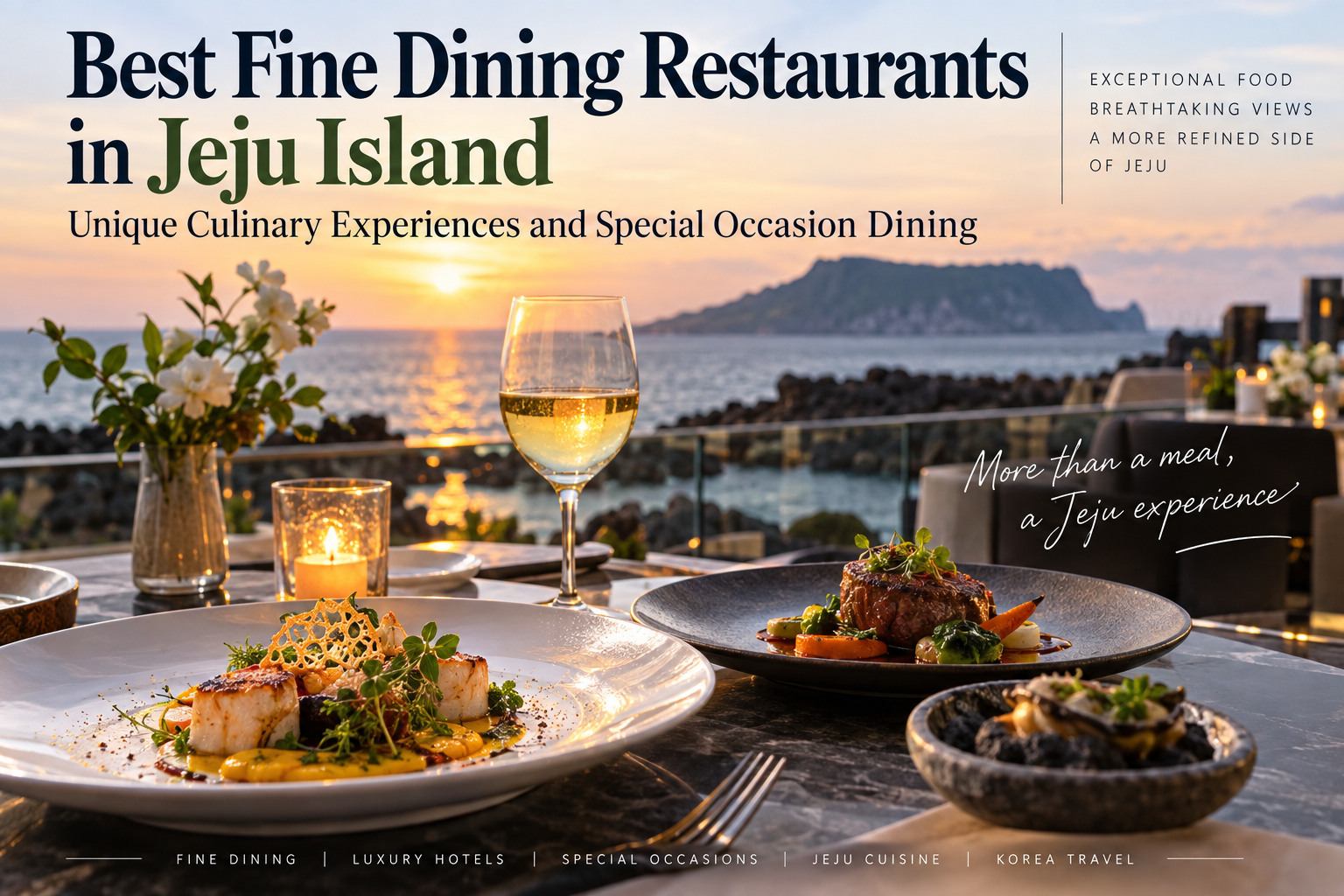
  • Best Fine Dining Restaurants in Jeju Island: Unique Culinary Experiences and Special Occasion Dining

    Best Fine Dining Restaurants in Jeju Island: Unique Culinary Experiences and Special Occasion Dining

    Fine Dining in Jeju: A Different Side of the Island’s Food Culture

    Jeju Island is famous for black pork, seafood, abalone, gogi-guksu, and traditional local dishes.

    But there is another side to Jeju’s food scene.

    Across the island, chefs and luxury hotels are using Jeju’s seafood, vegetables, pork, seasonal produce, and local traditions to create more refined dining experiences.

    These restaurants are particularly worth considering for a honeymoon, anniversary, birthday, romantic dinner, or simply one memorable meal during your trip.

    Unlike our guide to local Jeju restaurants, this article focuses on places where the atmosphere, presentation, service, and culinary experience are as important as the food itself.

    1. Yeoumul — A Refined Culinary Journey Inspired by Jeju

    One of the most distinctive luxury dining experiences in Seogwipo can be found at Yeoumul, inside JW Marriott Jeju Resort & Spa.

    The restaurant builds its dining experience around ingredients from Jeju’s sea and land, with dishes changing according to the seasons.

    Rather than simply serving famous Jeju specialties, Yeoumul interprets the island through a contemporary Korean dining experience.

    The concept is also influenced by Jeju’s culture and natural environment, making the meal feel connected to the destination rather than like a restaurant that could exist anywhere in the world.

    For international visitors who want to experience Jeju ingredients in a more sophisticated setting, this can be an excellent choice.

    Best for: Couples, anniversaries, honeymoons, and travelers interested in contemporary Korean cuisine.

    Location: JW Marriott Jeju Resort & Spa, Seogwipo.

    2. The Flying Hog — Wood-Fired Dining at JW Marriott Jeju

    Also at JW Marriott Jeju Resort & Spa, The Flying Hog offers a different type of special-occasion experience.

    The restaurant focuses on wood-fire grilling, bringing fire, smoke, and carefully selected ingredients together in a more dramatic style of cooking.

    This is a good choice for travelers who prefer grilled dishes and bold flavors rather than a traditional Korean course meal.

    The luxury resort setting also makes it easy to combine dinner with a sunset walk or a relaxing evening in Seogwipo.

    Advance planning is recommended for signature restaurants at the resort.

    Best for: Couples, meat lovers, special occasions, and luxury travelers.

    Location: JW Marriott Jeju Resort & Spa, Seogwipo.

    3. Island Kitchen — A Luxury Jeju Dining Experience

    Island Kitchen is another dining option at JW Marriott Jeju Resort & Spa.

    Rather than focusing on one single cooking style, Island Kitchen offers a broader experience built around seasonal ingredients and the flavors of Jeju.

    The resort’s signature Jeju Brunch Royale is designed as a leisurely dining experience, combining table-served dishes with premium ingredients and local flavors.

    This makes Island Kitchen particularly attractive for travelers who prefer a special daytime meal rather than a formal dinner.

    A long brunch can also work beautifully on a slower day when you do not want to rush from one tourist attraction to another.

    Best for: Luxury brunch, couples, resort guests, and relaxed special occasions.

    4. Confetti — Seasonal Jeju Ingredients with an Ocean View

    At Parnas Hotel Jeju in the Jungmun area, Confetti combines hotel dining with panoramic views of the Jeju coastline.

    The restaurant emphasizes seasonal ingredients grown and produced on Jeju Island.

    For travelers staying in Jungmun, this can be especially convenient because you can enjoy a more polished dining experience without driving across the island.

    The ocean setting is also part of the appeal.

    Jeju’s landscape is one of the reasons people travel to the island, and a restaurant that allows you to enjoy the scenery while eating can turn dinner into part of the travel experience.

    Best for: Families, couples, luxury hotel guests, and travelers staying in Jungmun.

    Location: Parnas Hotel Jeju, Jungmun.

    5. The Parkview — Luxury Hotel Dining in Jungmun

    For travelers who enjoy premium hotel buffets, The Parkview at The Shilla Jeju is another well-known option in the Jungmun resort area.

    A luxury buffet can be particularly useful when traveling with family or a group because everyone can choose according to their own preferences.

    It also provides a different experience from a chef-led tasting menu.

    Instead of spending the evening focused on a fixed sequence of dishes, diners can explore a wider selection at their own pace.

    If you are already staying in or visiting the Jungmun area, combining dinner with the resort atmosphere can make for a relaxing evening.

    Best for: Families, groups, celebrations, and travelers who prefer variety.

    6. La Tavola — An Intimate Fine-Dining Option in Jeju City

    Fine dining in Jeju is not limited to luxury resorts.

    La Tavola in Jeju City offers another option for travelers looking for a more intimate restaurant experience.

    Choosing an independent restaurant can provide a welcome contrast after visiting large resorts and hotels.

    It is also useful for travelers spending their first or final night near Jeju City, especially when they want a special meal without traveling all the way to southern Jeju.

    Best for: Couples, intimate dinners, and travelers staying in Jeju City.

    7. WooHwa — A Special-Occasion Restaurant in Jeju City

    WooHwa is another option for travelers searching for a more refined meal in Jeju City.

    Restaurants like this demonstrate how Jeju’s dining scene has expanded beyond traditional island dishes.

    That does not mean abandoning local food.

    Instead, a good Jeju itinerary can include both experiences: a simple bowl of pork noodles one day and a carefully planned dinner the next.

    The contrast helps travelers appreciate how diverse Jeju’s food culture has become.

    Best for: Date nights, celebrations, couples, and travelers seeking an upscale meal in Jeju City.

    8. Nansanri Restaurant — Dining Away from the Resort Districts

    Nansanri Restaurant in Seongsan offers another style of dining experience.

    Its eastern Jeju location makes it particularly interesting for travelers who are already exploring Seongsan and the quieter countryside on that side of the island.

    One of the pleasures of traveling around Jeju is discovering restaurants outside the major hotel districts.

    A memorable meal does not always require a luxury resort setting.

    Sometimes the surrounding village, landscape, and slower pace of eastern Jeju become part of the experience.

    Best for: Eastern Jeju road trips, couples, and travelers looking beyond the major resort areas.

    Fine Dining or Local Restaurant?

    You should try both.

    Jeju’s traditional restaurants tell the story of the island through dishes that have been eaten for generations.

    Black pork, momguk, dombe-gogi, seafood, abalone, and gogi-guksu provide an accessible introduction to Jeju’s culinary traditions.

    Fine dining offers a different perspective.

    Chefs can take the same island environment — its sea, farms, seasons, and local ingredients — and interpret it through contemporary techniques and presentation.

    One experience does not replace the other.

    Together, they provide a much richer understanding of Jeju food.

    Jeju City or Seogwipo for Special-Occasion Dining?

    Your choice should depend on your itinerary.

    Jeju City works well at the beginning or end of a trip because it is convenient for Jeju International Airport.

    It also offers independent restaurants that can provide a more intimate alternative to resort dining.

    Seogwipo and Jungmun are especially attractive for luxury dining.

    Many of Jeju’s major resorts are located in southern Jeju, making this area convenient for travelers who want to combine accommodation, ocean scenery, and a special dinner.

    Eastern Jeju is worth considering if you prefer smaller restaurants and a quieter road-trip atmosphere.

    Instead of driving across the island for dinner, choose a restaurant that fits naturally into the area where you are already spending the day.

    How Much Should You Budget?

    Fine dining in Jeju can vary considerably in price.

    An independent restaurant may cost much less than a luxury resort tasting menu, while premium hotel restaurants can become one of the more expensive meals of your trip.

    For this reason, check the current menu and prices before visiting.

    If you are traveling on a mixed budget, you do not need to eat expensive meals every day.

    A useful strategy is to enjoy inexpensive local restaurants for most of your trip and reserve one evening for a special dining experience.

    That combination can make the expensive meal feel even more memorable.

    Should You Make a Reservation?

    For high-end restaurants, reservations are strongly recommended.

    This is particularly important for chef-led course dining and signature restaurants inside luxury hotels.

    Some restaurants may have limited seating, fixed dining times, or menus that require preparation in advance.

    Weekends, Korean holidays, and peak travel seasons can also be busy.

    If there is one restaurant that matters especially to your trip, reserve it before arriving in Jeju rather than waiting until the same day.

    What to Look for on a Jeju Fine-Dining Menu

    When choosing a restaurant, look beyond familiar luxury ingredients.

    One of the most interesting reasons to dine in Jeju is the opportunity to experience ingredients connected to the island.

    Depending on the season and restaurant, menus may feature seafood, abalone, local vegetables, pork, citrus, herbs, and other ingredients produced on Jeju.

    Seasonal menus can change, which is part of the experience.

    Instead of expecting exactly the same dishes throughout the year, allow the restaurant to show you what Jeju tastes like during your visit.

    A Special Meal Can Be Part of the Journey

    Travelers sometimes treat restaurants as something to fit between sightseeing stops.

    In Jeju, it can be worth doing the opposite.

    Choose one evening when dinner itself is the main event.

    Spend the afternoon slowly exploring the coast, return to your hotel, and prepare for dinner without rushing.

    For couples, this can become one of the most memorable evenings of the trip.

    For families, a celebratory meal can mark the end of a special vacation.

    And for food lovers, it provides another way to understand an island whose identity has always been closely connected to the land and sea.

    Final Thoughts

    Jeju Island’s culinary identity cannot be explained by one type of restaurant.

    A tiny noodle shop, a busy black pork barbecue restaurant, a seafood restaurant near the coast, and an elegant tasting menu can all reveal something different about the island.

    For most travelers, the best approach is balance.

    Eat local dishes during your road trips. Visit markets. Try Jeju seafood. Enjoy black pork.

    Then, if your budget allows, choose one special restaurant where you can slow down and experience Jeju ingredients in a more refined setting.

    The combination of everyday local food and special-occasion dining is what makes exploring Jeju’s food scene so rewarding.


  • Best Cafes in Jeju Island: Beautiful Coffee Shops with Ocean Views and Unique Atmospheres

    Best Cafes in Jeju Island: Beautiful Coffee Shops with Ocean Views and Unique Atmospheres

    Why Jeju Island Has One of Korea’s Best Cafe Scenes

    Jeju Island is famous for volcanic landscapes, beaches, waterfalls, and hiking trails, but there is another reason many travelers love the island: its cafés.

    Across Jeju, old stone houses, coastal buildings, tangerine farms, gardens, and modern architectural spaces have been transformed into distinctive coffee shops.

    Some cafés are destinations in themselves.

    You can drink coffee while looking directly at the ocean in Aewol, stop at a quiet café during an eastern Jeju road trip, or spend an afternoon surrounded by gardens and tangerine trees in Seogwipo.

    Here are some cafés and café areas worth considering on your Jeju itinerary.

    1. Bomnal Cafe — A Classic Aewol Ocean-View Cafe

    Bomnal Cafe

    Cafe•영업 마감웹사이트

    •경로

    •050-71494-4999

    Aewol is one of the best-known café destinations on Jeju Island, and Bomnal Cafe helped make this coastline especially popular.

    Located beside the sea, the café combines ocean views with Jeju stone walls and a colorful, relaxed atmosphere.

    Bomnal also became known as a filming location associated with the Korean drama Warm and Cozy. Jeju’s official tourism site describes it as a beach-view café and suggests combining a visit with nearby Handam Beach or the Olle Trail.

    This is less about searching for the most sophisticated cup of coffee and more about enjoying one of Jeju’s classic coastal café experiences.

    Best for: First-time visitors, couples, K-drama fans, and Aewol coastal walks.

    2. Haejigae Cafe — Watch the Sea in Aewol

    해지개 카페

    4.8•카페웹사이트

    •경로

    •064-799-8585

    Another option in the Aewol area is Haejigae Cafe.

    Its coastal location makes it particularly attractive for travelers who want to build a relaxed afternoon around the Aewol shoreline rather than simply stopping somewhere for a quick coffee.

    The café is currently listed on Aewolbukseo-gil, close to the famous café district. Its location makes it easy to combine with a walk along the coast.

    Best for: Ocean views, couples, photography, and relaxed Aewol afternoons.

    3. Delmoondo — Coffee Right Beside Hamdeok Beach

    델문도

    4.1•카페웹사이트

    •경로

    •064-702-0007

    On the northeastern side of Jeju, Hamdeok is famous for its clear blue water and beautiful beach.

    Delmoondo sits directly beside this coastal scenery.

    It is a useful stop if your itinerary already includes Hamdeok Beach because you can enjoy coffee without making a major detour.

    On a sunny day, the contrast between Jeju’s dark volcanic rock and bright turquoise water creates one of the island’s most recognizable coastal scenes.

    Best for: Hamdeok Beach visitors, ocean views, couples, and eastern Jeju road trips.

    4. Cafe Lucia — Dramatic Scenery in Southwestern Jeju

    카페루시아 본점

    4.4•카페웹사이트

    •경로

    •064-738-8879

    Travelers exploring the southwestern side of Jeju should not feel that they have to drive back to Aewol for a beautiful café.

    Cafe Lucia is located in Andeok, Seogwipo.

    This part of Jeju is known for dramatic coastal scenery and works well with an itinerary around Sanbangsan, Yongmeori Coast, and the southwestern shoreline.

    A café stop here can become a natural break between sightseeing destinations rather than a separate trip.

    Best for: Southwestern Jeju road trips, couples, scenic breaks, and slow travel.

    5. Viewst — A Scenic Stop Near the Southwest Coast

    뷰스트

    4.4•카페웹사이트

    •경로

    •010-7759-9272

    Viewst is another café option in Andeok, located along Hyeongjehaean-ro.

    For travelers driving around southwestern Jeju, this area offers a very different atmosphere from busy Jeju City or Aewol.

    Instead of planning your entire day around one famous café, consider choosing a café that fits naturally into your driving route.

    That approach saves time and allows the coffee stop to become part of the landscape you are already exploring.

    Best for: Road trips, coastal scenery, couples, and travelers exploring Andeok.

    6. Gyulkkot Darak — Tangerine-Island Atmosphere in Seogwipo

    귤꽃다락

    4.4•카페웹사이트

    •경로

    •064-739-2323

    Jeju is not only an island of beaches. It is also famous for its tangerines.

    Gyulkkot Darak in Seogwipo offers a café experience that fits this agricultural side of Jeju particularly well.

    A garden or tangerine-inspired café can be a refreshing contrast after visiting several ocean-view coffee shops.

    This is the kind of place that helps visitors understand why Jeju’s café culture is so diverse: the island’s farms, gardens, traditional houses, and countryside can be just as important as the sea.

    Best for: Garden lovers, photography, couples, and travelers seeking a quieter Jeju atmosphere.

    7. Yudong Coffee — For Travelers Who Care About the Coffee

    유동커피

    4.4•카페웹사이트

    •경로

    •064-733-6662

    Not every great Jeju café needs a dramatic ocean view.

    Yudong Coffee in central Seogwipo is a good option for travelers who want the coffee itself to be a bigger part of the experience.

    Its city location also makes it easy to combine with a day exploring central Seogwipo, local restaurants, markets, waterfalls, and nearby coastal areas.

    After several large destination cafés, visiting a more coffee-focused shop can provide a welcome change of pace.

    Best for: Coffee lovers, solo travelers, and visitors staying in central Seogwipo.

    8. Blue Bottle Jeju — Modern Coffee Culture in Eastern Jeju

    블루보틀 제주

    4.2•카페웹사이트

    •경로

    •1533-6906

    Travelers heading through Gujwa can also find a very different style of café experience at Blue Bottle Jeju.

    Rather than sitting directly on a crowded beach, its eastern Jeju location makes it suitable for a road trip through the island’s quieter inland and eastern landscapes.

    It is also an interesting example of how international coffee culture has become part of Jeju’s rapidly evolving café scene.

    Best for: Coffee enthusiasts, design lovers, eastern Jeju itineraries, and travelers who prefer modern café spaces.

    9. Geu Chorok — A Green Escape in Gujwa

    그초록

    4.4•카페웹사이트

    •경로

    •010-7777-4244

    Gujwa is one of the best parts of Jeju for travelers who prefer a slower atmosphere.

    Geu Chorok offers another reason to explore this eastern side of the island.

    Instead of treating cafés only as places to photograph the ocean, look for spaces that reflect Jeju’s quieter countryside, vegetation, and local landscape.

    Combining one of these cafés with beaches, villages, or an eastern Jeju drive can create a much more relaxed day.

    Best for: Slow travel, couples, eastern Jeju road trips, and travelers looking for a peaceful break.

    10. Over the Window — A Relaxed Cafe Stop in Seogwipo

    오버더윈도우(Cafe over the window)

    4.7•카페웹사이트

    •경로

    •010-3419-9371

    If you are staying in Seogwipo, you do not need to spend hours driving simply to find a pleasant café.

    Over the Window is located on Taepyeong-ro in Seogwipo and can fit easily into a city-based itinerary.

    Pair a café stop with a local meal, market visit, waterfall, or coastal walk and you can experience Seogwipo at a much slower pace.

    Best for: Seogwipo stays, solo travelers, couples, and relaxed afternoons.

    Aewol: Best for the Classic Jeju Cafe Experience

    If this is your first trip to Jeju and you imagine drinking coffee beside the ocean, Aewol is an obvious place to start.

    The Handam coastal area became particularly well known for cafés such as Bomnal and other seaside establishments. Jeju’s official tourism information continues to highlight the area as a café and coastal-walking destination.

    The disadvantage is popularity.

    Weekends and peak travel periods can be busy, so visiting earlier in the day can provide a more relaxed experience.

    Hamdeok and Eastern Jeju: Best for Blue Water and Road Trips

    Hamdeok and the eastern side of Jeju are excellent choices if cafés are only one part of your sightseeing day.

    Combine coffee with beaches, villages, volcanic landscapes, or a drive toward Seongsan.

    This approach is particularly good for travelers renting a car because you can stop at smaller cafés as you move around the island.

    Seogwipo: Best for Variety

    Seogwipo offers perhaps the widest variety of café experiences.

    You can find urban coffee shops, coastal cafés, garden spaces, countryside cafés, and places connected to Jeju’s tangerine-growing landscape.

    It is also easy to combine café visits with local food.

    If you have already explored Jeju’s black pork, seafood, gogi-guksu, and traditional dishes, an afternoon coffee stop can provide a relaxing break between meals and sightseeing.

    Ocean-View Cafe or Hidden Cafe?

    Both deserve a place in a Jeju itinerary.

    Ocean-view cafés are popular for good reason. Few things feel more like a Jeju vacation than sitting beside the water with a drink while looking across the island’s volcanic coastline.

    But do not overlook smaller cafés away from the famous beaches.

    A quiet café beside a stone wall, garden, village, or tangerine field can sometimes become a more memorable experience than a crowded Instagram-famous destination.

    What Should You Order at a Jeju Cafe?

    Coffee is only the beginning.

    Many Jeju cafés use ingredients associated with the island in drinks and desserts.

    Look for seasonal items featuring Jeju tangerines, hallabong, green tea, peanuts, or other locally inspired ingredients.

    Menus change frequently, so rather than searching for one specific drink, check the seasonal specialties when you arrive.

    Trying a local ingredient can turn an ordinary café stop into another small taste of Jeju.

    How Many Cafes Should You Visit?

    It is easy to over-plan a Jeju café trip.

    Social media can make it seem as though you need to visit five famous cafés every day.

    You do not.

    One or two carefully chosen cafés that fit your daily route are usually enough.

    Spend the rest of your time walking along the coast, exploring markets, eating local food, hiking, or simply enjoying the island.

    The best café itinerary is the one that complements your Jeju trip rather than taking it over.

    Tips Before Visiting Jeju Cafes

    Opening hours, closing days, menus, and reservation policies can change, especially at independent cafés.

    Check current information shortly before visiting.

    Also remember that many of Jeju’s most scenic cafés are easiest to reach by car.

    If you are traveling by public transportation, group your café visits by area instead of crossing the island repeatedly.

    And if a famous café has a long queue, do not worry.

    Jeju has hundreds of cafés, and sometimes the unexpected place you discover nearby becomes the one you remember most.

    Final Thoughts

    Jeju’s café culture is about much more than coffee.

    It reflects the island itself: ocean, volcanic stone, tangerine farms, villages, gardens, modern design, and a slower rhythm of travel.

    Choose Aewol if you want the classic ocean-view café experience. Explore Hamdeok and eastern Jeju for beaches and road trips. Spend time in Seogwipo if you want cafés mixed with local food, gardens, and southern Jeju sightseeing.

    And leave room for spontaneity.

    Some of the best moments in Jeju happen when you see a small café beside a stone wall, decide to stop, order a coffee, and stay much longer than you planned.


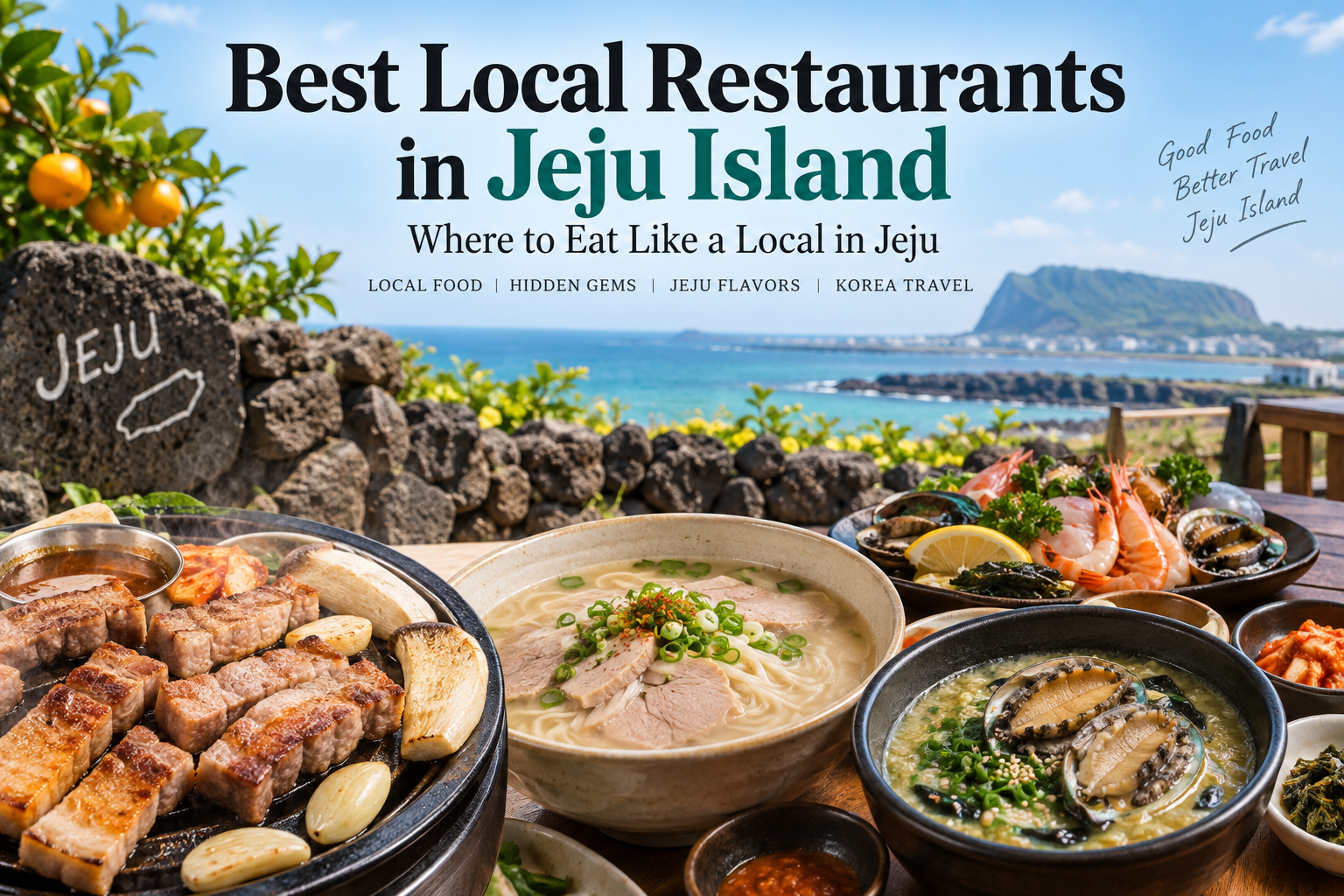
  • Best Local Restaurants in Jeju Island: Where to Eat Like a Local in Jeju

    Best Local Restaurants in Jeju Island: Where to Eat Like a Local in Jeju

    What Should You Eat in Jeju Island?

    Jeju Island has a food culture that feels different from mainland Korea.

    The island’s volcanic landscape, surrounding sea, fishing traditions, and history of raising pigs have shaped a cuisine built around ingredients such as black pork, seafood, seaweed, abalone, and locally prepared noodles.

    For first-time visitors, choosing where to eat can be difficult. Popular tourist areas are filled with restaurants, but some dishes are especially worth seeking out if you want to experience the flavors associated with Jeju.

    Here are some local restaurants and foods to consider during your trip.

    1. Woojin Haejangguk — Try Jeju-Style Momguk

    우진해장국

    4.1•한식당경로

    •064-757-3393

    One of the most distinctive dishes to try in Jeju is momguk, a traditional soup made with pork broth and gulfweed.

    Woojin Haejangguk in Jeju City is widely known for its Jeju-style dishes and is particularly associated with gosari haejangguk, a thick and savory soup made with bracken and meat.

    For international travelers, this is a useful place to experience a flavor that is very different from the Korean barbecue and bibimbap commonly found outside Korea.

    Its Jeju City location also makes it relatively convenient to include near the beginning or end of an island trip.

    What to try: Gosari haejangguk and traditional Jeju-style soup.

    Best for: Travelers interested in traditional local food and a hearty Korean breakfast.

    2. Ollae Guksu — A Classic Bowl of Jeju Gogi-Guksu

    올래국수 본점

    4.1•국수 전문점경로

    •064-742-7355

    Gogi-guksu, or pork noodles, is one of the easiest Jeju specialties for first-time visitors to enjoy.

    Ollae Guksu specializes in this Jeju-style noodle soup.

    The dish combines noodles, generous slices of pork, and a rich pork broth. Unlike many restaurants with long menus, Ollae Guksu has become particularly associated with this single local specialty.

    Jeju’s official tourism information describes its gogi-guksu as using medium-thick noodles, thick pork slices, and a savory bone broth.

    It is simple, filling, and an excellent introduction to Jeju comfort food.

    What to try: Gogi-guksu.

    Best for: First-time visitors, solo travelers, and anyone looking for an affordable local meal.

    3. Guksu Bada — Pork Noodles and More in Seogwipo

    Travelers staying in southern Jeju do not need to return to Jeju City to try local noodles.

    Guksu Bada in Seogwipo is another option for gogi-guksu.

    Its pork broth is simmered for more than 12 hours, while the restaurant makes and ages its own noodles. The menu also includes other dishes associated with Jeju, including dombe-gogi and momguk.

    This makes it particularly useful for travelers who want to sample several Jeju flavors during a Seogwipo itinerary.

    What to try: Gogi-guksu and dombe-gogi.

    Best for: Seogwipo travelers and visitors who want to explore several Jeju specialties.

    4. Sukseongdo — Jeju Black Pork Barbecue

    숙성도 제주본점

    4.8•숯불구이/바베큐전문점경로

    •064-743-8877

    No Jeju food trip feels complete without black pork barbecue.

    Jeju black pork is famous for its rich flavor and pleasantly chewy texture. Traditionally, grilled pork is often eaten with meljeot, a fermented anchovy sauce that adds a salty, savory contrast to the meat.

    Sukseongdo is a popular choice in Jeju City for travelers who want to experience aged pork prepared over charcoal.

    Korean barbecue is also a social meal, so this is especially enjoyable when traveling with a partner, friends, or family.

    What to try: A selection of aged Jeju pork cuts.

    Best for: Korean barbecue lovers and first-time visitors to Jeju.

    5. Ttungttanji Aewol — Black Pork on the Aewol Coast

    If your itinerary takes you toward Aewol, consider combining the coastal drive with a black pork meal.

    Ttungttanji Aewol Black Pork Main Branch has been operated across two generations and specializes in aged Jeju black pork. The meat is grilled for diners by restaurant staff.

    Aewol is already popular for its ocean scenery and cafés, so having a local pork meal here can fit naturally into a day exploring western Jeju.

    What to try: Aged black pork.

    Best for: Aewol road trips, couples, families, and groups.

    6. Sangchunjae — A Korean Meal Featuring Jeju Ingredients

    상춘재

    4.4•한식당웹사이트

    •경로

    •064-725-1557

    Travelers who want something other than barbecue or noodles can consider a more complete Korean-style meal.

    Sangchunjae in Jeju City is known as a Korean restaurant where visitors can experience dishes built around local ingredients.

    This type of meal is particularly useful for travelers who want to see how vegetables, seafood, rice, soups, and side dishes come together at a Korean table.

    Instead of focusing on one famous dish, the experience is about enjoying several flavors together.

    Best for: Couples, families, and travelers interested in Korean home-style dining.

    7. Try Abalone and Jeju Seafood

    양씨네 제주전복칼국수 본점

    4.6•해산물 요리 전문식당웹사이트

    •경로

    •064-721-1588

    Jeju is surrounded by the sea, so seafood deserves an important place in any island food itinerary.

    Abalone is one ingredient closely associated with Jeju dining.

    Travelers can find it prepared in porridge, rice dishes, soups, grilled dishes, and noodle dishes.

    At Yangssine Jeju Abalone Kalguksu in Jeju City, seafood lovers can try an abalone-focused version of Korean knife-cut noodles.

    This can be a good alternative for travelers who want a warm, comforting seafood meal rather than raw fish.

    What to try: Abalone kalguksu.

    Best for: Seafood lovers and travelers looking for a comforting lunch.

    8. Black Pork and Seafood in Seogwipo

    Jeju’s food culture does not require choosing between meat and seafood.

    Some restaurants combine the two.

    Black Pork & Seafood Samhap near Seogwipo’s Olle Market serves combinations of black pork and seafood, including octopus and other seafood ingredients.

    This type of meal can be fun for groups because several Jeju flavors arrive at the table together.

    After eating, visitors can continue exploring Seogwipo and its traditional market area.

    Best for: Groups, adventurous eaters, and travelers exploring central Seogwipo.

    Foods Every First-Time Jeju Visitor Should Know

    Even if you do not visit every restaurant in this guide, there are several Jeju foods worth remembering.

    Heukdwaeji means Jeju black pork. Try it grilled and, if available, dip it into meljeot.

    Gogi-guksu is Jeju-style pork noodle soup.

    Dombe-gogi is boiled pork traditionally served on a wooden cutting board called a dombe in the Jeju dialect.

    Momguk is a traditional pork and gulfweed soup.

    Jeonbok, or abalone, appears in porridge, rice, noodles, and many seafood dishes.

    Jeju is also known for fresh fish and other seafood that reflects its island environment.

    Jeju City or Seogwipo: Which Is Better for Food?

    You can eat well in both.

    Jeju City is especially convenient for travelers arriving through Jeju International Airport and offers everything from traditional soup and pork noodles to black pork barbecue and seafood.

    Seogwipo is an excellent base for combining local restaurants with markets, waterfalls, coastal attractions, and southern Jeju sightseeing.

    Aewol and western Jeju work particularly well for travelers who want to combine restaurants with coastal drives and cafés.

    Rather than driving across the island for one famous restaurant, it is usually better to choose good local food near the area you are already exploring.

    Tips for Eating at Local Restaurants in Jeju

    Restaurant hours and closing days can change, so check current information on the day you visit.

    Some famous restaurants may have long lines during lunch, dinner, weekends, and Korean holiday periods.

    At Korean barbecue restaurants, minimum orders may apply, particularly when ordering meat.

    Smaller local restaurants may also have limited English menus, although translation apps make ordering much easier than it once was.

    And do not be afraid to try something unfamiliar.

    Some of Jeju’s most memorable dishes are very different from the Korean foods international visitors already know.

    Local Restaurant or Michelin Restaurant?

    They offer different experiences.

    A local restaurant may specialize in one dish that residents have eaten for generations, while a Michelin-recognized restaurant may interpret Jeju ingredients through a more refined or contemporary style.

    Neither is necessarily more “authentic” than the other.

    They simply show different sides of Jeju’s evolving food culture.

    In a separate guide, we will explore Michelin-recognized dining and other notable restaurants for travelers looking for a more curated culinary experience.

    Final Thoughts

    Eating in Jeju is one of the best ways to understand the island.

    Black pork reflects Jeju’s agricultural traditions. Seafood connects the table to the surrounding ocean. Gogi-guksu and momguk reveal a simpler, comforting side of local cooking.

    Do not spend your entire trip searching only for the most famous restaurant on social media.

    Instead, try several kinds of Jeju food as you travel around the island.

    A bowl of pork noodles in Jeju City, black pork after an Aewol coastal drive, or a seafood meal in Seogwipo can become as memorable as any major tourist attraction.

    And after exploring Jeju’s local food, there is another side of the island worth discovering: its growing café culture.

    From ocean-view cafés in Aewol to quiet spaces hidden among stone walls and tangerine fields, Jeju has become one of Korea’s most interesting café destinations.


  • Best Michelin Restaurants in Busan: A Guide to Michelin-Starred Dining

    Best Michelin Restaurants in Busan: A Guide to Michelin-Starred Dining

    Busan has long been famous for seafood, traditional markets, dwaeji gukbap, milmyeon, and casual local restaurants.

    But in recent years, another side of the city’s food culture has become increasingly important: fine dining.

    The MICHELIN Guide now covers both Seoul and Busan, giving international travelers a new way to explore the city’s evolving culinary scene.

    In the MICHELIN Guide Seoul & Busan 2026, Busan has four restaurants awarded One MICHELIN Star: Fiotto, Palate, Mori, and Le DORER.

    These restaurants represent very different styles of cooking, from contemporary Italian and French-inspired cuisine to Japanese kaiseki and modern Korean dining.

    Here is a guide to Busan’s Michelin-starred restaurants and what travelers should know before making a reservation.

    1. Fiotto – Contemporary Italian Dining on Dalmaji Hill

    One MICHELIN Star

    Fiotto is a small restaurant located on Dalmaji Hill in Haeundae.

    Run by a husband-and-wife team, the restaurant focuses on a pasta-centered tasting menu that combines contemporary Italian techniques with carefully selected Korean ingredients.

    Vegetables from the owners’ family farm, Korean pork, native rice, and other seasonal ingredients appear throughout the menu.

    Many components, including fresh pasta and other preparations, are made in-house.

    Cuisine:
    Italian Contemporary

    Address:
    2F, 219 Dalmaji-gil 117beonga-gil, Haeundae-gu, Busan 48105, South Korea

    Phone:
    +82-51-744-5309

    Dalmaji Hill is already known for cafés, ocean scenery, and a quieter atmosphere above Haeundae, making Fiotto particularly attractive for travelers who want to combine fine dining with an evening in this part of Busan.

    Best for

    Couples, pasta lovers, food-focused travelers, and visitors interested in farm-to-table dining.

    Reservation tip

    Fiotto is a small restaurant and manages its own reservations. Advance planning is strongly recommended, especially if the restaurant is an important part of your Busan itinerary.

    2. Palate – Contemporary French-Inspired Dining in Haeundae

    One MICHELIN Star

    Palate is one of Busan’s most established fine-dining destinations.

    Chef Kim Jae-hoon uses French cuisine as a foundation while allowing influences from his wider culinary experience to shape the menu.

    The result is contemporary cuisine that is creative rather than rigidly traditional.

    Cuisine:
    Contemporary

    Address:
    3F, 154 Dalmaji-gil 65beon-gil, Haeundae-gu, Busan 48576, South Korea

    Phone:
    +82-51-626-2364

    Like Fiotto, Palate is located in the Dalmaji area of Haeundae.

    This makes the neighborhood particularly interesting for travelers who want to experience Busan’s contemporary fine-dining scene.

    Best for

    Special occasions, couples, contemporary cuisine enthusiasts, and travelers looking for an elegant dinner in Haeundae.

    Reservation tip

    Palate manages its own reservations, so check current availability before your trip.

    Menus, prices, and operating hours can change, particularly with seasonal tasting menus.

    3. Mori – Japanese Kaiseki Using Busan’s Seasonal Ingredients

    One MICHELIN Star

    Mori offers a completely different dining experience.

    The restaurant is co-owned by Korean chef Kim Wan-gyu, who trained in Japan, and his Japanese wife.

    Its focus is authentic Japanese kaiseki, presented through carefully composed courses.

    Fresh seafood and seasonal produce from Busan play an important role in the menu, making Mori particularly interesting for travelers who want to see how Japanese culinary traditions can interact with ingredients from Korea’s largest coastal city.

    Cuisine:
    Japanese

    Address:
    Unit 311, 3F, LEEIN: VIEW 2 Commercial Building,
    21 Gunam-ro, Haeundae-gu, Busan 48095, South Korea

    Phone:
    +82-51-731-9889

    The intimate atmosphere and counter-style dining make the experience feel very different from a large restaurant.

    Best for

    Japanese food lovers, seafood enthusiasts, couples, chef’s-table fans, and travelers looking for an intimate fine-dining experience.

    Reservation tip

    Mori manages reservations directly.

    Because of the restaurant’s intimate format, travelers should avoid assuming that a table will be available without advance planning.

    4. Le DORER – Busan’s New Michelin Star for 2026

    One MICHELIN Star

    Le DORER is especially important in the 2026 edition of the MICHELIN Guide.

    It became Busan’s fourth Michelin-starred restaurant, joining Fiotto, Palate, and Mori.

    The restaurant focuses on Korean Contemporary cuisine.

    Rather than abandoning traditional Korean flavors, Le DORER modernizes them through contemporary techniques while emphasizing seasonal and local ingredients.

    French and Japanese influences appear subtly in the cooking, but the identity of the cuisine remains rooted in Korea.

    The dining room also offers an atmospheric experience, reached through a small alley before opening into a space with impressive ocean views.

    Cuisine:
    Korean Contemporary

    Le DORER is also connected with another major distinction in the 2026 guide.

    Chef Kim Chang-uk received the 2026 MICHELIN Young Chef Award, recognizing his thoughtful approach to contemporary Korean cuisine and his focus on precision, seasonality, and ingredient quality.

    One dish highlighted by Michelin inspectors is the restaurant’s charcoal-grilled mackerel, which demonstrates how familiar Korean ingredients can be transformed through careful modern cooking.

    Best for

    Travelers interested in modern Korean cuisine, special occasions, culinary travelers, and visitors who want to experience one of the newest developments in Busan’s fine-dining scene.

    Reservation tip

    As one of Busan’s newest Michelin-starred restaurants, Le DORER may attract increased interest following its 2026 award.

    Check the restaurant’s current reservation system, location details, menu, and operating schedule before visiting.

    Why Are Most of Busan’s Michelin-Starred Restaurants Around Haeundae?

    One interesting feature of Busan’s Michelin-starred dining scene is its strong connection with the eastern side of the city.

    Haeundae and Dalmaji have developed into areas where luxury hotels, ocean views, contemporary restaurants, cafés, and international travelers come together.

    For visitors staying around Haeundae, this makes it possible to combine beach sightseeing with fine dining without traveling across the entire city.

    It also makes Haeundae an attractive base for travelers planning a food-focused luxury trip to Busan.

    Which Michelin-Starred Restaurant Should You Choose?

    Each of Busan’s four Michelin-starred restaurants offers a different experience.

    Choose Fiotto if you love handmade pasta, Italian techniques, and ingredient-focused cooking.

    Choose Palate if you prefer contemporary French-inspired fine dining and creative cuisine.

    Choose Mori if Japanese kaiseki, seafood, and intimate chef-driven dining appeal to you.

    Choose Le DORER if you want to experience contemporary Korean cuisine and one of the most important new additions to Busan’s 2026 dining scene.

    There is no single restaurant that is best for every traveler.

    The best choice depends on the cuisine and dining experience you want.

    Michelin Star vs. Bib Gourmand

    Travelers sometimes assume that every restaurant in the MICHELIN Guide has a star.

    That is not the case.

    A MICHELIN Star recognizes restaurants for outstanding cooking.

    The guide also includes Bib Gourmand restaurants, which are recognized for good-quality cooking at good value, as well as other Michelin-selected restaurants.

    This distinction is especially useful in Busan because the city’s culinary identity extends far beyond luxury dining.

    A traveler can enjoy a Michelin-starred tasting menu one evening and a much simpler bowl of local noodles, soup, or another regional specialty the next day.

    Both experiences can be valuable parts of exploring Busan’s food culture.

    Busan’s Growing Michelin Dining Scene

    The MICHELIN Guide Seoul & Busan 2026 selected 55 restaurants in Busan overall.

    Only four currently hold Michelin Stars, but the larger selection demonstrates the breadth of the city’s restaurant culture.

    The guide includes everything from contemporary cuisine to restaurants specializing in familiar Korean foods.

    For travelers, this means Michelin can be used not only to find special-occasion restaurants but also as one reference for exploring Busan’s broader dining scene.

    How Far in Advance Should You Reserve?

    For Michelin-starred restaurants, booking in advance is generally the safest approach.

    Smaller restaurants may have very limited seating, and tasting-menu restaurants often prepare ingredients according to the number of expected guests.

    If a particular restaurant is one of the main reasons for your trip, arrange the reservation before finalizing the rest of that day’s itinerary.

    Always check the restaurant’s current cancellation policy as well.

    What Should International Travelers Know?

    Fine-dining restaurants in Korea are increasingly accustomed to international guests, but reservation systems and communication methods can vary.

    Before visiting, confirm:

    the reservation date and time, the number of guests, dietary restrictions, menu price, cancellation rules, and the restaurant’s exact location.

    If you have serious allergies or dietary restrictions, communicate them as early as possible rather than waiting until you arrive.

    Combine Michelin Dining With a Busan Trip

    A Michelin meal does not need to stand alone.

    Travelers dining around Haeundae or Dalmaji can combine dinner with Haeundae Beach, coastal scenery, cafés, or an evening walk.

    This is one of the advantages of Busan.

    Fine dining exists alongside beaches, markets, local restaurants, cafés, and traditional regional food.

    A well-planned itinerary can include both sides of the city’s food culture.

    Is Michelin Dining in Busan Worth It?

    For travelers interested in food, it can be.

    Busan’s Michelin-starred restaurants are not simply copies of Seoul restaurants.

    The city’s coastal geography, seafood, local ingredients, and individual chefs influence what appears on the plate.

    Mori makes use of Busan’s fresh seafood and seasonal produce.

    Fiotto combines Italian techniques with Korean ingredients.

    Palate brings a contemporary and adventurous approach to French-inspired cuisine.

    Le DORER demonstrates how modern Korean cooking in Busan continues to evolve.

    Together, the four restaurants provide a snapshot of a city whose culinary identity is becoming increasingly diverse.

    Final Thoughts

    Busan will always be loved for its seafood markets, pork soup, noodles, fish cakes, and street food.

    But its Michelin-starred restaurants reveal another side of the city.

    In 2026, Fiotto, Palate, Mori, and Le DORER represent four distinct approaches to fine dining in Busan.

    From handmade pasta and contemporary cuisine to Japanese kaiseki and modern Korean cooking, these restaurants show how rapidly Busan’s dining scene is developing.

    For food-focused travelers, experiencing both local Busan specialties and Michelin-starred dining can provide a much richer understanding of the city.

    And as Busan’s culinary scene continues to evolve, the city is becoming a destination where the food can be just as memorable as the beaches and ocean views.


  • Best Cafés in Busan: Coffee, Ocean Views and Unique Café Experiences

    Best Cafés in Busan: Coffee, Ocean Views and Unique Café Experiences

    Busan is one of the best cities in South Korea for café lovers.

    While Seoul is famous for its constantly changing café trends, Busan offers something different: coffee with the sea.

    From large ocean-view cafés along the Gijang coastline to specialty coffee roasteries in Yeongdo, Busan’s café scene combines excellent coffee, creative architecture, desserts, and some of the most beautiful coastal scenery in Korea.

    For travelers, visiting a café in Busan can be more than simply stopping for coffee. It can become part of the sightseeing experience itself.

    Here are some cafés and café areas worth adding to your Busan itinerary.

    1. Waveon Coffee – One of Busan’s Iconic Ocean-View Cafés

    If you are looking for a café that combines coffee, architecture, and spectacular ocean scenery, Waveon Coffee is an excellent place to start.

    Located on the Gijang coastline, Waveon is designed around the experience of relaxing beside the sea.

    Large windows and outdoor spaces allow visitors to enjoy expansive ocean views while drinking coffee.

    Address:
    286 Haemaji-ro, Jangan-eup, Gijang-gun, Busan, South Korea

    Phone:
    +82-51-727-1660

    The café is farther from central Busan than cafés in Haeundae or Gwangalli, so it works particularly well as part of a Gijang coastal itinerary.

    Rather than rushing in for a quick drink, allow enough time to enjoy the architecture, coffee, and scenery.

    Best for

    Couples, photographers, architecture lovers, road trips, and travelers looking for an ocean-view café experience.

    2. Momos Coffee Yeongdo – Specialty Coffee in a Former Industrial Area

    For travelers who care about the coffee itself, Momos Coffee is one of the most interesting names to know in Busan.

    Its Yeongdo Roastery & Coffee Bar combines specialty coffee with the atmosphere of Busan’s old harbor and industrial districts.

    Address:
    160 Bongnaenaru-ro, Yeongdo-gu, Busan, South Korea

    Momos operates its roastery and coffee bar here, making the location particularly appealing to visitors interested in coffee roasting and contemporary Korean coffee culture.

    Unlike the large coastal cafés of Gijang, the attraction here is not simply an ocean panorama.

    It is the combination of coffee, roasting, architecture, and Yeongdo’s changing urban landscape.

    Best for

    Specialty-coffee lovers, design enthusiasts, repeat visitors to Busan, and travelers exploring Yeongdo.

    3. Cafe 385 – Panoramic Views from Yeongdo

    Yeongdo has become one of Busan’s most interesting café destinations, and Cafe 385 demonstrates why.

    The café occupies several floors, offering different spaces for visitors to relax.

    Large windows and outdoor areas provide expansive views, while different floors include spaces such as a gallery-style area and a library.

    Address:
    539 Taejong-ro, Yeongdo-gu, Busan, South Korea

    Phone:
    +82-507-1431-0492

    One of the biggest attractions is the rooftop, where visitors can enjoy panoramic views across Yeongdo and the surrounding coastline.

    This makes Cafe 385 particularly appealing when combined with sightseeing around Yeongdo.

    Best for

    Ocean views, families, couples, photographers, and travelers exploring Yeongdo.

    4. Gijang – Busan’s Ocean-View Café Coast

    You do not have to choose only one famous café in Gijang.

    The coastline itself has become one of Busan’s best café destinations.

    Large cafés are scattered along the coast, many featuring floor-to-ceiling windows, terraces, gardens, bakeries, and views directly over the East Sea.

    The experience can feel quite different from visiting a small neighborhood café in central Busan.

    Many travelers combine a Gijang café visit with attractions such as coastal temples, seaside walks, restaurants, or a drive along the coast.

    Best for

    Ocean views, couples, families, road trips, and travelers who want to spend a slow afternoon outside central Busan.

    Travel tip

    Gijang is spread out geographically. Check transportation before choosing a café, especially if you are relying entirely on public transportation.

    5. Yeongdo – Coffee, Harbor Views and Creative Spaces

    Yeongdo offers a completely different café atmosphere.

    Historically associated with Busan’s harbor and maritime industries, the area has gradually attracted cafés and creative spaces that reuse or reinterpret older buildings.

    This gives some Yeongdo cafés an industrial and local character that is difficult to find in Busan’s more polished beach districts.

    Visitors can combine coffee with harbor scenery, coastal roads, local neighborhoods, and viewpoints.

    Momos Coffee and Cafe 385 are two reasons to explore the area, but wandering through Yeongdo can reveal many smaller cafés as well.

    Best for

    Photography, specialty coffee, architecture, local neighborhoods, and travelers looking beyond the most famous tourist areas.

    6. Gwangalli – Coffee With Gwangan Bridge Views

    Few café views represent modern Busan as clearly as Gwangan Bridge.

    The streets around Gwangalli Beach contain numerous cafés overlooking the water.

    During the day, the area is bright and relaxed.

    Around sunset, the atmosphere begins to change as the city lights appear.

    At night, the illuminated bridge becomes the main attraction.

    Rather than recommending only one café here, walking along the waterfront and choosing a café according to the view, available seating, and atmosphere can be part of the experience.

    Best for

    Couples, sunset views, evening cafés, photographers, and first-time visitors.

    7. Haeundae – The Most Convenient Café Area for Travelers

    If you are staying near Haeundae Beach, you will have no shortage of cafés.

    The neighborhood contains everything from international coffee chains to independent cafés, bakeries, dessert cafés, and modern coffee shops.

    The main advantage is convenience.

    You can easily combine a café stop with Haeundae Beach, shopping, restaurants, coastal walks, and other nearby attractions.

    For first-time visitors who do not want to travel far specifically for coffee, Haeundae is one of the easiest choices.

    Best for

    First-time visitors, beach travelers, families, and anyone staying in Haeundae.

    8. Jeonpo Café Street – Busan’s Urban Café Culture

    Busan’s café scene is not limited to ocean views.

    Near Seomyeon, Jeonpo Café Street developed a reputation for independent cafés and creative small businesses.

    The experience is very different from Gijang.

    Instead of huge buildings overlooking the sea, visitors can explore narrow streets and discover smaller cafés with individual concepts.

    The surrounding Seomyeon area also offers excellent shopping, restaurants, bars, and public transportation.

    This makes Jeonpo especially convenient for travelers who want to explore Busan’s urban youth culture.

    Best for

    Younger travelers, café hopping, independent cafés, shopping, and urban exploration.

    9. Why Busan’s Café Culture Is Different

    Busan’s geography plays a major role in its café culture.

    The city stretches along mountains, beaches, harbors, and coastal roads.

    As a result, cafés have developed around very different landscapes.

    In Gijang, cafés often emphasize dramatic ocean views.

    In Gwangalli, the attraction is the beach and Gwangan Bridge.

    In Yeongdo, cafés can combine coffee with harbor and industrial scenery.

    In Jeonpo, the focus shifts toward small independent cafés and urban culture.

    This variety is what makes café hopping in Busan particularly interesting.

    What Should You Order at a Busan Café?

    Coffee remains the obvious choice, particularly at specialty roasteries.

    But many large cafés in Busan also operate as bakeries or dessert destinations.

    You may find cakes, pastries, bread, seasonal desserts, non-coffee drinks, and signature beverages.

    If coffee quality matters most to you, look for cafés that roast their own beans or specialize in single-origin coffee.

    If scenery is the priority, choose your café according to location and visit when the light is best.

    When Is the Best Time to Visit an Ocean-View Café?

    Timing can completely change the experience.

    Morning visits are often quieter and work well for travelers who prefer a peaceful atmosphere.

    Afternoon is ideal for seeing the ocean clearly, but popular cafés can become busy.

    Late afternoon and sunset can be especially beautiful at cafés with western-facing views.

    Gwangalli becomes particularly atmospheric after dark when Gwangan Bridge is illuminated.

    For famous cafés, visiting outside peak weekend hours can make the experience much more relaxing.

    Which Busan Café Area Should You Choose?

    If you want a dramatic ocean-view café, consider Gijang.

    If you want excellent specialty coffee, add Yeongdo to your itinerary.

    For Gwangan Bridge views, choose Gwangalli.

    For convenience near major tourist attractions, choose Haeundae.

    And if you prefer small independent cafés and urban streets, explore Jeonpo.

    Travelers staying several days in Busan may want to experience more than one area because each represents a different side of the city.

    Tips for Café Hopping in Busan

    Busan is much larger than it may appear on a map.

    Avoid planning cafés in distant neighborhoods back-to-back unless you have checked the transportation time.

    Instead, combine cafés with nearby attractions.

    For example, explore a Gijang café during a day on the eastern coastline, visit a Yeongdo café while sightseeing around the harbor district, or enjoy Gwangalli coffee before watching the bridge lights in the evening.

    Opening hours, menus, prices, and closing days can change, so check current information before making a special trip.

    Final Thoughts

    Busan’s café culture is one of the most enjoyable ways to experience the city.

    You can drink specialty coffee inside a Yeongdo roastery, spend an afternoon watching waves from a Gijang terrace, see Gwangan Bridge illuminate from a Gwangalli café, or explore small independent cafés around Jeonpo.

    The best café in Busan is not necessarily the most famous one.

    It is the café that matches the experience you want — great coffee, beautiful scenery, creative design, or simply a quiet moment during your trip.

    That combination of coffee and place is what makes Busan’s café scene special.


  • Best Restaurants in Busan: Must-Try Korean Food and Local Favorites

    Best Restaurants in Busan: Must-Try Korean Food and Local Favorites

    Busan is one of the best cities in South Korea for travelers who love food.

    As Korea’s largest coastal city, Busan is famous for fresh seafood, but the local food scene goes far beyond fish markets. Pork soup with rice, wheat noodles, Korean-style raw fish, traditional market food, and neighborhood restaurants are all part of the experience.

    For first-time visitors, deciding what and where to eat can be difficult because Busan is a large city and many famous restaurants are spread across different neighborhoods.

    This guide introduces some of the foods and restaurants worth experiencing in Busan, with practical information including addresses, phone numbers, locations, and what to order.

    1. Songjeong Samdae Gukbap – Classic Dwaeji Gukbap in Seomyeon

    One of the first foods visitors should try in Busan is dwaeji gukbap, a comforting bowl of pork broth served with pork and rice.

    Songjeong Samdae Gukbap is located in Seomyeon’s famous Dwaeji Gukbap Alley and has a long history in the neighborhood.

    Address:
    33 Seomyeon-ro 68beon-gil, Busanjin-gu, Busan, South Korea

    Phone:
    +82-51-806-5722

    What to try:
    Dwaeji gukbap, sundae gukbap, suyuk, and chapssal sundae.

    The broth is known for being milky yet relatively clean in flavor, making this a good introduction to Busan-style pork soup.

    Seomyeon is also one of the most convenient dining areas for travelers because it combines restaurants, shopping, cafés, nightlife, and excellent public transportation.

    Best for

    First-time visitors, solo travelers, budget-conscious travelers, and anyone who wants to try one of Busan’s signature dishes.

    2. Eom Yongbaek Dwaejigukbap – A Modern Take on a Busan Classic

    For travelers who want to compare different styles of pork soup, Eom Yongbaek Dwaejigukbap is another interesting choice.

    The restaurant serves both Busan-style and Miryang-style versions of dwaeji gukbap, giving visitors a chance to experience how this familiar Korean dish can vary.

    Address:
    1F, 39 Suyeong-ro 680beon-gil, Suyeong-gu, Busan, South Korea

    Phone:
    +82-51-757-8092

    What to try:
    Busan-style dwaeji gukbap, Miryang-style dwaeji gukbap, and steamed pork.

    The restaurant is also known for its steamed pork served with accompaniments such as tofu, chives, and garlic.

    Best for

    Food-focused travelers and visitors who want to explore different interpretations of Busan’s famous pork soup.

    3. Hapcheon Gukbapjip – Clear-Broth Pork Soup Loved in Busan

    Not every bowl of Busan pork soup looks the same.

    Hapcheon Gukbapjip in Nam-gu is known for a clearer, lighter-looking broth and generous portions of pork.

    Address:
    235 Yongho-ro, Nam-gu, Busan, South Korea

    Phone:
    +82-51-628-4898

    What to try:
    Dwaeji gukbap and steamed pork.

    This is a useful restaurant for travelers who want to go beyond the most tourist-oriented neighborhoods and experience a well-known local version of the dish.

    Hapcheon Gukbapjip is also included in the MICHELIN Guide’s Busan selection, demonstrating how seriously this seemingly simple local dish is taken in the city.

    Best for

    Local-food enthusiasts, repeat visitors, and travelers interested in traditional Busan dishes.

    4. Yeongjin Dwaeji Gukbap – Famous for Suyuk Baekban

    Yeongjin Dwaeji Gukbap is another popular name in Busan’s pork-soup culture.

    Located in Saha-gu, it is particularly well known for suyuk baekban, a set meal featuring steamed pork.

    Address:
    39 Hasinbeonyeong-ro 157beon-gil, Saha-gu, Busan, South Korea

    Phone:
    +82-507-1374-3820

    What to try:
    Suyuk baekban and dwaeji gukbap.

    For visitors who enjoy exploring restaurants outside Busan’s main tourist districts, this can be an interesting addition to a food-focused itinerary.

    Best for

    Travelers who want a more local dining experience and anyone who enjoys boiled or steamed pork dishes.

    5. Jagalchi Market – The Classic Busan Seafood Experience

    No Busan food guide would be complete without seafood.

    Jagalchi Market is one of the city’s best-known food destinations and remains an essential stop for many first-time visitors.

    Rather than thinking of Jagalchi as a single restaurant, think of it as an entire seafood district.

    Visitors can see tanks filled with live seafood, explore the market, and choose from numerous seafood restaurants and vendors in the surrounding area.

    Popular choices may include Korean-style raw fish known as hoe, shellfish, grilled fish, seafood soups, and seasonal catches.

    Best for

    Seafood lovers, first-time visitors, market explorers, and travelers who want one of Busan’s most recognizable food experiences.

    Travel tip

    Prices and available seafood can vary according to season and vendor. Ask about the price before ordering, particularly when choosing seafood sold by weight.

    6. Gwangalli – Seafood With a View

    Gwangalli is another excellent area for food lovers.

    The neighborhood surrounding Gwangalli Beach is filled with seafood restaurants, Korean restaurants, bars, cafés, and modern dining spots.

    What makes the area special is the view.

    In the evening, restaurants around the waterfront can offer beautiful views toward Gwangan Bridge, making dinner part of the sightseeing experience.

    For travelers who want seafood without the traditional market atmosphere of Jagalchi, Gwangalli can be an appealing alternative.

    Best for

    Couples, evening dining, seafood lovers, and travelers who enjoy restaurants with coastal views.

    7. Try Milmyeon – Busan’s Famous Wheat Noodles

    Another food closely associated with Busan is milmyeon.

    The dish features wheat noodles and is commonly served either in a chilled broth or mixed with a spicy sauce.

    It can be especially refreshing during Busan’s hot and humid summer.

    You may see two common versions:

    Mul milmyeon – noodles served in cold broth.

    Bibim milmyeon – noodles mixed with a spicy sauce.

    Rather than visiting Busan and eating only Korean barbecue or seafood, trying milmyeon gives travelers another taste of the city’s distinctive food history.

    Best for

    Summer travelers, noodle lovers, budget travelers, and anyone interested in regional Korean dishes.

    8. Nampo-dong and BIFF Square – Street Food and Casual Eating

    For casual eating, head toward Nampo-dong and BIFF Square.

    This part of Busan is ideal for travelers who prefer tasting several small foods rather than sitting down for one large meal.

    One of the best-known Busan snacks is ssiat hotteok, a sweet Korean pancake filled with seeds.

    You may also encounter tteokbokki, fish cakes, dumplings, fried foods, and other Korean street-food favorites.

    The nearby Gukje Market and Jagalchi area make it easy to combine sightseeing and food exploration.

    Best for

    Street-food lovers, families, budget travelers, and first-time visitors.

    9. Busan Eomuk – More Than Ordinary Fish Cake

    Busan is famous throughout Korea for eomuk, or fish cake.

    Although fish cake can be found everywhere in Korea, Busan has a particularly strong association with it because of the city’s history as a major port.

    Modern Busan fish-cake shops sell much more than the traditional skewers served in broth.

    Travelers may encounter fish cakes filled with cheese, vegetables, seafood, or other ingredients, as well as gift boxes designed for travelers.

    Trying warm eomuk while exploring a market is one of the simplest ways to experience everyday Busan food culture.

    10. Traditional Markets – Where Busan’s Food Culture Comes Alive

    Some of the most memorable food experiences in Busan happen in markets rather than famous restaurants.

    Gukje Market, Bupyeong Kkangtong Market, and the neighborhoods around Jagalchi provide opportunities to try numerous Korean dishes in a relatively small area.

    Bupyeong Kkangtong Market is particularly interesting in the evening, when visitors can explore a lively collection of snacks and street foods.

    Markets are also useful for travelers who are unfamiliar with Korean cuisine because you can see many foods before deciding what to order.

    What Food Is Busan Most Famous For?

    If you have only a short time in the city, start with a few dishes that strongly represent Busan.

    Dwaeji gukbap is one of the most important.

    Then try milmyeon, fresh or grilled seafood, Busan eomuk, and ssiat hotteok.

    Together, these foods provide a much broader introduction to Busan than eating only at internationally familiar restaurants.

    Which Area Is Best for Food in Busan?

    Different neighborhoods offer different experiences.

    Choose Seomyeon for pork soup, casual restaurants, nightlife, and easy transportation.

    Choose Jagalchi and Nampo-dong for seafood, markets, traditional food, and street snacks.

    Choose Gwangalli for seafood, cafés, restaurants, and evening views of Gwangan Bridge.

    Choose Haeundae for the widest combination of tourist-friendly restaurants, cafés, bars, hotels, and beachside dining.

    Exploring more than one neighborhood is the best way to understand Busan’s food culture.

    Tips for Eating at Local Restaurants in Busan

    Many traditional Korean restaurants specialize in only a few dishes. A short menu is therefore not necessarily a disadvantage.

    At popular restaurants, expect queues during lunch and dinner.

    Some smaller restaurants may have limited English information, so having the Korean name of the dish available on your phone can be useful.

    Restaurant hours, prices, menus, and closing days can change, so check current information before making a special trip.

    And when visiting seafood markets, confirm prices before ordering.

    Busan Beyond Local Food

    Busan is no longer only a destination for markets and traditional Korean dishes.

    The city also has a growing contemporary and fine-dining scene. The MICHELIN Guide now publishes a Seoul & Busan edition, with restaurants across Busan ranging from local specialties to contemporary cuisine.

    That side of the city deserves its own guide, so we will explore Busan’s MICHELIN restaurants separately.

    Final Thoughts

    Busan is a city that rewards travelers who arrive hungry.

    A bowl of dwaeji gukbap in a neighborhood restaurant, cold milmyeon on a summer afternoon, seafood near the harbor, and street food in Nampo-dong can reveal as much about the city as its beaches and famous landmarks.

    For first-time visitors, do not worry about finding only the most expensive or fashionable restaurant.

    Start with the foods Busan is known for, explore different neighborhoods, and allow some room in your itinerary for unexpected local discoveries.

    That is often where the best Busan food memories begin.


  • Best Michelin Restaurants in Seoul: A Guide to Michelin-Starred Dining

    Best Michelin Restaurants in Seoul: A Guide to Michelin-Starred Dining

    Seoul has become one of Asia’s most exciting destinations for fine dining.

    The city’s Michelin-starred restaurants show how Korean chefs are combining traditional ingredients, fermentation, seasonal produce and Korean culinary philosophy with modern techniques and international influences.

    The MICHELIN Guide Seoul & Busan 2026 selected 178 restaurants in Seoul, including 42 Michelin-starred restaurants: one Three-Star restaurant, ten Two-Star restaurants and thirty-one One-Star restaurants. The selection also includes Bib Gourmand and Michelin Selected restaurants.

    For travelers visiting Korea for the first time, Michelin-starred dining can be an excellent way to experience a more refined side of Korean food culture.

    Here are some of the Seoul restaurants that stand out in the 2026 Michelin Guide.

    1. Mingles – Seoul’s Three-Michelin-Star Experience

    Mingles is the highest-rated Michelin restaurant in Seoul in the 2026 guide.

    Chef Mingoo Kang’s restaurant retained Three Michelin Stars for the second consecutive year, continuing to represent the highest level of Korean gastronomy recognized by the Michelin Guide.

    Mingles focuses on Korean culinary traditions while presenting them through a contemporary tasting-menu format.

    The restaurant makes particularly thoughtful use of Korean fermented ingredients and traditional flavors. Its cuisine aims to connect familiar Korean tastes with modern fine-dining techniques.

    Michelin Rating: ★★★ Three Michelin Stars
    Cuisine: Korean
    Price Level: ₩₩₩₩
    Address: 2F, 19 Dosan-daero 67-gil, Gangnam-gu, Seoul 06016, South Korea
    Telephone: +82-2-515-7306

    Best for: Special occasions, food enthusiasts and travelers looking for an exceptional Korean fine-dining experience.

    Why Visit?

    Mingles is especially interesting for international visitors because the experience demonstrates how Korean cuisine can be interpreted at the highest level without losing its identity.

    2. La Yeon – Refined Korean Cuisine with a Seoul Skyline

    La Yeon is another important name in Seoul’s fine-dining scene.

    The restaurant focuses on Korean cuisine presented with precision and refinement. Traditional ingredients and dishes are interpreted through a sophisticated contemporary dining experience.

    La Yeon is also located within The Shilla Seoul, making the restaurant particularly attractive to travelers who want to combine a luxury hotel stay with a Michelin-starred meal.

    Michelin Rating: ★★ Two Michelin Stars
    Cuisine: Korean
    Price Level: ₩₩₩₩

    Best for: Luxury travelers, couples and special celebrations.

    The restaurant’s setting adds another dimension to the experience, especially for visitors who want to enjoy Korean cuisine in an elegant environment.

    3. Mosu – Modern Korean Cuisine in Yongsan

    Mosu returned to Seoul with a new chapter and received Two Michelin Stars in the 2026 guide.

    Chef Sung Anh’s cuisine emphasizes precision, balance and carefully controlled textures rather than unnecessary complexity.

    The restaurant’s current location is in Yongsan, and the dining room provides different experiences depending on where guests sit.

    The Michelin Guide highlights dishes such as abalone taco, sesame tofu, burdock tarte and steamed tilefish in anchovy broth.

    Michelin Rating: ★★ Two Michelin Stars
    Cuisine: Modern Cuisine
    Price Level: ₩₩₩₩
    Address: 4 Hoenamu-ro 41-gil, Yongsan-gu, Seoul 04344, South Korea
    Telephone: +82-2-6272-5678

    Best for: Experienced food travelers, couples and diners interested in contemporary Korean-inspired cuisine.

    A Special Point About Mosu

    Mosu’s return is one of the notable stories of the 2026 Seoul Michelin selection.

    The restaurant previously reached Three Michelin Stars before closing temporarily in 2024. It reopened in the same general area in 2025 and received Two Stars in the 2026 edition.

    4. Sosuheon – Sushi in a Traditional Hanok Setting

    Sosuheon offers an unusual combination of Japanese sushi and traditional Korean architectural atmosphere.

    The restaurant was promoted to Two Michelin Stars in 2026. The Michelin Guide describes it as an eight-seat counter located within a traditional hanok against Seoul’s modern skyline.

    The intimate setting makes the experience very different from a large fine-dining restaurant.

    Michelin Rating: ★★ Two Michelin Stars
    Cuisine: Sushi
    Price Level: ₩₩₩₩

    Best for: Sushi lovers, couples and travelers looking for an intimate dining experience.

    Why Is It Interesting?

    The combination of a traditional Korean building and high-level Japanese sushi creates a particularly Seoul-specific atmosphere.

    It is a good example of how different culinary traditions coexist within the city.

    5. Onjium – Contemporary Korean Cuisine Rooted in Tradition

    Onjium focuses on Korean cuisine while exploring traditional Korean ingredients, techniques and food culture through a contemporary approach.

    The restaurant is particularly interesting for visitors who want a fine-dining experience that remains closely connected to Korean culinary heritage.

    Michelin Rating: ★ One Michelin Star
    Cuisine: Korean
    Price Level: ₩₩₩₩

    Best for: Cultural travelers, Korean food enthusiasts and visitors interested in traditional ingredients.

    6. JUEUN – Modern Korean Dining

    JUEUN is a Korean restaurant recognized with One Michelin Star in the 2026 selection.

    Its cuisine explores Korean flavors through a contemporary fine-dining format, making it suitable for travelers who want to experience Korean ingredients in a more modern setting.

    The Michelin Guide also highlights dishes such as japchae in its 2026 inspector recommendations.

    Michelin Rating: ★ One Michelin Star
    Cuisine: Korean
    Price Level: ₩₩₩₩

    Best for: Travelers interested in contemporary Korean cuisine.

    7. Kwonsooksoo – Elegant Korean Fine Dining

    Kwonsooksoo is another important Korean fine-dining restaurant in Seoul.

    The restaurant has maintained its Michelin recognition through a cuisine that focuses on Korean ingredients, seasonal flavors and refined presentation.

    Michelin Rating: ★★ Two Michelin Stars
    Cuisine: Korean
    Price Level: ₩₩₩₩

    Best for: Special occasions and travelers looking for sophisticated Korean cuisine.

    8. Jungsik – Contemporary Korean Cuisine with Global Influence

    Jungsik is one of Seoul’s best-known contemporary Korean restaurants.

    Its approach combines Korean ingredients and culinary ideas with techniques and presentation associated with contemporary fine dining.

    The restaurant is particularly interesting for international visitors because it demonstrates how Korean cuisine can move beyond traditional formats while maintaining recognizable Korean elements.

    Michelin Rating: ★★ Two Michelin Stars
    Cuisine: Contemporary
    Price Level: ₩₩₩₩

    Best for: International food lovers and travelers looking for contemporary Korean cuisine.

    9. Evett – Innovative Cuisine in Seoul

    Evett is known for its innovative approach to ingredients and Korean culinary influences.

    The restaurant received Two Michelin Stars in the 2026 Seoul selection.

    Its cuisine can be a good choice for adventurous diners who want something beyond a conventional Korean meal.

    Michelin Rating: ★★ Two Michelin Stars
    Cuisine: Innovative
    Price Level: ₩₩₩₩

    Best for: Adventurous food travelers and diners interested in creative tasting menus.

    10. Restaurant Allen – Contemporary Fine Dining

    Restaurant Allen is another restaurant holding Two Michelin Stars in the 2026 Seoul selection.

    Its cuisine is contemporary and designed around a refined tasting experience.

    Michelin Rating: ★★ Two Michelin Stars
    Cuisine: Contemporary
    Price Level: ₩₩₩₩

    Best for: Couples, special occasions and experienced fine-dining travelers.

    Understanding Michelin Stars in Seoul

    The Michelin Guide uses stars to recognize restaurants according to the quality of their cooking.

    One Michelin Star represents high-quality cooking.

    Two Michelin Stars indicate excellent cooking that is worth a detour.

    Three Michelin Stars represent exceptional cuisine considered worth a special journey.

    In Seoul’s 2026 selection, there is only one Three-Star restaurant: Mingles.

    That makes a meal at Mingles particularly significant for travelers interested in the highest level of Korean gastronomy.

    Michelin-Starred Korean Food vs. Traditional Korean Restaurants

    A Michelin-starred Korean restaurant can be very different from the traditional restaurants featured in our Seoul food guide.

    A traditional restaurant might specialize in one dish—such as gomtang, naengmyeon or samgyetang—and have been serving it for generations.

    A Michelin-starred restaurant may instead present Korean ingredients through a multi-course tasting menu.

    Neither experience is necessarily better.

    They simply show different sides of Korean food culture.

    For a first trip to Seoul, experiencing both can be particularly rewarding.

    How Much Does Michelin Dining in Seoul Cost?

    Most Michelin-starred restaurants are significantly more expensive than everyday Korean restaurants.

    The Michelin Guide’s price categories show that many Seoul two- and three-star restaurants fall into the highest price category, ₩₩₩₩.

    Tasting menus can also require a significant time commitment, often lasting several hours.

    Travelers should therefore think of Michelin dining as an experience rather than simply another meal.

    Should You Make a Reservation?

    Yes.

    Popular Michelin-starred restaurants can have limited seating, and many operate only on selected days or during specific lunch and dinner periods.

    The Michelin Guide currently provides reservation information for some restaurants, while others ask guests to contact the restaurant directly. For example, Mosu manages its own bookings and provides its direct telephone number.

    Always check the restaurant’s latest reservation policy before making your travel plans.

    What Should First-Time Visitors Expect?

    Fine dining in Seoul may include several courses that are unfamiliar to international visitors.

    You may encounter Korean fermented ingredients, seasonal seafood, traditional sauces, unusual vegetables and modern interpretations of classic dishes.

    Do not worry if you do not recognize every ingredient.

    One of the pleasures of a tasting menu is allowing the chefs to introduce Korean flavors in a way that may be completely different from what you have experienced before.

    Best Michelin Experience for Different Travelers

    For the highest level of Korean cuisine: choose Mingles.

    For modern cuisine and an innovative tasting menu: consider Mosu.

    For sushi in an unusual Korean setting: consider Sosuheon.

    For traditional Korean culinary ideas presented in a refined format: consider La Yeon, Onjium or Kwonsooksoo.

    For creative and innovative cuisine: explore Evett or other contemporary Michelin-starred restaurants.

    Michelin Restaurants and Seoul Neighborhoods

    Many of Seoul’s Michelin restaurants are concentrated in areas such as Gangnam, Cheongdam, Apgujeong, Hannam-dong, Yongsan and central Seoul.

    This makes it possible to combine fine dining with sightseeing or shopping.

    For example, a restaurant visit in Gangnam can be combined with COEX, Apgujeong or Sinsa.

    A meal in Yongsan or Hannam can be combined with museums, galleries and the Hangang area.

    Choosing your restaurant according to your daily itinerary can save considerable travel time.

    Michelin Dining as Part of Your Seoul Trip

    A Michelin dinner does not have to be the only reason to visit a neighborhood.

    Instead, plan the entire day around it.

    Visit a palace or museum during the afternoon, explore a nearby neighborhood, enjoy a café and then finish the day with a Michelin tasting menu.

    This turns the restaurant reservation into the final part of a complete Seoul experience.

    A Note About the Michelin Guide

    Michelin selections can change every year.

    Restaurants may gain stars, lose stars, move locations, close temporarily or reopen under new concepts.

    The 2026 Michelin Guide Seoul & Busan was announced on March 5, 2026, so this article uses the 2026 edition as its reference point.

    Always check the latest Michelin Guide listing and the restaurant’s own information before traveling.

    Final Thoughts

    Seoul’s Michelin dining scene shows how Korean cuisine continues to evolve.

    Restaurants such as Mingles demonstrate the possibilities of contemporary Korean gastronomy, while places such as La Yeon, Onjium and Kwonsooksoo show how traditional Korean culinary ideas can be transformed into sophisticated fine dining.

    Mosu’s return, Sosuheon’s promotion to Two Stars and the continued success of Mingles also demonstrate how quickly Seoul’s fine-dining landscape is changing.

    But perhaps the most important thing to remember is that Michelin dining is only one part of Seoul’s food culture.

    A Michelin-starred tasting menu, a bowl of noodles in a neighborhood restaurant, a traditional market snack and a cup of coffee in a small café can all tell different stories about the same city.

    The best way to taste Seoul is to experience all of them.


  • Best Cafés in Seoul: Coffee, Desserts and Unique Café Experiences

    Best Cafés in Seoul: Coffee, Desserts and Unique Café Experiences

    Best Cafés in Seoul: Coffee, Desserts and Unique Café Experiences

    Seoul has one of the most exciting café cultures in Asia. Coffee shops here are more than places to grab a quick drink. Many cafés combine specialty coffee, creative desserts, beautiful interiors, traditional Korean architecture, and distinctive neighborhood experiences.

    From a café inside a traditional hanok near Bukchon to an industrial coffee roastery in Hapjeong, Seoul offers something for almost every type of café lover.

    Here are some of the best cafés in Seoul to add to your travel itinerary.

    1. Cafe Onion Anguk

    Located near Bukchon Hanok Village, Cafe Onion Anguk is one of the most recognizable cafés in Seoul.

    The café occupies a traditional Korean hanok, creating an interesting contrast between historic architecture and modern café culture. Visitors can sit around the traditional courtyard while enjoying coffee and bakery items.

    What to Try: Coffee, pastries and bakery items
    Address: 5 Gyedong-gil, Jongno-gu, Seoul
    Phone: +82-70-7543-2123
    Price Level: ₩₩

    Nearby Attractions:

    • Bukchon Hanok Village
    • Changdeokgung Palace
    • Insadong
    • Gyeongbokgung Palace

    Cafe Onion Anguk is particularly convenient for travelers exploring Seoul’s historic center. Visiting in the morning can also make it easier to combine the café with nearby palaces and traditional neighborhoods.

    2. Café Layered Yeonnam

    Yeonnam-dong is one of Seoul’s most enjoyable neighborhoods for café hopping, and Café Layered Yeonnam is a popular destination for travelers who enjoy desserts.

    The café has a European-inspired vintage atmosphere and is particularly known for its selection of scones and cakes. Upper-floor seating and a terrace add to its relaxed neighborhood feel.

    What to Try: Scones, cakes and coffee
    Address: 161-4 Seongmisan-ro, Mapo-gu, Seoul
    Phone: +82-507-1320-6219
    Price Level: ₩₩

    Nearby Attractions:

    • Yeonnam-dong
    • Gyeongui Line Forest Park
    • Hongdae
    • Hongik University area

    This is a good café to include during an afternoon exploring Hongdae and Yeonnam-dong.

    3. Anthracite Coffee Roasters – Hapjeong

    For travelers who care as much about coffee as interior design, Anthracite Coffee Roasters in Hapjeong offers a very different Seoul café experience.

    The café occupies a former shoe factory, and much of the building’s industrial character has been preserved. The rough concrete, old factory details, and coffee-roasting culture create an atmosphere that feels distinctly different from Seoul’s polished dessert cafés.

    What to Try: Espresso, Americano, filter coffee and desserts
    Address: 10 Tojeong-ro 5-gil, Mapo-gu, Seoul
    Phone: +82-2-336-7850
    Price Level: ₩₩

    Nearby Attractions:

    • Hapjeong
    • Hongdae
    • Sangsu
    • Hangang River

    Anthracite is a particularly good choice for travelers interested in specialty coffee and Seoul’s creative urban spaces.

    4. Coffee Hanyakbang

    Hidden in a narrow alley in Euljiro, Coffee Hanyakbang feels very different from the large modern cafés found elsewhere in Seoul.

    Its interior uses antique furniture, woodwork, mother-of-pearl details, and vintage decorative elements to create an atmosphere inspired by an earlier period of Seoul.

    The café is especially suitable for travelers who want to experience the older alleyways and distinctive character of Euljiro.

    What to Try: Hand-drip coffee, filter coffee and desserts
    Address: 16-6 Samil-daero 12-gil, Jung-gu, Seoul
    Phone: +82-70-4148-4242
    Price Level: ₩–₩₩

    Nearby Attractions:

    • Euljiro
    • Cheonggyecheon Stream
    • Myeongdong
    • Jongno

    Coffee Hanyakbang is easy to combine with a walk through central Seoul and the increasingly popular Euljiro area.

    5. Cheongsudang Bakery

    Ikseon-dong has become one of Seoul’s best-known areas for stylish cafés, restaurants, and renovated hanok buildings.

    Cheongsudang Bakery is known for creating a peaceful atmosphere in the middle of this busy neighborhood. Its landscaping and carefully designed interior make the visit as much about the space as the desserts.

    What to Try: Coffee, cakes and desserts
    Address: 31-9 Donhwamun-ro 11na-gil, Jongno-gu, Seoul
    Phone: +82-507-1318-8215
    Price Level: ₩₩

    Nearby Attractions:

    • Ikseon-dong Hanok Village
    • Jongmyo Shrine
    • Insadong
    • Changdeokgung Palace

    Because Ikseon-dong becomes particularly busy on weekends, visiting earlier in the day can provide a more relaxed experience.

    6. Seoul Coffee – Ikseon

    Seoul Coffee in Ikseon-dong combines retro Seoul aesthetics with the neighborhood’s traditional architecture.

    The café is a convenient stop while exploring the narrow streets of Ikseon-dong and offers another example of how Seoul transforms older buildings into contemporary café spaces.

    What to Try: Coffee and Korean-inspired desserts
    Address: 166-31 Ikseon-dong, Jongno-gu, Seoul
    Phone: +82-2-6085-4890
    Price Level: ₩₩

    Nearby Attractions:

    • Ikseon-dong
    • Jongmyo Shrine
    • Insadong
    • Changdeokgung Palace

    Travelers who enjoy photography may find this neighborhood particularly rewarding because traditional buildings, small shops, restaurants, and cafés are packed into a relatively compact area.

    Seoul’s Best Café Neighborhoods

    Choosing the right neighborhood can be more useful than choosing only one famous café.

    Anguk and Bukchon are ideal for travelers who want traditional architecture, palaces, hanok streets, and cafés in the same itinerary.

    Ikseon-dong and Jongno combine traditional buildings with modern cafés, desserts, restaurants, and historic attractions.

    Hongdae and Yeonnam-dong are better for youthful café culture, bakeries, independent shops, and creative neighborhoods.

    Hapjeong and Sangsu are particularly attractive for specialty coffee, independent cafés, and industrial-style spaces.

    Euljiro offers a different atmosphere, with cafés hidden among older commercial buildings and narrow alleys.

    What Makes Seoul Café Culture Special?

    One of the most interesting things about Seoul is the variety of café experiences available within a single city.

    A morning coffee can take place inside a traditional hanok. In the afternoon, you might visit a converted industrial building. Later, you can have dessert in a carefully designed café surrounded by the narrow streets of Ikseon-dong.

    This variety is one reason café hopping has become an enjoyable part of traveling in Seoul rather than simply a break between tourist attractions.

    Coffee or Dessert?

    Not every famous Seoul café specializes in the same thing.

    Travelers who prioritize specialty coffee may prefer roasteries and coffee-focused cafés such as Anthracite.

    Those interested in desserts and photography may enjoy Café Layered and the cafés of Yeonnam-dong or Ikseon-dong.

    For a distinctly Korean setting, hanok cafés around Anguk, Bukchon, and Jongno are particularly memorable.

    How Much Do Cafés Cost in Seoul?

    Coffee prices vary depending on location and café style. Independent specialty cafés, large design cafés, and famous dessert cafés can cost more than small neighborhood coffee shops.

    Desserts may sometimes cost as much as—or more than—a drink, especially at popular bakery cafés.

    Travelers on a budget do not need to visit famous cafés every day. Seoul has thousands of smaller neighborhood cafés, so mixing well-known destinations with local coffee shops is an easy way to control costs.

    A Simple Seoul Café Day

    A café-focused day can easily be combined with sightseeing.

    Start the morning around Anguk and Bukchon, explore the nearby palaces and traditional streets, and stop at a hanok café.

    After lunch, travel toward Yeonnam-dong or Hongdae for bakeries, desserts, shopping, and a walk along Gyeongui Line Forest Park.

    Another option is to spend the afternoon around Ikseon-dong and Jongno, where cafés can be combined with Insadong, Jongmyo Shrine, and Changdeokgung Palace.

    This approach allows visitors to experience Seoul’s café culture without sacrificing an entire sightseeing day.

    Tips Before Visiting Popular Seoul Cafés

    Popular cafés can become crowded during weekends and public holidays. Morning visits or weekday afternoons are often more comfortable.

    Some cafés may also change their opening hours, menus, or reservation policies, so checking current information shortly before visiting is recommended.

    When visiting a café inside a hanok or renovated historic building, remember that seating arrangements may differ from those in a conventional modern coffee shop.

    Finally, do not feel that you need to visit only the cafés that are famous on social media. Exploring a quiet neighborhood café can be just as memorable.

    Final Thoughts

    Seoul’s café culture reflects the city itself: historic and modern, fast-moving yet full of places designed for slowing down.

    Cafe Onion Anguk offers a memorable hanok setting, Café Layered highlights Seoul’s dessert culture, Anthracite represents the city’s specialty-coffee and industrial-design scene, while Coffee Hanyakbang and the cafés of Ikseon-dong show how older parts of Seoul continue to evolve.

    Whether you are looking for excellent coffee, beautiful desserts, traditional architecture, or simply a relaxing place between sightseeing stops, café hopping can become one of the most enjoyable parts of a trip to Seoul.