Category: Travel in Korea

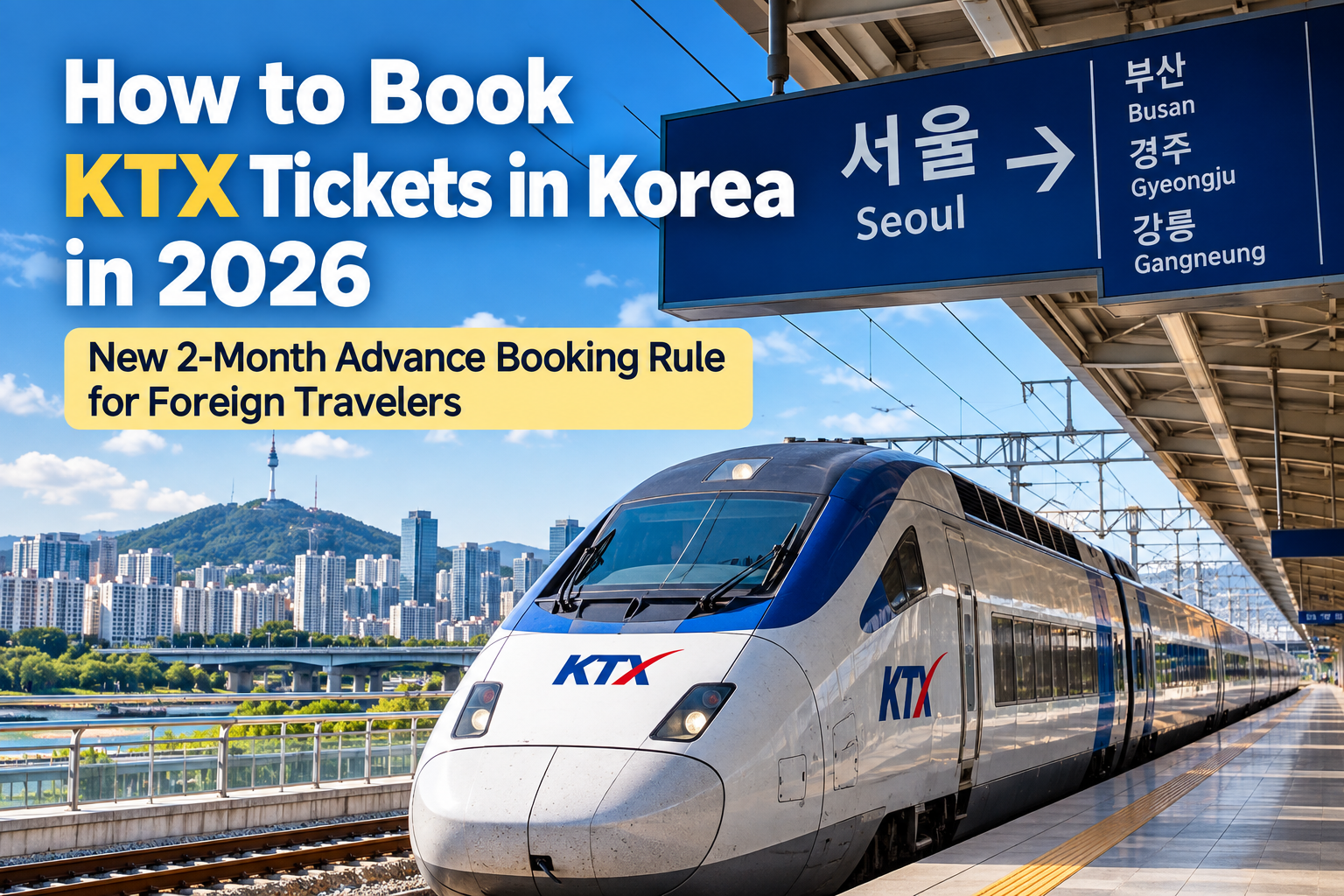
  • How to Book KTX Tickets in Korea in 2026: New 2-Month Advance Booking Rule for Foreign Travelers

    How to Book KTX Tickets in Korea in 2026: New 2-Month Advance Booking Rule for Foreign Travelers

    If you are planning a trip to South Korea in late 2026, booking your KTX train tickets is about to become easier.

    Starting October 1, 2026, travelers will be able to book KTX and other eligible train tickets up to two months before departure. Previously, most regular train tickets could only be booked about one month in advance.

    For international travelers planning popular routes such as Seoul to Busan, Seoul to Gyeongju, or Seoul to Gangneung, the change means you can secure your train tickets much earlier — especially useful when arranging hotels, flights, and a multi-city Korea itinerary.

    Here is what foreign travelers need to know about booking KTX tickets in Korea in 2026.

    What Is Changing for KTX Booking in October 2026?

    The biggest change is simple:

    From October 1, 2026, regular train tickets can be booked up to two months before departure.

    The previous advance booking window was generally one month.

    This applies to KTX and other eligible Korail train services, making it possible to organize long-distance travel much earlier.

    For example, if you are visiting Korea in November or December, you will no longer have to wait until roughly one month before your journey to start checking many regular train tickets.

    This is particularly helpful for international visitors who often book their flights and hotels several months ahead.

    Why the New 2-Month Booking Window Matters for Foreign Travelers

    KTX is one of the easiest ways to travel between major Korean cities.

    A traveler visiting Seoul and Busan, for example, can travel between the two cities by high-speed train rather than taking another domestic flight.

    The same rail network can also be useful for destinations such as Gyeongju, Daegu, Daejeon, Gangneung, Jeonju, and other parts of Korea.

    Until now, the shorter booking window sometimes created an awkward gap.

    You might have booked your international flight and hotels months in advance but still had to wait before buying your KTX ticket.

    The new system makes it easier to organize the transportation part of your itinerary at the same time.

    How to Book KTX Tickets in Korea

    For most foreign travelers, the safest starting point is Korail’s official booking service.

    Korail provides an English-language booking interface, along with other language options.

    The basic booking process is straightforward:

    1. Select your departure station.
    2. Select your destination.
    3. Choose your travel date.
    4. Search for available trains.
    5. Select your preferred departure time and seat.
    6. Enter the required passenger information.
    7. Complete payment.
    8. Keep your ticket or booking information available for your journey.

    When searching for trains, always check the station name carefully.

    Seoul has several major railway stations, and different trains may depart from different locations.

    Seoul to Busan: The Most Popular KTX Route for Tourists

    The Seoul–Busan route is one of the most useful KTX journeys for international travelers.

    It connects South Korea’s capital with its largest coastal city and makes a Seoul-and-Busan itinerary relatively easy to organize.

    Direct KTX services typically make the journey in roughly 2.5 to 3 hours, depending on the train.

    That means you can have breakfast in Seoul and arrive in Busan around lunchtime without going through an airport.

    Because this is such a popular route, booking earlier can be useful when your travel dates are fixed.

    What About Seoul to Gyeongju?

    Travelers visiting Gyeongju should pay particular attention to the station name.

    High-speed KTX trains serving the area use Gyeongju Station, which is outside the historic center.

    After arriving, you will still need local transportation to reach central Gyeongju and major attractions.

    Even with that extra transfer, KTX is often one of the most convenient ways to reach Gyeongju from Seoul.

    If Gyeongju is one of the main stops on your Korea itinerary, booking your train and accommodation together can make the trip much easier to organize.

    KTX to Gangneung and Korea’s East Coast

    KTX is also useful if you want to travel from Seoul toward Gangneung and the east coast.

    Gangneung is popular for beaches, cafes, seafood, and access to destinations around Gangwon Province.

    For travelers who do not want to rent a car, the train can be one of the simplest ways to leave Seoul and reach the east coast.

    Weekend services can attract significant demand, so travelers with a fixed itinerary should avoid assuming that their preferred train will always have seats available at the last minute.

    Should You Book KTX Tickets as Soon as They Become Available?

    Not necessarily.

    If your schedule is flexible and you are traveling on an ordinary weekday, you may have several train options.

    However, booking earlier makes more sense when:

    • you are traveling on a Friday evening or weekend,
    • your itinerary depends on a specific departure time,
    • you are traveling with several people,
    • you are visiting during a major Korean holiday,
    • or you are traveling during a particularly busy tourism period.

    For a carefully planned multi-city itinerary, there is little advantage in waiting unnecessarily once your dates are confirmed.

    Be Careful During Korean Public Holidays

    The new two-month booking window does not mean every train ticket will always follow exactly the same booking process.

    Major Korean holidays, especially Seollal (Lunar New Year) and Chuseok, can have special reservation periods and procedures.

    Demand during these periods is extremely high, and Korail may announce a separate holiday booking schedule.

    If your trip overlaps with a major Korean holiday, check the latest Korail announcement rather than relying only on the normal advance booking rule.

    This is one of the most important differences between ordinary KTX travel and holiday-period travel.

    Can Foreign Travelers Use the KTX Booking System?

    Yes.

    Korail provides foreign-language services, including English, and the Korean government has announced further improvements aimed at making rail booking more convenient for international visitors.

    These plans include expanded multilingual services and global payment options.

    Still, payment compatibility can vary depending on the card, issuing country, and booking platform.

    If an overseas card does not work, do not immediately assume that the train is sold out. Check the payment method and make sure you are using an official Korail booking channel.

    KTX or SRT: What Is the Difference?

    Foreign visitors may also encounter SRT when searching for high-speed trains.

    Both KTX and SRT operate high-speed rail services, but they traditionally used different booking systems and key departure stations.

    KTX commonly serves Seoul Station and Yongsan Station, while many SRT services use Suseo Station in southern Seoul.

    Korea has also been moving toward greater integration of KTX and SRT booking services, which can make comparing train options easier.

    For tourists, the most important consideration is usually not the brand of train but:

    Which station is easiest to reach, what time the train departs, where it stops, and whether seats are available.

    Do You Need a Korail Pass?

    Not every traveler needs a rail pass.

    If you are only taking one or two long-distance train journeys, buying individual tickets may be simpler.

    A rail pass becomes more relevant when you plan several eligible train journeys within a relatively short period.

    Before purchasing any pass, compare the current pass price with the actual cost of the individual trains you intend to take.

    Do not buy a rail pass simply because you plan to ride the KTX once.

    Tips for Booking KTX as a Foreign Visitor

    A few simple habits can prevent common problems.

    First, use official railway booking channels whenever possible.

    Second, double-check both your departure and arrival stations before paying.

    Third, keep a copy of your booking information available on your phone.

    Fourth, arrive at the station with enough time to find the correct platform.

    Korean railway stations are generally well organized, but major stations such as Seoul Station and Busan Station can be busy.

    Finally, remember that a confirmed seat is especially valuable when your hotel check-in, tour, or onward transportation depends on arriving at a particular time.

    Frequently Asked Questions

    How early can I book KTX tickets in Korea in 2026?

    Starting October 1, 2026, the normal advance reservation period for KTX and other eligible rail tickets expands from one month to two months before departure.

    Can foreigners book KTX tickets online?

    Yes. Korail provides foreign-language booking services, including English.

    Should I book Seoul to Busan KTX tickets in advance?

    It is a good idea if you need a particular departure time, especially on weekends, busy travel dates, or when traveling with a group.

    How long does the KTX take from Seoul to Busan?

    Many direct KTX services take roughly 2.5 to 3 hours, although journey times vary by service and stopping pattern.

    Can KTX tickets sell out?

    Yes. Popular trains and departure times can sell out, particularly during weekends and major travel periods.

    Is the two-month rule the same during Chuseok and Seollal?

    Do not assume so. Major Korean holidays can use special reservation schedules announced separately by Korail.

    Is KTX better than flying from Seoul to Busan?

    For many travelers, KTX is more convenient because it connects city centers and avoids the additional airport travel and procedures required for a domestic flight. The better choice still depends on your itinerary and fare.

    Final Thoughts

    The new two-month KTX booking window is a small change that can make planning a Korea trip much easier.

    From October 1, 2026, international travelers will be able to organize many train journeys earlier instead of waiting until about one month before departure.

    That is especially useful if you are building a multi-city itinerary connecting Seoul with Busan, Gyeongju, Gangneung, or other destinations around Korea.

    Once your itinerary is fixed, check your train options early, confirm the correct stations, and pay extra attention to special booking rules if your trip overlaps with a major Korean holiday.

    For travelers who want to explore beyond Seoul, Korea’s high-speed rail network remains one of the easiest ways to see more of the country.


  • Hiking in Seoul for Tourists in 2026: Bukhansan, Inwangsan, Achasan or Gwanaksan?

    Hiking in Seoul for Tourists in 2026: Bukhansan, Inwangsan, Achasan or Gwanaksan?

    If you want to see a different side of Seoul, leave the shopping streets and cafés behind for a few hours and head for the mountains.

    Seoul is unusual among major cities because hiking trails are surprisingly close to subway stations and busy neighborhoods. You can spend the morning walking along a rocky ridge and still be back in central Seoul for dinner.

    Hiking is also becoming increasingly popular among international visitors. According to Seoul Metropolitan Government data, foreign visitor numbers at several of the city’s mountains increased in 2025, with particularly strong growth at Achasan and Gwanaksan.

    But which mountain should you choose?

    For most travelers, the decision comes down to four excellent options: Bukhansan, Inwangsan, Achasan, and Gwanaksan.

    This guide compares them by difficulty, scenery, time commitment, accessibility, and the type of traveler each mountain suits best.

    Quick Comparison: Which Seoul Mountain Is Best for You?

    MountainBest ForDifficultyTime to AllowMain Attraction
    BukhansanTravelers who want a real mountain hikeModerate to challengingHalf day or longerDramatic peaks and panoramic views
    InwangsanFirst-time visitors with limited timeEasy to moderateAbout 2–3 hoursSeoul skyline and City Wall
    AchasanBeginners and casual hikersEasyAbout 2–3 hoursHan River and city views
    GwanaksanActive travelers wanting a tougher hikeModerate to challengingHalf dayRocky terrain and summit views

    The important thing to remember is that each mountain has multiple routes. Your actual hiking time and difficulty can therefore vary considerably depending on the trail you choose, weather conditions, and your fitness level.

    1. Bukhansan: Best for the Full Seoul Hiking Experience

    If hiking is one of the main activities you want to experience in Seoul, Bukhansan is the strongest choice.

    Bukhansan National Park is famous for its granite peaks, forests, valleys, temples, and expansive views over Seoul. It also attracts more foreign hikers than the other major mountains analyzed by the Seoul Metropolitan Government.

    The best-known destination is Baegundae, the highest peak of Bukhansan.

    Getting there requires considerably more effort than walking up Inwangsan or Achasan. Parts of the route are steep and rocky, so proper footwear is strongly recommended.

    The reward is a genuine mountain experience without having to travel far outside Seoul.

    Getting there

    One convenient starting point is Bukhansan Ui Station on the Ui-Sinseol Line.

    The Seoul Hiking Tourism Center – Bukhansan Branch is located about five minutes from the station and can help international travelers choose a trail. The center provides multilingual hiking information as well as rental equipment including hiking boots, clothing, trekking poles and backpacks.

    This is particularly useful if you did not plan to bring hiking equipment to Korea.

    Choose Bukhansan if:

    • You enjoy hiking rather than simply walking.
    • You want dramatic mountain scenery.
    • You can dedicate at least half a day.
    • Reaching a major summit is part of the experience you want.

    If you only have two hours available, however, Bukhansan probably should not be your first choice.

    2. Inwangsan: Best for a Short Hike with Classic Seoul Views

    Inwangsan is one of the easiest mountains to add to a busy Seoul itinerary.

    It rises directly behind central Seoul, and part of the trail follows the historic Seoul City Wall.

    From the ridge, you can look toward Gyeongbokgung Palace, central Seoul and the surrounding mountains.

    The official Seoul tourism guide describes the main ridge hike as relatively easy and estimates roughly two hours for the route. Visit Seoul

    That makes Inwangsan particularly attractive for travelers who want a memorable view without committing half a day to hiking.

    Why travelers like Inwangsan

    Its location is the biggest advantage.

    You can combine the hike with places such as Gyeongbokgung, Seochon or Buam-dong, making it possible to mix history, neighborhoods and hiking in the same day.

    You also get a very different perspective on Seoul.

    Instead of looking at the mountains from the city, you are standing above the old city and looking back toward its palaces, neighborhoods and skyline.

    Choose Inwangsan if:

    • This is your first trip to Seoul.
    • You have limited time.
    • You want great photographs of the city.
    • You prefer a shorter hike.
    • You want to combine hiking with sightseeing in central Seoul.

    For many first-time visitors, Inwangsan offers the best balance between effort and reward.

    3. Achasan: Best for Beginners and Han River Views

    If you are not an experienced hiker, consider Achasan.

    The mountain is known for relatively accessible trails and open views over the Han River and eastern Seoul.

    According to Seoul’s official tourism guide, Achasan has a number of easy hiking trails, and its viewpoints offer panoramas stretching across Jamsil, Namsan and other parts of the city.

    It is therefore a good option for travelers who want a relaxed outdoor activity rather than a demanding mountain climb.

    Achasan is also becoming more popular with international visitors. Seoul’s tourism analysis recorded an 11.8% year-over-year increase in foreign visitors, the strongest growth among the four mountain areas included in that particular analysis.

    Getting there

    You can approach the mountain from Achasan Station or Gwangnaru Station on Subway Line 5.

    Because the mountain is on the eastern side of Seoul, it can work particularly well if your itinerary also includes Jamsil or other attractions in eastern Seoul.

    Choose Achasan if:

    • You are a beginner.
    • You want an easier hike.
    • You enjoy river and city views.
    • You do not want hiking to consume most of your day.
    • You are staying in eastern Seoul.

    Achasan is also a good choice for travelers who simply want to experience Korea’s hiking culture without tackling a difficult summit.

    4. Gwanaksan: Best for Travelers Who Want More of a Challenge

    On the southern side of Seoul, Gwanaksan offers a very different experience.

    Expect forests, valleys, rocky sections and excellent views from higher elevations.

    One major advantage in 2026 is accessibility. The Seoul Hiking Tourism Center – Gwanaksan Branch is located inside Gwanaksan Station on the Sillim Line, and hikers can head toward the mountain directly from the station.

    There isn’t just one Gwanaksan hike.

    Beginners can choose gentler forest and stream routes, while more experienced hikers can head toward Yeonjudae or tackle rocky ridge sections such as the Jaunam Ridge Course. Visit Seoul

    That makes Gwanaksan particularly useful for groups in which people have different hiking abilities.

    Choose Gwanaksan if:

    • You want something more challenging than an urban walk.
    • You like rocky mountain scenery.
    • You want a half-day outdoor activity.
    • You are comfortable with steeper sections.
    • You are staying in southern Seoul.

    International interest is increasing here as well. Foreign visitor numbers at Gwanaksan increased 10.0% year over year in the Seoul tourism analysis.

    Bukhansan vs Inwangsan: Which Should First-Time Visitors Choose?

    This is probably the most important comparison for travelers.

    Choose Bukhansan if the hike itself is one of the highlights of your trip.

    Choose Inwangsan if hiking is just one part of a day exploring Seoul.

    Bukhansan provides the more impressive wilderness experience, but Inwangsan is much easier to fit between other attractions.

    For a five-day Seoul trip, for example, Bukhansan can justify most of a morning or afternoon.

    For a two-day Seoul trip, Inwangsan is usually easier to incorporate without sacrificing other major sights.

    Achasan vs Gwanaksan: Easy or Challenging?

    These two mountains suit almost opposite types of hikers.

    Choose Achasan if you want an accessible walk with rewarding city and Han River views.

    Choose Gwanaksan if you want a more substantial hike with the option of steeper trails and rocky terrain.

    Families, beginners and travelers without hiking gear may feel more comfortable starting with Achasan.

    More active travelers may find Gwanaksan more rewarding.

    Can You Rent Hiking Gear in Seoul?

    Yes.

    This is one of the reasons hiking has become much easier for international travelers.

    The Seoul Hiking Tourism Centers provide multilingual information, and the Bukhansan and Gwanaksan branches offer equipment rental services. Depending on availability, equipment can include hiking shoes, clothing, trekking poles and backpacks. Visit Seoul

    This means you do not necessarily need to pack hiking boots for your entire Korea trip just because you want to spend one day in the mountains.

    Check availability and operating information before visiting, especially if you need specific sizes or equipment.

    When Is the Best Time to Hike in Seoul?

    Spring and autumn are generally the most comfortable seasons.

    Late September through October can be particularly pleasant as temperatures become cooler, although popular trails can become busy during the fall foliage season.

    Summer hiking requires more attention to heat, humidity and hydration.

    Winter can provide exceptionally clear views, but snow and ice can make mountain trails considerably more difficult. Proper winter equipment may be necessary.

    Always check the weather before leaving your hotel, and avoid exposed ridges during severe weather.

    What Should You Bring?

    Even for an easy Seoul hike, bring:

    • Comfortable shoes with good grip
    • Water
    • A charged phone
    • A light layer or jacket
    • Sun protection
    • A small snack

    For Bukhansan or the more difficult Gwanaksan routes, proper hiking footwear is strongly preferable.

    Remember that conditions near a summit can feel very different from conditions at a subway station.

    Which Seoul Mountain Should You Choose?

    If you want the simplest answer:

    Choose Bukhansan for the best full mountain experience.

    Choose Inwangsan for the best combination of hiking, views and central Seoul sightseeing.

    Choose Achasan for an easy and beginner-friendly hike.

    Choose Gwanaksan if you want a more challenging half-day adventure.

    You do not have to leave Seoul to experience Korea’s mountain culture. That is exactly what makes hiking here special: a subway ride can take you from one of the world’s busiest cities to forests, rocky ridges and panoramic mountain views.

    For travelers who have already seen Seoul’s palaces, markets and shopping districts, a morning on one of these mountains can reveal an entirely different side of the city.

    FAQ

    What is the easiest mountain to hike in Seoul?

    Among these four choices, Achasan is one of the easiest options for beginners, with accessible trails and excellent views. Inwangsan is another good choice for travelers looking for a relatively short hike.

    What is the best mountain in Seoul for first-time visitors?

    It depends on your schedule. Inwangsan is convenient for a short first visit because it is close to central Seoul attractions. If you have half a day and want a more complete hiking experience, choose Bukhansan.

    Can beginners hike Bukhansan?

    Yes, but choose your route carefully. Bukhansan has trails of different difficulty levels. Reaching Baegundae is substantially more demanding than taking one of the gentler walking routes. The Bukhansan Hiking Tourism Center can provide route information for international visitors.

    Do I need hiking boots in Seoul?

    Not necessarily for an easy walk such as Achasan or a shorter urban hiking route, but shoes with good grip are important. For steep or rocky routes on Bukhansan and Gwanaksan, hiking footwear is strongly recommended.

    Can I rent hiking equipment in Seoul?

    Yes. Seoul’s Hiking Tourism Centers at Bukhansan and Gwanaksan provide hiking equipment rental services as well as multilingual trail information.

    Is hiking in Seoul free?

    Most ordinary mountain trails discussed in this guide can be accessed without an admission fee. However, certain controlled trails can have reservation requirements. For example, Bukhansan’s Uiryeong Trail requires advance reservation.


  • Best Luxury Hotels and Resorts in Jeju Island in 2026: Where to Stay for a Special Trip

    Best Luxury Hotels and Resorts in Jeju Island in 2026: Where to Stay for a Special Trip

    Jeju Island is one of the best places in South Korea to plan a trip where the hotel is part of the experience—not simply somewhere to sleep.

    The best luxury hotels in Jeju Island range from beachfront resorts in Jungmun and Seogwipo to upscale city hotels near Jeju Airport. The right choice depends on whether you prioritize ocean views, resort facilities, family-friendly amenities, easy airport access, or a quieter escape.

    Oceanfront resorts, infinity pools, spas, destination restaurants and dramatic coastal views make Jeju particularly attractive for honeymoons, anniversaries, family vacations and relaxing weekend escapes.

    But choosing a luxury hotel in Jeju can be surprisingly difficult.

    The island is large, and staying near Jeju City feels very different from choosing Jungmun or Seogwipo. Some resorts are ideal for couples who want a quiet oceanfront retreat, while others work better for families who want pools, entertainment and activities without leaving the property.

    This guide compares some of the best luxury hotels and resorts in Jeju Island in 2026, with an emphasis on which type of traveler each hotel suits best.

    Best Hotels in Jeju Island: Luxury Hotel and Resort Quick Picks

    HotelBest ForArea
    JW Marriott Jeju Resort & SpaLuxury escape and couplesSeogwipo
    Parnas Hotel JejuOceanfront resort experienceJungmun
    The Shilla JejuClassic Jeju luxuryJungmun
    Lotte Hotel JejuFamilies and resort facilitiesJungmun
    Grand Hyatt JejuLuxury near the airportJeju City
    Jeju Shinhwa World Marriott ResortFamilies and entertainmentAndeok
    PODO HotelQuiet design-focused escapeSouthwest Jeju

    For most first-time visitors, the best hotels in Jeju Island are in Jungmun or Seogwipo for a resort-style stay, while Jeju City is more convenient for airport access and shorter trips.

    If this is your first trip to the island, remember that location matters almost as much as the hotel itself.

    A beautiful resort can still be inconvenient if most of the places you want to visit are on the opposite side of Jeju.

    1. JW Marriott Jeju Resort & Spa — Best for a Special Luxury Escape

    Area: Seogwipo

    JW Marriott Jeju Resort & Spa is one of the strongest choices for travelers who want the hotel itself to be a major part of their Jeju trip.

    Set along the Seogwipo coastline, the resort combines ocean views, distinctive architecture, restaurants, wellness facilities and indoor and outdoor pools.

    Its location beside the coast also gives the property a very different atmosphere from a large city hotel.

    Why stay here?

    Choose JW Marriott Jeju if you want:

    • A high-end resort experience
    • Ocean views
    • Spa and wellness time
    • A romantic trip or anniversary stay
    • A hotel where you can spend significant time without sightseeing all day
    • Easy access to Seogwipo rather than Jeju City

    The property is particularly attractive for travelers who want a slower Jeju vacation built around dining, relaxation and coastal scenery.

    What to consider

    JW Marriott Jeju is approximately 40 km from Jeju International Airport, according to the hotel, so this is not the most convenient option if you have an early flight or only one night on the island. Marriott

    Best for: Couples, anniversaries, luxury getaways and travelers prioritizing wellness.

    2. Parnas Hotel Jeju — Best for a Jungmun Oceanfront Resort Stay

    Area: Jungmun, Seogwipo

    Jungmun is one of Jeju’s most established resort areas, and Parnas Hotel Jeju is an excellent choice if you want a polished modern hotel in this part of the island.

    The property offers several room categories designed for couples and families, making it easier to choose according to group size. Its Jungmun location also puts travelers in one of Jeju’s most convenient areas for a traditional resort vacation. 파르나스호텔 제주

    Why stay here?

    Parnas Hotel Jeju works especially well if you want:

    • A modern luxury resort
    • An ocean-oriented vacation
    • Easy access to the Jungmun area
    • A resort suitable for both couples and families
    • Pool and relaxation time between sightseeing days

    Jungmun is also useful if your itinerary focuses on southern and southwestern Jeju.

    What to consider

    If most of your itinerary is in Jeju City or northeastern Jeju, Jungmun may involve considerable driving.

    Best for: Couples and families wanting a modern resort experience in Jungmun.

    3. The Shilla Jeju — Best for Classic Jeju Luxury

    Area: Jungmun

    The Shilla Jeju is one of the island’s best-known luxury resort names.

    Rather than choosing it simply because of the brand, consider it if you want the feeling of a classic full-service resort where much of the trip can happen within or around the hotel.

    Its Jungmun location is particularly convenient for travelers building their itinerary around southern Jeju.

    Why stay here?

    The Shilla Jeju can be a good fit for:

    • Couples
    • Families
    • Honeymoon or anniversary trips
    • Travelers who value full-service hospitality
    • Guests who want a traditional luxury resort atmosphere

    What to consider

    Travelers planning to spend every day driving around the entire island may not get as much value from paying for a resort-focused stay.

    Luxury resorts make the most sense when you actually plan time to enjoy them.

    Best for: Travelers seeking an established, full-service luxury resort.

    4. Lotte Hotel Jeju — Best for Families

    Area: Jungmun

    For families, Lotte Hotel Jeju is worth comparing with the other large Jungmun resorts.

    The main advantage of choosing a property like this is convenience. Families can combine sightseeing with substantial hotel time rather than planning a packed itinerary every day.

    Why stay here?

    Consider Lotte Hotel Jeju if your priorities include:

    • Family-friendly facilities
    • Resort pools
    • A convenient Jungmun location
    • Restaurants and services within the property
    • A relaxed schedule with children

    This style of hotel can be particularly useful when parents want flexibility around children’s meal times, naps or changing weather.

    What to consider

    Couples looking for a very quiet boutique atmosphere may prefer a smaller property or a wellness-focused resort.

    Best for: Families who want a full resort vacation.

    5. Grand Hyatt Jeju — Best Luxury Hotel Near Jeju Airport

    Area: Jeju City

    Grand Hyatt Jeju offers something quite different from the southern resorts.

    Located in Jeju Dream Tower, it is a large urban luxury hotel just about 10 minutes from Jeju International Airport. The property has 1,600 rooms and suites, 14 restaurants and bars, two spas and a large outdoor pool deck. The hotel also operates an airport shuttle. 하얏트

    That makes it particularly useful for travelers who want luxury without traveling immediately to the southern side of the island.

    Why stay here?

    Grand Hyatt Jeju is a strong choice if you want:

    • Convenient airport access
    • A short Jeju trip
    • A luxury city hotel
    • Many dining choices
    • Shopping and nightlife nearby
    • A comfortable first or final night before a flight

    It can also work well for travelers without a rental car who prefer being based in Jeju City.

    What to consider

    This is an urban hotel rather than a secluded beach resort.

    If your idea of Jeju luxury is waking up beside a quiet southern coastline, Jungmun or Seogwipo will probably suit you better.

    Best for: Short trips, airport convenience and travelers who prefer city luxury.

    6. Jeju Shinhwa World Marriott Resort — Best for Entertainment and Family Trips

    Area: Andeok, southwest Jeju

    Jeju Shinhwa World is more than a single hotel.

    The large resort complex includes several accommodation options alongside dining, shopping and attractions. The complex has more than 2,000 guest rooms across its hotels and resorts and includes a theme park and water park. 신화월드

    That makes the Marriott Resort particularly attractive for families who want plenty to do without driving around Jeju every day.

    Why stay here?

    Consider it if you want:

    • A large integrated resort
    • Family activities
    • Theme park access nearby
    • Water park entertainment
    • Restaurants and shopping in the same complex
    • A southwest Jeju base

    It can also be practical for multigenerational family trips because different travelers can spend their time differently within the same resort complex.

    What to consider

    Travelers seeking a small, intimate or distinctly secluded Jeju experience may find a large integrated resort less appealing.

    Best for: Families, multigenerational trips and travelers prioritizing entertainment.

    7. PODO Hotel — Best for a Quiet Design-Focused Stay

    Area: Southwest Jeju

    Not every luxury trip needs a huge resort.

    For travelers who prefer quiet surroundings, architecture and a slower pace, PODO Hotel offers a very different type of Jeju stay from Grand Hyatt or the large Jungmun properties.

    This is the kind of option to consider when privacy and atmosphere matter more than having a long list of resort attractions.

    Why stay here?

    PODO Hotel may suit travelers looking for:

    • A quieter luxury experience
    • Distinctive architecture
    • A slower itinerary
    • A couples’ retreat
    • A stay away from large resort crowds

    What to consider

    If you want extensive children’s facilities, numerous restaurants or resort entertainment, one of Jeju’s larger properties will probably be more practical.

    Best for: Couples and travelers seeking tranquility and design.

    Jungmun vs Seogwipo vs Jeju City: Which Area Is Best for a Luxury Stay?

    Choosing the right area can make more difference than choosing between two similar five-star hotels.

    Choose Jungmun if…

    You want a classic Jeju resort vacation.

    Jungmun works particularly well for travelers who want a combination of upscale hotels, southern Jeju sightseeing and substantial time relaxing at the resort.

    Parnas Hotel Jeju, The Shilla Jeju and Lotte Hotel Jeju are all located in this general resort area.

    Choose Seogwipo if…

    You want dramatic southern coastal scenery and easier access to Seogwipo attractions.

    This can be a good choice for couples and travelers planning a slower, nature-oriented trip.

    JW Marriott Jeju is particularly strong for this type of stay.

    Choose Jeju City if…

    Airport convenience matters most.

    Grand Hyatt Jeju is especially useful for a short trip, a late arrival or an early departure.

    Jeju City also offers easier access to restaurants and urban conveniences.

    Choose southwest Jeju if…

    You want either a self-contained resort or a quieter escape.

    Jeju Shinhwa World works for travelers seeking entertainment and family facilities, while smaller properties can provide a more peaceful experience.

    Best Jeju Luxury Hotel for Couples

    For a romantic trip, start by comparing:

    JW Marriott Jeju Resort & Spa
    Parnas Hotel Jeju
    The Shilla Jeju
    PODO Hotel

    The right choice depends on what “romantic” means to you.

    If it means spa treatments, ocean views and spending most of the day at the resort, JW Marriott is particularly compelling.

    If it means quiet architecture and privacy, a smaller design-focused property may be more appealing.

    Best Jeju Luxury Hotel for Families

    Families should compare:

    Lotte Hotel Jeju
    Parnas Hotel Jeju
    Jeju Shinhwa World Marriott Resort
    JW Marriott Jeju Resort & Spa

    For families, room configuration matters as much as hotel rating.

    For example, JW Marriott offers dedicated family accommodation options, while Parnas lists family room categories designed for multiple guests.

    Always check the exact occupancy rules for your room before booking, particularly when traveling with older children.

    Best Luxury Hotel for a Short Jeju Trip

    For a one- or two-night stay, Grand Hyatt Jeju can be particularly practical because of its proximity to the airport.

    For a longer trip, staying farther south becomes easier to justify because you have more time to enjoy both the resort and nearby attractions.

    How Much Should You Spend on a Luxury Hotel in Jeju?

    Luxury hotel prices in Jeju can change significantly depending on:

    • Season
    • Weekend vs weekday
    • Room category
    • Ocean view
    • Breakfast inclusion
    • School holidays
    • Korean public holidays
    • Special packages
    • Cancellation conditions

    For that reason, avoid choosing a hotel based on a single advertised nightly price.

    Instead, compare the total cost for your exact travel dates.

    A room that initially looks cheaper may become more expensive after adding breakfast or selecting a flexible cancellation rate.

    Also compare what is actually included in a package.

    For example, some resort offers may bundle meals, activities or other benefits that would otherwise cost extra.

    When Should You Book a Jeju Luxury Hotel?

    For popular travel periods, booking earlier gives you a better chance of finding the room category you actually want.

    This matters especially for:

    • Spring travel
    • Summer vacations
    • Korean public holidays
    • October autumn trips
    • Christmas and New Year
    • Family rooms
    • Ocean-view rooms

    If your plans may change, compare cancellation conditions carefully rather than choosing purely by the lowest rate.

    Should You Stay at One Hotel for the Entire Jeju Trip?

    Not necessarily.

    Because Jeju is larger than many first-time visitors expect, a split stay can sometimes make sense.

    For example:

    2 nights in Jeju City + 3 nights in Seogwipo or Jungmun

    can combine airport convenience with a proper resort experience.

    However, changing hotels also takes time.

    For a three-night trip, staying in one well-chosen location is often simpler.

    For five nights or longer, splitting the stay becomes more attractive if your itinerary covers multiple parts of the island.

    What to Check Before Booking a Jeju Resort

    Before paying, check:

    • Exact room type
    • Maximum occupancy
    • Bed configuration
    • Breakfast policy
    • Children’s breakfast charges
    • Pool access
    • Spa charges
    • Parking
    • Airport transportation
    • Cancellation deadline
    • Distance from your planned attractions

    Do not assume every facility shown on a hotel’s website is automatically included in every room rate.

    Frequently Asked Questions

    What is the best area to stay in Jeju for luxury hotels?

    Jungmun is one of the easiest choices for a traditional resort vacation because several major luxury hotels are concentrated there. Seogwipo is excellent for southern coastal scenery, while Jeju City is more convenient for the airport.

    Which Jeju luxury hotel is best for couples?

    JW Marriott Jeju Resort & Spa, Parnas Hotel Jeju, The Shilla Jeju and PODO Hotel are all worth comparing. The best choice depends on whether you prioritize ocean views, spa facilities, resort amenities or privacy.

    Which luxury hotel in Jeju is best for families?

    Lotte Hotel Jeju, Parnas Hotel Jeju and Jeju Shinhwa World Marriott Resort are strong family-oriented options. JW Marriott Jeju also offers family accommodation and resort activities. Marriott

    Is it better to stay in Jeju City or Seogwipo?

    Stay in Jeju City if airport access, restaurants and urban convenience are priorities. Choose Seogwipo if southern scenery, coastal attractions and a more resort-oriented vacation matter more.

    Do I need a rental car if I stay at a luxury resort in Jeju?

    Not necessarily, especially if you plan to spend significant time at the resort. But a rental car can make sightseeing much easier because attractions are spread across the island. Travelers without a car should pay particular attention to hotel location and transportation options.

    Final Thoughts

    The best luxury hotel in Jeju is not necessarily the most expensive one.

    It is the hotel that fits how you actually want to experience the island.

    Choose JW Marriott Jeju for a destination-style luxury escape, Parnas Hotel Jeju for a modern Jungmun resort stay, The Shilla Jeju for classic resort luxury, Lotte Hotel Jeju for a family-friendly Jungmun vacation, Grand Hyatt Jeju for airport convenience and city luxury, Jeju Shinhwa World Marriott Resort for entertainment, or PODO Hotel for a quieter escape.

    Most importantly, choose the area first and the hotel second.

    Jeju is large enough that the right location can save hours of unnecessary driving—and leave you with more time to enjoy the resort you came all the way to Jeju to experience.

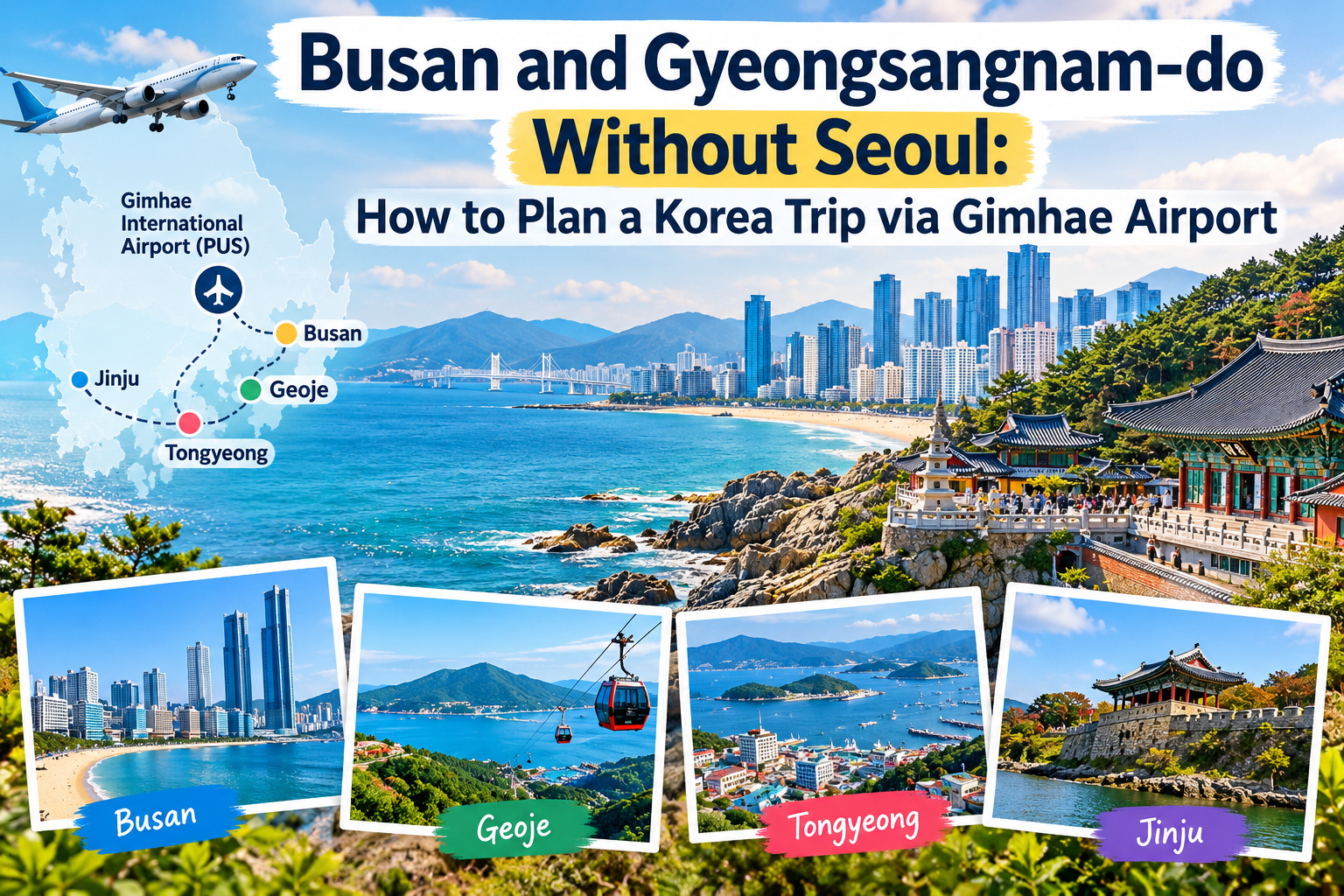
  • Busan and Gyeongsangnam-do Without Seoul: How to Plan a Korea Trip via Gimhae Airport

    Busan and Gyeongsangnam-do Without Seoul: How to Plan a Korea Trip via Gimhae Airport

    Most first-time visitors to South Korea automatically think of flying into Seoul. But if your trip is focused on Busan and southern Korea, starting at Gimhae International Airport can save you a surprising amount of time.

    Gimhae Airport gives international travelers direct access to Busan and Gyeongsangnam-do, making it possible to build an entire Korea itinerary without traveling through Seoul first.

    You could spend a few days exploring Busan, continue to coastal cities such as Geoje and Tongyeong, visit historic Jinju, or travel farther into the southern part of Korea before returning to Gimhae Airport.

    Here is how to plan a Busan and Gyeongsangnam-do trip via Gimhae International Airport in 2026.

    Why Start Your Korea Trip at Gimhae Airport?

    Gimhae International Airport (PUS) is the main international gateway for Busan and southeastern Korea.

    For travelers whose main destinations are Busan and Gyeongsangnam-do, arriving here can be much more convenient than flying into Seoul and then traveling several hours south.

    This route makes particular sense if you want to focus on:

    • Busan
    • Geoje
    • Tongyeong
    • Jinju
    • other destinations in Gyeongsangnam-do

    It can also work well for travelers returning home through Gimhae Airport, allowing you to create a southern Korea itinerary without backtracking to Seoul.

    First Stop: Spend 2–4 Days in Busan

    For most international travelers, Busan is the easiest place to begin.

    After arriving at Gimhae Airport, head into the city and use Busan as your first base.

    Popular areas to stay include:

    Haeundae

    Choose Haeundae if beaches, ocean views, cafes and coastal attractions are your priorities.

    It works especially well for travelers who want to visit Haeundae Beach, Dongbaekseom, Cheongsapo and the eastern coastline.

    Seomyeon

    Seomyeon is a convenient choice if transportation and nightlife matter more than staying next to the beach.

    Its central location makes it relatively easy to travel to different parts of Busan.

    Busan Station

    Staying near Busan Station can be useful if you plan to continue your trip by train.

    It also gives you convenient access to areas such as Nampo, Jagalchi Market and the older downtown districts.

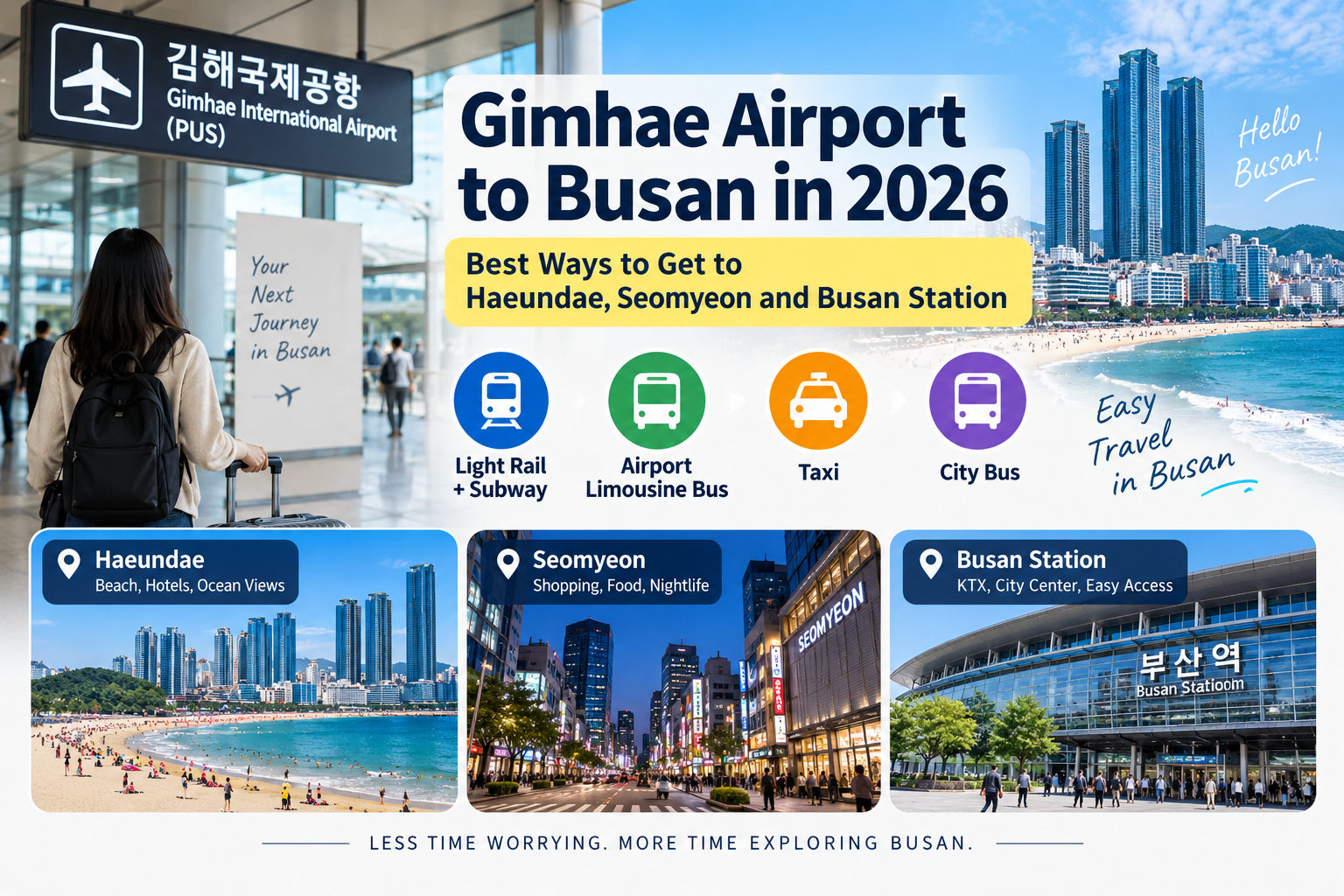
    If you need detailed transportation instructions after landing, see our Gimhae Airport to Busan guide for ways to reach Haeundae, Seomyeon and Busan Station.

    How Many Days Do You Need in Busan?

    For a southern Korea itinerary, I would generally allow at least two full days in Busan, with three or four days being more comfortable.

    A simple first visit could look like this:

    Day 1: Haeundae and the eastern coastline
    Day 2: Nampo, Jagalchi and Gamcheon
    Day 3: Additional coastal attractions, temples, markets or neighborhoods

    Instead of trying to see every famous attraction, group places geographically. Busan is a large city, and crossing from one side to the other can take longer than first-time visitors expect.

    Where Should You Go After Busan?

    This is where starting at Gimhae Airport becomes especially interesting.

    Rather than returning north toward Seoul, you can continue into Gyeongsangnam-do, the province surrounding much of Busan.

    Several destinations work particularly well.

    Option 1: Geoje

    Geoje is a good choice for travelers interested in dramatic coastal scenery and islands.

    The area is known for its coastline, viewpoints and access to nearby islands.

    Compared with Busan, Geoje feels less urban and gives your trip a more relaxed coastal character.

    It can work well as a one- or two-night stop after Busan.

    Who should choose Geoje?

    Geoje is especially suitable if you prefer:

    • coastal scenery
    • island landscapes
    • slower travel
    • scenic drives
    • nature rather than big-city attractions

    Travelers who want a Busan trip with a quieter second half may find Geoje particularly appealing.

    Option 2: Tongyeong

    Tongyeong is another strong addition to a southern Korea itinerary.

    It is a compact coastal city surrounded by islands and is known for harbor views, seafood and scenic landscapes.

    For travelers who enjoy smaller cities, Tongyeong provides a very different atmosphere from Busan.

    A typical itinerary might be:

    Busan → Geoje → Tongyeong

    or simply:

    Busan → Tongyeong

    if you have limited time.

    Tongyeong is worth considering for at least one night rather than treating it only as a rushed day trip.

    Option 3: Jinju

    If you want to add history rather than another coastal destination, consider Jinju.

    The city’s best-known historic landmark is Jinjuseong Fortress, which played an important role during the Japanese invasions of Korea in the late 16th century.

    Jinju provides a useful contrast to Busan, Geoje and Tongyeong because the focus shifts from beaches and coastal scenery toward history and local culture.

    It can therefore fit nicely into a longer southern itinerary.

    Busan + Gyeongsangnam-do: Sample 5-Day Itinerary

    If you only have five days, keep the route simple.

    Day 1 — Arrive at Gimhae Airport

    Travel into Busan, check into your hotel and explore the neighborhood around your accommodation.

    Avoid planning too much for arrival day, especially after a long international flight.

    Day 2 — Explore Busan

    Choose one side of the city rather than trying to cross Busan repeatedly.

    For example, spend the day around Haeundae and the eastern coastline.

    Day 3 — Explore More of Busan

    Visit the Nampo and Jagalchi area or another part of the city you missed on Day 2.

    Day 4 — Gyeongsangnam-do

    Travel to either Geoje, Tongyeong or Jinju.

    With only five days, choose one rather than trying to visit all three.

    Stay overnight if possible.

    Day 5 — Return Toward Gimhae Airport

    Travel back toward Busan or Gimhae Airport depending on your flight time.

    If you have an early international departure, returning to Busan the night before may make the final day less stressful.

    A Better 7-Day Southern Korea Itinerary

    Seven days gives you much more flexibility.

    One possible route is:

    Day 1: Arrive at Gimhae Airport → Busan
    Day 2: Busan
    Day 3: Busan
    Day 4: Busan → Geoje
    Day 5: Geoje → Tongyeong
    Day 6: Tongyeong → Busan
    Day 7: Busan → Gimhae Airport

    Another option is:

    Gimhae Airport → Busan → Tongyeong → Jinju → Busan → Gimhae Airport

    The better route depends on whether you prefer coastal scenery or history and city exploration.

    Do You Need a Rental Car?

    Not necessarily.

    Busan itself has an extensive public transportation network, so renting a car solely for sightseeing in Busan is usually unnecessary.

    Intercity buses also connect Busan with many cities in Gyeongsangnam-do.

    However, a rental car can become more useful once you leave Busan, particularly if you want to visit smaller coastal attractions or move between places that are inconvenient by public transportation.

    Public transportation is better if:

    • you mainly visit cities
    • you do not want to drive in Korea
    • your itinerary is Busan plus one or two major destinations
    • you are comfortable using intercity buses

    A rental car may be better if:

    • you want to explore rural or coastal areas
    • you have several countryside stops
    • you are traveling with family or significant luggage
    • flexibility matters more than minimizing costs

    International visitors planning to drive should check Korea’s current license and International Driving Permit requirements before their trip.

    Train or Bus for Gyeongsangnam-do?

    One important planning mistake is assuming that trains are always the easiest way to travel around Korea.

    South Korea has an excellent rail system, but intercity buses can be more practical for some destinations in Gyeongsangnam-do.

    The best option depends on the exact city.

    For destinations such as Tongyeong and Geoje, buses are often particularly useful because rail access is limited compared with major railway cities.

    Always compare the complete journey rather than simply choosing the fastest-looking train.

    Should You Visit Seoul on the Same Trip?

    You certainly can, but you do not have to.

    If this is your first trip to Korea and you have ten days or more, combining Seoul and Busan may still make sense.

    But travelers with only five to seven days sometimes spend too much of their vacation moving between cities.

    If beaches, seafood, coastal scenery and southern Korea are your priorities, a trip focused entirely on Busan and Gyeongsangnam-do can be a worthwhile alternative.

    This is particularly true if you can fly directly to Gimhae Airport.

    Who Is This Route Best For?

    A Gimhae-based itinerary works particularly well for:

    • travelers who have already visited Seoul
    • repeat visitors looking for a different side of Korea
    • travelers interested in Busan and the southern coast
    • visitors with direct flights to Gimhae Airport
    • people who prefer slower regional travel
    • travelers who want to combine a major city with smaller coastal destinations

    It may be less suitable if most of the attractions on your wish list are in Seoul, northern Korea or the Seoul metropolitan area.

    Practical Tips Before You Go

    Check your international flight options first

    Direct international routes to Gimhae Airport vary depending on your departure city and travel date.

    Check the actual flight schedule before building the rest of your itinerary.

    Do not underestimate Busan travel times

    Busan is geographically spread out.

    Two attractions that both appear to be “in Busan” can still require a substantial journey between them.

    Keep your final night flexible

    If you have an early flight from Gimhae Airport, consider spending your final night in Busan rather than traveling from a distant city on departure morning.

    Check bus schedules before changing cities

    Intercity transportation frequencies can vary by destination and day.

    Check current schedules close to your travel date rather than relying solely on an old itinerary online.

    Travel lighter if possible

    A regional trip involving buses and multiple hotels is much easier with manageable luggage.

    FAQ

    Can I travel to Korea without visiting Seoul?

    Absolutely. Seoul is not required for every Korea itinerary. Travelers focused on southern Korea can arrive through Gimhae International Airport and build a trip around Busan and Gyeongsangnam-do.

    Is Gimhae Airport actually in Busan?

    Gimhae International Airport serves Busan and the surrounding region and is located on the western side of Busan, despite the “Gimhae” name.

    How many days should I spend in Busan?

    For a first visit, around three days is a useful starting point. Two days can work for a short trip, while four or more allows for a slower itinerary.

    Can I visit Tongyeong from Busan?

    Yes. Busan and Tongyeong are connected by intercity transportation, making Tongyeong a practical addition to a southern Korea itinerary.

    Should I choose Geoje or Tongyeong?

    Choose Geoje if island scenery and exploring the coastline are your priority. Tongyeong may suit travelers who prefer a compact coastal city with harbor views, food and easy access to scenic attractions.

    Do I need a car to explore Gyeongsangnam-do?

    No. Major cities can be reached by public transportation. A car becomes more useful if you want to explore rural areas, remote viewpoints or multiple smaller attractions.

    Final Thoughts

    For international visitors, Korea does not have to mean Seoul first, everywhere else second.

    If your interests are concentrated in the south, Gimhae International Airport can become the starting point for an entirely different Korea itinerary.

    Begin with a few days in Busan, then continue into Gyeongsangnam-do for coastal scenery, smaller cities and regional experiences before returning to Gimhae Airport.

    For a short trip, keep it simple with Busan plus one additional destination.

    With a full week, a route such as Busan → Geoje → Tongyeong → Busan gives you a mix of big-city energy and Korea’s southern coastline without spending a large part of your vacation traveling to and from Seoul.


  • 2026 Chuseok in Seoul: What’s Open, Free Palaces, Transportation, and Things to Do

    2026 Chuseok in Seoul: What’s Open, Free Palaces, Transportation, and Things to Do

    If you are visiting Seoul in late September 2026, you may be wondering whether Chuseok will affect your trip.

    Will restaurants be open? Can you still use the subway? Are Seoul’s palaces open? And where should you go on Chuseok Day?

    The good news is that Seoul does not completely shut down during Chuseok. Public transportation continues to operate, major attractions remain accessible, and the holiday can actually be an interesting time to experience Korean culture.

    However, some restaurants, cafés, shops, and traditional markets may close or operate shorter hours.

    Here is what travelers should know about visiting Seoul during Chuseok 2026.

    When Is Chuseok in 2026?

    Chuseok falls on September 25, 2026.

    The official Chuseok holiday period runs from September 24 to September 26.

    This is one of Korea’s most important traditional holidays. Many Koreans travel to their hometowns to spend time with family, which means transportation between cities can become extremely busy.

    If you are staying in Seoul, however, the city can sometimes feel quieter than usual during parts of the holiday.

    Is Seoul Open During Chuseok?

    Yes, but not everything operates normally.

    Large tourist attractions, department stores, convenience stores, hotel facilities, and many businesses in major tourist areas may remain open.

    Smaller independent restaurants, cafés, neighborhood shops, and traditional businesses are more likely to close for at least part of the holiday.

    Chuseok Day, September 25, is the day when closures are most likely.

    If there is a particular restaurant or attraction you want to visit, check its official website, Naver Map, or Google Maps before making the trip.

    Opening hours can change during the holiday even when a business is normally open.

    Seoul Palaces Are a Great Chuseok Option

    One of the best things to do during Chuseok is visit Seoul’s royal palaces.

    Korea’s major royal heritage sites traditionally offer special access during the holiday period, and official tourism information for Chuseok 2026 includes free admission to major royal palaces and royal heritage sites during the holiday.

    This makes places such as Gyeongbokgung Palace, Changdeokgung Palace, Deoksugung Palace, and Changgyeonggung Palace particularly attractive options.

    You may also find traditional performances or cultural programs around major heritage attractions.

    If you are planning a palace day, you can also read our Jongno Seoul Travel Guide for ideas on combining Seoul’s historic neighborhoods and palaces in one itinerary.

    Special Chuseok Events in Seoul

    Seoul is also holding traditional cultural events during the holiday.

    Namsangol Hanok Village

    Namsangol Hanok Village is one of the easiest places for international visitors to experience traditional Korean culture without leaving central Seoul.

    During the Chuseok period, visitors can find holiday programs and traditional cultural activities.

    The hanok village itself is also worth visiting for its traditional houses and views toward Namsan.

    Seoul Museum of History

    The Seoul Museum of History is another useful option, especially if you want an indoor activity.

    Special holiday programming is scheduled around the Chuseok period, giving visitors an opportunity to learn more about Korean history and traditional culture.

    Unhyeongung Palace

    Unhyeongung is smaller than Seoul’s five major royal palaces, but it can be a pleasant stop during the holiday.

    Traditional activities and cultural programs are scheduled during the Chuseok period.

    Official Seoul tourism information lists holiday events running at several cultural sites between September 24 and 27, although schedules differ by location.

    Does the Seoul Subway Run During Chuseok?

    Yes.

    Seoul’s subway and city buses continue operating during the Chuseok holiday.

    That means travelers staying within Seoul can generally move around the city without major difficulty.

    However, transportation hubs such as Seoul Station, Yongsan Station, Express Bus Terminal, and major intercity bus terminals can become extremely crowded.

    The biggest transportation challenge during Chuseok is usually travel between cities, not getting around central Seoul.

    Be Careful With KTX and Intercity Travel

    If you are planning to travel from Seoul to Busan, Gyeongju, Jeonju, Daegu, or another Korean city during Chuseok, transportation requires much more planning.

    KTX and other intercity train tickets are in extremely high demand because millions of Koreans travel to visit family.

    Do not assume you can arrive at Seoul Station and easily buy a ticket on the day of travel.

    If your Seoul itinerary is flexible, staying in Seoul during the busiest holiday days and making your intercity trip before or after the peak period can be much easier.

    Are Restaurants Open During Chuseok?

    Some are. Some are not.

    This is one of the most important things international visitors should understand.

    Restaurants in major tourist districts such as Myeongdong, Hongdae, Itaewon, and areas around large hotels may be easier to find open than small neighborhood restaurants.

    Convenience stores are also useful during the holiday and many remain open.

    Still, individual businesses set their own holiday schedules.

    For a restaurant you really want to visit, check its latest opening information on the day rather than relying only on normal business hours shown online.

    Where Should You Go on Chuseok Day?

    If you are in Seoul on September 25, a simple itinerary could look like this:

    Morning:
    Visit Gyeongbokgung Palace and explore the historic Jongno area.

    Lunch:
    Eat in a major tourist district where you have several restaurant alternatives in case your first choice is closed.

    Afternoon:
    Visit Namsangol Hanok Village or another cultural attraction offering Chuseok programs.

    Evening:
    Walk along Cheonggyecheon, explore Myeongdong, or enjoy the Han River.

    Keeping your itinerary flexible is more important than trying to reserve every hour of the day.

    Practical Tips for Visiting Seoul During Chuseok

    Before heading out, check the latest opening hours for each attraction or restaurant.

    Avoid unnecessary intercity travel during the busiest holiday period if you do not already have transportation reservations.

    Keep alternative restaurants and cafés saved on your phone.

    Use Seoul’s subway and buses for getting around the city.

    And most importantly, do not assume that Chuseok means there is nothing to do.

    For international travelers, the holiday can actually provide a different view of Seoul—quieter streets in some neighborhoods, traditional cultural events, and opportunities to experience one of Korea’s most important holidays.

    Is Seoul Worth Visiting During Chuseok?

    Yes, as long as you plan around the holiday.

    Chuseok is not a normal travel period in Korea, so some businesses will close and intercity transportation can be difficult.

    But if you stay flexible, Seoul still offers plenty to see and do.

    Royal palaces, cultural events, museums, major tourist neighborhoods, and public transportation make it possible to enjoy the city throughout the holiday.

    For travelers already in Korea during Chuseok 2026, staying in Seoul may actually be one of the easiest ways to enjoy the holiday without dealing with the country’s busiest intercity travel period.

    This guide was updated on September 23, 2026. Holiday schedules can change, so always check the official website or latest local listing before visiting a specific attraction, restaurant, or event.

  • Seoul Welcome Week 2026: Free Tourist Pass, Events and Discounts for Foreign Visitors

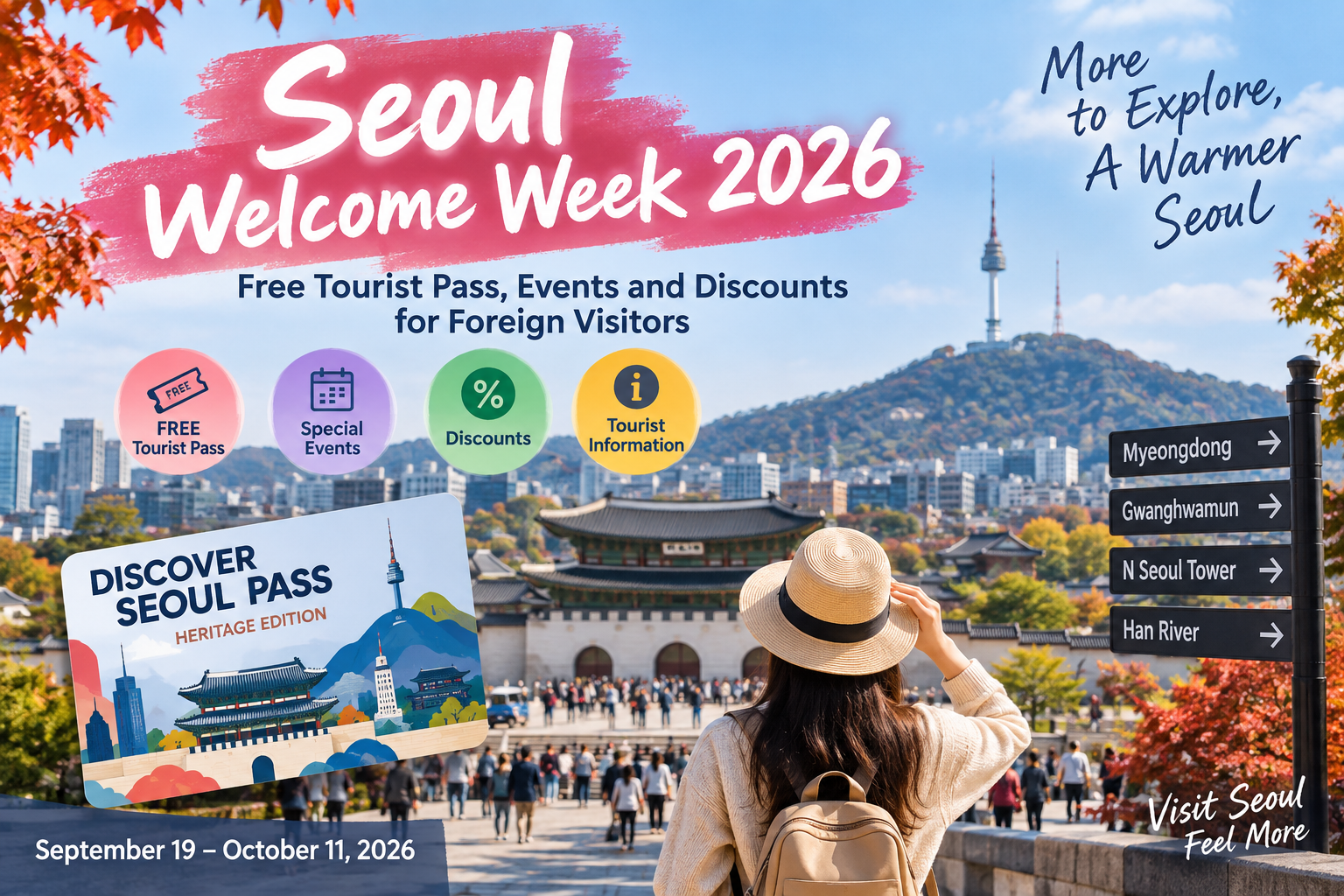
    Seoul Welcome Week 2026: Free Tourist Pass, Events and Discounts for Foreign Visitors

    Seoul Welcome Week 2026 Is Here

    If you are visiting Seoul this fall, there is an extra reason to explore the city right now.

    Seoul Welcome Week 2026 runs from September 19 to October 11, 2026, with special programs and benefits designed for international visitors. The campaign overlaps with Korea’s Chuseok holiday period, making it especially useful for travelers who are worried about what will be open or what they can do during the holiday.

    Visitors can find special welcome programs, tourism information, discounts, and limited benefits at locations including airports and central Seoul.

    One of the most interesting benefits is a special edition of the Discover Seoul Pass, which can help travelers visit major attractions while spending less.

    In this guide, we will look at what Seoul Welcome Week offers, who can use the benefits, where to find them, and what international travelers should know before heading out.

    Seoul Welcome Week 2026 at a Glance

    Here are the key dates to know:

    • Dates: September 19–October 11, 2026
    • Location: Seoul, with programs at major visitor touchpoints including airports and Myeongdong
    • Who it is for: International visitors to Seoul
    • Main benefits: Tourist information, special events, attraction benefits, and selected discounts

    Some programs are available only during specific dates within the Welcome Week period, and limited-quantity benefits may run out early.

    Tip: Do not assume every benefit is available throughout the entire September 19–October 11 period. Check the dates and conditions for the specific program you want to use before making a special trip.

    Free Discover Seoul Pass for International Visitors

    One of the headline benefits of Seoul Welcome Week 2026 is a special Discover Seoul Pass Heritage Edition for international travelers.

    According to the Seoul Metropolitan Government, a limited number of passes are being provided to eligible foreign visitors through welcome events at Seoul’s major gateways.

    The Heritage Edition is designed around Seoul’s cultural heritage and gives travelers access to 12 major heritage attractions, along with discounts or benefits at more than 110 participating locations.

    Because the free passes are limited and distribution conditions can vary by location, travelers should not plan their entire itinerary around receiving one. Think of it as a valuable bonus if you are eligible and passes are still available.

    If you receive a pass, check its validity period and included attractions before activating or using it. This will help you get the most value from the pass rather than using it for an attraction you would have visited cheaply anyway.

    Visit the Myeongdong Welcome Center

    Travelers staying in central Seoul should also pay attention to the temporary Welcome Center in Myeongdong, one of the city’s busiest areas for international visitors.

    The Welcome Center is scheduled to operate from October 1 to October 8, 2026.

    Visitors can stop by for tourism information and special Welcome Week programs while exploring Myeongdong and nearby areas such as Namdaemun, Euljiro, Cheonggyecheon, and central Seoul.

    This can be particularly useful during the Chuseok period, when travelers may be unsure about holiday schedules or need help adjusting their plans.

    Look for Special Seoul Travel Discounts

    Welcome Week is not limited to information booths and events.

    Selected tourism experiences are also offering visitor benefits during the campaign. One highlighted example is a 20% discount on selected Han River cruise experiences.

    If a Han River cruise is already on your Seoul itinerary, it is worth checking the current Welcome Week conditions before booking.

    However, discounts can have specific dates, reservation requirements, or eligibility rules. Always confirm the current terms with the participating operator before paying.

    How to Make the Most of Seoul Welcome Week

    The easiest way to use Seoul Welcome Week is to combine its benefits with places you already plan to visit.

    For example, if you are staying in Myeongdong, visiting the Welcome Center can fit naturally into a day exploring central Seoul. If you are planning a Han River cruise, check whether the Welcome Week discount applies to your preferred date and booking.

    Travelers arriving during the campaign period should also pay attention to welcome programs at the airport before leaving the arrivals area.

    A simple strategy is:

    1. Check which Welcome Week benefits are available on your travel dates.
    2. See whether any of them match attractions already on your itinerary.
    3. Confirm eligibility, operating dates, and reservation requirements.
    4. Use limited benefits only when they actually save you money or improve your trip.

    This is better than changing an entire Seoul itinerary simply to chase a free pass or discount.

    Visiting Seoul During Chuseok 2026

    Seoul Welcome Week overlaps with Chuseok, one of Korea’s most important holidays.

    For travelers, this does not mean Seoul shuts down completely. Major tourist areas, cultural attractions, shopping districts, and events can still give visitors plenty to do.

    However, opening hours may change, and individual restaurants, cafes, shops, museums, or attractions may operate on special holiday schedules.

    Before visiting a specific place during the holiday period, check its official operating information rather than relying only on normal opening hours shown in older travel guides.

    Transportation can also be busier around Chuseok as many people travel between Seoul and other parts of Korea. This is especially important if your trip includes KTX or other intercity transportation.

    Good Areas to Combine With Welcome Week Activities

    If you visit the Myeongdong Welcome Center, you can easily combine it with several nearby areas.

    Myeongdong is convenient for shopping, food, beauty stores, and first-time visitors.

    Namdaemun Market is within easy reach and offers a very different traditional market atmosphere.

    Cheonggyecheon Stream is a good option for an easy walk through central Seoul.

    Gwanghwamun and the palace area are also nearby and work well for travelers interested in Seoul’s history and cultural heritage.

    Instead of treating Welcome Week as a separate event, use it as an extra layer of benefits while following the Seoul itinerary you already wanted to experience.

    FAQ About Seoul Welcome Week 2026

    When is Seoul Welcome Week 2026?

    Seoul Welcome Week runs from September 19 to October 11, 2026. Individual programs may operate for shorter periods, so check the dates for each benefit before visiting.

    Is Seoul Welcome Week only for foreign tourists?

    Many of the special welcome programs and benefits are designed specifically for international visitors. Eligibility can vary by program, so bring your passport or other identification if a benefit requires proof of international visitor status.

    Is the Discover Seoul Pass really free?

    A limited number of special Discover Seoul Pass Heritage Edition passes are being offered to eligible international visitors through Welcome Week programs. Because quantities are limited, receiving one is not guaranteed.

    What does the Discover Seoul Pass Heritage Edition include?

    The special pass provides access to 12 major heritage attractions and benefits or discounts at more than 110 participating locations, according to the Seoul Metropolitan Government.

    Always check the current list of included attractions and usage conditions before planning around the pass.

    Where is the Seoul Welcome Center in Myeongdong?

    A temporary Welcome Center is scheduled to operate in the Myeongdong area from October 1 to October 8, 2026. Check Seoul’s official tourism information for the latest location and operating details before visiting.

    Is Seoul worth visiting during Chuseok?

    Yes. Seoul can still offer plenty to do during Chuseok, particularly in major tourist and cultural areas. The main difference is that some businesses and attractions may have special holiday hours.

    Check individual opening schedules in advance, especially for restaurants, smaller businesses, and specific attractions you do not want to miss.

    Final Thoughts

    Seoul Welcome Week 2026 gives international visitors a useful opportunity to get more from a fall trip to the Korean capital.

    The most valuable benefits are not necessarily the ones that sound the biggest. A free attraction pass can save money, a discount can make an activity more affordable, and a Welcome Center can be useful when holiday schedules make travel planning confusing.

    The key is to check what is available on your actual travel dates and combine those benefits with the Seoul itinerary you already have.

    If you are visiting during Chuseok, plan important transportation and must-see attractions in advance, but do not assume the holiday means there will be nothing to do. Seoul continues to offer cultural experiences, events, shopping, food, and sightseeing opportunities throughout the season.

    With a little preparation, Seoul Welcome Week can make an already exciting fall trip to Korea even better.

  • Where to Stay in Jeju Island in 2026: Best Areas and Hotels for First-Time Visitors

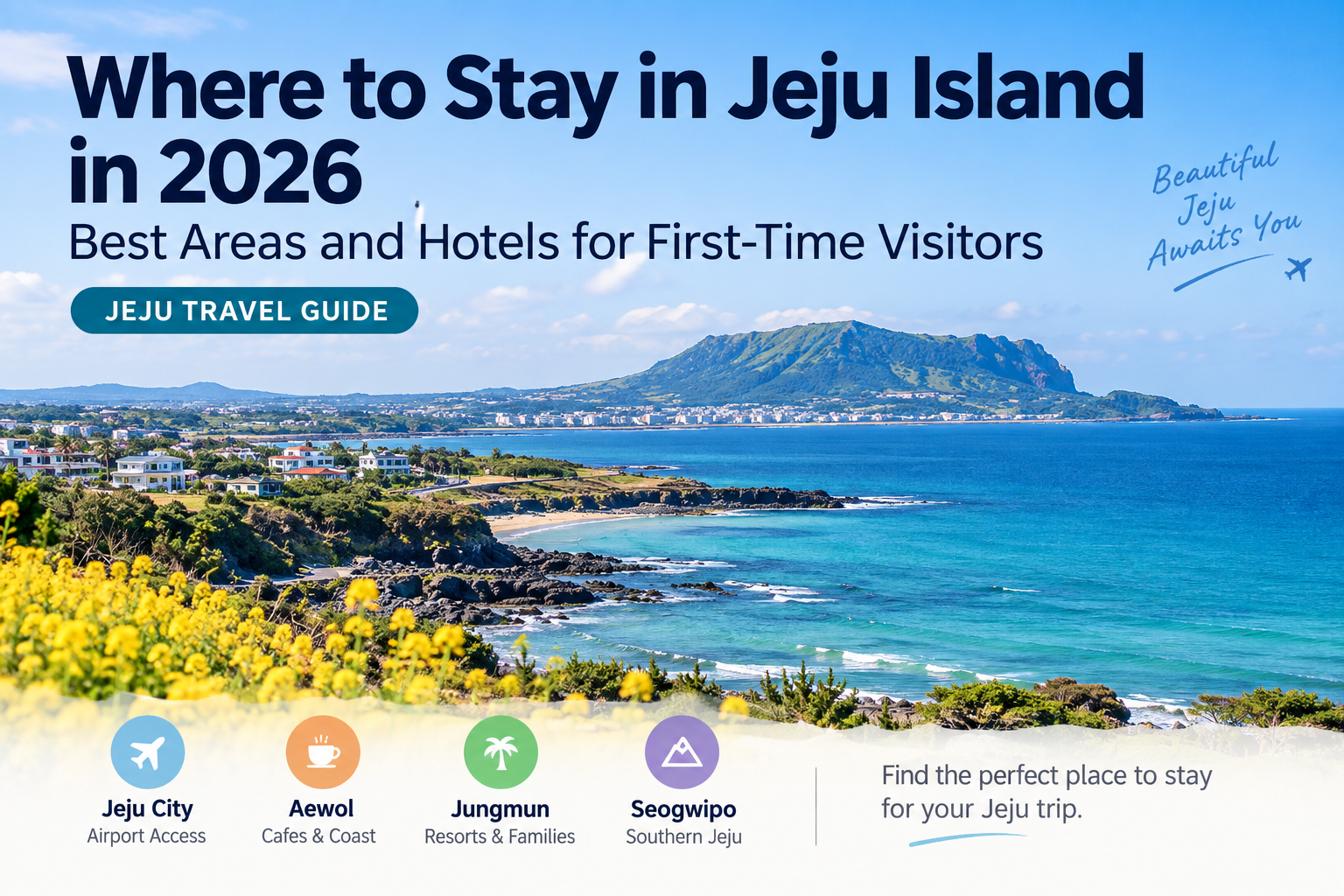
    Where to Stay in Jeju Island in 2026: Best Areas and Hotels for First-Time Visitors

    Choosing where to stay in Jeju Island can be surprisingly difficult for first-time visitors.

    Jeju is much larger than many travelers expect, and its attractions are spread across the island. Staying in the wrong area can mean spending a large part of your trip driving or sitting on buses, while choosing the right base can make exploring Jeju much easier.

    The best area to stay depends on the kind of trip you are planning. Jeju City is convenient for airport access and short stays, Aewol is popular for coastal scenery and cafes, Jungmun is known for resorts and family-friendly attractions, and Seogwipo is a good base for exploring southern Jeju.

    Travelers looking for something beyond a standard hotel can also explore boutique hotels, distinctive local stays, and other unique places to stay in Jeju Island.

    Transportation matters too. Travelers renting a car have much more flexibility in choosing accommodation, while visitors relying on public transportation should pay close attention to bus routes, travel times, and the location of their hotel.

    For most travelers, there is no single “best” area in Jeju. The right choice depends on your itinerary.

    Here is the simplest way to think about it:

    AreaBest ForMain Advantage
    Jeju CityFirst or last night, short trips, travelers without a carClose to Jeju Airport
    AewolCouples, cafes, coastal sceneryRelaxed west-coast atmosphere
    JungmunFamilies, resorts, luxury staysMajor resort area with nearby attractions
    SeogwipoLonger stays, southern Jeju sightseeingGood base for exploring the south

    If this is your first trip to Jeju, your itinerary should determine your hotel location—not simply which hotel looks the nicest online.

    For a short two- or three-night trip, staying in one well-chosen area may be easiest. For a longer trip, splitting your stay between northern and southern Jeju can reduce unnecessary travel across the island.

    1. Jeju City: Best for Airport Access and Short Stays

    Jeju City is the most practical place to stay for travelers who want easy access to Jeju International Airport.

    Because most visitors arrive and depart through the airport, staying in Jeju City can be especially convenient on the first or last night of a trip. It is also one of the easier areas for travelers who are visiting Jeju without renting a car.

    The city has a wide range of accommodation, from affordable business hotels and guesthouses to upscale hotels. You will also find restaurants, traditional markets, shopping areas, cafes, and transportation connections nearby.

    One of the biggest advantages is convenience. Instead of beginning or ending your trip with a long journey across the island, you can stay relatively close to the airport and use Jeju City as a base for exploring northern Jeju.

    Jeju City Is Best For:

    • Travelers arriving late or departing early
    • First-time visitors who value convenience
    • Short two- or three-night trips
    • Travelers without a rental car
    • Visitors who want restaurants and shopping nearby
    • Travelers planning to explore northern Jeju

    What to Know Before Staying in Jeju City

    The main disadvantage is that Jeju City does not provide the same resort atmosphere or dramatic coastal setting that many travelers imagine when they think of Jeju.

    If your priority is waking up beside the ocean, relaxing at a resort, or exploring waterfalls and attractions in southern Jeju, another area may suit you better.

    However, for convenience and airport access, Jeju City remains one of the easiest choices for a first visit.

    2. Aewol: Best for Cafes, Couples and West-Coast Scenery

    Located west of Jeju City, Aewol has become one of Jeju’s most recognizable coastal areas.

    The area is particularly popular with travelers looking for ocean views, stylish cafes, coastal drives, and a slower atmosphere than central Jeju City. It can work especially well for couples or travelers who want their accommodation to feel like part of the Jeju experience rather than simply a place to sleep.

    Aewol is also convenient for exploring parts of western Jeju, making it a useful base if your itinerary includes beaches, cafes, coastal scenery, and attractions on the western side of the island.

    Aewol Is Best For:

    • Couples
    • Cafe lovers
    • Travelers looking for ocean views
    • West Jeju itineraries
    • Relaxed trips
    • Visitors with a rental car

    What to Know Before Staying in Aewol

    Aewol is spread out, so the exact location of your accommodation matters.

    A hotel or pension described as being “in Aewol” may still be some distance from the cafes, coastline, or attractions you want to visit. Check the map carefully before booking rather than choosing accommodation based only on the area name.

    Travelers relying entirely on public transportation should also plan their routes in advance. A rental car generally makes staying in Aewol much easier, particularly if you want to explore several places around western Jeju.

    3. Jungmun: Best for Resorts, Families and Luxury Stays

    If your idea of a Jeju vacation includes a comfortable resort, ocean views, swimming pools, and easy access to major attractions, Jungmun Tourist Complex is one of the strongest areas to consider.

    Located on Jeju’s southern coast, Jungmun is home to many of the island’s well-known upscale hotels and resorts. The area is particularly convenient for families, couples on a relaxing vacation, and travelers who prefer resort facilities over staying in a busy city center.

    Nearby attractions include Jungmun Saekdal Beach, Cheonjeyeon Falls, and several museums and family-oriented attractions. This makes it possible to combine sightseeing with time at your hotel rather than spending every day traveling long distances around the island.

    Jungmun Is Best For:

    • Families with children
    • Couples looking for a resort stay
    • Luxury travelers
    • Honeymoon-style trips
    • Travelers who want hotel facilities and nearby attractions
    • Visitors exploring southwestern Jeju

    What to Know Before Staying in Jungmun

    Accommodation in Jungmun can be more expensive than in some other parts of Jeju, particularly at major resorts.

    It is therefore worth considering how much time you will actually spend at the property. Paying more for a resort makes greater sense if you plan to enjoy its pools, restaurants, ocean views, spa facilities, or other amenities.

    If you intend to leave early every morning and spend the entire day driving around Jeju, a simpler hotel elsewhere may provide better value.

    4. Seogwipo: Best for Exploring Southern Jeju

    Seogwipo is one of the most useful bases for travelers who want to explore the southern half of Jeju Island.

    The city and surrounding area provide access to waterfalls, coastal scenery, local restaurants, markets, and many of Jeju’s southern attractions. Compared with a resort-focused stay in Jungmun, central Seogwipo can also feel more like a working local city.

    Popular places around the area include Jeongbang Falls, Cheonjiyeon Falls, Seogwipo Maeil Olle Market, and sections of the Jeju Olle Trail.

    Seogwipo can be particularly attractive for travelers staying several nights because it provides a practical base while still offering plenty to do in the evening.

    Seogwipo Is Best For:

    • Travelers spending several days in Jeju
    • Southern Jeju sightseeing
    • Waterfalls and coastal scenery
    • Jeju Olle Trail travelers
    • Visitors who enjoy markets and local restaurants
    • Travelers who want a city base outside Jeju City

    What to Know Before Staying in Seogwipo

    The biggest consideration is its distance from Jeju International Airport.

    Travel time between the airport and Seogwipo can be significant depending on traffic, your exact accommodation, and the transportation method you use. If you have an early flight, staying in Seogwipo on your final night may therefore be less convenient than moving closer to Jeju City.

    On the other hand, if most of your itinerary is concentrated in southern Jeju, staying in Seogwipo can save considerable back-and-forth travel during the rest of your trip.

    Should You Stay in Jeju City or Seogwipo?

    This is one of the most common decisions first-time visitors face.

    Choose Jeju City if airport convenience, public transportation, shopping, restaurants, and northern Jeju are more important to you.

    Choose Seogwipo if your itinerary focuses on waterfalls, coastal scenery, the Olle Trail, and attractions across southern Jeju.

    For a longer trip, you do not necessarily have to choose only one.

    A traveler spending four or five nights on the island could stay part of the trip in Jeju City or western Jeju and then move to Seogwipo or Jungmun. Splitting your stay can reduce repeated travel across the island, although changing hotels also means packing and checking in again.

    For a very short trip, however, one strategically located hotel is usually simpler than changing accommodation.

    Where to Stay in Jeju Without a Rental Car

    Jeju is much easier to explore by car than many first-time visitors expect.

    Public buses connect major areas, but attractions can be widely separated and some journeys require transfers. This makes hotel location particularly important if you are not renting a car.

    For travelers without a rental car, Jeju City is generally the easiest base because of its transportation connections and proximity to the airport.

    Central Seogwipo can also work if most of your itinerary is concentrated in southern Jeju.

    Wherever you stay, check the actual bus stops and routes near your accommodation before booking. A hotel that looks close to an attraction on a map may still require an inconvenient public-transport journey.

    Where to Stay in Jeju With a Rental Car

    Having a rental car gives you much more freedom.

    Aewol, Jungmun, and accommodations outside the main city centers become considerably easier to consider because you are less dependent on bus routes.

    However, do not choose a remote hotel simply because you have a car.

    Before booking, check:

    • Driving time to the attractions on your itinerary
    • Parking availability at the accommodation
    • Distance to restaurants and convenience stores
    • Whether you will want to drive after dinner
    • Driving time back to Jeju Airport on departure day

    A beautiful ocean-view hotel can be worthwhile, but not if you spend several unnecessary hours driving every day.

    Best Area in Jeju for Different Types of Travelers

    First-Time Visitors

    For a short first trip, Jeju City offers the simplest logistics.

    For a longer first visit focused on southern attractions, Seogwipo can be a better base.

    Couples

    Aewol is attractive for couples who enjoy cafes, coastal scenery, and relaxed drives.

    For couples who prefer a more luxurious vacation, Jungmun offers a stronger resort experience.

    Families

    Jungmun is particularly convenient for families who want comfortable resort facilities combined with nearby attractions.

    Families renting a car can also consider larger accommodations elsewhere on the island, depending on their itinerary.

    Luxury Travelers

    For travelers primarily looking for an upscale resort experience, Jungmun is one of the first areas to consider.

    However, luxury properties can also be found in other parts of Jeju, so location should still come before the hotel brand itself.

    Short-Stay Travelers

    If you have only one or two nights in Jeju, staying near Jeju City and the airport can minimize transportation time.

    With such a short visit, spending hours crossing the island can take away a large portion of your available sightseeing time.

    Should You Split Your Stay in Jeju?

    For travelers staying four nights or longer, splitting accommodation between two areas can sometimes make sense.

    For example, you could spend the first part of your trip around Jeju City or Aewol while exploring northern and western Jeju, then move to Seogwipo or Jungmun for the southern part of your itinerary.

    This approach can reduce long cross-island drives and allow you to experience different sides of Jeju.

    However, changing hotels also takes time. You need to pack, check out, move your luggage, and check in again.

    If you prefer a slower trip, choosing one well-located base may be better.

    The important question is not whether other travelers split their stay. It is whether changing accommodation will actually reduce travel time for your itinerary.

    What to Check Before Booking a Hotel in Jeju

    Before choosing your accommodation, check more than the room photos and guest rating.

    1. Actual Location

    Jeju accommodation names often refer to a broad area. Open the map and check exactly where the property is located.

    2. Transportation

    If you are not renting a car, check nearby bus stops and realistic travel routes before paying for the room.

    3. Parking

    If you are renting a car, confirm whether parking is available and whether there are any restrictions.

    4. Airport Travel Time

    Check how long it will take to reach Jeju International Airport, especially for an early departure.

    5. Your Daily Itinerary

    Plot several of your priority attractions on a map. If almost everything you want to visit is on the opposite side of the island from your hotel, reconsider the location.

    6. Hotel Facilities

    A swimming pool, spa, ocean-view room, breakfast, or resort facilities can be valuable if you intend to use them. If your days will be spent sightseeing from morning until night, location may matter more.

    Frequently Asked Questions

    What is the best area to stay in Jeju for first-time visitors?

    There is no single best area for everyone. Jeju City is particularly convenient for airport access and shorter trips, while Seogwipo works well for travelers concentrating on southern Jeju. Jungmun is attractive for resort stays, and Aewol suits travelers interested in western coastal scenery and cafes.

    Is Jeju City or Seogwipo better?

    Jeju City is generally more convenient for the airport and northern Jeju. Seogwipo is better positioned for many attractions in southern Jeju. Your itinerary should determine which is more convenient.

    Where should I stay in Jeju without a car?

    Jeju City is often the easiest option because of its transportation connections and proximity to the airport. Central Seogwipo can also be practical for a southern Jeju itinerary.

    Where should couples stay in Jeju?

    Aewol is popular with travelers looking for coastal scenery, cafes, and a relaxed atmosphere. Jungmun is another strong option for couples who prefer an upscale resort experience.

    Where should families stay in Jeju?

    Jungmun is worth considering because of its concentration of resorts and nearby attractions. Families renting a car have more flexibility to choose accommodation elsewhere based on their itinerary.

    How many nights should I stay in Jeju?

    The answer depends on what you want to see, but Jeju’s size makes very short visits challenging if you want to explore several parts of the island. With more time, you can travel at a slower pace or divide your stay between different areas.

    Final Thoughts

    Choosing where to stay in Jeju Island is ultimately a transportation decision as much as a hotel decision.

    Jeju City offers convenience and airport access. Aewol provides a relaxed west-coast atmosphere. Jungmun is well suited to resort and family vacations, while Seogwipo provides a useful base for exploring southern Jeju.

    Instead of starting with a list of hotels, build a rough itinerary first. Mark the places you most want to visit, decide whether you will rent a car, and then choose the area that minimizes unnecessary travel.

    Once you have chosen the right part of Jeju, selecting the right hotel becomes much easier.

    For a first visit, that simple decision can make the difference between spending your vacation experiencing Jeju and spending too much of it traveling from one side of the island to the other.

  • Gimhae Airport to Busan in 2026: Best Ways to Get to Haeundae, Seomyeon and Busan Station

    Gimhae Airport to Busan in 2026: Best Ways to Get to Haeundae, Seomyeon and Busan Station

    Getting from Gimhae Airport to Busan

    Gimhae International Airport (PUS) is the main airport serving Busan and one of the most common entry points for international travelers visiting South Korea’s second-largest city.

    But after landing, many first-time visitors face the same question: What is the best way to get from Gimhae Airport to Haeundae, Seomyeon, Busan Station, or other parts of Busan?

    The answer depends on where you are staying, how much luggage you have, what time you arrive, and whether you prefer the cheapest, easiest, or fastest option.

    In 2026, travelers can choose from several transportation options, including the Busan-Gimhae Light Rail Transit (BGL), subway connections, airport limousine buses, regular city buses, and taxis. Busan has also been expanding payment and transportation services for international visitors, making it easier to travel around the city without a car.

    This guide compares the main ways to travel from Gimhae Airport to central Busan and explains which option makes the most sense for popular destinations such as Haeundae, Seomyeon, and Busan Station.

    Quick Comparison: Gimhae Airport to Busan

    Here is the simplest way to think about your options:

    TransportationBest ForMain Advantage
    Light Rail + SubwayBudget travelersAffordable and reliable
    Airport Limousine BusTravelers with luggageFewer transfers
    City BusBudget-conscious travelers on suitable routesLow cost
    TaxiFamilies, groups, late arrivalsDoor-to-door convenience

    For many travelers with light luggage, the light rail and subway are the most economical choices. If you have large suitcases, however, avoiding multiple transfers can be worth paying more for a limousine bus or taxi.

    The best option also changes depending on your destination. Seomyeon is relatively convenient by rail, while Haeundae is farther from the airport and may be more comfortable to reach by a direct or low-transfer option.

    Option 1: Light Rail and Subway — Best for Budget Travelers

    For many visitors, the Busan-Gimhae Light Rail Transit (BGL) is the most practical low-cost way to leave Gimhae International Airport.

    The airport station is connected to the passenger terminals, and the light rail takes you to Sasang Station, where you can transfer to Busan Metro Line 2. From there, you can continue toward major areas including Seomyeon, Gwangan, and Haeundae.

    How It Works

    The basic route is:

    Gimhae International Airport → Sasang Station → Busan Metro

    At Sasang, your next route depends on your destination.

    For Seomyeon, continue on Metro Line 2 toward the city center.

    For Haeundae, stay on Line 2 after transferring at Sasang and continue east toward Haeundae Station.

    For Busan Station, you will need another subway transfer because Busan Station is on Metro Line 1.

    Why Choose the Light Rail and Subway?

    The biggest advantages are predictable travel times and relatively low transportation costs. You also avoid road traffic, which can make bus or taxi travel slower during busy periods.

    This option works particularly well if:

    • you are traveling alone or as a couple;
    • you have a small suitcase or backpack;
    • you arrive while the rail system is operating;
    • saving money is more important than door-to-door convenience.

    The main disadvantage is luggage. Carrying a large suitcase through stations, platforms, elevators, and transfers can become tiring after a long flight.

    Practical Tip for First-Time Visitors

    Before leaving the airport, check your hotel’s nearest subway station, not just the neighborhood name.

    Busan is spread across a large area, and two hotels described as being in the same general district can require very different final transfers or walks.

    A few minutes spent checking the exact station can make the trip from the airport much easier.

    Option 2: Airport Limousine Bus — Best for Travelers with Luggage

    If you are carrying a large suitcase, an airport limousine bus can be more comfortable than transferring between the light rail and subway.

    Busan reorganized its Gimhae Airport limousine services in 2026, with routes connecting the airport to important visitor areas including Seomyeon and Haeundae.

    The biggest advantage is simple: fewer transfers with your luggage.

    Gimhae Airport to Haeundae

    Haeundae is one of Busan’s most popular areas for international visitors, but it is relatively far from Gimhae Airport.

    Using the light rail and subway is possible, but the journey can feel long after an international flight. A limousine bus can therefore be an attractive option for travelers staying around Haeundae, especially when traveling with suitcases.

    Depending on the route and stop, services may also be useful for travelers staying around Centum City, eastern Busan, or nearby coastal areas.

    Gimhae Airport to Seomyeon

    Seomyeon is much more central and is one of the most convenient bases for first-time visitors to Busan.

    Travelers can reach it by light rail and subway, but the airport limousine service provides another option for visitors who would rather reduce transfers.

    This can be particularly useful if your accommodation is reasonably close to a limousine bus stop.

    Check the Current Schedule Before You Travel

    Airport bus routes, stops, fares, and operating schedules can change.

    Before your flight, check the latest information from Gimhae International Airport or the relevant Busan transportation service, especially if you plan to arrive early in the morning or late at night.

    Do not choose a hotel solely because an airport bus currently stops nearby. Transportation services can be adjusted, while the subway network is generally a more permanent part of the city’s infrastructure.

    Option 3: Taxi — Best for Convenience, Families and Late Arrivals

    A taxi is usually the easiest option if you want to travel directly from Gimhae Airport to your hotel without transfers.

    This can make sense for families, small groups, travelers with several suitcases, or passengers arriving after a long flight.

    The main benefit is door-to-door convenience. Instead of navigating stations with luggage, you can leave the airport and travel directly to your accommodation.

    When Is a Taxi Worth It?

    A taxi becomes more attractive when the fare is shared between several people.

    For a solo traveler, public transportation will usually be much cheaper. For three or four travelers, however, the difference per person may be easier to justify, especially when luggage and convenience are considered.

    Travel time and fare will depend on your destination and traffic conditions. Haeundae is considerably farther from the airport than areas such as Seomyeon, so avoid relying on one fixed taxi price when planning your budget.

    It is useful to have your hotel name and address available in Korean as well as English. Showing the exact location on a map can also help avoid confusion.

    Option 4: City Bus — Useful, but Not Always the Easiest First Choice

    Regular city buses can provide inexpensive connections between Gimhae Airport and parts of Busan.

    They may work well when a route happens to stop near your accommodation, but they are not automatically the best choice for every international traveler.

    Compared with the subway, bus routes can be more difficult for a first-time visitor to understand, and traveling with a large suitcase may be inconvenient.

    For most first-time visitors, the decision is therefore simple:

    Use the rail system when you want an inexpensive and predictable trip, choose an airport limousine when its route works well for your hotel, and consider a taxi when convenience matters most.

    City buses become more useful once you know exactly which route serves your destination.

    Best Transportation by Destination

    The easiest airport transfer depends heavily on where you are staying. Here is how to think about three of the most common destinations for international visitors.

    Gimhae Airport to Haeundae

    Haeundae is one of the farthest major tourist areas from Gimhae Airport.

    If you are traveling light and want to save money, take the light rail to Sasang and transfer to Metro Line 2 toward Haeundae.

    If you have large luggage, check whether the current airport limousine route has a convenient stop near your hotel. A taxi is another comfortable choice, particularly for families or groups who can share the fare.

    Best for budget travelers: Light rail + Metro Line 2
    Best for heavy luggage: Airport limousine, when the route suits your hotel
    Best for maximum convenience: Taxi

    Gimhae Airport to Seomyeon

    Seomyeon is one of the easiest areas to reach from the airport and an excellent transportation hub for exploring Busan.

    A practical public-transport route is Gimhae Airport → Sasang → Metro Line 2 → Seomyeon.

    Because Seomyeon is closer to the airport than Haeundae, it is also a more reasonable taxi destination for travelers who prioritize convenience.

    If an airport limousine stop is close to your accommodation, compare that option with the rail route before traveling.

    Best for most budget-conscious visitors: Light rail + Metro Line 2
    Best with several suitcases: Limousine bus or taxi

    Gimhae Airport to Busan Station

    Busan Station is particularly useful for travelers connecting to KTX trains or staying in the older central part of Busan.

    Unlike Seomyeon and Haeundae, Busan Station is on Metro Line 1, so a rail journey from the airport requires an additional subway transfer after entering Busan’s metro network.

    If you have large luggage or need to catch a train, a taxi may be worth considering because it reduces the risk and inconvenience of moving between multiple stations.

    Always leave extra time when connecting to a KTX train. Flight delays, immigration, baggage collection, traffic, and unfamiliar public transportation can all make a tightly planned connection stressful.

    Best for low cost: Light rail + subway
    Best for luggage or a time-sensitive train connection: Taxi

    Paying for Transportation from Gimhae Airport

    Having a payment plan before leaving the airport can make your first journey in Busan much easier.

    For public transportation, travelers commonly use a reloadable transportation card such as T-money or Cashbee. These cards can be useful not only in Busan but also on public transportation in other parts of South Korea.

    If you already purchased a transportation card earlier in your Korea trip, you generally do not need a separate card simply because you have arrived in Busan.

    However, do not assume that every ticket machine, bus, taxi, or transportation service accepts exactly the same foreign card or mobile payment method. Korea continues to expand cashless payment options, but keeping a small amount of Korean won available can still be useful.

    What If You Arrive Late at Night?

    Late arrival changes the decision.

    Rail and bus services do not operate 24 hours a day, so travelers landing late should check the last available public transportation connection for their specific arrival date.

    Remember that your flight’s scheduled landing time is not the time you will leave the terminal. Immigration, baggage claim, customs, and finding your way through an unfamiliar airport all take additional time.

    If your arrival is close to the final public transportation services, a taxi may be the safer and simpler option.

    Traveling with Large Luggage

    Do not choose transportation based only on the cheapest fare.

    A route that looks easy on a map can become much less convenient when you are carrying a large suitcase through transfers, elevators, station exits, and crowded trains.

    Before choosing your airport transfer, consider:

    • how many times you need to transfer;
    • how far your hotel is from the final station or stop;
    • whether you are traveling with children;
    • how many suitcases your group has;
    • and whether you will be traveling during a busy commuting period.

    For travelers with significant luggage, paying more for a lower-transfer option can be one of the most worthwhile transportation decisions of the trip.

    Which Option Should You Choose?

    There is no single best airport transfer for every traveler. Your destination, luggage, arrival time, and group size matter more than choosing the cheapest option.

    Your SituationRecommended Option
    Solo traveler with light luggageLight rail + subway
    Staying in SeomyeonLight rail + Metro Line 2
    Staying in Haeundae with light luggageLight rail + Metro Line 2
    Staying in Haeundae with large luggageAirport limousine or taxi
    Family or small groupTaxi can be worth comparing
    Connecting to KTX at Busan StationRail if you have enough time; taxi for convenience
    Arriving late at nightCheck final transit times; taxi may be necessary
    Hotel near a limousine stopCompare limousine service with the rail route

    Frequently Asked Questions

    What is the cheapest way from Gimhae Airport to Busan?

    For many destinations, combining the Busan-Gimhae Light Rail Transit with the Busan Metro is one of the most economical and predictable options.

    Is there a subway directly from Gimhae Airport to Haeundae?

    Not directly. You can take the light rail from the airport to Sasang Station, transfer to Busan Metro Line 2, and continue toward Haeundae.

    Is Seomyeon easy to reach from Gimhae Airport?

    Yes. Seomyeon is relatively convenient because you can transfer from the airport light rail to Metro Line 2 at Sasang and continue toward Seomyeon.

    Should I take a taxi from Gimhae Airport?

    A taxi is worth considering if you have heavy luggage, are traveling with children or several people, arrive late, or simply want door-to-door transportation. Solo travelers with light luggage will usually save money by using public transportation.

    Can I use T-money in Busan?

    T-money is widely used on public transportation in Busan. If you already have a transportation card from another part of your Korea trip, check its balance before traveling rather than automatically buying another card.

    How early should I leave Gimhae Airport if I need to catch a KTX train?

    Allow a generous buffer. Immigration, baggage collection, transportation transfers, traffic, and finding the correct platform can all take longer than expected. Avoid planning a tight airport-to-KTX connection.

    Final Thoughts

    Getting from Gimhae International Airport to Busan is not difficult once you choose transportation based on your actual destination.

    For travelers with light luggage, the light rail and subway provide an affordable and dependable way into the city. Travelers carrying large suitcases may prefer an airport limousine bus when its route matches their accommodation, while families, groups, and late-night arrivals may find a taxi worth the additional cost.

    Most importantly, check the exact location of your hotel before choosing your transfer. Busan is a large city, and the best route to Haeundae can be very different from the best route to Seomyeon or Busan Station.

    Transportation routes, schedules, and fares can change, so confirm current operating information shortly before your trip.

    With your airport transfer planned in advance, you can spend less time figuring out transportation after landing and more time enjoying Busan.

  • How to Pay in South Korea in 2026: Cash, Cards, ATMs and Cashless Payments for Travelers

    How to Pay in South Korea in 2026: Cash, Cards, ATMs and Cashless Payments for Travelers

    Do You Need Cash in South Korea? Best Ways to Pay as a Traveler

    You do not need to carry large amounts of cash in South Korea because credit and debit cards are widely accepted. However, foreign travelers should still carry some Korean won for places or situations where cards may not work, including some traditional markets, small businesses, transportation-related payments, or when a foreign card is declined.

    In this guide, you’ll learn when to carry cash, which foreign cards are most likely to work, how to use ATMs, whether mobile payments are practical for visitors, and how to avoid common payment problems in Korea.

    South Korea is highly developed in electronic payments, and cards are widely used in everyday life. However, travelers should not assume that they can complete an entire trip without carrying any Korean won.

    The most practical approach is to understand how cash, credit cards, transportation cards, ATMs, and mobile payments work before you travel.

    What Currency Is Used in South Korea?

    The official currency of South Korea is the South Korean won, commonly written as KRW or represented by the symbol ₩.

    Korean banknotes commonly include:

    • ₩1,000
    • ₩5,000
    • ₩10,000
    • ₩50,000

    Coins are also used for smaller amounts.

    Korean prices are usually shown in thousands of won, so seeing ₩10,000 or ₩20,000 on a restaurant menu is completely normal. Exchange rates change daily, so check a current rate shortly before or during your trip rather than relying on an old conversion.

    Is South Korea a Cashless Society?

    South Korea is very card-friendly, but travelers should still carry some cash for small purchases, traditional markets, transportation-related needs, and places where a foreign card may not be accepted.

    Credit cards and other electronic payment methods are widely used at restaurants, cafés, convenience stores, department stores, hotels, and many tourist attractions.

    Korean residents may complete much of their daily spending without using physical cash.

    For foreign travelers, however, the situation can be slightly different.

    Some payment systems are designed primarily for locally issued cards or Korean mobile-payment services. A foreign card may occasionally be declined even when the store normally accepts card payments.

    Do You Need Cash in Korea?

    You probably do not need to carry a large amount of cash, but having some cash available is a good idea.

    Cash may be useful for:

    • traditional markets
    • small food stalls
    • certain ticket machines
    • small independent businesses
    • topping up some transportation cards
    • situations where a foreign card is declined

    In central Seoul, Busan, and other major tourist areas, travelers can often use cards for most purchases.

    But keeping some won in your wallet provides a backup when electronic payment does not work as expected.

    Can Foreign Credit Cards Be Used in Korea?

    International credit and debit cards are widely accepted in many places in South Korea, especially in major cities and tourist areas.

    Hotels, large restaurants, shopping malls, department stores, cafés, convenience stores, and major attractions commonly accept card payments.

    However, acceptance of a card network does not guarantee that every foreign card will work at every terminal.

    Possible problems can include:

    • card issuer security blocks
    • overseas transactions being disabled
    • compatibility issues with a payment terminal
    • online services requiring a Korean-issued card
    • authentication requirements

    Before traveling, check that your card is enabled for international transactions.

    Should You Bring More Than One Card?

    Yes, if possible.

    Depending on a single credit or debit card can create unnecessary problems if the card is lost, damaged, blocked, or unexpectedly declined.

    A practical travel setup might include:

    one primary card + one backup card + some Korean won

    Keep the backup card separately from your main wallet when possible.

    You should also know how to contact your bank or card issuer if you encounter a payment problem abroad.

    Can You Withdraw Korean Won From an ATM?

    Foreign travelers can use many ATMs in South Korea, but not every ATM accepts every international card.

    Look for ATMs that indicate support for global or international cards.

    They are commonly found at airports, banks, convenience stores, transportation hubs, and busy commercial areas.

    Your home bank, the ATM operator, or both may charge fees.

    The exchange rate applied to the withdrawal can also vary.

    For this reason, check your own bank’s international ATM policies before leaving home.

    Should You Exchange Money Before Traveling to Korea?

    You do not necessarily need to exchange all of your travel money before arriving.

    Many travelers combine several methods:

    bringing a small amount of Korean won, exchanging currency after arrival, withdrawing cash from an ATM, and using cards for regular purchases.

    The best choice depends on the fees and exchange rates offered by your bank, card provider, or currency-exchange service.

    Avoid carrying unnecessarily large amounts of cash.

    For most travelers, having enough won for immediate expenses and using cards for many larger purchases can be more convenient.

    Can You Exchange Money at Incheon Airport?

    Currency-exchange services and ATMs are available at major international arrival points such as Incheon International Airport.

    This can be convenient if you arrive without Korean won and need cash immediately.

    After arriving in Seoul, you can also find currency-exchange services in major tourist and commercial areas.

    Convenience and exchange value are not always the same thing, so travelers who plan to exchange a larger amount may want to compare available rates and fees.

    What Is T-money?

    T-money is one of the most useful payment tools for travelers using public transportation in Korea.

    It is a rechargeable transportation card commonly used for buses and subways and can also be used for certain other payments where supported.

    Do You Need Cash to Recharge a Transportation Card?

    This is one reason travelers should keep some Korean won available.

    Depending on the transportation card, recharge location, and payment method, cash may still be required or be the simplest option for topping up.

    Can Foreign Travelers Use Korean Mobile Payments?

    South Korea has an advanced mobile-payment environment, but some domestic payment systems can be difficult for short-term foreign visitors to use.

    Certain services may require a Korean phone number, Korean bank account, local identity verification, or a locally issued card.

    International mobile wallets may work in some situations, but travelers should not assume that every shop or payment terminal will support their preferred service.

    A physical international card remains a useful primary payment method for many visitors.

    What If Your Card Is Declined in Korea?

    Do not immediately assume that the store does not accept foreign travelers’ cards.

    There can be several reasons for a declined transaction.

    Try another card if you have one.

    If the problem continues, contact your bank or card issuer and check whether overseas transactions have been blocked.

    This is also why carrying a small cash reserve is useful.

    Can You Use Cash at Restaurants and Shops?

    Cash is still legal currency and remains usable in many places.

    However, payment practices can vary, and some businesses may strongly prefer electronic payments.

    Use cards where they work conveniently and keep cash available as a backup.

    How Much Cash Should You Carry in Korea?

    There is no single amount that is correct for every traveler.

    It depends on your itinerary, spending habits, accommodation, transportation plans, and whether you will visit traditional markets or areas outside major tourist centers.

    Rather than carrying your entire travel budget in cash, consider keeping enough Korean won for small purchases and unexpected payment problems.

    For larger expenses such as hotels or major shopping purchases, cards are often more convenient when accepted.

    Are Traditional Markets More Cash-Friendly?

    Traditional markets are one place where carrying cash can be particularly useful.

    Many vendors now accept electronic payments, but payment options vary from stall to stall.

    If you plan to explore Korean street food, local markets, or smaller independent vendors, keeping Korean won available can make the experience easier.

    What About Tipping in Korea?

    Tipping is generally not a standard part of everyday Korean restaurant and café culture in the same way it is in some countries.

    Travelers usually pay the amount shown on the bill.

    However, practices can vary in specialized tourism or hospitality situations, so follow any clearly stated service policies.

    For ordinary restaurants, cafés, taxis, and shops, visitors should not assume that a percentage-based tip is expected.

    Should You Choose KRW When a Card Terminal Offers Currency Conversion?

    Some international card transactions may offer the option of paying in your home currency rather than Korean won.

    This is often called dynamic currency conversion (DCC).

    The exchange rate or fees associated with DCC may differ from the rate your own card provider would apply.

    Before accepting the option, check the displayed rate and understand your card’s foreign transaction policy.

    Do not automatically select your home currency simply because the amount looks more familiar.

    A Simple Payment Strategy for First-Time Visitors

    For many foreign travelers, the easiest approach is to avoid relying on only one payment method.

    A simple setup is:

    International card + backup card + small amount of Korean won + transportation card

    This gives you several options if one payment method fails.

    Use your international card for ordinary purchases where it works, keep cash for smaller transactions and backup situations, and use a transportation card for convenient public transit.

    Money in Korea: What Should You Prepare Before Your Trip?

    Before leaving for South Korea, consider doing a few simple things.

    Make sure your bank cards can be used internationally.

    Check your bank’s foreign transaction and ATM fees.

    Know the approximate exchange rate between your currency and the Korean won.

    Prepare more than one payment method.

    And once you arrive, obtain some Korean won rather than assuming your trip will be completely cashless.

    Final Thoughts

    South Korea is easy to navigate with cards, but travelers should still keep some Korean won for small purchases, transportation needs, and unexpected payment problems.

    The most practical setup is simple: use an international card for most purchases, carry a backup card, and keep a modest amount of cash available.

    With those options prepared, you can travel around Korea without worrying too much about how to pay.


  • Seongsu-dong Seoul Travel Guide 2026: Cafes, K-Beauty, Shopping, Pop-Ups and Seoul Forest

    Seongsu-dong Seoul Travel Guide 2026: Cafes, K-Beauty, Shopping, Pop-Ups and Seoul Forest

    Introduction

    Seoul is famous for palaces, traditional markets, K-pop, and late-night shopping, but one neighborhood has become especially popular with travelers looking for a more contemporary side of the city: Seongsu-dong.

    Once known for warehouses, factories, and handmade shoe workshops, Seongsu has evolved into one of Seoul’s most creative neighborhoods. Old industrial buildings now house specialty coffee shops, fashion boutiques, art spaces, K-beauty stores, restaurants, and constantly changing pop-up shops.

    What makes Seongsu particularly interesting is that it offers more than shopping. You can spend the morning exploring cafes and local streets, discover Korean beauty and fashion brands in the afternoon, and then walk to Seoul Forest for a relaxing break from the city.

    For international visitors—especially travelers returning to Seoul after already seeing major attractions such as Gyeongbokgung Palace, Myeongdong, and N Seoul Tower—Seongsu offers a different way to experience everyday Seoul.

    In this Seongsu-dong Seoul travel guide for 2026, you’ll learn what to see, where to explore, how to get there, when to visit, and how to combine Seongsu’s cafes, K-beauty, shopping, pop-ups, and Seoul Forest into an easy half-day or full-day itinerary.

    Why Is Seongsu-dong So Popular?

    Seongsu-dong is often described as one of Seoul’s most creative neighborhoods because it combines the area’s industrial past with Korea’s fast-moving fashion, beauty, cafe, and pop-up culture.

    Instead of replacing every old building with something new, many businesses have transformed former factories and warehouses into stylish cafes, showrooms, galleries, restaurants, and retail spaces. The contrast between exposed brick buildings and modern Korean brands gives Seongsu a distinctive atmosphere that feels different from more traditional shopping districts.

    Cafes and Industrial Spaces

    Seongsu is especially famous for its cafe culture. Large warehouse-style cafes, small specialty coffee shops, bakeries, and dessert cafes are scattered throughout the neighborhood.

    Rather than visiting Seongsu for one specific attraction, many travelers simply walk through the streets, stop at a cafe that catches their attention, and continue exploring.

    Pop-Up Stores and Korean Brands

    Pop-up stores are another major reason people visit Seongsu. Korean fashion, beauty, food, entertainment, and lifestyle brands frequently use the neighborhood for temporary exhibitions, product launches, and interactive experiences.

    Because pop-ups change regularly, the neighborhood can feel different each time you visit.

    K-Beauty and Shopping

    Seongsu has also developed into an important destination for travelers interested in K-beauty and Korean fashion. Flagship stores and brand experience spaces allow visitors to explore products in a more immersive setting than a conventional shopping mall.

    Seoul Forest

    One of Seongsu’s biggest advantages is its proximity to Seoul Forest, one of the city’s most popular urban green spaces.

    After spending several hours exploring busy shopping streets and cafes, visitors can walk toward the park and enjoy a quieter side of Seoul.

    This combination of cafes, shopping, K-beauty, pop-ups, creative spaces, and nature is what makes Seongsu particularly appealing to travelers who want to experience contemporary Seoul beyond the city’s traditional sightseeing route.

    How to Get to Seongsu-dong

    Seongsu is easy to reach by Seoul’s subway system, but there are two useful stations depending on which part of the neighborhood you want to explore.

    Seongsu Station

    Seongsu Station (Line 2) is usually the most convenient starting point if your main goal is to explore Seongsu’s cafes, shops, pop-up stores, restaurants, and creative spaces.

    After leaving the station, you can explore the neighborhood on foot. Many of Seongsu’s popular streets and businesses are spread across several blocks, so comfortable walking shoes are recommended.

    Seoul Forest Station

    Seoul Forest Station (Suin-Bundang Line) is more convenient if you want to begin your visit near Seoul Forest and then walk toward the main Seongsu shopping and cafe areas.

    This can be a good option for travelers who want to combine nature, shopping, and cafes in one route.

    Which Station Should You Use?

    A simple rule is:

    • Start at Seongsu Station if cafes, shopping, K-beauty, and pop-ups are your priorities.
    • Start at Seoul Forest Station if Seoul Forest is your first destination.

    For a half-day or full-day trip, you do not necessarily need to return to the station where you started. One convenient strategy is to enter the neighborhood through one station, explore Seongsu on foot, and leave through the other.

    Getting There From Popular Areas of Seoul

    From neighborhoods such as Myeongdong, Hongdae, or Gangnam, the subway is generally the easiest option. Depending on where you start, you may need to transfer lines.

    Instead of relying on a fixed travel time, check your route shortly before leaving because transfer combinations and travel times vary by starting location.

    For navigation in Korea, travelers may also find Korean map apps useful when locating individual cafes, stores, and pop-up venues.

    Best Things to Do in Seongsu-dong

    Seongsu is best explored on foot rather than by rushing from one famous attraction to another. Part of the experience is discovering new stores, cafes, and pop-ups as you walk through the neighborhood.

    Here are some of the best ways to experience Seongsu in 2026.

    1. Explore Seongsu’s Cafe Streets

    Cafe hopping is one of the most popular things to do in Seongsu.

    The neighborhood is known for transforming former factories, warehouses, and industrial buildings into distinctive coffee shops and bakeries. Some are large destination cafes, while others are smaller specialty coffee shops hidden along side streets.

    Instead of planning every cafe in advance, consider choosing one or two places that interest you and leaving time to discover others while walking.

    Weekends and afternoons can be particularly busy, so visiting earlier in the day can provide a more relaxed experience.

    2. Discover the Latest Pop-Up Stores

    Seongsu has become one of Seoul’s best-known neighborhoods for pop-up stores and temporary brand experiences.

    Beauty companies, fashion labels, food brands, entertainment companies, and lifestyle brands regularly open short-term spaces where visitors can see new products, take photos, participate in events, or receive samples.

    The important thing to remember is that Seongsu pop-ups change constantly. A store mentioned in an older travel guide may already be closed by the time you arrive.

    For that reason, check current pop-up information shortly before your visit rather than building your itinerary around an old list.

    3. Explore K-Beauty Flagship Stores

    If you are interested in Korean skincare and cosmetics, Seongsu is becoming much more than a cafe neighborhood.

    Beauty brands increasingly use Seongsu for flagship stores and experience-focused spaces where visitors can test products, discover new releases, and experience the brand beyond a traditional cosmetics counter.

    One of the neighborhood’s major beauty destinations is Olive Young N Seongsu, a large beauty-focused space designed around products, trends, and brand experiences.

    Even travelers who already plan to shop for K-beauty in Myeongdong may find Seongsu worthwhile because the experience here is often more focused on discovering brands and trends rather than simply purchasing products.

    4. Shop Korean Fashion and Lifestyle Brands

    Seongsu is one of the best neighborhoods in Seoul for discovering contemporary Korean fashion and lifestyle brands.

    Rather than concentrating everything inside a large department store, Seongsu is filled with flagship stores, showrooms, concept shops, and smaller boutiques spread throughout the neighborhood. This makes shopping feel like part of exploring the area itself.

    You may find Korean clothing, shoes, accessories, fragrances, home goods, stationery, and design products that are less visible in Seoul’s traditional tourist shopping districts.

    New stores also open frequently, so it is worth leaving some flexibility in your itinerary rather than planning every stop in advance.

    5. Take a Break at Seoul Forest

    After exploring Seongsu’s busy streets, Seoul Forest provides a completely different atmosphere.

    The large urban park includes walking paths, lawns, trees, gardens, and spaces where visitors can slow down and take a break from shopping and cafe hopping.

    Spring and autumn are particularly pleasant seasons for walking, but the park can be enjoyed throughout much of the year.

    Combining Seongsu with Seoul Forest also makes the neighborhood suitable for travelers who do not want to spend an entire day shopping.

    A convenient itinerary is to explore Seongsu’s cafes and shops first and then finish the afternoon with a walk through Seoul Forest.

    6. Walk Through Seongsu’s Industrial Streets

    Do not limit your visit to the newest flagship stores.

    Part of Seongsu’s character comes from the contrast between its industrial history and its modern transformation. Older workshops, brick buildings, warehouses, small factories, and narrow streets still exist alongside fashionable cafes and contemporary retail spaces.

    Walking between these different areas helps explain why Seongsu feels different from purpose-built shopping districts.

    For photographers and travelers interested in urban neighborhoods, simply exploring the streets can be one of the most memorable parts of visiting Seongsu.

    Where to Eat and Drink in Seongsu

    Seongsu’s food scene is almost as varied as its shopping. Alongside its famous cafes, the neighborhood has Korean restaurants, bakeries, casual dining spots, dessert shops, and restaurants serving international cuisine.

    Coffee and Desserts

    Cafe hopping is part of the Seongsu experience, but you do not need to visit every famous cafe you see on social media.

    Choose a cafe based on what matters most to you—specialty coffee, baked goods, unusual architecture, outdoor seating, or simply a convenient break during your walk.

    Because popular cafes can become crowded on weekends, having one or two backup options nearby can save time.

    Korean Food

    If you want a proper meal between shopping stops, explore the streets beyond the busiest cafe areas. You can find Korean dishes ranging from casual everyday meals to more contemporary interpretations of Korean cuisine.

    Looking a few streets away from the most crowded shopping areas can also lead to a quieter dining experience.

    Bakeries and Quick Snacks

    Seongsu is also a good neighborhood for travelers who prefer to eat smaller meals throughout the day. Bakeries, dessert shops, and takeaway snacks make it easy to combine eating with sightseeing rather than planning a long restaurant stop.

    Half-Day Seongsu Itinerary

    If you have around four to five hours, try this route:

    Seongsu Station → Cafe → Pop-Up Stores → K-Beauty & Shopping → Lunch or Snack → Seoul Forest

    Start at Seongsu Station and explore the cafe and shopping streets while your energy is high. Check any current pop-ups you want to visit, browse Korean beauty and fashion stores, and then gradually walk toward Seoul Forest.

    Finish with a relaxed walk through the park and leave from Seoul Forest Station.

    Full-Day Seongsu Itinerary

    With a full day, you can explore at a slower pace:

    Morning: Arrive at Seongsu Station and have coffee or brunch.

    Late Morning: Explore industrial streets, boutiques, and Korean fashion stores.

    Afternoon: Visit K-beauty spaces and current pop-ups, followed by lunch and another cafe.

    Late Afternoon: Walk toward Seoul Forest and spend time exploring the park.

    Evening: Return toward Seongsu for dinner or continue to another nearby Seoul neighborhood.

    A full day works particularly well for travelers interested in shopping, photography, cafes, Korean brands, and contemporary Seoul culture.

    Best Time to Visit Seongsu

    Seongsu can be visited throughout the year, but the experience changes depending on the day and time.

    Weekdays vs. Weekends

    If your schedule allows, a weekday visit is usually more comfortable. Popular cafes, flagship stores, and pop-up spaces can become crowded on weekends, particularly in the afternoon.

    For travelers visiting on Saturday or Sunday, arriving earlier in the day can make it easier to explore before the busiest period.

    Spring and Autumn

    Spring and autumn are especially pleasant if you plan to combine Seongsu with Seoul Forest. Mild temperatures make walking between the neighborhood’s shops, cafes, and the park more enjoyable.

    Summer can be hot and humid, while winter temperatures can make long outdoor walks less comfortable. Fortunately, Seongsu has plenty of indoor cafes and shops where you can take breaks.

    Practical Tips for International Travelers

    Check Pop-Ups Shortly Before Your Visit

    Pop-up stores are temporary by nature. Do not rely entirely on a travel article or social media post published months earlier.

    Search for current Seongsu pop-ups shortly before your visit and confirm dates and operating hours.

    Save Places on Your Map

    Seongsu is spread across many streets rather than concentrated inside one shopping complex. Save the places you most want to visit before arriving, but leave room for spontaneous discoveries.

    Wear Comfortable Shoes

    Expect to walk considerably more than you might think. Cafes, shops, pop-ups, and Seoul Forest are spread across the neighborhood, so comfortable shoes will make the day much easier.

    Carry a Payment Backup

    Cards are widely accepted in Seoul, but carrying more than one payment option can be useful when traveling. A small amount of Korean won can also be helpful for occasional situations where cash is more convenient.

    Check Tax Refund Eligibility

    International visitors shopping for Korean beauty, fashion, and other products may encounter stores participating in Korea’s tax-refund system. Eligibility and procedures can vary, so look for tax-refund information at the store and keep your passport available when required.

    Do Not Overplan

    Seongsu changes quickly. New stores appear, pop-ups rotate, and unexpected places are often part of the experience.

    Plan a few priority stops, but leave enough time simply to walk around and see what you find.

    Frequently Asked Questions About Seongsu-dong

    Is Seongsu-dong worth visiting?

    Yes, especially if you are interested in contemporary Seoul culture. Seongsu combines cafes, Korean fashion and beauty brands, pop-up stores, creative spaces, industrial architecture, and Seoul Forest in one walkable area.

    It can be particularly interesting for repeat visitors who have already explored Seoul’s major historical attractions.

    How much time do you need in Seongsu?

    Allow at least four to five hours if you want to visit cafes, browse shops, explore pop-ups, and walk through Seoul Forest without rushing.

    Travelers interested in shopping, photography, K-beauty, and cafe hopping can easily spend most of a day in the neighborhood.

    Is Seongsu better on weekdays or weekends?

    Weekdays are generally more comfortable for travelers who want to avoid the largest crowds. Weekends can be lively, but popular cafes, stores, and pop-ups may have longer waits.

    What is Seongsu famous for?

    Seongsu is best known for its warehouse-style cafes, Korean fashion and lifestyle brands, K-beauty stores, temporary pop-ups, creative spaces, and its proximity to Seoul Forest.

    Is Seongsu good for K-beauty shopping?

    Yes. Seongsu has become an increasingly important destination for Korean beauty brands, flagship stores, and brand experience spaces. It offers a different experience from traditional cosmetics shopping areas such as Myeongdong.

    Should I use Seongsu Station or Seoul Forest Station?

    Use Seongsu Station on Line 2 if you want to begin with cafes, shopping, and pop-ups. Seoul Forest Station on the Suin-Bundang Line is convenient if you want to start near the park.

    A good strategy is to enter through one station and leave through the other.

    Can I visit Seongsu and Seoul Forest on the same day?

    Absolutely. They are close enough to combine naturally, which is one reason Seongsu works so well as a half-day or full-day Seoul itinerary.

    Final Thoughts

    Seongsu represents a side of Seoul that is constantly changing.

    Its appeal does not come from one famous landmark. Instead, it comes from the combination of old industrial streets, creative cafes, Korean fashion and beauty brands, temporary pop-ups, restaurants, and the greenery of Seoul Forest.

    For first-time visitors, Seongsu can add contemporary Korean culture to a traditional Seoul itinerary. For repeat visitors, it offers a reason to explore beyond the city’s most familiar tourist districts.

    Most importantly, do not try to schedule every minute. Choose a few places you genuinely want to visit, check the latest pop-ups before you go, and leave time to explore.

    Seongsu is one of those Seoul neighborhoods where discovering something you did not plan can become the best part of the day.