
Tag: Busan Restaurants

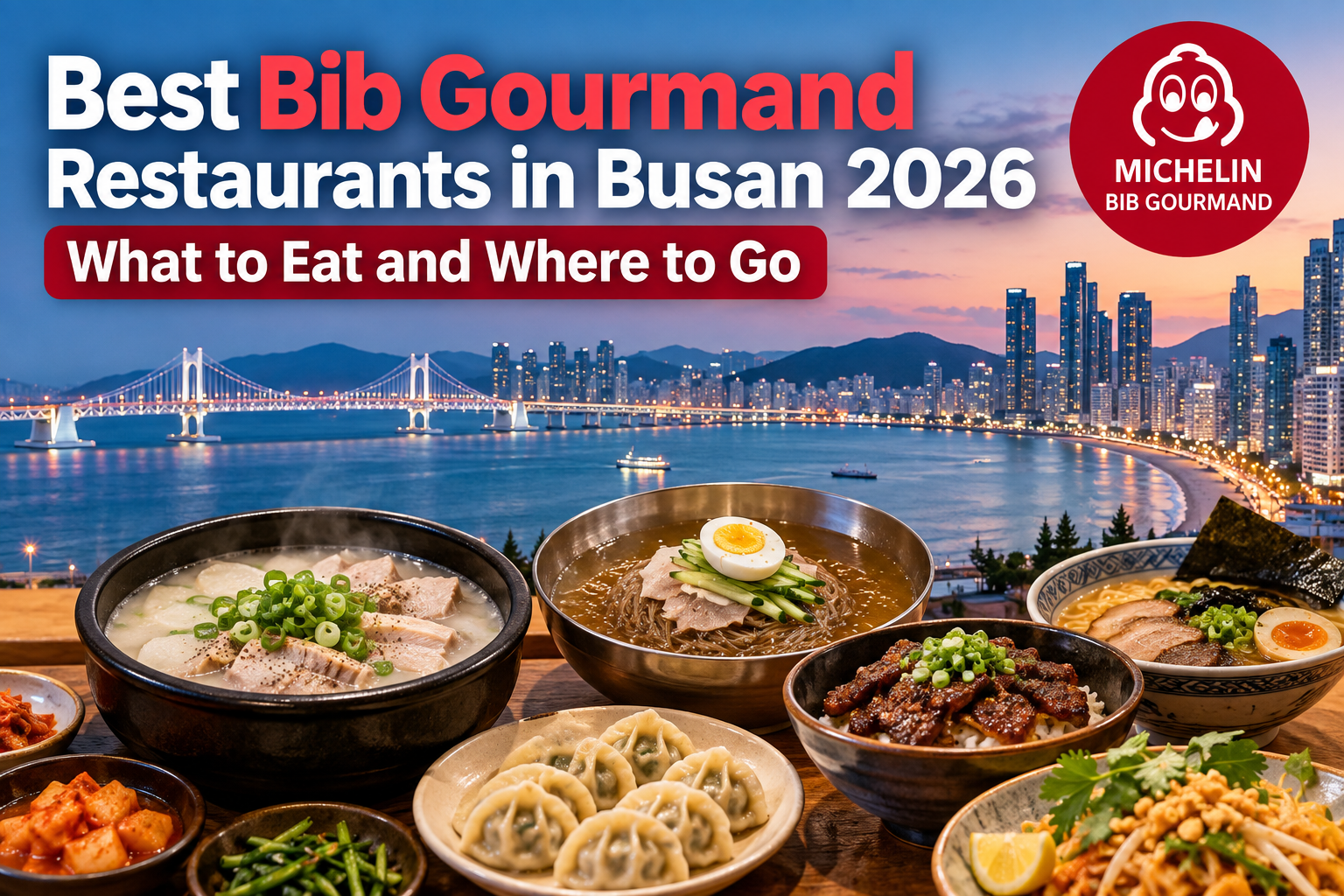
  • Best Bib Gourmand Restaurants in Busan 2026: What to Eat and Where to Go

    Best Bib Gourmand Restaurants in Busan 2026: What to Eat and Where to Go

    Busan has 20 Bib Gourmand restaurants in the 2026 Michelin Guide, but most travelers do not need a list of all 20.

    They need to know which ones actually fit their trip.

    If this is your first visit to Busan, start with the food you want to experience and the neighborhood already on your itinerary. A bowl of dwaeji-gukbap can make more sense than crossing the city for another highly rated restaurant, while travelers staying around Haeundae or Gwangalli have good Michelin-recognized options much closer to them.

    Quick answer: For a distinctly Busan meal, start with one of the Bib Gourmand restaurants specializing in dwaeji-gukbap. If you are staying around Haeundae, Buda Myeonoak or Haemok can be easier to work into your day. Around Gwangalli and Suyeong, Hanwolgwan, Anmok and other nearby selections give you several choices without a long detour. Travelers who want something other than Korean food can also find Taiwanese, Japanese, Thai, Italian and other cuisines in the 2026 selection.

    The goal of this guide is not to rank every Michelin Bib Gourmand restaurant from 1 to 20.

    It is to help you choose the right one for your Busan trip.

    Busan Bib Gourmand 2026: Quick Picks

    If you want…Start with…Why
    A classic Busan experienceDwaeji-gukbapOne of Busan’s signature local foods
    A meal around Gwangalli/SuyeongHanwolgwan or AnmokEasier to combine with the Gwangalli area
    A meal around HaeundaeBuda Myeonoak or HaemokUseful if Haeundae is already on your itinerary
    Something new in the 2026 GuideMoemiljip, Songheonjip or PyeongyangjipAll three are new Busan Bib Gourmand additions for 2026
    NoodlesMoemiljip, Buda Myeonoak or 100.1.PyeongnaengDifferent styles rather than one generic noodle choice
    Something other than Korean foodChoose by cuisine and neighborhoodThe list includes Japanese, Taiwanese, Thai and Italian options
    A vegetarian-friendly searchCheck the vegan/vegetarian selections firstThe Michelin selection includes vegan and vegetarian options
    A solo mealPrioritize simple meal-focused restaurantsOften easier than building your day around a formal dining experience

    The most important thing to notice is that “Bib Gourmand” does not describe one type of restaurant.

    Busan’s 2026 selection ranges from local soup and noodle shops to Japanese, Taiwanese, Thai, Italian and vegan restaurants.

    So choosing by Michelin status alone does not narrow the decision enough.

    What Does Bib Gourmand Mean in Busan?

    Bib Gourmand is Michelin’s recognition for restaurants offering good-quality cooking at good value.

    It is different from a Michelin Star.

    For travelers, that difference is useful.

    A Michelin-starred restaurant may become the centerpiece of an evening. A Bib Gourmand restaurant can often work much more naturally into an ordinary sightseeing day.

    That makes the category particularly useful in Busan, where you may be moving between areas such as Haeundae, Gwangalli, Seomyeon, Nampo and Yeongdo.

    In the 2026 Michelin Guide, Busan has 20 Bib Gourmand restaurants. Nineteen are placed in Michelin’s lower price category, while only one is shown in the next price category.

    This is why Bib Gourmand can be a good place to start if you want a recognized restaurant without turning every meal into a special-occasion expense.

    First Time in Busan? Start With Dwaeji-Gukbap

    If you only have time for one Michelin Bib Gourmand meal and want it to feel specifically connected to Busan, dwaeji-gukbap deserves serious consideration.

    Dwaeji-gukbap is pork soup served with rice and is one of the foods most strongly associated with Busan.

    The 2026 Michelin Bib Gourmand selection includes several restaurants specializing in it.

    That is actually more useful than having one obvious “winner.”

    Your best choice can depend on where you are staying.

    Anmok

    Anmok is in Suyeong-gu, making it a practical option if your day already includes the Gwangalli or Suyeong area.

    Choose it when you want a local Busan meal without adding a cross-city restaurant trip to your schedule.

    Jeongjitgan

    Jeongjitgan specializes in dwaeji-gukbap but is located in Saha-gu.

    That makes it more attractive when your itinerary takes you toward western Busan rather than when you are spending the entire day around Haeundae.

    Hapcheon Gukbapjip

    Another Bib Gourmand option for travelers specifically looking for Busan-style pork soup.

    The important decision here is not which restaurant has the most impressive label.

    It is which one fits the part of Busan you are actually visiting.

    Best Bib Gourmand Choices Around Gwangalli and Suyeong

    Gwangalli is one of the easiest areas for travelers to combine sightseeing with a Bib Gourmand meal.

    You can visit the beach, see Gwangan Bridge and build lunch or dinner into the same part of the day rather than traveling across Busan just for a restaurant.

    Hanwolgwan

    Hanwolgwan specializes in gomtang.

    This is a good option if you want a comforting Korean soup but would prefer something other than dwaeji-gukbap.

    It also works particularly well when Gwangalli is already part of your itinerary.

    Anmok

    Anmok is another strong choice in this part of the city if your priority is a more distinctly Busan meal.

    Choose Anmok over Hanwolgwan if dwaeji-gukbap itself is something you specifically want to try.

    Choose Hanwolgwan if you would rather have gomtang.

    That is a more useful distinction than simply asking which restaurant is “better.”

    100.1.Pyeongnaeng

    If you want noodles instead of soup with rice, this gives you another direction.

    Cold noodles can also be a welcome change if you have already eaten several heavier Korean meals during your trip.

    The larger point is that travelers staying near Gwangalli do not need to cross Busan simply because another Michelin restaurant appears higher on somebody’s ranking.

    You already have meaningful choices nearby.

    Best Bib Gourmand Choices Around Haeundae

    Haeundae is one of the most common bases for first-time Busan visitors, so location matters here.

    Buda Myeonoak

    Buda Myeonoak specializes in naengmyeon.

    It is a useful choice if you want a relatively straightforward meal that can fit between Haeundae sightseeing stops rather than planning an entire evening around dining.

    Haemok

    Haemok offers a different experience and is particularly relevant if you want Japanese cuisine rather than another Korean soup or noodle meal.

    It is also the exception travelers should notice when thinking about Bib Gourmand as uniformly inexpensive: Michelin currently places it in a higher price category than the other 19 Busan Bib Gourmand restaurants.

    So check the current menu before assuming every Bib Gourmand meal will cost roughly the same.

    Should You Stay in Haeundae Just to Eat at a Bib Gourmand?

    No.

    Choose Haeundae because it fits your overall Busan itinerary, not simply because it contains Michelin-listed restaurants.

    But if you are already staying there, using a nearby Bib Gourmand is often smarter than spending a large part of your afternoon traveling across the city for a restaurant with a similar level of recognition.

    Three New Busan Bib Gourmand Restaurants for 2026

    Three Busan restaurants joined the Bib Gourmand selection in 2026:

    Moemiljip, Songheonjip and Pyeongyangjip.

    These are particularly interesting for repeat visitors who have already tried some of Busan’s better-known Michelin selections.

    Moemiljip

    Moemiljip focuses on buckwheat noodles made with 100% Korean buckwheat.

    Its dishes include different preparations such as spicy mixed buckwheat noodles and perilla-oil or broth-based versions.

    Choose it if noodles are the main reason for your meal rather than simply looking for the newest Michelin restaurant.

    Songheonjip

    Songheonjip centers its meal around thick charcoal-grilled tteokgalbi served with rice, side dishes and doenjang-jjigae.

    This is the new 2026 addition I would look at if you want a fuller Korean meal rather than a noodle-focused stop.

    Pyeongyangjip

    Pyeongyangjip specializes in northern Korean-style mandu and also serves dishes such as mung-bean pancakes.

    It gives travelers another useful choice when they want Korean food but have already eaten gukbap, barbecue and noodles elsewhere on the trip.

    The “new for 2026” label is useful, but it should not be the only reason to choose one.

    Pick the food first.

    What If You Do Not Want Korean Food?

    One strength of Busan’s Bib Gourmand selection is its variety.

    The 2026 list is not limited to traditional Korean restaurants.

    Michelin currently categorizes restaurants in the Busan Bib Gourmand selection across cuisines including Japanese, Taiwanese, Thai, Italian, ramen, yakitori and freshwater eel.

    This can be useful on a longer Korea trip.

    After several days of Korean meals, you may simply want something different.

    For example, travelers spending time around Seomyeon can consider Bib Gourmand options in Busanjin-gu rather than automatically heading toward the beach districts for every notable meal.

    This is another reason to choose by neighborhood + cuisine, not by a universal ranking.

    Vegetarian or Vegan Travelers: Check the Restaurant, Not Just the Michelin Label

    Busan’s 2026 Bib Gourmand selection includes vegan and vegetarian-friendly options, but this is one area where travelers should check carefully before going.

    Michelin’s current filters show vegan and vegetarian options within the selection.

    However, “vegetarian options” does not necessarily mean every dish is vegetarian, and Korean broths, sauces and side dishes can contain ingredients that are not obvious from the menu name.

    If this matters to you, verify the current menu before visiting.

    A Michelin designation tells you about the restaurant’s cooking and value.

    It does not replace checking dietary requirements.

    Solo Travelers: Bib Gourmand Can Be Easier Than Fine Dining

    Solo travelers in Korea sometimes worry about restaurants that are designed around shared dishes.

    Bib Gourmand can be useful because several of the Busan selections revolve around individual meals such as soup, noodles or rice dishes.

    Michelin itself currently identifies several Busan Bib Gourmand restaurants as suitable for solo dining.

    Still, do not assume every restaurant operates the same way.

    If you are traveling alone, restaurants centered on gukbap, gomtang, naengmyeon, ramen or similar individual dishes are generally the easiest places to investigate first.

    Should You Travel Across Busan for a Michelin Bib Gourmand Restaurant?

    Usually, no.

    This is probably the most important practical advice in this guide.

    Busan is geographically spread out.

    A restaurant that looks close on a city map can require a substantial subway or bus journey from your sightseeing area.

    If two restaurants both interest you, choose the one that fits your route.

    For example:

    If you are spending the afternoon at Gwangalli, eat around Suyeong or Gwangalli.

    If you are staying around Haeundae, start with the Haeundae selections.

    If you are exploring Seomyeon, look at Busanjin-gu options.

    Only make a dedicated restaurant trip when the specific dish or restaurant itself is something you particularly want to experience.

    Michelin recognition alone is rarely a good reason to lose two hours of a short Busan itinerary.

    Lunch or Dinner: Which Is Better?

    For Bib Gourmand restaurants, lunch can often be easier to fit into a sightseeing itinerary.

    But opening days and service hours vary considerably.

    Do not build your schedule around the assumption that a restaurant serves continuously from lunch through dinner.

    Some restaurants have a break between services, some close on particular weekdays, and popular places may involve a wait.

    Check the restaurant’s current opening hours on the day you plan to visit.

    This is especially important if you are traveling across Busan specifically for that meal.

    Do You Need a Reservation?

    It depends on the restaurant.

    Bib Gourmand covers everything from casual meal-focused establishments to restaurants where planning ahead can be more useful.

    Do not assume that Michelin recognition automatically means formal reservations are required.

    Likewise, do not assume you can walk into every popular restaurant immediately at peak lunch or dinner time.

    For casual restaurants, arriving slightly outside the busiest meal period can sometimes be more useful than trying to build a complicated reservation strategy.

    For restaurants that accept bookings, check the restaurant’s current booking method before your trip.

    How I Would Choose a Busan Bib Gourmand Restaurant

    For a first Busan trip, use this order:

    1. Decide which neighborhood I will already be in.

    Avoid unnecessary cross-city travel.

    2. Decide whether I want a specifically Busan dish.

    If yes, dwaeji-gukbap is an obvious place to start.

    3. Check what I have already eaten on the trip.

    If you have already had several soup and rice meals, noodles, mandu or another cuisine may make the next meal more enjoyable.

    4. Check opening hours and current menu.

    Restaurant details change more quickly than Michelin selections.

    5. Only then compare individual restaurants.

    This reverses the way many “best restaurant” lists work, but it produces a much more practical travel plan.

    Bib Gourmand or Michelin-Starred Restaurant in Busan?

    Choose Bib Gourmand when you want a good meal to fit naturally into your sightseeing day.

    Choose a Michelin-starred restaurant when the dining experience itself is one of the major activities of your trip.

    Neither is automatically better.

    They solve different travel needs.

    A three-day first visit to Busan might easily include both: a casual local Bib Gourmand lunch one day and a planned fine-dining experience on another.

    Final Recommendation

    Busan’s 20 Bib Gourmand restaurants give travelers much more choice than a simple “best restaurants” ranking suggests.

    For a first visit, I would not try to collect Michelin restaurants.

    I would use the guide to improve meals that already fit the trip.

    Start with dwaeji-gukbap if you want a distinctly Busan experience.

    Choose Gwangalli/Suyeong or Haeundae options when those neighborhoods are already part of your sightseeing route.

    Look at Moemiljip, Songheonjip and Pyeongyangjip if you specifically want to explore the new 2026 additions.

    And if you have already eaten plenty of Korean food, use the broader Bib Gourmand selection to try something different rather than forcing another “must-eat” dish into the itinerary.

    The best Bib Gourmand restaurant in Busan is not necessarily the restaurant with the longest queue or the most recommendations.

    It is the one that gives you a meal you actually want without making the rest of your Busan trip worse.
  • Best Michelin Restaurants in Busan: A Guide to Michelin-Starred Dining

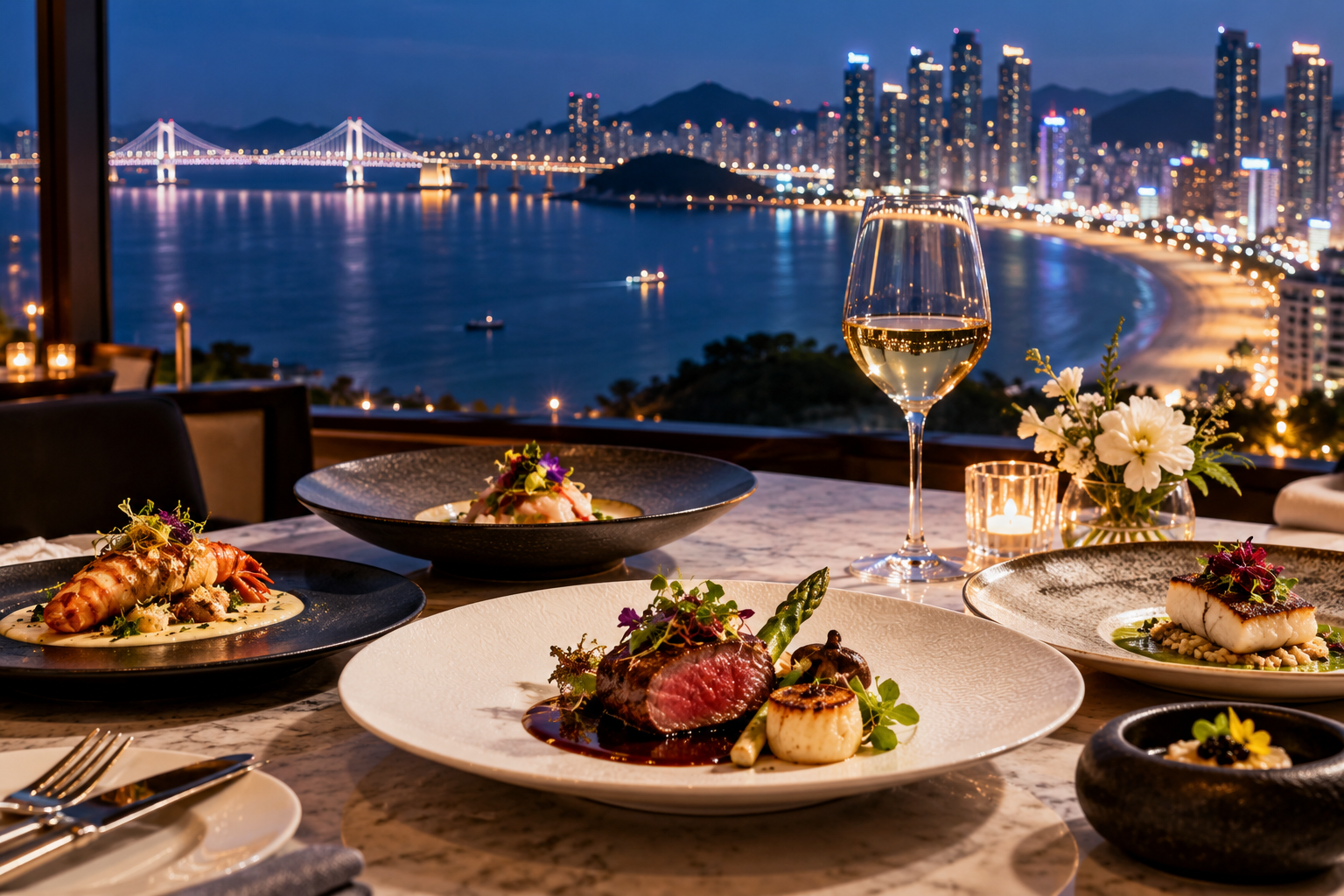
    Best Michelin Restaurants in Busan: A Guide to Michelin-Starred Dining

    Busan has long been famous for seafood, traditional markets, dwaeji gukbap, milmyeon, and casual local restaurants.

    But in recent years, another side of the city’s food culture has become increasingly important: fine dining.

    The MICHELIN Guide now covers both Seoul and Busan, giving international travelers a new way to explore the city’s evolving culinary scene.

    In the MICHELIN Guide Seoul & Busan 2026, Busan has four restaurants awarded One MICHELIN Star: Fiotto, Palate, Mori, and Le DORER.

    These restaurants represent very different styles of cooking, from contemporary Italian and French-inspired cuisine to Japanese kaiseki and modern Korean dining.

    Here is a guide to Busan’s Michelin-starred restaurants and what travelers should know before making a reservation.

    1. Fiotto – Contemporary Italian Dining on Dalmaji Hill

    One MICHELIN Star

    Fiotto is a small restaurant located on Dalmaji Hill in Haeundae.

    Run by a husband-and-wife team, the restaurant focuses on a pasta-centered tasting menu that combines contemporary Italian techniques with carefully selected Korean ingredients.

    Vegetables from the owners’ family farm, Korean pork, native rice, and other seasonal ingredients appear throughout the menu.

    Many components, including fresh pasta and other preparations, are made in-house.

    Cuisine:
    Italian Contemporary

    Address:
    2F, 219 Dalmaji-gil 117beonga-gil, Haeundae-gu, Busan 48105, South Korea

    Phone:
    +82-51-744-5309

    Dalmaji Hill is already known for cafés, ocean scenery, and a quieter atmosphere above Haeundae, making Fiotto particularly attractive for travelers who want to combine fine dining with an evening in this part of Busan.

    Best for

    Couples, pasta lovers, food-focused travelers, and visitors interested in farm-to-table dining.

    Reservation tip

    Fiotto is a small restaurant and manages its own reservations. Advance planning is strongly recommended, especially if the restaurant is an important part of your Busan itinerary.

    2. Palate – Contemporary French-Inspired Dining in Haeundae

    One MICHELIN Star

    Palate is one of Busan’s most established fine-dining destinations.

    Chef Kim Jae-hoon uses French cuisine as a foundation while allowing influences from his wider culinary experience to shape the menu.

    The result is contemporary cuisine that is creative rather than rigidly traditional.

    Cuisine:
    Contemporary

    Address:
    3F, 154 Dalmaji-gil 65beon-gil, Haeundae-gu, Busan 48576, South Korea

    Phone:
    +82-51-626-2364

    Like Fiotto, Palate is located in the Dalmaji area of Haeundae.

    This makes the neighborhood particularly interesting for travelers who want to experience Busan’s contemporary fine-dining scene.

    Best for

    Special occasions, couples, contemporary cuisine enthusiasts, and travelers looking for an elegant dinner in Haeundae.

    Reservation tip

    Palate manages its own reservations, so check current availability before your trip.

    Menus, prices, and operating hours can change, particularly with seasonal tasting menus.

    3. Mori – Japanese Kaiseki Using Busan’s Seasonal Ingredients

    One MICHELIN Star

    Mori offers a completely different dining experience.

    The restaurant is co-owned by Korean chef Kim Wan-gyu, who trained in Japan, and his Japanese wife.

    Its focus is authentic Japanese kaiseki, presented through carefully composed courses.

    Fresh seafood and seasonal produce from Busan play an important role in the menu, making Mori particularly interesting for travelers who want to see how Japanese culinary traditions can interact with ingredients from Korea’s largest coastal city.

    Cuisine:
    Japanese

    Address:
    Unit 311, 3F, LEEIN: VIEW 2 Commercial Building,
    21 Gunam-ro, Haeundae-gu, Busan 48095, South Korea

    Phone:
    +82-51-731-9889

    The intimate atmosphere and counter-style dining make the experience feel very different from a large restaurant.

    Best for

    Japanese food lovers, seafood enthusiasts, couples, chef’s-table fans, and travelers looking for an intimate fine-dining experience.

    Reservation tip

    Mori manages reservations directly.

    Because of the restaurant’s intimate format, travelers should avoid assuming that a table will be available without advance planning.

    4. Le DORER – Busan’s New Michelin Star for 2026

    One MICHELIN Star

    Le DORER is especially important in the 2026 edition of the MICHELIN Guide.

    It became Busan’s fourth Michelin-starred restaurant, joining Fiotto, Palate, and Mori.

    The restaurant focuses on Korean Contemporary cuisine.

    Rather than abandoning traditional Korean flavors, Le DORER modernizes them through contemporary techniques while emphasizing seasonal and local ingredients.

    French and Japanese influences appear subtly in the cooking, but the identity of the cuisine remains rooted in Korea.

    The dining room also offers an atmospheric experience, reached through a small alley before opening into a space with impressive ocean views.

    Cuisine:
    Korean Contemporary

    Le DORER is also connected with another major distinction in the 2026 guide.

    Chef Kim Chang-uk received the 2026 MICHELIN Young Chef Award, recognizing his thoughtful approach to contemporary Korean cuisine and his focus on precision, seasonality, and ingredient quality.

    One dish highlighted by Michelin inspectors is the restaurant’s charcoal-grilled mackerel, which demonstrates how familiar Korean ingredients can be transformed through careful modern cooking.

    Best for

    Travelers interested in modern Korean cuisine, special occasions, culinary travelers, and visitors who want to experience one of the newest developments in Busan’s fine-dining scene.

    Reservation tip

    As one of Busan’s newest Michelin-starred restaurants, Le DORER may attract increased interest following its 2026 award.

    Check the restaurant’s current reservation system, location details, menu, and operating schedule before visiting.

    Why Are Most of Busan’s Michelin-Starred Restaurants Around Haeundae?

    One interesting feature of Busan’s Michelin-starred dining scene is its strong connection with the eastern side of the city.

    Haeundae and Dalmaji have developed into areas where luxury hotels, ocean views, contemporary restaurants, cafés, and international travelers come together.

    For visitors staying around Haeundae, this makes it possible to combine beach sightseeing with fine dining without traveling across the entire city.

    It also makes Haeundae an attractive base for travelers planning a food-focused luxury trip to Busan.

    Which Michelin-Starred Restaurant Should You Choose?

    Each of Busan’s four Michelin-starred restaurants offers a different experience.

    Choose Fiotto if you love handmade pasta, Italian techniques, and ingredient-focused cooking.

    Choose Palate if you prefer contemporary French-inspired fine dining and creative cuisine.

    Choose Mori if Japanese kaiseki, seafood, and intimate chef-driven dining appeal to you.

    Choose Le DORER if you want to experience contemporary Korean cuisine and one of the most important new additions to Busan’s 2026 dining scene.

    There is no single restaurant that is best for every traveler.

    The best choice depends on the cuisine and dining experience you want.

    Michelin Star vs. Bib Gourmand

    Travelers sometimes assume that every restaurant in the MICHELIN Guide has a star.

    That is not the case.

    A MICHELIN Star recognizes restaurants for outstanding cooking.

    The guide also includes Bib Gourmand restaurants, which are recognized for good-quality cooking at good value, as well as other Michelin-selected restaurants.

    This distinction is especially useful in Busan because the city’s culinary identity extends far beyond luxury dining.

    A traveler can enjoy a Michelin-starred tasting menu one evening and a much simpler bowl of local noodles, soup, or another regional specialty the next day.

    Both experiences can be valuable parts of exploring Busan’s food culture.

    Busan’s Growing Michelin Dining Scene

    The MICHELIN Guide Seoul & Busan 2026 selected 55 restaurants in Busan overall.

    Only four currently hold Michelin Stars, but the larger selection demonstrates the breadth of the city’s restaurant culture.

    The guide includes everything from contemporary cuisine to restaurants specializing in familiar Korean foods.

    For travelers, this means Michelin can be used not only to find special-occasion restaurants but also as one reference for exploring Busan’s broader dining scene.

    How Far in Advance Should You Reserve?

    For Michelin-starred restaurants, booking in advance is generally the safest approach.

    Smaller restaurants may have very limited seating, and tasting-menu restaurants often prepare ingredients according to the number of expected guests.

    If a particular restaurant is one of the main reasons for your trip, arrange the reservation before finalizing the rest of that day’s itinerary.

    Always check the restaurant’s current cancellation policy as well.

    What Should International Travelers Know?

    Fine-dining restaurants in Korea are increasingly accustomed to international guests, but reservation systems and communication methods can vary.

    Before visiting, confirm:

    the reservation date and time, the number of guests, dietary restrictions, menu price, cancellation rules, and the restaurant’s exact location.

    If you have serious allergies or dietary restrictions, communicate them as early as possible rather than waiting until you arrive.

    Combine Michelin Dining With a Busan Trip

    A Michelin meal does not need to stand alone.

    Travelers dining around Haeundae or Dalmaji can combine dinner with Haeundae Beach, coastal scenery, cafés, or an evening walk.

    This is one of the advantages of Busan.

    Fine dining exists alongside beaches, markets, local restaurants, cafés, and traditional regional food.

    A well-planned itinerary can include both sides of the city’s food culture.

    Is Michelin Dining in Busan Worth It?

    For travelers interested in food, it can be.

    Busan’s Michelin-starred restaurants are not simply copies of Seoul restaurants.

    The city’s coastal geography, seafood, local ingredients, and individual chefs influence what appears on the plate.

    Mori makes use of Busan’s fresh seafood and seasonal produce.

    Fiotto combines Italian techniques with Korean ingredients.

    Palate brings a contemporary and adventurous approach to French-inspired cuisine.

    Le DORER demonstrates how modern Korean cooking in Busan continues to evolve.

    Together, the four restaurants provide a snapshot of a city whose culinary identity is becoming increasingly diverse.

    Final Thoughts

    Busan will always be loved for its seafood markets, pork soup, noodles, fish cakes, and street food.

    But its Michelin-starred restaurants reveal another side of the city.

    In 2026, Fiotto, Palate, Mori, and Le DORER represent four distinct approaches to fine dining in Busan.

    From handmade pasta and contemporary cuisine to Japanese kaiseki and modern Korean cooking, these restaurants show how rapidly Busan’s dining scene is developing.

    For food-focused travelers, experiencing both local Busan specialties and Michelin-starred dining can provide a much richer understanding of the city.

    And as Busan’s culinary scene continues to evolve, the city is becoming a destination where the food can be just as memorable as the beaches and ocean views.


  • Best Restaurants in Busan: Must-Try Korean Food and Local Favorites

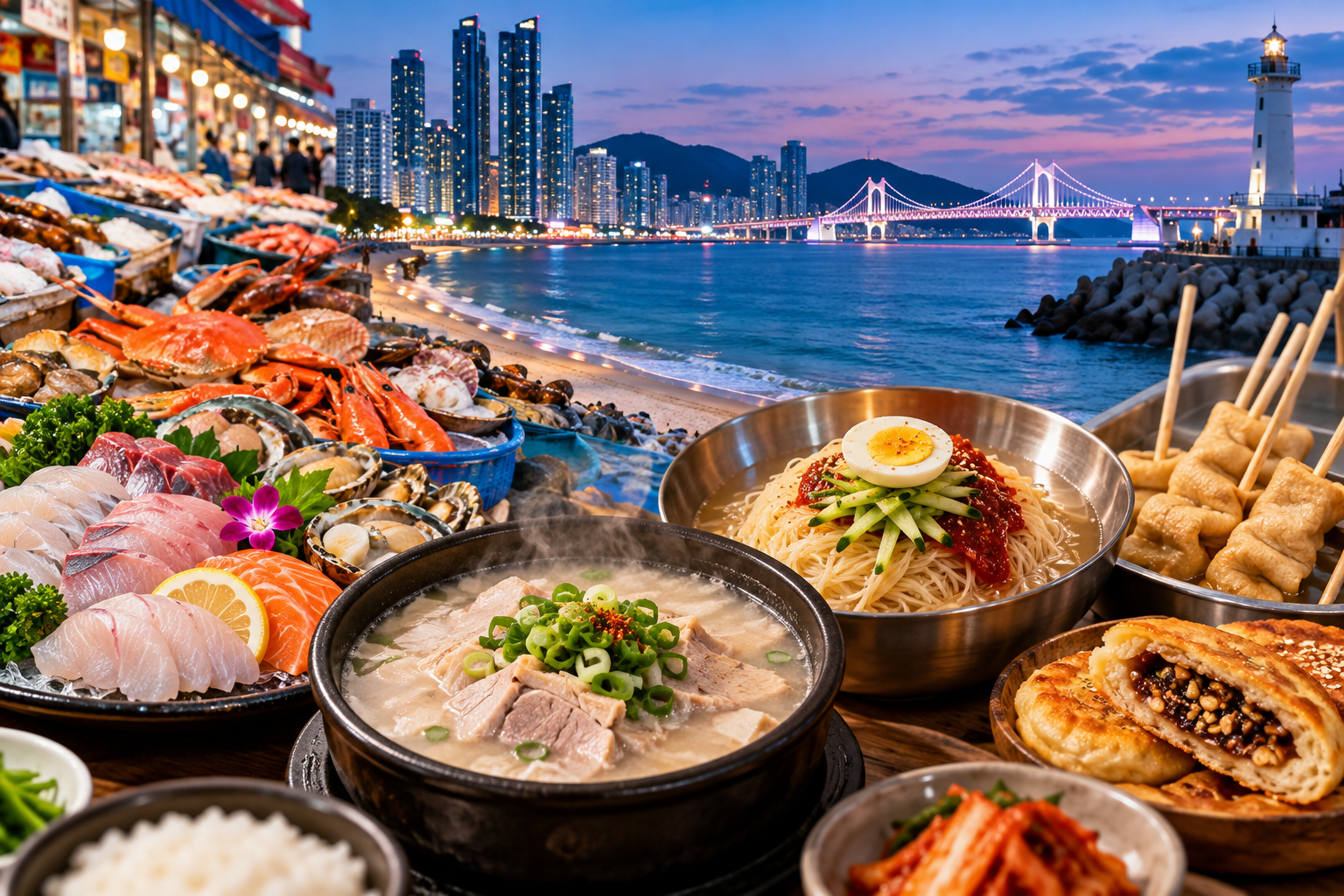
    Best Restaurants in Busan: Must-Try Korean Food and Local Favorites

    Busan is one of the best cities in South Korea for travelers who love food.

    As Korea’s largest coastal city, Busan is famous for fresh seafood, but the local food scene goes far beyond fish markets. Pork soup with rice, wheat noodles, Korean-style raw fish, traditional market food, and neighborhood restaurants are all part of the experience.

    For first-time visitors, deciding what and where to eat can be difficult because Busan is a large city and many famous restaurants are spread across different neighborhoods.

    This guide introduces some of the foods and restaurants worth experiencing in Busan, with practical information including addresses, phone numbers, locations, and what to order.

    1. Songjeong Samdae Gukbap – Classic Dwaeji Gukbap in Seomyeon

    One of the first foods visitors should try in Busan is dwaeji gukbap, a comforting bowl of pork broth served with pork and rice.

    Songjeong Samdae Gukbap is located in Seomyeon’s famous Dwaeji Gukbap Alley and has a long history in the neighborhood.

    Address:
    33 Seomyeon-ro 68beon-gil, Busanjin-gu, Busan, South Korea

    Phone:
    +82-51-806-5722

    What to try:
    Dwaeji gukbap, sundae gukbap, suyuk, and chapssal sundae.

    The broth is known for being milky yet relatively clean in flavor, making this a good introduction to Busan-style pork soup.

    Seomyeon is also one of the most convenient dining areas for travelers because it combines restaurants, shopping, cafés, nightlife, and excellent public transportation.

    Best for

    First-time visitors, solo travelers, budget-conscious travelers, and anyone who wants to try one of Busan’s signature dishes.

    2. Eom Yongbaek Dwaejigukbap – A Modern Take on a Busan Classic

    For travelers who want to compare different styles of pork soup, Eom Yongbaek Dwaejigukbap is another interesting choice.

    The restaurant serves both Busan-style and Miryang-style versions of dwaeji gukbap, giving visitors a chance to experience how this familiar Korean dish can vary.

    Address:
    1F, 39 Suyeong-ro 680beon-gil, Suyeong-gu, Busan, South Korea

    Phone:
    +82-51-757-8092

    What to try:
    Busan-style dwaeji gukbap, Miryang-style dwaeji gukbap, and steamed pork.

    The restaurant is also known for its steamed pork served with accompaniments such as tofu, chives, and garlic.

    Best for

    Food-focused travelers and visitors who want to explore different interpretations of Busan’s famous pork soup.

    3. Hapcheon Gukbapjip – Clear-Broth Pork Soup Loved in Busan

    Not every bowl of Busan pork soup looks the same.

    Hapcheon Gukbapjip in Nam-gu is known for a clearer, lighter-looking broth and generous portions of pork.

    Address:
    235 Yongho-ro, Nam-gu, Busan, South Korea

    Phone:
    +82-51-628-4898

    What to try:
    Dwaeji gukbap and steamed pork.

    This is a useful restaurant for travelers who want to go beyond the most tourist-oriented neighborhoods and experience a well-known local version of the dish.

    Hapcheon Gukbapjip is also included in the MICHELIN Guide’s Busan selection, demonstrating how seriously this seemingly simple local dish is taken in the city.

    Best for

    Local-food enthusiasts, repeat visitors, and travelers interested in traditional Busan dishes.

    4. Yeongjin Dwaeji Gukbap – Famous for Suyuk Baekban

    Yeongjin Dwaeji Gukbap is another popular name in Busan’s pork-soup culture.

    Located in Saha-gu, it is particularly well known for suyuk baekban, a set meal featuring steamed pork.

    Address:
    39 Hasinbeonyeong-ro 157beon-gil, Saha-gu, Busan, South Korea

    Phone:
    +82-507-1374-3820

    What to try:
    Suyuk baekban and dwaeji gukbap.

    For visitors who enjoy exploring restaurants outside Busan’s main tourist districts, this can be an interesting addition to a food-focused itinerary.

    Best for

    Travelers who want a more local dining experience and anyone who enjoys boiled or steamed pork dishes.

    5. Jagalchi Market – The Classic Busan Seafood Experience

    No Busan food guide would be complete without seafood.

    Jagalchi Market is one of the city’s best-known food destinations and remains an essential stop for many first-time visitors.

    Rather than thinking of Jagalchi as a single restaurant, think of it as an entire seafood district.

    Visitors can see tanks filled with live seafood, explore the market, and choose from numerous seafood restaurants and vendors in the surrounding area.

    Popular choices may include Korean-style raw fish known as hoe, shellfish, grilled fish, seafood soups, and seasonal catches.

    Best for

    Seafood lovers, first-time visitors, market explorers, and travelers who want one of Busan’s most recognizable food experiences.

    Travel tip

    Prices and available seafood can vary according to season and vendor. Ask about the price before ordering, particularly when choosing seafood sold by weight.

    6. Gwangalli – Seafood With a View

    Gwangalli is another excellent area for food lovers.

    The neighborhood surrounding Gwangalli Beach is filled with seafood restaurants, Korean restaurants, bars, cafés, and modern dining spots.

    What makes the area special is the view.

    In the evening, restaurants around the waterfront can offer beautiful views toward Gwangan Bridge, making dinner part of the sightseeing experience.

    For travelers who want seafood without the traditional market atmosphere of Jagalchi, Gwangalli can be an appealing alternative.

    Best for

    Couples, evening dining, seafood lovers, and travelers who enjoy restaurants with coastal views.

    7. Try Milmyeon – Busan’s Famous Wheat Noodles

    Another food closely associated with Busan is milmyeon.

    The dish features wheat noodles and is commonly served either in a chilled broth or mixed with a spicy sauce.

    It can be especially refreshing during Busan’s hot and humid summer.

    You may see two common versions:

    Mul milmyeon – noodles served in cold broth.

    Bibim milmyeon – noodles mixed with a spicy sauce.

    Rather than visiting Busan and eating only Korean barbecue or seafood, trying milmyeon gives travelers another taste of the city’s distinctive food history.

    Best for

    Summer travelers, noodle lovers, budget travelers, and anyone interested in regional Korean dishes.

    8. Nampo-dong and BIFF Square – Street Food and Casual Eating

    For casual eating, head toward Nampo-dong and BIFF Square.

    This part of Busan is ideal for travelers who prefer tasting several small foods rather than sitting down for one large meal.

    One of the best-known Busan snacks is ssiat hotteok, a sweet Korean pancake filled with seeds.

    You may also encounter tteokbokki, fish cakes, dumplings, fried foods, and other Korean street-food favorites.

    The nearby Gukje Market and Jagalchi area make it easy to combine sightseeing and food exploration.

    Best for

    Street-food lovers, families, budget travelers, and first-time visitors.

    9. Busan Eomuk – More Than Ordinary Fish Cake

    Busan is famous throughout Korea for eomuk, or fish cake.

    Although fish cake can be found everywhere in Korea, Busan has a particularly strong association with it because of the city’s history as a major port.

    Modern Busan fish-cake shops sell much more than the traditional skewers served in broth.

    Travelers may encounter fish cakes filled with cheese, vegetables, seafood, or other ingredients, as well as gift boxes designed for travelers.

    Trying warm eomuk while exploring a market is one of the simplest ways to experience everyday Busan food culture.

    10. Traditional Markets – Where Busan’s Food Culture Comes Alive

    Some of the most memorable food experiences in Busan happen in markets rather than famous restaurants.

    Gukje Market, Bupyeong Kkangtong Market, and the neighborhoods around Jagalchi provide opportunities to try numerous Korean dishes in a relatively small area.

    Bupyeong Kkangtong Market is particularly interesting in the evening, when visitors can explore a lively collection of snacks and street foods.

    Markets are also useful for travelers who are unfamiliar with Korean cuisine because you can see many foods before deciding what to order.

    What Food Is Busan Most Famous For?

    If you have only a short time in the city, start with a few dishes that strongly represent Busan.

    Dwaeji gukbap is one of the most important.

    Then try milmyeon, fresh or grilled seafood, Busan eomuk, and ssiat hotteok.

    Together, these foods provide a much broader introduction to Busan than eating only at internationally familiar restaurants.

    Which Area Is Best for Food in Busan?

    Different neighborhoods offer different experiences.

    Choose Seomyeon for pork soup, casual restaurants, nightlife, and easy transportation.

    Choose Jagalchi and Nampo-dong for seafood, markets, traditional food, and street snacks.

    Choose Gwangalli for seafood, cafés, restaurants, and evening views of Gwangan Bridge.

    Choose Haeundae for the widest combination of tourist-friendly restaurants, cafés, bars, hotels, and beachside dining.

    Exploring more than one neighborhood is the best way to understand Busan’s food culture.

    Tips for Eating at Local Restaurants in Busan

    Many traditional Korean restaurants specialize in only a few dishes. A short menu is therefore not necessarily a disadvantage.

    At popular restaurants, expect queues during lunch and dinner.

    Some smaller restaurants may have limited English information, so having the Korean name of the dish available on your phone can be useful.

    Restaurant hours, prices, menus, and closing days can change, so check current information before making a special trip.

    And when visiting seafood markets, confirm prices before ordering.

    Busan Beyond Local Food

    Busan is no longer only a destination for markets and traditional Korean dishes.

    The city also has a growing contemporary and fine-dining scene. The MICHELIN Guide now publishes a Seoul & Busan edition, with restaurants across Busan ranging from local specialties to contemporary cuisine.

    That side of the city deserves its own guide, so we will explore Busan’s MICHELIN restaurants separately.

    Final Thoughts

    Busan is a city that rewards travelers who arrive hungry.

    A bowl of dwaeji gukbap in a neighborhood restaurant, cold milmyeon on a summer afternoon, seafood near the harbor, and street food in Nampo-dong can reveal as much about the city as its beaches and famous landmarks.

    For first-time visitors, do not worry about finding only the most expensive or fashionable restaurant.

    Start with the foods Busan is known for, explore different neighborhoods, and allow some room in your itinerary for unexpected local discoveries.

    That is often where the best Busan food memories begin.