
What Should You Eat in Jeju Island?
Jeju Island has a food culture that feels different from mainland Korea.
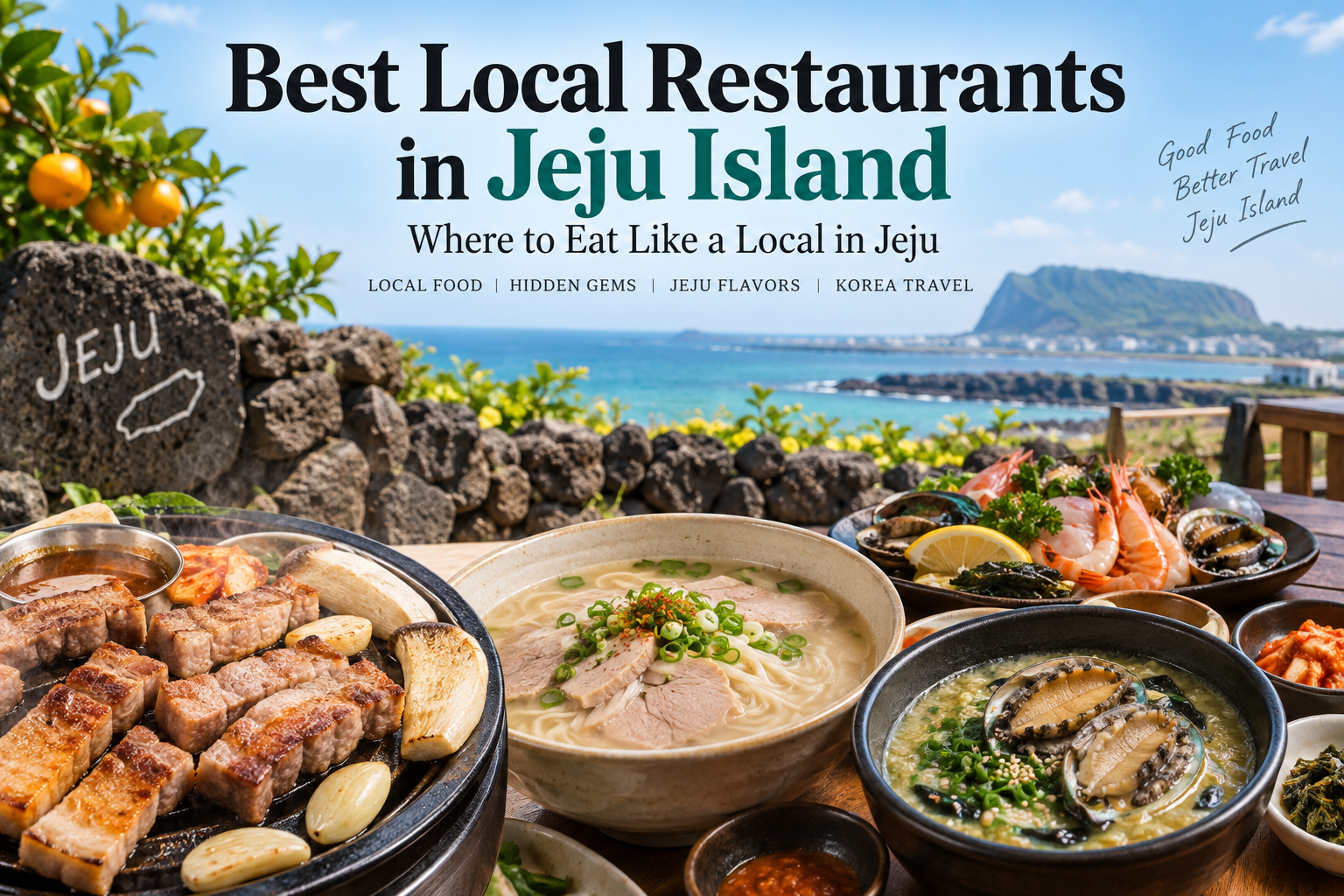
The island’s volcanic landscape, surrounding sea, fishing traditions, and history of raising pigs have shaped a cuisine built around ingredients such as black pork, seafood, seaweed, abalone, and locally prepared noodles.
For first-time visitors, choosing where to eat can be difficult. Popular tourist areas are filled with restaurants, but some dishes are especially worth seeking out if you want to experience the flavors associated with Jeju.
Here are some local restaurants and foods to consider during your trip.
1. Woojin Haejangguk — Try Jeju-Style Momguk
우진해장국
4.1•한식당경로
•064-757-3393
One of the most distinctive dishes to try in Jeju is momguk, a traditional soup made with pork broth and gulfweed.
Woojin Haejangguk in Jeju City is widely known for its Jeju-style dishes and is particularly associated with gosari haejangguk, a thick and savory soup made with bracken and meat.
For international travelers, this is a useful place to experience a flavor that is very different from the Korean barbecue and bibimbap commonly found outside Korea.
Its Jeju City location also makes it relatively convenient to include near the beginning or end of an island trip.
What to try: Gosari haejangguk and traditional Jeju-style soup.
Best for: Travelers interested in traditional local food and a hearty Korean breakfast.
2. Ollae Guksu — A Classic Bowl of Jeju Gogi-Guksu
올래국수 본점
4.1•국수 전문점경로
•064-742-7355
Gogi-guksu, or pork noodles, is one of the easiest Jeju specialties for first-time visitors to enjoy.
Ollae Guksu specializes in this Jeju-style noodle soup.
The dish combines noodles, generous slices of pork, and a rich pork broth. Unlike many restaurants with long menus, Ollae Guksu has become particularly associated with this single local specialty.
Jeju’s official tourism information describes its gogi-guksu as using medium-thick noodles, thick pork slices, and a savory bone broth.
It is simple, filling, and an excellent introduction to Jeju comfort food.
What to try: Gogi-guksu.
Best for: First-time visitors, solo travelers, and anyone looking for an affordable local meal.
3. Guksu Bada — Pork Noodles and More in Seogwipo
Travelers staying in southern Jeju do not need to return to Jeju City to try local noodles.
Guksu Bada in Seogwipo is another option for gogi-guksu.
Its pork broth is simmered for more than 12 hours, while the restaurant makes and ages its own noodles. The menu also includes other dishes associated with Jeju, including dombe-gogi and momguk.
This makes it particularly useful for travelers who want to sample several Jeju flavors during a Seogwipo itinerary.
What to try: Gogi-guksu and dombe-gogi.
Best for: Seogwipo travelers and visitors who want to explore several Jeju specialties.
4. Sukseongdo — Jeju Black Pork Barbecue
숙성도 제주본점
4.8•숯불구이/바베큐전문점경로
•064-743-8877
No Jeju food trip feels complete without black pork barbecue.
Jeju black pork is famous for its rich flavor and pleasantly chewy texture. Traditionally, grilled pork is often eaten with meljeot, a fermented anchovy sauce that adds a salty, savory contrast to the meat.
Sukseongdo is a popular choice in Jeju City for travelers who want to experience aged pork prepared over charcoal.
Korean barbecue is also a social meal, so this is especially enjoyable when traveling with a partner, friends, or family.
What to try: A selection of aged Jeju pork cuts.
Best for: Korean barbecue lovers and first-time visitors to Jeju.
5. Ttungttanji Aewol — Black Pork on the Aewol Coast
If your itinerary takes you toward Aewol, consider combining the coastal drive with a black pork meal.
Ttungttanji Aewol Black Pork Main Branch has been operated across two generations and specializes in aged Jeju black pork. The meat is grilled for diners by restaurant staff.
Aewol is already popular for its ocean scenery and cafés, so having a local pork meal here can fit naturally into a day exploring western Jeju.
What to try: Aged black pork.
Best for: Aewol road trips, couples, families, and groups.
6. Sangchunjae — A Korean Meal Featuring Jeju Ingredients
상춘재
4.4•한식당웹사이트
•경로
•064-725-1557
Travelers who want something other than barbecue or noodles can consider a more complete Korean-style meal.
Sangchunjae in Jeju City is known as a Korean restaurant where visitors can experience dishes built around local ingredients.
This type of meal is particularly useful for travelers who want to see how vegetables, seafood, rice, soups, and side dishes come together at a Korean table.
Instead of focusing on one famous dish, the experience is about enjoying several flavors together.
Best for: Couples, families, and travelers interested in Korean home-style dining.
7. Try Abalone and Jeju Seafood
양씨네 제주전복칼국수 본점
4.6•해산물 요리 전문식당웹사이트
•경로
•064-721-1588
Jeju is surrounded by the sea, so seafood deserves an important place in any island food itinerary.
Abalone is one ingredient closely associated with Jeju dining.
Travelers can find it prepared in porridge, rice dishes, soups, grilled dishes, and noodle dishes.
At Yangssine Jeju Abalone Kalguksu in Jeju City, seafood lovers can try an abalone-focused version of Korean knife-cut noodles.
This can be a good alternative for travelers who want a warm, comforting seafood meal rather than raw fish.
What to try: Abalone kalguksu.
Best for: Seafood lovers and travelers looking for a comforting lunch.
8. Black Pork and Seafood in Seogwipo
Jeju’s food culture does not require choosing between meat and seafood.
Some restaurants combine the two.
Black Pork & Seafood Samhap near Seogwipo’s Olle Market serves combinations of black pork and seafood, including octopus and other seafood ingredients.
This type of meal can be fun for groups because several Jeju flavors arrive at the table together.
After eating, visitors can continue exploring Seogwipo and its traditional market area.
Best for: Groups, adventurous eaters, and travelers exploring central Seogwipo.
Foods Every First-Time Jeju Visitor Should Know
Even if you do not visit every restaurant in this guide, there are several Jeju foods worth remembering.
Heukdwaeji means Jeju black pork. Try it grilled and, if available, dip it into meljeot.
Gogi-guksu is Jeju-style pork noodle soup.
Dombe-gogi is boiled pork traditionally served on a wooden cutting board called a dombe in the Jeju dialect.
Momguk is a traditional pork and gulfweed soup.
Jeonbok, or abalone, appears in porridge, rice, noodles, and many seafood dishes.
Jeju is also known for fresh fish and other seafood that reflects its island environment.
Jeju City or Seogwipo: Which Is Better for Food?
You can eat well in both.
Jeju City is especially convenient for travelers arriving through Jeju International Airport and offers everything from traditional soup and pork noodles to black pork barbecue and seafood.
Seogwipo is an excellent base for combining local restaurants with markets, waterfalls, coastal attractions, and southern Jeju sightseeing.
Aewol and western Jeju work particularly well for travelers who want to combine restaurants with coastal drives and cafés.
Rather than driving across the island for one famous restaurant, it is usually better to choose good local food near the area you are already exploring.
Tips for Eating at Local Restaurants in Jeju
Restaurant hours and closing days can change, so check current information on the day you visit.
Some famous restaurants may have long lines during lunch, dinner, weekends, and Korean holiday periods.
At Korean barbecue restaurants, minimum orders may apply, particularly when ordering meat.
Smaller local restaurants may also have limited English menus, although translation apps make ordering much easier than it once was.
And do not be afraid to try something unfamiliar.
Some of Jeju’s most memorable dishes are very different from the Korean foods international visitors already know.
Local Restaurant or Michelin Restaurant?
They offer different experiences.
A local restaurant may specialize in one dish that residents have eaten for generations, while a Michelin-recognized restaurant may interpret Jeju ingredients through a more refined or contemporary style.
Neither is necessarily more “authentic” than the other.
They simply show different sides of Jeju’s evolving food culture.
In a separate guide, we will explore Michelin-recognized dining and other notable restaurants for travelers looking for a more curated culinary experience.
Final Thoughts
Eating in Jeju is one of the best ways to understand the island.
Black pork reflects Jeju’s agricultural traditions. Seafood connects the table to the surrounding ocean. Gogi-guksu and momguk reveal a simpler, comforting side of local cooking.
Do not spend your entire trip searching only for the most famous restaurant on social media.
Instead, try several kinds of Jeju food as you travel around the island.
A bowl of pork noodles in Jeju City, black pork after an Aewol coastal drive, or a seafood meal in Seogwipo can become as memorable as any major tourist attraction.
And after exploring Jeju’s local food, there is another side of the island worth discovering: its growing café culture.
From ocean-view cafés in Aewol to quiet spaces hidden among stone walls and tangerine fields, Jeju has become one of Korea’s most interesting café destinations.