Fine Dining in Jeju: A Different Side of the Island’s Food Culture
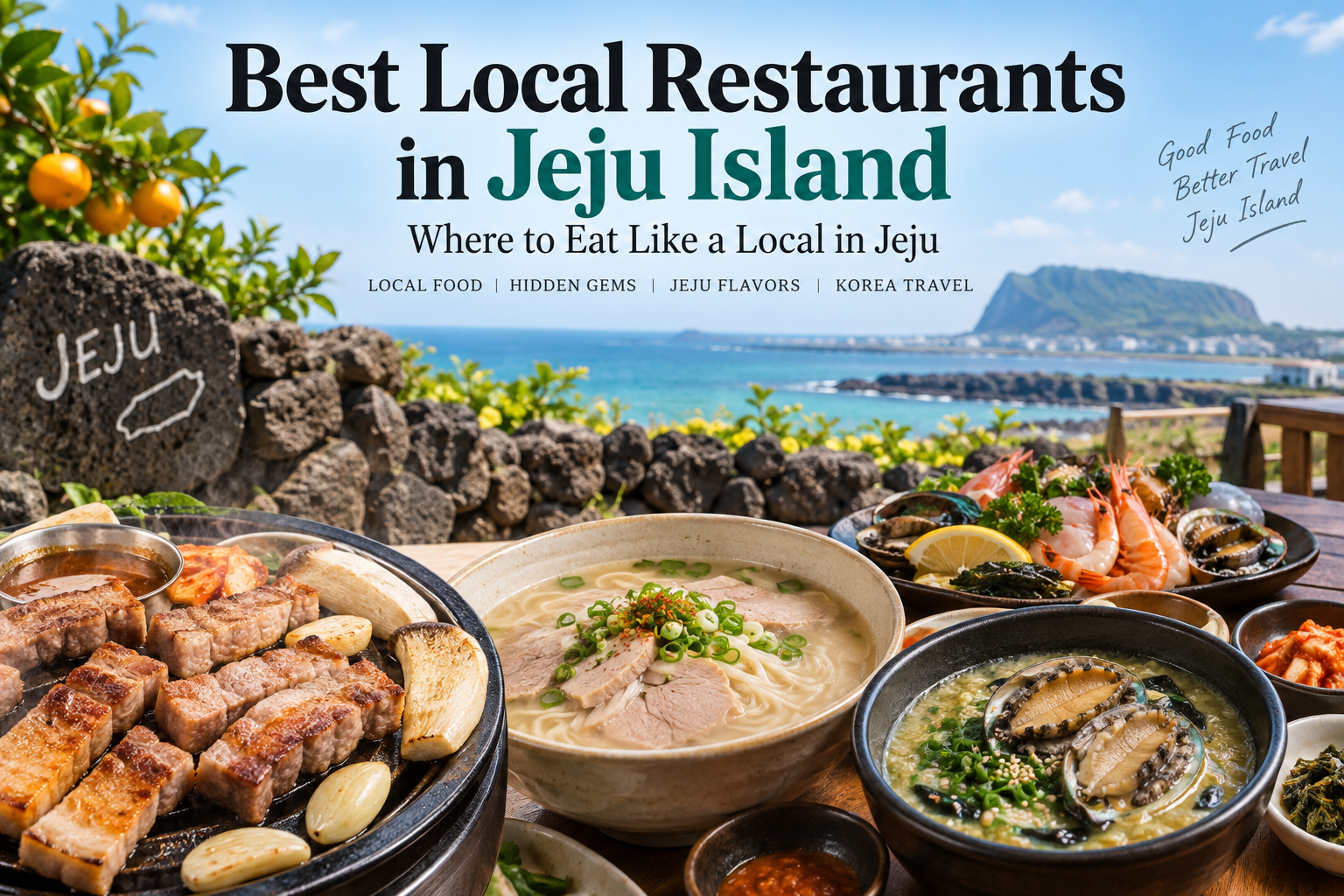
Jeju Island is famous for black pork, seafood, abalone, gogi-guksu, and traditional local dishes.
But there is another side to Jeju’s food scene.
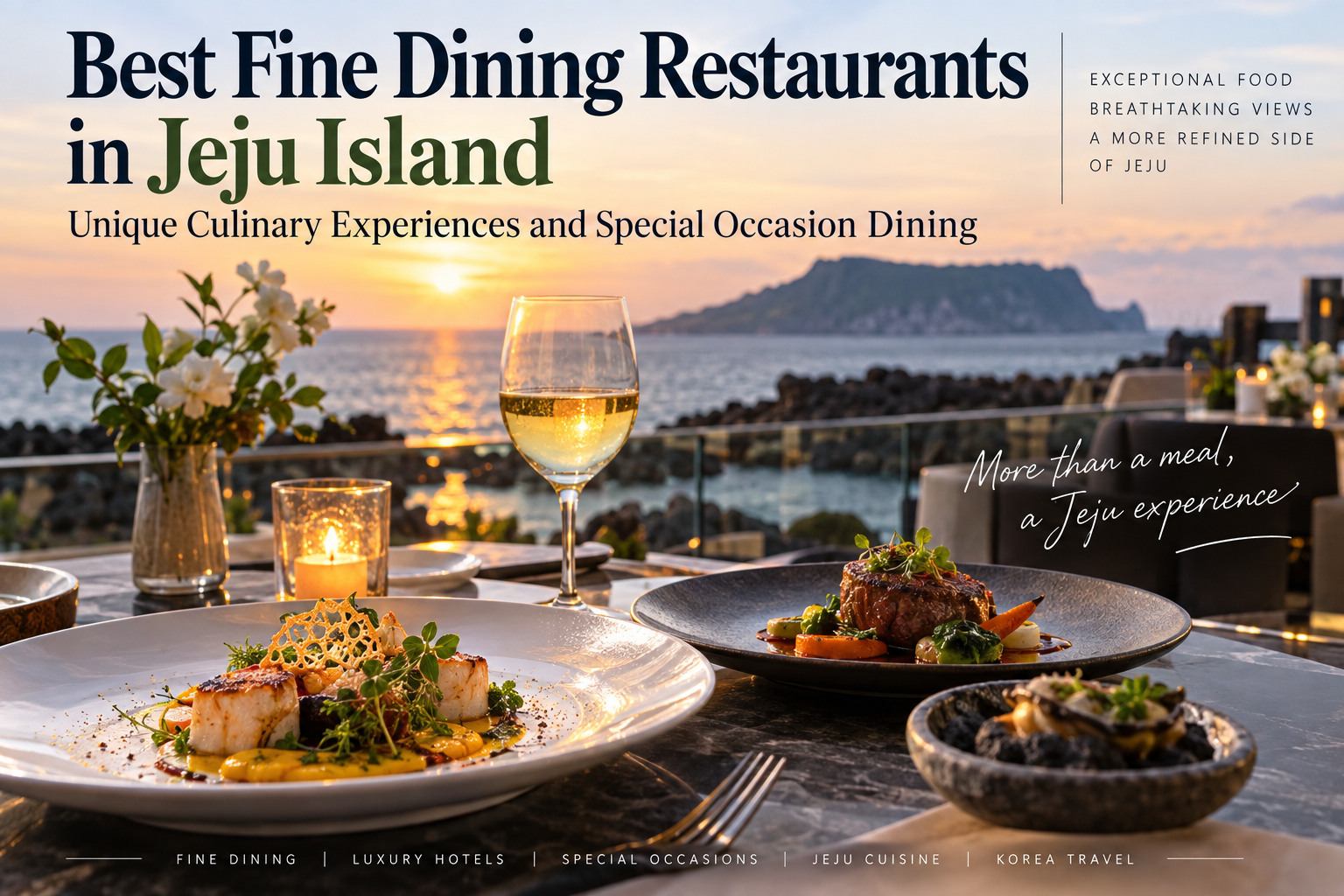
Across the island, chefs and luxury hotels are using Jeju’s seafood, vegetables, pork, seasonal produce, and local traditions to create more refined dining experiences.
These restaurants are particularly worth considering for a honeymoon, anniversary, birthday, romantic dinner, or simply one memorable meal during your trip.
Unlike our guide to local Jeju restaurants, this article focuses on places where the atmosphere, presentation, service, and culinary experience are as important as the food itself.
1. Yeoumul — A Refined Culinary Journey Inspired by Jeju
One of the most distinctive luxury dining experiences in Seogwipo can be found at Yeoumul, inside JW Marriott Jeju Resort & Spa.
The restaurant builds its dining experience around ingredients from Jeju’s sea and land, with dishes changing according to the seasons.
Rather than simply serving famous Jeju specialties, Yeoumul interprets the island through a contemporary Korean dining experience.
The concept is also influenced by Jeju’s culture and natural environment, making the meal feel connected to the destination rather than like a restaurant that could exist anywhere in the world.
For international visitors who want to experience Jeju ingredients in a more sophisticated setting, this can be an excellent choice.
Best for: Couples, anniversaries, honeymoons, and travelers interested in contemporary Korean cuisine.
Location: JW Marriott Jeju Resort & Spa, Seogwipo.
2. The Flying Hog — Wood-Fired Dining at JW Marriott Jeju
Also at JW Marriott Jeju Resort & Spa, The Flying Hog offers a different type of special-occasion experience.
The restaurant focuses on wood-fire grilling, bringing fire, smoke, and carefully selected ingredients together in a more dramatic style of cooking.
This is a good choice for travelers who prefer grilled dishes and bold flavors rather than a traditional Korean course meal.
The luxury resort setting also makes it easy to combine dinner with a sunset walk or a relaxing evening in Seogwipo.
Advance planning is recommended for signature restaurants at the resort.
Best for: Couples, meat lovers, special occasions, and luxury travelers.
Location: JW Marriott Jeju Resort & Spa, Seogwipo.
3. Island Kitchen — A Luxury Jeju Dining Experience
Island Kitchen is another dining option at JW Marriott Jeju Resort & Spa.
Rather than focusing on one single cooking style, Island Kitchen offers a broader experience built around seasonal ingredients and the flavors of Jeju.
The resort’s signature Jeju Brunch Royale is designed as a leisurely dining experience, combining table-served dishes with premium ingredients and local flavors.
This makes Island Kitchen particularly attractive for travelers who prefer a special daytime meal rather than a formal dinner.
A long brunch can also work beautifully on a slower day when you do not want to rush from one tourist attraction to another.
Best for: Luxury brunch, couples, resort guests, and relaxed special occasions.
4. Confetti — Seasonal Jeju Ingredients with an Ocean View
At Parnas Hotel Jeju in the Jungmun area, Confetti combines hotel dining with panoramic views of the Jeju coastline.
The restaurant emphasizes seasonal ingredients grown and produced on Jeju Island.
For travelers staying in Jungmun, this can be especially convenient because you can enjoy a more polished dining experience without driving across the island.
The ocean setting is also part of the appeal.
Jeju’s landscape is one of the reasons people travel to the island, and a restaurant that allows you to enjoy the scenery while eating can turn dinner into part of the travel experience.
Best for: Families, couples, luxury hotel guests, and travelers staying in Jungmun.
Location: Parnas Hotel Jeju, Jungmun.
5. The Parkview — Luxury Hotel Dining in Jungmun
For travelers who enjoy premium hotel buffets, The Parkview at The Shilla Jeju is another well-known option in the Jungmun resort area.
A luxury buffet can be particularly useful when traveling with family or a group because everyone can choose according to their own preferences.
It also provides a different experience from a chef-led tasting menu.
Instead of spending the evening focused on a fixed sequence of dishes, diners can explore a wider selection at their own pace.
If you are already staying in or visiting the Jungmun area, combining dinner with the resort atmosphere can make for a relaxing evening.
Best for: Families, groups, celebrations, and travelers who prefer variety.
6. La Tavola — An Intimate Fine-Dining Option in Jeju City
Fine dining in Jeju is not limited to luxury resorts.
La Tavola in Jeju City offers another option for travelers looking for a more intimate restaurant experience.
Choosing an independent restaurant can provide a welcome contrast after visiting large resorts and hotels.
It is also useful for travelers spending their first or final night near Jeju City, especially when they want a special meal without traveling all the way to southern Jeju.
Best for: Couples, intimate dinners, and travelers staying in Jeju City.
7. WooHwa — A Special-Occasion Restaurant in Jeju City
WooHwa is another option for travelers searching for a more refined meal in Jeju City.
Restaurants like this demonstrate how Jeju’s dining scene has expanded beyond traditional island dishes.
That does not mean abandoning local food.
Instead, a good Jeju itinerary can include both experiences: a simple bowl of pork noodles one day and a carefully planned dinner the next.
The contrast helps travelers appreciate how diverse Jeju’s food culture has become.
Best for: Date nights, celebrations, couples, and travelers seeking an upscale meal in Jeju City.
8. Nansanri Restaurant — Dining Away from the Resort Districts
Nansanri Restaurant in Seongsan offers another style of dining experience.
Its eastern Jeju location makes it particularly interesting for travelers who are already exploring Seongsan and the quieter countryside on that side of the island.
One of the pleasures of traveling around Jeju is discovering restaurants outside the major hotel districts.
A memorable meal does not always require a luxury resort setting.
Sometimes the surrounding village, landscape, and slower pace of eastern Jeju become part of the experience.
Best for: Eastern Jeju road trips, couples, and travelers looking beyond the major resort areas.
Fine Dining or Local Restaurant?
You should try both.
Jeju’s traditional restaurants tell the story of the island through dishes that have been eaten for generations.
Black pork, momguk, dombe-gogi, seafood, abalone, and gogi-guksu provide an accessible introduction to Jeju’s culinary traditions.
Fine dining offers a different perspective.
Chefs can take the same island environment — its sea, farms, seasons, and local ingredients — and interpret it through contemporary techniques and presentation.
One experience does not replace the other.
Together, they provide a much richer understanding of Jeju food.
Jeju City or Seogwipo for Special-Occasion Dining?
Your choice should depend on your itinerary.
Jeju City works well at the beginning or end of a trip because it is convenient for Jeju International Airport.
It also offers independent restaurants that can provide a more intimate alternative to resort dining.
Seogwipo and Jungmun are especially attractive for luxury dining.
Many of Jeju’s major resorts are located in southern Jeju, making this area convenient for travelers who want to combine accommodation, ocean scenery, and a special dinner.
Eastern Jeju is worth considering if you prefer smaller restaurants and a quieter road-trip atmosphere.
Instead of driving across the island for dinner, choose a restaurant that fits naturally into the area where you are already spending the day.
How Much Should You Budget?
Fine dining in Jeju can vary considerably in price.
An independent restaurant may cost much less than a luxury resort tasting menu, while premium hotel restaurants can become one of the more expensive meals of your trip.
For this reason, check the current menu and prices before visiting.
If you are traveling on a mixed budget, you do not need to eat expensive meals every day.
A useful strategy is to enjoy inexpensive local restaurants for most of your trip and reserve one evening for a special dining experience.
That combination can make the expensive meal feel even more memorable.
Should You Make a Reservation?
For high-end restaurants, reservations are strongly recommended.
This is particularly important for chef-led course dining and signature restaurants inside luxury hotels.
Some restaurants may have limited seating, fixed dining times, or menus that require preparation in advance.
Weekends, Korean holidays, and peak travel seasons can also be busy.
If there is one restaurant that matters especially to your trip, reserve it before arriving in Jeju rather than waiting until the same day.
What to Look for on a Jeju Fine-Dining Menu
When choosing a restaurant, look beyond familiar luxury ingredients.
One of the most interesting reasons to dine in Jeju is the opportunity to experience ingredients connected to the island.
Depending on the season and restaurant, menus may feature seafood, abalone, local vegetables, pork, citrus, herbs, and other ingredients produced on Jeju.
Seasonal menus can change, which is part of the experience.
Instead of expecting exactly the same dishes throughout the year, allow the restaurant to show you what Jeju tastes like during your visit.
A Special Meal Can Be Part of the Journey
Travelers sometimes treat restaurants as something to fit between sightseeing stops.
In Jeju, it can be worth doing the opposite.
Choose one evening when dinner itself is the main event.
Spend the afternoon slowly exploring the coast, return to your hotel, and prepare for dinner without rushing.
For couples, this can become one of the most memorable evenings of the trip.
For families, a celebratory meal can mark the end of a special vacation.
And for food lovers, it provides another way to understand an island whose identity has always been closely connected to the land and sea.
Final Thoughts
Jeju Island’s culinary identity cannot be explained by one type of restaurant.
A tiny noodle shop, a busy black pork barbecue restaurant, a seafood restaurant near the coast, and an elegant tasting menu can all reveal something different about the island.
For most travelers, the best approach is balance.
Eat local dishes during your road trips. Visit markets. Try Jeju seafood. Enjoy black pork.
Then, if your budget allows, choose one special restaurant where you can slow down and experience Jeju ingredients in a more refined setting.
The combination of everyday local food and special-occasion dining is what makes exploring Jeju’s food scene so rewarding.