
Tag: Korean Fine Dining

  • Best Fine Dining Restaurants in Jeju Island: Unique Culinary Experiences and Special Occasion Dining

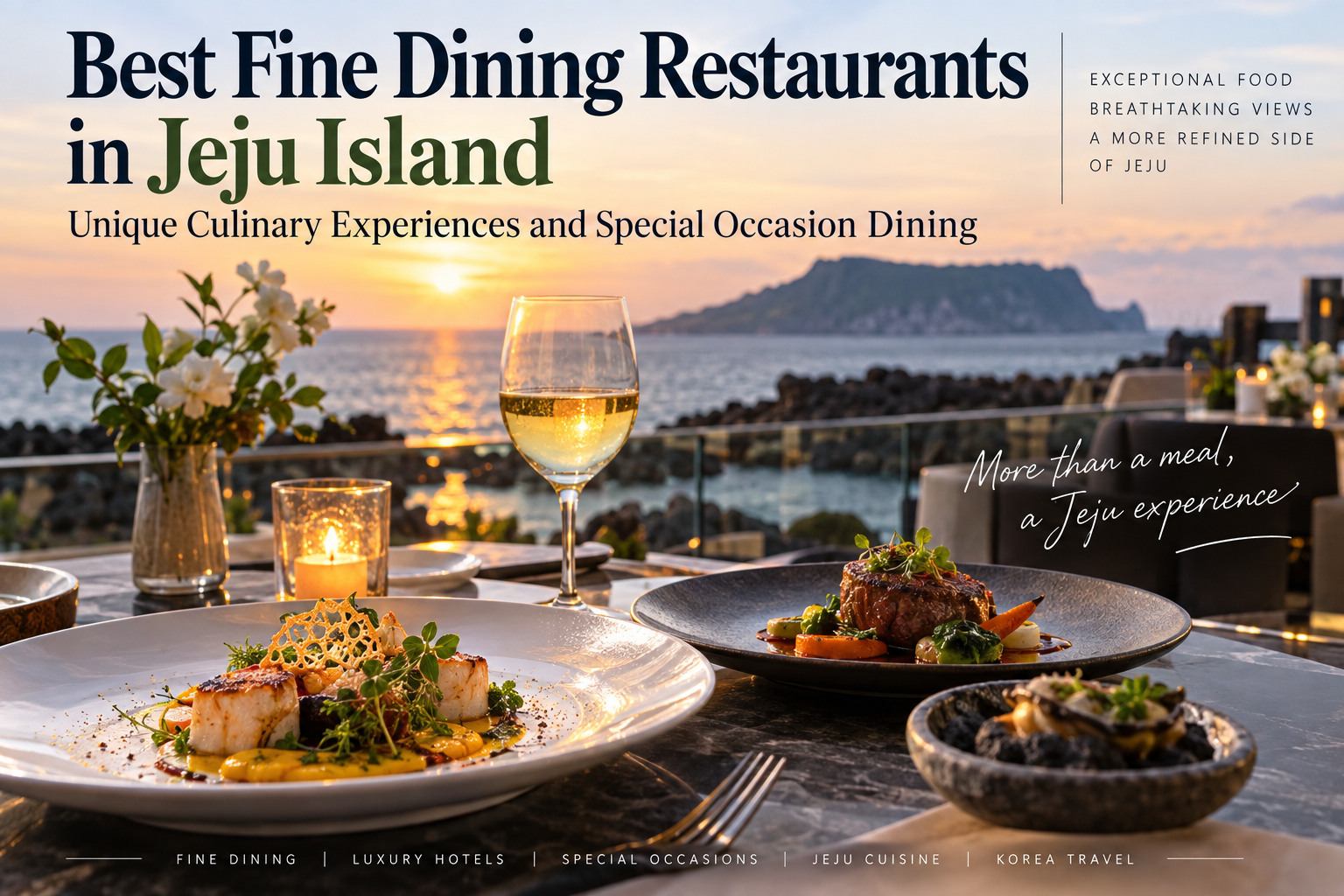
    Best Fine Dining Restaurants in Jeju Island: Unique Culinary Experiences and Special Occasion Dining

    Fine Dining in Jeju: A Different Side of the Island’s Food Culture

    Jeju Island is famous for black pork, seafood, abalone, gogi-guksu, and traditional local dishes.

    But there is another side to Jeju’s food scene.

    Across the island, chefs and luxury hotels are using Jeju’s seafood, vegetables, pork, seasonal produce, and local traditions to create more refined dining experiences.

    These restaurants are particularly worth considering for a honeymoon, anniversary, birthday, romantic dinner, or simply one memorable meal during your trip.

    Unlike our guide to local Jeju restaurants, this article focuses on places where the atmosphere, presentation, service, and culinary experience are as important as the food itself.

    1. Yeoumul — A Refined Culinary Journey Inspired by Jeju

    One of the most distinctive luxury dining experiences in Seogwipo can be found at Yeoumul, inside JW Marriott Jeju Resort & Spa.

    The restaurant builds its dining experience around ingredients from Jeju’s sea and land, with dishes changing according to the seasons.

    Rather than simply serving famous Jeju specialties, Yeoumul interprets the island through a contemporary Korean dining experience.

    The concept is also influenced by Jeju’s culture and natural environment, making the meal feel connected to the destination rather than like a restaurant that could exist anywhere in the world.

    For international visitors who want to experience Jeju ingredients in a more sophisticated setting, this can be an excellent choice.

    Best for: Couples, anniversaries, honeymoons, and travelers interested in contemporary Korean cuisine.

    Location: JW Marriott Jeju Resort & Spa, Seogwipo.

    2. The Flying Hog — Wood-Fired Dining at JW Marriott Jeju

    Also at JW Marriott Jeju Resort & Spa, The Flying Hog offers a different type of special-occasion experience.

    The restaurant focuses on wood-fire grilling, bringing fire, smoke, and carefully selected ingredients together in a more dramatic style of cooking.

    This is a good choice for travelers who prefer grilled dishes and bold flavors rather than a traditional Korean course meal.

    The luxury resort setting also makes it easy to combine dinner with a sunset walk or a relaxing evening in Seogwipo.

    Advance planning is recommended for signature restaurants at the resort.

    Best for: Couples, meat lovers, special occasions, and luxury travelers.

    Location: JW Marriott Jeju Resort & Spa, Seogwipo.

    3. Island Kitchen — A Luxury Jeju Dining Experience

    Island Kitchen is another dining option at JW Marriott Jeju Resort & Spa.

    Rather than focusing on one single cooking style, Island Kitchen offers a broader experience built around seasonal ingredients and the flavors of Jeju.

    The resort’s signature Jeju Brunch Royale is designed as a leisurely dining experience, combining table-served dishes with premium ingredients and local flavors.

    This makes Island Kitchen particularly attractive for travelers who prefer a special daytime meal rather than a formal dinner.

    A long brunch can also work beautifully on a slower day when you do not want to rush from one tourist attraction to another.

    Best for: Luxury brunch, couples, resort guests, and relaxed special occasions.

    4. Confetti — Seasonal Jeju Ingredients with an Ocean View

    At Parnas Hotel Jeju in the Jungmun area, Confetti combines hotel dining with panoramic views of the Jeju coastline.

    The restaurant emphasizes seasonal ingredients grown and produced on Jeju Island.

    For travelers staying in Jungmun, this can be especially convenient because you can enjoy a more polished dining experience without driving across the island.

    The ocean setting is also part of the appeal.

    Jeju’s landscape is one of the reasons people travel to the island, and a restaurant that allows you to enjoy the scenery while eating can turn dinner into part of the travel experience.

    Best for: Families, couples, luxury hotel guests, and travelers staying in Jungmun.

    Location: Parnas Hotel Jeju, Jungmun.

    5. The Parkview — Luxury Hotel Dining in Jungmun

    For travelers who enjoy premium hotel buffets, The Parkview at The Shilla Jeju is another well-known option in the Jungmun resort area.

    A luxury buffet can be particularly useful when traveling with family or a group because everyone can choose according to their own preferences.

    It also provides a different experience from a chef-led tasting menu.

    Instead of spending the evening focused on a fixed sequence of dishes, diners can explore a wider selection at their own pace.

    If you are already staying in or visiting the Jungmun area, combining dinner with the resort atmosphere can make for a relaxing evening.

    Best for: Families, groups, celebrations, and travelers who prefer variety.

    6. La Tavola — An Intimate Fine-Dining Option in Jeju City

    Fine dining in Jeju is not limited to luxury resorts.

    La Tavola in Jeju City offers another option for travelers looking for a more intimate restaurant experience.

    Choosing an independent restaurant can provide a welcome contrast after visiting large resorts and hotels.

    It is also useful for travelers spending their first or final night near Jeju City, especially when they want a special meal without traveling all the way to southern Jeju.

    Best for: Couples, intimate dinners, and travelers staying in Jeju City.

    7. WooHwa — A Special-Occasion Restaurant in Jeju City

    WooHwa is another option for travelers searching for a more refined meal in Jeju City.

    Restaurants like this demonstrate how Jeju’s dining scene has expanded beyond traditional island dishes.

    That does not mean abandoning local food.

    Instead, a good Jeju itinerary can include both experiences: a simple bowl of pork noodles one day and a carefully planned dinner the next.

    The contrast helps travelers appreciate how diverse Jeju’s food culture has become.

    Best for: Date nights, celebrations, couples, and travelers seeking an upscale meal in Jeju City.

    8. Nansanri Restaurant — Dining Away from the Resort Districts

    Nansanri Restaurant in Seongsan offers another style of dining experience.

    Its eastern Jeju location makes it particularly interesting for travelers who are already exploring Seongsan and the quieter countryside on that side of the island.

    One of the pleasures of traveling around Jeju is discovering restaurants outside the major hotel districts.

    A memorable meal does not always require a luxury resort setting.

    Sometimes the surrounding village, landscape, and slower pace of eastern Jeju become part of the experience.

    Best for: Eastern Jeju road trips, couples, and travelers looking beyond the major resort areas.

    Fine Dining or Local Restaurant?

    You should try both.

    Jeju’s traditional restaurants tell the story of the island through dishes that have been eaten for generations.

    Black pork, momguk, dombe-gogi, seafood, abalone, and gogi-guksu provide an accessible introduction to Jeju’s culinary traditions.

    Fine dining offers a different perspective.

    Chefs can take the same island environment — its sea, farms, seasons, and local ingredients — and interpret it through contemporary techniques and presentation.

    One experience does not replace the other.

    Together, they provide a much richer understanding of Jeju food.

    Jeju City or Seogwipo for Special-Occasion Dining?

    Your choice should depend on your itinerary.

    Jeju City works well at the beginning or end of a trip because it is convenient for Jeju International Airport.

    It also offers independent restaurants that can provide a more intimate alternative to resort dining.

    Seogwipo and Jungmun are especially attractive for luxury dining.

    Many of Jeju’s major resorts are located in southern Jeju, making this area convenient for travelers who want to combine accommodation, ocean scenery, and a special dinner.

    Eastern Jeju is worth considering if you prefer smaller restaurants and a quieter road-trip atmosphere.

    Instead of driving across the island for dinner, choose a restaurant that fits naturally into the area where you are already spending the day.

    How Much Should You Budget?

    Fine dining in Jeju can vary considerably in price.

    An independent restaurant may cost much less than a luxury resort tasting menu, while premium hotel restaurants can become one of the more expensive meals of your trip.

    For this reason, check the current menu and prices before visiting.

    If you are traveling on a mixed budget, you do not need to eat expensive meals every day.

    A useful strategy is to enjoy inexpensive local restaurants for most of your trip and reserve one evening for a special dining experience.

    That combination can make the expensive meal feel even more memorable.

    Should You Make a Reservation?

    For high-end restaurants, reservations are strongly recommended.

    This is particularly important for chef-led course dining and signature restaurants inside luxury hotels.

    Some restaurants may have limited seating, fixed dining times, or menus that require preparation in advance.

    Weekends, Korean holidays, and peak travel seasons can also be busy.

    If there is one restaurant that matters especially to your trip, reserve it before arriving in Jeju rather than waiting until the same day.

    What to Look for on a Jeju Fine-Dining Menu

    When choosing a restaurant, look beyond familiar luxury ingredients.

    One of the most interesting reasons to dine in Jeju is the opportunity to experience ingredients connected to the island.

    Depending on the season and restaurant, menus may feature seafood, abalone, local vegetables, pork, citrus, herbs, and other ingredients produced on Jeju.

    Seasonal menus can change, which is part of the experience.

    Instead of expecting exactly the same dishes throughout the year, allow the restaurant to show you what Jeju tastes like during your visit.

    A Special Meal Can Be Part of the Journey

    Travelers sometimes treat restaurants as something to fit between sightseeing stops.

    In Jeju, it can be worth doing the opposite.

    Choose one evening when dinner itself is the main event.

    Spend the afternoon slowly exploring the coast, return to your hotel, and prepare for dinner without rushing.

    For couples, this can become one of the most memorable evenings of the trip.

    For families, a celebratory meal can mark the end of a special vacation.

    And for food lovers, it provides another way to understand an island whose identity has always been closely connected to the land and sea.

    Final Thoughts

    Jeju Island’s culinary identity cannot be explained by one type of restaurant.

    A tiny noodle shop, a busy black pork barbecue restaurant, a seafood restaurant near the coast, and an elegant tasting menu can all reveal something different about the island.

    For most travelers, the best approach is balance.

    Eat local dishes during your road trips. Visit markets. Try Jeju seafood. Enjoy black pork.

    Then, if your budget allows, choose one special restaurant where you can slow down and experience Jeju ingredients in a more refined setting.

    The combination of everyday local food and special-occasion dining is what makes exploring Jeju’s food scene so rewarding.
  • Best Michelin Restaurants in Busan: A Guide to Michelin-Starred Dining

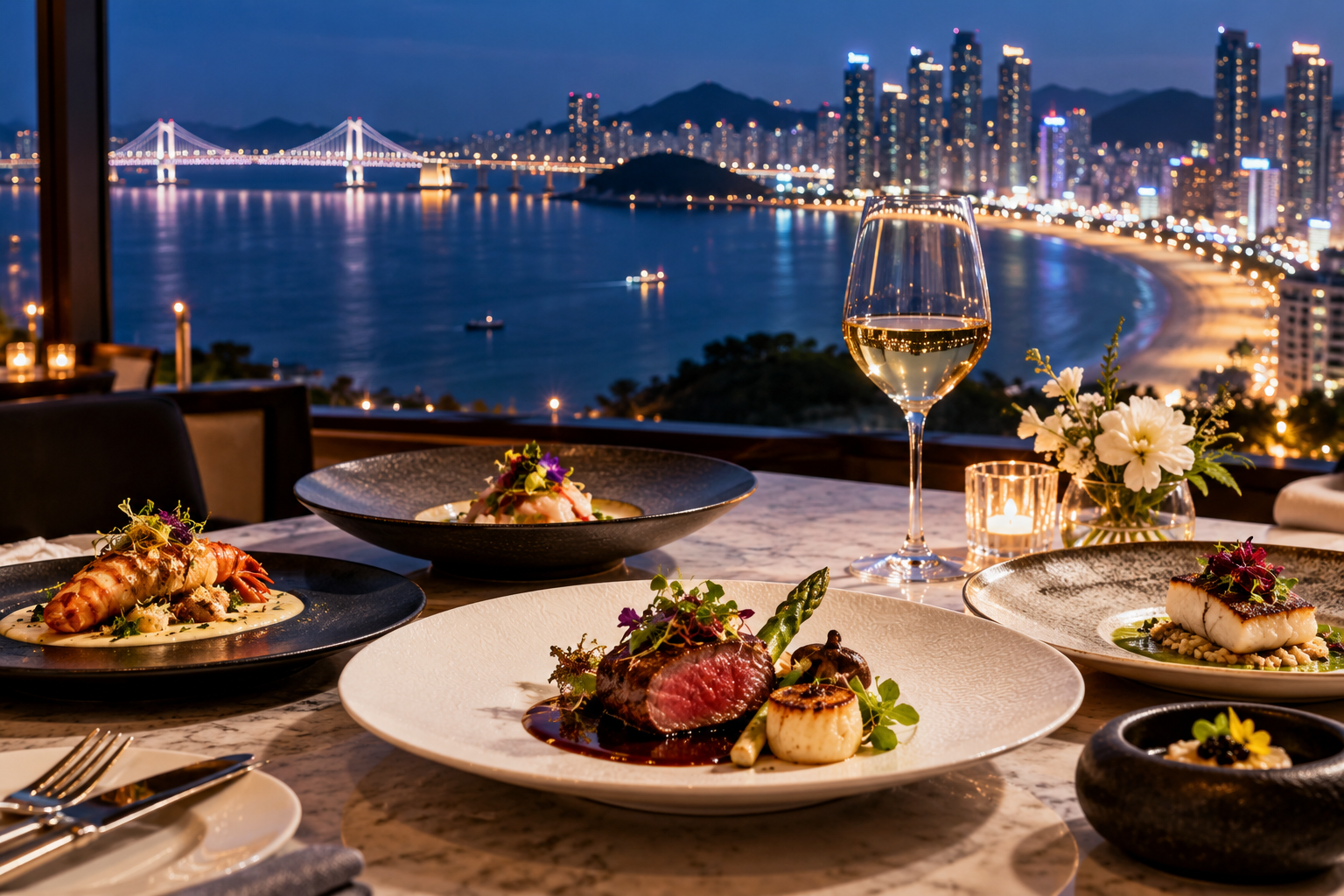
    Best Michelin Restaurants in Busan: A Guide to Michelin-Starred Dining

    Busan has long been famous for seafood, traditional markets, dwaeji gukbap, milmyeon, and casual local restaurants.

    But in recent years, another side of the city’s food culture has become increasingly important: fine dining.

    The MICHELIN Guide now covers both Seoul and Busan, giving international travelers a new way to explore the city’s evolving culinary scene.

    In the MICHELIN Guide Seoul & Busan 2026, Busan has four restaurants awarded One MICHELIN Star: Fiotto, Palate, Mori, and Le DORER.

    These restaurants represent very different styles of cooking, from contemporary Italian and French-inspired cuisine to Japanese kaiseki and modern Korean dining.

    Here is a guide to Busan’s Michelin-starred restaurants and what travelers should know before making a reservation.

    1. Fiotto – Contemporary Italian Dining on Dalmaji Hill

    One MICHELIN Star

    Fiotto is a small restaurant located on Dalmaji Hill in Haeundae.

    Run by a husband-and-wife team, the restaurant focuses on a pasta-centered tasting menu that combines contemporary Italian techniques with carefully selected Korean ingredients.

    Vegetables from the owners’ family farm, Korean pork, native rice, and other seasonal ingredients appear throughout the menu.

    Many components, including fresh pasta and other preparations, are made in-house.

    Cuisine:
    Italian Contemporary

    Address:
    2F, 219 Dalmaji-gil 117beonga-gil, Haeundae-gu, Busan 48105, South Korea

    Phone:
    +82-51-744-5309

    Dalmaji Hill is already known for cafés, ocean scenery, and a quieter atmosphere above Haeundae, making Fiotto particularly attractive for travelers who want to combine fine dining with an evening in this part of Busan.

    Best for

    Couples, pasta lovers, food-focused travelers, and visitors interested in farm-to-table dining.

    Reservation tip

    Fiotto is a small restaurant and manages its own reservations. Advance planning is strongly recommended, especially if the restaurant is an important part of your Busan itinerary.

    2. Palate – Contemporary French-Inspired Dining in Haeundae

    One MICHELIN Star

    Palate is one of Busan’s most established fine-dining destinations.

    Chef Kim Jae-hoon uses French cuisine as a foundation while allowing influences from his wider culinary experience to shape the menu.

    The result is contemporary cuisine that is creative rather than rigidly traditional.

    Cuisine:
    Contemporary

    Address:
    3F, 154 Dalmaji-gil 65beon-gil, Haeundae-gu, Busan 48576, South Korea

    Phone:
    +82-51-626-2364

    Like Fiotto, Palate is located in the Dalmaji area of Haeundae.

    This makes the neighborhood particularly interesting for travelers who want to experience Busan’s contemporary fine-dining scene.

    Best for

    Special occasions, couples, contemporary cuisine enthusiasts, and travelers looking for an elegant dinner in Haeundae.

    Reservation tip

    Palate manages its own reservations, so check current availability before your trip.

    Menus, prices, and operating hours can change, particularly with seasonal tasting menus.

    3. Mori – Japanese Kaiseki Using Busan’s Seasonal Ingredients

    One MICHELIN Star

    Mori offers a completely different dining experience.

    The restaurant is co-owned by Korean chef Kim Wan-gyu, who trained in Japan, and his Japanese wife.

    Its focus is authentic Japanese kaiseki, presented through carefully composed courses.

    Fresh seafood and seasonal produce from Busan play an important role in the menu, making Mori particularly interesting for travelers who want to see how Japanese culinary traditions can interact with ingredients from Korea’s largest coastal city.

    Cuisine:
    Japanese

    Address:
    Unit 311, 3F, LEEIN: VIEW 2 Commercial Building,
    21 Gunam-ro, Haeundae-gu, Busan 48095, South Korea

    Phone:
    +82-51-731-9889

    The intimate atmosphere and counter-style dining make the experience feel very different from a large restaurant.

    Best for

    Japanese food lovers, seafood enthusiasts, couples, chef’s-table fans, and travelers looking for an intimate fine-dining experience.

    Reservation tip

    Mori manages reservations directly.

    Because of the restaurant’s intimate format, travelers should avoid assuming that a table will be available without advance planning.

    4. Le DORER – Busan’s New Michelin Star for 2026

    One MICHELIN Star

    Le DORER is especially important in the 2026 edition of the MICHELIN Guide.

    It became Busan’s fourth Michelin-starred restaurant, joining Fiotto, Palate, and Mori.

    The restaurant focuses on Korean Contemporary cuisine.

    Rather than abandoning traditional Korean flavors, Le DORER modernizes them through contemporary techniques while emphasizing seasonal and local ingredients.

    French and Japanese influences appear subtly in the cooking, but the identity of the cuisine remains rooted in Korea.

    The dining room also offers an atmospheric experience, reached through a small alley before opening into a space with impressive ocean views.

    Cuisine:
    Korean Contemporary

    Le DORER is also connected with another major distinction in the 2026 guide.

    Chef Kim Chang-uk received the 2026 MICHELIN Young Chef Award, recognizing his thoughtful approach to contemporary Korean cuisine and his focus on precision, seasonality, and ingredient quality.

    One dish highlighted by Michelin inspectors is the restaurant’s charcoal-grilled mackerel, which demonstrates how familiar Korean ingredients can be transformed through careful modern cooking.

    Best for

    Travelers interested in modern Korean cuisine, special occasions, culinary travelers, and visitors who want to experience one of the newest developments in Busan’s fine-dining scene.

    Reservation tip

    As one of Busan’s newest Michelin-starred restaurants, Le DORER may attract increased interest following its 2026 award.

    Check the restaurant’s current reservation system, location details, menu, and operating schedule before visiting.

    Why Are Most of Busan’s Michelin-Starred Restaurants Around Haeundae?

    One interesting feature of Busan’s Michelin-starred dining scene is its strong connection with the eastern side of the city.

    Haeundae and Dalmaji have developed into areas where luxury hotels, ocean views, contemporary restaurants, cafés, and international travelers come together.

    For visitors staying around Haeundae, this makes it possible to combine beach sightseeing with fine dining without traveling across the entire city.

    It also makes Haeundae an attractive base for travelers planning a food-focused luxury trip to Busan.

    Which Michelin-Starred Restaurant Should You Choose?

    Each of Busan’s four Michelin-starred restaurants offers a different experience.

    Choose Fiotto if you love handmade pasta, Italian techniques, and ingredient-focused cooking.

    Choose Palate if you prefer contemporary French-inspired fine dining and creative cuisine.

    Choose Mori if Japanese kaiseki, seafood, and intimate chef-driven dining appeal to you.

    Choose Le DORER if you want to experience contemporary Korean cuisine and one of the most important new additions to Busan’s 2026 dining scene.

    There is no single restaurant that is best for every traveler.

    The best choice depends on the cuisine and dining experience you want.

    Michelin Star vs. Bib Gourmand

    Travelers sometimes assume that every restaurant in the MICHELIN Guide has a star.

    That is not the case.

    A MICHELIN Star recognizes restaurants for outstanding cooking.

    The guide also includes Bib Gourmand restaurants, which are recognized for good-quality cooking at good value, as well as other Michelin-selected restaurants.

    This distinction is especially useful in Busan because the city’s culinary identity extends far beyond luxury dining.

    A traveler can enjoy a Michelin-starred tasting menu one evening and a much simpler bowl of local noodles, soup, or another regional specialty the next day.

    Both experiences can be valuable parts of exploring Busan’s food culture.

    Busan’s Growing Michelin Dining Scene

    The MICHELIN Guide Seoul & Busan 2026 selected 55 restaurants in Busan overall.

    Only four currently hold Michelin Stars, but the larger selection demonstrates the breadth of the city’s restaurant culture.

    The guide includes everything from contemporary cuisine to restaurants specializing in familiar Korean foods.

    For travelers, this means Michelin can be used not only to find special-occasion restaurants but also as one reference for exploring Busan’s broader dining scene.

    How Far in Advance Should You Reserve?

    For Michelin-starred restaurants, booking in advance is generally the safest approach.

    Smaller restaurants may have very limited seating, and tasting-menu restaurants often prepare ingredients according to the number of expected guests.

    If a particular restaurant is one of the main reasons for your trip, arrange the reservation before finalizing the rest of that day’s itinerary.

    Always check the restaurant’s current cancellation policy as well.

    What Should International Travelers Know?

    Fine-dining restaurants in Korea are increasingly accustomed to international guests, but reservation systems and communication methods can vary.

    Before visiting, confirm:

    the reservation date and time, the number of guests, dietary restrictions, menu price, cancellation rules, and the restaurant’s exact location.

    If you have serious allergies or dietary restrictions, communicate them as early as possible rather than waiting until you arrive.

    Combine Michelin Dining With a Busan Trip

    A Michelin meal does not need to stand alone.

    Travelers dining around Haeundae or Dalmaji can combine dinner with Haeundae Beach, coastal scenery, cafés, or an evening walk.

    This is one of the advantages of Busan.

    Fine dining exists alongside beaches, markets, local restaurants, cafés, and traditional regional food.

    A well-planned itinerary can include both sides of the city’s food culture.

    Is Michelin Dining in Busan Worth It?

    For travelers interested in food, it can be.

    Busan’s Michelin-starred restaurants are not simply copies of Seoul restaurants.

    The city’s coastal geography, seafood, local ingredients, and individual chefs influence what appears on the plate.

    Mori makes use of Busan’s fresh seafood and seasonal produce.

    Fiotto combines Italian techniques with Korean ingredients.

    Palate brings a contemporary and adventurous approach to French-inspired cuisine.

    Le DORER demonstrates how modern Korean cooking in Busan continues to evolve.

    Together, the four restaurants provide a snapshot of a city whose culinary identity is becoming increasingly diverse.

    Final Thoughts

    Busan will always be loved for its seafood markets, pork soup, noodles, fish cakes, and street food.

    But its Michelin-starred restaurants reveal another side of the city.

    In 2026, Fiotto, Palate, Mori, and Le DORER represent four distinct approaches to fine dining in Busan.

    From handmade pasta and contemporary cuisine to Japanese kaiseki and modern Korean cooking, these restaurants show how rapidly Busan’s dining scene is developing.

    For food-focused travelers, experiencing both local Busan specialties and Michelin-starred dining can provide a much richer understanding of the city.

    And as Busan’s culinary scene continues to evolve, the city is becoming a destination where the food can be just as memorable as the beaches and ocean views.


  • Best Michelin Restaurants in Seoul: A Guide to Michelin-Starred Dining

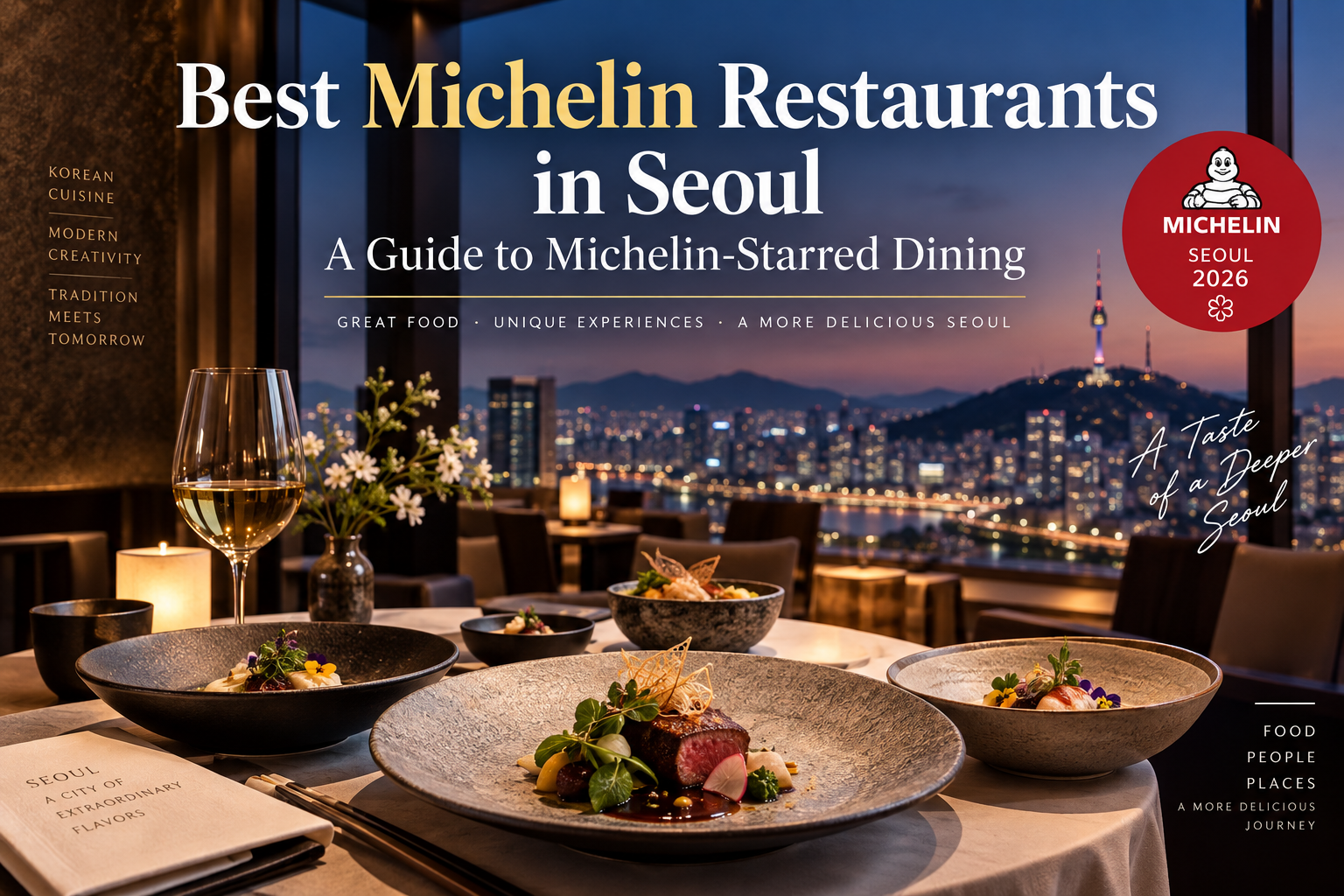
    Best Michelin Restaurants in Seoul: A Guide to Michelin-Starred Dining

    Seoul has become one of Asia’s most exciting destinations for fine dining.

    The city’s Michelin-starred restaurants show how Korean chefs are combining traditional ingredients, fermentation, seasonal produce and Korean culinary philosophy with modern techniques and international influences.

    The MICHELIN Guide Seoul & Busan 2026 selected 178 restaurants in Seoul, including 42 Michelin-starred restaurants: one Three-Star restaurant, ten Two-Star restaurants and thirty-one One-Star restaurants. The selection also includes Bib Gourmand and Michelin Selected restaurants.

    For travelers visiting Korea for the first time, Michelin-starred dining can be an excellent way to experience a more refined side of Korean food culture.

    Here are some of the Seoul restaurants that stand out in the 2026 Michelin Guide.

    1. Mingles – Seoul’s Three-Michelin-Star Experience

    Mingles is the highest-rated Michelin restaurant in Seoul in the 2026 guide.

    Chef Mingoo Kang’s restaurant retained Three Michelin Stars for the second consecutive year, continuing to represent the highest level of Korean gastronomy recognized by the Michelin Guide.

    Mingles focuses on Korean culinary traditions while presenting them through a contemporary tasting-menu format.

    The restaurant makes particularly thoughtful use of Korean fermented ingredients and traditional flavors. Its cuisine aims to connect familiar Korean tastes with modern fine-dining techniques.

    Michelin Rating: ★★★ Three Michelin Stars
    Cuisine: Korean
    Price Level: ₩₩₩₩
    Address: 2F, 19 Dosan-daero 67-gil, Gangnam-gu, Seoul 06016, South Korea
    Telephone: +82-2-515-7306

    Best for: Special occasions, food enthusiasts and travelers looking for an exceptional Korean fine-dining experience.

    Why Visit?

    Mingles is especially interesting for international visitors because the experience demonstrates how Korean cuisine can be interpreted at the highest level without losing its identity.

    2. La Yeon – Refined Korean Cuisine with a Seoul Skyline

    La Yeon is another important name in Seoul’s fine-dining scene.

    The restaurant focuses on Korean cuisine presented with precision and refinement. Traditional ingredients and dishes are interpreted through a sophisticated contemporary dining experience.

    La Yeon is also located within The Shilla Seoul, making the restaurant particularly attractive to travelers who want to combine a luxury hotel stay with a Michelin-starred meal.

    Michelin Rating: ★★ Two Michelin Stars
    Cuisine: Korean
    Price Level: ₩₩₩₩

    Best for: Luxury travelers, couples and special celebrations.

    The restaurant’s setting adds another dimension to the experience, especially for visitors who want to enjoy Korean cuisine in an elegant environment.

    3. Mosu – Modern Korean Cuisine in Yongsan

    Mosu returned to Seoul with a new chapter and received Two Michelin Stars in the 2026 guide.

    Chef Sung Anh’s cuisine emphasizes precision, balance and carefully controlled textures rather than unnecessary complexity.

    The restaurant’s current location is in Yongsan, and the dining room provides different experiences depending on where guests sit.

    The Michelin Guide highlights dishes such as abalone taco, sesame tofu, burdock tarte and steamed tilefish in anchovy broth.

    Michelin Rating: ★★ Two Michelin Stars
    Cuisine: Modern Cuisine
    Price Level: ₩₩₩₩
    Address: 4 Hoenamu-ro 41-gil, Yongsan-gu, Seoul 04344, South Korea
    Telephone: +82-2-6272-5678

    Best for: Experienced food travelers, couples and diners interested in contemporary Korean-inspired cuisine.

    A Special Point About Mosu

    Mosu’s return is one of the notable stories of the 2026 Seoul Michelin selection.

    The restaurant previously reached Three Michelin Stars before closing temporarily in 2024. It reopened in the same general area in 2025 and received Two Stars in the 2026 edition.

    4. Sosuheon – Sushi in a Traditional Hanok Setting

    Sosuheon offers an unusual combination of Japanese sushi and traditional Korean architectural atmosphere.

    The restaurant was promoted to Two Michelin Stars in 2026. The Michelin Guide describes it as an eight-seat counter located within a traditional hanok against Seoul’s modern skyline.

    The intimate setting makes the experience very different from a large fine-dining restaurant.

    Michelin Rating: ★★ Two Michelin Stars
    Cuisine: Sushi
    Price Level: ₩₩₩₩

    Best for: Sushi lovers, couples and travelers looking for an intimate dining experience.

    Why Is It Interesting?

    The combination of a traditional Korean building and high-level Japanese sushi creates a particularly Seoul-specific atmosphere.

    It is a good example of how different culinary traditions coexist within the city.

    5. Onjium – Contemporary Korean Cuisine Rooted in Tradition

    Onjium focuses on Korean cuisine while exploring traditional Korean ingredients, techniques and food culture through a contemporary approach.

    The restaurant is particularly interesting for visitors who want a fine-dining experience that remains closely connected to Korean culinary heritage.

    Michelin Rating: ★ One Michelin Star
    Cuisine: Korean
    Price Level: ₩₩₩₩

    Best for: Cultural travelers, Korean food enthusiasts and visitors interested in traditional ingredients.

    6. JUEUN – Modern Korean Dining

    JUEUN is a Korean restaurant recognized with One Michelin Star in the 2026 selection.

    Its cuisine explores Korean flavors through a contemporary fine-dining format, making it suitable for travelers who want to experience Korean ingredients in a more modern setting.

    The Michelin Guide also highlights dishes such as japchae in its 2026 inspector recommendations.

    Michelin Rating: ★ One Michelin Star
    Cuisine: Korean
    Price Level: ₩₩₩₩

    Best for: Travelers interested in contemporary Korean cuisine.

    7. Kwonsooksoo – Elegant Korean Fine Dining

    Kwonsooksoo is another important Korean fine-dining restaurant in Seoul.

    The restaurant has maintained its Michelin recognition through a cuisine that focuses on Korean ingredients, seasonal flavors and refined presentation.

    Michelin Rating: ★★ Two Michelin Stars
    Cuisine: Korean
    Price Level: ₩₩₩₩

    Best for: Special occasions and travelers looking for sophisticated Korean cuisine.

    8. Jungsik – Contemporary Korean Cuisine with Global Influence

    Jungsik is one of Seoul’s best-known contemporary Korean restaurants.

    Its approach combines Korean ingredients and culinary ideas with techniques and presentation associated with contemporary fine dining.

    The restaurant is particularly interesting for international visitors because it demonstrates how Korean cuisine can move beyond traditional formats while maintaining recognizable Korean elements.

    Michelin Rating: ★★ Two Michelin Stars
    Cuisine: Contemporary
    Price Level: ₩₩₩₩

    Best for: International food lovers and travelers looking for contemporary Korean cuisine.

    9. Evett – Innovative Cuisine in Seoul

    Evett is known for its innovative approach to ingredients and Korean culinary influences.

    The restaurant received Two Michelin Stars in the 2026 Seoul selection.

    Its cuisine can be a good choice for adventurous diners who want something beyond a conventional Korean meal.

    Michelin Rating: ★★ Two Michelin Stars
    Cuisine: Innovative
    Price Level: ₩₩₩₩

    Best for: Adventurous food travelers and diners interested in creative tasting menus.

    10. Restaurant Allen – Contemporary Fine Dining

    Restaurant Allen is another restaurant holding Two Michelin Stars in the 2026 Seoul selection.

    Its cuisine is contemporary and designed around a refined tasting experience.

    Michelin Rating: ★★ Two Michelin Stars
    Cuisine: Contemporary
    Price Level: ₩₩₩₩

    Best for: Couples, special occasions and experienced fine-dining travelers.

    Understanding Michelin Stars in Seoul

    The Michelin Guide uses stars to recognize restaurants according to the quality of their cooking.

    One Michelin Star represents high-quality cooking.

    Two Michelin Stars indicate excellent cooking that is worth a detour.

    Three Michelin Stars represent exceptional cuisine considered worth a special journey.

    In Seoul’s 2026 selection, there is only one Three-Star restaurant: Mingles.

    That makes a meal at Mingles particularly significant for travelers interested in the highest level of Korean gastronomy.

    Michelin-Starred Korean Food vs. Traditional Korean Restaurants

    A Michelin-starred Korean restaurant can be very different from the traditional restaurants featured in our Seoul food guide.

    A traditional restaurant might specialize in one dish—such as gomtang, naengmyeon or samgyetang—and have been serving it for generations.

    A Michelin-starred restaurant may instead present Korean ingredients through a multi-course tasting menu.

    Neither experience is necessarily better.

    They simply show different sides of Korean food culture.

    For a first trip to Seoul, experiencing both can be particularly rewarding.

    How Much Does Michelin Dining in Seoul Cost?

    Most Michelin-starred restaurants are significantly more expensive than everyday Korean restaurants.

    The Michelin Guide’s price categories show that many Seoul two- and three-star restaurants fall into the highest price category, ₩₩₩₩.

    Tasting menus can also require a significant time commitment, often lasting several hours.

    Travelers should therefore think of Michelin dining as an experience rather than simply another meal.

    Should You Make a Reservation?

    Yes.

    Popular Michelin-starred restaurants can have limited seating, and many operate only on selected days or during specific lunch and dinner periods.

    The Michelin Guide currently provides reservation information for some restaurants, while others ask guests to contact the restaurant directly. For example, Mosu manages its own bookings and provides its direct telephone number.

    Always check the restaurant’s latest reservation policy before making your travel plans.

    What Should First-Time Visitors Expect?

    Fine dining in Seoul may include several courses that are unfamiliar to international visitors.

    You may encounter Korean fermented ingredients, seasonal seafood, traditional sauces, unusual vegetables and modern interpretations of classic dishes.

    Do not worry if you do not recognize every ingredient.

    One of the pleasures of a tasting menu is allowing the chefs to introduce Korean flavors in a way that may be completely different from what you have experienced before.

    Best Michelin Experience for Different Travelers

    For the highest level of Korean cuisine: choose Mingles.

    For modern cuisine and an innovative tasting menu: consider Mosu.

    For sushi in an unusual Korean setting: consider Sosuheon.

    For traditional Korean culinary ideas presented in a refined format: consider La Yeon, Onjium or Kwonsooksoo.

    For creative and innovative cuisine: explore Evett or other contemporary Michelin-starred restaurants.

    Michelin Restaurants and Seoul Neighborhoods

    Many of Seoul’s Michelin restaurants are concentrated in areas such as Gangnam, Cheongdam, Apgujeong, Hannam-dong, Yongsan and central Seoul.

    This makes it possible to combine fine dining with sightseeing or shopping.

    For example, a restaurant visit in Gangnam can be combined with COEX, Apgujeong or Sinsa.

    A meal in Yongsan or Hannam can be combined with museums, galleries and the Hangang area.

    Choosing your restaurant according to your daily itinerary can save considerable travel time.

    Michelin Dining as Part of Your Seoul Trip

    A Michelin dinner does not have to be the only reason to visit a neighborhood.

    Instead, plan the entire day around it.

    Visit a palace or museum during the afternoon, explore a nearby neighborhood, enjoy a café and then finish the day with a Michelin tasting menu.

    This turns the restaurant reservation into the final part of a complete Seoul experience.

    A Note About the Michelin Guide

    Michelin selections can change every year.

    Restaurants may gain stars, lose stars, move locations, close temporarily or reopen under new concepts.

    The 2026 Michelin Guide Seoul & Busan was announced on March 5, 2026, so this article uses the 2026 edition as its reference point.

    Always check the latest Michelin Guide listing and the restaurant’s own information before traveling.

    Final Thoughts

    Seoul’s Michelin dining scene shows how Korean cuisine continues to evolve.

    Restaurants such as Mingles demonstrate the possibilities of contemporary Korean gastronomy, while places such as La Yeon, Onjium and Kwonsooksoo show how traditional Korean culinary ideas can be transformed into sophisticated fine dining.

    Mosu’s return, Sosuheon’s promotion to Two Stars and the continued success of Mingles also demonstrate how quickly Seoul’s fine-dining landscape is changing.

    But perhaps the most important thing to remember is that Michelin dining is only one part of Seoul’s food culture.

    A Michelin-starred tasting menu, a bowl of noodles in a neighborhood restaurant, a traditional market snack and a cup of coffee in a small café can all tell different stories about the same city.

    The best way to taste Seoul is to experience all of them.