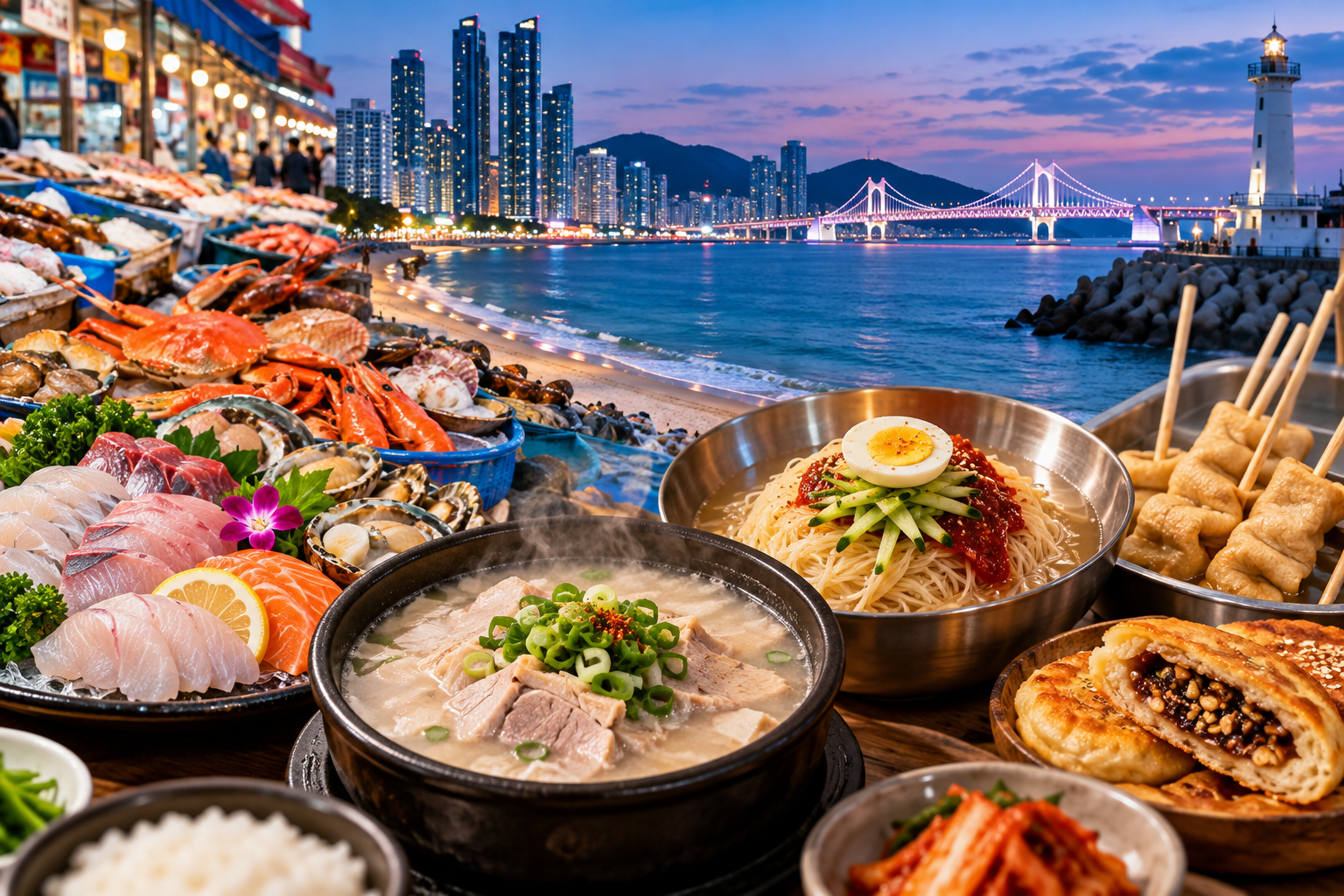

Where to Stay in Busan: Choosing the Right Area for Your Trip
Busan is one of South Korea’s most exciting destinations, combining beaches, seafood, shopping, nightlife, traditional markets, mountain scenery, and modern city life.
But Busan is also a large and spread-out city.
That means choosing the right neighborhood can make a major difference to your trip.
For most first-time visitors, four areas stand out:
Haeundae, Gwangalli, Seomyeon, and Nampo-dong.
Each offers a very different Busan experience.
This guide compares the best areas to stay in Busan in 2026 and explains which neighborhood is best for beaches, sightseeing, nightlife, transportation, couples, families, and first-time visitors.
Quick Answer: What Is the Best Area to Stay in Busan?
If you want the simplest answer:
Haeundae — best for beaches and a classic Busan vacation
Gwangalli — best for ocean views, cafés, and couples
Seomyeon — best for transportation, nightlife, and exploring the whole city
Nampo-dong — best for markets, food, and traditional sightseeing
For many first-time international visitors, Haeundae or Seomyeon will be the easiest choices.
However, the best area depends on what you want to do.
Busan Is Bigger Than Many Travelers Expect
One of the most common mistakes first-time visitors make is choosing a hotel based only on price.
A cheaper hotel may look attractive, but if it is far from the places you want to visit, you could spend a large part of your vacation traveling across the city.
Busan’s attractions are spread across several districts.
Haeundae Beach and Gwangalli Beach are on the eastern side of the city, while Jagalchi Market and Nampo-dong are farther west.
Seomyeon sits closer to the center and functions as an important transportation hub.
Therefore, when comparing Busan hotels, consider location and transportation time alongside the nightly price.
1. Haeundae — Best for First-Time Beach Travelers
For many international travelers, Haeundae is the image that comes to mind when they think of Busan.
The neighborhood is centered around Haeundae Beach, one of Korea’s best-known urban beaches.
The area has a large concentration of hotels, restaurants, cafés, convenience stores, entertainment, and tourist services.
Why Stay in Haeundae?
Haeundae is especially convenient if you want a vacation atmosphere.
You can wake up near the ocean, walk along the beach, visit nearby attractions, enjoy seafood, and return to your hotel without crossing the entire city.
The neighborhood is also accustomed to international tourism, making it relatively easy for first-time visitors.
Haeundae Is Best For
- First-time Busan visitors
- Beach lovers
- Families
- Couples
- Luxury hotel travelers
- Travelers who want a resort-like atmosphere
Possible Disadvantages
Haeundae is not equally convenient for every Busan attraction.
If you plan to spend significant time around Nampo-dong, Jagalchi Market, or western Busan, transportation can take longer.
Hotels near the beach can also become more expensive during popular travel periods.
What Kind of Hotels Can You Find?
Haeundae has one of Busan’s widest selections of accommodation.
You can find:
Luxury beachfront hotels with ocean views and extensive facilities.
Mid-range hotels offering comfortable rooms within walking distance of the beach.
Budget hotels and guesthouses for travelers who prioritize location over luxury.
For travelers willing to spend more on accommodation, Haeundae is one of the strongest areas to compare premium hotels.
2. Gwangalli — Best for Ocean Views and Couples
Gwangalli offers a different beach experience.
The main attraction is Gwangalli Beach, with spectacular views of Gwangandaegyo Bridge across the water.
At night, the illuminated bridge creates one of Busan’s most recognizable cityscapes.
The beachfront is lined with cafés, restaurants, bars, and places to relax while enjoying the view.
Why Stay in Gwangalli?
Choose Gwangalli if atmosphere matters more to you than checking off as many attractions as possible.
It works especially well for travelers who enjoy slow mornings, cafés, evening walks, restaurants, and ocean views.
Gwangalli Is Best For
- Couples
- Café lovers
- Travelers who enjoy nightlife
- Ocean-view hotel seekers
- Repeat visitors to Busan
- Travelers looking for a relaxed city-and-beach experience
Possible Disadvantages
Gwangalli is not necessarily the most efficient base for travelers who plan to visit attractions across all of Busan.
Depending on your hotel’s exact location, reaching the subway may also require more walking than in a transportation-focused neighborhood such as Seomyeon.
What Kind of Hotels Can You Find?
Accommodation around Gwangalli ranges from stylish ocean-view properties to smaller affordable hotels.
When comparing rooms, pay attention to whether “ocean view” actually means a clear Gwangandaegyo Bridge view.
The difference can significantly affect both the experience and the price.
3. Seomyeon — Best for Transportation and Nightlife
If your priority is exploring as much of Busan as possible, Seomyeon deserves serious consideration.
Located closer to the center of the city, Seomyeon is one of Busan’s major commercial and transportation districts.
Busan Metro Lines 1 and 2 meet here, which makes it particularly useful for travelers moving between different parts of the city.
Why Stay in Seomyeon?
The biggest advantage is transportation.
Instead of choosing between eastern and western Busan, Seomyeon provides a more central base.
You can travel toward Haeundae and Gwangalli in one direction and toward Nampo-dong and Jagalchi in another.
The neighborhood also offers restaurants, shopping, cafés, bars, and nightlife.
Seomyeon Is Best For
- First-time visitors who want to see many attractions
- Travelers using public transportation
- Solo travelers
- Nightlife seekers
- Food lovers
- Travelers who do not need to stay beside the beach
Possible Disadvantages
The biggest disadvantage is obvious:
You are not staying at the beach.
If your dream Busan trip involves opening your hotel curtains and seeing the ocean every morning, choose Haeundae or Gwangalli instead.
What Kind of Hotels Can You Find?
Seomyeon has a broad range of accommodation, including business hotels, international hotel brands, mid-range properties, and budget options.
For travelers balancing price, convenience, and transportation, Seomyeon can provide excellent value.
4. Nampo-dong — Best for Markets, Food, and Traditional Busan
Nampo-dong is an excellent choice for travelers who are more interested in markets, street food, history, and local atmosphere than beaches.
This part of Busan puts you close to several famous attractions.
Jagalchi Market, BIFF Square, and Gukje Market are among the best-known destinations in the area.
Why Stay in Nampo-dong?
Nampo-dong gives travelers easy access to a different side of Busan.
Instead of beach resorts and modern waterfront cafés, you are surrounded by markets, shopping streets, food stalls, and older commercial neighborhoods.
It can also be convenient for travelers interested in attractions in western Busan.
Nampo-dong Is Best For
- Food travelers
- Market lovers
- Cultural sightseeing
- Budget-conscious visitors
- Travelers interested in traditional Busan
- Visitors prioritizing western Busan attractions
Possible Disadvantages
Nampo-dong is farther from Haeundae and Gwangalli.
If you plan to spend most of your vacation on Busan’s eastern beaches, staying here may create unnecessary transportation time.
Haeundae vs Gwangalli: Which Beach Area Is Better?
This is one of the most common decisions travelers face.
Choose Haeundae if you want:
- A famous beach
- More large hotels
- A classic first-time Busan experience
- Family-friendly convenience
- Easy access to a large tourist district
Choose Gwangalli if you want:
- Gwangandaegyo Bridge views
- Romantic evenings
- Trendy cafés
- Beachfront restaurants and bars
- A more atmospheric stay
For first-time visitors, Haeundae is generally the safer all-around choice.
For couples and travelers prioritizing evening scenery, Gwangalli can be more memorable.
Haeundae vs Seomyeon: Beach or Convenience?
This decision depends almost entirely on your itinerary.
Choose Haeundae if the beach is a major reason you are visiting Busan.
Choose Seomyeon if you want to explore many different parts of the city.
A traveler staying three nights and planning Haeundae, Gwangalli, Jagalchi, Gamcheon, and several other attractions may appreciate Seomyeon’s central transportation connections.
A traveler who mainly wants a relaxing beach vacation will probably prefer Haeundae.
Best Area for First-Time Visitors
There is no single answer for every traveler, but Haeundae and Seomyeon are the strongest starting points.
Choose Haeundae for the iconic Busan beach experience.
Choose Seomyeon for efficient sightseeing.
If you have four or more nights, another strategy is to split your stay.
For example:
Spend the first part of your trip in Seomyeon while exploring different parts of Busan.
Then spend your final nights in Haeundae or Gwangalli for a more relaxing coastal experience.
This approach can reduce unnecessary transportation while allowing you to experience two very different sides of the city.
Best Area for Couples
For couples, Gwangalli is particularly attractive.
Ocean views, cafés, restaurants, evening walks, and the illuminated bridge create an atmosphere that works well for romantic trips.
Haeundae is another strong option if you prefer larger hotels and more resort-style facilities.
Best Area for Families
For many families, Haeundae is the easiest choice.
The concentration of hotels, restaurants, convenience stores, beach access, and tourist infrastructure can simplify daily travel.
Families planning extensive sightseeing across the city may still prefer Seomyeon for transportation convenience.
Best Area for Solo Travelers
Seomyeon works particularly well for solo travelers.
Its central location, public transportation connections, restaurants, shopping, and nightlife make it easier to explore Busan without relying heavily on taxis.
Budget-conscious solo travelers may also find a wider range of practical accommodation choices.
Best Area for Food Lovers
Nampo-dong and Seomyeon are both excellent choices.
Choose Nampo-dong for traditional markets, seafood, street food, and older Busan neighborhoods.
Choose Seomyeon for a dense variety of restaurants and nightlife in a more central location.
Best Area for Luxury Hotels
Travelers searching for premium accommodation should start with Haeundae.
The Haeundae area includes some of Busan’s most prominent upscale properties and ocean-view accommodation.
Luxury travelers should compare more than room price.
Look at:
- Ocean or city view
- Distance from the beach
- Breakfast
- Pool and spa facilities
- Lounge access
- Transportation
- Cancellation policies
A slightly more expensive hotel in the right location can sometimes provide better overall value than a cheaper property requiring frequent long taxi rides.
Best Area for Budget Travelers
Budget travelers should compare Seomyeon and Nampo-dong first.
Both areas can provide convenient access to food and transportation without requiring beachfront hotel prices.
However, accommodation prices change significantly depending on season, weekends, festivals, and holidays.
Always compare current rates for your actual travel dates.
How Much Should You Spend on a Busan Hotel?
There is no fixed amount because Busan hotel prices vary considerably.
Factors include:
- Season
- Weekday versus weekend
- Beach proximity
- Ocean views
- Hotel category
- Festivals and major events
- Korean public holidays
Instead of choosing a hotel based on a generic average nightly rate, compare hotels for your exact dates.
This is especially important during summer, autumn festivals, major events, and national holidays.
What to Check Before Booking a Hotel in Busan
Before clicking the booking button, check five things carefully.
1. Distance From the Nearest Subway Station
A hotel may appear centrally located on a map while still requiring a long walk.
2. Actual Travel Time to Your Main Attractions
Use a map to check your planned destinations.
3. Room Size
Some affordable city hotels have compact rooms.
4. View Type
If you are paying extra for an ocean-view room, verify exactly what the room overlooks.
5. Cancellation Conditions
Flexible cancellation can be valuable when travel plans change.
How Many Nights Should You Stay in Busan?
For first-time visitors, three to four nights provides a comfortable introduction to the city.
Two nights can work for a short trip, but you will need to prioritize carefully.
Four or more nights allow you to combine beaches, markets, cultural attractions, cafés, food, and slower sightseeing.
Travelers staying longer may benefit from splitting their accommodation between central Busan and the beach area.
Busan Hotel Strategy for Different Trips
2-Night Trip
Stay in Seomyeon if sightseeing efficiency matters most.
Stay in Haeundae if the beach is your main priority.
3- to 4-Night Trip
Choose one base—Haeundae or Seomyeon—and organize your itinerary geographically.
5 Nights or More
Consider splitting your stay between:
Seomyeon + Haeundae
or
Nampo-dong + Gwangalli
This gives you easier access to multiple parts of the city while creating two different travel experiences.
Frequently Asked Questions
What is the best area to stay in Busan for first-time visitors?
Haeundae is excellent for travelers who want the classic beach experience, while Seomyeon is ideal for travelers prioritizing transportation and sightseeing.
Is it better to stay in Haeundae or Seomyeon?
Stay in Haeundae for beaches and vacation atmosphere. Stay in Seomyeon for central transportation and easier access to different parts of Busan.
Is Gwangalli a good place to stay?
Yes. Gwangalli is especially good for couples, café lovers, nightlife, and travelers who want views of Gwangandaegyo Bridge.
Is Nampo-dong a good area for tourists?
Yes. It is particularly convenient for Jagalchi Market, BIFF Square, Gukje Market, food, shopping, and western Busan sightseeing.
Where should couples stay in Busan?
Gwangalli is one of the strongest choices because of its beachfront atmosphere and night views.
Where should families stay in Busan?
Haeundae is a convenient choice because of its beach, hotels, restaurants, and tourist infrastructure.
Should I split my hotel stay in Busan?
For trips of five nights or longer, splitting your stay can be useful because Busan is geographically spread out.
Final Thoughts
Choosing where to stay in Busan is not simply about finding the cheapest hotel.
It is about choosing the part of the city that matches your travel style.
Choose Haeundae for beaches and a classic Busan vacation.
Choose Gwangalli for ocean views, cafés, and romantic evenings.
Choose Seomyeon for transportation, nightlife, and efficient sightseeing.
Choose Nampo-dong for markets, food, and traditional Busan.
For most first-time travelers, Haeundae and Seomyeon are the easiest places to begin.
Choose the right base, and you will spend less time crossing the city—and more time actually enjoying Busan.