Introduction
Seoul is famous for palaces, traditional markets, K-pop, and late-night shopping, but one neighborhood has become especially popular with travelers looking for a more contemporary side of the city: Seongsu-dong.
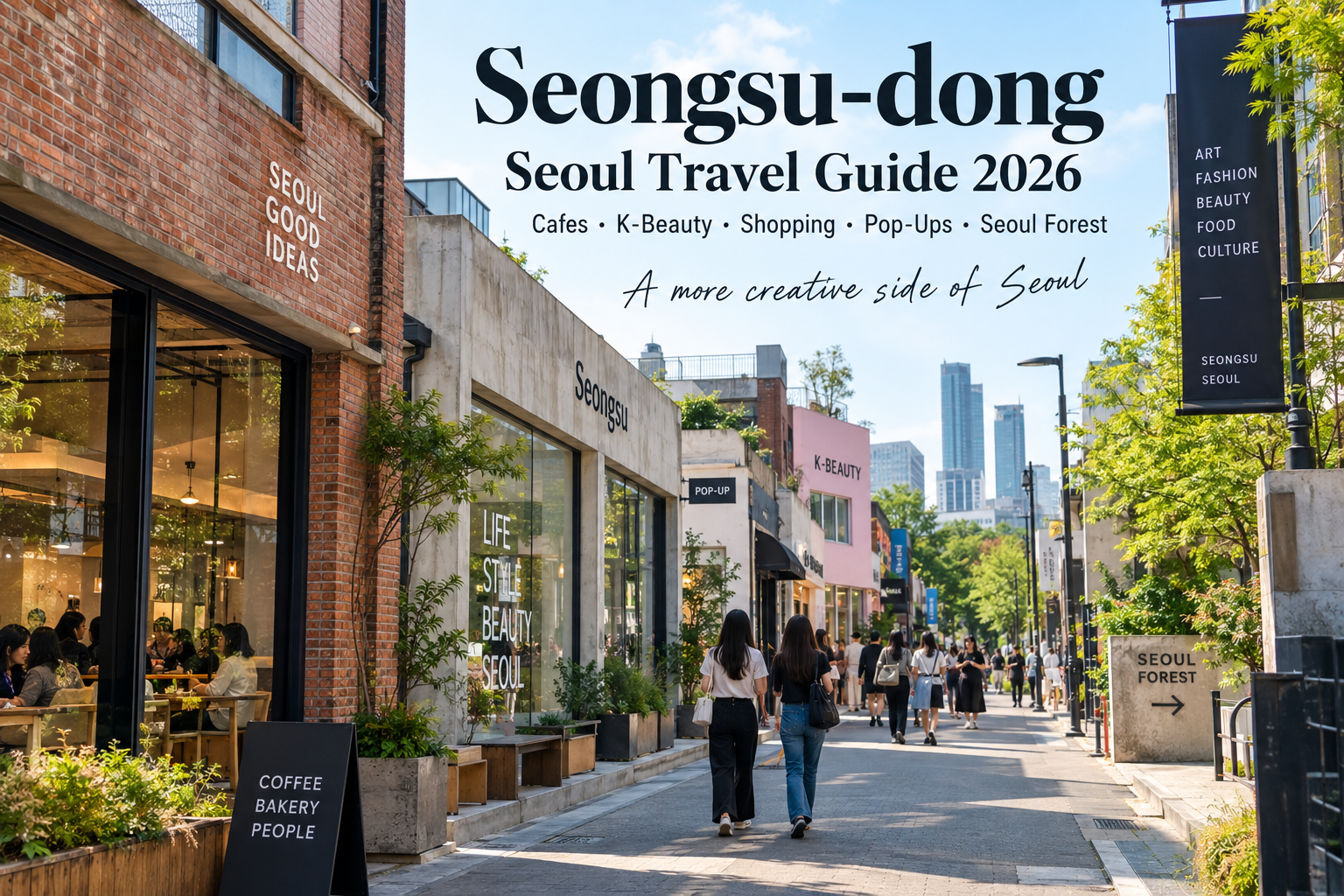
Once known for warehouses, factories, and handmade shoe workshops, Seongsu has evolved into one of Seoul’s most creative neighborhoods. Old industrial buildings now house specialty coffee shops, fashion boutiques, art spaces, K-beauty stores, restaurants, and constantly changing pop-up shops.
What makes Seongsu particularly interesting is that it offers more than shopping. You can spend the morning exploring cafes and local streets, discover Korean beauty and fashion brands in the afternoon, and then walk to Seoul Forest for a relaxing break from the city.
For international visitors—especially travelers returning to Seoul after already seeing major attractions such as Gyeongbokgung Palace, Myeongdong, and N Seoul Tower—Seongsu offers a different way to experience everyday Seoul.
In this Seongsu-dong Seoul travel guide for 2026, you’ll learn what to see, where to explore, how to get there, when to visit, and how to combine Seongsu’s cafes, K-beauty, shopping, pop-ups, and Seoul Forest into an easy half-day or full-day itinerary.
Why Is Seongsu-dong So Popular?
Seongsu-dong is often described as one of Seoul’s most creative neighborhoods because it combines the area’s industrial past with Korea’s fast-moving fashion, beauty, cafe, and pop-up culture.
Instead of replacing every old building with something new, many businesses have transformed former factories and warehouses into stylish cafes, showrooms, galleries, restaurants, and retail spaces. The contrast between exposed brick buildings and modern Korean brands gives Seongsu a distinctive atmosphere that feels different from more traditional shopping districts.
Cafes and Industrial Spaces
Seongsu is especially famous for its cafe culture. Large warehouse-style cafes, small specialty coffee shops, bakeries, and dessert cafes are scattered throughout the neighborhood.
Rather than visiting Seongsu for one specific attraction, many travelers simply walk through the streets, stop at a cafe that catches their attention, and continue exploring.
Pop-Up Stores and Korean Brands
Pop-up stores are another major reason people visit Seongsu. Korean fashion, beauty, food, entertainment, and lifestyle brands frequently use the neighborhood for temporary exhibitions, product launches, and interactive experiences.
Because pop-ups change regularly, the neighborhood can feel different each time you visit.
K-Beauty and Shopping
Seongsu has also developed into an important destination for travelers interested in K-beauty and Korean fashion. Flagship stores and brand experience spaces allow visitors to explore products in a more immersive setting than a conventional shopping mall.
Seoul Forest
One of Seongsu’s biggest advantages is its proximity to Seoul Forest, one of the city’s most popular urban green spaces.
After spending several hours exploring busy shopping streets and cafes, visitors can walk toward the park and enjoy a quieter side of Seoul.
This combination of cafes, shopping, K-beauty, pop-ups, creative spaces, and nature is what makes Seongsu particularly appealing to travelers who want to experience contemporary Seoul beyond the city’s traditional sightseeing route.
How to Get to Seongsu-dong
Seongsu is easy to reach by Seoul’s subway system, but there are two useful stations depending on which part of the neighborhood you want to explore.
Seongsu Station
Seongsu Station (Line 2) is usually the most convenient starting point if your main goal is to explore Seongsu’s cafes, shops, pop-up stores, restaurants, and creative spaces.
After leaving the station, you can explore the neighborhood on foot. Many of Seongsu’s popular streets and businesses are spread across several blocks, so comfortable walking shoes are recommended.
Seoul Forest Station
Seoul Forest Station (Suin-Bundang Line) is more convenient if you want to begin your visit near Seoul Forest and then walk toward the main Seongsu shopping and cafe areas.
This can be a good option for travelers who want to combine nature, shopping, and cafes in one route.
Which Station Should You Use?
A simple rule is:
- Start at Seongsu Station if cafes, shopping, K-beauty, and pop-ups are your priorities.
- Start at Seoul Forest Station if Seoul Forest is your first destination.
For a half-day or full-day trip, you do not necessarily need to return to the station where you started. One convenient strategy is to enter the neighborhood through one station, explore Seongsu on foot, and leave through the other.
Getting There From Popular Areas of Seoul
From neighborhoods such as Myeongdong, Hongdae, or Gangnam, the subway is generally the easiest option. Depending on where you start, you may need to transfer lines.
Instead of relying on a fixed travel time, check your route shortly before leaving because transfer combinations and travel times vary by starting location.
For navigation in Korea, travelers may also find Korean map apps useful when locating individual cafes, stores, and pop-up venues.
Best Things to Do in Seongsu-dong
Seongsu is best explored on foot rather than by rushing from one famous attraction to another. Part of the experience is discovering new stores, cafes, and pop-ups as you walk through the neighborhood.
Here are some of the best ways to experience Seongsu in 2026.
1. Explore Seongsu’s Cafe Streets
Cafe hopping is one of the most popular things to do in Seongsu.
The neighborhood is known for transforming former factories, warehouses, and industrial buildings into distinctive coffee shops and bakeries. Some are large destination cafes, while others are smaller specialty coffee shops hidden along side streets.
Instead of planning every cafe in advance, consider choosing one or two places that interest you and leaving time to discover others while walking.
Weekends and afternoons can be particularly busy, so visiting earlier in the day can provide a more relaxed experience.
2. Discover the Latest Pop-Up Stores
Seongsu has become one of Seoul’s best-known neighborhoods for pop-up stores and temporary brand experiences.
Beauty companies, fashion labels, food brands, entertainment companies, and lifestyle brands regularly open short-term spaces where visitors can see new products, take photos, participate in events, or receive samples.
The important thing to remember is that Seongsu pop-ups change constantly. A store mentioned in an older travel guide may already be closed by the time you arrive.
For that reason, check current pop-up information shortly before your visit rather than building your itinerary around an old list.
3. Explore K-Beauty Flagship Stores
If you are interested in Korean skincare and cosmetics, Seongsu is becoming much more than a cafe neighborhood.
Beauty brands increasingly use Seongsu for flagship stores and experience-focused spaces where visitors can test products, discover new releases, and experience the brand beyond a traditional cosmetics counter.
One of the neighborhood’s major beauty destinations is Olive Young N Seongsu, a large beauty-focused space designed around products, trends, and brand experiences.
Even travelers who already plan to shop for K-beauty in Myeongdong may find Seongsu worthwhile because the experience here is often more focused on discovering brands and trends rather than simply purchasing products.
4. Shop Korean Fashion and Lifestyle Brands
Seongsu is one of the best neighborhoods in Seoul for discovering contemporary Korean fashion and lifestyle brands.
Rather than concentrating everything inside a large department store, Seongsu is filled with flagship stores, showrooms, concept shops, and smaller boutiques spread throughout the neighborhood. This makes shopping feel like part of exploring the area itself.
You may find Korean clothing, shoes, accessories, fragrances, home goods, stationery, and design products that are less visible in Seoul’s traditional tourist shopping districts.
New stores also open frequently, so it is worth leaving some flexibility in your itinerary rather than planning every stop in advance.
5. Take a Break at Seoul Forest
After exploring Seongsu’s busy streets, Seoul Forest provides a completely different atmosphere.
The large urban park includes walking paths, lawns, trees, gardens, and spaces where visitors can slow down and take a break from shopping and cafe hopping.
Spring and autumn are particularly pleasant seasons for walking, but the park can be enjoyed throughout much of the year.
Combining Seongsu with Seoul Forest also makes the neighborhood suitable for travelers who do not want to spend an entire day shopping.
A convenient itinerary is to explore Seongsu’s cafes and shops first and then finish the afternoon with a walk through Seoul Forest.
6. Walk Through Seongsu’s Industrial Streets
Do not limit your visit to the newest flagship stores.
Part of Seongsu’s character comes from the contrast between its industrial history and its modern transformation. Older workshops, brick buildings, warehouses, small factories, and narrow streets still exist alongside fashionable cafes and contemporary retail spaces.
Walking between these different areas helps explain why Seongsu feels different from purpose-built shopping districts.
For photographers and travelers interested in urban neighborhoods, simply exploring the streets can be one of the most memorable parts of visiting Seongsu.
Where to Eat and Drink in Seongsu
Seongsu’s food scene is almost as varied as its shopping. Alongside its famous cafes, the neighborhood has Korean restaurants, bakeries, casual dining spots, dessert shops, and restaurants serving international cuisine.
Coffee and Desserts
Cafe hopping is part of the Seongsu experience, but you do not need to visit every famous cafe you see on social media.
Choose a cafe based on what matters most to you—specialty coffee, baked goods, unusual architecture, outdoor seating, or simply a convenient break during your walk.
Because popular cafes can become crowded on weekends, having one or two backup options nearby can save time.
Korean Food
If you want a proper meal between shopping stops, explore the streets beyond the busiest cafe areas. You can find Korean dishes ranging from casual everyday meals to more contemporary interpretations of Korean cuisine.
Looking a few streets away from the most crowded shopping areas can also lead to a quieter dining experience.
Bakeries and Quick Snacks
Seongsu is also a good neighborhood for travelers who prefer to eat smaller meals throughout the day. Bakeries, dessert shops, and takeaway snacks make it easy to combine eating with sightseeing rather than planning a long restaurant stop.
Half-Day Seongsu Itinerary
If you have around four to five hours, try this route:
Seongsu Station → Cafe → Pop-Up Stores → K-Beauty & Shopping → Lunch or Snack → Seoul Forest
Start at Seongsu Station and explore the cafe and shopping streets while your energy is high. Check any current pop-ups you want to visit, browse Korean beauty and fashion stores, and then gradually walk toward Seoul Forest.
Finish with a relaxed walk through the park and leave from Seoul Forest Station.
Full-Day Seongsu Itinerary
With a full day, you can explore at a slower pace:
Morning: Arrive at Seongsu Station and have coffee or brunch.
Late Morning: Explore industrial streets, boutiques, and Korean fashion stores.
Afternoon: Visit K-beauty spaces and current pop-ups, followed by lunch and another cafe.
Late Afternoon: Walk toward Seoul Forest and spend time exploring the park.
Evening: Return toward Seongsu for dinner or continue to another nearby Seoul neighborhood.
A full day works particularly well for travelers interested in shopping, photography, cafes, Korean brands, and contemporary Seoul culture.
Best Time to Visit Seongsu
Seongsu can be visited throughout the year, but the experience changes depending on the day and time.
Weekdays vs. Weekends
If your schedule allows, a weekday visit is usually more comfortable. Popular cafes, flagship stores, and pop-up spaces can become crowded on weekends, particularly in the afternoon.
For travelers visiting on Saturday or Sunday, arriving earlier in the day can make it easier to explore before the busiest period.
Spring and Autumn
Spring and autumn are especially pleasant if you plan to combine Seongsu with Seoul Forest. Mild temperatures make walking between the neighborhood’s shops, cafes, and the park more enjoyable.
Summer can be hot and humid, while winter temperatures can make long outdoor walks less comfortable. Fortunately, Seongsu has plenty of indoor cafes and shops where you can take breaks.
Practical Tips for International Travelers
Check Pop-Ups Shortly Before Your Visit
Pop-up stores are temporary by nature. Do not rely entirely on a travel article or social media post published months earlier.
Search for current Seongsu pop-ups shortly before your visit and confirm dates and operating hours.
Save Places on Your Map
Seongsu is spread across many streets rather than concentrated inside one shopping complex. Save the places you most want to visit before arriving, but leave room for spontaneous discoveries.
Wear Comfortable Shoes
Expect to walk considerably more than you might think. Cafes, shops, pop-ups, and Seoul Forest are spread across the neighborhood, so comfortable shoes will make the day much easier.
Carry a Payment Backup
Cards are widely accepted in Seoul, but carrying more than one payment option can be useful when traveling. A small amount of Korean won can also be helpful for occasional situations where cash is more convenient.
Check Tax Refund Eligibility
International visitors shopping for Korean beauty, fashion, and other products may encounter stores participating in Korea’s tax-refund system. Eligibility and procedures can vary, so look for tax-refund information at the store and keep your passport available when required.
Do Not Overplan
Seongsu changes quickly. New stores appear, pop-ups rotate, and unexpected places are often part of the experience.
Plan a few priority stops, but leave enough time simply to walk around and see what you find.
Frequently Asked Questions About Seongsu-dong
Is Seongsu-dong worth visiting?
Yes, especially if you are interested in contemporary Seoul culture. Seongsu combines cafes, Korean fashion and beauty brands, pop-up stores, creative spaces, industrial architecture, and Seoul Forest in one walkable area.
It can be particularly interesting for repeat visitors who have already explored Seoul’s major historical attractions.
How much time do you need in Seongsu?
Allow at least four to five hours if you want to visit cafes, browse shops, explore pop-ups, and walk through Seoul Forest without rushing.
Travelers interested in shopping, photography, K-beauty, and cafe hopping can easily spend most of a day in the neighborhood.
Is Seongsu better on weekdays or weekends?
Weekdays are generally more comfortable for travelers who want to avoid the largest crowds. Weekends can be lively, but popular cafes, stores, and pop-ups may have longer waits.
What is Seongsu famous for?
Seongsu is best known for its warehouse-style cafes, Korean fashion and lifestyle brands, K-beauty stores, temporary pop-ups, creative spaces, and its proximity to Seoul Forest.
Is Seongsu good for K-beauty shopping?
Yes. Seongsu has become an increasingly important destination for Korean beauty brands, flagship stores, and brand experience spaces. It offers a different experience from traditional cosmetics shopping areas such as Myeongdong.
Should I use Seongsu Station or Seoul Forest Station?
Use Seongsu Station on Line 2 if you want to begin with cafes, shopping, and pop-ups. Seoul Forest Station on the Suin-Bundang Line is convenient if you want to start near the park.
A good strategy is to enter through one station and leave through the other.
Can I visit Seongsu and Seoul Forest on the same day?
Absolutely. They are close enough to combine naturally, which is one reason Seongsu works so well as a half-day or full-day Seoul itinerary.
Final Thoughts
Seongsu represents a side of Seoul that is constantly changing.
Its appeal does not come from one famous landmark. Instead, it comes from the combination of old industrial streets, creative cafes, Korean fashion and beauty brands, temporary pop-ups, restaurants, and the greenery of Seoul Forest.
For first-time visitors, Seongsu can add contemporary Korean culture to a traditional Seoul itinerary. For repeat visitors, it offers a reason to explore beyond the city’s most familiar tourist districts.
Most importantly, do not try to schedule every minute. Choose a few places you genuinely want to visit, check the latest pop-ups before you go, and leave time to explore.
Seongsu is one of those Seoul neighborhoods where discovering something you did not plan can become the best part of the day.