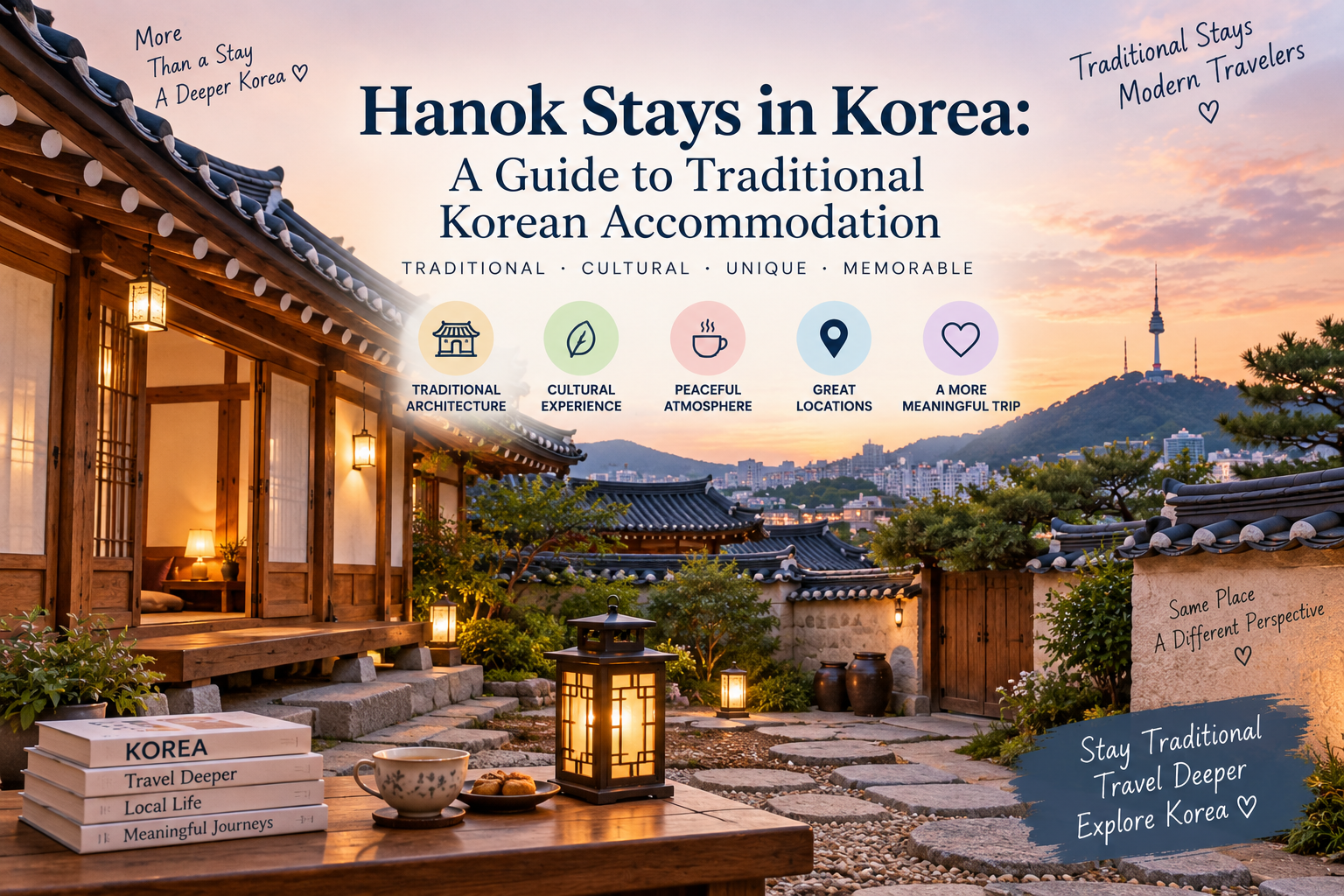
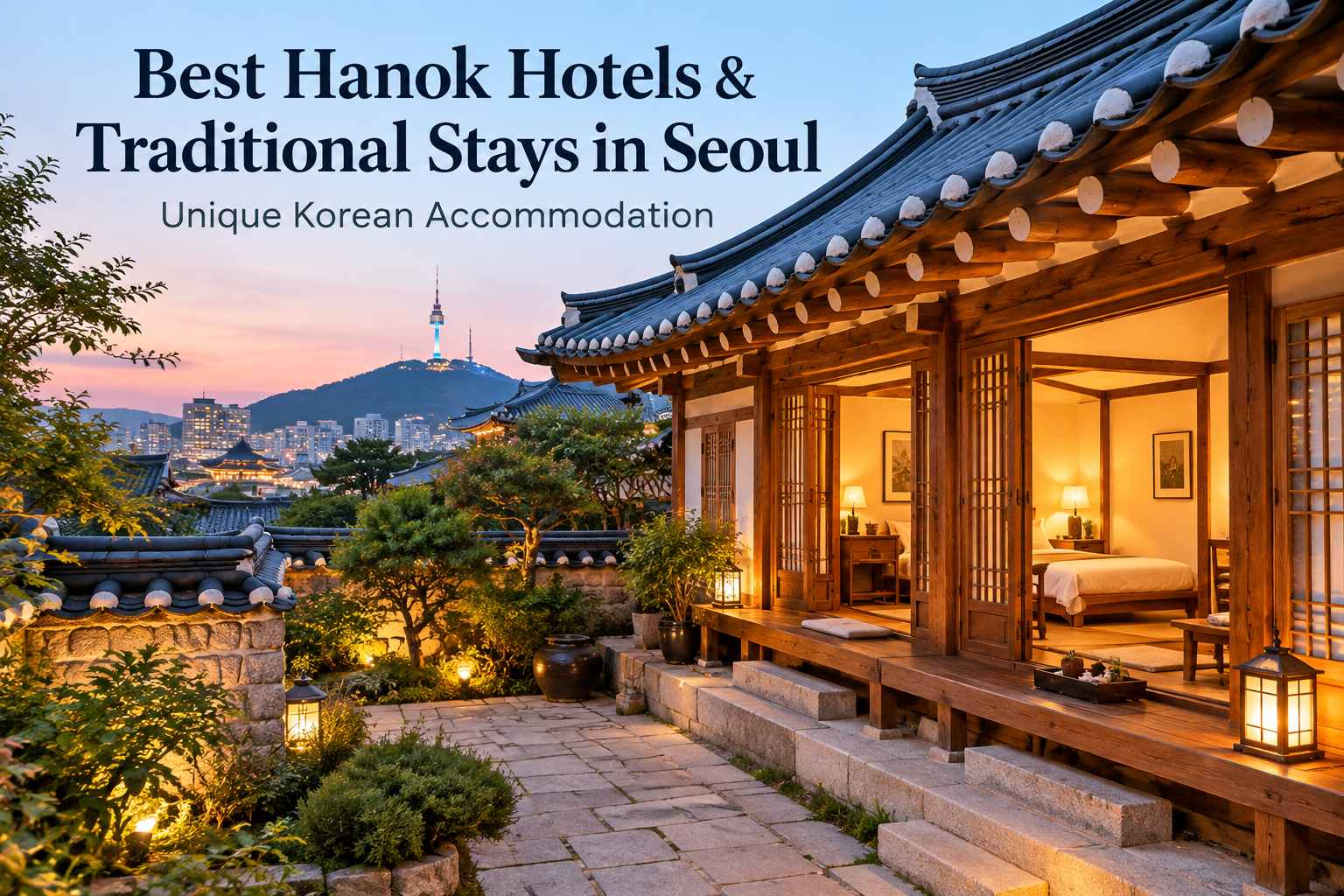
Seoul is famous for its modern skyline, busy shopping districts and contemporary hotels, but travelers can also spend the night in a completely different side of the city: a traditional Korean hanok.
A hanok stay offers more than a place to sleep. Wooden beams, tiled roofs, peaceful courtyards and traditional neighborhoods can turn accommodation itself into part of your Korean travel experience.
Many of Seoul’s hanok stays are concentrated around Bukchon, Seochon and Jongno, close to royal palaces and some of the city’s most historic streets. Seoul also has traditional-style accommodation outside the busiest tourist areas, giving visitors several ways to experience Korean architecture.
Here are some traditional hanok stays to consider in Seoul.
1. Rakkojae Seoul – A Classic Luxury Hanok Experience
Rakkojae Seoul Main Hanok is one of the best-known traditional accommodation experiences in Seoul.
Located in the historic Bukchon area, Rakkojae offers travelers the opportunity to stay inside a traditional Korean setting while remaining close to major attractions in central Seoul.
The atmosphere is very different from a conventional luxury hotel. Traditional architecture, wooden interiors and a quiet courtyard help create the feeling of stepping away from modern Seoul for a while.
Its location is especially attractive for visitors who want to explore Bukchon, Changdeokgung Palace, Insadong and other historic neighborhoods.
Address: 218 Gahoe-dong, Jongno-gu, Seoul, South Korea
Telephone: +82-2-742-3410
Best for: Couples, cultural travelers and visitors looking for a premium traditional Korean experience.
Nearby attractions: Bukchon Hanok Village, Changdeokgung Palace, Insadong and Jongno.
2. THE CHAE – A Private Premium Hanok Stay
THE CHAE Premium Hanok Stay offers another style of hanok experience: a more private and contemporary interpretation of traditional Korean accommodation.
Its location near the historic palace district makes it attractive for travelers who want privacy while staying close to some of Seoul’s most important cultural attractions.
This type of accommodation is particularly interesting for couples, families or small groups who prefer the feeling of having a traditional space to themselves rather than staying in a conventional hotel.
Address: 56-3 Hyoja-ro 9-gil, Jongno-gu, Seoul, South Korea
Telephone: +82-1544-1431
Best for: Couples, families, small groups and travelers looking for a private premium stay.
Nearby attractions: Gyeongbokgung Palace, Seochon, Tongin Market and Gwanghwamun.
3. Nostalgia Hanok Hotel – Traditional Seoul with a Boutique Feel
노스텔지어 한옥호텔 (Nostalgia Hanok Hotel) is located in Jongno, close to the traditional neighborhoods that make northern Seoul especially appealing to first-time visitors.
Its setting makes it possible to combine a distinctive accommodation experience with days spent exploring palaces, hanok streets, galleries and cafés.
Address: 1 Bukchon-ro 8-gil, Jongno-gu, Seoul, South Korea
Telephone: +82-2-3673-3666
Best for: Couples and travelers who want a boutique-style stay near Bukchon.
Nearby attractions: Bukchon Hanok Village, Gyeongbokgung Palace, Changdeokgung Palace and Samcheong-dong.
4. Bukchonmaru Hanok Guesthouse – Stay Near Changdeokgung
Bukchonmaru Hanok Guesthouse is another option for travelers who want to stay in the historic heart of Seoul.
The surrounding area is particularly rewarding on foot. Traditional streets, palaces, small cafés and cultural attractions can all become part of the experience.
Compared with Seoul’s large luxury hotels, a guesthouse-style hanok stay can also feel more intimate and personal.
Address: 152 Changdeokgung-gil, Jongno-gu, Seoul, South Korea
Telephone: +82-10-3253-8751
Best for: Independent travelers and visitors who want an intimate traditional stay.
Nearby attractions: Changdeokgung Palace, Bukchon Hanok Village and Jongmyo Shrine.
5. Dajayon Hanok Stay – A Traditional Stay in Jongno
다자연 한옥스테이 is listed among Seoul’s hanok accommodations and provides another alternative for travelers who want to stay in Jongno.
Its central location makes it convenient for exploring Seoul’s royal palaces and traditional neighborhoods while experiencing a smaller-scale accommodation style.
Address: 81-3 Yulgok-ro 10-gil, Jongno-gu, Seoul, South Korea
Telephone: +82-10-7131-9685
Best for: Independent travelers and visitors interested in Seoul’s historic neighborhoods.
Nearby attractions: Changdeokgung Palace, Jongmyo Shrine, Ikseon-dong and Insadong.
6. STAY256 Hanok Guesthouse – Close to the Palace District
STAY256 한옥 게스트하우스 is situated in Jongno, making it another useful base for travelers who want to spend much of their trip around Seoul’s historic center.
Staying in this part of the city means that palaces, traditional neighborhoods and many cultural attractions can be reached without crossing the entire capital.
Address: 104-10 Palpan-dong, Jongno-gu, Seoul, South Korea
Telephone: +82-10-3300-0256
Best for: Travelers who prioritize sightseeing and a traditional neighborhood atmosphere.
Nearby attractions: Gyeongbokgung Palace, Bukchon, Samcheong-dong and the National Folk Museum of Korea.
7. Adam Hanok – A Quiet Seochon Alternative
아담한옥 is located in the Seochon area west of Gyeongbokgung Palace.
Seochon has a different atmosphere from Bukchon. Its narrow streets combine older homes with independent cafés, restaurants, galleries and small shops.
For travelers who want to experience a more residential side of historic Seoul, staying around Seochon can be particularly enjoyable.
Address: 21 Pilundae-ro 6-gil, Jongno-gu, Seoul, South Korea
Telephone: +82-1670-4948
Best for: Couples and independent travelers who prefer a quieter neighborhood.
Nearby attractions: Gyeongbokgung Palace, Seochon, Tongin Market and Inwangsan Mountain.
What Is It Like to Stay in a Hanok?
A hanok stay can be quite different from staying in a conventional hotel.
Traditional Korean houses were designed around natural materials, courtyards and seasonal living. Some accommodations preserve traditional sleeping arrangements, while others combine hanok architecture with modern beds, bathrooms and contemporary conveniences.
That difference is part of the experience.
Travelers should therefore check room descriptions carefully before booking. If sleeping on a traditional floor mattress is important to you—or if you specifically require a Western-style bed—confirm the room arrangement in advance.
Bukchon or Seochon: Which Area Is Better?
For first-time visitors, Bukchon is an excellent choice if your priority is being surrounded by famous historic attractions.
Bukchon sits between Gyeongbokgung and Changdeokgung and is close to Samcheong-dong and Insadong. It is one of the most recognizable traditional neighborhoods in Seoul.
Seochon, on the western side of Gyeongbokgung, tends to offer a slightly different atmosphere. Travelers can explore neighborhood cafés, Tongin Market, small galleries and streets that mix traditional and contemporary Seoul.
Neither is necessarily better. They simply offer different versions of historic Seoul.
Hanok Stay vs. 5-Star Hotel in Seoul
Choosing between a hanok and a five-star hotel depends on what you want from your trip.
A luxury hotel usually provides extensive facilities, larger rooms, restaurants, fitness centers and standardized services.
A hanok stay offers something different: atmosphere, architecture and a closer connection with traditional Korean living.
One interesting option for a longer Seoul trip is to experience both.
You might spend the first few nights in a centrally located luxury hotel and then stay one or two nights in a hanok around Bukchon or Seochon.
That way, accommodation becomes another part of discovering Seoul.
Who Should Choose a Hanok Stay?
A hanok stay can be particularly memorable for couples, photographers, architecture lovers, cultural travelers and anyone visiting Korea for the first time.
Families may also enjoy the experience, but room configurations vary considerably between properties. Travelers with mobility concerns should check accessibility carefully because historic buildings can have steps, thresholds and layouts that differ from modern hotels.
Before You Book a Hanok in Seoul
Hanok accommodations are often much smaller than conventional hotels, which means popular properties may have limited availability.
Before booking, check the property’s current room information, cancellation policy, check-in procedures and luggage arrangements.
Also confirm whether the room includes a private bathroom and whether it uses a Western-style bed or traditional Korean bedding.
Because accommodation details and contact information can change, travelers should reconfirm the latest information directly with the property before arrival.
Final Thoughts
A night in a Seoul hanok can become one of the most memorable parts of a trip to Korea.
During the day, you can walk through royal palaces, traditional markets and historic neighborhoods. At night, instead of returning to an ordinary hotel room, you can continue the cultural experience inside a traditional Korean space.
For travelers who want Seoul to feel like more than sightseeing, a hanok stay offers something a modern hotel simply cannot reproduce.
Sometimes where you sleep becomes part of the journey itself.