Getting around Busan by bus has become easier for international travelers in 2026.
Starting September 21, foreign visitors can pay for Busan city buses by scanning a QR code with supported overseas payment apps. This means some travelers can now ride a bus without buying a Korean transportation card or preparing Korean cash first.
However, QR payment is not always the cheapest or most convenient option. If you plan to use buses and the subway frequently, a transportation card such as T-Money can still be the better choice.
Here is what foreign travelers need to know about paying for buses in Busan in 2026.
Three Ways to Pay for a Bus in Busan
For most international visitors, there are three practical ways to pay for a city bus in Busan:
- a transportation card such as T-Money
- cash in Korean won
- the new QR payment system using a supported overseas payment app
The best option depends on how often you plan to use public transportation and whether your mobile payment app supports the new QR service.
1. Paying with T-Money or Another Transportation Card
For travelers who will use public transportation several times during their trip, a transportation card remains one of the easiest options.
T-Money and other compatible Korean transportation cards can be used on buses and the subway in Busan.
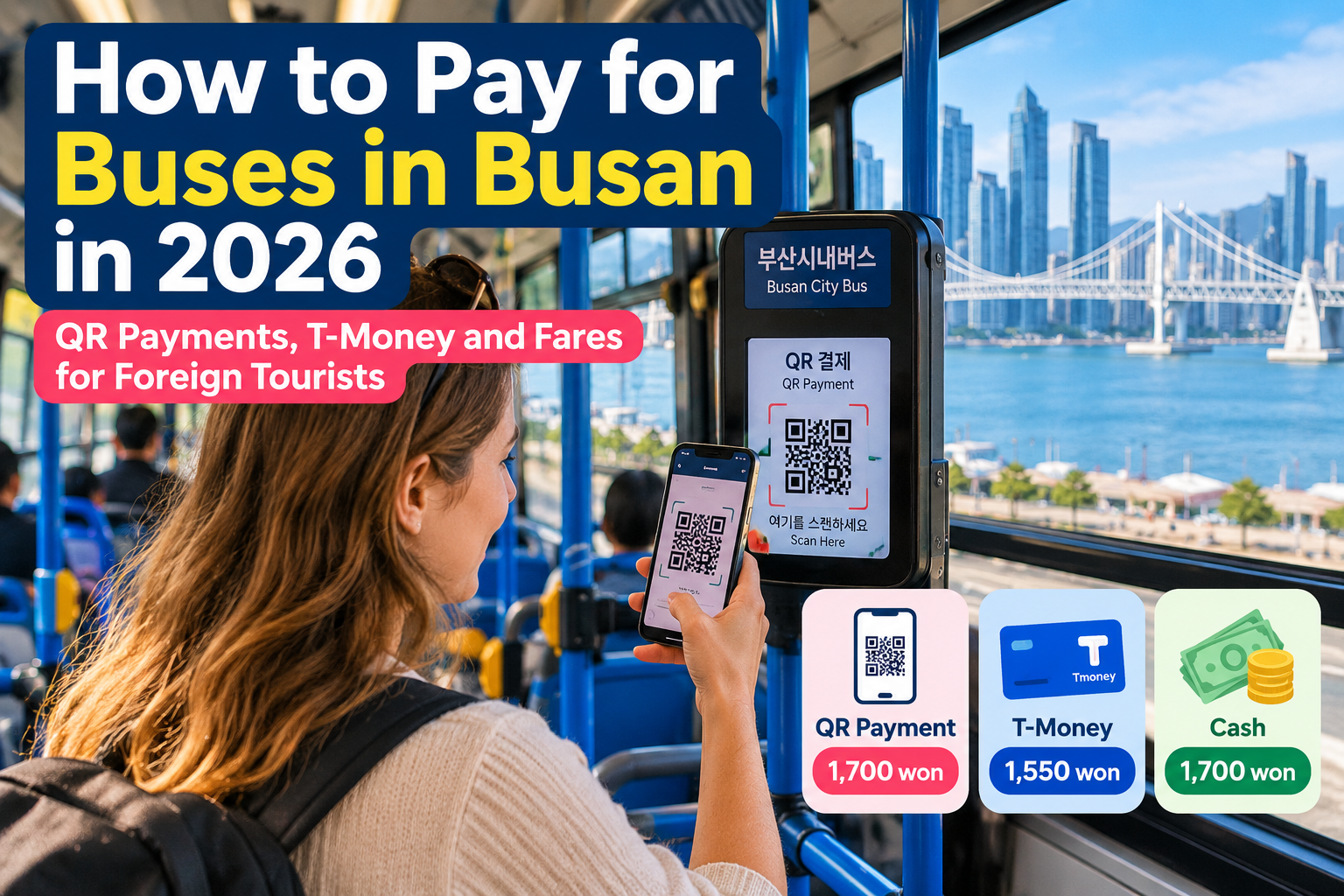
For a regular city bus, the adult transportation-card fare is 1,550 won, compared with 1,700 won when paying cash.
Using a transportation card also gives you access to eligible transfer discounts between public transportation services.
This makes a transportation card particularly useful if you plan to:
- take several buses in one day
- transfer between buses
- combine buses and the subway
- travel around Busan for several days
Transportation cards can also be recharged at locations such as subway stations and convenience stores.
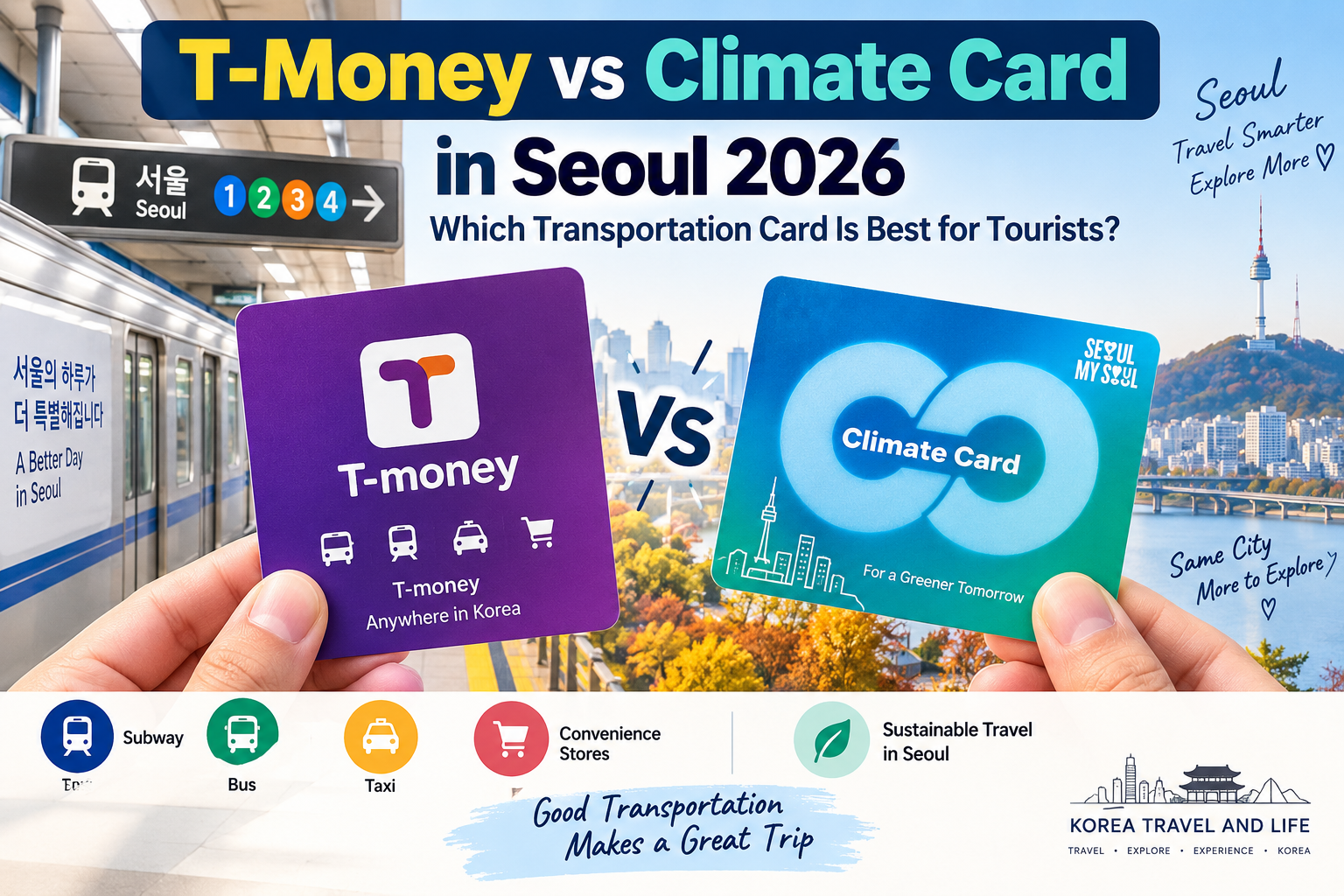
Is T-Money Only for Seoul?
No.
This is a common point of confusion for first-time visitors. Although T-Money is strongly associated with Seoul, it can also be used on public transportation in Busan.
So if you already bought and loaded a T-Money card in Seoul, you generally do not need to buy another transportation card just because you arrived in Busan.
2. New QR Bus Payment for Foreign Tourists
Busan introduced a new QR payment option for foreign tourists on September 21, 2026.
The system uses Zeropay’s global payment network and allows travelers with supported overseas payment apps to scan a QR code posted inside the bus.
Supported services include major mobile payment platforms such as Alipay and WeChat Pay, along with other participating overseas payment services.
You do not need to install a separate Korean transportation app simply to use this QR payment method if you already have a supported payment app.
How to Pay by QR Code
The process is straightforward.
After boarding the bus:
- Open your supported mobile payment app.
- Scan the Zeropay QR code inside the bus.
- Confirm the payment.
- Show the completed payment screen to the bus driver.
Currency conversion is handled through the payment system.
Multilingual instructions and QR codes are being provided on Busan city buses, with additional information available around major tourist areas and transportation gateways.
How Much Does QR Bus Payment Cost?
The QR fare is 1,700 won per person.
That is the same as the standard adult cash fare for a regular city bus.
There are two important differences compared with using a transportation card.
First, transfer discounts do not apply to QR payments.
Second, the QR system charges the same 1,700-won fare for adults, teenagers and children.
If several people are traveling together, each passenger requires a separate payment.
For families or travelers making multiple transfers, this can make a transportation card more economical.
3. Paying Cash on Busan Buses
Cash remains another option on Busan city buses.
For a regular city bus, the adult cash fare is 1,700 won.
However, cash has two disadvantages for most tourists.
The fare is higher than the standard transportation-card fare, and cash passengers cannot receive the same transfer discount available when using a transportation card.
For that reason, cash is most useful as a backup rather than the main payment method for a multi-day trip.
Busan Bus Fares in 2026
For a regular Busan city bus, the basic fares are:
| Payment Method | Adult Fare | Transfer Discount |
|---|---|---|
| Transportation card | 1,550 won | Available when eligible |
| Cash | 1,700 won | No |
| Foreign tourist QR payment | 1,700 won | No |
These figures apply to regular city buses. Express and late-night buses can have different fares.
QR Payment vs T-Money: Which Is Better?
For most tourists, the answer depends on the trip.
Choose QR payment if:
You only need an occasional bus ride, already use a supported overseas payment app, and do not want to buy or recharge a Korean transportation card.
Choose T-Money or another compatible transportation card if:
You plan to use buses and the subway frequently, expect to make transfers, or will travel around Korea for several days.
The new QR system is mainly about convenience. A transportation card can still be better for frequent public transportation use because of the lower regular bus fare and transfer benefits.
Can You Use the Same T-Money Card in Seoul and Busan?
Yes.
For many international travelers, this is the simplest solution.
If your itinerary includes both Seoul and Busan, you can generally continue using the same T-Money card instead of purchasing a separate card for each city.
That makes T-Money especially practical for travelers arriving in Seoul and later traveling to Busan.
What About the Busan Subway?
Do not confuse the new onboard bus QR payment system with QR tickets used for the Busan Metro.
They are different payment systems.
For tourists who plan to use both buses and the subway regularly, using a compatible transportation card is usually simpler because the same card can be used across the public transportation network.
How to Ride a Bus in Busan
If you have never used a Korean city bus before, the basic process is simple.
Check your bus number and direction before boarding. Enter through the front door and pay your fare when you board.
If using a transportation card, tap it on the card reader.
If using the new foreign-tourist QR payment system, scan the QR code inside the bus, complete payment and show the confirmation screen to the driver.
Before your stop, press one of the stop buttons inside the bus.
Passengers normally exit through the rear door.
When using a transportation card, remember to tap your card when getting off as well, especially if you may transfer to another bus or the subway.
Which Payment Method Should First-Time Visitors Use?
If you are spending several days in Busan, a transportation card is still the most flexible choice.
You can use it for buses and the subway, and it is more convenient when making transfers.
But the new QR payment system solves a real problem for short-term visitors.
If you arrive in Busan without a transportation card and simply need to take a bus, you may now be able to pay using a familiar overseas mobile payment app instead of finding a place to purchase and recharge a card.
That makes spontaneous bus trips considerably easier for international travelers.
Final Tips for Using Buses in Busan
Busan’s subway is convenient, but many beaches, hillside neighborhoods, temples and scenic areas are easier to reach by bus.
For frequent public transportation use, keep a transportation card loaded with enough balance.
For occasional trips, check whether your existing mobile payment app supports Busan’s new Zeropay QR bus payment system.
And remember one important difference: QR payment offers convenience, while a transportation card generally offers better value for travelers making multiple trips and transfers.
With both options now available, exploring Busan by bus has become easier for foreign visitors in 2026.