Tag: Things to Do in Seoul

  • 2026 Chuseok in Seoul: What’s Open, Free Palaces, Transportation, and Things to Do

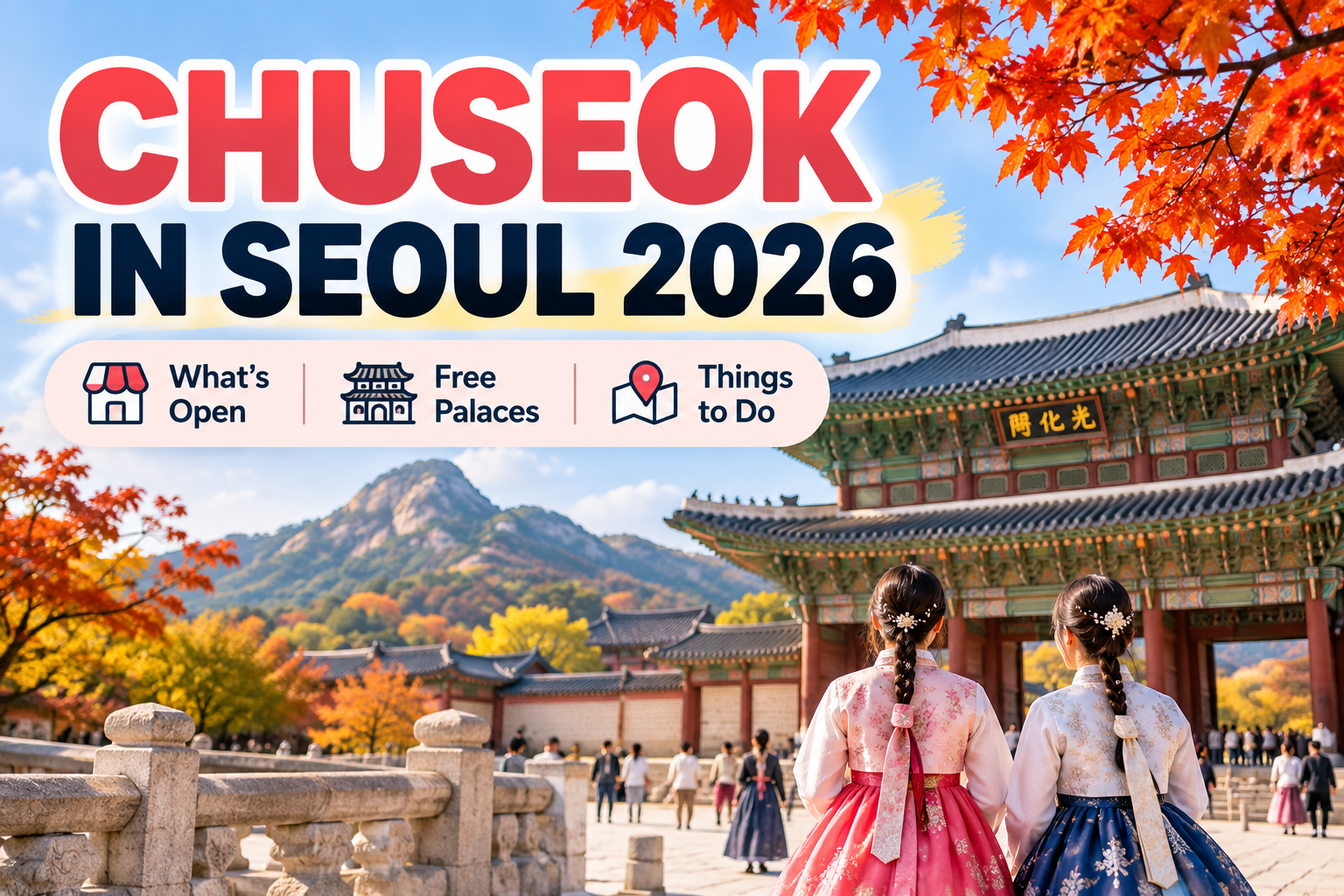
    2026 Chuseok in Seoul: What’s Open, Free Palaces, Transportation, and Things to Do

    If you are visiting Seoul in late September 2026, you may be wondering whether Chuseok will affect your trip.

    Will restaurants be open? Can you still use the subway? Are Seoul’s palaces open? And where should you go on Chuseok Day?

    The good news is that Seoul does not completely shut down during Chuseok. Public transportation continues to operate, major attractions remain accessible, and the holiday can actually be an interesting time to experience Korean culture.

    However, some restaurants, cafés, shops, and traditional markets may close or operate shorter hours.

    Here is what travelers should know about visiting Seoul during Chuseok 2026.

    When Is Chuseok in 2026?

    Chuseok falls on September 25, 2026.

    The official Chuseok holiday period runs from September 24 to September 26.

    This is one of Korea’s most important traditional holidays. Many Koreans travel to their hometowns to spend time with family, which means transportation between cities can become extremely busy.

    If you are staying in Seoul, however, the city can sometimes feel quieter than usual during parts of the holiday.

    Is Seoul Open During Chuseok?

    Yes, but not everything operates normally.

    Large tourist attractions, department stores, convenience stores, hotel facilities, and many businesses in major tourist areas may remain open.

    Smaller independent restaurants, cafés, neighborhood shops, and traditional businesses are more likely to close for at least part of the holiday.

    Chuseok Day, September 25, is the day when closures are most likely.

    If there is a particular restaurant or attraction you want to visit, check its official website, Naver Map, or Google Maps before making the trip.

    Opening hours can change during the holiday even when a business is normally open.

    Seoul Palaces Are a Great Chuseok Option

    One of the best things to do during Chuseok is visit Seoul’s royal palaces.

    Korea’s major royal heritage sites traditionally offer special access during the holiday period, and official tourism information for Chuseok 2026 includes free admission to major royal palaces and royal heritage sites during the holiday.

    This makes places such as Gyeongbokgung Palace, Changdeokgung Palace, Deoksugung Palace, and Changgyeonggung Palace particularly attractive options.

    You may also find traditional performances or cultural programs around major heritage attractions.

    If you are planning a palace day, you can also read our Jongno Seoul Travel Guide for ideas on combining Seoul’s historic neighborhoods and palaces in one itinerary.

    Special Chuseok Events in Seoul

    Seoul is also holding traditional cultural events during the holiday.

    Namsangol Hanok Village

    Namsangol Hanok Village is one of the easiest places for international visitors to experience traditional Korean culture without leaving central Seoul.

    During the Chuseok period, visitors can find holiday programs and traditional cultural activities.

    The hanok village itself is also worth visiting for its traditional houses and views toward Namsan.

    Seoul Museum of History

    The Seoul Museum of History is another useful option, especially if you want an indoor activity.

    Special holiday programming is scheduled around the Chuseok period, giving visitors an opportunity to learn more about Korean history and traditional culture.

    Unhyeongung Palace

    Unhyeongung is smaller than Seoul’s five major royal palaces, but it can be a pleasant stop during the holiday.

    Traditional activities and cultural programs are scheduled during the Chuseok period.

    Official Seoul tourism information lists holiday events running at several cultural sites between September 24 and 27, although schedules differ by location.

    Does the Seoul Subway Run During Chuseok?

    Yes.

    Seoul’s subway and city buses continue operating during the Chuseok holiday.

    That means travelers staying within Seoul can generally move around the city without major difficulty.

    However, transportation hubs such as Seoul Station, Yongsan Station, Express Bus Terminal, and major intercity bus terminals can become extremely crowded.

    The biggest transportation challenge during Chuseok is usually travel between cities, not getting around central Seoul.

    Be Careful With KTX and Intercity Travel

    If you are planning to travel from Seoul to Busan, Gyeongju, Jeonju, Daegu, or another Korean city during Chuseok, transportation requires much more planning.

    KTX and other intercity train tickets are in extremely high demand because millions of Koreans travel to visit family.

    Do not assume you can arrive at Seoul Station and easily buy a ticket on the day of travel.

    If your Seoul itinerary is flexible, staying in Seoul during the busiest holiday days and making your intercity trip before or after the peak period can be much easier.

    Are Restaurants Open During Chuseok?

    Some are. Some are not.

    This is one of the most important things international visitors should understand.

    Restaurants in major tourist districts such as Myeongdong, Hongdae, Itaewon, and areas around large hotels may be easier to find open than small neighborhood restaurants.

    Convenience stores are also useful during the holiday and many remain open.

    Still, individual businesses set their own holiday schedules.

    For a restaurant you really want to visit, check its latest opening information on the day rather than relying only on normal business hours shown online.

    Where Should You Go on Chuseok Day?

    If you are in Seoul on September 25, a simple itinerary could look like this:

    Morning:
    Visit Gyeongbokgung Palace and explore the historic Jongno area.

    Lunch:
    Eat in a major tourist district where you have several restaurant alternatives in case your first choice is closed.

    Afternoon:
    Visit Namsangol Hanok Village or another cultural attraction offering Chuseok programs.

    Evening:
    Walk along Cheonggyecheon, explore Myeongdong, or enjoy the Han River.

    Keeping your itinerary flexible is more important than trying to reserve every hour of the day.

    Practical Tips for Visiting Seoul During Chuseok

    Before heading out, check the latest opening hours for each attraction or restaurant.

    Avoid unnecessary intercity travel during the busiest holiday period if you do not already have transportation reservations.

    Keep alternative restaurants and cafés saved on your phone.

    Use Seoul’s subway and buses for getting around the city.

    And most importantly, do not assume that Chuseok means there is nothing to do.

    For international travelers, the holiday can actually provide a different view of Seoul—quieter streets in some neighborhoods, traditional cultural events, and opportunities to experience one of Korea’s most important holidays.

    Is Seoul Worth Visiting During Chuseok?

    Yes, as long as you plan around the holiday.

    Chuseok is not a normal travel period in Korea, so some businesses will close and intercity transportation can be difficult.

    But if you stay flexible, Seoul still offers plenty to see and do.

    Royal palaces, cultural events, museums, major tourist neighborhoods, and public transportation make it possible to enjoy the city throughout the holiday.

    For travelers already in Korea during Chuseok 2026, staying in Seoul may actually be one of the easiest ways to enjoy the holiday without dealing with the country’s busiest intercity travel period.

    This guide was updated on September 23, 2026. Holiday schedules can change, so always check the official website or latest local listing before visiting a specific attraction, restaurant, or event.

  • Seongsu-dong Seoul Travel Guide 2026: Cafes, K-Beauty, Shopping, Pop-Ups and Seoul Forest

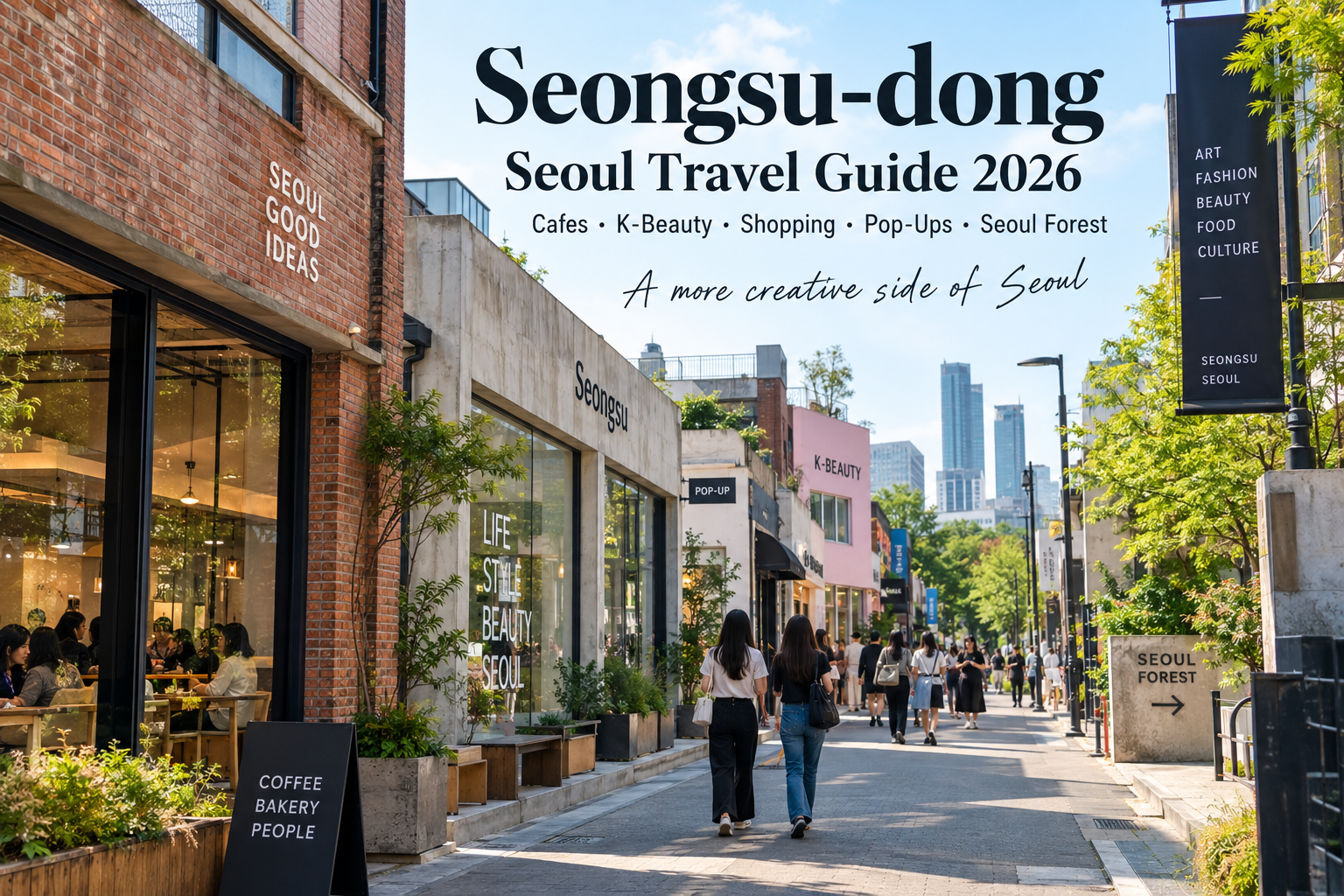
    Seongsu-dong Seoul Travel Guide 2026: Cafes, K-Beauty, Shopping, Pop-Ups and Seoul Forest

    Introduction

    Seoul is famous for palaces, traditional markets, K-pop, and late-night shopping, but one neighborhood has become especially popular with travelers looking for a more contemporary side of the city: Seongsu-dong.

    Once known for warehouses, factories, and handmade shoe workshops, Seongsu has evolved into one of Seoul’s most creative neighborhoods. Old industrial buildings now house specialty coffee shops, fashion boutiques, art spaces, K-beauty stores, restaurants, and constantly changing pop-up shops.

    What makes Seongsu particularly interesting is that it offers more than shopping. You can spend the morning exploring cafes and local streets, discover Korean beauty and fashion brands in the afternoon, and then walk to Seoul Forest for a relaxing break from the city.

    For international visitors—especially travelers returning to Seoul after already seeing major attractions such as Gyeongbokgung Palace, Myeongdong, and N Seoul Tower—Seongsu offers a different way to experience everyday Seoul.

    In this Seongsu-dong Seoul travel guide for 2026, you’ll learn what to see, where to explore, how to get there, when to visit, and how to combine Seongsu’s cafes, K-beauty, shopping, pop-ups, and Seoul Forest into an easy half-day or full-day itinerary.

    Why Is Seongsu-dong So Popular?

    Seongsu-dong is often described as one of Seoul’s most creative neighborhoods because it combines the area’s industrial past with Korea’s fast-moving fashion, beauty, cafe, and pop-up culture.

    Instead of replacing every old building with something new, many businesses have transformed former factories and warehouses into stylish cafes, showrooms, galleries, restaurants, and retail spaces. The contrast between exposed brick buildings and modern Korean brands gives Seongsu a distinctive atmosphere that feels different from more traditional shopping districts.

    Cafes and Industrial Spaces

    Seongsu is especially famous for its cafe culture. Large warehouse-style cafes, small specialty coffee shops, bakeries, and dessert cafes are scattered throughout the neighborhood.

    Rather than visiting Seongsu for one specific attraction, many travelers simply walk through the streets, stop at a cafe that catches their attention, and continue exploring.

    Pop-Up Stores and Korean Brands

    Pop-up stores are another major reason people visit Seongsu. Korean fashion, beauty, food, entertainment, and lifestyle brands frequently use the neighborhood for temporary exhibitions, product launches, and interactive experiences.

    Because pop-ups change regularly, the neighborhood can feel different each time you visit.

    K-Beauty and Shopping

    Seongsu has also developed into an important destination for travelers interested in K-beauty and Korean fashion. Flagship stores and brand experience spaces allow visitors to explore products in a more immersive setting than a conventional shopping mall.

    Seoul Forest

    One of Seongsu’s biggest advantages is its proximity to Seoul Forest, one of the city’s most popular urban green spaces.

    After spending several hours exploring busy shopping streets and cafes, visitors can walk toward the park and enjoy a quieter side of Seoul.

    This combination of cafes, shopping, K-beauty, pop-ups, creative spaces, and nature is what makes Seongsu particularly appealing to travelers who want to experience contemporary Seoul beyond the city’s traditional sightseeing route.

    How to Get to Seongsu-dong

    Seongsu is easy to reach by Seoul’s subway system, but there are two useful stations depending on which part of the neighborhood you want to explore.

    Seongsu Station

    Seongsu Station (Line 2) is usually the most convenient starting point if your main goal is to explore Seongsu’s cafes, shops, pop-up stores, restaurants, and creative spaces.

    After leaving the station, you can explore the neighborhood on foot. Many of Seongsu’s popular streets and businesses are spread across several blocks, so comfortable walking shoes are recommended.

    Seoul Forest Station

    Seoul Forest Station (Suin-Bundang Line) is more convenient if you want to begin your visit near Seoul Forest and then walk toward the main Seongsu shopping and cafe areas.

    This can be a good option for travelers who want to combine nature, shopping, and cafes in one route.

    Which Station Should You Use?

    A simple rule is:

    • Start at Seongsu Station if cafes, shopping, K-beauty, and pop-ups are your priorities.
    • Start at Seoul Forest Station if Seoul Forest is your first destination.

    For a half-day or full-day trip, you do not necessarily need to return to the station where you started. One convenient strategy is to enter the neighborhood through one station, explore Seongsu on foot, and leave through the other.

    Getting There From Popular Areas of Seoul

    From neighborhoods such as Myeongdong, Hongdae, or Gangnam, the subway is generally the easiest option. Depending on where you start, you may need to transfer lines.

    Instead of relying on a fixed travel time, check your route shortly before leaving because transfer combinations and travel times vary by starting location.

    For navigation in Korea, travelers may also find Korean map apps useful when locating individual cafes, stores, and pop-up venues.

    Best Things to Do in Seongsu-dong

    Seongsu is best explored on foot rather than by rushing from one famous attraction to another. Part of the experience is discovering new stores, cafes, and pop-ups as you walk through the neighborhood.

    Here are some of the best ways to experience Seongsu in 2026.

    1. Explore Seongsu’s Cafe Streets

    Cafe hopping is one of the most popular things to do in Seongsu.

    The neighborhood is known for transforming former factories, warehouses, and industrial buildings into distinctive coffee shops and bakeries. Some are large destination cafes, while others are smaller specialty coffee shops hidden along side streets.

    Instead of planning every cafe in advance, consider choosing one or two places that interest you and leaving time to discover others while walking.

    Weekends and afternoons can be particularly busy, so visiting earlier in the day can provide a more relaxed experience.

    2. Discover the Latest Pop-Up Stores

    Seongsu has become one of Seoul’s best-known neighborhoods for pop-up stores and temporary brand experiences.

    Beauty companies, fashion labels, food brands, entertainment companies, and lifestyle brands regularly open short-term spaces where visitors can see new products, take photos, participate in events, or receive samples.

    The important thing to remember is that Seongsu pop-ups change constantly. A store mentioned in an older travel guide may already be closed by the time you arrive.

    For that reason, check current pop-up information shortly before your visit rather than building your itinerary around an old list.

    3. Explore K-Beauty Flagship Stores

    If you are interested in Korean skincare and cosmetics, Seongsu is becoming much more than a cafe neighborhood.

    Beauty brands increasingly use Seongsu for flagship stores and experience-focused spaces where visitors can test products, discover new releases, and experience the brand beyond a traditional cosmetics counter.

    One of the neighborhood’s major beauty destinations is Olive Young N Seongsu, a large beauty-focused space designed around products, trends, and brand experiences.

    Even travelers who already plan to shop for K-beauty in Myeongdong may find Seongsu worthwhile because the experience here is often more focused on discovering brands and trends rather than simply purchasing products.

    4. Shop Korean Fashion and Lifestyle Brands

    Seongsu is one of the best neighborhoods in Seoul for discovering contemporary Korean fashion and lifestyle brands.

    Rather than concentrating everything inside a large department store, Seongsu is filled with flagship stores, showrooms, concept shops, and smaller boutiques spread throughout the neighborhood. This makes shopping feel like part of exploring the area itself.

    You may find Korean clothing, shoes, accessories, fragrances, home goods, stationery, and design products that are less visible in Seoul’s traditional tourist shopping districts.

    New stores also open frequently, so it is worth leaving some flexibility in your itinerary rather than planning every stop in advance.

    5. Take a Break at Seoul Forest

    After exploring Seongsu’s busy streets, Seoul Forest provides a completely different atmosphere.

    The large urban park includes walking paths, lawns, trees, gardens, and spaces where visitors can slow down and take a break from shopping and cafe hopping.

    Spring and autumn are particularly pleasant seasons for walking, but the park can be enjoyed throughout much of the year.

    Combining Seongsu with Seoul Forest also makes the neighborhood suitable for travelers who do not want to spend an entire day shopping.

    A convenient itinerary is to explore Seongsu’s cafes and shops first and then finish the afternoon with a walk through Seoul Forest.

    6. Walk Through Seongsu’s Industrial Streets

    Do not limit your visit to the newest flagship stores.

    Part of Seongsu’s character comes from the contrast between its industrial history and its modern transformation. Older workshops, brick buildings, warehouses, small factories, and narrow streets still exist alongside fashionable cafes and contemporary retail spaces.

    Walking between these different areas helps explain why Seongsu feels different from purpose-built shopping districts.

    For photographers and travelers interested in urban neighborhoods, simply exploring the streets can be one of the most memorable parts of visiting Seongsu.

    Where to Eat and Drink in Seongsu

    Seongsu’s food scene is almost as varied as its shopping. Alongside its famous cafes, the neighborhood has Korean restaurants, bakeries, casual dining spots, dessert shops, and restaurants serving international cuisine.

    Coffee and Desserts

    Cafe hopping is part of the Seongsu experience, but you do not need to visit every famous cafe you see on social media.

    Choose a cafe based on what matters most to you—specialty coffee, baked goods, unusual architecture, outdoor seating, or simply a convenient break during your walk.

    Because popular cafes can become crowded on weekends, having one or two backup options nearby can save time.

    Korean Food

    If you want a proper meal between shopping stops, explore the streets beyond the busiest cafe areas. You can find Korean dishes ranging from casual everyday meals to more contemporary interpretations of Korean cuisine.

    Looking a few streets away from the most crowded shopping areas can also lead to a quieter dining experience.

    Bakeries and Quick Snacks

    Seongsu is also a good neighborhood for travelers who prefer to eat smaller meals throughout the day. Bakeries, dessert shops, and takeaway snacks make it easy to combine eating with sightseeing rather than planning a long restaurant stop.

    Half-Day Seongsu Itinerary

    If you have around four to five hours, try this route:

    Seongsu Station → Cafe → Pop-Up Stores → K-Beauty & Shopping → Lunch or Snack → Seoul Forest

    Start at Seongsu Station and explore the cafe and shopping streets while your energy is high. Check any current pop-ups you want to visit, browse Korean beauty and fashion stores, and then gradually walk toward Seoul Forest.

    Finish with a relaxed walk through the park and leave from Seoul Forest Station.

    Full-Day Seongsu Itinerary

    With a full day, you can explore at a slower pace:

    Morning: Arrive at Seongsu Station and have coffee or brunch.

    Late Morning: Explore industrial streets, boutiques, and Korean fashion stores.

    Afternoon: Visit K-beauty spaces and current pop-ups, followed by lunch and another cafe.

    Late Afternoon: Walk toward Seoul Forest and spend time exploring the park.

    Evening: Return toward Seongsu for dinner or continue to another nearby Seoul neighborhood.

    A full day works particularly well for travelers interested in shopping, photography, cafes, Korean brands, and contemporary Seoul culture.

    Best Time to Visit Seongsu

    Seongsu can be visited throughout the year, but the experience changes depending on the day and time.

    Weekdays vs. Weekends

    If your schedule allows, a weekday visit is usually more comfortable. Popular cafes, flagship stores, and pop-up spaces can become crowded on weekends, particularly in the afternoon.

    For travelers visiting on Saturday or Sunday, arriving earlier in the day can make it easier to explore before the busiest period.

    Spring and Autumn

    Spring and autumn are especially pleasant if you plan to combine Seongsu with Seoul Forest. Mild temperatures make walking between the neighborhood’s shops, cafes, and the park more enjoyable.

    Summer can be hot and humid, while winter temperatures can make long outdoor walks less comfortable. Fortunately, Seongsu has plenty of indoor cafes and shops where you can take breaks.

    Practical Tips for International Travelers

    Check Pop-Ups Shortly Before Your Visit

    Pop-up stores are temporary by nature. Do not rely entirely on a travel article or social media post published months earlier.

    Search for current Seongsu pop-ups shortly before your visit and confirm dates and operating hours.

    Save Places on Your Map

    Seongsu is spread across many streets rather than concentrated inside one shopping complex. Save the places you most want to visit before arriving, but leave room for spontaneous discoveries.

    Wear Comfortable Shoes

    Expect to walk considerably more than you might think. Cafes, shops, pop-ups, and Seoul Forest are spread across the neighborhood, so comfortable shoes will make the day much easier.

    Carry a Payment Backup

    Cards are widely accepted in Seoul, but carrying more than one payment option can be useful when traveling. A small amount of Korean won can also be helpful for occasional situations where cash is more convenient.

    Check Tax Refund Eligibility

    International visitors shopping for Korean beauty, fashion, and other products may encounter stores participating in Korea’s tax-refund system. Eligibility and procedures can vary, so look for tax-refund information at the store and keep your passport available when required.

    Do Not Overplan

    Seongsu changes quickly. New stores appear, pop-ups rotate, and unexpected places are often part of the experience.

    Plan a few priority stops, but leave enough time simply to walk around and see what you find.

    Frequently Asked Questions About Seongsu-dong

    Is Seongsu-dong worth visiting?

    Yes, especially if you are interested in contemporary Seoul culture. Seongsu combines cafes, Korean fashion and beauty brands, pop-up stores, creative spaces, industrial architecture, and Seoul Forest in one walkable area.

    It can be particularly interesting for repeat visitors who have already explored Seoul’s major historical attractions.

    How much time do you need in Seongsu?

    Allow at least four to five hours if you want to visit cafes, browse shops, explore pop-ups, and walk through Seoul Forest without rushing.

    Travelers interested in shopping, photography, K-beauty, and cafe hopping can easily spend most of a day in the neighborhood.

    Is Seongsu better on weekdays or weekends?

    Weekdays are generally more comfortable for travelers who want to avoid the largest crowds. Weekends can be lively, but popular cafes, stores, and pop-ups may have longer waits.

    What is Seongsu famous for?

    Seongsu is best known for its warehouse-style cafes, Korean fashion and lifestyle brands, K-beauty stores, temporary pop-ups, creative spaces, and its proximity to Seoul Forest.

    Is Seongsu good for K-beauty shopping?

    Yes. Seongsu has become an increasingly important destination for Korean beauty brands, flagship stores, and brand experience spaces. It offers a different experience from traditional cosmetics shopping areas such as Myeongdong.

    Should I use Seongsu Station or Seoul Forest Station?

    Use Seongsu Station on Line 2 if you want to begin with cafes, shopping, and pop-ups. Seoul Forest Station on the Suin-Bundang Line is convenient if you want to start near the park.

    A good strategy is to enter through one station and leave through the other.

    Can I visit Seongsu and Seoul Forest on the same day?

    Absolutely. They are close enough to combine naturally, which is one reason Seongsu works so well as a half-day or full-day Seoul itinerary.

    Final Thoughts

    Seongsu represents a side of Seoul that is constantly changing.

    Its appeal does not come from one famous landmark. Instead, it comes from the combination of old industrial streets, creative cafes, Korean fashion and beauty brands, temporary pop-ups, restaurants, and the greenery of Seoul Forest.

    For first-time visitors, Seongsu can add contemporary Korean culture to a traditional Seoul itinerary. For repeat visitors, it offers a reason to explore beyond the city’s most familiar tourist districts.

    Most importantly, do not try to schedule every minute. Choose a few places you genuinely want to visit, check the latest pop-ups before you go, and leave time to explore.

    Seongsu is one of those Seoul neighborhoods where discovering something you did not plan can become the best part of the day.
  • Seoul in October 2026: Best Things to Do, Festivals, Hanok Week & Autumn Travel Guide

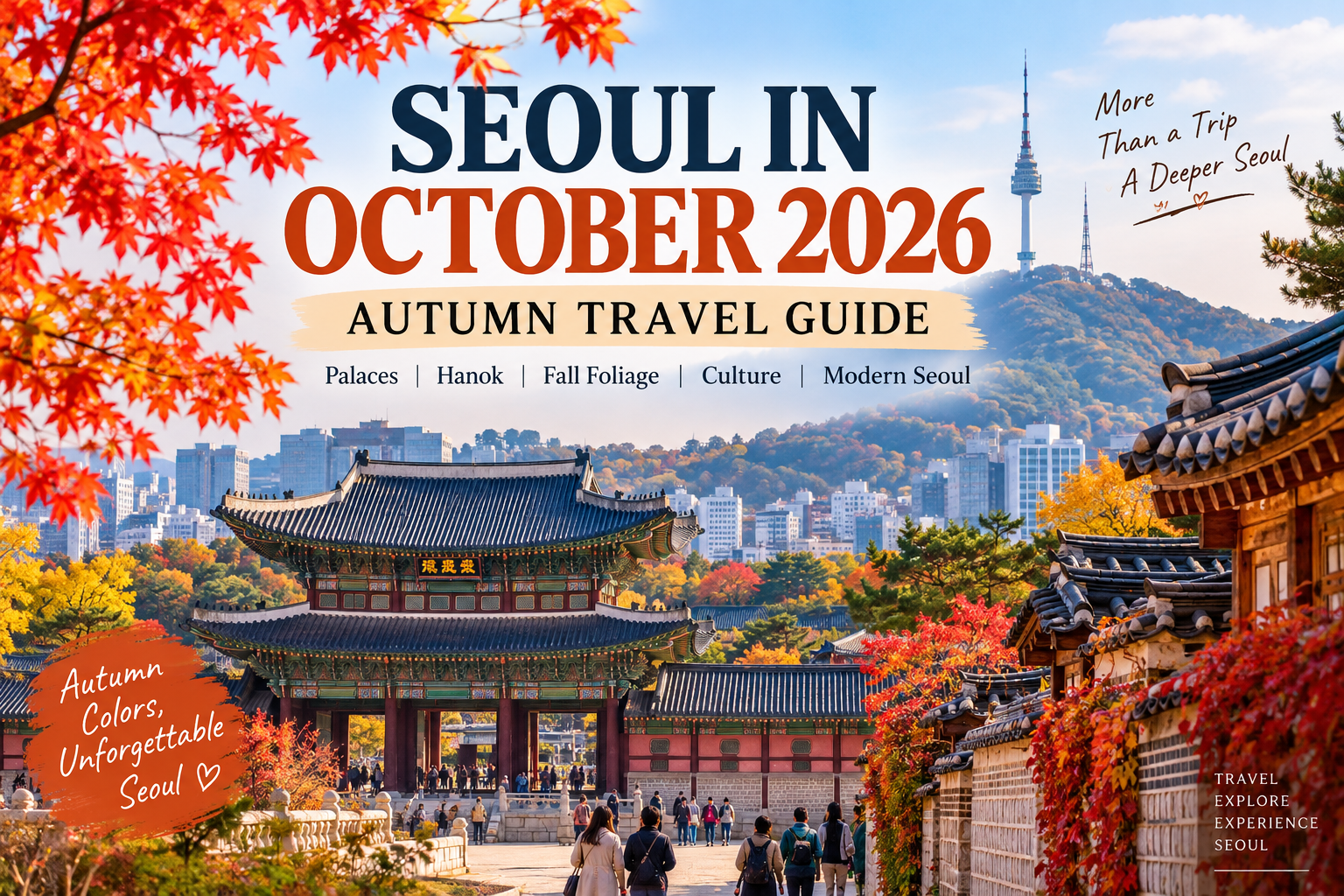
    Seoul in October 2026: Best Things to Do, Festivals, Hanok Week & Autumn Travel Guide

    Why October Is One of the Best Months to Visit Seoul

    October is one of the most rewarding times of the year to explore Seoul.

    The intense summer heat has eased, autumn colors begin spreading across the city, and Seoul’s parks, palaces, hanok neighborhoods, and mountains become especially attractive for walking and sightseeing.

    In October 2026, travelers can also experience seasonal cultural events, including Seoul Hanok Week, alongside autumn activities across neighborhoods such as Bukchon and Seochon.

    For international visitors, this combination of comfortable weather, traditional culture, seasonal scenery, and outdoor events makes October an excellent month to experience different sides of the Korean capital.

    In this guide, we’ll cover the best things to do in Seoul in October 2026, major autumn events, Hanok Week, fall foliage spots, what to wear, and practical travel tips for planning your trip.

    Seoul Weather in October 2026: What to Expect

    October brings noticeably cooler and drier weather to Seoul, making it comfortable for travelers who plan to spend much of the day outdoors.

    Early October can still feel mild during the daytime, while mornings and evenings become increasingly cool as the month progresses. By late October, visitors should be prepared for much cooler temperatures, especially after sunset.

    What to Wear in Seoul in October

    Layering is the easiest approach.

    Bring long-sleeved shirts, light sweaters, comfortable pants, and a jacket that you can add or remove as temperatures change throughout the day.

    Comfortable walking shoes are especially important because many of Seoul’s best autumn experiences — from palace grounds and hanok neighborhoods to riverside parks and mountain trails — involve plenty of walking.

    If you are visiting toward the end of October, packing a slightly warmer outer layer is also a good idea.

    Seoul Hanok Week 2026: Explore Bukchon and Seochon

    One of the standout cultural events for October visitors is Seoul Hanok Week 2026, taking place from October 2 to October 11.

    The event brings a wide range of cultural programs to Seoul’s famous hanok neighborhoods, particularly Bukchon and Seochon, giving visitors an opportunity to experience traditional Korean architecture alongside exhibitions, walks, workshops, and other cultural activities.

    For international travelers, special programs including guided walking experiences make Hanok Week particularly accessible even if it is your first visit to these neighborhoods.

    Bukchon or Seochon?

    Bukchon Hanok Village is one of Seoul’s best-known areas for traditional Korean houses and historic streets, while Seochon offers a different atmosphere with hanok buildings mixed among small restaurants, cafés, galleries, and local streets.

    Visiting during Hanok Week makes it possible to combine Seoul’s historic architecture with contemporary neighborhood culture in a single autumn itinerary.

    Because some programs require advance reservations and schedules can vary, travelers should check the latest official Seoul Hanok Week information before visiting.

    Best Places to Enjoy Autumn in Seoul

    October is also when Seoul gradually begins to take on its autumn colors.

    Instead of traveling far outside the capital, visitors can find seasonal scenery at palaces, parks, mountains, and riverside areas throughout the city.

    Some popular places to consider include Gyeongbokgung Palace, Changdeokgung Palace, Namsan, Seoul Forest, Olympic Park, and Bukhansan National Park.

    The exact timing of peak foliage varies by location and weather conditions, so travelers visiting specifically for autumn colors should check the latest foliage forecast shortly before their trip.

    If seeing Korea’s fall colors is one of the main reasons for your visit, our separate Korea Fall Foliage 2026 guide covers peak dates and destinations beyond Seoul in more detail.

    Experience Seoul’s Palaces After Dark

    October is also a great time to experience Seoul’s historic palaces in the evening.

    One notable seasonal program is the Changdeokgung Moonlight Tour, which allows visitors to explore parts of the palace after dark while experiencing traditional performances and cultural storytelling in a very different atmosphere from a daytime palace visit.

    For international visitors, selected 2026 sessions are offered in foreign languages, making the experience more accessible to travelers who do not speak Korean.

    Even if you cannot reserve a special nighttime program, Seoul’s royal palaces are worth including in an October itinerary. Cooler weather makes walking through the large palace grounds much more comfortable than during the summer months.

    If a nighttime palace experience is high on your list, check the official reservation schedule before your trip because special programs may have limited capacity.

    Best Things to Do in Seoul in October

    Beyond autumn foliage and traditional culture, October is an excellent month for simply exploring Seoul on foot.

    Spend a morning walking through Gyeongbokgung Palace and Seochon, then continue to cafés, galleries, and local restaurants nearby. Another day can be devoted to Seoul Forest and Seongsu, combining autumn scenery with one of Seoul’s most popular contemporary neighborhoods.

    For panoramic city views, consider Namsan and N Seoul Tower, especially in the late afternoon when you can watch the city transition from daylight to night.

    October is also ideal for spending time along the Han River. Parks such as Yeouido Hangang Park offer open spaces for walking, cycling, picnics, and sunset views without the intense heat of summer.

    The key is not to pack too many neighborhoods into one day. Seoul is a large city, so grouping nearby attractions together will give you more time to enjoy each area instead of spending much of your trip on public transportation.

    Festivals and Events to Check in October 2026

    October is one of Seoul’s busiest months for outdoor events, cultural programs, neighborhood festivals, and seasonal activities.

    In addition to Seoul Hanok Week, travelers may find performances, food events, art programs, and local festivals taking place across different parts of the city.

    However, event dates and reservation requirements can change, so avoid building your entire itinerary around an event without checking its latest schedule.

    Before your trip, check official tourism information for the exact dates, locations, admission rules, and reservation requirements of any festival you want to attend.

    A good strategy is to choose one major seasonal event and combine it with nearby attractions. This keeps your itinerary flexible while still giving you a memorable October experience in Seoul.

    Sample 3-Day Seoul October Itinerary

    If you have three days in Seoul, you can combine traditional culture, autumn scenery, and modern neighborhoods without rushing.

    Day 1: Palaces, Hanok Streets & Seochon

    Start at Gyeongbokgung Palace, then explore Seochon’s streets, cafés, and hanok buildings. If your visit falls during Seoul Hanok Week, check whether any programs fit your schedule.

    Day 2: Seoul Forest, Seongsu & the Han River

    Spend the morning enjoying the seasonal scenery at Seoul Forest, continue to Seongsu for cafés, shops, and restaurants, and finish the day near the Han River.

    Day 3: Namsan & Central Seoul

    Explore central Seoul before heading to Namsan in the afternoon. Stay through sunset for views of the city as the lights begin to appear.

    This itinerary can easily be adjusted depending on foliage conditions, festival schedules, and the neighborhood where you are staying.

    Frequently Asked Questions About Seoul in October

    Is October a good time to visit Seoul?

    Yes. October generally offers cooler weather, outdoor activities, seasonal events, and the beginning of autumn foliage, making it a popular time for sightseeing in Seoul.

    Is Seoul cold in October?

    Early October is usually milder, while mornings and evenings become noticeably cooler later in the month. Layered clothing and a light jacket are useful, with a warmer outer layer recommended toward late October.

    Can I see fall foliage in Seoul in October?

    Yes, although the best timing depends on the location and weather conditions. Colors generally develop as October progresses, with some locations reaching their best displays later in the season.

    What are the best places to visit in Seoul in October?

    Popular choices include Gyeongbokgung Palace, Changdeokgung Palace, Bukchon, Seochon, Namsan, Seoul Forest, Bukhansan National Park, and the Han River parks.

    What special events are happening in Seoul in October 2026?

    One major event is Seoul Hanok Week 2026, scheduled for October 2–11. Seasonal palace programs and various neighborhood cultural events may also be available during the month.

    What should I pack for Seoul in October?

    Pack comfortable walking shoes, long-sleeved tops, sweaters, pants, and a jacket. Layering is particularly useful because daytime and evening temperatures can feel quite different.

    Final Thoughts: Visiting Seoul in October 2026

    October brings together many of the experiences that make Seoul memorable: historic palaces, hanok neighborhoods, changing autumn scenery, outdoor walks, cultural events, and lively modern districts.

    In 2026, events such as Seoul Hanok Week add another reason to explore neighborhoods like Bukchon and Seochon, while parks, mountains, palaces, and the Han River provide plenty of opportunities to enjoy the cooler season outdoors.

    The best approach is to keep your itinerary flexible. Check current foliage conditions and event schedules shortly before your visit, then group nearby attractions together to spend less time traveling across the city.

    Whether you are visiting Seoul for the first time or returning to explore it more deeply, October 2026 offers an excellent combination of Korean culture, seasonal scenery, and comfortable city travel.