
Author: koreatravellife

  • Korean Hair Salon in Seoul 2026: Real Prices, English Consultations, Perm vs Color Decisions and Hidden Fees

    Korean Hair Salon in Seoul 2026: Real Prices, English Consultations, Perm vs Color Decisions and Hidden Fees

    Getting your hair done in Seoul can be one of the most memorable K-beauty experiences of your trip. You might want the soft layers you have seen in Korean dramas, a natural C-curl perm, a fresh color, or a Korean-style haircut that is difficult to explain to your stylist back home.

    But here is the part most social media transformations do not show:

    The final result depends on your existing hair, the service you actually book, the stylist’s consultation, and the price you agree to before the appointment begins.

    A ₩45,000 haircut may remain a ₩45,000 haircut. A seemingly affordable perm or color appointment, however, can become much more expensive when length surcharges, bleaching, additional treatments, or a higher stylist tier are involved.

    And not every viral Korean hairstyle is suitable for every hair texture or hair history.

    This guide helps international visitors make the right decisions before sitting in a Seoul salon chair.

    You will learn:

    • What haircuts, perms, straightening and coloring can realistically involve.
    • What published Seoul salon prices look like in 2026.
    • How to estimate the total bill rather than trusting a starting price.
    • What to ask about English-speaking stylists.
    • How to describe your hair history and desired result.
    • How to fit a hair appointment into a short Seoul itinerary.

    The goal is not simply to find a popular salon. It is to leave with a result you understand, at a price you agreed to pay.

    Quick Answer: Is Getting Your Hair Done in Seoul Worth It?

    It can be, especially if you want a Korean-specific cut, styling technique, or beauty experience during your trip.

    But your best choice depends on the complexity of the service.

    Your goalBest starting serviceBiggest question to ask
    Refresh your current hairstyleHaircut and stylingIs shampoo and blow-drying included?
    Try Korean face-framing layersLayered haircutWill the result suit my hair density and styling routine?
    Get inward-curving endsC-curl styling or an appropriate permDo I need a permanent chemical service?
    Create soft wavesS-curl or another suitable permIs my hair healthy enough for the process?
    Reduce volume or straighten hairStraightening or volume-magic consultationIs it compatible with my previous treatments?
    Change hair colorSingle-process color consultationWill bleaching be necessary?
    Try an idol-inspired bright shadeBleach and color consultationHow many sessions and how much maintenance?
    Enjoy a relaxing salon visitHead spa or conditioning treatmentWhat is included, and is it cosmetic or medical?

    Our recommendation: For first-time visitors with only a few days in Seoul, a well-consulted haircut is usually a simpler commitment than major bleaching, color correction, or chemical straightening.

    1. What Does a Korean Hair Salon Actually Cost in 2026?

    Published salon menus show that Seoul has a wide price range.

    The city includes neighborhood salons, major chains, trend-focused Hongdae studios and premium Gangnam or Cheongdam businesses.

    A single Seoul-wide average can therefore be misleading.

    To make the comparison meaningful, consider publicly reported menu examples from 2026.

    Published salon price examples

    ServicePublic 2026 exampleImportant condition
    Women’s haircut at JUNO Hair Myeongdong Street₩45,000 with a designerHigher stylist tiers may charge more
    Haircut with the head director at the same branch₩65,000Stylist rank affects pricing
    Women’s perm at the same branch₩180,000–₩280,000Short, medium and long lengths
    Women’s color at the same branch₩200,000–₩240,000Length-based menu tiers
    Men’s down perm at the same branch₩30,000–₩70,000Treatment area determines price
    SOONSIKI Hongdae haircut example₩33,000Confirm the current service option and inclusions

    These are examples reported from salon and booking menus checked in October 2026, not guaranteed prices for future appointments.

    The listed prices do not necessarily include every possible surcharge, optional service or booking condition.

    The takeaway is important:

    You cannot accurately compare two salon prices until you know which stylist, hair length, treatment and services each price covers.

    Why a cheap starting price can be misleading

    Suppose a visitor books a coloring service advertised at ₩120,000.

    During consultation, the stylist explains that the desired result requires an additional length charge and a separate treatment.

    Here is an illustrative calculation:

    Cost componentExample
    Advertised color service₩120,000
    Long-hair surcharge₩40,000
    Optional conditioning treatment₩60,000
    Total with the optional treatment₩220,000
    Total without the optional treatment₩160,000

    This is a hypothetical example, not a quotation from a named salon.

    It demonstrates why you should ask for two totals: the essential service alone, and the essential service with optional add-ons.

    Do not approve a chemical service until you understand the final plan and price.

    2. Korean Haircuts: What Are You Actually Asking For?

    A common mistake is showing a fashionable photograph and assuming the result requires only a basic haircut.

    In reality, the photograph may involve a particular cut, blow-dry technique, hair tools, or a perm.

    Korean layered cut

    A layered cut creates different lengths within the hairstyle.

    It may help achieve movement and shape, but the exact result depends on hair density, natural texture and how you style it at home.

    Ask whether the reference photograph shows a professionally styled finish that requires daily effort.

    Hush cut

    A hush cut typically features softer, more textured layers and a less uniform silhouette.

    The amount of layering needs careful discussion, especially if you have very fine, highly textured or damaged hair.

    C-curl

    A C-curl describes a curved shape, often at the ends of the hair.

    It may be created temporarily with styling tools or through a suitable chemical process.

    Do not assume you need a permanent perm just because you like a C-curl photograph.

    S-curl

    S-curls create a more pronounced wave pattern.

    The technique, result and suitability vary according to the service offered and your hair characteristics.

    Ask whether the stylist is proposing a cold perm, heat perm, or temporary styling.

    Men’s two-block cut

    A two-block cut is a popular Korean men’s hairstyle with contrasting lengths.

    A down perm may sometimes be offered separately to help the side hair lie flatter.

    These are not automatically the same service.

    Before booking, ask: “Can this look be achieved with a haircut alone, or will I need an additional perm?”

    That one question can prevent an unnecessary service from being added to your bill.

    3. Korean Perms: C-Curl, S-Curl, Down Perm and Volume Magic

    Not all Korean perms create curls.

    Some are designed to alter direction, reduce puffiness or create controlled root volume.

    Down perm

    A down perm is commonly used to make short side hair lie flatter.

    It is frequently associated with men’s styles, although suitability depends on the individual’s hair and desired appearance.

    The fee may be based on which area is treated.

    Setting or digital perm

    These terms refer to heat-assisted perm techniques.

    They may be discussed for certain types of soft waves or shaped curls, but the final result depends on the stylist’s method and the condition of your hair.

    A heat perm is not automatically better for every person.

    Volume magic

    Volume magic is commonly associated with straightening while preserving a more natural-looking shape or volume.

    It involves more than simply using a flat iron for a few minutes.

    The process may require several hours, and its suitability depends on your existing hair condition and chemical history.

    Why your hair history matters

    Tell the stylist if you have recently had:

    • Bleaching or highlights.
    • Permanent or semi-permanent color.
    • Chemical straightening.
    • Previous perms.
    • Significant breakage or damaged ends.
    • Home chemical treatments.

    Even if you cannot remember the product name, give an approximate date.

    A responsible stylist may recommend a less intensive service, additional assessment, or postponement rather than attempting the exact reference photo.

    A salon refusing an unsuitable chemical service is not necessarily a bad customer experience. It may be an appropriate professional decision.

    4. Coloring Your Hair in Seoul: The Hidden Complexity

    Color services deserve particular attention because the photograph you bring may not represent a single-process dye.

    Consider three different requests.

    Request A: A darker brown shade

    Depending on your starting color, a stylist may be able to create the desired result without bleaching.

    But previous color buildup can complicate the process.

    Request B: A bright ash beige or cool-toned blonde

    This may require lightening the hair first.

    The number of sessions and achievable result depend on the starting color, treatment history and hair integrity.

    Do not treat a single advertised coloring price as a guaranteed all-inclusive quote.

    Request C: Correcting uneven or previously bleached hair

    Color correction can be significantly more complicated than applying a new shade.

    It may require a longer consultation, multiple steps, or more than one appointment.

    For a short-term visitor, follow-up availability is particularly important.

    Questions to ask before agreeing to color

    Ask the stylistWhy it matters
    Does this result require bleaching?Determines complexity and cost
    How many sessions are realistic?Prevents unrealistic expectations
    What result is achievable today?Separates the reference photo from a feasible outcome
    Is the quote for one process or the complete result?Clarifies the final cost
    What aftercare will I need?Helps you maintain the color after leaving Korea
    What happens if the hair cannot safely tolerate the process?Establishes an alternative plan

    If your main goal is simply to refresh your appearance before a flight, a major color correction may be an unnecessarily ambitious choice.

    5. How to Avoid Unexpected Salon Charges

    Hair-length supplements and stylist ranks are not inherently unfair.

    The problem occurs when the customer does not understand the total before the service begins.

    Some public 2026 salon menus separate prices by short, medium and long hair. Others specify a starting price with additional length fees.

    SOONSIKI’s published booking information, for example, has described length surcharges that vary according to the service and hair length.

    Use this five-point price check

    Before agreeing to the service, confirm:

    1. Your exact booked treatment. Is it a haircut, a perm, a color, or a combination?

    2. The stylist’s level. Does the price change for a director or senior stylist?

    3. Your length category. How does the salon classify your hair length?

    4. Chemical-process extras. Are bleach, toner, bonding or other steps separate?

    5. Optional additions. Is scalp care, conditioning, or a clinic treatment included or optional?

    The easiest way to avoid confusion is to ask for the total in writing.

    You can say:

    “Please confirm the full price before starting. I would like to approve any additional services or charges first.”

    And if an upgrade is suggested during the appointment:

    “Thank you. Could you explain whether it is necessary for the result, and how much it adds to the total?”

    You do not have to buy an optional beauty package simply because it is recommended.

    However, if a stylist says a chemical procedure is unsafe without changing the plan, do not pressure them to continue with the original service.

    6. How to Find an English-Friendly Hair Salon

    A listing marked “English Available” is a useful starting point, but it does not guarantee that your specific stylist will conduct a detailed consultation in English.

    Some salons have multilingual stylists.

    Others may provide interpretation, bilingual reception staff, or translation-app assistance.

    Those experiences are not identical.

    What to confirm before booking

    Ask the salon:

    • Will the person performing my service speak English?
    • Can we discuss hair damage and chemical-treatment risks in English?
    • Can I send photos of the hairstyle I want in advance?
    • Can I choose the stylist who performs the treatment?
    • Will the full price and aftercare instructions be explained clearly?

    This is especially important for bleaching, perms and straightening.

    A straightforward trim may require only a brief conversation, while a multi-hour chemical service requires more precise communication.

    Where can you look?

    Creatrip’s October 2026 Hongdae listings include salons labeled as English-friendly, such as SOONSIKI Hair Hongdae Flagship, The Day’s Hair, and #CCONTE Seogyo Branch.

    These are examples of publicly listed options, not an independent ranking or personal endorsement by Korea Travel and Life.

    Check the current listing for language support, available dates, exact services and cancellation rules.

    You can browse:

    Creatrip — Hongdae Hair Salon Listings

    7. Can Foreign Tourists Book Without a Korean Phone Number?

    Yes, there are booking options that do not require a Korean mobile number.

    One important 2026 development is NAVER’s foreign passport verification system.

    Introduced on June 4, 2026, and announced on June 9, it allows eligible foreign visitors to verify their identity using an overseas-issued passport for supported NAVER services.

    This can help visitors access participating reservations without traditional Korean mobile-phone identity verification.

    However, eligibility for passport verification does not guarantee that every salon accepts foreign bookings.

    Other options may include international booking platforms or direct contact with the salon.

    Which booking route makes sense?

    Booking routePotential advantageWhat to check
    NAVER BookingDirect access to participating businessesPassport eligibility, merchant acceptance and payment
    Creatrip or similar platformTravel-oriented booking experienceIncluded service, deposit, remaining balance and cancellation
    Official salon website or social channelEasier customized inquiriesAuthenticity, confirmation and payment terms

    A deposit is not always the total cost.

    A booking request is not always a confirmed reservation.

    Before paying, confirm the appointment date, named stylist if applicable, treatment, duration, deposit, balance and cancellation deadline.

    For the full platform-by-platform explanation, see our previously published K-Beauty Booking in Seoul 2026: Naver vs Creatrip vs Direct Booking Without a Korean Phone Number guide on Korea Travel and Life.

    8. A Bilingual Consultation Script You Can Actually Use

    You do not need fluent Korean, but a few precise questions can make the appointment much easier.

    EnglishKorean
    I would like a consultation before deciding.시술을 결정하기 전에 상담받고 싶어요.
    Can this style work with my current hair?제 현재 머리 상태로 이 스타일이 가능할까요?
    I have bleached my hair before.예전에 탈색한 적이 있어요.
    I have had a perm or straightening treatment before.예전에 펌이나 매직을 한 적이 있어요.
    Will bleaching be necessary?탈색이 필요한가요?
    Is the haircut included in the price?가격에 커트가 포함되어 있나요?
    Is there an extra charge for my hair length?제 머리 길이에 따른 추가 요금이 있나요?
    What is the final total price?최종 총금액이 얼마인가요?
    Please ask before adding any extra treatment.추가 시술 전에 먼저 확인해 주세요.
    How should I care for my hair afterward?시술 후 머리 관리는 어떻게 해야 하나요?

    A message to send before your appointment

    Hello, I am visiting Seoul and would like to book a hair appointment.

    I am interested in [haircut / perm / color / straightening].

    My current hair length is [short / shoulder-length / long], and I have previously had [bleaching / color / perm / straightening] approximately [time] ago.

    I can send reference photos.

    Could you confirm whether an English-speaking stylist is available, the estimated total price, possible additional charges, appointment duration and cancellation policy?

    Thank you.

    Sharing these details early gives the salon a better opportunity to recommend an appropriate appointment length and service.

    9. Which Seoul Neighborhood Should You Choose?

    Location should support your travel schedule rather than determine your entire salon decision.

    Hongdae and Yeonnam — for trend-focused styles

    Hongdae is a reasonable starting area for visitors interested in contemporary Korean hair trends and salons accustomed to international clients.

    Several hair businesses in the area appear on English-language reservation platforms.

    Myeongdong — for convenience

    Myeongdong may be easier to combine with shopping, hotels and central Seoul sightseeing.

    A salon near your accommodation can be especially useful if you want a straightforward haircut without traveling across the city.

    Gangnam, Sinsa and Cheongdam — for premium consultations

    These areas include higher-end salon options and businesses with international clients.

    However, the neighborhood name alone does not guarantee that a salon is better for your particular hair.

    Ask whether the stylist has relevant experience with your texture and preferred result.

    Seongsu — for a beauty-and-lifestyle itinerary

    Seongsu may fit a day that also includes shopping, beauty brands and cafés.

    Book the appointment first, then arrange the rest of your itinerary around the service duration.

    For neighborhood planning, see our Seongsu-dong Seoul Travel Guide 2026: Cafes, K-Beauty, Shopping, Pop-Ups and Seoul Forest.

    The best neighborhood is the one that offers the right stylist, a clear price, and a practical appointment time—not simply the most famous beauty district.

    10. When Should You Book During Your Korea Trip?

    One of the easiest mistakes is scheduling a complicated salon visit too close to a departure or an important event.

    For a straightforward haircut

    A haircut is generally easier to fit into a busy sightseeing itinerary.

    Still, allow time for consultation, shampooing and styling when included.

    For a perm or straightening

    Reserve a substantial block of time.

    Depending on the technique and hair condition, multi-hour appointments are common.

    Do not assume the entire service will take only as long as the booking platform’s shortest advertised duration.

    For bleaching or major color work

    Allow more time and avoid booking immediately before an important event or flight.

    The result may require additional steps, and you should leave room to address questions or aftercare.

    For multiple beauty appointments

    If you are combining personal color analysis and hair coloring, consider doing the color consultation first.

    A personal color recommendation may help you discuss preferred hair shades, though the eventual color must still be assessed by the stylist.

    Our existing guide, Personal Color Analysis in Seoul 2026: Is It Worth $100? Real Costs, English Sessions and What You Actually Get, explains what a consultation includes and how to compare packages.

    11. What to Do If the Stylist Says Your Reference Photo Is Not Achievable

    This is an important part of an informed salon experience.

    You may bring a photo of a celebrity with bright blonde hair, soft waves, or a perfectly shaped layered cut.

    But your starting hair may have a different texture, density, length or treatment history.

    If the stylist says the exact look cannot safely or realistically be achieved, ask:

    “What result can we achieve today without excessive damage?”

    “Would a haircut or temporary styling create a similar appearance?”

    “Can we do a less dramatic version?”

    “Would it be better to postpone the chemical treatment?”

    A good alternative is often more valuable than forcing a risky process.

    You should understand the likely result before consenting, particularly when chemical treatments are involved.

    12. What Happens After Your Appointment?

    Your salon experience does not end when you leave the chair.

    Ask for practical, specific aftercare instructions that match the treatment actually performed.

    For a haircut, that may mean asking how to recreate the style without professional tools.

    For color, ask which cleansing and maintenance products the stylist recommends and when further coloring might be appropriate.

    For a perm or straightening service, follow the specific timing and care instructions provided for the chemicals and method used.

    Do not rely on a universal internet rule that applies to every perm or coloring system.

    Keep a record of the products or procedure names if you plan to visit another salon after returning home.

    That information may be valuable at your next consultation.

    Frequently Asked Questions

    How much does a Korean haircut cost in Seoul in 2026?

    Prices vary significantly by salon, neighborhood, stylist and included services. Publicly reported 2026 menu examples include around ₩33,000 at a Hongdae salon and ₩45,000–₩65,000 for different stylist levels at a named Myeongdong branch. These are examples, not a citywide average.

    Are Seoul hair salons cheaper than those in the United States?

    Some services may be less expensive, but the comparison depends on the salon, service complexity, currency conversion and additional charges. A premium Seoul appointment can cost considerably more than an ordinary haircut elsewhere.

    Can I get a Korean perm if my hair has been bleached?

    That depends on the extent of damage, chemical history and professional assessment. Some salons may advise against the treatment. Disclose previous bleaching before booking.

    Will a Seoul salon understand my natural curly or textured hair?

    Experience varies. If you have tightly curled, coily, highly textured or otherwise specialized hair-care needs, ask the stylist for relevant experience and examples before booking. Do not assume all salons have the same expertise.

    Do I need to tip at a Korean hair salon?

    Tipping is generally not customary at Korean hair salons. Confirm the service price and any additional charges rather than assuming a gratuity is expected.

    Can I book without speaking Korean?

    Yes, some salons offer English-language support or international booking options. Confirm the language of the actual consultation rather than relying only on an English booking page.

    Should I get a haircut and personal color analysis on the same day?

    It can be possible, depending on appointment lengths and locations. If the color analysis will inform a major hair-color decision, schedule enough time to review the recommendations first.

    Are Korean head spas the same as medical scalp treatments?

    No. A salon head spa is typically a cosmetic cleansing, conditioning or relaxation service. It should not be confused with the diagnosis or treatment of a medical scalp condition.

    Final Verdict: The Best Seoul Hair Salon Is the One That Understands Your Hair and Your Budget

    Getting your hair done in Seoul can be a worthwhile travel experience, whether you want a subtle layered haircut or a more dramatic Korean-inspired transformation.

    But a viral photograph, a fashionable neighborhood or an attractive promotional price should never be the only reason you book.

    Choose a stylist who can explain what is achievable with your hair.

    Confirm the total cost before agreeing to a treatment.

    Make sure you understand any language, booking and cancellation conditions.

    And consider how much time and maintenance your chosen style will require after you return home.

    The best K-beauty hair experience is not the most dramatic transformation. It is a result you can enjoy without unpleasant surprises.


    Sources and Editorial Methodology

    This is an independent travel-planning and buying-decision guide. Korea Travel and Life does not claim to have personally visited, tested or ranked the salons mentioned.

    Prices and listings reflect publicly available information reviewed for this October 2026 guide. They may change by branch, stylist, length, promotion and appointment date. Confirm all charges directly before paying.
  • Naver Map vs Google Maps in Korea (2026): What Works, What Doesn’t & How Tourists Can Navigate

    Naver Map vs Google Maps in Korea (2026): What Works, What Doesn’t & How Tourists Can Navigate

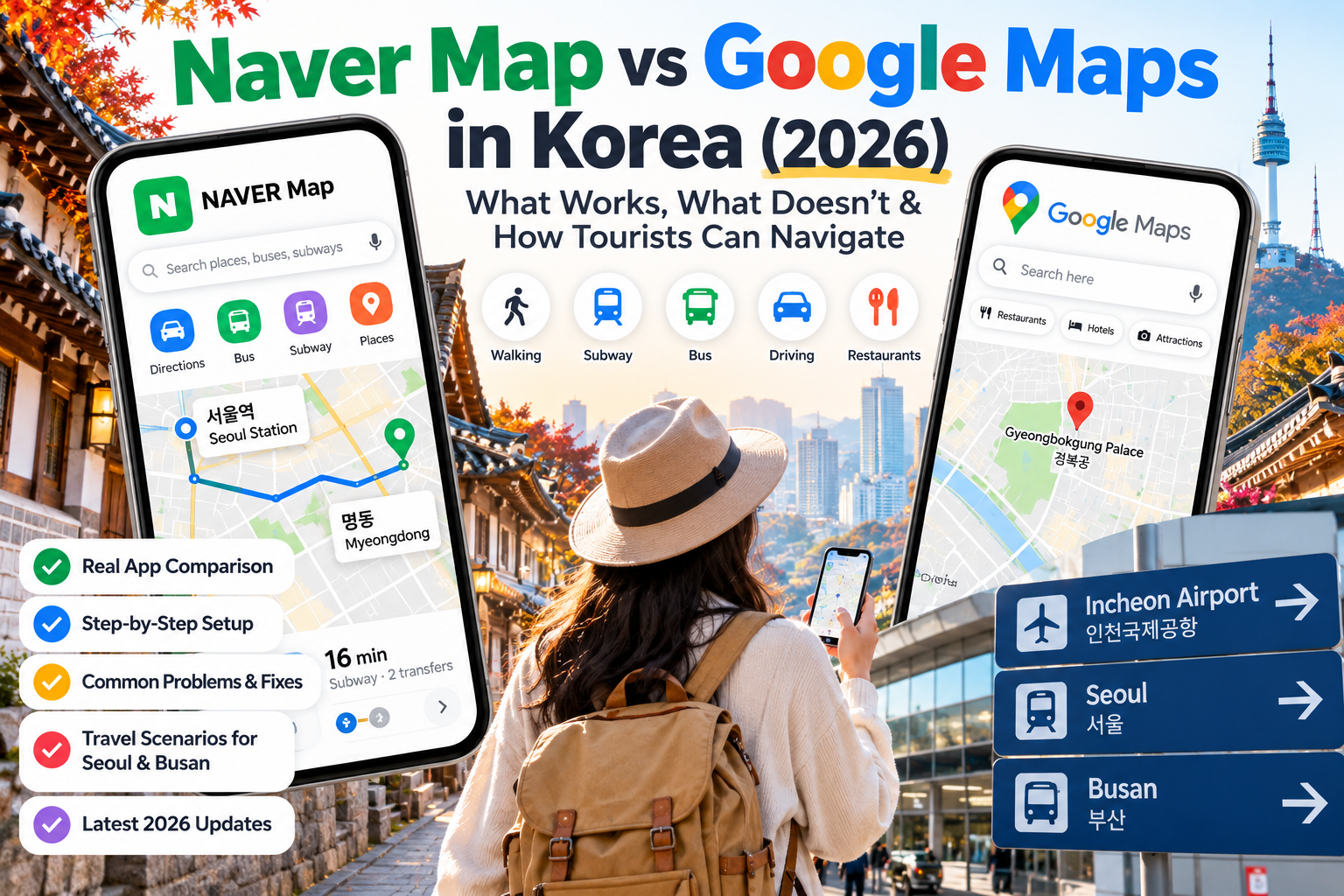
    Google Maps is familiar. Naver Map is built for Korea. But in 2026, the smartest travel strategy is not choosing one app blindly—it is knowing which one to use when a route, restaurant, or address cannot be found.

    You have just arrived in Seoul. Your hotel is only a short walk from the subway station, or so Google Maps seems to suggest.

    You search for walking directions, tap the route button, and discover that the familiar navigation experience you use at home is not working as expected.

    Now what?

    For international visitors, navigating South Korea can be surprisingly confusing—not because the country lacks good transportation, but because the mapping apps travelers already know do not necessarily provide the same functionality they offer elsewhere.

    And in 2026, the situation has become more complicated.

    South Korea conditionally approved Google’s request to export high-precision map data in February, potentially paving the way for improved Google Maps navigation. However, regulatory approval and a fully functioning app are not the same thing.

    Meanwhile, Naver Map continues to offer locally focused route planning, business information, and increasingly accessible booking features for international visitors.

    This guide explains what actually works, what remains uncertain, and how to navigate Seoul, Busan, and the rest of Korea without relying on a single app.

    Quick Answer: Which Map App Should Tourists Use in Korea in 2026?

    For most visitors, Naver Map is the best primary navigation app to prepare before arriving in South Korea.

    Keep Google Maps as a complementary tool for familiar place research, reviews, and routes that are supported in your version of the app. KakaoMap is also a useful backup for local navigation.

    Travel taskRecommended starting pointImportant consideration
    Walking between attractionsNaver MapCheck pedestrian routing and actual entrances
    Subway and bus routesNaver Map or KakaoMapRecheck departures and transfers
    Finding Korean restaurantsNaver MapTry Korean names when English searches fail
    Exploring familiar international listingsGoogle MapsCheck whether the location details are current
    Driving in KoreaNaver Map or KakaoMapDo not assume Google driving navigation is available
    Finding subway exitsNaver MapConfirm exit numbers and street-level landmarks
    Restaurant bookingsNaver Map, where supportedAvailability and verification requirements vary
    Backing up an unfamiliar addressTwo apps plus Korean addressMatching the exact entrance is essential

    This is a practical recommendation, not the result of a controlled performance test across every Korean city.

    Map coverage, English translations, transit data, and navigation features can change.

    The best habit is simple: use Naver Map first for local navigation, keep a second mapping option ready, and verify the destination before departing.

    1. Does Google Maps Work in South Korea in October 2026?

    The answer is more nuanced than a simple yes or no.

    Google Maps can display Korean locations and support certain place-search and public-transport functions. However, its navigation capabilities have historically been restricted compared with those available in many other countries.

    Recent independent travel-app checks published in October 2026 still reported limitations with walking and driving routes.

    That does not mean Google Maps has no value in Korea.

    It means travelers should not assume every familiar navigation feature will operate normally.

    What changed on February 27, 2026?

    South Korea’s government conditionally approved Google’s request to transfer high-precision geographic data overseas.

    The approval followed years of disagreement over national security requirements and the handling of detailed geographic information.

    Conditions include security processing of sensitive geographic data and safeguards governing how mapping information is processed and exported.

    This was a significant policy development.

    But it did not automatically establish a public launch date for enhanced walking or driving navigation.

    What the approval does—and does not—mean

    Confirmed developmentWhat travelers should understand
    Conditional approval granted in February 2026An important regulatory barrier was reduced
    Security conditions imposedImplementation remains subject to compliance requirements
    Improved Google navigation became possible in principlePossibility does not equal immediate availability
    Some Google Maps features already functionThis does not guarantee walking or driving navigation
    No verified nationwide launch date established in sources reviewedTravelers should test current app functionality

    If you read an older article saying that Google can never provide full navigation in Korea, that explanation is outdated.

    But if an article claims the February approval means Google Maps immediately became fully functional, that also goes beyond what the decision established.

    As of this guide’s October 18 update, travelers should check the live app before relying on any newly announced Google navigation feature.

    2. Naver Map vs Google Maps vs KakaoMap: A Practical Comparison

    These three apps serve overlapping but different needs.

    Naver Map: The primary local navigation choice

    Naver Map is especially useful for finding places within Korea, planning journeys, locating public transportation, and accessing Korean business listings.

    It supports multilingual features, including English, although translated names and business information may be incomplete.

    Its biggest advantage is not that every interface element is perfectly translated.

    It is the combination of local map information, route guidance, transportation features, and business discovery within one service.

    For a traveler moving between a subway station, restaurant, café, and hotel, that integration can be valuable.

    Google Maps: Familiar but not a complete replacement

    Google Maps offers an interface many international travelers already know.

    It can be useful when reviewing saved travel ideas, comparing international place information, or looking up attractions.

    However, travelers must check route availability for the specific transportation mode.

    A public-transit route appearing in Google Maps does not prove that walking or driving directions will also work.

    Think of Google Maps as a useful companion rather than the only navigation tool you install.

    KakaoMap: A valuable second local map

    KakaoMap is another established Korean mapping service, offering local place searches and transportation routing.

    It can be useful when a destination is difficult to find in Naver Map or when you want to compare routes.

    An effective travel setup does not require mastering every feature of three apps.

    Start with one primary service, then use another when information is missing or unclear.

    3. Set Up Naver Map Before Leaving for Korea

    Installing the app after arriving is possible, but preparation is easier when you have a reliable internet connection and the time to check your destinations.

    Step 1: Install the correct app

    Look for NAVER Map in your phone’s official app store.

    Avoid unofficial downloads that claim to provide modified English-language versions.

    Step 2: Check your language preferences

    Open the app and look for its language settings.

    English-language functionality is available, but the exact settings screens may vary by app version, operating system, and account.

    Even after choosing English, some business names, reviews, and location details may remain in Korean.

    That is normal and does not necessarily mean your language setting is wrong.

    Step 3: Allow location access when appropriate

    Location permission helps the app identify your starting point.

    You can choose a permission level that matches your privacy preferences.

    If location access is unavailable or inaccurate, enter the starting place manually.

    Step 4: Search for your first three essential destinations

    Before your flight, search for:

    1. Your hotel
    2. Your arrival airport or main train station
    3. The nearest subway station to your accommodation

    Check that each result matches the address supplied by the hotel or transportation operator.

    A neighborhood name is not enough.

    For example, two hotels described as being in Hongdae may be a significant walking distance apart.

    Step 5: Save your important places

    Use the app’s available bookmarking or saved-place functions where supported.

    Also keep a separate note containing your hotel’s address in Korean and English.

    An independent copy is useful if you lose access to your account or internet connection.

    4. The Most Common Problem: A Place Appears in Google Maps but Not in Naver Map

    This is one of the most frustrating situations for international travelers.

    You may have found a café through Instagram, saved it in Google Maps, and then discovered that searching for the English name in Naver Map returns no obvious result.

    The venue might still be there.

    The problem may be its registered Korean business name, transliteration, branch name, or listing details.

    How to solve it

    First, check whether the original source includes the Korean name.

    Then copy that name into Naver Map.

    If it still does not appear, search the Korean street address or road-name address.

    Next, compare the result against the original location information.

    Finally, confirm that you have found the correct branch.

    For businesses with multiple locations, matching the name alone is insufficient.

    Useful Korean location words

    English meaningKorean search word
    Seoul Station서울역
    Busan Station부산역
    Hongdae Entrance Station홍대입구역
    Myeongdong Station명동역
    Gyeongbokgung Palace경복궁
    Haeundae Beach해운대해수욕장
    Incheon International Airport인천국제공항
    Restaurant식당
    Café카페
    Main entrance정문
    Parking lot주차장

    Copying Korean text from a hotel’s official address or a venue’s verified listing is generally safer than guessing how its English name should be spelled in Korean.

    For attractions, the name may identify a large complex rather than the exact visitor entrance.

    5. Five Navigation Problems—and How to Recover

    Problem 1: Walking directions are unavailable in Google Maps

    What to do: Open the destination in Naver Map and request a walking route.

    Check the destination pin before following the route.

    If it represents a large station, shopping mall, or palace, look for the actual entrance you need.

    Do not assume a straight-line distance is a walkable route.

    Problem 2: The English restaurant name returns no result

    What to do: Search using the Korean business name or address.

    Check the district and branch.

    If the original listing is from social media, verify whether the business is still operating before making a long journey.

    A restaurant with the same name may have several branches in Seoul.

    Problem 3: The subway exit is not the one you expected

    What to do: Recheck the destination and station-exit information in your local navigation app.

    Large subway stations can have numerous exits and long underground corridors.

    The correct station may still leave you with a confusing final walk if you select the wrong exit.

    Check elevator access when traveling with luggage, a stroller, or mobility limitations.

    Problem 4: The suggested bus route looks unusually complicated

    What to do: Compare a route in Naver Map with KakaoMap.

    Consider whether a subway route with one predictable transfer is more convenient than several bus transfers.

    Also check the direction of travel, boarding stop, and service time.

    A route displayed earlier in the day may not be practical late at night.

    Problem 5: The hotel address appears in the wrong location

    What to do: Return to the hotel’s official confirmation, copy its Korean address, and compare it with the map result.

    Do not rely only on the name of the neighborhood or the hotel’s marketing description.

    For taxis, showing the exact Korean address can be more reliable than giving an English-language hotel name alone.

    6. Real Travel Scenario: From Incheon Airport to a Hotel in Seoul

    Imagine arriving at Incheon International Airport for your first Korea trip.

    You are staying in Myeongdong, but the booking confirmation only includes an English hotel name.

    Before leaving the terminal, follow this sequence.

    First, confirm the hotel’s full address.

    Use the official confirmation email, not a shortened search result.

    Second, locate the address in Naver Map.

    Compare the building name and street address.

    Third, choose your arrival transportation.

    Depending on the exact hotel, public transportation might involve an airport train, subway transfer, airport bus, or taxi.

    Do not assume one route works best for every hotel in Myeongdong.

    Fourth, check the final walking segment.

    A hotel near a major station may still be far from the exit selected by a navigation app.

    Fifth, save the location.

    This makes it easier to return after sightseeing.

    If you are arriving with large suitcases, consider the number of transfers and the final walking distance—not just the estimated fare.

    7. Real Travel Scenario: Exploring Busan Without Getting Lost

    Busan illustrates why exact locations matter.

    Haeundae, Seomyeon, and Busan Station are all major visitor destinations, but they serve different parts of the city.

    Suppose you arrive at Gimhae International Airport and plan to stay near Haeundae Beach.

    A practical process is:

    1. Search your hotel in Naver Map.
    2. Confirm its exact address and nearest station.
    3. Compare light-rail, subway, bus, and taxi options.
    4. Check the last public-transport services if arriving late.
    5. Save the hotel and the airport for your return trip.

    Don’t plan your journey based only on the word “Busan.”

    The city is geographically extensive, and the most convenient airport transfer depends on your final neighborhood.

    For a detailed transportation comparison, read our Gimhae Airport to Busan guide for Haeundae, Seomyeon and Busan Station.

    The broader principle applies throughout Korea: map the final destination, not merely the city or station where your journey begins.

    8. What Changed for Foreign Travelers Using Naver Booking in 2026?

    Naver Map is increasingly useful for more than directions.

    In June 2026, NAVER introduced passport-based identity verification for foreign users, expanding access to supported booking, ordering, and payment services without requiring a Korean mobile phone number for that identity-verification step.

    This is particularly relevant to tourists who have struggled with Korean phone-number requirements.

    However, there are important limitations.

    Not every business accepts foreign-user bookings.

    Some reservation products may have separate eligibility requirements, payment conditions, or restrictions.

    Passport verification also does not guarantee that every international payment method will be accepted.

    How to prepare for a booking

    Start by opening the venue’s listing in Naver Map.

    Look for a booking or reservation option, if available.

    Read the booking requirements, available languages, and cancellation policy.

    If the service requests passport verification, follow NAVER’s official instructions within its supported verification flow.

    Be prepared to confirm your identity using an eligible passport and the required camera-based process.

    Do not share passport photographs through unofficial messaging channels or third-party links claiming to complete verification for you.

    Important: NAVER’s help documentation identifies special account-status requirements for certain foreign-tourist booking flows. Follow the instructions for the specific service rather than assuming every NAVER account works identically.

    For restaurants that do not support online booking for your account, check whether the venue offers another official reservation method.

    9. Internet Access Is Part of Your Navigation Plan

    A mapping app is much less useful if your phone has no reliable data connection.

    Before arriving in Korea, choose a connectivity option such as an appropriate international roaming plan, a local SIM, or an eSIM compatible with your device.

    If you plan to use an eSIM, confirm compatibility, activation rules, validity period, and data allowance before buying.

    You can compare the options in our South Korea eSIM guide: Airalo vs Nomad vs Holafly.

    Can you use offline maps instead?

    Offline maps can help with some location reference tasks, but you should not assume that downloading a map provides complete offline pedestrian or public-transport navigation throughout Korea.

    The capabilities differ by app and may change.

    Save your hotel’s address separately, and take screenshots of essential travel information before beginning a long journey.

    A saved screenshot of the correct Korean address can be useful even when live navigation is temporarily unavailable.

    10. The Two-App Strategy That Makes Korean Travel Easier

    There is no need to switch between three apps every few minutes.

    For most visitors, a simple two-app strategy is enough.

    Use Naver Map for movement

    Use it to find walking routes, local transit directions, station exits, and Korean business listings.

    Use Google Maps for supplementary research

    Continue using familiar saved lists, international reviews, or available place information where useful.

    If you encounter a route that does not function, change apps rather than repeatedly trying the same unsupported mode.

    Keep KakaoMap as an optional fallback

    If a location, bus stop, or route seems inconsistent, checking a second Korean mapping service can help.

    Do not automatically assume the second app is correct. Compare the exact address and other reliable details.

    11. Your Before-Departure Map Checklist

    Before boarding your flight, make sure you can answer these questions:

    • Have you installed a Korean navigation app?
    • Can you locate your hotel using its Korean address?
    • Have you confirmed the hotel’s nearest subway station and exit?
    • Do you have working mobile data arranged for arrival?
    • Have you saved your first destination outside the app?
    • Can you find the airport or train station you will depart from?
    • Do you have a backup if your preferred navigation app fails?
    • Have you verified the current hours of any attraction that requires a reservation?

    For a multi-city trip, repeat the address check each time you change accommodations.

    It takes only a few minutes and can prevent unnecessary confusion.

    Frequently Asked Questions

    Is Google Maps banned in South Korea?

    No. Google Maps is accessible, but historically it has had limitations in certain navigation functions. The February 2026 map-data decision was a conditional regulatory approval, not a blanket guarantee that every route feature had launched.

    Is Naver Map available in English?

    Yes. Naver Map provides English-language functionality. However, some place names, business information, and reviews may still appear in Korean.

    Is Naver Map better than Google Maps for walking?

    For visitors traveling in Korea in October 2026, Naver Map is the safer starting choice for walking routes. Confirm available functions in the current versions of both apps before relying on them.

    Should I download KakaoMap too?

    It is useful as a backup, particularly if you want to compare local routes or verify an address that is difficult to locate in your primary app.

    Does Naver Map require a Korean phone number?

    Not for every function. Basic navigation does not generally depend on Korean mobile-number verification. Some account-based services have additional requirements. NAVER introduced foreign-passport verification for supported booking and payment flows in 2026.

    Can tourists reserve restaurants through Naver Map?

    Some businesses support reservations for eligible foreign users. However, booking eligibility, payment requirements, and business participation vary.

    Can I rely entirely on offline Google Maps in Korea?

    No. Offline maps should be treated as a backup reference, not as a guaranteed replacement for live walking routes, public-transit information, and up-to-date local business details.

    What if the address is in Korean?

    Copy the Korean address directly into Naver Map. Verify the district, building, and destination before starting your route.

    Final Verdict: Which Map App Should You Actually Use?

    South Korea’s map-app landscape is changing, but tourists should base their travel plans on features they can use today rather than services that may become available in the future.

    For now, Naver Map is the strongest default choice for local navigation, particularly for walking routes, public transportation, Korean business searches, and locating the correct station exits.

    Google Maps remains useful as a complementary research tool, while KakaoMap provides another local option when you need to double-check a route or destination.

    The 2026 Google map-data approval is significant, but it should not be confused with a verified launch of complete navigation functionality.

    And the growing accessibility of NAVER’s foreign-user booking services adds another reason for travelers to learn the platform before visiting Korea.

    The best advice is not simply “download Naver Map.”

    It is this:

    Save the exact Korean address, test the route you need, and keep a backup ready.

    Once those habits become part of your travel routine, navigating Korea becomes much easier—even when the app you usually trust does not behave as expected.


    Sources and fact-checking notes

    Editorial note: This article is based on official announcements and publicly reported app observations. We have not independently tested every app version, route, device, or destination. Navigation capabilities and booking eligibility can change.

    Last reviewed: October 18, 2026.

  • Damyang Metasequoia Road in Autumn 2026: Best Time to Visit, Transport, Costs and DIY vs Guided Tours

    Damyang Metasequoia Road in Autumn 2026: Best Time to Visit, Transport, Costs and DIY vs Guided Tours

    Some places in South Korea are worth visiting for a famous landmark. Others are worth visiting simply for the feeling of being there.

    Damyang Metasequoia Road belongs to the second category.

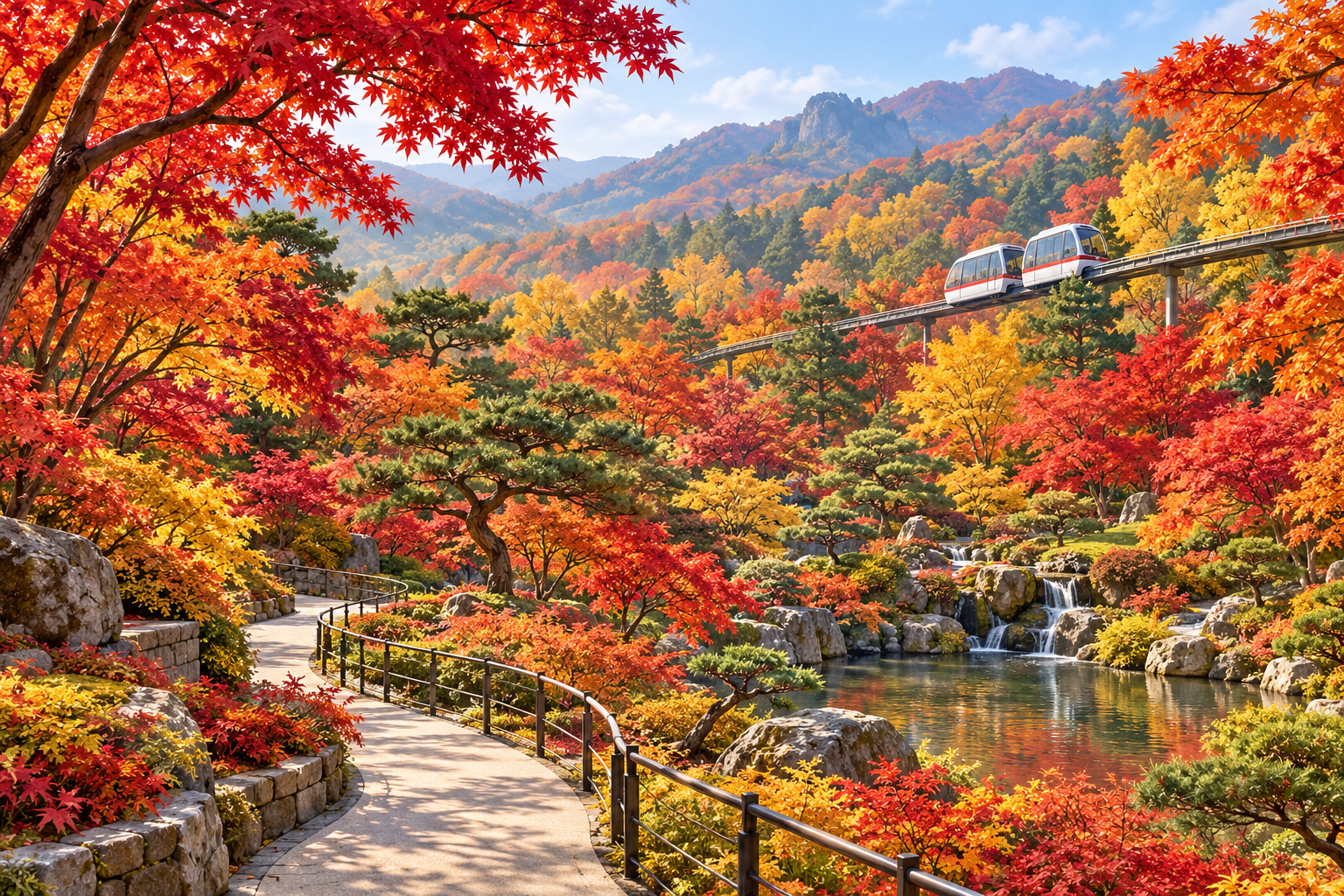
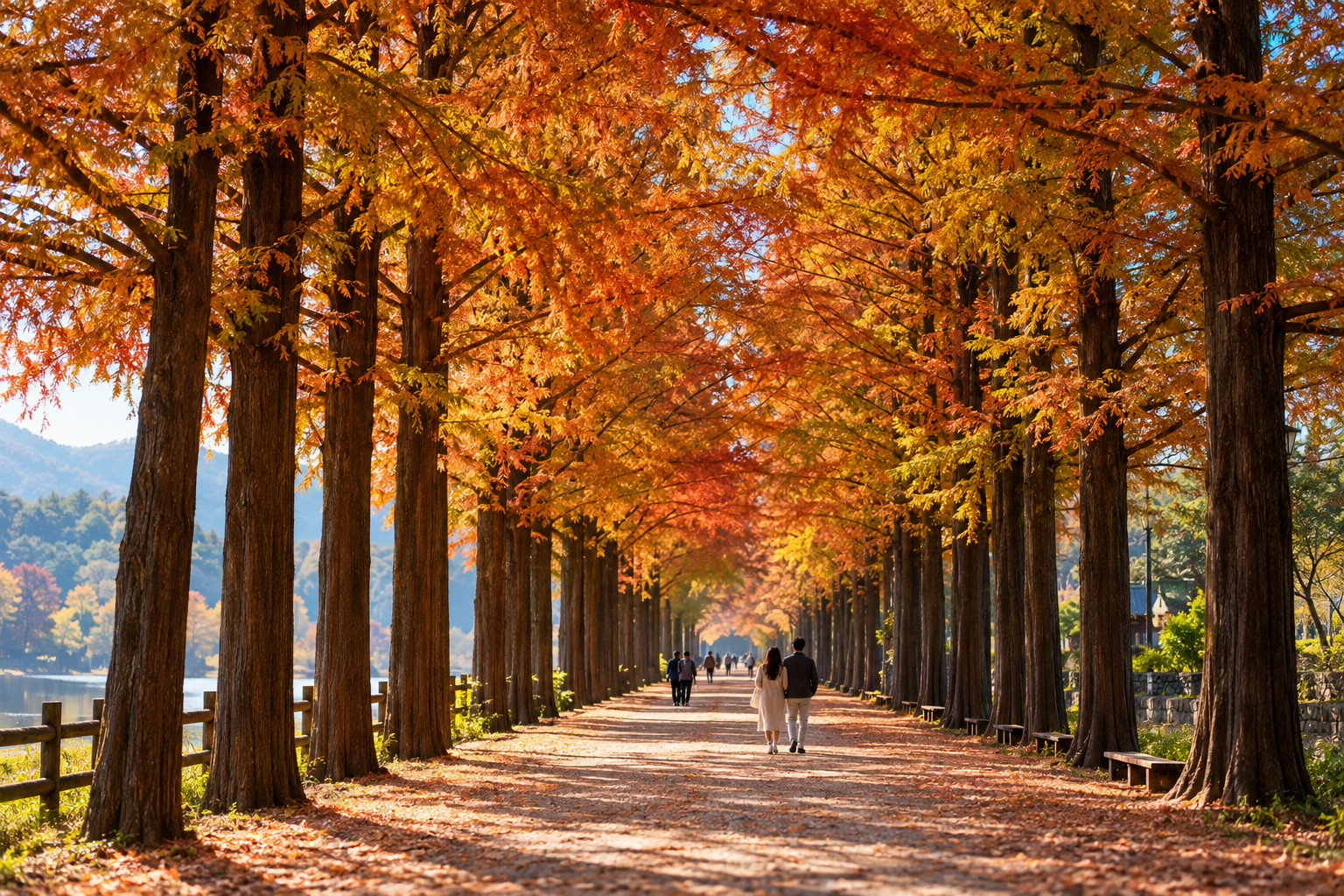
    Imagine walking between two long rows of towering trees, their branches forming a tunnel overhead. In autumn, the soft green foliage gradually gives way to copper, amber and reddish-brown.

    It’s a completely different atmosphere from the golden ginkgo avenues of Seoul or the mountain foliage of Seoraksan.

    But there’s one question that travel photographs rarely answer.

    Is Damyang worth the journey if you’re visiting Korea without a car?

    After all, Damyang doesn’t have a KTX station, and getting there from Seoul or Busan involves more planning than visiting Nami Island or a city park.

    This guide takes a practical approach. We’ll look at when to visit, how to reach the famous road, how much to budget, and whether a self-guided day trip or organized tour makes more sense.

    We’ll also explore how to combine the road with Juknokwon Bamboo Garden and Gwanbangjerim Forest without turning a relaxing autumn outing into a transportation marathon.

    Travel information reviewed: October 17, 2026. Operating hours, fares, bus schedules and autumn colors may change.

    1. What Makes Damyang Metasequoia Road Special?

    Damyang is a county near Gwangju in southwestern South Korea, best known for its bamboo forests and green landscapes.

    Its Metasequoia-lined Road, known in Korean as 담양 메타세쿼이아길, is one of the country’s distinctive tree-lined attractions.

    According to the Korea Tourism Organization, the wider metasequoia boulevard stretches approximately 8.5 kilometers and was recognized by the Korea Forest Service as one of Korea’s most beautiful roads.

    But don’t let that 8.5-kilometer figure confuse you.

    You do not need to walk the entire boulevard to enjoy the attraction.

    Most visitors concentrate on the dedicated scenic walking area, where rows of tall trees create the famous tunnel-like view.

    And while the trees are beautiful in summer, autumn gives the road a different character.

    The warm-colored leaves, long shadows and striking symmetry of the tree trunks create the kind of scenery that makes you want to slow down rather than rush to your next stop.

    There’s no complicated hiking route to complete.

    You can simply walk, take photographs, sit for a while and enjoy the changing season.

    Official attraction information: VISITKOREA — Damyang Metasequoia-lined Road

    2. When Is the Best Time to Visit in Autumn 2026?

    Here’s the part many visitors get wrong.

    They plan to visit Damyang at the same time as Seoul’s autumn foliage.

    But autumn colors don’t arrive everywhere in Korea at once.

    Damyang lies farther south, and the trees along the metasequoia road can change color later than mountain forests in northern Korea.

    For travelers planning an autumn visit, late October through November is a useful period to monitor, with early to mid-November often discussed as a promising window for deeper autumn colors.

    However, this is a planning window, not a confirmed 2026 peak date.

    Temperature, rainfall and weather conditions can shift the timing, and not every part of the road changes color simultaneously.

    Visiting periodWhat you may findHow to plan
    Mid-to-late OctoberMostly green foliage with possible early changesVisit for the tree tunnel itself, not guaranteed peak colors
    Early NovemberA greater possibility of mixed green, yellow and copper tonesCheck recent photographs before traveling
    Mid-NovemberPotential for richer autumn colorsPromising period, but not a guaranteed peak
    Late NovemberRemaining color or substantial leaf fallGo for the atmosphere rather than expecting full foliage

    If your travel dates are fixed, don’t cancel a visit simply because the trees aren’t at their deepest autumn color.

    Even without peak foliage, the architecture-like lines of the trees are impressive.

    But if you’re traveling several hours specifically for photographs, check recent local images and weather before committing.

    For a broader look at autumn timing across the country, read our Korea Fall Foliage 2026: Best Places and When to See Autumn Colors.

    What time of day is best for photographs?

    Many travel photographs make the road look completely empty.

    In reality, popular autumn weekends can attract plenty of visitors.

    Earlier in the morning is generally a better choice if you want fewer people in your photographs.

    Soft morning light may also create a gentler atmosphere between the trees.

    Later afternoon light can make the trunks and foliage look especially warm, although the effect depends on weather and the position of the sun.

    One important warning: the official opening hours for the paid attraction must take priority over a photograph you’ve seen online.

    Don’t assume you can enter the ticketed walking area before opening just because another traveler photographed nearby scenery at sunrise.

    3. Damyang Metasequoia Road: Entrance Fee and Opening Hours

    This is one of the easiest parts of the trip to budget for.

    According to the Korea Tourism Organization’s published visitor information:

    ItemPublished information
    Location12 Metasequoia-ro, Damyang-gun
    Korean address담양군 담양읍 메타세쿼이아로 12
    Adult admissionKRW 2,000
    Teenager admissionKRW 1,000
    Child admissionKRW 700
    September–April hours9:00 AM–6:00 PM
    May–August hours9:00 AM–7:00 PM
    ParkingAvailable

    The official listing also provides reduced group admission rates and certain age-based exemptions.

    Some local travel guides report a Damyang local-voucher return scheme linked to admission payments introduced in 2026. Because its conditions and availability can vary, don’t count a voucher as cash savings until you confirm the current arrangement at the ticket office.

    For an international traveler, the practical approach is simple.

    Budget the published admission price first, then treat any locally usable voucher as an additional benefit.

    You should also distinguish the paid scenic walking area from the broader metasequoia-lined road network.

    A statement that the road is accessible at any time does not necessarily mean the ticketed attraction is open around the clock.

    Official reference: VISITKOREA attraction listing

    4. How to Get to Damyang from Seoul

    Let’s deal with the biggest obstacle.

    Damyang has no KTX station of its own.

    So if you’re traveling independently from Seoul, there are two main approaches worth comparing.

    Option A: Travel through Gwangju

    Take a train from Seoul to Gwangju-Songjeong Station, then continue toward Damyang by local transportation.

    This can work particularly well if you’re already using Gwangju as a regional base.

    However, Gwangju-Songjeong Station is not in Damyang, and reaching the famous road still requires additional travel.

    You’ll need to account for the transfer across Gwangju, the regional bus or taxi connection, and the final journey to the attraction.

    Don’t compare only the KTX time with a direct bus journey.

    Compare the entire trip from your accommodation to the entrance.

    For the train reservation process, see our How to Book KTX Tickets in Korea in 2026.

    Option B: Check a direct intercity bus

    Depending on the travel date and current timetable, direct long-distance bus services may provide a simpler connection between Seoul and Damyang.

    This can be more convenient than arriving by train and making multiple transfers.

    But the exact departure terminal, timetable and return service are critical.

    Before booking, confirm that the service actually runs on your chosen date and that the return journey leaves enough time for sightseeing.

    You can check the appropriate reservation platforms using our Guide to Booking Express and Intercity Buses in Korea.

    Is a same-day round trip from Seoul worth it?

    It is possible to plan a same-day visit, but it is a long travel day.

    Consider what happens if you spend several hours reaching Damyang, then another stretch of time connecting to the road, and still need to make the last convenient trip back.

    You could end up watching the clock instead of enjoying the trees.

    That’s why I would approach a Seoul-origin day trip cautiously.

    If Damyang is your main reason for traveling, consider staying one night in Gwangju.

    It gives you a more flexible visit, especially if you want to combine the metasequoia road with Juknokwon Bamboo Garden.

    5. How to Get to Damyang from Gwangju

    For many independent travelers, Gwangju is the most practical gateway to Damyang.

    Regional buses connect Gwangju and Damyang, including services commonly identified with route 311.

    However, the exact boarding point, journey time and stopping pattern can vary.

    Don’t assume that every bus marked for Damyang will stop directly outside the metasequoia walking area.

    Before leaving, use an up-to-date Korean map app such as Naver Map or KakaoMap to confirm your specific departure point and destination.

    Search these Korean names:

    • 담양 메타세쿼이아길 — Damyang Metasequoia Road
    • 담양공용버스터미널 — Damyang Bus Terminal
    • 죽녹원 — Juknokwon Bamboo Garden
    • 광주종합버스터미널 — Gwangju U-Square Bus Terminal

    You may find that a bus connection is convenient for reaching central Damyang, while a short local taxi ride makes the final attraction-to-attraction journey easier.

    That’s perfectly reasonable.

    Trying to save every taxi fare can sometimes mean losing too much of your afternoon waiting for a less convenient bus.

    Should you use a taxi?

    A taxi is worth considering if you’re traveling as a couple, in a family or with friends who can share the fare.

    It can also be useful for the short transfer between Juknokwon and the metasequoia attraction.

    For a solo budget traveler, public transportation may make more sense, provided there is a convenient service.

    The right choice depends on the total route and the number of passengers — not just the price of one ride.

    6. What If You’re Coming from Busan?

    Busan is another possible starting point, particularly for travelers already exploring southern Korea.

    However, Damyang is not a straightforward urban excursion from Busan.

    Traveling independently generally involves a long-distance connection toward the Gwangju or Damyang area and then local transportation.

    You may also encounter organized autumn tours that combine Damyang’s bamboo forest and metasequoia road.

    These are worth comparing carefully.

    Some tours take care of the most difficult part — regional transportation — but give you less freedom to decide how long to stay at each attraction.

    Before reserving a tour, check whether the advertised package includes actual admission, how much time is allocated to Damyang Metasequoia Road, and whether the departure and return points work with your hotel.

    The word Damyang in a tour title doesn’t necessarily mean the famous road is the main stop.

    7. DIY Trip vs Guided Tour: Which Is Better?

    This decision can make a bigger difference to your experience than the season you choose.

    A self-guided visit gives you freedom.

    Want to spend an extra 40 minutes photographing the trees? You can.

    Want to stop for bamboo rice or traditional grilled tteokgalbi before visiting the garden? No problem, provided your return transport allows it.

    A guided tour, on the other hand, can remove much of the uncertainty around buses and transfers.

    FactorSelf-guided visitOrganized tour
    Transport planningYou arrange trains, buses and taxisUsually handled by the operator
    FlexibilityHighLimited by scheduled stops
    Photography timeYou control your scheduleDepends on the itinerary
    CostOften attractive for travelers already near GwangjuMay be worth the premium for simpler transport
    Language supportYou navigate independentlyVaries by operator
    Best forIndependent travelers, slower itinerariesFirst-time visitors, short trips, groups

    When a DIY trip makes sense

    Choose a self-guided trip if you’re already staying in Gwangju or have a flexible overnight itinerary.

    The travel planning becomes much simpler when you don’t need to return all the way to Seoul on the same day.

    When a tour may be worth it

    Consider a tour if you’re visiting from Busan, traveling with people who prefer not to navigate regional transfers, or trying to visit several attractions within a limited time.

    But don’t buy a tour based only on the number of locations listed.

    A four-stop tour with short visits may be less satisfying than a relaxed afternoon in Damyang.

    Ask how much usable time you will actually spend walking among the trees.

    8. The Best Damyang Autumn Itinerary: Three Places, One Relaxed Day

    One reason Damyang makes a rewarding day trip is that Metasequoia Road isn’t the only attraction worth seeing.

    Three places work particularly well together.

    Stop 1: Juknokwon Bamboo Garden

    Start with the bamboo forest.

    Juknokwon is one of Damyang’s best-known attractions, featuring paths through dense bamboo groves.

    Walking here feels different from walking along the metasequoia road.

    The bamboo creates a green, sheltered environment, while the tall metasequoia trees form a grand, open avenue.

    You don’t need to cover every trail inside Juknokwon to enjoy it.

    Set aside approximately 60–90 minutes for a relaxed visit, depending on how much walking you want to do.

    The Korea Tourism Organization lists the adult entrance fee at KRW 3,000.

    Note that the published operating hours change seasonally: March–October is 9:00 AM–7:00 PM, while November–February is 9:00 AM–6:00 PM, with last admission earlier than closing.

    Official guide: VISITKOREA — Juknokwon Bamboo Garden

    Stop 2: Gwanbangjerim Forest

    Next, slow down along the riverside.

    Gwanbangjerim is a historic forest planted along Damyangcheon Stream, with mature trees that create a different autumn atmosphere from both bamboo groves and the metasequoia road.

    The Korea Tourism Organization describes a forest corridor extending approximately two kilometers.

    It’s especially appealing if you want a quieter walk and a different kind of autumn photograph.

    You can also use this part of the day for a meal or rest around central Damyang.

    Official guide: VISITKOREA — Gwanbangjerim Forest

    Stop 3: Damyang Metasequoia Road

    Finish with the main attraction.

    Allow approximately 45–90 minutes depending on how much you enjoy photography.

    You don’t need to hurry from one end of the road to the other.

    The experience is about the trees, their symmetry and the changing light.

    If the timing works, you may also stop by nearby Meta Provence, a shopping and leisure complex beside the metasequoia attraction.

    It’s a convenient option for a coffee or break, rather than an essential stop for every traveler.

    A sample itinerary

    TimeActivityPlanning note
    10:00 AMArrive at JuknokwonAdjust for your actual transport arrival
    10:00–11:30 AMExplore the bamboo gardenChoose comfortable paths
    11:30 AM–1:00 PMLunch and GwanbangjerimAllow time to rest
    1:00–1:30 PMTransfer toward Metasequoia RoadWalk or take a taxi depending on conditions
    1:30–3:00 PMExplore the tree-lined roadPhotography and a relaxed walk
    After 3:00 PMReturn toward Gwangju or enjoy a caféConfirm your return connection first

    This is an illustrative schedule, not a published transport timetable. Distances, walking speed and waiting times vary, so leave enough flexibility for your actual journey.

    9. How Much Does a Damyang Day Trip Cost?

    The attraction fees are relatively modest.

    For a traveler visiting both the metasequoia road and Juknokwon, the standard adult admission costs currently listed by the Korea Tourism Organization are:

    ExpensePublished or planning amount
    Damyang Metasequoia Road admissionKRW 2,000
    Juknokwon adult admissionKRW 3,000
    Combined adult admissionKRW 5,000
    Meals and drinksDepends on your choices
    Gwangju–Damyang transportationCheck your route and fare
    Local taxisOptional
    Train or long-distance bus from Seoul/BusanDepends on date, class and route
    Organized tourCompare the final price and inclusions

    The entrance fees are not the expensive part of this journey.

    Transportation is what determines whether Damyang becomes an affordable outing or an expensive detour.

    If you’re already staying in Gwangju, the total cost can be relatively manageable.

    If you’re traveling from Seoul solely for one afternoon, intercity transportation may account for the majority of your spending.

    That’s why adding Damyang to an existing Gwangju or Jeolla itinerary may offer better value than making a special long-distance round trip.

    10. Where Should You Stay: Damyang or Gwangju?

    Not every traveler needs to stay overnight.

    But if you’re coming from Seoul or Busan and want a relaxed visit, spending a night in the region is worth considering.

    Stay in Gwangju if transport convenience matters

    Gwangju is a practical base for travelers using KTX, intercity buses or other regional connections.

    It can be easier to organize your onward journey from a major city than from a smaller destination.

    This is the option I would consider first for an international visitor without a car.

    Stay in Damyang if atmosphere matters more

    Damyang may appeal to travelers who want a slower countryside visit or accommodation near the area’s natural attractions.

    But check the exact location of your accommodation carefully.

    Not every stay described as being in Damyang will be within walking distance of the metasequoia road or Juknokwon.

    And if you’re dependent on public transportation, arriving late at night may complicate your plans.

    For most first-time visitors without a car, Gwangju is the more flexible base.

    11. Five Mistakes That Can Ruin a Damyang Day Trip

    Mistake 1: Assuming the trees peak on the same date every year

    Autumn colors respond to weather, not a calendar.

    Check recent photographs and conditions instead of treating a predicted peak date as guaranteed.

    Mistake 2: Assuming the entire 8.5-kilometer road is one ticketed walking trail

    The broader metasequoia boulevard and the main scenic attraction are not exactly the same thing.

    Use the attraction’s published address when planning your visit.

    Mistake 3: Planning around the fastest train without calculating transfers

    A fast KTX connection to Gwangju doesn’t mean you’ll be standing under Damyang’s trees immediately after leaving the station.

    Add the time required for regional buses or taxis.

    Mistake 4: Trying to squeeze too many attractions into one day

    Juknokwon, Gwanbangjerim and Metasequoia Road already make a satisfying outing.

    You don’t have to add distant gardens and mountain destinations just because they appear in the same regional guide.

    Mistake 5: Forgetting the return journey

    This is especially important for independent travelers.

    Before exploring the attractions, confirm how you’ll return to Gwangju, whether your long-distance connection still works, and how much extra time to allow.

    Don’t leave that decision until the ticketed attraction closes.

    12. Is Damyang Better Than Nami Island for Autumn Foliage?

    This is an interesting comparison, especially if you have only one free day in Korea.

    Both destinations offer beautiful tree-lined scenery.

    But they suit different kinds of trips.

    What matters to youDamyang Metasequoia RoadNami Island
    Main attractionTall metasequoia avenue and nearby bamboo forestIsland walks, multiple tree-lined paths
    Travel from SeoulLonger and more complicatedGenerally more convenient
    Regional characterSouthwestern countryside and local foodEstablished day-trip destination near Seoul
    Ideal travel styleGwangju-based trip or slower regional journeySeoul-based day trip
    Best reason to chooseDistinctive metasequoia scenery and Damyang attractionsEasier access and a broad range of activities

    If you’re visiting Korea for the first time and have just one spare day in Seoul, Nami Island may be easier to fit into your itinerary.

    If you’ve already visited the major Seoul attractions, are exploring southern Korea or specifically want the towering metasequoia tunnel, Damyang becomes more compelling.

    For a detailed breakdown of the easier Seoul-area alternative, see our Nami Island from Seoul in Autumn 2026: DIY Train Trip vs Guided Tour.

    13. Frequently Asked Questions

    Is Damyang Metasequoia Road worth visiting?

    Yes, especially if you enjoy photography, peaceful walking routes and distinctive seasonal scenery. However, whether it’s worth a special trip from Seoul depends on how much time and money you’re willing to spend reaching it.

    Can you visit Damyang without renting a car?

    Yes. Public transport connects the area with Gwangju, although reaching specific attractions may require local buses, walking or taxis.

    Is Damyang a good day trip from Seoul?

    It’s possible, but the round-trip journey can be demanding. A Gwangju-based day trip or an overnight itinerary may be more comfortable.

    Is the Metasequoia Road free?

    The Korea Tourism Organization lists admission fees for the paid scenic attraction, including KRW 2,000 for adults. Check current admission arrangements before visiting.

    When will the trees be at their best in autumn 2026?

    Early to mid-November may be promising for richer colors, but there is no guaranteed peak date. Check recent local conditions close to your travel date.

    How long should you spend at the road?

    For many visitors, around 45–90 minutes is a reasonable planning estimate. Those who enjoy photography may want longer.

    Can you combine Damyang Metasequoia Road with Juknokwon?

    Absolutely. The two attractions complement each other well, particularly with a stop at Gwanbangjerim Forest in between.

    Final Verdict: Who Should Visit Damyang Metasequoia Road?

    Damyang isn’t the most convenient autumn destination in Korea.

    And that is exactly why it’s worth thinking carefully before adding it to your itinerary.

    If you’re looking for an easy day trip from Seoul with minimal transfers, you may prefer Nami Island or a closer autumn destination.

    But if you’re already traveling through Gwangju, have an extra night in southern Korea or want to see one of the country’s most memorable avenues of tall trees, Damyang is an excellent place to consider.

    The best version of the trip isn’t the one with the most stops.

    It’s the one that gives you enough time to appreciate the bamboo forest, walk beneath the metasequoias and enjoy the quieter rhythm of the region.

    My recommended approach: Travel through Gwangju, give yourself a relaxed day in Damyang, and combine Metasequoia Road with Juknokwon and Gwanbangjerim.

    Most importantly, check the autumn colors, current operating information and return transport before leaving.

    Because the most rewarding part of Damyang isn’t simply taking a photograph beneath the trees.

    It’s having enough time to enjoy being there.


    Official Sources and Further Reading

  • Personal Color Analysis in Seoul 2026: Is It Worth $100? Real Costs, English Sessions and What You Actually Get

    Personal Color Analysis in Seoul 2026: Is It Worth $100? Real Costs, English Sessions and What You Actually Get

    Seoul has become a destination for more than skincare shopping and K-beauty makeovers. For international visitors, a personal color consultation offers something potentially more lasting: a better understanding of which clothing, makeup and hair colors they enjoy wearing.

    But is a 60-minute appointment worth spending the equivalent of $100 on? And what makes a premium session worth two or three times as much?

    The answer depends less on the name of the studio than on what you receive, how well you understand the consultation and whether you can use the results after returning home.

    This guide compares real Seoul pricing examples, explains what English-language services should include, and helps you choose between a basic color diagnosis and a more expensive styling package.

    The Short Answer: Is Personal Color Analysis in Seoul Worth It?

    A personal color consultation can be worth the money if you leave with practical recommendations you can use repeatedly. It offers less value if you receive only a seasonal label and a few photographs.

    For most first-time visitors, a focused consultation is a sensible starting point. A premium package becomes more attractive when you also want hands-on makeup instruction, face-shape analysis or broader wardrobe advice.

    Before booking, ask yourself three questions:

    1. Do I want to understand my colors, or do I want someone to teach me how to use them?
    2. Will the recommendations be explained in a language I understand?
    3. What information will I be able to keep after the appointment?

    The third question is particularly important. A memorable hour in Seoul is enjoyable; a useful reference you can consult for years is potentially more valuable.

    1. What Happens During a Korean Personal Color Consultation?

    Most consultations begin with a discussion of your current makeup, clothing preferences and the colors you feel comfortable wearing.

    A consultant may then place colored fabrics, often called drapes, near your face and compare how different hues, brightness levels and saturation affect your appearance.

    The familiar four-season system uses the categories Spring, Summer, Autumn and Winter. Some studios refine these into more detailed subcategories.

    Depending on the package, you might also receive advice about:

    • Lipstick, blush and eyeshadow colors
    • Hair color choices
    • Jewelry metals and accessories
    • Clothing colors and combinations
    • Colors that are less flattering under certain styling conditions
    • How to use colors outside your recommended palette

    The last point matters. A good consultation should not make you feel that half your wardrobe is suddenly unusable.

    Color analysis is a styling framework based on visual judgments and individual preferences, not a medical test or an immutable scientific diagnosis. Different consultants and lighting conditions can produce different interpretations.

    Use the result as guidance, not a rule that overrides your own taste.

    2. Real Personal Color Analysis Prices in Seoul in 2026

    Prices vary considerably by studio, consultant, language support and package.

    For a verified public example, the Korea Tourism Organization lists COCORY COLOR’s Myeongdong and Gangnam branches with the following indicative pricing:

    Published programListed price
    Personal color analysisFrom ₩80,000 per person
    Additional option₩20,000 per option
    Best option package₩140,000
    Face and body analysis or premium programsVaries by program

    The tourism listing also indicates that programs generally take approximately 60–120 minutes, depending on the service selected.

    These are published reference prices, not guaranteed checkout quotes. Always confirm the exact package, availability and current price before paying.

    What About Higher-End Studios?

    More specialized appointments can cost substantially more.

    For example, Creatrip’s published Color Signal listing in Gangnam shows a 60-minute individual personal color experience at ₩190,000 and a 120-minute personal color plus K-beauty makeup experience at ₩300,000.

    These listings demonstrate how dramatically the price can change when the service includes more personalized instruction or additional beauty work.

    The important comparison is not ₩80,000 versus ₩300,000. It is what each package includes and whether you will actually use those services.

    Why We Compare Prices in Korean Won

    Exchange rates change, and international card issuers may use different conversion rates.

    Although travelers often think in dollars, compare the final price in Korean won first. Convert it using your payment provider’s current rate before booking.

    3. Basic vs Premium: What Are You Really Paying For?

    FeatureBasic consultationExtended styling consultationPremium beauty experience
    Seasonal color analysisUsually centralUsually includedUsually included
    Fabric drapingCommonCommonCommon
    Makeup shade suggestionsVariesOften more detailedMay include hands-on application
    Hair and accessory adviceVariesMay be expandedDepends on package
    Face or body-shape analysisNot necessarily includedPossible add-onMay be included
    Makeup lessonUsually separateSometimes offeredMay be a major component
    Take-home report or paletteMust confirmMust confirmMust confirm
    Best suited toFirst-time visitorsVisitors seeking detailed guidanceVisitors planning a broader makeover

    This table describes typical package differences, not a guarantee that every Seoul studio offers the same inclusions.

    When the Basic Package Is Enough

    Choose a basic consultation if you mainly want to understand which colors work well with your preferred makeup and clothing.

    It can also be the better choice when your Seoul itinerary is packed with sightseeing, food and shopping.

    When Paying More Makes Sense

    An extended package may be worthwhile if you regularly struggle with makeup application, want detailed feedback on products you already own, or need help translating color recommendations into everyday outfits.

    A premium session is harder to justify if you are paying for several services you did not originally want.

    4. The Most Overlooked Value: What You Take Home

    Imagine two appointments.

    In the first, you spend an hour learning that you are a particular seasonal color type. The consultant explains several shades, takes a few photographs and ends the session.

    In the second, you leave with a documented color palette, examples of makeup shades, hair color guidance and practical advice for coordinating clothes you already own.

    Even if the second appointment costs more, its usefulness may last longer.

    Before booking, ask whether you will receive any of the following:

    Take-home itemWhy it matters
    Digital or printed color paletteHelps when shopping after the trip
    Lipstick and blush shade recommendationsMakes cosmetics shopping more targeted
    Hair color guidanceUseful at your usual salon back home
    Clothing color combinationsHelps you work with your existing wardrobe
    Product or shade referencesReduces the chance of buying unsuitable products
    Written English summaryMakes the results easier to remember and apply

    Not every studio provides these items, and a digital report may cost extra.

    A detailed explanation you can understand is more valuable than an elaborate report you cannot interpret.

    5. English-Language Sessions: What to Confirm Before Booking

    Some Seoul studios offer English-speaking consultants. Others may provide interpretation, English-language materials or specific foreign-language appointment slots.

    These are not identical experiences.

    An English-language booking page does not necessarily mean your actual consultation will be conducted entirely in English.

    Ask these questions before making a payment:

    • Will the consultant speak English directly?
    • If interpretation is required, is it included in the quoted price?
    • Will my written results be provided in English?
    • Can I ask detailed questions about makeup and clothing?
    • Is the English service available at my chosen appointment time?
    • What happens if the language service becomes unavailable?

    The Korea Tourism Organization identifies COCORY COLOR’s Myeongdong branch as offering Korean, English, Chinese and Japanese programs, with booking options for preferred language.

    However, individual time-slot availability should still be checked directly.

    A Message You Can Send Before Booking

    “Hello, I am visiting Seoul and would like to book a personal color analysis. Could you confirm whether the consultation and take-home results are available in English? Please also let me know the total price, duration, included services and cancellation policy. Thank you.”

    A clear written reply helps prevent misunderstandings.

    If you’re unsure whether to book through NAVER, Creatrip, or directly with a Seoul beauty studio, read our K-Beauty Booking in Seoul 2026: Naver vs Creatrip vs Direct BookiK-Beauty Booking in Seoul 2026 guide before paying. It explains passport verification, international payment options, appointment confirmation, and cancellation rules.

    6. Hidden Costs That Can Change the Value of Your Appointment

    The advertised session price may not be the final amount you spend.

    Look for the following potential extras.

    Interpretation fees. Some providers include language support; others charge separately.

    Makeup or styling add-ons. A basic color diagnosis may not include an applied makeup lesson.

    Detailed reports. Printed or digital recommendations may be included, optional or unavailable.

    Deposits and cancellation charges. Confirm the refund deadline, time zone and no-show rules.

    Payment-related fees. Your card issuer may apply foreign transaction or currency conversion charges.

    Travel time. A lower-priced studio on the other side of Seoul may be less attractive if it consumes several hours of your itinerary.

    A Simple Total-Cost Comparison

    The following example is hypothetical, not a quote from a specific studio.

    CostOption AOption B
    Consultation₩90,000₩120,000
    Language support₩20,000Included
    Detailed results₩15,000Included
    Total₩125,000₩120,000

    Option B has a higher advertised starting price but a lower total in this example.

    Always compare like-for-like services before deciding.

    7. Where Should You Book: Myeongdong, Hongdae, Seongsu or Gangnam?

    Location matters because a beauty appointment is only one part of your trip.

    Myeongdong: Best for a Beauty-Shopping Day

    Myeongdong works particularly well if you want to use your color recommendations while shopping for cosmetics afterward.

    A practical sequence is to schedule your consultation first, take a break and then browse makeup products with your palette in mind.

    This makes the advice immediately useful without turning your day into a rushed shopping mission.

    Hongdae: Best for a Casual Style-Focused Day

    Hongdae can fit naturally into an itinerary that includes fashion shopping, cafés and neighborhood exploration.

    Choose a studio based on the specific services and language support, not simply because it is close to popular shopping streets.

    Seongsu: Best for a Curated Beauty and Lifestyle Itinerary

    Seongsu is appealing if you enjoy contemporary Korean brands, concept stores and a slower day of exploring.

    A consultation can complement the neighborhood’s shopping experience, especially if you want to compare colors and styling ideas.

    Gangnam and Sinsa: Best for a Dedicated Beauty Appointment

    Gangnam and Sinsa may be convenient if you are arranging multiple beauty-related services on the same day.

    Leave enough time between appointments. A personal color consultation, skincare treatment and makeup session may each require different preparation.

    Our recommendation: Choose your appointment around the neighborhood you already plan to visit, unless a particular consultant offers something you cannot find elsewhere.

    8. How to Prepare for Your Personal Color Analysis

    A little preparation can make the appointment more useful.

    Before You Go

    Wear minimal makeup if the studio recommends it. Strong foundation, lip color and colored contacts may affect how the consultant evaluates your appearance.

    Bring a few photographs of outfits you like, along with one or two cosmetics you use frequently.

    Think about your real styling concerns.

    For example:

    • Why does a lipstick look flattering in the store but different at home?
    • Which hair colors should I consider before my next salon visit?
    • How can I wear black, beige or other colors I already love?
    • What colors work for professional clothing?
    • How do I adapt the recommendations to my usual makeup style?

    You do not need to buy a new wardrobe to benefit from the session.

    During the Consultation

    Ask the consultant to explain why particular colors are recommended.

    Request examples of both flattering and less flattering shades.

    If you receive a seasonal category, ask how flexible that category is and whether neighboring palettes may also work.

    A useful consultation should encourage informed experimentation rather than rigid restrictions.

    9. How to Use Your Results at Olive Young Without Overspending

    Many travelers want to visit Olive Young after a color analysis.

    That can be a sensible idea, but there is no need to replace your entire makeup collection.

    Start with one product category that you genuinely want to improve.

    For example, if your main concern is lipstick, compare two or three shades within your recommended range.

    Consider how the colors look in different lighting and whether you would wear them regularly.

    Avoid buying a large number of products simply because their packaging uses your recommended seasonal label.

    A shade that technically fits a color family may still differ in brightness, saturation and finish.

    A Better Post-Consultation Shopping Plan

    1. Photograph or save your recommended palette if the studio permits it.
    2. Write down your preferred lip and blush shades.
    3. Identify products you actually need.
    4. Compare shades rather than seasonal marketing labels alone.
    5. Keep your budget separate from the consultation fee.

    The aim is to make more confident choices, not to spend more.

    10. Who Should Skip a Premium Personal Color Package?

    A premium package is not the right purchase for everyone.

    You may prefer a basic consultation—or skip the experience entirely—if:

    • You already understand your preferred colors and are happy with your current style.
    • You have little interest in makeup, hair color or wardrobe changes.
    • You are booking primarily because the experience is popular on social media.
    • You do not have time to review or use the recommendations afterward.
    • The extra services do not match your personal goals.
    • The appointment would significantly reduce your travel budget.

    There is also nothing wrong with treating a consultation as a one-time cultural experience rather than an investment.

    Just price it as entertainment if that is what you want.

    11. A 2026 Booking Detail Worth Checking: Official Visitor Promotions

    The Korea Tourism Organization has published a COCORY COLOR promotion offering a 10% discount on personal color analysis for international travelers through December 31, 2026.

    The published conditions include advance online booking and presenting the VISITKOREA coupon when paying on-site.

    The promotion also states that reservation changes are limited and subject to advance notice, and that arriving more than 10 minutes late may count as a no-show.

    Promotions can change, so verify eligibility and terms on the official page before relying on a discount.

    This is an example of why the lowest displayed package price is not always the best basis for comparison.

    12. Your Personal Color Booking Decision Checklist

    Before reserving, make sure you can answer these questions:

    • What is the total price in Korean won?
    • Is English consultation guaranteed for my selected time?
    • How long does the appointment last?
    • Is makeup instruction included or separate?
    • Will I receive a written or digital color reference?
    • Are interpretation and additional reports included?
    • What is the cancellation and no-show policy?
    • Is the studio convenient for my Seoul itinerary?
    • Am I paying for services I genuinely want?

    If the booking page does not answer an important question, contact the studio before paying.

    Frequently Asked Questions

    How much does personal color analysis cost in Seoul?

    Prices vary by studio and package. As a published example, the Korea Tourism Organization lists COCORY COLOR sessions starting from ₩80,000 per person, while more specialized programs at other studios can cost substantially more.

    Is $100 enough for a personal color consultation?

    It may be, depending on the current exchange rate, studio and services included. Compare prices in Korean won and check the final checkout amount rather than assuming a fixed dollar price.

    Can foreigners book personal color analysis in Seoul?

    Yes. Some studios offer foreign-language programs and international booking options. Confirm language availability for your specific date and time.

    How long does a personal color consultation take?

    A basic consultation may take around an hour, while extended packages can require 90 minutes, two hours or longer. Follow the duration listed for your exact program.

    Do I need to speak Korean?

    Not if you choose an appointment with suitable English-language support. However, an English booking page does not automatically guarantee an English-speaking consultant.

    Should I get personal color analysis before shopping in Seoul?

    If cosmetics or fashion shopping is a major part of your itinerary, scheduling the consultation first can make your shopping more focused.

    Are personal color results permanent?

    The seasonal framework is intended as a styling reference, but assessments are interpretive and can vary by consultant, lighting and method. Your preferences and style can also change.

    Final Verdict: Pay for Useful Advice, Not Just a Seasonal Label

    Personal color analysis in Seoul can be a worthwhile K-beauty experience, especially if you want practical guidance about makeup, clothing and hair colors.

    For most first-time visitors, the best value comes from a well-explained basic consultation with clear take-home recommendations.

    A premium package becomes more compelling when it includes additional services you actively want and will use.

    Before booking, compare the final cost, language support, session duration and quality of the results you will keep.

    The best consultation is not necessarily the most expensive one. It is the one that helps you make better choices long after your Seoul trip ends.


    Official Sources and Further Reading

  • K-Beauty Booking in Seoul 2026: Naver vs Creatrip vs Direct Booking Without a Korean Phone Number

    K-Beauty Booking in Seoul 2026: Naver vs Creatrip vs Direct Booking Without a Korean Phone Number

    Updated October 15, 2026

    You have found a Seoul hair salon, nail studio, personal color consultant, or facial treatment that looks perfect for your trip.

    Then the booking process gets complicated.

    The business may direct you to NAVER Booking, ask for a Korean phone number, request a bank-transfer deposit, or offer an English-language booking platform with different cancellation rules.

    The good news is that you do not necessarily need a Korean phone number to book a K-beauty appointment in Seoul in 2026.

    NAVER introduced foreign passport verification in June 2026, making supported reservations more accessible to international visitors. Meanwhile, platforms such as Creatrip and direct booking channels offer alternatives.

    But which method should you actually use?

    This guide compares booking routes based on payment, confirmation, cancellation, language support, and the risk of arriving in Seoul without a confirmed appointment.

    Quick Answer: Which K-Beauty Booking Method Should You Choose?

    Your situationStart withWhat to verify
    The salon has an active NAVER Booking buttonNAVER BookingPassport verification and foreign booking eligibility
    You want an English-language booking interfaceCreatrip or another travel booking platformFinal price, confirmation status, cancellation policy
    You want a specific hairstylistSalon’s official direct channelStylist availability and deposit requirements
    You need to send reference photosOfficial direct messagingWhether your preferred design is available
    You want a personal color sessionSpecialist’s official site or supported platformSession language, duration, and deliverables
    You are considering a medical skin procedureLicensed clinic’s official consultation channelMedical qualifications, consultation, risks, and follow-up care

    The best booking method is not necessarily the cheapest-looking one. It is the route that provides a confirmed appointment, understandable terms, and a clear total price.

    1. The Biggest 2026 Change: NAVER Passport Verification

    Many older Korea travel guides say that foreign tourists cannot use NAVER Booking without a Korean phone number.

    That statement is now too broad.

    On June 4, 2026, NAVER introduced a foreign passport verification process designed to help eligible visitors use supported NAVER Booking, NAVER Order, and payment services.

    NAVER publicly announced the change on June 9.

    According to NAVER, eligible users can complete verification using a passport issued outside South Korea, without needing Korean mobile-phone identity verification.

    What you need for passport verification

    NAVER’s official help page explains that eligible users generally need:

    • A valid passport issued outside South Korea.
    • A NAVER account with a matching name and date of birth.
    • A device with camera access.
    • A live passport photograph and facial verification.

    A passport that has already been used to verify another NAVER ID may not be eligible.

    You should also follow NAVER’s current account and verification instructions, since eligibility and supported services may change.

    Does passport verification guarantee a salon booking?

    No.

    NAVER’s business documentation explains that merchants can control whether they accept foreign reservations.

    A salon may also have no available appointments or may use a separate booking system.

    Therefore, successful passport verification does not guarantee that every beauty business can be booked through NAVER.

    Official references:

    2. NAVER vs Creatrip vs Direct Booking: The Real Differences

    Instead of asking which platform is universally better, compare what happens at each stage of your booking.

    Decision factorNAVER BookingCreatrip or similar platformOfficial direct booking
    Main advantageBooking directly through a participating businessTravel-oriented interface and payment optionsCommunication with the salon or specialist
    Korean phone numberPassport verification may provide an alternativeOften unnecessary for supported listingsDepends on the business
    Foreign paymentSupported where enabledDepends on product and checkoutDepends on the business
    Appointment confirmationFollow NAVER’s booking statusInstant or manual, depending on listingMust be explicitly confirmed
    Custom requestsDepends on booking optionsDepends on productOften easier to discuss directly
    Cancellation rulesBusiness-specificProduct-specificBusiness-specific
    Main riskVerification or merchant eligibilityMisreading voucher conditionsUnclear deposit or confirmation

    These are booking-route characteristics, not guarantees about every listing.

    When NAVER makes sense

    Choose NAVER when the business has an active reservation page, your account is eligible, and the available service matches what you want.

    Check that you have received an actual reservation confirmation, rather than merely submitting a request.

    When Creatrip makes sense

    A travel-oriented booking platform can be convenient when you prefer an English-language product page, a defined service package, and an international payment route.

    However, read the listing carefully.

    Some services require the merchant to confirm your requested appointment after payment. The voucher may represent a deposit or a particular package rather than every service you expect to receive.

    When direct booking makes sense

    Direct booking can be useful when you need to ask detailed questions.

    For example, a hair salon may need to know your current hair length, previous bleaching history, and desired color before confirming a price or appointment length.

    Use the business’s official website, verified social profile, or published contact channel.

    Do not send money to an unrelated personal account merely because someone contacted you through social media.

    3. Choose by Beauty Service, Not Just by Platform

    Different K-beauty experiences have different booking requirements.

    Hair salon

    A basic haircut may be straightforward to reserve, but a perm, bleaching session, or color correction can involve a longer appointment and additional charges.

    Before booking, confirm the exact service, stylist, expected duration, and possible length-based or product-based surcharges.

    Nail studio

    Nail appointments depend on the requested design, existing gel removal, extensions, and available technician time.

    A photograph of your preferred design can help the studio quote the correct service.

    Ask whether removal and nail art are included in the advertised price.

    Personal color analysis

    Check whether the session includes a written result, makeup recommendations, fabric draping, or interpretation in your preferred language.

    A short consultation and an extended one-to-one session are not interchangeable products.

    Facial and spa services

    Confirm the specific treatment included in the package, its duration, and any restrictions or skin-sensitivity considerations.

    A cosmetic facial is not the same as a medical dermatology procedure.

    Medical skin clinic

    For injections, lasers, prescription treatments, or other medical procedures, booking convenience should not outweigh medical qualifications and informed consent.

    Verify that the provider is appropriately licensed, that you understand the risks and aftercare, and that you have a plan for complications or follow-up.

    Avoid selecting medical treatment solely because a promotional package appears inexpensive.

    4. The Hidden-Cost Test: What Will You Actually Pay?

    The displayed booking price may not equal your final expense.

    Consider this illustrative example, not a quote from any particular Seoul business:

    Cost componentExample
    Advertised hair service₩90,000
    Hair-length surcharge₩20,000
    Additional treatment requested₩30,000
    Total before other applicable charges₩140,000

    In this example, the final amount is approximately 56% higher than the advertised starting price.

    The problem is not necessarily an improper surcharge. The problem is failing to understand what the original price includes.

    Five questions to ask before paying

    1. Is the listed amount the full service price or a deposit?
    2. Are there additional charges for hair length, design, stylist level, or treatment options?
    3. Is the deposit deducted from the final bill?
    4. What is the cancellation and refund deadline?
    5. Is the appointment confirmed immediately or only after the business accepts it?

    Also check the currency used at checkout and any foreign transaction fees charged by your card issuer.

    Do not assume that a booking platform always has lower prices than direct booking, or vice versa.

    5. What to Do When Your NAVER Booking Fails

    A failed booking does not automatically mean foreigners are prohibited from using NAVER.

    Use this troubleshooting sequence.

    Problem A: Passport verification fails

    Check that your account details match your passport, that the passport is valid, and that the camera image meets NAVER’s instructions.

    Use NAVER’s official support process rather than creating multiple accounts with inconsistent personal information.

    Problem B: Verification succeeds, but you cannot reserve

    Check whether the particular merchant accepts foreign reservations and whether the requested service has an available time slot.

    Try the business’s official alternative booking channel if one is provided.

    Problem C: The business requires a Korean bank-transfer deposit

    Ask whether international card payment, an official payment link, or another supported method is available.

    If not, consider a different business or an established booking platform.

    Avoid sending money without a written confirmation of the recipient, service, amount, and refund terms.

    Problem D: You paid but received no confirmed time

    Review whether the listing describes a booking request or an instantly confirmed appointment.

    Contact the platform or business through its official support channel.

    Do not assume that payment alone guarantees a specific date and time.

    6. Copy-and-Paste Booking Message for Foreign Visitors

    For a salon, nail studio, or personal color consultant that accepts direct inquiries, you can use this message.

    English version

    Hello! I will be visiting Seoul and would like to book an appointment.

    Service: [haircut / hair color / nail art / personal color analysis]

    Preferred date and time: [date and time]

    Number of people: [number]

    I do not have a Korean phone number. Can I book using email, WhatsApp, or another international contact method?

    Could you also confirm the total price, deposit, cancellation policy, and whether English-language assistance is available?

    Thank you!

    Simple Korean version

    안녕하세요. 서울 여행 중 예약하고 싶습니다.

    희망 서비스: [서비스명]

    희망 날짜와 시간: [날짜 / 시간]

    예약 인원: [인원]

    한국 전화번호가 없는데 이메일이나 다른 방법으로 예약할 수 있을까요?

    총비용, 예약금, 취소 규정, 영어 응대 가능 여부도 알려주시면 감사하겠습니다.

    Both versions ask for the details that matter before you commit to payment.

    7. How Early Should You Book?

    There is no universal advance-booking rule for Seoul beauty services.

    A simple appointment at a business with open availability may be possible on short notice.

    A specific stylist, popular weekend appointment, elaborate nail design, or extended consultation may require more planning.

    A practical approach is to contact the business before your trip if the appointment is an important part of your itinerary.

    If you are considering a medical procedure, allow time for an appropriate consultation and follow-up planning rather than treating the appointment like an ordinary tourist activity.

    Should you book on your arrival or departure day?

    For a nonmedical appointment, consider possible flight delays, hotel check-in timing, and the duration of the service.

    For medical procedures, discuss travel timing, recovery, and follow-up requirements with a qualified clinician.

    An appointment that ends later than expected can disrupt a tightly scheduled airport transfer.

    8. Five Realistic Booking Scenarios

    Scenario 1: A solo traveler wants a haircut in Hongdae

    Start with the salon’s official reservation page.

    If NAVER Booking is available, check passport verification eligibility. If not, use the salon’s official alternative contact method.

    Confirm the stylist and any additional charges before booking.

    Scenario 2: Two friends want personal color analysis in English

    Prioritize language availability, session length, and whether the price is per person.

    Ask if the two appointments are simultaneous or sequential.

    A lower advertised price may not be better value if the consultation is substantially shorter.

    Scenario 3: A traveler wants detailed nail art

    Send a design reference through the studio’s official contact channel.

    Ask for a quote that includes existing gel removal, extensions, and artwork.

    Confirm how much time the design requires.

    Scenario 4: A visitor finds a discounted facial package

    Read the full treatment description.

    Check whether the price includes the consultation, treatment, and any mandatory charges.

    If the service is medical rather than cosmetic, verify the clinician and medical consent process.

    Scenario 5: A traveler has only one free afternoon

    Choose a provider with clear confirmation, manageable travel time, and transparent cancellation terms.

    Do not spend the entire afternoon chasing a marginally cheaper booking that has not been confirmed.

    9. How to Compare Two Offers Without Guessing

    Use this simple decision worksheet.

    QuestionBooking ABooking B
    Exact service included
    Total quoted price
    Deposit required
    Cancellation deadline
    Appointment confirmed?
    Language support
    Travel time from hotel
    Additional charges possible?

    If a business cannot clarify important pricing or cancellation terms before payment, that uncertainty should count against the offer.

    A confirmed ₩110,000 appointment may be preferable to an advertised ₩85,000 appointment with unclear surcharges and refund conditions.

    The correct choice depends on the service, your budget, and your tolerance for uncertainty.

    10. How This Fits Into Your Seoul Trip

    K-beauty experiences can fit naturally into a shopping or neighborhood exploration day.

    For example, a traveler visiting Seongsu may combine a pre-booked beauty consultation with cafes and retail stores, provided the appointment timing is realistic.

    Read our Seongsu-dong Seoul Travel Guide 2026 for neighborhood planning.

    If you are primarily interested in Korean skincare products rather than appointments, our Olive Young Korea Shopping Guide 2026 covers a different part of the K-beauty experience.

    Shopping for cosmetics, booking a salon, and arranging medical treatment should be treated as separate decisions.

    Frequently Asked Questions

    Can foreigners use NAVER Booking without a Korean phone number in 2026?

    Eligible foreign users can use passport verification for supported NAVER services. However, individual merchants may control whether they accept foreign bookings.

    Is Creatrip always cheaper than booking directly?

    No. Compare the exact service, final price, payment terms, and cancellation conditions for the particular listing.

    Can I book a Korean hair salon through Instagram?

    Some salons use official social media messaging for inquiries and reservations. Always verify that you are communicating with the genuine business and obtain explicit confirmation.

    Do I need to pay a deposit?

    It depends on the business and booking route. Never assume that all Seoul beauty providers follow the same deposit policy.

    Can I pay with an international credit card?

    Some NAVER merchants and international booking platforms support foreign-issued cards. Direct-booking payment options vary by business.

    Is a booking request the same as a confirmed appointment?

    No. Check whether the business has actually accepted the requested time.

    Should I choose a beauty clinic based on the lowest advertised price?

    No. For medical services, clinical qualifications, appropriate consultation, informed consent, and aftercare matter more than promotional pricing.

    Planning to book a personal color consultation during your Seoul trip? Read our Personal Color Analysis in Seoul 2026: Is It Worth $100? Real Costs, English Sessions and What You Actually Get guide to compare consultation prices, English-language services, hidden fees, and what you should receive before choosing a studio.

    Final Verdict: Choose the Route That Reduces Uncertainty

    K-beauty booking in Seoul has become more accessible to international visitors, especially following NAVER’s 2026 foreign passport verification update.

    But there is still no universal booking method that works for every hair salon, nail studio, personal color consultant, or skin clinic.

    Start with the business’s official reservation route.

    Use NAVER when the merchant and your account are eligible. Consider a travel booking platform when its terms and payment process are clearer. Choose direct booking when you need a customized consultation or detailed service quote.

    Above all, confirm the appointment, total cost, cancellation conditions, and communication method before paying.

    That is more useful than choosing a platform based on popularity alone.


    Sources and Editorial Notes

    This article is an independent travel-planning guide, not a paid endorsement of any booking platform or beauty provider. Platform features, business policies, prices, and availability may change. Example costs are hypothetical, not verified quotes. Medical procedures require individualized advice from appropriately qualified professionals.

  • Nami Island from Seoul in Autumn 2026: DIY Train Trip vs Guided Tour, Real Costs and the Best Itinerary

    Nami Island from Seoul in Autumn 2026: DIY Train Trip vs Guided Tour, Real Costs and the Best Itinerary

    Planning a Nami Island day trip from Seoul in autumn 2026? The biggest decision is not whether Nami Island is worth visiting. It is how to get there—and how much of your day you want to spend traveling rather than enjoying the scenery.

    You can take an ITX-Cheongchun train, use a direct shuttle bus, or book a guided tour combining Nami Island with other attractions around Gapyeong.

    Each option has advantages. The train gives independent travelers flexibility. A direct shuttle simplifies transportation. A guided tour can make multiple attractions easier to visit, but some packages leave surprisingly little time at each stop.

    This guide compares all three approaches, explains the actual costs you should consider, and provides realistic itineraries for first-time visitors.

    Information checked in October 2026. Prices, transportation schedules, seasonal services, and tour inclusions can change. Always verify your specific travel date before booking.

    At a Glance: What Is the Best Way to Visit Nami Island?

    Travel optionBest forMain advantageMain drawback
    ITX train + local transferIndependent travelers and photographersFlexible sightseeing timeRequires connections
    Direct tourist shuttleVisitors who prefer simple transportationNo train-to-wharf transferFixed return schedule
    Guided day tourFamilies and visitors combining attractionsCoordinated transportationLess flexibility
    Private vehicle or private tourGroups wanting a customized itineraryDoor-to-door conveniencePotentially higher cost

    Our recommendation: If Nami Island is your main destination, consider the train or direct shuttle. If you want to combine it with the Garden of Morning Calm, a well-paced guided tour may be more convenient.

    Do not automatically choose the package with the most attractions. A two-stop itinerary can offer a better experience than a rushed four-stop excursion.

    1. Why Visit Nami Island in Autumn?

    Nami Island, also known as Namiseom (남이섬), is a small island famous for its tree-lined paths, seasonal landscapes, and association with the Korean drama Winter Sonata.

    Its autumn appeal comes from the changing colors of its trees, especially the picturesque avenues that attract photographers and couples.

    Unlike a mountain hike, visiting Nami Island does not require strenuous climbing.

    You can spend your time walking, photographing the scenery, stopping for refreshments, and exploring at a comfortable pace.

    When are autumn colors at their best?

    Autumn foliage depends on temperature, rainfall, and the particular trees you want to see.

    Late October and early November are useful planning periods, but no specific date guarantees peak colors.

    Rather than planning your entire trip around a predicted peak day, consider:

    • Traveling on a weekday when possible
    • Allowing enough time to explore beyond the busiest photo locations
    • Checking recent foliage photographs before departure
    • Avoiding an overly crowded itinerary
    • Preparing for cool mornings and changing weather

    For a wider seasonal overview, read our Korea Fall Foliage 2026 guide.

    2. How Much Does Nami Island Cost in 2026?

    According to the official Nami Island admission information, the standard admission price is 19,000 KRW, including the regular round-trip ferry.

    The published categories are:

    Ticket categoryAdmission including round-trip ferry
    Regular admission19,000 KRW
    Discount admission16,000 KRW
    Special admission13,000 KRW
    Children younger than 36 months accompanied by a guardianFree

    Discount eligibility depends on age and other official conditions. The special rate also applies in certain early-bird or late-evening circumstances.

    Confirm the conditions before assuming you qualify.

    Is the ferry included?

    Yes. The regular admission ticket includes transportation by the standard ferry to and from Nami Island.

    You do not need to purchase a separate standard round-trip ferry ticket on top of regular admission.

    Special transportation options, such as a motorboat or zip wire, have different pricing and conditions.

    What is not included?

    Your admission does not automatically cover:

    • Transportation from Seoul
    • Transportation between Gapyeong Station and the ferry terminal
    • Meals and drinks
    • Bicycle rental or other optional activities
    • Additional attractions
    • Private guides or premium transportation

    This distinction matters when comparing independent travel with packaged tours.

    Official ticket information: https://namisum-en.imweb.me/163

    3. Option One: Travel Independently by ITX-Cheongchun Train

    For many travelers, taking the ITX-Cheongchun train is a practical balance of convenience and independence.

    Nami Island’s official access guide lists approximate ITX travel times of:

    • Yongsan Station to Gapyeong Station: 60 minutes
    • Cheongnyangni Station to Gapyeong Station: 42 minutes

    Actual departure times and journey durations depend on the service selected.

    Step 1: Reach your departure station

    Choose a departure station based on where you are staying.

    If you are near central or eastern Seoul, Cheongnyangni may be convenient.

    If you are staying elsewhere, compare the total journey from your hotel rather than selecting a station simply because its train ride is shorter.

    Step 2: Travel to Gapyeong Station

    Book the appropriate train and confirm the departure time.

    The ITX-Cheongchun is different from the ordinary Gyeongchun Line subway service.

    Make sure you are purchasing the correct ticket for the train you intend to board.

    Step 3: Reach the Nami Island ferry terminal

    According to Nami Island’s official access information, the ferry terminal is approximately 1.5 kilometers from Gapyeong Station.

    The operator lists several options:

    • Walking: approximately 20 minutes
    • Local bus No. 10-4: approximately 5 minutes
    • Taxi: approximately 5 minutes

    These are approximate local travel times and do not include waiting.

    For families with luggage, older visitors, or travelers trying to catch a particular ferry, a taxi may be more comfortable.

    Step 4: Take the ferry

    Purchase or present your admission ticket and follow the signs for boarding.

    During the main daytime operating period, the operator generally lists ferries at intervals of 10–20 minutes.

    Autumn schedules may include additional sailings.

    Step 5: Explore without a fixed tour departure

    This is the main benefit of independent travel.

    You can stay longer when the light is beautiful, take a relaxed lunch, or leave early if the weather changes.

    Who should choose the ITX?

    Independent travel works especially well for:

    • Couples who want a relaxed outing
    • Photographers
    • Solo travelers
    • Repeat visitors to Korea
    • Travelers comfortable using trains and local transportation

    It is less attractive if your main goal is to cover several geographically separated attractions in a single day.

    4. Option Two: Take the Direct Shuttle Bus from Seoul

    A direct tourist shuttle eliminates the need to transfer from a train to a local bus or taxi.

    Nami Island’s official access page identifies a direct round-trip shuttle operated by Ktourstory.

    Its published departure points include:

    • Hongik University Station
    • Namsan Yejang Bus Transfer Parking Lot, near Myeongdong
    • Dongdaemun History & Culture Park

    The published schedule shows morning departures from Seoul, arrival at Nami Island around 11:30 a.m., and an afternoon return departure from Nami Island at 4:30 p.m.

    These times are subject to change.

    Why choose a shuttle?

    A shuttle is useful if you want predictable transportation without arranging rail tickets and a local transfer.

    It can be particularly appealing for first-time visitors.

    However, it also limits your time on the island.

    If you prefer sunrise photography, an unusually early visit, or a long evening stay, a fixed-schedule shuttle may not fit your plans.

    Check before booking

    Confirm:

    1. The exact meeting location
    2. Whether the price includes Nami Island admission
    3. The return departure time
    4. Cancellation conditions
    5. Luggage and child-seat policies, if relevant

    Do not assume a transportation-only shuttle includes attraction tickets.

    Official access information: https://namisum-en.imweb.me/164

    5. Option Three: Book a Guided Nami Island Day Tour

    Guided tours can simplify a visit when you want to see more than Nami Island.

    Popular combinations include:

    • Nami Island and the Garden of Morning Calm
    • Nami Island and Gangchon Rail Bike
    • Nami Island and Petite France
    • Nami Island with multiple Gapyeong attractions

    Travel platforms such as Klook, Trazy, and GetYourGuide list different combinations.

    Prices and inclusions vary by date, package, and operator.

    The hidden trade-off: More attractions mean less time

    Consider two hypothetical tour structures.

    Tour A: Two attractions

    • Nami Island
    • Garden of Morning Calm

    Tour B: Four attractions

    • Nami Island
    • Rail bike
    • Petite France
    • Garden of Morning Calm

    Tour B may sound like better value because it includes more places.

    But every additional attraction requires travel, parking, entry procedures, and time to regroup.

    The result may be shorter visits and a longer day.

    For a first-time visitor who wants memorable autumn photographs, Tour A may offer better value even if Tour B includes more attractions for a modest extra fee.

    Seven questions to ask before buying a tour

    Before booking, check:

    1. Is Nami Island admission included?
    2. Is the regular ferry included through that admission?
    3. Are other attraction tickets included?
    4. How much time is allocated to Nami Island?
    5. Is the itinerary guided or mainly transportation?
    6. Are meals included?
    7. What happens if weather or traffic changes the schedule?

    The cheapest advertised price is not necessarily the cheapest final experience.

    6. DIY vs Guided Tour: A Realistic Cost Comparison

    Instead of comparing only the advertised tour price, calculate the entire cost of each option.

    Example: One adult visiting Nami Island independently

    The confirmed base admission cost is 19,000 KRW.

    Other costs depend on your choices.

    ExpenseIndependent trip
    Nami Island regular admission and ferry19,000 KRW
    Seoul–Gapyeong round-trip rail ticketsAdd the current fare for your selected trains
    Gapyeong Station–ferry terminal transfersAdd bus or taxi fares
    Meals and drinksPersonal choice
    Optional attractionsPersonal choice

    Independent-trip total = 19,000 KRW + round-trip rail + local transfers + meals + extras

    Do not compare that total with a tour package until you confirm whether the tour includes admission and other attractions.

    Example: A guided tour

    A tour may include round-trip transportation and multiple attraction admissions, or it may include only transportation.

    Tour total = advertised package price + excluded admission fees + meals + optional activities

    A package that initially appears more expensive may become competitive when it includes several admissions and transportation between attractions.

    Conversely, a low-priced tour may offer less free time than you want.

    The family factor

    For two adults traveling together, independent transportation can remain attractive.

    For a family with children or older relatives, convenience and reduced transfers may justify paying more.

    For a larger private group, dividing the cost of a vehicle among travelers can change the comparison again.

    Our recommendation: Calculate the total cost per person, then compare the amount of meaningful sightseeing time each option provides.

    7. The Best One-Day Nami Island Itinerary from Seoul

    This itinerary prioritizes a relaxed autumn experience.

    Times are illustrative planning targets, not confirmed train reservations.

    8:00–9:00 a.m. — Depart Seoul

    Travel toward Gapyeong using a train that fits your starting location.

    Allow extra time for reaching the departure station and finding the correct platform.

    9:30–10:30 a.m. — Arrive at the ferry terminal

    Transfer from Gapyeong Station and complete ticketing.

    Actual arrival depends on your train and local connection.

    10:30 a.m.–12:30 p.m. — Explore the island

    Start with the tree-lined paths and scenic walking routes.

    Do not spend your entire visit waiting for photographs at one popular spot.

    Walk farther from the main entrance to find different views and quieter corners.

    12:30–1:30 p.m. — Lunch

    Choose a convenient lunch stop and avoid planning a complicated detour.

    1:30–3:30 p.m. — Continue exploring

    Enjoy additional walking paths, seasonal scenery, or optional activities.

    This flexible afternoon is one of the biggest advantages of independent travel.

    3:30–5:30 p.m. — Return toward Seoul

    Take the ferry back, travel to Gapyeong Station, and board your return service.

    Confirm the actual train schedule in advance.

    Best for: Couples, photographers, solo travelers, and visitors who prefer quality time at one destination.

    8. Can You Visit Nami Island and the Garden of Morning Calm in One Day?

    Yes, but the second destination changes the transportation calculation.

    The Garden of Morning Calm is a botanical garden in Gapyeong, known for landscaped gardens and seasonal displays.

    The Korea Tourism Organization lists regular adult admission at 11,000 KRW, with standard operating hours of 8:30 a.m. to 7:00 p.m. outside its winter schedule.

    The two attractions are not next door to each other.

    Travel between them requires additional planning.

    Is a DIY two-stop trip realistic?

    It can be, particularly if you arrange reliable transportation.

    But do not assume that the local tourist shuttle operates at the exact time you need.

    Schedules and route arrangements have changed, so confirm current services before committing to a tight itinerary.

    A missed connection could leave you with less time at the garden than expected.

    A better two-stop approach

    If you want both attractions without a private vehicle:

    • Begin the day early.
    • Prioritize Nami Island.
    • Check transportation to the garden before leaving Seoul.
    • Keep the final return journey realistic.
    • Consider a guided two-stop tour if connections look inconvenient.

    When should you skip the garden?

    Stay with Nami Island alone if:

    • You are traveling with young children.
    • You want an unhurried photography day.
    • You prefer fewer transfers.
    • Your departure from Seoul is late.
    • You are visiting during a particularly busy weekend.

    A single destination enjoyed properly can be more rewarding than two destinations visited in a rush.

    9. What About Gangchon Rail Bike and Petite France?

    These attractions frequently appear in Nami Island tour packages, but they serve different interests.

    Gangchon Rail Bike

    Consider it if you enjoy a scheduled outdoor activity and want something more active than walking.

    Before booking, check the activity’s meeting point, reservation time, operating conditions, and any age or physical requirements.

    A rail-bike reservation introduces a fixed-time commitment into your itinerary.

    Petite France

    Consider it if you enjoy themed architecture and photography.

    It may be more appealing to travelers seeking multiple photo stops than to visitors whose main goal is experiencing Korea’s autumn landscape.

    Should you visit all three?

    Only if you are comfortable with a structured, potentially long day.

    For a first-time autumn visit, Nami Island plus one carefully chosen attraction is often the better balance.

    10. How to Avoid Autumn Crowds

    Autumn is one of the most attractive seasons to visit Nami Island.

    That also makes popular photography locations busy.

    Travel on a weekday

    If your itinerary allows it, consider a weekday rather than a weekend or public holiday.

    Arrive earlier

    Earlier arrival can help you begin exploring before some organized tour groups reach the island.

    However, do not assume every early ferry will be uncrowded.

    Explore beyond the most famous paths

    The island offers more than a single photograph of an avenue of trees.

    Allow time to walk and discover quieter scenery.

    Be flexible about foliage

    Autumn colors vary from year to year.

    A visit outside the exact peak can still be worthwhile.

    Avoid packing too much into the day

    The most expensive mistake may not be buying the wrong ticket.

    It may be spending most of your day in transit instead of enjoying the destination.

    11. Practical Tips for Foreign Visitors

    Bring the right payment options

    Carry an internationally accepted payment card and have access to a modest amount of Korean won for situations where local payment is easier.

    For a wider explanation, read How to Pay in South Korea in 2026.

    Save the destination name in Korean

    Useful names include:

    • Nami Island: 남이섬
    • Gapyeong Station: 가평역
    • Garden of Morning Calm: 아침고요수목원

    These can help when using Korean navigation applications or communicating with local transportation providers.

    Check the weather

    Autumn temperatures can vary considerably between the morning and afternoon.

    Bring layers and comfortable walking shoes.

    Verify the return journey

    If traveling independently, check your return train before the afternoon.

    If using a shuttle or tour, confirm the exact meeting point and departure time.

    Do not confuse different tour inclusions

    A tour description mentioning Nami Island does not automatically mean every optional attraction is included.

    Read the specific package option you selected.

    12. Who Should Choose DIY, Shuttle or Guided Tour?

    Traveler profileRecommended starting pointWhy
    Solo travelerDIY trainFlexibility
    Couple focused on autumn photographyDIY trainMore time on the island
    First-time visitor uncomfortable with transfersDirect shuttleSimpler transport
    Family visiting multiple attractionsGuided tourEasier coordination
    Travelers with limited mobilityShuttle or suitable private transportFewer connections
    Group wanting a custom schedulePrivate transportFlexible route
    Budget-conscious travelerCompare complete DIY and tour costsLowest advertised price can mislead

    There is no universal winner.

    The best choice is the one that matches your budget, mobility needs, preferred pace, and interest in additional attractions.

    13. Common Nami Island Planning Mistakes

    Mistake 1: Buying a separate standard ferry ticket when admission already includes it.

    The regular Nami Island admission includes the round-trip ferry.

    Mistake 2: Comparing train and tour prices without including local transfers.

    Independent travel involves more than the rail ticket.

    Mistake 3: Booking too many attractions in one day.

    Four attractions may leave less time for the scenery you came to see.

    Mistake 4: Assuming all guided tours include admission.

    Inclusions depend on the package.

    Mistake 5: Depending on an outdated local bus timetable.

    Confirm current routes and operating days.

    Mistake 6: Treating predicted peak foliage dates as guaranteed.

    Autumn color timing changes with the weather.

    Mistake 7: Forgetting the return journey.

    A flexible outward journey is useful only if you have a practical way back.

    Frequently Asked Questions

    Is Nami Island worth visiting in autumn?

    Yes, particularly if you enjoy tree-lined walking paths, seasonal photography, and a nature-focused day outside Seoul. The experience is most rewarding when you allow enough time to explore.

    How long does it take to reach Nami Island from Seoul?

    The official Nami Island access guide lists ITX-Cheongchun travel times of approximately 42 minutes from Cheongnyangni or 60 minutes from Yongsan to Gapyeong Station. You must also account for reaching the departure station, the local transfer, and ferry boarding.

    How much is Nami Island admission in 2026?

    The published regular admission price is 19,000 KRW, including the standard round-trip ferry.

    Do I need to book the ferry separately?

    No. Standard round-trip ferry transportation is included with regular admission.

    Is it cheaper to visit independently or book a tour?

    It depends on the rail fare, local transfers, included attractions, and tour price. Compare complete costs rather than advertised starting prices.

    Can I visit Nami Island without a tour guide?

    Yes. Independent travel by train and local transfer is a practical option.

    Can I combine Nami Island with the Garden of Morning Calm?

    Yes. A two-stop day is possible, but you should confirm transportation and allow enough time for both attractions.

    Is a four-attraction tour worth it?

    It may suit travelers who prioritize variety, but visitors seeking a relaxed autumn experience may prefer one or two destinations.

    When is the best time to see autumn foliage?

    Late October and early November are useful planning periods, but actual colors depend on seasonal conditions.

    Is Nami Island suitable for families?

    Many families enjoy its walking paths and outdoor scenery. Consider transportation simplicity, children’s needs, weather, and the amount of walking involved.

    Final Verdict: Choose the Experience, Not Just the Ticket

    For travelers who want to enjoy Nami Island’s autumn scenery at their own pace, an independent train trip is an excellent starting point.

    For visitors who prefer transportation without transfers, a direct shuttle may be more comfortable.

    For those who want to combine Nami Island with the Garden of Morning Calm or another Gapyeong attraction, a guided tour can be worth the additional cost—provided the itinerary allows enough time at each stop.

    Before booking, compare the complete price, not just the headline offer.

    Most importantly, decide whether your ideal day is about seeing as many places as possible or enjoying one beautiful destination properly.

    For an autumn day trip from Seoul, the best itinerary is often the one with enough time to slow down.


    Official Sources and Booking Resources

    Editorial note: This guide compares travel options using published information and planning scenarios. It does not claim first-hand testing of individual tours. Prices and schedules should be rechecked before travel.

  • Best eSIM for South Korea in 2026: Airalo vs Nomad vs Holafly, Real 7-Day and 14-Day Costs, Coverage and Which Is Worth It?

    Best eSIM for South Korea in 2026: Airalo vs Nomad vs Holafly, Real 7-Day and 14-Day Costs, Coverage and Which Is Worth It?

    You may need mobile data to navigate Seoul’s subway system, find restaurants in Busan, book transportation, translate Korean menus or contact your accommodation. An eSIM lets many travelers get connected without visiting a physical SIM-card counter.

    Three popular international options are Airalo, Nomad and Holafly. But which one offers the best value for a seven-day vacation or a two-week trip?

    The answer depends on more than the advertised price. Data allowance, plan validity, hotspot restrictions, network access and your actual travel habits all matter.

    This guide compares the three providers, explains how to calculate the real cost of a trip, and helps you choose a practical option for Seoul, Busan, Jeju Island and beyond.

    Last reviewed: October 13, 2026. Prices and plan conditions can change. All amounts are in US dollars unless otherwise stated.

    Quick Answer: Which South Korea eSIM Should You Choose?

    Airalo is a strong starting point for travelers who want a choice between fixed-data and unlimited packages. Its South Korea listings include several data allowances and validity periods.

    Nomad is worth comparing for travelers who want a straightforward fixed-data package. A longer-validity package can sometimes cover an entire two-week trip without requiring a separate 14-day product.

    Holafly is an option for travelers who prefer an unlimited-data product and do not want to monitor a conventional data allowance. However, its hotspot-sharing rules and fair-use conditions deserve particular attention.

    There is no universal winner. The cheapest plan may not have enough data, while the most expensive unlimited plan may be unnecessary for a traveler who mainly uses maps and messaging.

    Airalo vs Nomad vs Holafly: Main Differences

    FeatureAiraloNomadHolafly
    Main appealFixed-data and unlimited choicesFlexible prepaid data packagesUnlimited-data travel plans
    Best suited toLight to heavy usersTravelers comparing data allowancesTravelers prioritizing convenience
    Seven-day optionsYesYes, depending on packageCustom trip-duration selection
    Two-week suitabilityLonger-validity packages availableLonger-validity packages availableSelect the required duration
    HotspotCheck selected planCheck selected planSharing limits apply
    Korean phone numberDo not assume one is includedDo not assume one is includedDo not assume one is included
    Important detailCheck daily speed limits on unlimited plansCompare data amount and validityCheck daily hotspot allowance

    Important: These are provider-level comparisons, not guarantees for every individual package. Always read the exact product details before checkout.

    How Much Does an eSIM for South Korea Really Cost?

    A useful comparison starts with two questions:

    1. How many days will you need service?
    2. How much mobile data will you realistically use?

    A seven-day package is not necessarily the best purchase for a seven-day visit. A longer-validity package with more data might cost only slightly more.

    Likewise, a 14-day trip does not automatically require a product labeled “14 days.” A 15-day or 30-day package may cover the entire journey.

    Airalo: Examples of Listed South Korea Prices

    Airalo’s official South Korea listings reviewed for this guide displayed the following examples:

    ValidityDataListed price
    7 days3 GB$9.00
    7 days5 GB$10.00
    7 days10 GB$18.00
    15 days5 GB$10.50
    15 days10 GB$18.50
    15 days20 GB$29.00
    7 daysUnlimited$29.00
    15 daysUnlimited$49.00

    These are examples of displayed listings, not guaranteed checkout prices. Discounts, currency conversion, taxes and product changes can affect the final amount.

    Airalo’s unlimited listing also disclosed a reduced speed of 1 Mbps after 3 GB of usage per day for the relevant package shown during review. That distinction matters if you stream video, upload large files or use your phone heavily.

    Official plans: https://www.airalo.com/south-korea-esim

    Nomad: Compare the Full Package, Not Just the Daily Price

    Nomad offers prepaid South Korea eSIM packages with different data allowances and validity periods.

    Its official listing has shown examples including a 1 GB seven-day package and larger packages with longer validity.

    For a traveler staying 14 days, a 30-day package can still be appropriate. You pay for the package’s data allowance, not necessarily for every day of its validity.

    For example, consider these hypothetical purchasing decisions:

    • A traveler using 3 GB over two weeks needs a package valid for the full trip with at least 3 GB.
    • A traveler using 10 GB over two weeks should compare 10 GB packages rather than repeatedly buying small top-ups.
    • A traveler expecting heavy video use should compare unlimited packages and speed restrictions.

    Nomad’s live prices may change, so check the official South Korea product page immediately before buying.

    Official plans: https://www.getnomad.app/south-korea-eSIM

    Holafly: Unlimited Data With Important Conditions

    Holafly markets its South Korea travel eSIM around unlimited mobile data.

    This can be attractive if you do not want to monitor a fixed allowance while navigating, using translation apps, browsing or streaming.

    However, unlimited mobile data does not necessarily mean unlimited high-speed performance or unlimited tethering.

    Holafly’s South Korea product information reviewed for this guide stated that hotspot sharing is available at 1 GB per day, with the total shareable allowance depending on the purchased duration.

    Its product information also explains that local network operators may apply fair-use traffic management, potentially reducing speeds temporarily.

    Check the exact price for seven or fourteen days using Holafly’s duration selector. A reliable current dollar quote should come from the final product selection rather than an old comparison article.

    Official plans: https://esim.holafly.com/esim-south-korea/

    Real Seven-Day Cost: Three Traveler Examples

    To understand value, consider three common travel styles.

    Traveler A: Light Data User

    This traveler uses:

    • Google Maps or Naver Map
    • Messaging apps
    • Restaurant searches
    • Occasional translation
    • Hotel Wi-Fi for downloads and video

    A 3 GB or 5 GB package may be sufficient, depending on usage.

    For this traveler, paying for unlimited data may not provide much additional value. Airalo and Nomad fixed-data packages deserve comparison first.

    Traveler B: Everyday Tourist

    This traveler uses navigation frequently, uploads photos, watches some short videos and occasionally makes video calls.

    A 5 GB or 10 GB package may be a more comfortable choice than a very small plan.

    The important comparison is the total seven-day price for enough data, not the lowest advertised starting price.

    Traveler C: Heavy Data User

    This traveler streams video, works remotely, uses cloud applications and may connect a laptop.

    An unlimited product could be useful, but only after checking:

    • High-speed fair-use thresholds
    • Hotspot allowances
    • Speed reduction rules
    • Coverage and network restrictions

    For remote work, an unlimited phone plan with a limited hotspot allowance may be less suitable than a large fixed-data plan that permits tethering.

    Real Fourteen-Day Cost: Why Validity Matters

    A two-week trip changes the comparison.

    Imagine arriving in Seoul, spending several days in Busan, visiting Jeju Island and returning to Seoul before departure.

    You need a plan that remains active throughout the journey.

    A seven-day product would normally be insufficient unless you purchase additional service. That can make an apparently cheap option more expensive.

    Compare These Three Approaches

    Purchase strategyWhat to checkMain risk
    Two separate 7-day packagesCombined price and activation processPaying twice or needing a second setup
    One 15-day packageTotal data allowance and priceRunning out of data
    One 30-day packageData allowance and full-trip coveragePaying for more data than needed

    For most travelers, buying one package that covers the full 14-day journey is simpler than arranging multiple short packages.

    A 15-day or 30-day package is not wasteful merely because the traveler leaves earlier. What matters is whether its total price and included data are competitive.

    A Practical Cost Formula

    Use this calculation:

    Real trip cost = initial package price + necessary top-ups + applicable fees

    Then compare:

    Cost per usable GB = real trip cost ÷ data you can realistically use during the trip

    For unlimited products, a per-GB calculation is less meaningful. Compare total trip price, fair-use restrictions and hotspot needs instead.

    Do not treat an advertised discount as savings unless the final checkout amount is actually lower.

    Coverage in Seoul, Busan and Jeju Island

    South Korea has extensive mobile infrastructure, particularly in major cities. However, an eSIM reseller’s actual experience depends on its local network partner, product configuration, device and location.

    Seoul

    In Seoul, travelers commonly need data for subway navigation, street directions, restaurant searches and translation.

    Mobile service is generally accessible in busy urban areas, but indoor reception and underground performance can vary.

    For first-time visitors, see our guide to traveling from Incheon Airport and exploring Seoul.

    Busan

    Busan combines dense urban neighborhoods, beaches, hills and major transport hubs.

    Coverage can differ between central neighborhoods, coastal areas and less populated locations. Check which local Korean network your selected eSIM uses.

    Jeju Island

    Jeju travelers may rely heavily on navigation when renting a car or traveling between attractions.

    A working data connection is useful for maps and route changes, but remote trails and less populated areas may have less consistent reception.

    Download important maps and accommodation details for offline access before heading into remote areas.

    For accommodation planning, read Where to Stay in Jeju Island in 2026: Best Areas and Hotels for First-Time Visitors.

    Does One Provider Always Have Better Coverage?

    Not necessarily.

    Airalo, Nomad and Holafly sell travel connectivity products, but the actual network connection may depend on different Korean carrier arrangements and product-specific agreements.

    Before purchasing, check the local network shown in the exact plan details.

    Do not assume every package sold by the same brand uses the same network or offers identical performance.

    Hotspot and Tethering: The Hidden Comparison

    Hotspot access is especially important for travelers carrying a laptop or tablet.

    Suppose you want to upload photos from a laptop every evening or work during a train journey. Your phone may have enough data for itself, but the eSIM’s sharing policy could restrict how much your laptop can use.

    Holafly’s South Korea information currently describes a daily hotspot-sharing allowance. That means its unlimited-data marketing should not be interpreted as unlimited laptop tethering.

    For Airalo and Nomad, inspect the terms of the exact package you are considering.

    Before checkout, ask:

    1. Is hotspot use permitted?
    2. Is there a separate tethering limit?
    3. Does the plan reduce speed after a daily threshold?
    4. Can I purchase additional data without reinstalling the eSIM?

    If your trip involves substantial remote work, hotspot policy may matter more than the headline data allowance.

    Do These eSIMs Include a Korean Phone Number?

    Do not assume that a travel eSIM includes a local Korean telephone number.

    Many international travel eSIM products primarily provide mobile data.

    You may still be able to use WhatsApp, FaceTime, KakaoTalk and other internet-based messaging services through the data connection.

    However, certain Korean services, reservations or verification procedures may require a Korean number or identity verification.

    A data-only eSIM cannot necessarily satisfy those requirements.

    If receiving local calls or SMS messages is essential, compare Korean carrier tourist SIM or eSIM products that explicitly include the required service.

    Also remember that keeping your home SIM active for calls or text messages may result in charges from your home carrier.

    Is Your Phone Compatible With a South Korea eSIM?

    Before buying, confirm that your device:

    • Supports eSIM technology
    • Is not restricted by a carrier lock
    • Can use the selected travel eSIM
    • Has an available eSIM slot or profile capacity
    • Supports the necessary network settings

    Compatibility varies by phone model, country of purchase and carrier configuration.

    Do not assume that every phone bearing the same commercial model name has identical eSIM support worldwide.

    If you are uncertain, use the provider’s device compatibility checker before paying.

    How to Install and Activate an eSIM for Korea

    The exact process varies by phone and provider, but a typical setup follows these steps.

    Before Departure

    Purchase the package from the provider’s official website or app.

    Read the activation policy carefully. Some plans begin their validity when installed, while others begin when they first connect to a supported network.

    Install the eSIM while you have a reliable internet connection, if the provider recommends doing so.

    Keep the installation instructions and QR code accessible.

    After Arriving in South Korea

    Open your phone’s cellular or mobile network settings.

    Enable the travel eSIM and select it as your mobile data line.

    Follow the provider’s instructions regarding data roaming for that eSIM.

    Check that your home SIM is not being used for expensive international data roaming.

    Test a map or webpage before leaving the airport.

    Avoid deleting an eSIM profile while troubleshooting unless the provider explicitly instructs you to do so. Reinstallation may not always be straightforward.

    Should You Buy an eSIM Before Landing at Incheon Airport?

    For many visitors, buying and preparing an eSIM before departure is convenient.

    It can help you access directions, accommodation details and transportation information shortly after landing.

    However, airport Wi-Fi, local SIM counters and other connectivity options may also be available.

    An eSIM is not automatically the best choice for every traveler. A local SIM may be preferable if you specifically need a Korean phone number.

    If you are planning your first arrival, read First Time in Seoul: From Incheon Airport to Exploring the City.

    eSIM or Pocket Wi-Fi: Which Is Better?

    An eSIM is generally convenient for one person using a compatible smartphone.

    Pocket Wi-Fi may be worth comparing when several travelers want to share a single connection, although it requires carrying and charging another device.

    A physical tourist SIM can be useful for travelers whose phones do not support eSIM or who need specific voice and SMS capabilities.

    The best choice depends on group size, device compatibility, battery needs and the services you require.

    Five Mistakes to Avoid When Buying a Korea eSIM

    1. Buying Too Little Data

    A very cheap plan may be poor value if you need multiple expensive top-ups.

    Estimate your usage before purchasing.

    2. Ignoring Validity

    A seven-day plan may expire before the end of a two-week holiday.

    Always confirm when the validity clock begins.

    3. Assuming Unlimited Means Unrestricted

    Check speed policies, hotspot limits and fair-use conditions.

    4. Assuming a Korean Number Is Included

    Read the product description carefully if you need local calls or verification messages.

    5. Forgetting Home-Carrier Roaming Settings

    Using the travel eSIM for data does not automatically prevent your primary SIM from incurring roaming charges.

    Review your phone settings and home-carrier policies before departure.

    Which eSIM Is Best for Your Travel Style?

    Best for a Budget-Conscious Seven-Day Trip

    Start by comparing Airalo and Nomad fixed-data packages.

    Choose a plan with enough data for your actual habits rather than buying the cheapest possible package.

    Best for a Fourteen-Day Korea Itinerary

    Compare one longer-validity Airalo or Nomad package against a Holafly plan covering the entire trip.

    Focus on the final cost, data needs and sharing restrictions.

    Best for Travelers Who Dislike Monitoring Data

    Holafly’s unlimited-data approach may appeal to you.

    However, compare it with Airalo’s unlimited products and review speed and hotspot policies before deciding.

    Best for Remote Workers

    Prioritize stable connectivity, hotspot access, adequate high-speed data and a backup connection.

    Do not choose based on the word “unlimited” alone.

    Best for Families

    If everyone has a compatible phone, separate eSIMs may provide greater independence.

    For families planning to share one connection, compare hotspot restrictions and pocket Wi-Fi alternatives.

    Frequently Asked Questions

    Is an eSIM cheaper than international roaming in South Korea?

    It can be, especially if your home carrier charges high roaming rates. But some carriers include international data in their regular plans, so compare your actual roaming cost before purchasing.

    Can I use an eSIM in both Seoul and Busan?

    A South Korea country-wide eSIM is generally intended for use across supported areas of the country, subject to local network coverage and the product’s terms.

    Will an eSIM work on Jeju Island?

    A South Korea eSIM should work in supported Jeju coverage areas, but reception can vary by location, network and device.

    Can I keep my normal phone number?

    On compatible dual-SIM devices, you can often keep your primary line enabled while using a travel eSIM for data. Whether calls or texts incur charges depends on your home carrier.

    How much data do I need for seven days?

    Light users may find 3–5 GB sufficient, while travelers frequently streaming video, making video calls or uploading media may need considerably more.

    Is 10 GB enough for fourteen days?

    It can be for moderate usage, especially with hotel Wi-Fi. Heavy video streaming or laptop tethering may require a larger allowance.

    Can I use an eSIM for Naver Map and KakaoTalk?

    Yes, these apps can use an active mobile data connection. Some app functions or account registration procedures may have separate verification requirements.

    Should I activate the eSIM before traveling?

    Follow the specific provider’s instructions. Installation and activation are not always the same event, and the validity start rules vary.

    Can I get a refund if the eSIM does not work?

    Refund eligibility depends on the provider, whether the package was installed or activated, and the reason for the problem. Review the refund policy before purchase.

    Final Verdict: Airalo vs Nomad vs Holafly for South Korea

    For most travelers, the best eSIM is the one that provides enough usable data for the entire trip at a reasonable total price.

    Choose Airalo if you want to compare multiple fixed-data and unlimited packages.

    Choose Nomad if its current data allowance, validity and checkout price fit your itinerary better.

    Choose Holafly if you prefer an unlimited-data product and its hotspot and fair-use restrictions are acceptable for your needs.

    For a seven-day vacation, compare fixed-data packages before paying more for unlimited service.

    For a fourteen-day itinerary, prioritize one plan that covers your full stay and compare the final checkout price rather than relying on advertised daily rates.

    Finally, confirm phone compatibility and installation instructions before leaving home. A few minutes of preparation can save valuable time after landing in South Korea.

    Further Reading on Korea Travel and Life

    Planning a complete Korea trip? These guides can help with arrival, payments and accommodation:

    Sources and Editorial Methodology

    This comparison uses publicly available provider product descriptions and pricing information. Product listings and policies can change, and no provider was independently field-tested for this article.

    Official provider sources:

    Prices should be checked at checkout. Coverage descriptions are not guarantees of speed or reception at every location.

    Last reviewed: October 13, 2026.

  • Gumi Ramyun Festival 2026: How Foreign Tourists Can Visit from Seoul or Busan

    Gumi Ramyun Festival 2026: How Foreign Tourists Can Visit from Seoul or Busan

    South Korea has plenty of famous food destinations, but one of its most unusual food festivals takes place in Gumi, a city in North Gyeongsang Province.

    The Gumi Ramyun Festival 2026 celebrates one of Korea’s most recognizable comfort foods: instant noodles, known locally as ramyeon (라면).

    Instead of visiting another shopping district or following a standard Seoul itinerary, travelers can explore a Korean city that has turned its connection to instant-noodle production into a food-focused festival.

    But is it worth traveling from Seoul or Busan? How do you get there without a car? And should you make it a day trip or stay overnight?

    This guide focuses on those practical questions, especially for international visitors planning their first trip to Gumi.

    Information checked: October 13, 2026. Festival schedules, food vendors, and transportation details may change. Verify the latest announcements before traveling.

    Gumi Ramyun Festival 2026: Dates, Location, and Admission

    Here are the essential details confirmed through official tourism and festival sources.

    DetailInformation
    FestivalGumi Ramyun Festival 2026
    DatesNovember 6–8, 2026
    LocationGumi Station area and surrounding downtown streets
    CityGumi, Gyeongsangbuk-do, South Korea
    AdmissionFree
    Main themeKorean instant noodles, creative ramyeon dishes, and local food culture
    Official websiteGumi Ramyun Festival

    The festival takes place around Gumi Station, including parts of the city’s downtown area.

    The official tourism listings identify the Gumi Station area as the festival venue. This is especially convenient for travelers arriving by rail.

    Published sources have displayed different daily operating hours, so check the official website for the final schedule rather than relying on a single timetable.

    Important: Free admission does not mean all food, products, or activities are free. Budget separately for meals, shopping, transportation, and any paid experiences.

    Why Is There a Ramyun Festival in Gumi?

    Gumi is better known as an industrial city than as a conventional international tourist destination.

    However, it has a direct connection to Korea’s instant-noodle industry.

    The city is home to a Nongshim production facility, and the festival builds on that industrial connection by bringing ramyeon culture into its downtown streets.

    Korean instant noodles are more than a quick meal. They appear in convenience stores, homes, television shows, films, and everyday food culture.

    The festival offers visitors a chance to experience ramyeon beyond simply buying a packet at a supermarket.

    For international travelers, the appeal is the combination of familiar Korean food, regional tourism, and a local festival atmosphere.

    What Can You Do at the Gumi Ramyun Festival?

    The festival is designed around food, entertainment, and interactive experiences.

    Official tourism information describes several recurring attractions, while the 2026 festival website features its own program announcements.

    Because some tourism descriptions still refer to previous editions, treat individual activities as subject to confirmation.

    Try creative ramyeon dishes

    One of the festival’s central attractions is the opportunity to sample unusual ramyeon recipes.

    Rather than offering only standard packaged noodles, participating food businesses may prepare creative dishes that combine noodles with different ingredients and regional cooking styles.

    The official festival website promotes a large ramyeon restaurant experience featuring selected local and other participating food vendors.

    Menus, prices, ingredients, and participating businesses should be checked closer to the event.

    Explore the ramyeon-themed festival streets

    The festival extends beyond a single indoor exhibition hall.

    Its downtown setting allows visitors to move between food areas, shops, and festival attractions.

    This street-based format is one of the main reasons Gumi is an interesting destination for travelers who want to experience a Korean regional festival.

    Look for noodle-related products and experiences

    Previous festival descriptions have included freshly produced ramyeon products, themed exhibitions, and hands-on activities.

    However, a past activity is not a guarantee that the identical experience will be offered in 2026.

    Check the official program for current availability, participation requirements, and any reservation procedures.

    Enjoy performances and festival entertainment

    The 2026 festival website also advertises stage programming.

    Specific performances may have their own start times, so travelers interested in a particular event should check the published schedule before choosing a train home.

    How to Get to Gumi Ramyun Festival from Seoul

    For visitors staying in Seoul, the most practical approach is usually to travel by rail and then reach the festival area around Gumi Station.

    However, there is one important distinction:

    Gumi Station and Gimcheon–Gumi Station are not the same station.

    This matters when booking high-speed rail tickets.

    Option 1: Travel toward Gumi Station

    Gumi Station is located close to the festival area.

    Depending on the service and travel date, visitors may be able to reach Gumi by a conventional intercity rail service or by making a connection.

    Search the available routes for your exact travel date instead of assuming a direct service will be offered at your preferred time.

    This option is attractive because arriving at Gumi Station can reduce the need for additional local transportation.

    Option 2: Take KTX to Gimcheon–Gumi Station

    Some travelers may find a suitable KTX service to Gimcheon–Gumi Station.

    Despite its name, Gimcheon–Gumi Station is separate from central Gumi and the festival streets.

    You will need onward transportation to reach the event.

    Before booking, compare the full journey, including:

    • KTX departure and arrival times
    • The transfer from Gimcheon–Gumi Station
    • Local bus or taxi availability
    • Total journey time
    • Total transportation cost

    A faster train does not always produce the shortest door-to-door trip.

    Where to check train tickets

    Use the official Korail booking website:

    Korail — Official Train Reservations

    Search using the actual stations and your intended date.

    For additional guidance, see our existing article:

    How to Book KTX Tickets in Korea in 2026: New 2-Month Advance Booking Rule for Foreign Travelers

    Is a Seoul-to-Gumi day trip realistic?

    It may be possible, but the decision depends on your train connections and how long you want to stay at the festival.

    A day trip is more attractive if you can arrive relatively early and secure a convenient return journey.

    If the festival’s evening performances are a priority, staying overnight may be more comfortable.

    Avoid booking the last available return connection without allowing time for crowds, walking, and local transfers.

    How to Get to Gumi Ramyun Festival from Busan

    Busan can also be a starting point for visiting Gumi.

    As with Seoul, the best route depends on the available rail services and the station you choose.

    Option 1: Rail travel to Gumi Station

    Check whether a suitable train or connecting service reaches Gumi Station.

    The main advantage is arriving close to the downtown festival area.

    Option 2: KTX via Gimcheon–Gumi Station

    You can also compare KTX services that stop at Gimcheon–Gumi Station.

    Remember that this station is not in the immediate festival area.

    Include the onward transfer when comparing journey times and costs.

    Should you visit from Busan?

    For travelers already spending several days in Busan, Gumi can be considered as a regional excursion.

    It may be particularly appealing if you enjoy Korean food festivals and want an experience beyond Busan’s better-known tourist attractions.

    However, the trip is less compelling if your schedule is tight or the available rail connections require inconvenient transfers.

    Seoul vs. Busan: Which Starting Point Is Better?

    There is no universal winner.

    The best choice depends on your existing Korea itinerary.

    QuestionStarting from SeoulStarting from Busan
    Are you already staying there?Convenient if Seoul is your baseConvenient if Busan is your base
    Is a day trip possible?Depends on train connectionsDepends on train connections
    Can you arrive at Gumi Station?Check available rail routesCheck available rail routes
    Does KTX solve the entire trip?No, not if arriving at Gimcheon–GumiNo, not if arriving at Gimcheon–Gumi
    Is an overnight stay worth considering?Yes, especially for evening activitiesYes, if connections are inconvenient

    Our recommendation: Do not choose your starting city solely for the festival. Instead, fit Gumi into the Seoul or Busan portion of your trip where the actual transportation schedule makes the most sense.

    Day Trip or Overnight Stay: Which Is Better?

    This is one of the most important decisions for international visitors.

    Choose a day trip if:

    • You mainly want to explore the food stalls and festival streets.
    • You can arrive with enough time to enjoy the main activities.
    • Your return transportation is straightforward.
    • You prefer not to change hotels.

    Choose an overnight stay if:

    • You want to enjoy evening performances.
    • You dislike rushing between food stalls and transport connections.
    • You want time to explore more of Gumi.
    • You are concerned about weekend crowds or missed connections.

    Sample day-trip plan

    This is a flexible planning example, not an official festival itinerary.

    Morning: Travel from Seoul or Busan toward Gumi.

    Late morning or early afternoon: Arrive at the festival area and explore the food streets.

    Afternoon: Try selected ramyeon dishes, visit festival attractions, and explore the surrounding downtown area.

    Late afternoon or evening: Return to your departure city, allowing sufficient time for station transfers.

    Sample overnight plan

    Day 1: Arrive in Gumi, check in, and explore the festival at a relaxed pace.

    Evening: Enjoy dinner and any performances included in the confirmed program.

    Day 2: Explore another part of Gumi or nearby regional attractions before traveling onward.

    Always verify hotel location and transport connections before making a reservation.

    Where Should You Stay for the Festival?

    For travelers whose main purpose is attending the festival, accommodation near central Gumi may be practical.

    The key consideration is not simply the hotel’s distance from a train station.

    Check whether the hotel is near Gumi Station and the downtown festival area, rather than assuming any property labeled “Gimcheon–Gumi” will be equally convenient.

    Before booking, compare:

    • Actual walking or transit distance to the festival
    • Check-in and check-out times
    • Cancellation policies
    • Recent guest reviews
    • Availability during November 6–8
    • Access to the station for your return journey

    Weekend demand may affect availability, but do not assume a particular price increase without checking current listings.

    How Much Should You Budget?

    The festival itself has free admission, but your total cost depends on your travel style.

    Consider these separate expenses.

    ExpenseWhat to check
    Festival admissionFree
    Ramyeon dishes and snacksIndividual vendor prices
    Train ticketsRoute, class, date, and availability
    Local transportationStation transfer and taxi or bus costs
    AccommodationOptional, if staying overnight
    ShoppingPackaged food, souvenirs, or other purchases

    Rather than relying on an estimated total that may not match your travel date, price your transportation first.

    Then add a realistic food and shopping allowance based on your preferences.

    If you are traveling with several people, compare the combined costs of rail tickets and local transfers before deciding whether the trip fits your budget.

    Practical Tips for Foreign Visitors

    Save the Korean festival name

    Use this name when searching Korean maps:

    구미라면축제

    For the central railway station, search:

    구미역

    For the separate KTX station, search:

    김천구미역

    Keeping these names in Korean can help avoid confusion.

    Use Korean map services

    Naver Map and KakaoMap are useful for checking walking routes, local transport, and nearby businesses.

    Compare the location of your station, hotel, and festival entrance before traveling.

    Bring a payment backup

    Payment methods may differ between vendors.

    Carry a working payment card and some Korean won in case a particular stall has limited payment options.

    Do not assume every vendor accepts foreign cards or mobile payment systems.

    Check food ingredients if you have dietary restrictions

    Ramyeon dishes may contain wheat, soy, seafood, meat-based broths, or other allergens.

    Ingredients can vary widely between recipes.

    Ask the vendor directly if you have allergies or dietary requirements. Do not rely on a dish’s appearance alone.

    Expect busy periods

    A popular food festival can attract queues, especially during meal times and weekend performances.

    Allow extra time for ordering food and moving through crowded areas.

    Check the weather

    November weather in inland South Korea can feel cool, particularly in the evening.

    Check the local forecast before departure and bring suitable layers for an outdoor event.

    Confirm the latest festival program

    The most important final step is to check the official website shortly before your visit.

    Specific menus, events, operating hours, and access arrangements can change.

    Is Gumi Ramyun Festival Worth Visiting?

    The festival is most appealing to travelers who enjoy Korean food culture and want to explore somewhere beyond the usual international tourist circuit.

    It may be worth visiting if:

    • You genuinely enjoy Korean instant noodles.
    • You like local food festivals.
    • You want to experience a less familiar Korean city.
    • The event fits naturally into your rail itinerary.
    • You have enough time to explore without rushing.

    You may want to skip it if:

    • You have only a very short stay in Korea.
    • Your train connections are inconvenient.
    • You are expecting a major theme park or large international food expo.
    • You are not particularly interested in ramyeon.
    • The transportation cost outweighs the value of the experience for you.

    For a first-time visitor with only a few days in Korea, major destinations such as Seoul and Busan may remain the better priority.

    For a returning visitor or a traveler interested in regional Korean culture, Gumi offers a different kind of experience.

    Frequently Asked Questions

    When is the Gumi Ramyun Festival 2026?

    The festival is scheduled for November 6–8, 2026.

    Where is the festival held?

    The event takes place around Gumi Station and nearby downtown streets in Gumi, Gyeongsangbuk-do.

    Is Gumi Ramyun Festival free?

    Yes. Official tourism sources list free admission. Food purchases and certain activities may involve separate costs.

    Can foreigners attend the festival?

    Yes. The festival is a public event, and international visitors can attend. However, individual activities may have their own participation rules.

    Is the festival near Gumi Station?

    Yes. The festival is centered around the Gumi Station area. Check the official event map for the exact entrances and activity zones.

    Is Gimcheon–Gumi Station the same as Gumi Station?

    No. They are separate railway stations. Travelers arriving at Gimcheon–Gumi Station need onward transportation to the downtown festival.

    Can I visit from Seoul in one day?

    Potentially, depending on available rail services, transfer times, and your desired length of stay. Check the complete round-trip schedule before booking.

    Can I visit from Busan?

    Yes, provided you choose suitable transportation connections. Compare routes to Gumi Station and Gimcheon–Gumi Station.

    Will there be special ramyeon dishes?

    The festival promotes creative ramyeon dining experiences. Specific 2026 menus and participating vendors should be confirmed through the official program.

    Do I need to book festival tickets?

    General admission is listed as free. However, individual programs may have separate registration or participation requirements, so check official announcements.

    Final Thoughts: A Different Way to Experience Korea

    The Gumi Ramyun Festival 2026 offers something different from Korea’s best-known sightseeing attractions.

    It connects a familiar everyday food with local industry, creative cooking, and the atmosphere of a regional festival.

    For travelers staying in Seoul or Busan, the most important step is to plan the transportation carefully—especially the difference between Gumi Station and Gimcheon–Gumi Station.

    If the journey fits your itinerary and you enjoy Korean food culture, the festival could be a memorable addition to your November trip.

    Before you go: Check the official festival website, confirm your rail connections, and allow enough time to enjoy the event without rushing.


    Official Sources and Useful Links

    Editorial note: This guide uses official information available as of October 13, 2026. Some tourism listings still describe activities from earlier editions. Check the organizer’s latest announcements for the final 2026 program, operating hours, vendor details, and any reservation requirements.

  • Hwadam Forest in Autumn 2026: How Foreign Visitors Can Book Tickets and Choose Between DIY and a Tour

    Hwadam Forest in Autumn 2026: How Foreign Visitors Can Book Tickets and Choose Between DIY and a Tour

    Hwadam Forest is an appealing autumn day trip from Seoul, but the first thing to arrange is admission—not transport.

    For foreign visitors, the practical question is whether you can secure a ticket for your date and entry time, then choose a way to reach the garden that fits your budget and travel style.

    This guide separates garden admission, the monorail and tour transport so you can compare like with like. Prices below are the standard rates displayed on the garden’s official English pages when checked in October 2026. Availability and booking conditions must be checked for your actual visit.

    Where is Hwadam Forest?

    Hwadam Forest, also called Hwadamsup or Hwadam Botanic Garden, is within Konjiam Resort in Gwangju, Gyeonggi Province.

    This is Gwangju near Seoul, not the city of Gwangju in southwestern Korea. Search for the full destination name when planning your route.

    The official address is 278-1 Docheokwit-ro, Docheok-myeon, Gwangju, Gyeonggi Province.

    Book the garden before planning the rest of the day

    Start at the official Hwadamsup website and check its current reservation link, visitor notices and operating calendar.

    The Korea Tourism Organization lists online reservation as required. The garden’s general English FAQ also mentions on-site sales when tickets remain. These statements are not a reason to assume you can arrive during autumn and buy a ticket.

    For a date-sensitive trip, use a confirmed reservation. If you plan to rely on a foreign-visitor exception or walk-in admission, obtain current confirmation from the garden before traveling.

    A practical booking sequence

    1. Choose your visit date and check that the garden is operating.
    2. Follow the reservation link currently provided by the official website.
    3. Select garden admission and the correct visitor category.
    4. Check the entry time and any optional add-ons.
    5. Complete the account and payment requirements shown by that seller.
    6. Confirm that the booking succeeded and that you can open the admission ticket.

    A payment attempt is not the same as a confirmed ticket. Before leaving Seoul, check the date, party size and entry time on the final confirmation.

    What if you do not have a Korean phone number?

    Check the requirements before spending time selecting tickets. Do not assume that a travel SIM or data-only eSIM can complete Korean identity verification.

    If the official booking route requires credentials you cannot provide, contact the garden and ask for the current reservation method for foreign visitors without a Korean phone number.

    The official contact number is +82-31-8026-6666, and the published email address is hwadam@dnocorp.com.

    A useful message is:

    “I am a foreign visitor without a Korean phone number. I would like to visit on [date]. Which booking channel should I use, and what documents or mobile ticket will I need?”

    We have not verified that every foreign card or overseas phone number is accepted by the booking checkout. Confirm your own payment and ticket delivery before making onward arrangements.

    Garden admission, monorail and Hwadamchae are different purchases

    The garden’s official standard admission prices are:

    Visitor categoryGarden admission
    Adult₩11,000
    Senior or teenager₩9,000
    Child₩7,000
    Child under 24 monthsFree

    Check the seller’s age definitions when booking.

    The monorail is charged separately. Hwadamchae is an exhibition experience with its own booking arrangements; access also requires garden admission.

    A product labeled “Hwadam” does not automatically include all three. Read the inclusions before paying.

    Is the monorail worth adding?

    The monorail can be useful if you want to reduce some walking or see the garden from the track. It is optional, and a garden ticket does not guarantee a ride.

    The official English monorail guide displays these prices:

    Route from Platform 1Adult, senior or teenagerChild
    Platform 1 → Platform 2₩5,000₩4,000
    Platform 1 → Platform 3₩7,000₩6,000
    Full loop back to Platform 1₩9,000₩7,000

    For one adult, garden entry plus the full loop is therefore ₩20,000 before transport and other purchases. This is arithmetic based on the listed rates, not a tour-package quote.

    Choose the route according to the walking you want to do afterward. Do not assume that a short ride removes every slope or the need to reach the boarding platform.

    The official guide says reboarding after getting off mid-route is not permitted. Most passengers stand, with priority seating available.

    If the ride is essential for someone in your party, confirm availability before committing to the day trip. If it sells out, decide whether a walking visit still suits that person.

    Getting there independently from Seoul

    The garden’s official public-transport directions list Gonjiam Station on the Gyeonggang Line, followed by a taxi or Gwangju bus 9.

    Plan the complete journey from your accommodation. Your route may require transfers before reaching the Gyeonggang Line, and the garden entrance is not at the station.

    Allow time for the final connection and the approach to the entrance. A reservation time should guide your departure from Seoul, rather than being treated as an approximate arrival target.

    Plan the return journey as well. Check bus information for your travel date or arrange how you will request a taxi; do not assume an immediate vehicle will be waiting when you leave.

    DIY or a tour: which fits your trip?

    Your situationOption to consider
    You have confirmed admission and enjoy independent travelDIY by public transport
    Several people can share a taxi for the final connectionDIY with a shared taxi
    You want a fixed pickup and return arrangementA tour with clearly stated transport
    You cannot complete the direct booking processAsk the garden for an alternative, or compare tours that explicitly include admission
    The monorail is essentialSelect only an option that confirms the required ride
    You want a flexible pace inside the gardenCompare independent travel with the tour’s actual garden time

    A tour can simplify logistics, but its name is not proof that it includes admission, the monorail or enough time to explore.

    Before booking, ask whether garden entry is included and confirmed for your date. Also check the pickup point, return location, minimum-participant rule, cancellation terms and any additional attraction stops.

    A tour may have a different refund policy from a directly purchased garden ticket.

    Compare the total cost, not just the entry price

    Use the same set of inclusions for both options.

    DIY cost per person = garden admission + chosen extras + return public transport + your share of any taxi fares.

    Tour cost per person = package price + excluded entry or rides + transport to the pickup point + other required charges.

    For two adults choosing the full-loop monorail, the listed garden-and-ride subtotal is ₩40,000. Transport and meals are additional.

    Get current fare estimates for your route before comparing that subtotal with a tour price. A higher-priced package may save transfers, while independent travel may give you more control over your pace. The useful comparison is what you receive for the total amount.

    What if tickets are unavailable?

    Check the official booking channel again for legitimate availability changes. Do not assume that an advertised tour still has garden admission simply because its product page remains online.

    If a seller offers your preferred date, confirm the included admission and booking status before paying.

    If you cannot secure the visit, keep a backup plan in Seoul. Our Seoul outdoors guide provides ideas for parks and walks, while our Korea fall foliage guide helps you compare other destinations.

    A backup plan is particularly helpful if your trip dates are fixed. No autumn garden can guarantee peak leaf color on a particular day.

    Before leaving your hotel

    • Open the valid admission ticket and confirm the date and entry time.
    • Check whether any monorail or exhibition booking is separate.
    • Review that day’s operating notice and weather.
    • Confirm your route to the entrance and your return plan.
    • Read the cancellation terms attached to your purchase.
    • Bring suitable walking shoes and the documents required by your seller.

    If you need a stroller or wheelchair, arrange your own: the official FAQ says these are not available for rent.

    The best Hwadam plan begins with a ticket you can actually use. Once that is settled, choose DIY for flexibility or a tour for simpler transport, and compare the full cost of the same experience.


  • Seoraksan from Seoul in Autumn 2026: Day Trip or Overnight in Sokcho?

    Seoraksan from Seoul in Autumn 2026: Day Trip or Overnight in Sokcho?

    A Seoraksan day trip from Seoul can work. Whether it works for your trip depends on what you want to do after you arrive.

    A temple visit and a short walk require a different schedule from climbing Ulsanbawi. A cable-car visit adds another uncertainty: you cannot reserve the ride in advance, and wind can stop operations.

    Before booking, decide how much usable time you need in the park—not simply whether a bus can take you there and back.

    This guide compares an independent day trip, an organized tour and an overnight stay in Sokcho, with a practical way to protect your return journey during autumn foliage season.

    Quick Answer: Which Seoraksan Trip Should You Choose?

    Your priorityBest starting optionMain trade-off
    A short introduction to mountain sceneryIndependent day tripYou manage transfers and the return deadline
    Simple transport with a fixed planOrganized day tourLess control over time at each stop
    Ulsanbawi as the main activityOvernight stayAccommodation and an extra travel day
    Cable car is your main reason to visitOvernight if your schedule allowsMore flexibility, but no guarantee of operation
    Mountain visit plus a relaxed Sokcho eveningOvernight stayHigher total trip cost
    Very short Seoul stay and little tolerance for long road journeysStay in Seoul or choose a closer outingYou miss Seoraksan but retain more sightseeing time

    An independent day trip is most convincing when you have one modest park goal and can accept changing it. An overnight stay becomes more useful when the mountain is a major reason for your Korea trip.

    1. Autumn Timing: A Forecast Is Not a Reservation

    VISITKOREA’s 2026 forecast places Seoraksan’s first foliage around October 3 and its expected peak around October 25. Actual conditions can change with the weather.

    Use that forecast to select a travel window, then check current conditions close to departure. Different elevations and paths will not necessarily look their best on the same day.

    If your dates are flexible, compare weekday transport and accommodation availability before choosing a peak-season weekend.

    Our Korea fall foliage guide covers destinations across the country. This article answers a narrower question: how to make Seoraksan fit the time you actually have.

    2. Calculate Your Usable Park Time

    The journey does not finish when your long-distance bus reaches Sokcho.

    You still need to leave the terminal, find your onward transport, travel to the park and reach the activity’s starting point. The same steps apply in reverse.

    Use this calculation:

    Time available at the park = latest sensible park departure − actual park arrival.

    Your latest sensible departure must leave room for the local journey, waiting time, a delay allowance and reaching the correct terminal before your Seoul-bound bus.

    A hypothetical example

    Suppose you arrive at the park at 10:30 a.m. and your booked bus leaves Sokcho at 5:30 p.m.

    If you allocate a combined two hours for returning to the terminal, waiting and contingency, your park departure is 3:30 p.m. That leaves five hours for activities, food, queues and breaks.

    These are planning assumptions, not published bus times or a guarantee that two hours is sufficient. Replace them with your actual booking, route and conditions.

    Now ask whether your chosen activity fits those five hours. Do not spend the delay allowance on an extra attraction.

    3. Independent Day Trip: Keep the Plan Small

    For a first visit focused on Sinheungsa, scenery near the entrance and a short walk, an independent day trip can be a reasonable choice.

    Its advantage is flexibility inside the park. Its disadvantage is that you carry the transfer and return-planning responsibility.

    Before booking:

    1. Identify the exact Seoul departure terminal.
    2. Check which Sokcho terminal your service uses.
    3. Confirm your return departure terminal separately.
    4. Plan onward travel to the Seorakdong/Sogongwon entrance.
    5. Set your park departure time before choosing activities.

    Sokcho’s official transport information lists buses 7 and 7-1 for the Seoraksan direction. Check the route from your actual arrival point; the bus number alone does not identify the correct stop or direction.

    Useful Korean place names include:

    • 속초고속버스터미널: Sokcho Express Bus Terminal
    • 속초시외버스터미널: Sokcho Intercity Bus Terminal
    • 설악산소공원: Seoraksan Sogongwon

    Save the terminal and park destination in your map app. Seoraksan has multiple access areas, so a generic mountain search is not enough for planning this route.

    For booking-platform guidance, see our guide to express and intercity buses in Korea.

    4. Organized Day Tour: Compare Park Time, Not Just Price

    A tour can simplify pickup and transport. It does not remove road traffic, weather uncertainty or attraction queues.

    Compare these details before paying:

    CheckWhy it matters
    Actual time allocated to SeoraksanA multi-stop tour may leave less time for the park
    Pickup and drop-off locationsHotel-to-meeting-point travel adds to your day
    Included activities and chargesTransport and cable-car admission are different items
    Walking expectationsA sightseeing tour may not suit an ambitious hike
    Bad-weather arrangementsThe operator’s alternative may differ from your priorities
    Return-time wordingA stated arrival time may be an estimate

    If the mountain is your main goal, a Seoraksan-focused tour may fit better than a package combining several distant attractions. Choose the itinerary that protects time for your priority.

    5. Cable Car: Keep a Second Plan

    As checked on October 10, 2026, the operator lists round-trip fares of 16,000 won for middle-school age and above, 12,000 won for children aged 37 months through elementary school, and free rides for children under 37 months.

    Tickets are purchased on site on the day. Advance reservations are not accepted. Operating hours vary, and strong wind or severe weather can interrupt service.

    The ride goes to Gwongeumseong; it is not a cable-car route to Ulsanbawi or Daecheongbong. You must return by cable car because there is no walking descent route from the cable-car area.

    On arrival, compare the available boarding time with your latest park departure. Include time at the top and the descent.

    If the timing no longer fits, switch to your planned ground-level visit. If severe weather affects the park more broadly, reconsider the outing rather than assuming another outdoor activity is suitable.

    An overnight stay provides more scheduling flexibility. It does not guarantee a seat or safe operating weather.

    6. Ulsanbawi: Give the Hike Its Own Time

    VISITKOREA describes the Ulsanbawi circuit from Sogongwon as approximately 7.6 km and four hours, including the return. The upper section beyond Heundeulbawi is steep.

    Treat that duration as a reference, not a personal completion promise. Breaks, crowded sections, fitness and weather can change your pace.

    For a first-time autumn visitor, staying overnight is the more forgiving starting plan when Ulsanbawi is the main goal. You can reach the park without first completing the Seoul-to-Sokcho journey that morning.

    A fit traveler may make a carefully planned day trip work, but avoid automatically adding the cable car and a Sokcho market visit to the same hiking day.

    Check current park notices, trail access and conditions before starting. Daecheongbong requires a separate mountain itinerary; it is not a casual addition to this sightseeing plan.

    7. Where to Stay: Near the Park or in Sokcho?

    BaseMost useful whenWhat to verify
    Near Seorakdong/SogongwonAn early park visit is the priorityActual walking or transport route to the entrance
    Near your Sokcho bus terminalSmooth arrival and onward travel matter mostWhether it is the terminal used by your booking
    Central SokchoFood and an evening in the city are part of the tripMorning route to the park and luggage arrangements

    A property advertised as “near Seoraksan” may still require transport. Check the map distance and the route you will actually use.

    If you plan to visit the park after checking out, arrange luggage storage first. Returning across town for a suitcase can change which Seoul-bound bus is realistic.

    8. Compare the Whole Trip Cost

    For independent travel, add:

    Return intercity transport + local transfers + optional cable car + meals + any luggage costs.

    For an overnight visit, add accommodation and the extra meals or transfers created by the longer stay.

    For a tour, separate the advertised price from excluded attraction charges, meals and travel to the pickup point.

    Use current prices for your date and seat type. One universal “Seoraksan trip cost” hides too many differences.

    The overnight premium is easier to justify when it buys time for your main hike or a Sokcho evening you actually want. It is less compelling when you only want a brief scenic introduction.

    A Simple Final Decision

    Choose an independent day trip when you can keep the visit modest, manage the connections and change activities if queues or weather intervene.

    Choose an organized tour when transport simplicity matters more than controlling each hour.

    Choose one night in Sokcho or near the park when a substantial hike, an earlier park arrival or a relaxed city evening is central to the trip.

    Before you book, answer three questions: What is my main activity? How much usable park time do I have? What will I do if the cable car or transport plan changes?

    Those answers make a better itinerary than trying to fit every famous Seoraksan attraction into one day.

    Last reviewed: October 10, 2026. Foliage dates are forecasts; transport, fares and access conditions can change.