
Author: koreatravellife

  • Airbnb and Guesthouses in Korea: What Travelers Should Know

    Airbnb and Guesthouses in Korea: What Travelers Should Know

    If you are planning a trip to Korea, you may be considering more than just hotels.

    Airbnb-style vacation rentals, guesthouses, hostels, and other alternative accommodations can offer different experiences and price options.

    These accommodations can be especially interesting for travelers who want a more local atmosphere, need a kitchen or laundry facilities, or want to stay for a longer period.

    However, accommodation standards and operating requirements can vary, so it is important to check the details before making a reservation.

    This guide explains what travelers should know when considering Airbnb-style accommodations and guesthouses in Korea.

    1. What Is an Airbnb-Style Accommodation?

    Airbnb is a platform that allows hosts to offer different types of accommodation to travelers.

    Depending on the listing and local rules, a traveler may stay in an entire home, a private room, or another type of accommodation.

    The experience can be different from staying in a traditional hotel.

    Some properties may have kitchens, washing machines, living rooms, or other facilities that are useful for longer stays.

    However, travelers should carefully check the listing details and make sure the accommodation is legally operating under the applicable local requirements.

    2. What Is a Guesthouse?

    Guesthouses in Korea can range from small private properties to larger accommodations with shared facilities.

    Some guesthouses provide private rooms, while others offer shared rooms or dormitory-style accommodation.

    Common areas such as kitchens, lounges, or dining spaces may also be available.

    Guesthouses can be a good option for solo travelers and people who enjoy meeting other travelers.

    However, the level of privacy and facilities can vary significantly, so read the accommodation description carefully before booking.

    3. Why Choose Alternative Accommodation?

    There are several reasons travelers choose Airbnb-style rentals or guesthouses.

    You may want:

    • a more residential neighborhood;
    • a kitchen for preparing simple meals;
    • laundry facilities;
    • more space for a longer stay;
    • a social atmosphere;
    • or an accommodation experience that feels different from a standard hotel.

    The right choice depends on your travel plans and personal preferences.

    4. Compare the Total Cost

    Price is an important factor when choosing accommodation, but the cheapest option is not always the best value.

    Check the total cost for your entire stay and look for additional charges that may apply.

    These could include cleaning fees, service fees, taxes, deposits, or other charges depending on the accommodation and booking platform.

    Compare the final price rather than looking only at the advertised nightly rate.

    5. Check the Location Carefully

    Location is especially important when booking an apartment or guesthouse.

    A property may look close to a popular attraction on a map, but the actual walking route may involve hills, stairs, or a long distance from public transportation.

    Before booking, check the nearest subway station or bus stop and look at the surrounding area.

    It is also useful to check whether convenience stores, restaurants, pharmacies, and other basic services are nearby.

    6. Read Recent Reviews

    Reviews can help you understand what the accommodation is really like.

    Look for recent comments about cleanliness, noise, communication with the host, check-in procedures, bedding, bathrooms, and the surrounding neighborhood.

    Pay attention to repeated comments rather than relying on one review.

    If several recent guests mention the same problem, consider whether it could affect your own stay.

    7. Check the Facilities You Actually Need

    Alternative accommodations can offer useful facilities that some hotels do not.

    If you plan to stay for several days, a washing machine or kitchen may be valuable.

    If you are traveling with children, additional space may be more important.

    If you are traveling alone, you may prefer a smaller room in a convenient location.

    Before booking, check whether the facilities shown in the listing are private or shared and whether there are any additional rules for using them.

    8. Check the Accommodation Rules

    Before booking, read the house rules carefully.

    Some accommodations may have rules about smoking, parties, visitors, pets, noise, cooking, or quiet hours.

    Following the rules is important because you are staying in a property that may be part of a residential neighborhood.

    If you are unsure about a rule, ask the host or accommodation provider before booking.

    9. Check the Legal and Registration Information

    Accommodation regulations can vary depending on the type of property and location.

    When booking an Airbnb-style accommodation or guesthouse in Korea, check that the property is operating under the appropriate local requirements and that the listing provides the information required by the booking platform or applicable regulations.

    Do not assume that every online listing is automatically approved simply because it appears on a booking platform.

    If anything about the accommodation’s registration or operating status is unclear, consider choosing another property or contacting the platform before making a reservation.

    10. Think About Your Travel Style

    Alternative accommodation can be a great choice, but it is not suitable for every traveler.

    It may work well if you want more space, cooking or laundry facilities, a residential neighborhood, or a more social experience.

    A traditional hotel may be a better choice if you prefer daily housekeeping, a front desk, room service, or predictable hotel facilities.

    The best accommodation is the one that fits your needs, budget, and travel plans.

    A Simple Checklist Before Booking

    Before making a reservation, check:

    • the total price;
    • the exact location;
    • recent guest reviews;
    • check-in and check-out procedures;
    • cancellation policy;
    • available facilities;
    • house rules;
    • privacy arrangements;
    • host or property communication;
    • and applicable registration or operating information.

    Taking a few minutes to check these details can help make your stay more comfortable.

    Final Thoughts

    Airbnb-style accommodations and guesthouses can give travelers a different way to experience Korea.

    They may offer more space, useful facilities, a local neighborhood atmosphere, or opportunities to meet other travelers.

    At the same time, they can differ significantly from traditional hotels.

    Read the listing carefully, compare the total cost, check recent reviews, understand the rules, and make sure the accommodation is operating appropriately.

    Choose an accommodation that fits your travel style, and take a little time to check the details before you book.

    A well-chosen place to stay can make your Korean trip more comfortable, convenient, and memorable.
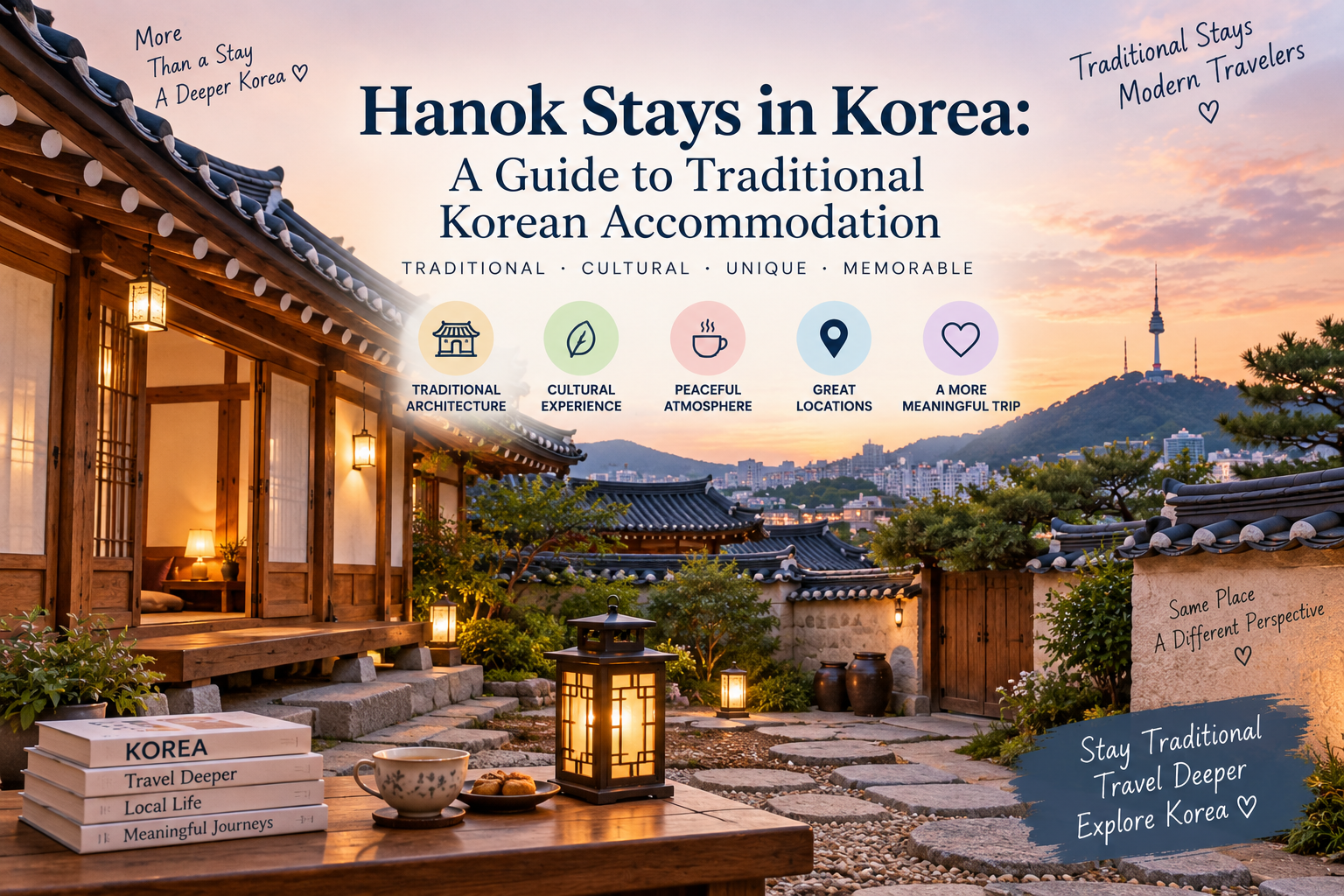
  • Hanok Stays in Korea: A Guide to Traditional Korean Accommodation

    Hanok Stays in Korea: A Guide to Traditional Korean Accommodation

    If you want to experience a different side of Korea, staying in a traditional hanok can be a memorable part of your trip.

    A hanok is a traditional Korean house designed around traditional architecture, natural materials, and a layout suited to the Korean way of life.

    Today, some traditional houses have been renovated and adapted for travelers while preserving important elements of traditional Korean architecture.

    A hanok stay can offer an experience that feels very different from staying in a modern hotel.

    However, it is important to understand what to expect before making a reservation.

    This guide explains what a hanok stay is, what the experience can be like, and what to check before booking.

    1. What Is a Hanok?

    Hanok refers to traditional Korean houses.

    Traditional hanok architecture often includes wooden structures, tiled roofs, courtyards, and spaces designed to connect the interior with the surrounding environment.

    Different regions and periods of Korean history have produced different styles of hanok.

    Some hanok accommodations are historic buildings, while others are newer properties designed in a traditional style.

    For travelers, this means that the experience can vary considerably from one accommodation to another.

    2. What Is a Hanok Stay?

    A hanok stay allows visitors to spend the night in a traditional-style Korean house.

    Some properties offer private rooms, while others may have shared areas.

    Depending on the accommodation, guests may sleep on a traditional-style floor mattress rather than a Western-style bed.

    Some hanok stays also have courtyards, gardens, traditional furniture, or other cultural features.

    The atmosphere is often quieter and more intimate than a large hotel.

    3. Understanding Ondol

    One traditional feature you may encounter is ondol, Korea’s traditional underfloor heating system.

    Instead of heating the room through radiators or vents, traditional ondol warms the floor.

    Modern hanok accommodations may use updated heating systems while maintaining the experience of warm floors.

    If you are used to sleeping on a Western-style bed, sleeping on a floor mattress may feel different at first.

    For many visitors, however, experiencing a traditional-style sleeping arrangement is one of the memorable parts of a hanok stay.

    Travel tip: Check the sleeping arrangement carefully before booking, especially if you have mobility concerns or prefer a standard bed.

    4. A Different Travel Experience

    One of the biggest advantages of a hanok stay is the opportunity to experience a traditional side of Korea.

    Instead of simply visiting a traditional building during the day, you can actually spend time in a traditional-style space.

    You may enjoy a quiet courtyard in the morning, walk through nearby historic neighborhoods, or experience traditional architecture at a slower pace.

    For international visitors, this can make a trip feel more connected to Korean culture and everyday traditions.

    5. A Quiet and Relaxing Atmosphere

    Many hanok accommodations are located in traditional neighborhoods or quieter residential areas.

    The atmosphere can be peaceful, especially in the evening.

    Some properties have small courtyards or gardens where guests can relax.

    However, the level of privacy and quietness varies between properties.

    Read recent guest reviews to understand the actual environment before booking.

    6. Hanok Stays Can Be Different from Hotels

    A hanok stay may not provide the same facilities as a modern hotel.

    Some properties have smaller rooms, traditional bathrooms, limited storage space, or fewer common facilities.

    Some may not have elevators, particularly if the property is a traditional building.

    This does not necessarily mean the accommodation is unsuitable.

    It simply means that the experience is different from staying in a modern hotel.

    Understanding this difference can help you choose a hanok stay that matches your expectations.

    7. Consider Your Comfort

    Traditional accommodation can be beautiful and memorable, but comfort should still be a priority.

    Before booking, check whether the room has air conditioning, heating, a private bathroom, Wi-Fi, and the type of bedding you prefer.

    If you are sensitive to noise, check reviews about sound insulation.

    If you have large luggage, look at the property’s access and storage options.

    Travel tip: A traditional atmosphere is wonderful, but make sure the basic facilities meet your needs.

    8. Check the Location Before Booking

    Location is important when choosing a hanok stay.

    Many traditional neighborhoods are close to historical attractions, but some streets can be narrow or difficult to reach by car.

    Check the walking distance from the nearest subway station or bus stop.

    If you are carrying heavy luggage, consider how easy it will be to reach the accommodation.

    It is also useful to check whether restaurants, convenience stores, and other basic services are nearby.

    9. Who Should Consider a Hanok Stay?

    A hanok stay can be a great choice for travelers who:

    • want to experience traditional Korean architecture;
    • enjoy cultural and historical experiences;
    • prefer a quieter neighborhood;
    • are interested in Korean traditions;
    • want a memorable alternative to a modern hotel.

    It may be less suitable for travelers who strongly prefer large hotel rooms, elevators, extensive facilities, or a standard Western-style bed.

    There is no right or wrong choice.

    The best accommodation is the one that matches your expectations and travel style.

    10. What to Check Before Booking

    Before booking a hanok stay, check:

    • sleeping arrangements;
    • private or shared bathroom;
    • heating and air conditioning;
    • Wi-Fi availability;
    • luggage storage;
    • stairs or elevator access;
    • check-in and check-out times;
    • cancellation policy;
    • recent guest reviews;
    • exact location and access.

    Taking a few minutes to check these details can help you avoid surprises after arrival.

    Final Thoughts

    A hanok stay can be one of the most memorable experiences of a trip to Korea.

    It gives travelers an opportunity to slow down and experience traditional Korean architecture and atmosphere in a more personal way.

    At the same time, a hanok is different from a modern hotel, so it is important to understand the facilities and sleeping arrangements before booking.

    If you choose a property that matches your expectations, a hanok stay can add a special cultural experience to your Korean journey.

    Stay somewhere traditional, slow down, and experience another side of Korea.

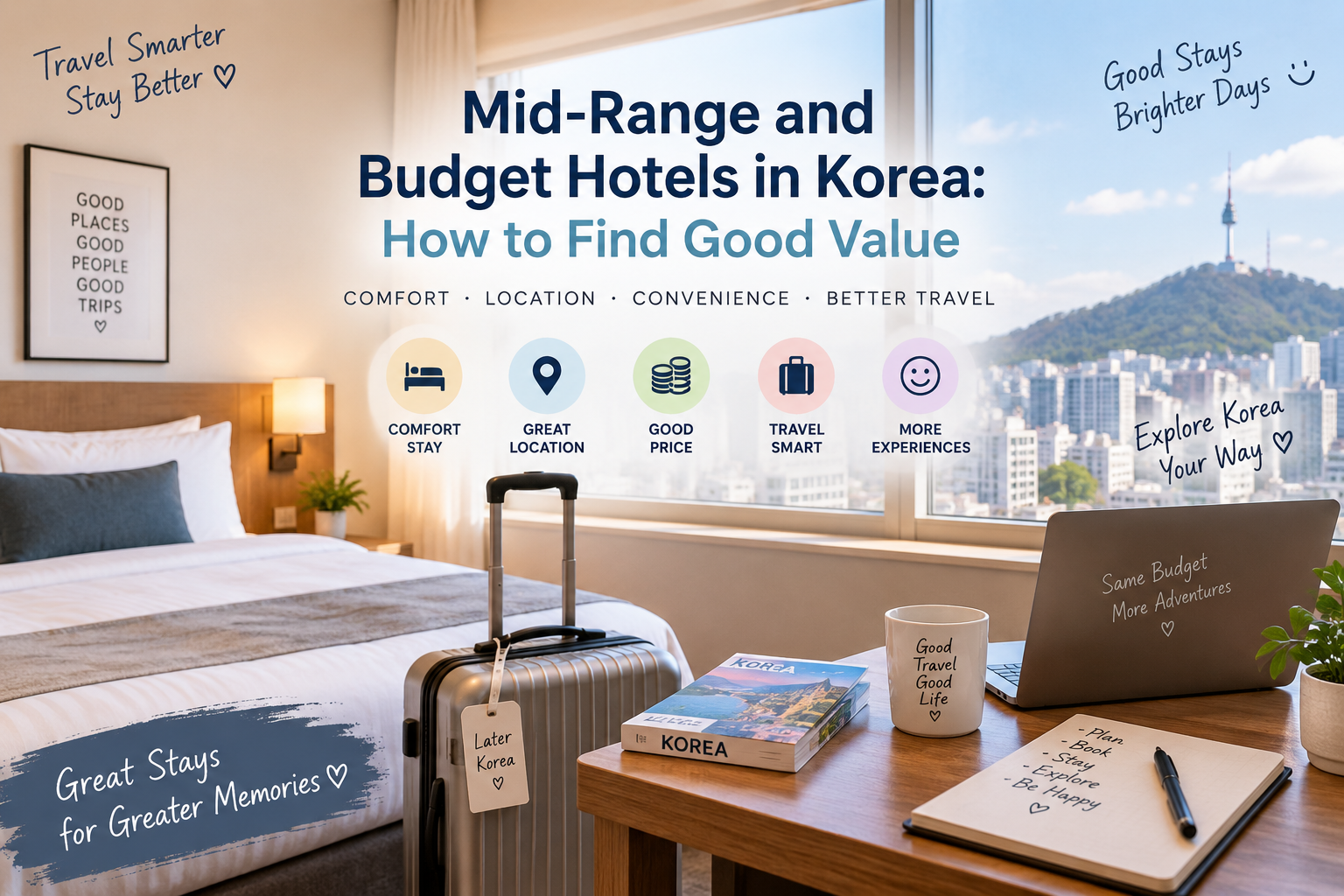
  • Mid-Range and Budget Hotels in Korea: How to Find Good Value

    Mid-Range and Budget Hotels in Korea: How to Find Good Value

    Finding a comfortable place to stay does not always mean choosing the most expensive hotel.

    For many travelers, a mid-range or budget hotel can offer an excellent balance between price, comfort, location, and convenience.

    Korea has a wide range of accommodation options, from simple budget rooms to modern mid-range hotels with useful facilities.

    The key is to understand what you actually need before making a reservation.

    This guide explains how to choose a good-value hotel in Korea and what to check before you book.

    1. What Is a Mid-Range or Budget Hotel?

    Budget hotels generally focus on providing basic accommodation at an affordable price.

    Mid-range hotels may offer additional comfort and facilities while remaining less expensive than luxury hotels.

    The exact standards can vary from one hotel to another, so it is better to compare the actual room, facilities, location, and guest reviews rather than relying only on the hotel’s category.

    A simple hotel can be a great choice if you plan to spend most of your day exploring Korea and mainly need a clean and comfortable place to sleep.

    2. Location Can Be More Important Than Room Size

    A less expensive hotel in a convenient location may provide better value than a larger room far away from the places you want to visit.

    Before booking, check the distance to the nearest subway station or bus stop.

    Also consider how long it will take to reach the attractions, restaurants, shopping areas, and other places on your itinerary.

    Spending less on accommodation but several extra hours traveling every day may not actually save you money or time.

    Travel tip: Open the hotel location on a map and check the actual walking distance to public transportation.

    3. Check What Is Included

    The room price does not always tell the whole story.

    Check whether the rate includes Wi-Fi, breakfast, cleaning, taxes, fees, or other services.

    Some hotels may offer a lower basic rate but charge extra for services that you consider important.

    Compare the total cost rather than only the advertised nightly price.


    4. Check the Room Carefully

    Before booking, look at the room details rather than judging the hotel only by its photographs.

    Check the room size, bed type, bathroom, storage space, window, and available amenities.

    If you are traveling with large luggage, a very small room may feel uncomfortable even if the price is attractive.

    Also check whether the room has air conditioning or heating appropriate for the season of your visit.

    Travel tip: Read recent reviews about cleanliness, noise, and room condition. These details can be more useful than a hotel’s promotional photographs.

    5. Think About Breakfast

    Breakfast can be convenient, but it is not always worth paying extra for.

    If breakfast is included at a reasonable rate and you prefer convenience, it may be a good option.

    On the other hand, Korea has many cafes, bakeries, convenience stores, and local restaurants where you can enjoy breakfast.

    Compare the additional breakfast cost with the options available around your hotel.

    6. Read Recent Guest Reviews

    Guest reviews can help you understand what staying at a hotel is actually like.

    Look for repeated comments about cleanliness, noise, bed comfort, bathroom condition, staff service, and location.

    Pay particular attention to recent reviews because hotel conditions and management can change over time.

    Do not let one negative review make the entire decision for you. Instead, look for patterns across many reviews.

    7. Choose According to Your Travel Style

    Solo travelers may prefer a small, well-located room with easy access to public transportation.

    Couples may value a comfortable room, good location, and a pleasant neighborhood with restaurants and cafes.

    Families may need more space, larger beds, convenient facilities, and easy transportation.

    Longer-stay travelers may want laundry facilities, a refrigerator, or a small kitchen depending on their needs.

    There is no single best hotel for everyone.

    The best choice is the one that fits your travel plans and daily routine.

    8. Compare the Total Price

    When comparing hotels, look beyond the nightly room rate.

    Check whether taxes, service charges, breakfast, parking, or other fees are included.

    A slightly more expensive room can sometimes offer better value if it includes useful services or has a much more convenient location.

    It can also be helpful to compare the total price for your entire stay rather than comparing only one night.

    9. Check the Cancellation Policy

    Travel plans can change, so always check the cancellation and refund policy before making a reservation.

    Some rates may be cheaper but non-refundable.

    Other rates may allow cancellation until a certain date.

    Read the conditions carefully and make sure you understand when cancellation fees may apply.

    10. A Simple Checklist Before Booking

    Before booking a mid-range or budget hotel in Korea, ask yourself:

    Is the location convenient?

    Is the room large enough for my needs?

    Is the room clean and comfortable according to recent reviews?

    Are the important facilities included in the price?

    Is breakfast worth the additional cost?

    Is the cancellation policy suitable for my trip?

    Is the total price reasonable compared with other hotels nearby?

    If the answer to most of these questions is yes, you may have found a good-value accommodation option.

    Final Thoughts

    A good hotel does not have to be expensive.

    For many travelers, a clean room, convenient location, comfortable bed, reliable Wi-Fi, and reasonable price are more important than luxury facilities.

    Take some time to compare hotels and read recent reviews before making your decision.

    The money you save on accommodation can also give you more opportunities to enjoy Korean food, attractions, shopping, and experiences.

    Choose a hotel that gives you the comfort you need at a price that fits your travel budget.

    With a little research, finding good-value accommodation in Korea can be much easier.


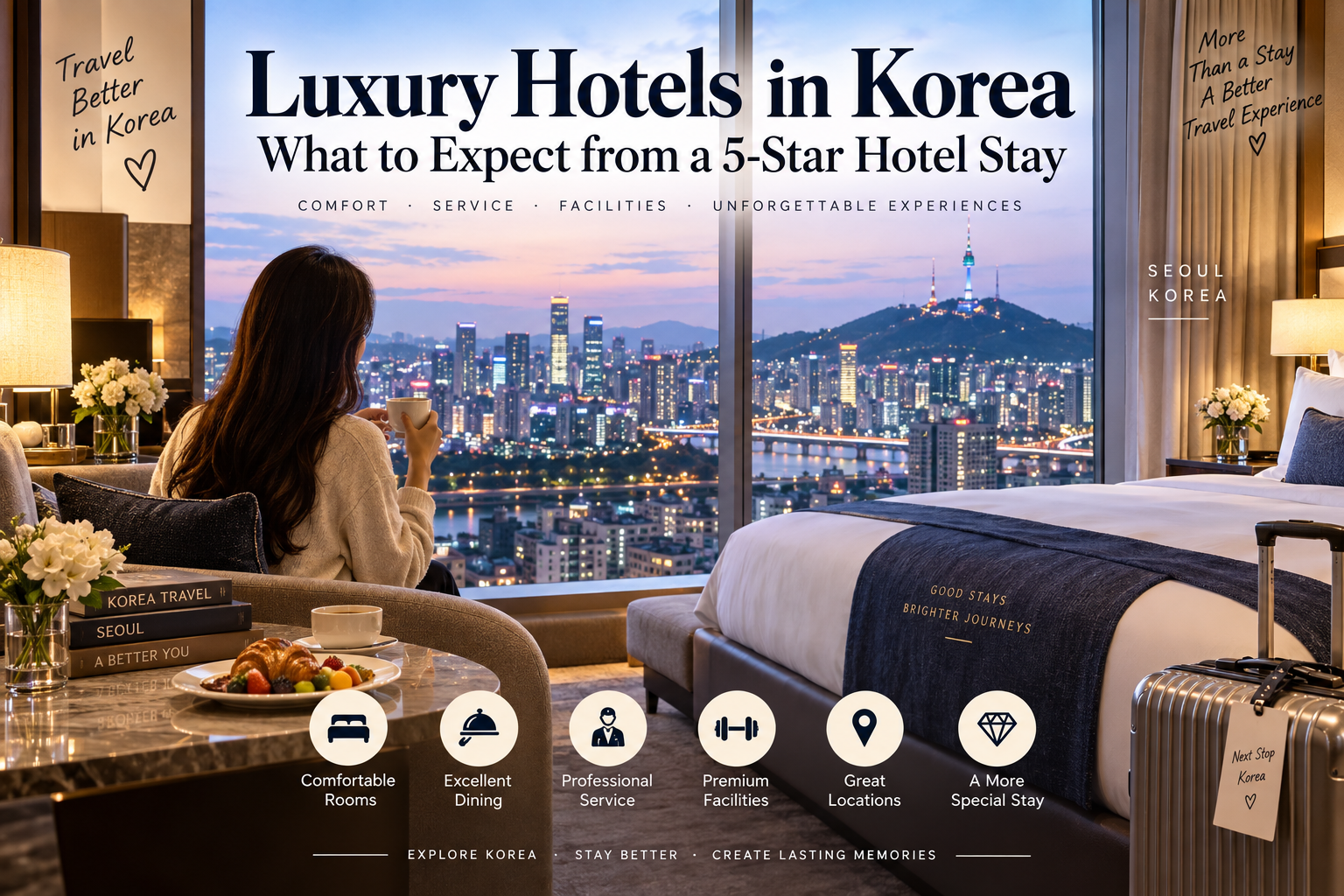
  • Luxury Hotels in Korea: What to Expect from a 5-Star Hotel Stay

    Luxury Hotels in Korea: What to Expect from a 5-Star Hotel Stay

    If you are planning a trip to Korea and considering a luxury hotel, you may be wondering what to expect from a 5-star hotel.

    A 5-star hotel can offer a higher level of comfort, service, facilities, and convenience than many standard hotels.

    However, a higher price does not automatically mean that every hotel will be the right choice for every traveler.

    The best luxury hotel depends on your budget, travel plans, preferred location, and the type of experience you want.

    This guide explains what you can generally expect from a 5-star hotel stay in Korea and what to consider before making a reservation.

    1. What Is a 5-Star Hotel?

    A 5-star hotel generally offers a high level of accommodation, service, facilities, and guest amenities.

    Luxury hotels may provide features such as spacious rooms, restaurants, fitness centers, swimming pools, business facilities, concierge services, and room service.

    However, hotel classifications and standards can vary by country and by hotel.

    For this reason, it is a good idea to check the actual facilities and services offered by a hotel rather than relying only on its star rating.

    2. Comfortable Rooms and Quality Facilities

    One of the main reasons travelers choose a luxury hotel is comfort.

    Rooms at high-end hotels may offer larger spaces, comfortable beds, quality bathrooms, work areas, seating areas, and additional amenities.

    Some hotels also provide beautiful city views or convenient access to restaurants, shopping areas, and major attractions.

    Before booking, check the room size, bed type, view, and included amenities.

    A room that looks attractive in photographs may not necessarily be the best choice for your particular trip.

    3. Hotel Restaurants and Dining

    Many luxury hotels have several dining options, including restaurants, cafes, lounges, and breakfast facilities.

    Some offer Korean cuisine, while others specialize in international dishes.

    A hotel breakfast can be convenient if you want to start your sightseeing day without searching for a restaurant.

    However, staying at a luxury hotel does not mean you need to eat every meal there.

    Exploring local restaurants and traditional markets can provide a different and often more memorable experience of Korean food.

    4. Service and Hospitality

    One of the biggest advantages of a luxury hotel can be the level of service.

    Staff may be available to help with check-in, luggage, restaurant reservations, transportation, and other guest requests.

    Some luxury hotels also offer concierge services that can help guests plan activities or arrange reservations.

    If you have special needs or requests, it is often helpful to contact the hotel before arrival.

    However, service levels can vary between hotels, so reading recent guest reviews can give you a better idea of what to expect.

    5. Location Matters

    Even the most luxurious hotel may not be the best choice if its location does not suit your travel plans.

    Before booking, look at the hotel’s distance from subway stations, major attractions, restaurants, shopping areas, and airports or train stations.

    For a first trip to Seoul, staying in a convenient central area can reduce travel time.

    On the other hand, travelers who prefer a quieter atmosphere may choose a hotel away from the busiest tourist districts.

    Think about where you will spend most of your time before deciding where to stay.

    6. Facilities and Amenities

    Luxury hotels may offer a wide range of facilities.

    Depending on the property, these can include swimming pools, fitness centers, spas, lounges, business centers, restaurants, cafes, and meeting facilities.

    Families may want to check whether the hotel offers suitable facilities for children.

    Business travelers may value a comfortable workspace and business services.

    Leisure travelers may care more about a swimming pool, spa, breakfast, or convenient dining options.

    The most useful facilities are the ones that match your travel needs.

    7. Is a 5-Star Hotel Worth the Price?

    A 5-star hotel can be worth the extra cost if comfort, service, facilities, and convenience are important to you.

    However, a luxury hotel is not always necessary.

    If you plan to spend most of your day sightseeing and only return to your accommodation to sleep, a comfortable mid-range hotel may provide better value.

    Before booking, compare the total cost with the facilities and services you are actually likely to use.

    Think about value, not just the star rating.

    8. What to Check Before Booking

    Before booking a 5-star hotel in Korea, check the details carefully.

    Look at the room size, bed type, breakfast options, cancellation policy, check-in and check-out times, and any additional fees.

    If you are traveling with children, check the hotel’s family policies and available room arrangements.

    If you need an accessible room or have other special requirements, contact the hotel before making your reservation.

    It is also worth checking the hotel’s location on a map rather than relying only on the description.

    9. Read Recent Guest Reviews

    Photos and descriptions can give you a good first impression, but recent guest reviews can provide additional information.

    Look for comments about cleanliness, noise, staff service, room condition, breakfast, and location.

    Try to look for patterns rather than relying on a single review.

    A hotel with many positive reviews about the things that matter to you may be a better choice than a hotel with a higher rating but fewer relevant reviews.

    10. Luxury Does Not Have to Mean Complicated

    Staying at a 5-star hotel can be a memorable part of a trip to Korea.

    You can enjoy comfortable accommodation, professional service, good dining options, and convenient facilities.

    But the most important thing is choosing a hotel that fits your own travel plans.

    If you value comfort and want to enjoy your accommodation as part of the travel experience, a luxury hotel may be a good choice.

    If your main goal is sightseeing and you expect to spend most of your time outside, another type of accommodation may offer better value.

    Final Thoughts

    A 5-star hotel can provide comfort and convenience, but the best hotel is not necessarily the most expensive one.

    Consider your budget, location, travel schedule, and the facilities you are most likely to use.

    Take time to compare the actual room, services, location, policies, and recent guest reviews before making a reservation.

    Choose the hotel that fits your trip—not simply the hotel with the highest price or star rating.

    With the right choice, your accommodation can become a comfortable place to rest and an enjoyable part of your Korean travel experience.


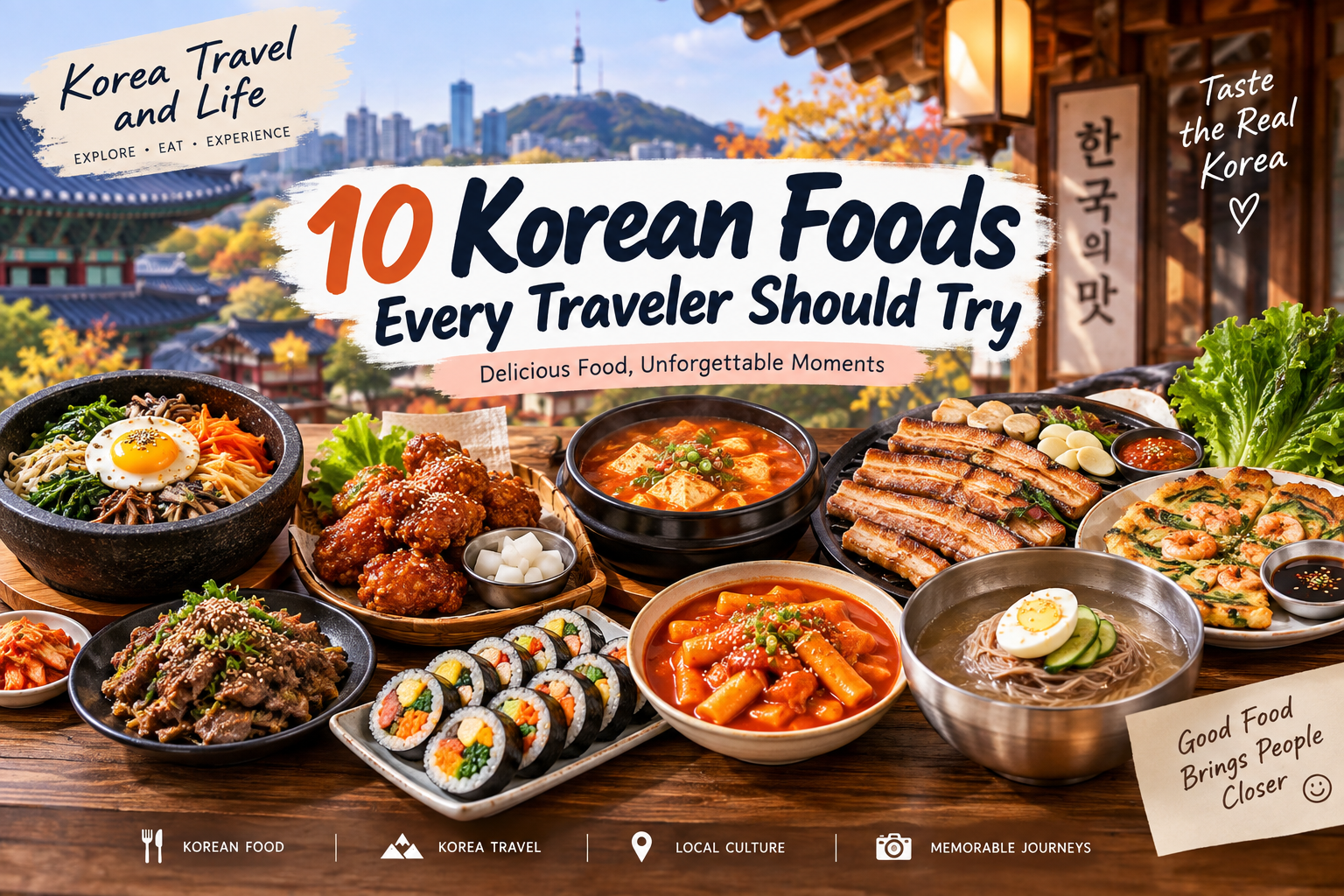
  • 10 Korean Foods Every Traveler Should Try

    10 Korean Foods Every Traveler Should Try

    Planning a trip to Korea? One of the best ways to experience the country is through its food.

    Korean cuisine offers a wide variety of flavors, from savory grilled dishes and comforting soups to spicy street food and simple rice dishes.

    You don’t need to visit expensive restaurants to enjoy Korean food. Traditional markets, neighborhood restaurants, food courts, and casual eateries can all offer memorable meals.

    If you are visiting Korea for the first time, choosing what to eat can feel overwhelming.

    This guide introduces 10 Korean foods that are popular, accessible, and worth trying during your trip.

    1. Bibimbap

    Bibimbap is one of the most well-known Korean dishes.

    It is usually made with rice, vegetables, meat or other toppings, and a Korean chili paste called gochujang.

    The ingredients are arranged on top of the rice and mixed together before eating.

    One of the best things about bibimbap is that the flavors and textures come together in one bowl.

    If you prefer less spicy food, ask for the gochujang on the side so you can control how much you add.

    Travel tip: Bibimbap is a good choice for first-time visitors because it can include a variety of ingredients in one meal.

    2. Korean Fried Chicken

    Korean fried chicken is known for its crispy texture and flavorful sauces.

    Unlike some traditional Korean dishes, Korean fried chicken is a relatively modern food that has become popular both in Korea and around the world.

    You can find many different styles, including original crispy chicken, soy garlic chicken, and spicy versions.

    It is often enjoyed with pickled radish and a cold drink, making it a popular choice for a casual meal or evening snack.

    Travel tip: If you are ordering for the first time, consider trying a half-and-half order so you can enjoy two different flavors.

    3. Bulgogi

    Bulgogi is thinly sliced meat that is marinated before being grilled or cooked.

    The marinade often includes ingredients that create a savory and slightly sweet flavor.

    Bulgogi can be served with rice and side dishes or used as part of another Korean meal.

    Because it is generally milder than some spicy Korean dishes, bulgogi can be a comfortable choice for visitors who are trying Korean food for the first time.

    Travel tip: If you are not used to spicy food, bulgogi is one of the dishes you may want to try first.

    4. Kimchi Stew (Kimchi-jjigae)

    Kimchi-jjigae is a warm and comforting Korean stew made with kimchi and other ingredients such as pork, tofu, onions, and green onions.

    It is often served bubbling hot in a small pot and eaten with rice.

    The flavor can be spicy, sour, and savory, depending on the kimchi and the recipe.

    For visitors who enjoy bold flavors, kimchi-jjigae is a great dish to try.

    Travel tip: If you are sensitive to spicy food, ask about the level of spiciness before ordering.

    5. Samgyeopsal

    Samgyeopsal is grilled pork belly and is one of the most popular Korean barbecue dishes.

    The thick slices of pork are usually grilled at the table and eaten with lettuce, sauces, garlic, and other side dishes.

    Many people enjoy making small wraps with the grilled pork and vegetables.

    Samgyeopsal is especially popular for group meals because everyone can share the food and grill it together.

    Travel tip: Restaurant portions and serving styles can vary, so check whether the menu is priced per person or per serving.

    6. Tteokbokki

    Tteokbokki is a popular Korean street food made with chewy rice cakes cooked in a spicy and slightly sweet sauce.

    It is commonly found at traditional markets, street food stalls, and casual snack shops.

    The classic version can be quite spicy, but some restaurants offer milder versions.

    Tteokbokki is often enjoyed with other street foods such as fish cakes and fried snacks.

    Travel tip: If you are sensitive to spicy food, ask for a mild version or start with a small portion.

    7. Gimbap

    Gimbap is a Korean rice roll made with rice, vegetables, and other ingredients wrapped in dried seaweed.

    Common fillings include egg, vegetables, pickled radish, and meat or fish.

    Gimbap is convenient to eat and can be found at restaurants, markets, convenience stores, and food shops throughout Korea.

    It is a great option when you want a quick and affordable meal while traveling.

    Travel tip: Gimbap is easy to take with you, making it useful for a picnic, day trip, or train journey.

    8. Naengmyeon

    Naengmyeon is a Korean cold noodle dish that is especially popular during the warmer months.

    The noodles are served in a chilled broth or with a spicy sauce, depending on the style.

    The texture of the noodles can be different from pasta or other noodles that international visitors may be familiar with.

    Naengmyeon is refreshing and can be a good choice after eating grilled meat.

    Travel tip: If you prefer a milder flavor, try the broth-based version first.

    9. Haemul Pajeon

    Haemul pajeon is a savory Korean pancake made with green onions and seafood.

    It is often served as a shared dish and can be enjoyed with a dipping sauce.

    The outside can be crispy while the inside remains soft and flavorful.

    It is especially enjoyable on a cool or rainy day.

    Travel tip: Since it is often served as a shared dish, consider ordering it with friends or family.

    10. Korean Street Food

    Korean street food is an easy way to try several different flavors without having a full restaurant meal.

    Popular choices include fish cakes, hotteok, mandu, fried snacks, and other regional specialties.

    Traditional markets and busy food streets are good places to discover local snacks.

    Street food prices and ingredients vary, so check the menu or ask the vendor if you have allergies or dietary restrictions.

    Travel tip: Try small portions of several different foods rather than ordering too much of one item.

    Final Thoughts

    Korean food is an important part of experiencing Korea.

    From bibimbap and bulgogi to gimbap and street food, there are many different flavors and styles to discover.

    You do not have to try everything in one trip.

    Start with foods that look familiar, then gradually try something new.

    Exploring local restaurants, traditional markets, and neighborhood food shops can become one of the most memorable parts of your journey.

    Enjoy your meal and discover Korea one dish at a time!


  • Best Time to Visit Korea: A Simple Guide to Every Season

    Best Time to Visit Korea: A Simple Guide to Every Season

    Planning a trip to Korea and wondering when to visit?

    Korea is a great destination throughout the year, but each season offers a different travel experience.

    Spring brings flowers and comfortable weather. Summer is warm and lively. Autumn offers beautiful colors and pleasant temperatures, while winter brings cold weather, seasonal food, and a different side of Korean culture.

    The best time to visit Korea depends on what you want to see and do.

    This simple guide will help you understand what each season is like and choose the travel period that suits you best.

    1. Spring — March to May

    Spring is one of the most popular seasons for traveling in Korea.

    Temperatures gradually become warmer, and flowers begin to bloom across the country.

    Late March and April can be especially beautiful in many areas, although the exact timing of flowers can vary from year to year.

    Spring is a good season for walking around cities, visiting parks, exploring historical sites, and enjoying outdoor activities.

    Seoul’s parks and palace areas can be particularly pleasant when flowers are in bloom.

    If you enjoy photography, spring can be an excellent time to explore Korea’s streets, parks, and traditional neighborhoods.

    What to pack: Light layers, a jacket, comfortable walking shoes, and an umbrella can be useful.

    Best for: Flower viewing, sightseeing, walking tours, photography, and outdoor activities.

    Spring Travel Tip

    Spring weather can change quickly during the day.

    Mornings and evenings may feel cool even when afternoons are warm, so wearing layers can make your trip more comfortable.

    2. Summer — June to August

    Summer in Korea is generally hot and humid, especially in July and August.

    If you enjoy beaches, summer activities, and lively city evenings, this season can still be an enjoyable time to visit.

    Busan and Jeju Island are popular destinations during the warmer months, with beaches and outdoor activities attracting many visitors.

    Summer is also a good time to explore Korea’s many cafes, shopping areas, museums, and indoor attractions when the weather becomes too hot.

    Rain can occur during the summer, so checking the forecast before your daily activities is a good idea.

    What to pack: Light clothing, comfortable shoes, sunscreen, a hat, and an umbrella.

    Best for: Beaches, island trips, evening activities, cafes, shopping, and indoor attractions.

    Summer Travel Tip

    Korean summers can feel hotter than expected because of the combination of heat and humidity.

    Plan outdoor sightseeing for the morning or later afternoon when possible, and take regular breaks to stay comfortable.

    3. Autumn — September to November

    Autumn is another excellent season for traveling in Korea.

    The weather is generally comfortable, and the cooler temperatures make it enjoyable to spend time outdoors.

    October and November can be particularly attractive for travelers who want to experience colorful autumn scenery.

    Mountains, parks, palace grounds, and city streets can all offer beautiful views during the autumn season.

    Autumn is also a wonderful time to explore traditional neighborhoods and take long walking tours without the intense summer heat.

    Food is another reason to enjoy autumn in Korea. Seasonal ingredients and warm Korean dishes can make cool evenings especially enjoyable.

    What to pack: Light layers, a jacket, comfortable walking shoes, and slightly warmer clothing for late autumn.

    Best for: Autumn foliage, hiking, sightseeing, photography, food, and walking tours.

    Autumn Travel Tip

    Autumn is a popular travel season, especially during periods of colorful foliage.

    If you plan to visit well-known attractions, consider traveling on weekdays or visiting earlier in the day to enjoy a more relaxed experience.

    4. Winter — December to February

    Winter in Korea is cold and often dry, but it can be a wonderful season for travelers who enjoy winter scenery and seasonal experiences.

    Seoul and other inland areas can become quite cold, while Jeju Island generally has a milder climate.

    Winter is a good time to explore museums, palaces, cafes, markets, and indoor attractions. If you enjoy winter sports, some mountainous areas offer skiing and snow-related activities.

    Winter also gives visitors a chance to experience seasonal Korean foods such as hot soups, stews, and street foods.

    What to pack: A warm coat, layers, gloves, a scarf, warm socks, and comfortable shoes.

    Best for: Winter scenery, skiing, seasonal food, shopping, cafes, museums, and indoor attractions.

    Winter Travel Tip

    Temperatures can be very low during winter, particularly in the morning and evening.

    Check the weather forecast before going outside and dress in layers. Comfortable shoes are especially important if you plan to walk around sightseeing areas.

    Which Season Is Best for Your Trip?

    There is no single best season for everyone.

    Choose spring if you love flowers, comfortable walks, and outdoor sightseeing.

    Choose summer if you enjoy beaches, island trips, and lively summer activities.

    Choose autumn if you want comfortable weather, colorful scenery, and long walking tours.

    Choose winter if you enjoy cold-weather experiences, seasonal food, shopping, and winter scenery.

    If you have flexibility, spring and autumn are often comfortable choices for travelers who plan to spend a lot of time outdoors.

    However, every season has its own attractions, so the best choice depends on your interests and travel plans.

    A Simple Way to Plan Your Trip

    Before booking your trip, consider three things:

    1. Weather: Check the typical conditions for your travel dates.

    2. Activities: Think about whether you prefer beaches, hiking, sightseeing, shopping, food, or cultural experiences.

    3. Clothing: Pack according to the expected temperature and bring comfortable shoes because many Korean destinations are best explored on foot.

    Final Thoughts

    Korea is a destination that changes with the seasons.

    Spring flowers, summer beaches, autumn colors, and winter scenery each offer a different way to experience the country.

    Instead of worrying too much about choosing the “perfect” season, think about what kind of experience you want from your trip.

    With a little preparation, Korea can be an enjoyable destination at any time of year.

    Choose the season that matches your interests, pack comfortably, and enjoy discovering Korea at your own pace.


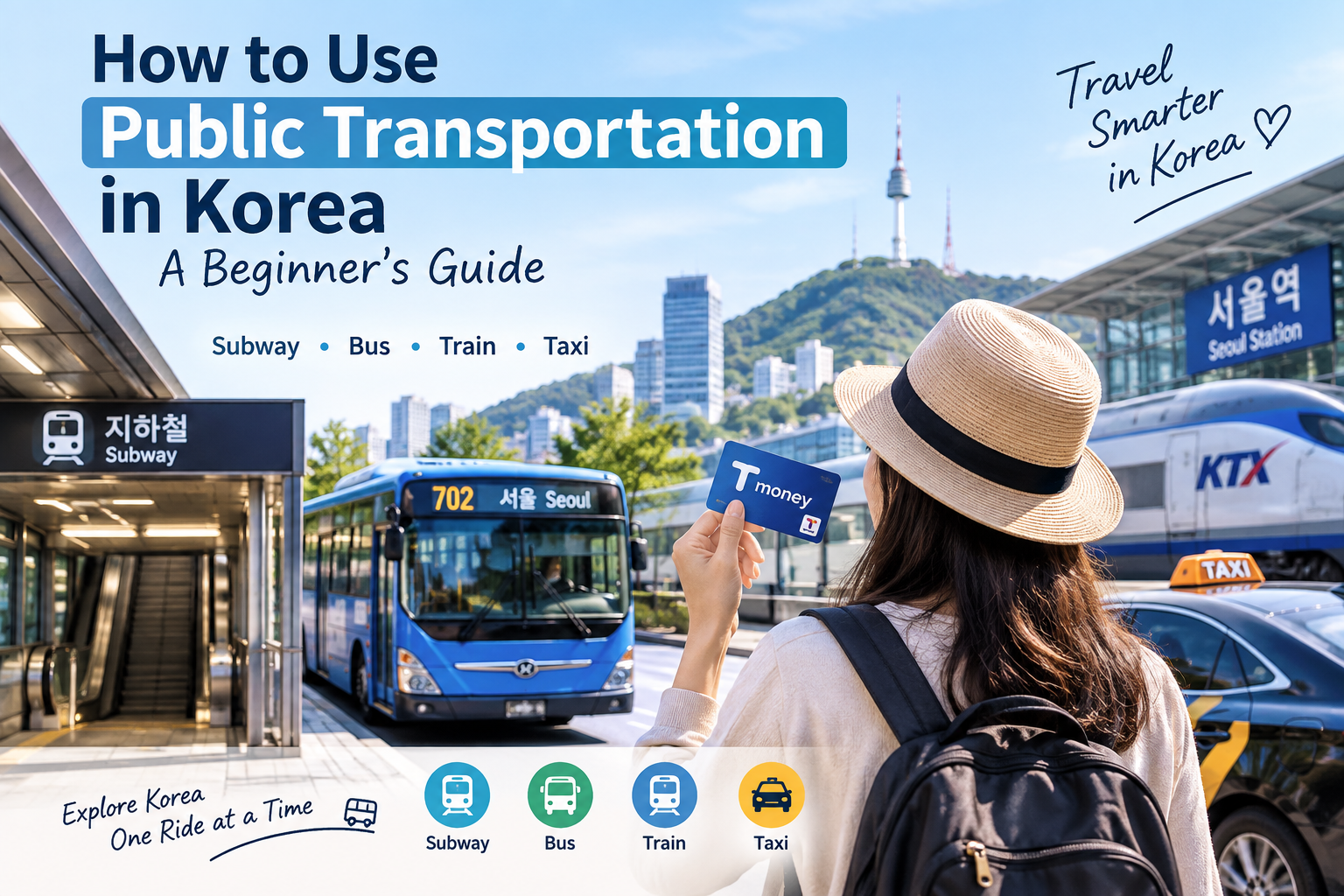
  • How to Use Public Transportation in Korea: A Beginner’s Guide

    How to Use Public Transportation in Korea: A Beginner’s Guide

    Planning your first trip to Korea? One of the easiest ways to make your journey more comfortable is to understand how public transportation works.

    Korea has an extensive transportation system, especially in major cities. Subways, buses, trains, and taxis make it possible to travel around without renting a car.

    For first-time visitors, however, using a new transportation system can feel confusing at first.

    The good news is that with a few basic tips, getting around Korea can be quite simple.

    In this beginner’s guide, we will explain how to use public transportation in Korea, including transportation cards, subways, buses, trains, and useful travel tips.

    1. Get a Transportation Card

    A transportation card is one of the most useful things to have when traveling around Korea.

    Cards such as T-money can generally be used on buses and subways in many parts of Korea. They can also be used for some other transportation-related payments and at participating stores.

    You can usually purchase and recharge a transportation card at convenience stores or subway stations.

    Before getting on a bus or entering the subway, make sure your card has enough balance.

    Using a transportation card is often more convenient than buying a separate ticket for every journey.

    2. How to Use a Transportation Card

    Using the card is simple.

    When entering a bus, tap your card on the card reader.

    When leaving a bus, you may also need to tap your card again. This is important because the transportation system may use the entry and exit information to calculate fares or transfers.

    On the subway, tap your card when entering and again when leaving through the station gates.

    Keep your transportation card easily accessible so you do not have to search for it every time you use public transportation.

    The subway is one of the most convenient ways to travel around major Korean cities.

    Seoul, in particular, has an extensive subway network connecting many neighborhoods and tourist attractions.

    Before you travel, check your route using a reliable map or navigation app.

    Look at the subway line number or color and check the direction of the train.

    When you arrive at the station, follow the signs to the correct platform.

    Korean subway stations usually have signs in Korean and English, and many major stations also provide information in other languages.

    Pay attention to the station name and the direction of the train before boarding.

    4. Understanding Transfers

    You may need to transfer between subway lines during your trip.

    Follow the signs marked for the line you need to transfer to.

    Some stations are very large, so changing lines may require a few minutes of walking.

    If you are traveling with luggage, allow extra time for transfers.

    It is also helpful to check your complete route before leaving your hotel or accommodation.

    5. Using Navigation Apps

    A navigation app can make public transportation much easier for international visitors.

    You can use a map or transportation app to check subway routes, bus routes, travel times, and transfer information.

    Before leaving, check the destination name carefully and make sure you are going in the correct direction.

    If possible, save important locations such as your accommodation, airport, train station, and major attractions.

    This can be especially useful if your phone connection becomes temporarily unavailable.


    6. How to Use City Buses

    Buses are another convenient way to get around Korean cities.

    Bus stops usually display route numbers and information about destinations. Major stops may also provide information in English.

    Before boarding, check the bus number and direction carefully.

    When you get on the bus, tap your transportation card on the card reader.

    When getting off, tap your card again if required.

    If you are not sure where to get off, use a navigation app to follow your route.

    It is also helpful to watch the names of upcoming bus stops so you know when your destination is approaching.

    7. Traveling Between Cities by Train

    If you want to travel between major Korean cities, trains can be a convenient option.

    Korea has several types of passenger trains, including high-speed services such as KTX.

    For popular routes and busy travel periods, consider checking schedules and purchasing tickets in advance.

    Keep your ticket or reservation information available until you arrive at your destination.

    If you have large luggage, check the available luggage storage areas before boarding.

    8. Using Taxis in Korea

    Taxis can be useful when public transportation is inconvenient or when you are traveling with luggage.

    You can usually find taxis at designated taxi stands, near major transportation hubs, or request one through a taxi-hailing app.

    Before getting into a taxi, make sure the destination is correct.

    Having the destination written in Korean can be helpful, especially when traveling to a smaller hotel, restaurant, or residential area.

    Most taxis use a meter to calculate the fare. Check the fare and payment method before completing your journey.

    9. Tips for Saving Time and Money

    Public transportation is often an economical way to travel around Korea.

    If you plan to use buses and subways frequently, a transportation card can be more convenient than purchasing individual tickets for every trip.

    Before traveling, compare different routes and check whether a transfer is required.

    Traveling a little earlier can also help you avoid the busiest times on popular routes.

    If you are carrying large luggage, consider choosing a route with fewer transfers, even if it takes slightly longer.

    A simple and comfortable route is sometimes better than the fastest route.

    10. A Few Safety Tips

    Public transportation in Korea is generally convenient, but travelers should still take normal precautions.

    Keep your passport, wallet, phone, and other valuables secure.

    Pay attention when walking through busy stations and when getting on or off buses and trains.

    If you are traveling late at night, stay aware of your surroundings and use well-lit areas whenever possible.

    If you are unsure about a route, do not hesitate to ask station staff or check a navigation app again.

    Final Thoughts

    Using public transportation in Korea may seem complicated when you first arrive, but it becomes much easier after a few trips.

    Start with a transportation card, check your route before leaving, and give yourself enough time for transfers.

    Subways and buses are especially useful for exploring cities, while trains are a convenient choice when traveling between major destinations.

    You do not need to understand everything on your first day.

    Take your time, check the signs, and enjoy the journey.

    With a little preparation, public transportation can become one of the easiest and most enjoyable ways to experience Korea.