
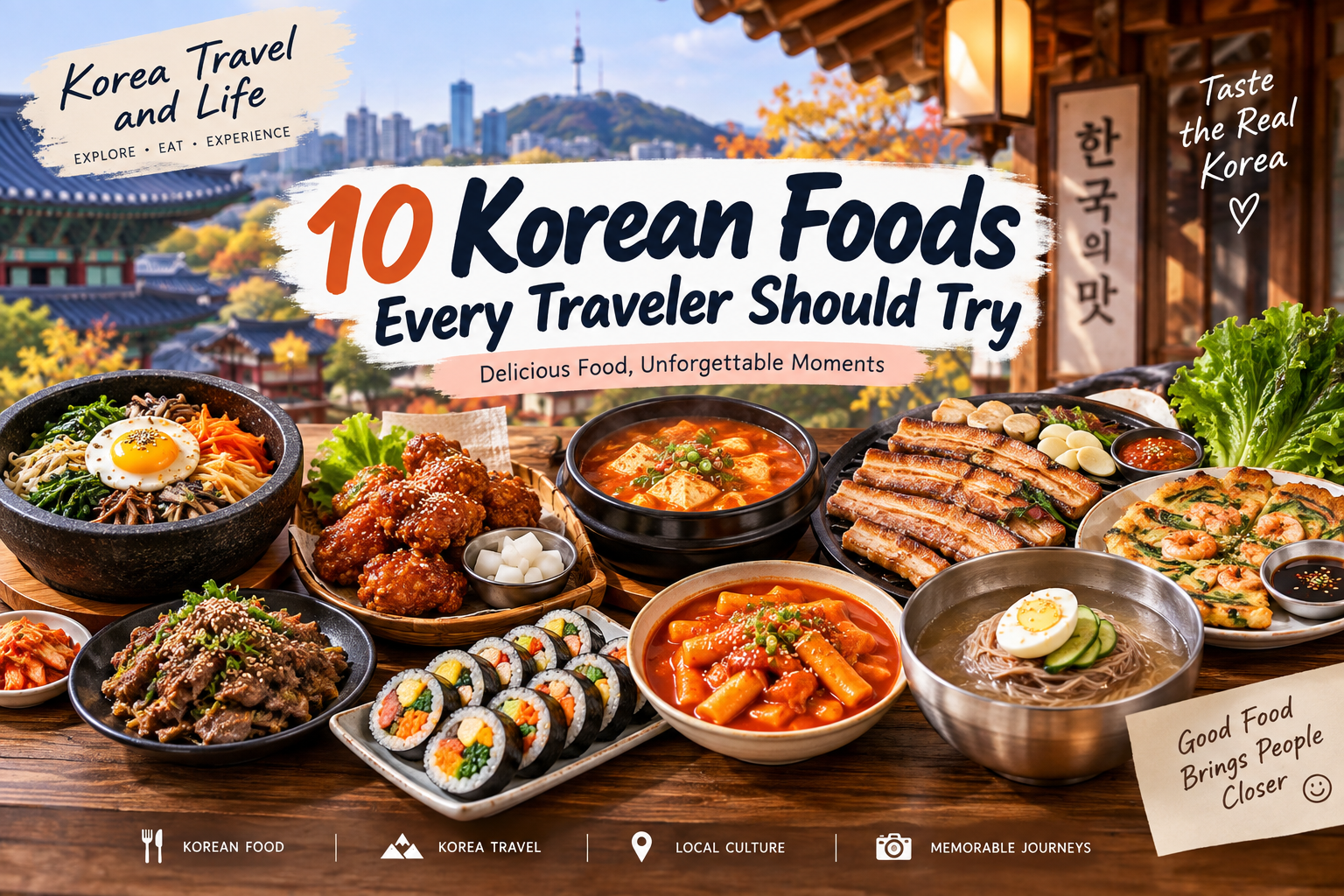
Planning a trip to Korea? One of the best ways to experience the country is through its food.
Korean cuisine offers a wide variety of flavors, from savory grilled dishes and comforting soups to spicy street food and simple rice dishes.
You don’t need to visit expensive restaurants to enjoy Korean food. Traditional markets, neighborhood restaurants, food courts, and casual eateries can all offer memorable meals.
If you are visiting Korea for the first time, choosing what to eat can feel overwhelming.
This guide introduces 10 Korean foods that are popular, accessible, and worth trying during your trip.
- Bibimbap
Bibimbap is one of the most well-known Korean dishes.
It is usually made with rice, vegetables, meat or other toppings, and a Korean chili paste called gochujang.
The ingredients are arranged on top of the rice and mixed together before eating.
One of the best things about bibimbap is that the flavors and textures come together in one bowl.
If you prefer less spicy food, ask for the gochujang on the side so you can control how much you add.
Travel tip: Bibimbap is a good choice for first-time visitors because it can include a variety of ingredients in one meal.
2. Korean Fried Chicken
Korean fried chicken is known for its crispy texture and flavorful sauces.
Unlike some traditional Korean dishes, Korean fried chicken is a relatively modern food that has become popular both in Korea and around the world.
You can find many different styles, including original crispy chicken, soy garlic chicken, and spicy versions.
It is often enjoyed with pickled radish and a cold drink, making it a popular choice for a casual meal or evening snack.
Travel tip: If you are ordering for the first time, consider trying a half-and-half order so you can enjoy two different flavors.
3. Bulgogi
Bulgogi is thinly sliced meat that is marinated before being grilled or cooked.
The marinade often includes ingredients that create a savory and slightly sweet flavor.
Bulgogi can be served with rice and side dishes or used as part of another Korean meal.
Because it is generally milder than some spicy Korean dishes, bulgogi can be a comfortable choice for visitors who are trying Korean food for the first time.
Travel tip: If you are not used to spicy food, bulgogi is one of the dishes you may want to try first.
4. Kimchi Stew (Kimchi-jjigae)
Kimchi-jjigae is a warm and comforting Korean stew made with kimchi and other ingredients such as pork, tofu, onions, and green onions.
It is often served bubbling hot in a small pot and eaten with rice.
The flavor can be spicy, sour, and savory, depending on the kimchi and the recipe.
For visitors who enjoy bold flavors, kimchi-jjigae is a great dish to try.
Travel tip: If you are sensitive to spicy food, ask about the level of spiciness before ordering.
5. Samgyeopsal
Samgyeopsal is grilled pork belly and is one of the most popular Korean barbecue dishes.
The thick slices of pork are usually grilled at the table and eaten with lettuce, sauces, garlic, and other side dishes.
Many people enjoy making small wraps with the grilled pork and vegetables.
Samgyeopsal is especially popular for group meals because everyone can share the food and grill it together.
Travel tip: Restaurant portions and serving styles can vary, so check whether the menu is priced per person or per serving.
6. Tteokbokki
Tteokbokki is a popular Korean street food made with chewy rice cakes cooked in a spicy and slightly sweet sauce.
It is commonly found at traditional markets, street food stalls, and casual snack shops.
The classic version can be quite spicy, but some restaurants offer milder versions.
Tteokbokki is often enjoyed with other street foods such as fish cakes and fried snacks.
Travel tip: If you are sensitive to spicy food, ask for a mild version or start with a small portion.
7. Gimbap
Gimbap is a Korean rice roll made with rice, vegetables, and other ingredients wrapped in dried seaweed.
Common fillings include egg, vegetables, pickled radish, and meat or fish.
Gimbap is convenient to eat and can be found at restaurants, markets, convenience stores, and food shops throughout Korea.
It is a great option when you want a quick and affordable meal while traveling.
Travel tip: Gimbap is easy to take with you, making it useful for a picnic, day trip, or train journey.
8. Naengmyeon
Naengmyeon is a Korean cold noodle dish that is especially popular during the warmer months.
The noodles are served in a chilled broth or with a spicy sauce, depending on the style.
The texture of the noodles can be different from pasta or other noodles that international visitors may be familiar with.
Naengmyeon is refreshing and can be a good choice after eating grilled meat.
Travel tip: If you prefer a milder flavor, try the broth-based version first.
9. Haemul Pajeon
Haemul pajeon is a savory Korean pancake made with green onions and seafood.
It is often served as a shared dish and can be enjoyed with a dipping sauce.
The outside can be crispy while the inside remains soft and flavorful.
It is especially enjoyable on a cool or rainy day.
Travel tip: Since it is often served as a shared dish, consider ordering it with friends or family.
10. Korean Street Food
Korean street food is an easy way to try several different flavors without having a full restaurant meal.
Popular choices include fish cakes, hotteok, mandu, fried snacks, and other regional specialties.
Traditional markets and busy food streets are good places to discover local snacks.
Street food prices and ingredients vary, so check the menu or ask the vendor if you have allergies or dietary restrictions.
Travel tip: Try small portions of several different foods rather than ordering too much of one item.
Final Thoughts
Korean food is an important part of experiencing Korea.
From bibimbap and bulgogi to gimbap and street food, there are many different flavors and styles to discover.
You do not have to try everything in one trip.
Start with foods that look familiar, then gradually try something new.
Exploring local restaurants, traditional markets, and neighborhood food shops can become one of the most memorable parts of your journey.
Enjoy your meal and discover Korea one dish at a time!
Leave a Reply