Author: koreatravellife

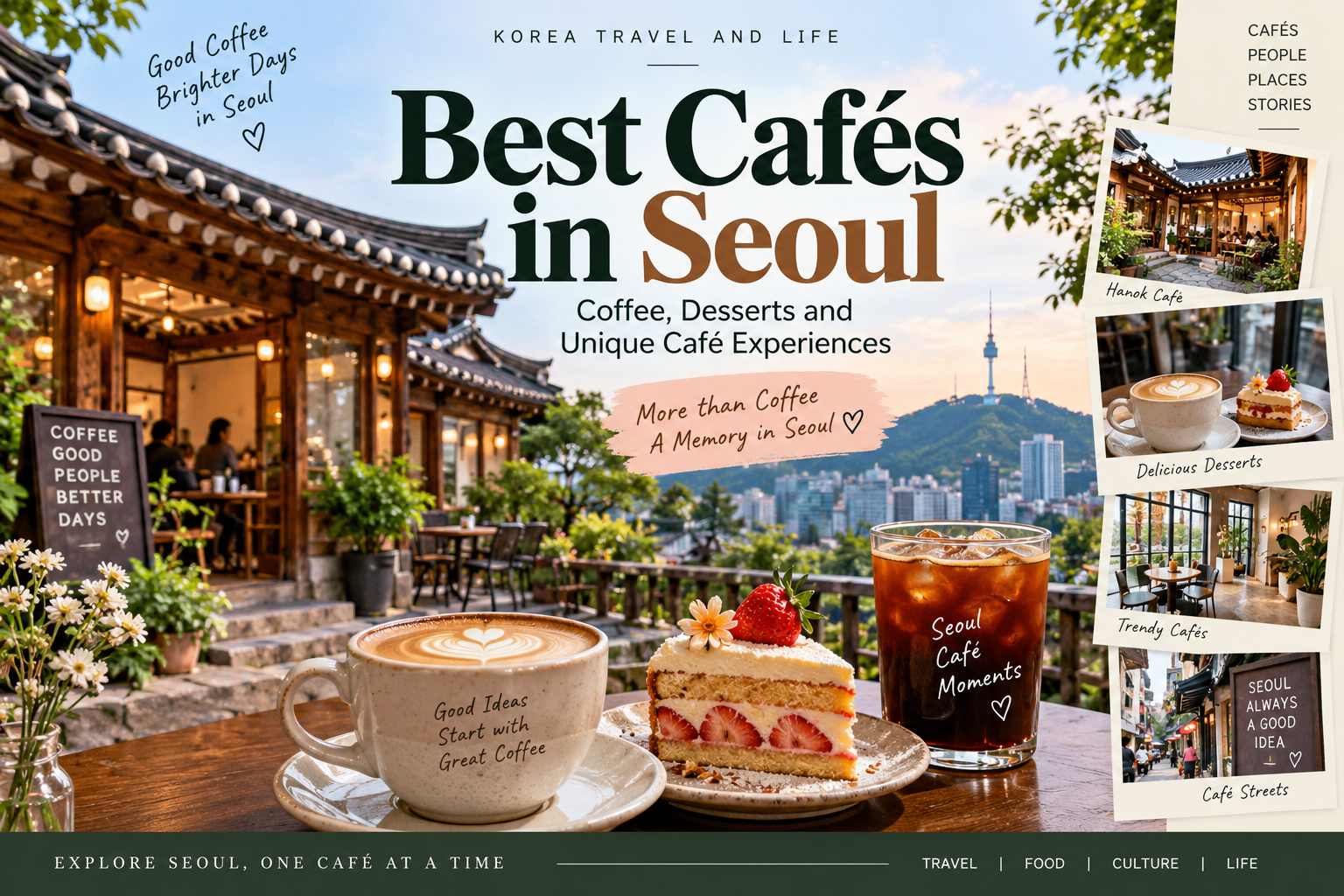
  • Best Cafés in Seoul: Coffee, Desserts and Unique Café Experiences

    Best Cafés in Seoul: Coffee, Desserts and Unique Café Experiences

    Best Cafés in Seoul: Coffee, Desserts and Unique Café Experiences

    Seoul has one of the most exciting café cultures in Asia. Coffee shops here are more than places to grab a quick drink. Many cafés combine specialty coffee, creative desserts, beautiful interiors, traditional Korean architecture, and distinctive neighborhood experiences.

    From a café inside a traditional hanok near Bukchon to an industrial coffee roastery in Hapjeong, Seoul offers something for almost every type of café lover.

    Here are some of the best cafés in Seoul to add to your travel itinerary.

    1. Cafe Onion Anguk

    Located near Bukchon Hanok Village, Cafe Onion Anguk is one of the most recognizable cafés in Seoul.

    The café occupies a traditional Korean hanok, creating an interesting contrast between historic architecture and modern café culture. Visitors can sit around the traditional courtyard while enjoying coffee and bakery items.

    What to Try: Coffee, pastries and bakery items
    Address: 5 Gyedong-gil, Jongno-gu, Seoul
    Phone: +82-70-7543-2123
    Price Level: ₩₩

    Nearby Attractions:

    • Bukchon Hanok Village
    • Changdeokgung Palace
    • Insadong
    • Gyeongbokgung Palace

    Cafe Onion Anguk is particularly convenient for travelers exploring Seoul’s historic center. Visiting in the morning can also make it easier to combine the café with nearby palaces and traditional neighborhoods.

    2. Café Layered Yeonnam

    Yeonnam-dong is one of Seoul’s most enjoyable neighborhoods for café hopping, and Café Layered Yeonnam is a popular destination for travelers who enjoy desserts.

    The café has a European-inspired vintage atmosphere and is particularly known for its selection of scones and cakes. Upper-floor seating and a terrace add to its relaxed neighborhood feel.

    What to Try: Scones, cakes and coffee
    Address: 161-4 Seongmisan-ro, Mapo-gu, Seoul
    Phone: +82-507-1320-6219
    Price Level: ₩₩

    Nearby Attractions:

    • Yeonnam-dong
    • Gyeongui Line Forest Park
    • Hongdae
    • Hongik University area

    This is a good café to include during an afternoon exploring Hongdae and Yeonnam-dong.

    3. Anthracite Coffee Roasters – Hapjeong

    For travelers who care as much about coffee as interior design, Anthracite Coffee Roasters in Hapjeong offers a very different Seoul café experience.

    The café occupies a former shoe factory, and much of the building’s industrial character has been preserved. The rough concrete, old factory details, and coffee-roasting culture create an atmosphere that feels distinctly different from Seoul’s polished dessert cafés.

    What to Try: Espresso, Americano, filter coffee and desserts
    Address: 10 Tojeong-ro 5-gil, Mapo-gu, Seoul
    Phone: +82-2-336-7850
    Price Level: ₩₩

    Nearby Attractions:

    • Hapjeong
    • Hongdae
    • Sangsu
    • Hangang River

    Anthracite is a particularly good choice for travelers interested in specialty coffee and Seoul’s creative urban spaces.

    4. Coffee Hanyakbang

    Hidden in a narrow alley in Euljiro, Coffee Hanyakbang feels very different from the large modern cafés found elsewhere in Seoul.

    Its interior uses antique furniture, woodwork, mother-of-pearl details, and vintage decorative elements to create an atmosphere inspired by an earlier period of Seoul.

    The café is especially suitable for travelers who want to experience the older alleyways and distinctive character of Euljiro.

    What to Try: Hand-drip coffee, filter coffee and desserts
    Address: 16-6 Samil-daero 12-gil, Jung-gu, Seoul
    Phone: +82-70-4148-4242
    Price Level: ₩–₩₩

    Nearby Attractions:

    • Euljiro
    • Cheonggyecheon Stream
    • Myeongdong
    • Jongno

    Coffee Hanyakbang is easy to combine with a walk through central Seoul and the increasingly popular Euljiro area.

    5. Cheongsudang Bakery

    Ikseon-dong has become one of Seoul’s best-known areas for stylish cafés, restaurants, and renovated hanok buildings.

    Cheongsudang Bakery is known for creating a peaceful atmosphere in the middle of this busy neighborhood. Its landscaping and carefully designed interior make the visit as much about the space as the desserts.

    What to Try: Coffee, cakes and desserts
    Address: 31-9 Donhwamun-ro 11na-gil, Jongno-gu, Seoul
    Phone: +82-507-1318-8215
    Price Level: ₩₩

    Nearby Attractions:

    • Ikseon-dong Hanok Village
    • Jongmyo Shrine
    • Insadong
    • Changdeokgung Palace

    Because Ikseon-dong becomes particularly busy on weekends, visiting earlier in the day can provide a more relaxed experience.

    6. Seoul Coffee – Ikseon

    Seoul Coffee in Ikseon-dong combines retro Seoul aesthetics with the neighborhood’s traditional architecture.

    The café is a convenient stop while exploring the narrow streets of Ikseon-dong and offers another example of how Seoul transforms older buildings into contemporary café spaces.

    What to Try: Coffee and Korean-inspired desserts
    Address: 166-31 Ikseon-dong, Jongno-gu, Seoul
    Phone: +82-2-6085-4890
    Price Level: ₩₩

    Nearby Attractions:

    • Ikseon-dong
    • Jongmyo Shrine
    • Insadong
    • Changdeokgung Palace

    Travelers who enjoy photography may find this neighborhood particularly rewarding because traditional buildings, small shops, restaurants, and cafés are packed into a relatively compact area.

    Seoul’s Best Café Neighborhoods

    Choosing the right neighborhood can be more useful than choosing only one famous café.

    Anguk and Bukchon are ideal for travelers who want traditional architecture, palaces, hanok streets, and cafés in the same itinerary.

    Ikseon-dong and Jongno combine traditional buildings with modern cafés, desserts, restaurants, and historic attractions.

    Hongdae and Yeonnam-dong are better for youthful café culture, bakeries, independent shops, and creative neighborhoods.

    Hapjeong and Sangsu are particularly attractive for specialty coffee, independent cafés, and industrial-style spaces.

    Euljiro offers a different atmosphere, with cafés hidden among older commercial buildings and narrow alleys.

    What Makes Seoul Café Culture Special?

    One of the most interesting things about Seoul is the variety of café experiences available within a single city.

    A morning coffee can take place inside a traditional hanok. In the afternoon, you might visit a converted industrial building. Later, you can have dessert in a carefully designed café surrounded by the narrow streets of Ikseon-dong.

    This variety is one reason café hopping has become an enjoyable part of traveling in Seoul rather than simply a break between tourist attractions.

    Coffee or Dessert?

    Not every famous Seoul café specializes in the same thing.

    Travelers who prioritize specialty coffee may prefer roasteries and coffee-focused cafés such as Anthracite.

    Those interested in desserts and photography may enjoy Café Layered and the cafés of Yeonnam-dong or Ikseon-dong.

    For a distinctly Korean setting, hanok cafés around Anguk, Bukchon, and Jongno are particularly memorable.

    How Much Do Cafés Cost in Seoul?

    Coffee prices vary depending on location and café style. Independent specialty cafés, large design cafés, and famous dessert cafés can cost more than small neighborhood coffee shops.

    Desserts may sometimes cost as much as—or more than—a drink, especially at popular bakery cafés.

    Travelers on a budget do not need to visit famous cafés every day. Seoul has thousands of smaller neighborhood cafés, so mixing well-known destinations with local coffee shops is an easy way to control costs.

    A Simple Seoul Café Day

    A café-focused day can easily be combined with sightseeing.

    Start the morning around Anguk and Bukchon, explore the nearby palaces and traditional streets, and stop at a hanok café.

    After lunch, travel toward Yeonnam-dong or Hongdae for bakeries, desserts, shopping, and a walk along Gyeongui Line Forest Park.

    Another option is to spend the afternoon around Ikseon-dong and Jongno, where cafés can be combined with Insadong, Jongmyo Shrine, and Changdeokgung Palace.

    This approach allows visitors to experience Seoul’s café culture without sacrificing an entire sightseeing day.

    Tips Before Visiting Popular Seoul Cafés

    Popular cafés can become crowded during weekends and public holidays. Morning visits or weekday afternoons are often more comfortable.

    Some cafés may also change their opening hours, menus, or reservation policies, so checking current information shortly before visiting is recommended.

    When visiting a café inside a hanok or renovated historic building, remember that seating arrangements may differ from those in a conventional modern coffee shop.

    Finally, do not feel that you need to visit only the cafés that are famous on social media. Exploring a quiet neighborhood café can be just as memorable.

    Final Thoughts

    Seoul’s café culture reflects the city itself: historic and modern, fast-moving yet full of places designed for slowing down.

    Cafe Onion Anguk offers a memorable hanok setting, Café Layered highlights Seoul’s dessert culture, Anthracite represents the city’s specialty-coffee and industrial-design scene, while Coffee Hanyakbang and the cafés of Ikseon-dong show how older parts of Seoul continue to evolve.

    Whether you are looking for excellent coffee, beautiful desserts, traditional architecture, or simply a relaxing place between sightseeing stops, café hopping can become one of the most enjoyable parts of a trip to Seoul.
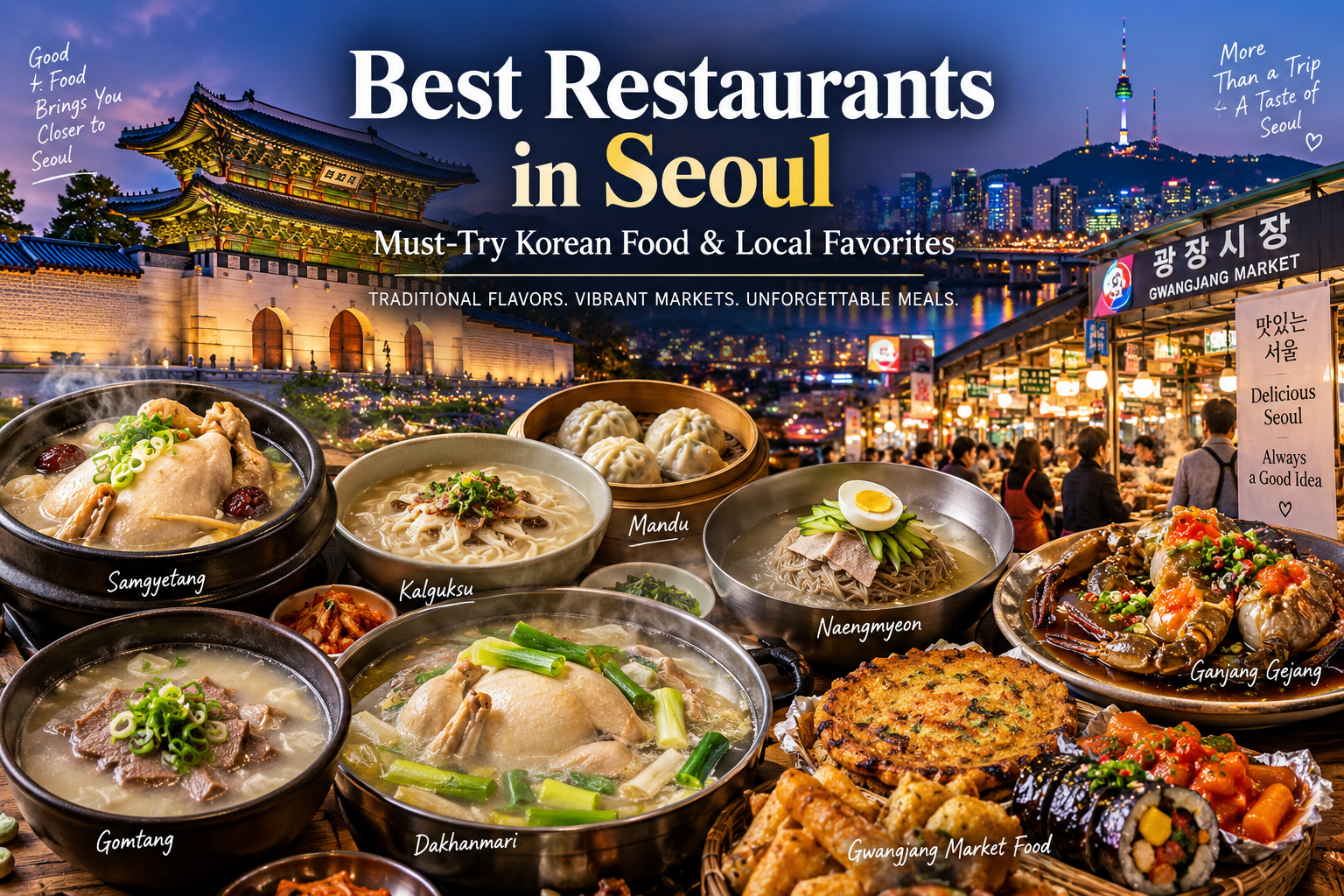
  • Best Restaurants in Seoul: Must-Try Korean Food and Local Favorites

    Best Restaurants in Seoul: Must-Try Korean Food and Local Favorites

    Food is one of the best reasons to visit Seoul.

    The city offers everything from decades-old soup restaurants and traditional chicken dishes to handmade noodles, Korean barbecue, marinated crab and busy market food stalls.

    For first-time visitors, however, deciding where to eat can be difficult. Seoul is enormous, and thousands of restaurants compete for attention.

    This guide focuses on places where travelers can experience some of Korea’s most recognizable dishes while exploring different neighborhoods of Seoul.

    Addresses, telephone numbers and practical information are included to make planning easier.

    1. Tosokchon Samgyetang – Traditional Ginseng Chicken Soup Near Gyeongbokgung

    Tosokchon Samgyetang is one of Seoul’s best-known restaurants for samgyetang, a traditional Korean soup made with a whole young chicken filled with ingredients such as glutinous rice, garlic, jujube and ginseng.

    The restaurant has operated near Gyeongbokgung Palace since 1983, and its traditional hanok-style setting adds to the experience. Seoul’s official tourism guide continues to list it as a samgyetang specialty restaurant and notes that multilingual menus are available.

    Signature dish: Samgyetang (Ginseng Chicken Soup)
    Address: 5 Jahamun-ro 5-gil, Jongno-gu, Seoul 03041, South Korea
    Telephone: +82-2-737-7444
    Price level: ₩₩
    Best for: First-time visitors, traditional Korean food and lunch after palace sightseeing.

    Nearby attractions: Gyeongbokgung Palace, Seochon, Gwanghwamun and Tongin Market.

    Why Eat Here?

    Samgyetang is particularly associated with Korea’s summer food culture. Koreans traditionally eat the hot, nourishing soup during the hottest days of summer—a custom connected with the idea of fighting heat with heat.

    Combining Gyeongbokgung Palace, Seochon and a samgyetang lunch makes an excellent half-day Seoul itinerary.

    2. Myeongdong Kyoja – Kalguksu and Mandu in the Heart of Myeongdong

    Myeongdong Kyoja has been serving diners since 1966 and is famous for a remarkably small menu centered on kalguksu, handmade noodle soup, and mandu, Korean dumplings.

    Its location makes it particularly convenient for travelers exploring Myeongdong.

    The kalguksu combines soft noodles with a rich, savory broth, while the dumplings are another long-standing favorite.

    Signature dishes: Kalguksu and Mandu
    Address: 29 Myeongdong 10-gil, Jung-gu, Seoul 04537, South Korea
    Telephone: +82-2-776-5348
    Price level: ₩
    Best for: Budget-friendly Korean food, noodle lovers and Myeongdong visitors.

    Nearby attractions: Myeongdong, Namsan, Namdaemun Market and central Seoul.

    Why Eat Here?

    This is the kind of restaurant that works particularly well for first-time travelers because the menu is easy to understand and the food represents a familiar side of everyday Korean dining.

    Seoul’s official tourism guide currently lists the restaurant as operating daily and identifies kalguksu as its specialty.

    3. Hadongkwan – Historic Seoul-Style Gomtang

    Hadongkwan is one of Seoul’s classic restaurants for gomtang, a clear beef soup served with rice.

    The restaurant dates back to 1939 and has become a long-standing Myeongdong institution. Its menu remains focused on gomtang and suyuk, or boiled beef.

    Unlike heavily seasoned soups, the attraction here is the clean but deep beef flavor.

    Signature dish: Gomtang
    Address: 12 Myeongdong 9-gil, Jung-gu, Seoul 04538, South Korea
    Telephone: +82-2-776-5656
    Price level: ₩
    Best for: Traditional Seoul food, breakfast or an early lunch.

    Nearby attractions: Myeongdong, Euljiro, Cheonggyecheon Stream and Seoul City Hall.

    Travel Tip

    Hadongkwan opens early and traditionally stops serving when the day’s prepared soup is sold out, so visiting earlier in the day is a sensible choice.

    4. Wonhalmae Wonjo Dakhanmari – A Dongdaemun Favorite

    Dakhanmari literally means “a whole chicken.”

    The dish is strongly associated with Dongdaemun, where restaurants serve whole chicken simmered at the table in broth. Diners typically eat the chicken first and then add noodles to the remaining broth.

    Wonhalmae Wonjo Dakhanmari is one of the restaurants associated with the origins of Dongdaemun’s famous Dakhanmari Street. Seoul’s official tourism guide currently lists its whole-chicken stew set for two among its signature offerings.

    Signature dish: Dakhanmari (Whole Chicken Stew)
    Address: 25 Jong-ro 40ga-gil, Jongno-gu, Seoul 03197, South Korea
    Telephone: +82-2-2279-2078
    Price level: ₩₩
    Best for: Couples, families and small groups.

    Nearby attractions: Dongdaemun, Gwangjang Market, DDP and Cheonggyecheon Stream.

    Why Eat Here?

    Dakhanmari is a social meal.

    The pot sits in the middle of the table, making it especially enjoyable when shared with another traveler or a group of friends.

    5. Woo Lae Oak – Pyongyang Naengmyeon Since 1946

    Woo Lae Oak is one of Seoul’s most established names for Pyongyang naengmyeon, cold buckwheat noodles served in a delicate broth.

    The restaurant has operated since 1946. Its broth is made from beef and is known for a restrained flavor that can seem surprisingly subtle to travelers encountering Pyongyang-style noodles for the first time.

    Bulgogi is another popular choice here and can be paired with naengmyeon.

    Signature dishes: Pyongyang Naengmyeon and Bulgogi
    Address: 62-29 Changgyeonggung-ro, Jung-gu, Seoul 04546, South Korea
    Telephone: +82-2-2265-0151
    Price level: ₩–₩₩
    Best for: Korean food enthusiasts and travelers interested in historic restaurants.

    Nearby attractions: Euljiro, Dongdaemun, Gwangjang Market and central Seoul.

    What Should You Expect?

    Pyongyang naengmyeon is not designed to overwhelm you with spice or sweetness.

    Its appeal is subtle. The broth, buckwheat noodles and meat create a restrained combination that becomes more interesting as you continue eating.

    6. Pro Soy Crab – Try Ganjang Gejang in Sinsa

    Pro Soy Crab is one of Seoul’s long-established restaurants specializing in ganjang gejang, raw crab marinated in soy sauce.

    The main restaurant in Sinsa dates back to 1980 and serves several crab and seafood dishes.

    Ganjang gejang has an intense combination of salty, sweet and rich seafood flavors. It is traditionally eaten with rice, which absorbs the seasoned crab sauce.

    Signature dish: Ganjang Gejang (Soy Sauce Marinated Crab)
    Address: 9 Gangnam-daero 97-gil, Seocho-gu, Seoul 06526, South Korea
    Telephone: +82-2-543-4126
    Price level: ₩₩₩
    Best for: Seafood lovers and adventurous first-time visitors.

    Nearby attractions: Sinsa, Garosu-gil, Gangnam and the Hangang River.

    Before Ordering Raw Crab

    Ganjang gejang is raw marinated seafood, so it may not suit every traveler.

    Visitors with shellfish allergies, pregnancy-related dietary restrictions or concerns about raw seafood should choose another dish.

    7. Jin Ok-Hwa Original Chicken Restaurant – Another Dongdaemun Classic

    Jin Ok-Hwa Original Chicken Restaurant is another famous name associated with Dongdaemun’s dakhanmari scene.

    The experience is casual and energetic: chicken cooks in a large pot at the table and diners customize dipping sauces before adding noodles or other ingredients later in the meal.

    Signature dish: Dakhanmari
    Address: 18 Jong-ro 40ga-gil, Jongno-gu, Seoul, South Korea
    Telephone: +82-2-2275-9666
    Price level: ₩–₩₩
    Best for: Groups, casual dining and travelers exploring Dongdaemun.

    Nearby attractions: Dongdaemun Market, Gwangjang Market, DDP and Cheonggyecheon Stream.

    8. Gwangjang Market – For a Korean Street-Food Experience

    Not every memorable Seoul meal needs to happen inside a traditional restaurant.

    Gwangjang Market is one of the best places for travelers to experience several Korean foods in one area.

    Popular foods include bindaetteok (mung bean pancakes), mayak gimbap (small seaweed rice rolls), yukhoe (Korean-style raw beef) and various noodles, dumplings and market snacks.

    Instead of choosing one large meal, walk through the market and try several smaller dishes.

    Area: Jongno-gu, Seoul
    Price level: ₩
    Best for: Street-food lovers, first-time visitors and travelers who enjoy busy traditional markets.

    Nearby attractions: Jongmyo Shrine, Dongdaemun, Cheonggyecheon Stream and Euljiro.

    Market Tip

    Bring an appetite but do not order too much at the first stall.

    One of the pleasures of Gwangjang Market is trying several different foods as you walk.

    What Korean Foods Should First-Time Visitors Try?

    If this is your first trip to Seoul, do not feel that you need to try everything in one day.

    Start with a few representative dishes.

    Try samgyetang for traditional chicken soup, kalguksu for handmade noodles, gomtang for a classic Seoul beef soup, dakhanmari for a shared meal, and Korean barbecue for one of the country’s most social dining experiences.

    Then explore dishes such as naengmyeon, bibimbap, tteokbokki, mandu and ganjang gejang as your trip continues.

    What About Korean BBQ?

    Korean barbecue deserves its own guide.

    Seoul has everything from inexpensive neighborhood pork barbecue restaurants to premium Hanwoo beef establishments.

    Instead of adding one random barbecue restaurant to this list, a dedicated Seoul Korean BBQ guide will allow us to compare neighborhoods, meat types, prices and ordering styles properly.

    For first-time visitors, remember that many barbecue restaurants expect at least two portions of meat to be ordered, although policies vary by restaurant.

    Where Should Food Lovers Stay in Seoul?

    Jongno is an excellent base for traditional Korean food, markets and historic sightseeing.

    Myeongdong and Euljiro combine famous restaurants with convenient transportation and central sightseeing.

    Hongdae and Yeonnam-dong are good choices for younger dining culture, casual restaurants, cafés and nightlife.

    Gangnam, Sinsa and Apgujeong offer everything from Korean barbecue to contemporary restaurants and luxury dining.

    Your hotel location can therefore influence your food experience almost as much as your restaurant choices.

    Traditional Restaurants vs. Michelin Dining

    Seoul’s food culture operates on many levels.

    A bowl of soup from a restaurant that has served generations of Seoul residents can be just as meaningful as a carefully designed tasting menu.

    That is why this guide focuses primarily on traditional and accessible restaurants.

    Seoul also has an increasingly important fine-dining scene, including restaurants recognized by the MICHELIN Guide. We will explore those restaurants separately in our dedicated guide to Michelin dining in Seoul.

    How Much Does Eating in Seoul Cost?

    Seoul can accommodate very different food budgets.

    Market snacks and simple noodle dishes can be relatively inexpensive, while Korean barbecue, premium seafood and high-end dining can cost considerably more.

    Prices also change over time, so travelers should check the restaurant’s current menu rather than relying entirely on older online price lists.

    A useful strategy is to mix inexpensive local meals with one or two special dining experiences.

    Restaurant Etiquette for First-Time Visitors

    At many Korean restaurants, side dishes called banchan are served automatically.

    Water and utensils may be self-service in casual restaurants, while table service is more common at higher-end establishments.

    Some restaurants specialize in only one or two dishes. A small menu is not necessarily a disadvantage—in Korea, it can be a sign that a restaurant has spent decades focusing on one specialty.

    Busy traditional restaurants may also expect customers to eat and leave relatively quickly, particularly during peak lunch periods.

    A Simple Seoul Food Day

    A food-focused day in central Seoul could begin with a traditional beef soup in Myeongdong, continue with market snacks at Gwangjang Market and finish with dakhanmari near Dongdaemun.

    Another day could combine Gyeongbokgung Palace with samgyetang in Seochon before heading to Sinsa or Gangnam for dinner.

    Planning meals around neighborhoods reduces unnecessary travel and gives you more time to experience the city.

    Before You Visit

    Restaurant hours, prices, holidays and menus can change.

    Popular restaurants may also have long lines during lunch, dinner, weekends and holidays.

    Check the latest information before traveling across the city specifically for one restaurant. For particularly popular places, arriving outside peak meal times can make the experience easier.

    Final Thoughts

    The best way to understand Seoul is not only through palaces, museums and neighborhoods.

    It is also through food.

    A bowl of gomtang in a restaurant that has survived for generations, noodles in crowded Myeongdong, chicken bubbling in a Dongdaemun pot or a few dishes shared at a traditional market can reveal a side of Seoul that sightseeing alone cannot provide.

    Do not simply ask, “What is the most famous restaurant in Seoul?”

    Ask instead, “What part of Seoul do I want to taste today?”

    That question can lead to some of the best memories of your trip.


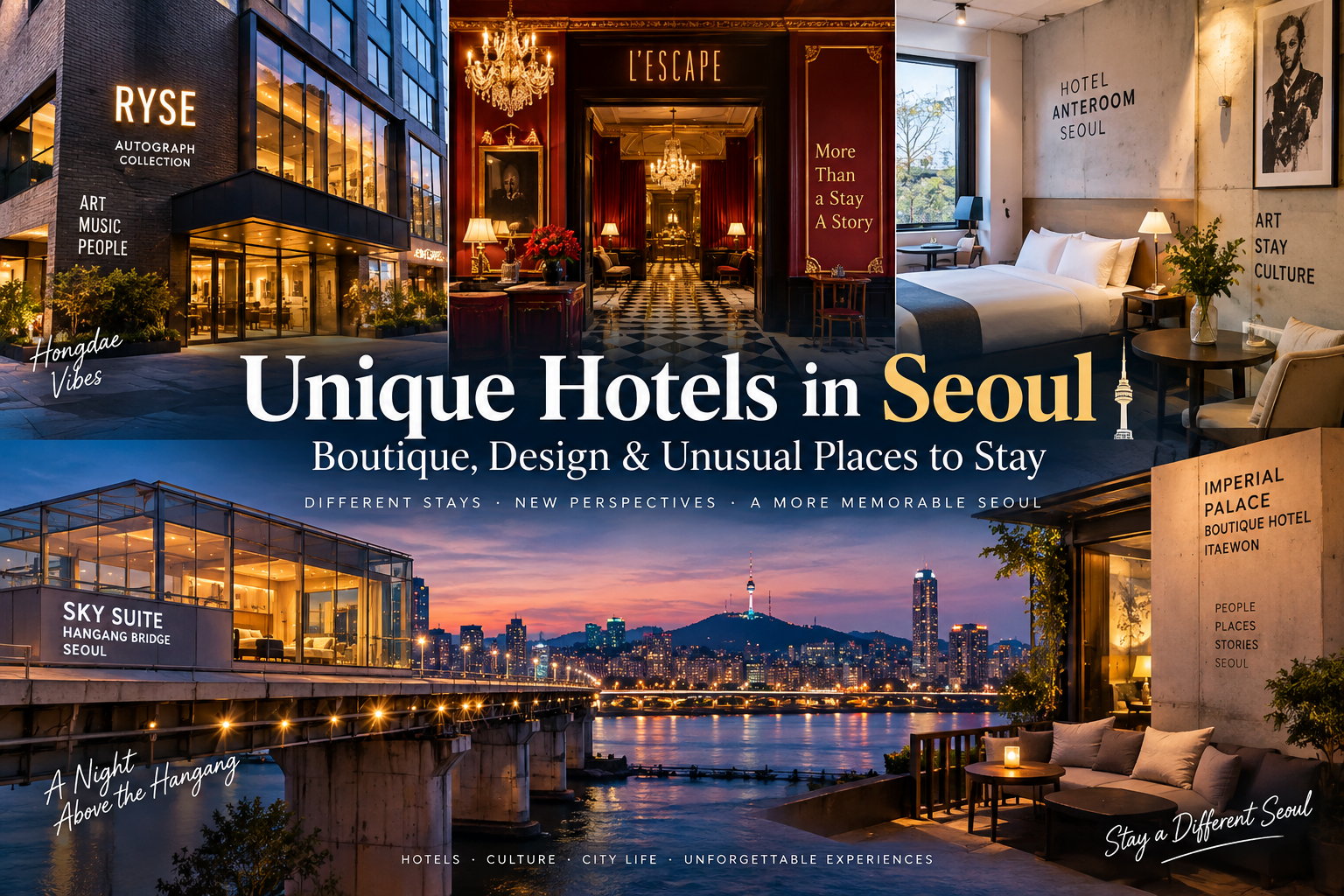
  • Unique Hotels in Seoul: Boutique, Design and Unusual Places to Stay

    Unique Hotels in Seoul: Boutique, Design and Unusual Places to Stay

    Seoul has no shortage of excellent hotels, but sometimes travelers want something more memorable than a standard room.

    Perhaps you want to stay in the middle of Hongdae’s creative culture, sleep inside a dramatic Paris-inspired hotel, discover art inside your accommodation, experience Itaewon’s international atmosphere, or even spend a night above the Hangang River.

    These unique hotels and accommodations show very different sides of Seoul.

    If you have already experienced a traditional hanok or a classic five-star hotel, these distinctive stays offer another way to make your accommodation part of the journey.

    1. RYSE, Autograph Collection – Creative Energy in Hongdae

    RYSE, Autograph Collection is located in Hongdae, one of Seoul’s best-known neighborhoods for music, art, fashion and youth culture.

    Rather than feeling like a conventional business hotel, RYSE emphasizes contemporary design and the creative character of its neighborhood. Its location is especially convenient for travelers who want cafés, restaurants, shopping and nightlife within walking distance.

    Hongik University Station also provides convenient access to other parts of Seoul and the airport railroad.

    Address: 130 Yanghwa-ro, Mapo-gu, Seoul 04038, South Korea
    Telephone: +82-2-330-7700

    Best for: Younger travelers, couples, design lovers and visitors interested in Hongdae culture.

    Nearby attractions: Hongdae, Yeonnam-dong, Gyeongui Line Forest Park and Mangwon.

    Why Stay Here?

    RYSE is particularly appealing when you want your hotel to reflect the neighborhood outside it.

    Instead of traveling across Seoul every evening for entertainment, guests can step outside and immediately experience one of the city’s most energetic districts.

    2. L’Escape, a Luxury Collection Hotel, Seoul Myeongdong – Dramatic European-Inspired Design

    L’Escape offers one of the most theatrical hotel experiences in central Seoul.

    The property combines luxury accommodation with elaborate interiors inspired by European aesthetics, creating an atmosphere very different from the minimalist style common in many modern hotels.

    Its location in Jung-gu is another advantage. Travelers can easily explore Myeongdong, Namdaemun Market and central Seoul while staying in a hotel with a strong visual identity.

    Address: 67 Toegye-ro, Jung-gu, Seoul 04529, South Korea
    Telephone: +82-2-317-4000

    Best for: Couples, luxury travelers, design lovers and special occasions.

    Nearby attractions: Myeongdong, Namdaemun Market, Namsan and Seoul Station.

    Why Stay Here?

    L’Escape works particularly well for travelers who see the hotel itself as part of their Seoul experience.

    The contrast is also interesting: outside is the fast-moving center of Seoul, while inside the atmosphere is deliberately dramatic and immersive.

    3. Hotel Anteroom Seoul – Art and Local Culture in Gangnam

    Hotel Anteroom Seoul approaches the boutique-hotel idea through art, design and local culture.

    Located near Garosu-gil and Sinsa, the hotel describes itself as working with creators connected to Seoul’s local culture and lifestyle. It also incorporates cultural spaces, including Gallery 9.5.

    This makes Anteroom particularly interesting for visitors who prefer smaller, creative hotels over large international properties.

    Address: 153 Dosan-daero, Gangnam-gu, Seoul 06037, South Korea
    Telephone: +82-2-542-2300
    Reservation: +82-2-542-2391

    Best for: Art lovers, solo travelers, couples and visitors interested in contemporary Seoul.

    Nearby attractions: Garosu-gil, Sinsa-dong, Apgujeong and Gangnam.

    Why Stay Here?

    The attraction is not simply the room.

    Anteroom connects accommodation with art and neighborhood culture, which makes it a good choice for travelers interested in discovering Seoul beyond its most famous landmarks.

    4. Imperial Palace Boutique Hotel Itaewon – Colorful Seoul in Itaewon

    Imperial Palace Boutique Hotel offers another distinctive Seoul experience, this time in Itaewon.

    The hotel is positioned between Itaewon Station and Hangangjin Station, placing guests close to Itaewon, Hannam-dong, Gyeongridan-gil and Haebangchon. Its rooms include different styles and concepts rather than presenting one uniform design throughout the property.

    The neighborhood itself is part of the appeal. Itaewon has long been one of Seoul’s most internationally influenced areas, with restaurants, bars and cultural influences from around the world.

    Address: 221 Itaewon-ro, Yongsan-gu, Seoul 04349, South Korea
    Telephone: +82-2-3702-8000

    Best for: International travelers, couples, nightlife visitors and travelers interested in Itaewon and Hannam-dong.

    Nearby attractions: Itaewon, Hannam-dong, Leeum Museum of Art, Gyeongridan-gil and Namsan.

    Why Stay Here?

    This hotel works well for travelers who want a colorful boutique atmosphere combined with one of Seoul’s most diverse neighborhoods.

    5. Sky Suite Hangang Bridge, Seoul – Sleep Above the Hangang River

    This may be one of the most unusual places to stay in Seoul.

    Sky Suite Hangang Bridge, Seoul is not a typical hotel building. The accommodation was created by transforming a former bridge observation café into a single guest suite above the Hangang River.

    The space measures approximately 144 square meters and contains just one guest room, with a maximum occupancy of four people. Large windows provide panoramic views toward the river, Nodeul Island and Yeouido.

    Address: 3F, 495 Yangnyeong-ro, Yongsan-gu, Seoul, South Korea
    Telephone / Inquiries: +82-2-792-8810

    Best for: Couples, special occasions, photographers and travelers looking for a truly unusual Seoul stay.

    Nearby attractions: Hangang River, Nodeul Island, Yongsan and Yeouido.

    Why Stay Here?

    The answer is simple: the location.

    Instead of merely seeing the Hangang River from a hotel tower, guests actually spend the night in a special accommodation space built into Hangang Bridge.

    According to the Seoul Metropolitan Government, Sky Suite operates year-round and can accommodate up to four guests.

    For travelers searching for an experience that feels uniquely connected to Seoul, this is difficult to replicate elsewhere.

    Which Unique Seoul Hotel Should You Choose?

    The best choice depends on the Seoul experience you want.

    Choose RYSE if you want Hongdae’s creative energy right outside your door.

    Choose L’Escape if dramatic interiors and a romantic atmosphere are part of the attraction.

    Choose Hotel Anteroom Seoul if contemporary art, design and local culture appeal to you.

    Choose Imperial Palace Boutique Hotel Itaewon if you want to experience Itaewon and Seoul’s international side.

    And choose Sky Suite Hangang Bridge if the accommodation itself is meant to become one of the highlights of your trip.

    Boutique Hotel vs. 5-Star Hotel vs. Hanok Stay

    Seoul now offers very different styles of accommodation.

    A five-star hotel is usually the best choice for travelers prioritizing extensive facilities, luxury service and convenience.

    A hanok stay allows accommodation to become part of a traditional Korean cultural experience.

    A boutique or design hotel can provide something else: personality.

    These properties often reflect their neighborhoods more strongly, making them particularly attractive for travelers returning to Seoul or visitors looking for something beyond conventional sightseeing.

    Try Different Stays During One Seoul Trip

    Travelers staying in Seoul for a week or longer do not necessarily need to choose only one type of accommodation.

    For example, you could spend several nights near Seoul’s historic center, move to a hanok for a traditional experience, and finish the trip at a design hotel in Hongdae or Gangnam.

    Another option is to save an unusual accommodation such as Sky Suite for one special night.

    Changing hotels requires a little extra planning, but it can allow travelers to experience several very different sides of the city.

    Which Neighborhood Is Best?

    Hongdae is ideal for music, cafés, nightlife and younger creative culture.

    Myeongdong and central Seoul work well for first-time sightseeing, shopping and transportation.

    Sinsa and Gangnam appeal to travelers interested in contemporary fashion, cafés, design and modern city life.

    Itaewon and Hannam-dong provide an international atmosphere along with restaurants, nightlife, galleries and easy access to Namsan.

    Yongsan and the Hangang River are worth considering when river scenery or access to central Seoul is a priority.

    In a city as large as Seoul, choosing the right neighborhood can be just as important as choosing the hotel itself.

    Before You Book

    Unique hotels can have very different room types, policies and facilities.

    Always check the hotel’s official information before booking, especially if a particular room design, view or facility is important to you.

    For unusual properties such as Sky Suite, availability may be much more limited than at a conventional hotel because the property has only one guest room.

    Room rates can also change according to dates, seasons, weekends, events and promotions, so check current pricing directly when planning your trip.

    Final Thoughts

    Accommodation does not have to be simply somewhere to sleep.

    In Seoul, your hotel can introduce you to Hongdae’s creative culture, the contemporary design of Gangnam, Itaewon’s international character or the scenery of the Hangang River.

    After experiencing Seoul’s five-star hotels and traditional hanok stays, boutique and unusual accommodation adds another layer to the city.

    Sometimes the most memorable part of a journey begins after you return to your hotel.


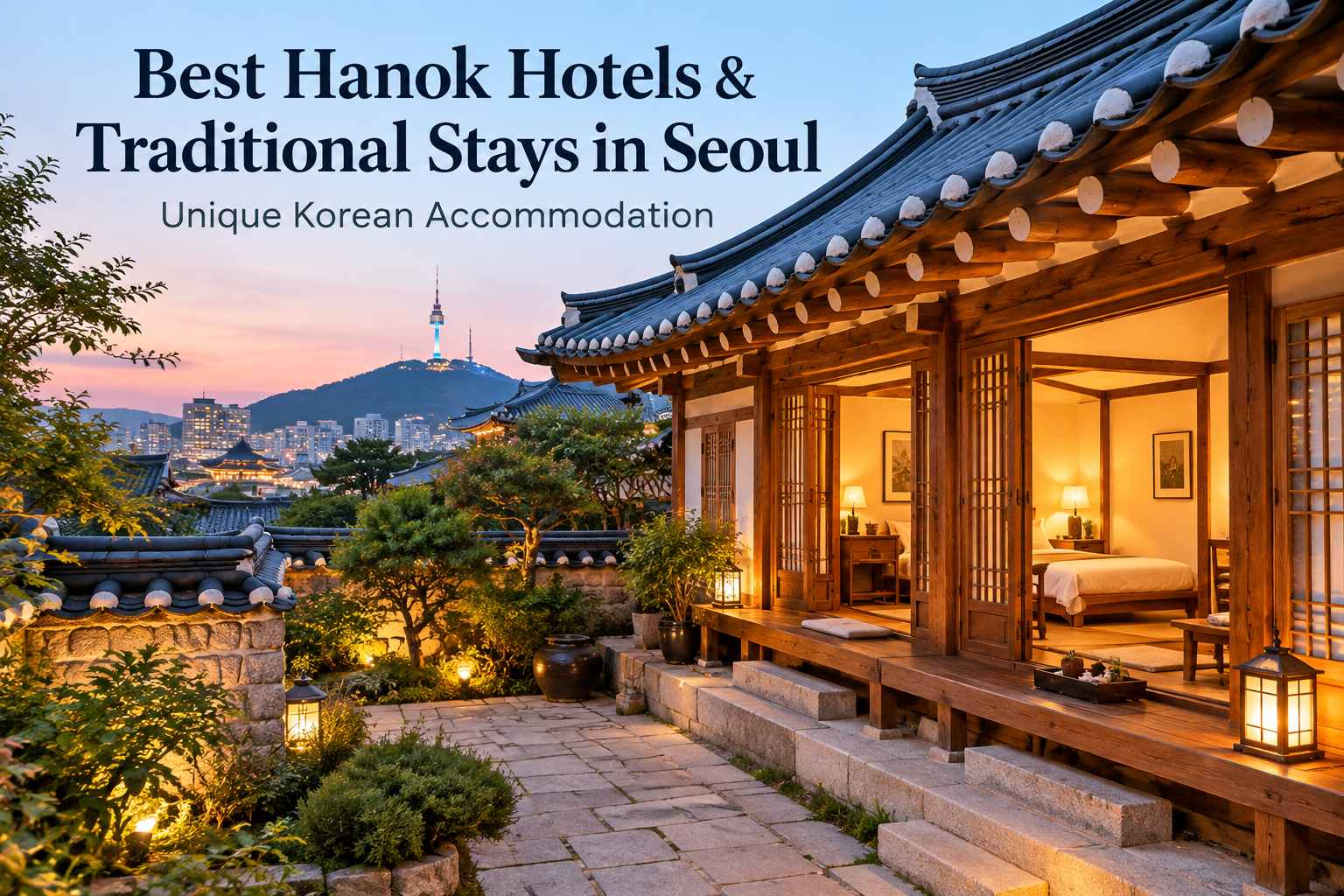
  • Best Hanok Hotels and Traditional Stays in Seoul: Unique Korean Accommodation

    Best Hanok Hotels and Traditional Stays in Seoul: Unique Korean Accommodation

    Seoul is famous for its modern skyline, busy shopping districts and contemporary hotels, but travelers can also spend the night in a completely different side of the city: a traditional Korean hanok.

    A hanok stay offers more than a place to sleep. Wooden beams, tiled roofs, peaceful courtyards and traditional neighborhoods can turn accommodation itself into part of your Korean travel experience.

    Many of Seoul’s hanok stays are concentrated around Bukchon, Seochon and Jongno, close to royal palaces and some of the city’s most historic streets. Seoul also has traditional-style accommodation outside the busiest tourist areas, giving visitors several ways to experience Korean architecture.

    Here are some traditional hanok stays to consider in Seoul.

    1. Rakkojae Seoul – A Classic Luxury Hanok Experience

    Rakkojae Seoul Main Hanok is one of the best-known traditional accommodation experiences in Seoul.

    Located in the historic Bukchon area, Rakkojae offers travelers the opportunity to stay inside a traditional Korean setting while remaining close to major attractions in central Seoul.

    The atmosphere is very different from a conventional luxury hotel. Traditional architecture, wooden interiors and a quiet courtyard help create the feeling of stepping away from modern Seoul for a while.

    Its location is especially attractive for visitors who want to explore Bukchon, Changdeokgung Palace, Insadong and other historic neighborhoods.

    Address: 218 Gahoe-dong, Jongno-gu, Seoul, South Korea
    Telephone: +82-2-742-3410

    Best for: Couples, cultural travelers and visitors looking for a premium traditional Korean experience.

    Nearby attractions: Bukchon Hanok Village, Changdeokgung Palace, Insadong and Jongno.

    2. THE CHAE – A Private Premium Hanok Stay

    THE CHAE Premium Hanok Stay offers another style of hanok experience: a more private and contemporary interpretation of traditional Korean accommodation.

    Its location near the historic palace district makes it attractive for travelers who want privacy while staying close to some of Seoul’s most important cultural attractions.

    This type of accommodation is particularly interesting for couples, families or small groups who prefer the feeling of having a traditional space to themselves rather than staying in a conventional hotel.

    Address: 56-3 Hyoja-ro 9-gil, Jongno-gu, Seoul, South Korea
    Telephone: +82-1544-1431

    Best for: Couples, families, small groups and travelers looking for a private premium stay.

    Nearby attractions: Gyeongbokgung Palace, Seochon, Tongin Market and Gwanghwamun.

    3. Nostalgia Hanok Hotel – Traditional Seoul with a Boutique Feel

    노스텔지어 한옥호텔 (Nostalgia Hanok Hotel) is located in Jongno, close to the traditional neighborhoods that make northern Seoul especially appealing to first-time visitors.

    Its setting makes it possible to combine a distinctive accommodation experience with days spent exploring palaces, hanok streets, galleries and cafés.

    Address: 1 Bukchon-ro 8-gil, Jongno-gu, Seoul, South Korea
    Telephone: +82-2-3673-3666

    Best for: Couples and travelers who want a boutique-style stay near Bukchon.

    Nearby attractions: Bukchon Hanok Village, Gyeongbokgung Palace, Changdeokgung Palace and Samcheong-dong.

    4. Bukchonmaru Hanok Guesthouse – Stay Near Changdeokgung

    Bukchonmaru Hanok Guesthouse is another option for travelers who want to stay in the historic heart of Seoul.

    The surrounding area is particularly rewarding on foot. Traditional streets, palaces, small cafés and cultural attractions can all become part of the experience.

    Compared with Seoul’s large luxury hotels, a guesthouse-style hanok stay can also feel more intimate and personal.

    Address: 152 Changdeokgung-gil, Jongno-gu, Seoul, South Korea
    Telephone: +82-10-3253-8751

    Best for: Independent travelers and visitors who want an intimate traditional stay.

    Nearby attractions: Changdeokgung Palace, Bukchon Hanok Village and Jongmyo Shrine.

    5. Dajayon Hanok Stay – A Traditional Stay in Jongno

    다자연 한옥스테이 is listed among Seoul’s hanok accommodations and provides another alternative for travelers who want to stay in Jongno.

    Its central location makes it convenient for exploring Seoul’s royal palaces and traditional neighborhoods while experiencing a smaller-scale accommodation style.

    Address: 81-3 Yulgok-ro 10-gil, Jongno-gu, Seoul, South Korea
    Telephone: +82-10-7131-9685

    Best for: Independent travelers and visitors interested in Seoul’s historic neighborhoods.

    Nearby attractions: Changdeokgung Palace, Jongmyo Shrine, Ikseon-dong and Insadong.

    6. STAY256 Hanok Guesthouse – Close to the Palace District

    STAY256 한옥 게스트하우스 is situated in Jongno, making it another useful base for travelers who want to spend much of their trip around Seoul’s historic center.

    Staying in this part of the city means that palaces, traditional neighborhoods and many cultural attractions can be reached without crossing the entire capital.

    Address: 104-10 Palpan-dong, Jongno-gu, Seoul, South Korea
    Telephone: +82-10-3300-0256

    Best for: Travelers who prioritize sightseeing and a traditional neighborhood atmosphere.

    Nearby attractions: Gyeongbokgung Palace, Bukchon, Samcheong-dong and the National Folk Museum of Korea.

    7. Adam Hanok – A Quiet Seochon Alternative

    아담한옥 is located in the Seochon area west of Gyeongbokgung Palace.

    Seochon has a different atmosphere from Bukchon. Its narrow streets combine older homes with independent cafés, restaurants, galleries and small shops.

    For travelers who want to experience a more residential side of historic Seoul, staying around Seochon can be particularly enjoyable.

    Address: 21 Pilundae-ro 6-gil, Jongno-gu, Seoul, South Korea
    Telephone: +82-1670-4948

    Best for: Couples and independent travelers who prefer a quieter neighborhood.

    Nearby attractions: Gyeongbokgung Palace, Seochon, Tongin Market and Inwangsan Mountain.

    What Is It Like to Stay in a Hanok?

    A hanok stay can be quite different from staying in a conventional hotel.

    Traditional Korean houses were designed around natural materials, courtyards and seasonal living. Some accommodations preserve traditional sleeping arrangements, while others combine hanok architecture with modern beds, bathrooms and contemporary conveniences.

    That difference is part of the experience.

    Travelers should therefore check room descriptions carefully before booking. If sleeping on a traditional floor mattress is important to you—or if you specifically require a Western-style bed—confirm the room arrangement in advance.

    Bukchon or Seochon: Which Area Is Better?

    For first-time visitors, Bukchon is an excellent choice if your priority is being surrounded by famous historic attractions.

    Bukchon sits between Gyeongbokgung and Changdeokgung and is close to Samcheong-dong and Insadong. It is one of the most recognizable traditional neighborhoods in Seoul.

    Seochon, on the western side of Gyeongbokgung, tends to offer a slightly different atmosphere. Travelers can explore neighborhood cafés, Tongin Market, small galleries and streets that mix traditional and contemporary Seoul.

    Neither is necessarily better. They simply offer different versions of historic Seoul.

    Hanok Stay vs. 5-Star Hotel in Seoul

    Choosing between a hanok and a five-star hotel depends on what you want from your trip.

    A luxury hotel usually provides extensive facilities, larger rooms, restaurants, fitness centers and standardized services.

    A hanok stay offers something different: atmosphere, architecture and a closer connection with traditional Korean living.

    One interesting option for a longer Seoul trip is to experience both.

    You might spend the first few nights in a centrally located luxury hotel and then stay one or two nights in a hanok around Bukchon or Seochon.

    That way, accommodation becomes another part of discovering Seoul.

    Who Should Choose a Hanok Stay?

    A hanok stay can be particularly memorable for couples, photographers, architecture lovers, cultural travelers and anyone visiting Korea for the first time.

    Families may also enjoy the experience, but room configurations vary considerably between properties. Travelers with mobility concerns should check accessibility carefully because historic buildings can have steps, thresholds and layouts that differ from modern hotels.

    Before You Book a Hanok in Seoul

    Hanok accommodations are often much smaller than conventional hotels, which means popular properties may have limited availability.

    Before booking, check the property’s current room information, cancellation policy, check-in procedures and luggage arrangements.

    Also confirm whether the room includes a private bathroom and whether it uses a Western-style bed or traditional Korean bedding.

    Because accommodation details and contact information can change, travelers should reconfirm the latest information directly with the property before arrival.

    Final Thoughts

    A night in a Seoul hanok can become one of the most memorable parts of a trip to Korea.

    During the day, you can walk through royal palaces, traditional markets and historic neighborhoods. At night, instead of returning to an ordinary hotel room, you can continue the cultural experience inside a traditional Korean space.

    For travelers who want Seoul to feel like more than sightseeing, a hanok stay offers something a modern hotel simply cannot reproduce.

    Sometimes where you sleep becomes part of the journey itself.


  • Best 5-Star Hotels in Seoul: Luxury Stays, Locations and Contact Information

    Best 5-Star Hotels in Seoul: Luxury Stays, Locations and Contact Information

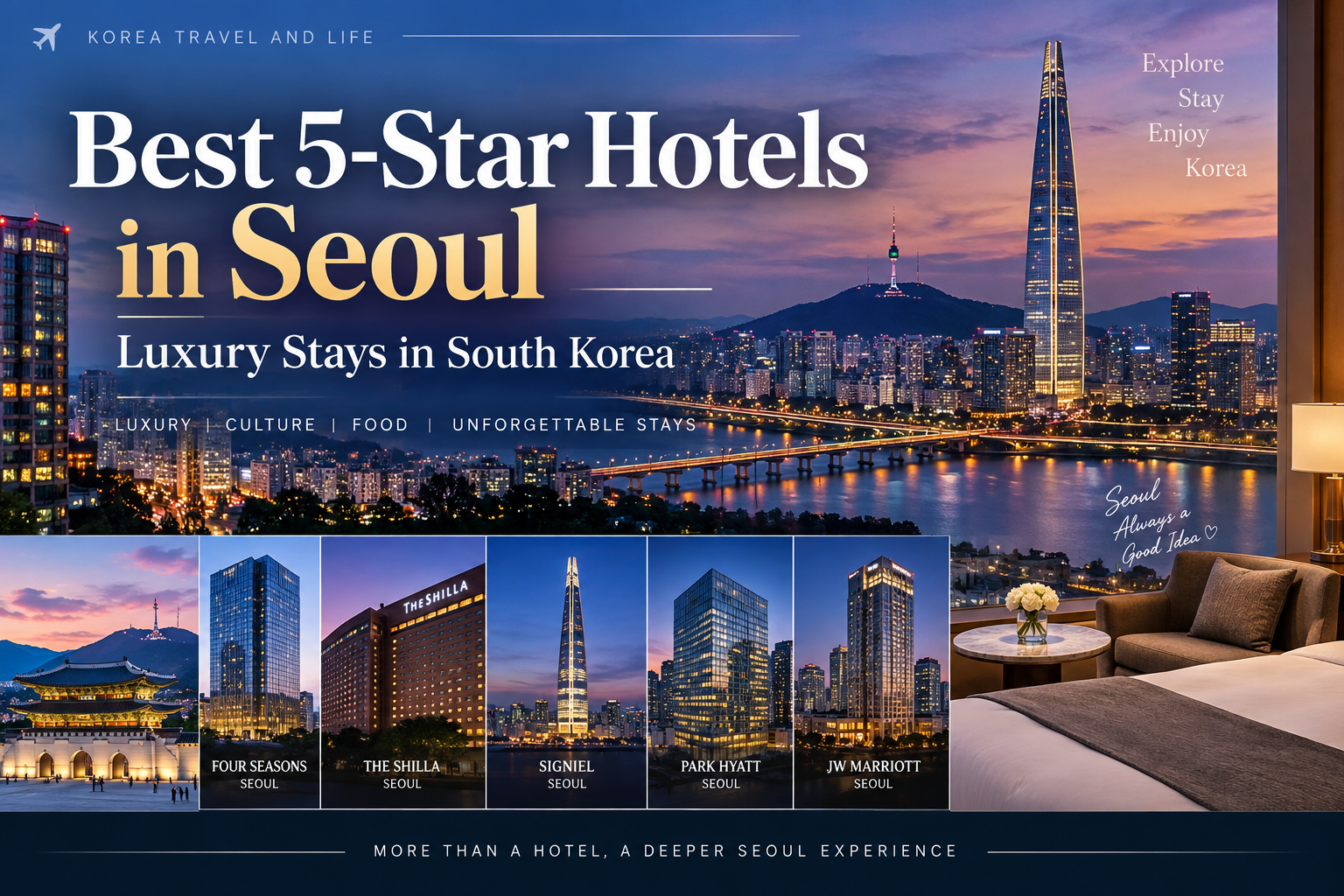
    Seoul’s best 5-star hotels are spread across very different areas, from central Seoul and Myeongdong to Gangnam, Jamsil and the Han River. The best choice depends on whether you prioritize sightseeing, shopping, business access, river views, or a quieter luxury stay.

    But choosing the right luxury hotel in Seoul is not simply about finding the most expensive room. Location can completely change your travel experience. Staying near Gwanghwamun makes it easy to explore historic Seoul, while a hotel in Gangnam places you closer to shopping, business districts and modern city life. Jamsil, meanwhile, offers spectacular skyline views and easy access to attractions around Lotte World.

    Here are some of the best five-star hotels in Seoul, along with their locations, contact information and the type of traveler each hotel may suit best.

    Best 5-Star Hotels in Seoul: Quick Picks

    Hotel Best for Area
    Four Seasons Hotel Seoul Historic Seoul & sightseeing Gwanghwamun
    The Shilla Seoul Classic Korean luxury Jung-gu / Namsan
    SIGNIEL SEOUL Skyline views & special occasions Jamsil
    Park Hyatt Seoul Business & Gangnam Gangnam
    JW Marriott Hotel Seoul Shopping & transportation Seocho
    Josun Palace Contemporary luxury Gangnam
    Grand Hyatt Seoul Namsan & city views Yongsan / Namsan
    The Westin Josun Seoul Myeongdong & central Seoul Myeongdong

    1. Four Seasons Hotel Seoul – Best for Historic Seoul

    Located near Gwanghwamun in central Seoul, Four Seasons Hotel Seoul is one of the most convenient luxury hotels for travelers who want to combine five-star comfort with sightseeing.

    The hotel is close to Gyeongbokgung Palace, Gwanghwamun Square and the historic neighborhoods of Jongno. Bukchon Hanok Village and Insadong are also within easy reach.

    The hotel offers spacious rooms, an urban spa, indoor pools, fitness facilities and several restaurants and bars. Its central location makes it especially attractive for first-time visitors who want to explore Seoul’s historic center without spending too much time traveling across the city.

    Address: 97 Saemunan-ro, Jongno-gu, Seoul 03183, South Korea
    Telephone: +82-2-6388-5000

    Best for: First-time visitors, couples and travelers interested in Korean history and culture.

    Nearby attractions: Gyeongbokgung Palace, Gwanghwamun Square, Bukchon Hanok Village, Insadong and Cheonggyecheon Stream.

    2. The Shilla Seoul – Best for Classic Korean Luxury

    THE SHILLA Seoul is one of Seoul’s best-known luxury hotels and has long been associated with refined Korean hospitality.

    Located near Namsan, the hotel provides a quieter atmosphere than many properties located directly in Seoul’s busiest commercial districts. It can be a particularly appealing choice for travelers who want luxury while remaining within easy reach of central Seoul.

    The Shilla combines modern hotel facilities with elements of Korean tradition, making it an interesting option for international travelers looking for a distinctly Korean luxury experience.

    Address: 249 Dongho-ro, Jung-gu, Seoul 04605, South Korea
    Telephone: +82-2-2233-3131

    Best for: Couples, luxury travelers and visitors looking for elegant Korean hospitality.

    Nearby attractions: Namsan, Dongdaemun, Jangchung-dong and central Seoul.

    3. SIGNIEL SEOUL – Best for Spectacular Skyline Views

    SIGNIEL SEOUL is located inside the iconic Lotte World Tower in Jamsil.

    For many travelers, the biggest attraction here is the view. Staying high above Seoul provides a very different experience from hotels in the historic center of the city.

    Jamsil is also a convenient location for travelers interested in Lotte World, shopping, entertainment and walks around Seokchon Lake.

    Address: 300 Olympic-ro, Songpa-gu, Seoul 05551, South Korea
    Telephone: +82-2-3213-1000

    Best for: Couples, special occasions, luxury travelers and visitors who love panoramic city views.

    Nearby attractions: Lotte World Tower, Lotte World, Seokchon Lake and Jamsil.

    4. Park Hyatt Seoul – Best for Gangnam

    Park Hyatt Seoul is located on Teheran-ro in Gangnam, directly in one of Seoul’s major business and commercial districts.

    Its location makes it particularly convenient for business travelers as well as visitors who prefer the modern side of Seoul. COEX, shopping facilities and numerous restaurants and cafés are nearby.

    The hotel is known for contemporary design and rooms with large windows overlooking the city.

    Address: 606 Teheran-ro, Gangnam-gu, Seoul 06174, South Korea
    Telephone: +82-2-2016-1234

    Best for: Business travelers, couples and visitors who want to stay in Gangnam.

    Nearby attractions: COEX, Starfield Library, Bongeunsa Temple and Gangnam.

    5. JW Marriott Hotel Seoul – Best for Shopping and Transportation

    JW Marriott Hotel Seoul is located in Seocho-gu near Express Bus Terminal, making it particularly convenient for travelers who want both luxury accommodation and excellent transportation connections.

    The surrounding area is also a major shopping destination, with large retail complexes nearby. Its location south of the Han River provides relatively easy access to Gangnam and other parts of southern Seoul.

    Address: 176 Sinbanpo-ro, Seocho-gu, Seoul, South Korea
    Telephone: +82-2-6282-6262

    Best for: Shoppers, business travelers and visitors planning trips outside Seoul.

    Nearby attractions: Central City, Express Bus Terminal, Banpo Hangang Park and Gangnam.

    6. Josun Palace, a Luxury Collection Hotel, Seoul Gangnam – Best for Contemporary Luxury

    Josun Palace, a Luxury Collection Hotel, Seoul Gangnam brings a glamorous contemporary luxury experience to Gangnam.

    Located on Teheran-ro, the hotel works well for travelers who want to experience Seoul’s modern business, dining and shopping districts while staying in an upscale environment.

    Its Gangnam location also makes it a useful base for exploring southern Seoul.

    Address: 231 Teheran-ro, Gangnam-gu, Seoul, South Korea
    Telephone: +82-2-727-7200

    Best for: Luxury travelers, couples and visitors who prefer contemporary design.

    Nearby attractions: Gangnam, Seolleung, COEX and the Teheran-ro business district.

    7. Grand Hyatt Seoul – Best for Namsan and City Views

    Grand Hyatt Seoul occupies a distinctive location on Namsan, between central Seoul and Itaewon.

    Its elevated setting provides a sense of separation from the dense streets below while still keeping guests relatively close to major neighborhoods.

    The location can work particularly well for travelers who want to explore Itaewon, Namsan and central Seoul during the same trip.

    Address: 322 Sowol-ro, Yongsan-gu, Seoul, South Korea
    Telephone: +82-2-797-1234

    Best for: Couples, families and travelers looking for a resort-like atmosphere within Seoul.

    Nearby attractions: Namsan, N Seoul Tower, Itaewon and Hannam-dong.

    8. The Westin Josun Seoul – Best for Myeongdong and Central Seoul

    The Westin Josun Seoul has one of the most convenient locations for travelers who want to stay in the heart of Seoul.

    The hotel is near Myeongdong, Seoul City Hall and major shopping areas, while historic attractions in Jongno are also relatively easy to reach.

    For first-time visitors who want shopping, sightseeing and public transportation close together, this part of Seoul can be particularly practical.

    Address: 106 Sogong-ro, Jung-gu, Seoul, South Korea
    Telephone: +82-2-771-0500

    Best for: First-time visitors, shoppers and travelers who value a central location.

    Nearby attractions: Myeongdong, Deoksugung Palace, Seoul City Hall and Namdaemun Market.

    Which Area of Seoul Should You Choose?

    Choosing the hotel is important, but choosing the right neighborhood may be even more important.

    Travelers interested in palaces, traditional neighborhoods and Korean history should consider Jongno or Gwanghwamun. Four Seasons Hotel Seoul is particularly well positioned for this type of trip.

    For shopping and a highly central location, Myeongdong and Jung-gu are practical choices.

    Travelers interested in modern Seoul, business districts, luxury shopping and contemporary nightlife may prefer Gangnam. Park Hyatt Seoul and Josun Palace are strong options in this area.

    For skyline views and attractions such as Lotte World, consider Jamsil, where SIGNIEL SEOUL is located.

    Visitors looking for Namsan views and convenient access to Itaewon may prefer the area around Namsan and Yongsan.

    Best 5-Star Hotel in Seoul for First-Time Visitors

    For a first visit to Korea, staying in central Seoul is usually the easiest option.

    Gwanghwamun, Jongno and Myeongdong provide convenient access to many of Seoul’s most recognizable attractions, including royal palaces, traditional neighborhoods, markets and shopping streets.

    Travelers who already know Seoul—or who are particularly interested in modern Korean city life—may enjoy staying in Gangnam or Jamsil instead.

    A Luxury Hotel Can Change Your Seoul Experience

    Seoul is enormous, and travelers can easily spend significant time moving between neighborhoods.

    Choosing a hotel close to the attractions you care about can therefore make your trip more relaxing.

    A traveler interested in Korean history may appreciate waking up near Gyeongbokgung Palace. Someone interested in modern Seoul may prefer the skyscrapers and shopping districts of Gangnam. Another traveler may simply want to watch Seoul’s lights from a room high above Jamsil.

    There is no single five-star hotel that is best for everyone. The best choice depends on the kind of Seoul experience you want.

    Before You Book

    Hotel rates in Seoul can change considerably depending on season, room type, weekends, holidays and special events.

    Before booking, check the hotel’s official website for current room availability, policies and rates. Travelers should also confirm check-in requirements and transportation options before arrival.

    Addresses and telephone numbers can occasionally change, so it is a good idea to reconfirm contact information with the hotel before your trip.

    Final Thoughts

    Seoul’s five-star hotels offer much more than luxurious rooms. Their locations can become part of the travel experience itself.

    Stay near Gwanghwamun and historic Seoul is outside your door. Choose Gangnam for a more modern side of the capital. Head to Jamsil for dramatic skyline views, or stay near Namsan for a quieter perspective on the city.

    Whichever area you choose, selecting the right hotel can make exploring Seoul easier, more comfortable and far more memorable.


  • Honam Travel Guide: Best Places to Visit in Southwestern Korea

    Honam Travel Guide: Best Places to Visit in Southwestern Korea

    Discover the Honam Region of Korea

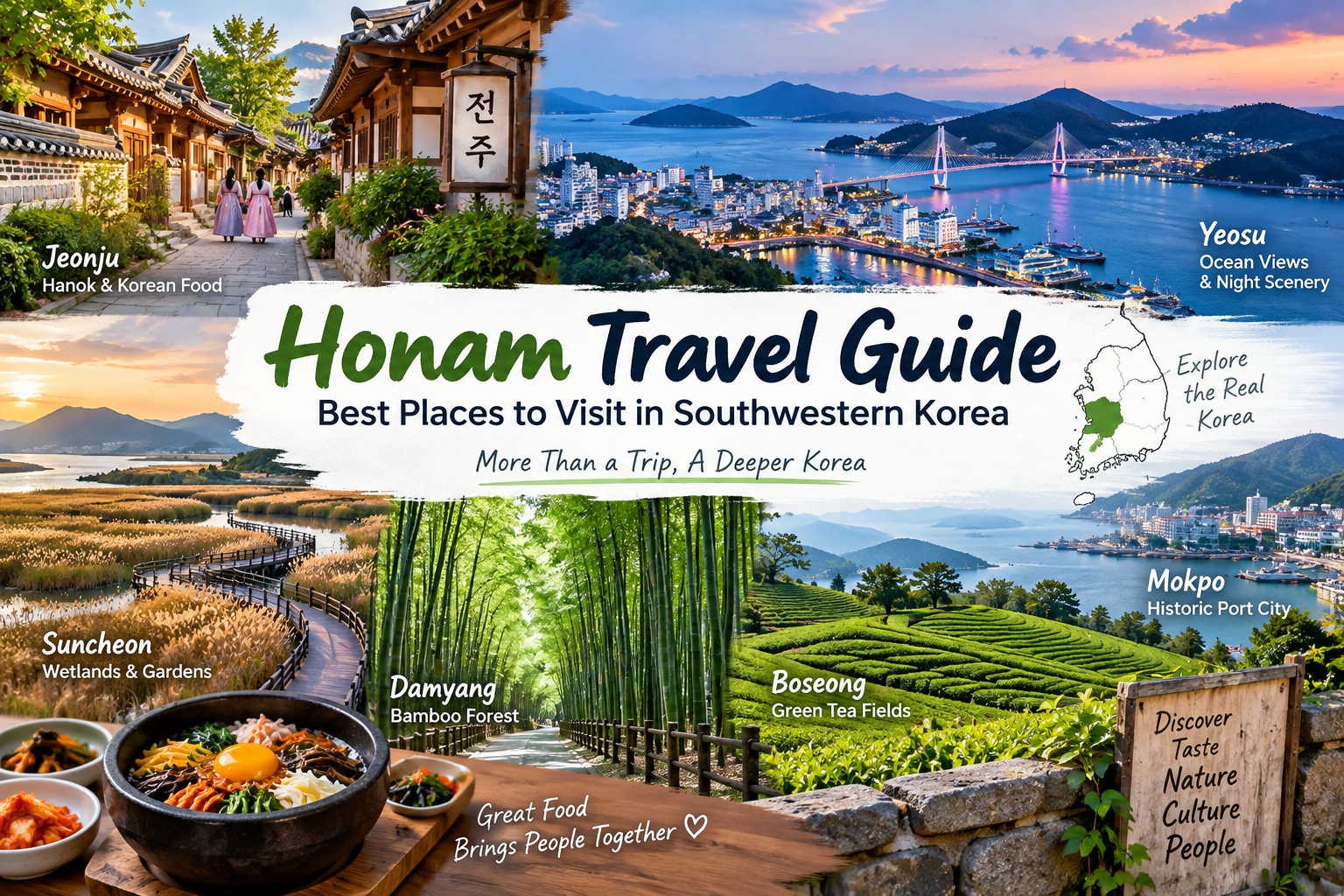
    Honam is the traditional name for the southwestern region of Korea centered on Jeolla, today broadly associated with Jeonbuk State, Jeollanam-do (South Jeolla), and Gwangju. It is a regional and historical term rather than a single modern administrative area.

    For travelers, Honam offers a different side of Korea from Seoul and the better-known southeastern routes. The region is especially famous for its food, but it also includes historic cities, traditional hanok neighborhoods, coastlines, wetlands, islands, mountains, bamboo forests, and distinctive local markets.

    From eating bibimbap in Jeonju to watching the sea in Yeosu, walking through the wetlands of Suncheon, and exploring the historic port city of Mokpo, Honam rewards travelers who venture beyond Korea’s most familiar routes.

    Is Honam the Same as Jeolla?

    Honam and Jeolla refer to closely related parts of southwestern Korea, but the terms are not used in exactly the same way. Jeolla is the historical provincial name that survives today in Jeonbuk State and Jeollanam-do (South Jeolla), while Honam is a broader traditional regional term.

    In modern usage, Honam commonly refers to Jeonbuk, Jeollanam-do, and the metropolitan city of Gwangju. Travelers are therefore more likely to see Jeolla in province names and on maps, while Honam often appears when southwestern Korea is discussed as a broader historical, cultural, or regional area

    1. Jeonju – Hanok, History and Korean Food

    Jeonju is one of the best places to begin a journey through the Honam region.

    The city is famous for Jeonju Hanok Village, an area filled with hundreds of traditional Korean hanok buildings.

    Visitors can walk through narrow streets, see traditional architecture, visit cultural attractions, try Korean snacks, and experience a different atmosphere from modern Korean cities.

    Jeonju is also one of Korea’s most famous food destinations.

    The city is strongly associated with Jeonju bibimbap, but travelers will find many other dishes, traditional sweets, market foods, and local specialties.

    For international visitors interested in both Korean culture and food, Jeonju is an excellent introduction to southwestern Korea.

    2. Gwangju – Culture, Markets and Local Life

    Gwangju is the largest city in the Honam region and an important center of culture and history.

    The city offers museums, cultural spaces, traditional markets, shopping areas, restaurants, and easy access to surrounding destinations.

    Gwangju is also an excellent place to experience Jeolla-do’s reputation for generous and flavorful food.

    Rather than treating the city only as a transportation hub, spend time exploring its neighborhoods and markets.

    Gwangju can provide a more everyday view of urban life in Korea away from the country’s most heavily visited cities.

    3. Yeosu – Ocean Views and Night Scenery

    Yeosu is one of the most attractive coastal cities in southern Korea.

    Surrounded by sea and islands, the city is known for waterfront scenery, seafood, bridges, and beautiful night views.

    Travelers can spend time walking beside the coast, visiting viewpoints, exploring local markets, and enjoying fresh seafood.

    Yeosu becomes especially atmospheric in the evening when lights reflect across the water.

    For travelers who enjoy coastal cities, Yeosu offers a very different experience from Seoul or inland destinations.

    4. Suncheon – Wetlands and Gardens

    Suncheon is one of the best destinations in Korea for travelers interested in nature.

    The area is famous for Suncheon Bay Wetland, an important coastal wetland with reed fields, walking paths, and expansive natural scenery.

    Suncheon also offers gardens and other outdoor attractions that make it a good destination for slower travel.

    The landscape changes with the seasons, creating different experiences throughout the year.

    Suncheon and Yeosu are often easy to combine in the same regional itinerary because they are relatively close to each other.

    5. Mokpo – A Historic Port City

    Located in southwestern Korea, Mokpo has long been connected to the sea.

    The city offers harbor views, local seafood, markets, historic neighborhoods, and access to islands off Korea’s southwest coast.

    Mokpo’s atmosphere feels different from Korea’s largest cities.

    Travelers can explore the waterfront, visit local markets, discover regional dishes, and use the city as a gateway to nearby islands and coastal areas.

    It is a particularly interesting destination for travelers who enjoy port cities and regional food culture.

    6. Damyang – Walk Through a Bamboo Forest

    Damyang is famous for bamboo and is one of the most distinctive nature destinations in the Honam region.

    One of its best-known attractions is Juknokwon Bamboo Garden, where walking paths wind through tall bamboo.

    The cool shade and sound of bamboo moving in the wind create a peaceful atmosphere.

    Damyang is also known for local food and traditional landscapes, making it a good day trip or overnight destination from Gwangju.

    For travelers who want a break from busy cities, Damyang offers a quieter side of Korea.

    7. Boseong – Korea’s Green Tea Country

    Boseong is strongly associated with green tea.

    Its rolling tea fields create one of the most recognizable landscapes in southwestern Korea.

    The scenery is particularly beautiful when the tea plants are green and the hills are covered with carefully arranged rows of leaves.

    Visitors can walk through tea plantation areas and try green tea drinks, desserts, and other local products.

    Boseong is an excellent destination for photography, nature, and travelers interested in Korean tea culture.

    8. Explore the Islands of Southwestern Korea

    The southwest coast of Korea is surrounded by numerous islands.

    Some are connected by bridges, while others require ferry travel.

    Island trips can offer quiet fishing villages, beaches, walking trails, seafood, and landscapes far removed from Korea’s major cities.

    However, island transportation requires more planning.

    Ferry schedules can vary according to destination, season, and weather, so travelers should always check current transportation information before departure.

    For visitors with enough time, exploring an island can become one of the most memorable experiences in Honam.

    9. Experience Jeolla-do’s Famous Food Culture

    Food is one of the strongest reasons to visit Honam.

    Jeolla-do has long been celebrated in Korea for its rich culinary traditions and generous meals.

    A Korean meal in the region may arrive with numerous banchan, or side dishes, surrounding the main dish.

    Jeonju is famous for bibimbap, coastal cities such as Yeosu and Mokpo offer seafood, and smaller towns have their own local specialties.

    The best food experiences are not limited to expensive or famous restaurants.

    Traditional markets, neighborhood restaurants, and family-run establishments can be equally memorable.

    For food-focused travelers, Honam deserves several days of exploration.

    10. Visit Traditional Markets

    Traditional markets provide an excellent introduction to regional food and everyday life.

    Instead of seeing only polished tourist districts, visitors can explore stalls selling vegetables, seafood, meat, snacks, prepared dishes, and local specialties.

    Markets in Jeonju, Gwangju, Yeosu, Mokpo, and other cities offer different experiences depending on the region.

    They are also useful places to discover foods you may never encounter in restaurants aimed primarily at international visitors.

    Bring curiosity and an appetite.

    11. Discover Korea at a Slower Pace

    One of the pleasures of traveling through Honam is that many destinations encourage slower travel.

    Instead of rushing between major landmarks, you can spend an afternoon walking through a bamboo forest, sit beside the sea, explore a traditional market, or enjoy a long Korean meal with many side dishes.

    This slower rhythm can be especially refreshing after several busy days in Seoul.

    Honam gives travelers room to experience regional Korea rather than simply checking attractions off a list.

    How Many Days Do You Need in Honam?

    Honam covers a large area, so it is better to choose several destinations rather than attempting to see everything at once.

    For a short trip, three or four days can provide a good introduction.

    For example:

    Day 1: Seoul → Jeonju → Jeonju Hanok Village → local food

    Day 2: Jeonju → Gwangju → traditional market → local restaurants

    Day 3: Gwangju → Suncheon → Suncheon Bay → Yeosu

    Day 4: Yeosu → coastal sightseeing → seafood → return or continue traveling

    With five to seven days, travelers can add Damyang, Boseong, Mokpo, or an island destination.

    Food lovers may want even more time.

    How to Get to Honam from Seoul

    The best transportation option depends on which part of Honam you plan to visit.

    Seoul to Jeonju

    Jeonju is accessible from the Seoul area by train and express or intercity bus.

    Rail travel is a convenient option for many visitors, while buses can also be useful depending on your departure point and accommodation.

    Once you arrive in Jeonju, local buses and taxis can be used to reach the main sightseeing areas.

    Seoul to Gwangju

    High-speed rail makes Gwangju relatively easy to reach from the Seoul area.

    Travelers can use KTX services to Gwangju-Songjeong Station and continue by subway, bus, or taxi.

    Gwangju can also work as a transportation base for exploring nearby destinations such as Damyang.

    Seoul to Yeosu

    Yeosu can be reached from the Seoul area by rail, including KTX services.

    Because the journey is longer than a trip to Jeonju, staying overnight is generally more practical than treating Yeosu as a day trip from Seoul.

    Seoul to Mokpo

    Mokpo is connected to the Seoul area by high-speed rail.

    From Mokpo, travelers can explore the city or continue toward islands and other parts of the southwest coast.

    Always check current train and bus schedules before traveling because departure times and services can change.

    Getting Around the Honam Region

    Major cities are connected by trains and intercity buses, but transportation becomes less frequent in rural and coastal areas.

    Within cities such as Gwangju, Jeonju, Yeosu, and Mokpo, local buses and taxis can cover many tourist destinations.

    For places such as Boseong, smaller towns, remote coastal areas, and multi-stop regional trips, renting a car can provide more flexibility.

    If you plan to visit islands, check ferry schedules carefully and allow extra time for weather-related changes.

    When Is the Best Time to Visit Honam?

    Honam can be visited throughout the year.

    Spring is pleasant for outdoor sightseeing and seasonal flowers.

    Summer brings green landscapes and coastal travel, although the weather can be hot, humid, and rainy.

    Autumn offers comfortable temperatures and is an excellent season for markets, cities, gardens, and countryside trips.

    Winter is quieter and can be a good time for food-focused travel, although some outdoor destinations may feel less active.

    For a balanced combination of food, cities, and nature, spring and autumn are particularly attractive.

    Honam for First-Time Visitors

    If this is your first trip to southwestern Korea, Jeonju is one of the easiest places to start.

    It combines traditional architecture, Korean food, cultural experiences, and relatively convenient transportation from the Seoul area.

    Travelers with more time can continue to Gwangju and then choose between several directions.

    Go south toward Suncheon and Yeosu for wetlands and coastal scenery.

    Travel toward Damyang for bamboo forests.

    Continue southwest toward Mokpo for port-city culture and island connections.

    The best itinerary depends on whether you are most interested in food, nature, history, or the coast.

    Where Korean Food Becomes Part of the Journey

    Travelers often arrive in Honam because they have heard about Jeolla-do’s food.

    But food here is more than a list of famous dishes.

    Traditional markets, regional ingredients, seafood, banchan, family-run restaurants, and local specialties all reveal something about the communities that created them.

    A meal can become part of the sightseeing itself.

    That is why Honam will also be an important region for travelers who want to explore Korea through its restaurants and local food.

    Why Honam Belongs on Your Korea Itinerary

    Honam offers something that can be difficult to experience on a short trip limited to Korea’s largest cities.

    It combines traditional culture, regional cuisine, wetlands, bamboo forests, tea fields, port cities, islands, and coastal landscapes.

    You can begin with a bowl of bibimbap in Jeonju, walk beneath bamboo in Damyang, explore wetlands in Suncheon, eat seafood beside the sea in Yeosu or Mokpo, and discover places that many first-time international visitors never reach.

    For travelers willing to go beyond the familiar route, southwestern Korea offers a deeper and more flavorful journey.

    Come for the food, but leave time for everything else.


  • Yeongnam Travel Guide: Best Places to Visit in Southeastern Korea

    Yeongnam Travel Guide: Best Places to Visit in Southeastern Korea

    Discover the Yeongnam Region of Korea

    Yeongnam is the historical region of southeastern South Korea that includes Busan, Daegu, Ulsan, Gyeongsangbuk-do (North Gyeongsang), and Gyeongsangnam-do (South Gyeongsang). The name traditionally refers to the area south of the major mountain passes that separated this part of Korea from the central regions.

    For travelers, Yeongnam is useful as a way to understand southeastern Korea rather than as a single modern administrative region. It brings together some of the country’s most important historic cities, coastal destinations, traditional villages, mountains, temples, and regional food cultures.

    Many first-time visitors focus on Seoul, but traveling through Yeongnam reveals a very different side of Korea—from Busan’s coastline and Gyeongju’s historic sites to Daegu, Ulsan, and the smaller cities and countryside of the two Gyeongsang provinces.

    For travelers, Yeongnam offers remarkable variety. You can explore ancient royal tombs in Gyeongju, walk through a traditional village in Andong, enjoy seafood beside the ocean in Busan, discover colorful coastal towns, and travel through some of Korea’s most beautiful countryside.

    If you want to explore beyond Seoul, Yeongnam deserves a place on your Korea itinerary.

    Is Yeongnam the Same as Gyeongsang?

    Yeongnam and Gyeongsang refer to almost the same part of southeastern Korea, but the terms are used differently. Gyeongsang is the historical provincial name that survives today in Gyeongsangbuk-do (North Gyeongsang) and Gyeongsangnam-do (South Gyeongsang), while Yeongnam is a broader regional term.

    In modern usage, Yeongnam generally includes the two Gyeongsang provinces as well as the major metropolitan cities of Busan, Daegu, and Ulsan. Travelers are therefore more likely to see Gyeongsang on maps and administrative information, while Yeongnam may appear when Korea is discussed in broader regional, historical, or cultural terms.

    1. Busan – Korea’s Dynamic Coastal City

    Busan is South Korea’s second-largest city and one of the best places to begin exploring the Yeongnam region.

    The city combines beaches, mountains, seafood markets, temples, modern neighborhoods, and dramatic coastal scenery.

    Haeundae Beach is one of Korea’s best-known beaches, while Gwangalli Beach offers impressive views of Gwangan Bridge, especially after sunset.

    Travelers can also explore Jagalchi Market, walk through the colorful streets of Gamcheon Culture Village, or visit Haedong Yonggungsa, a Buddhist temple overlooking the sea.

    Busan is large enough to deserve several days on its own, but it also works as an excellent transportation base for exploring southeastern Korea.

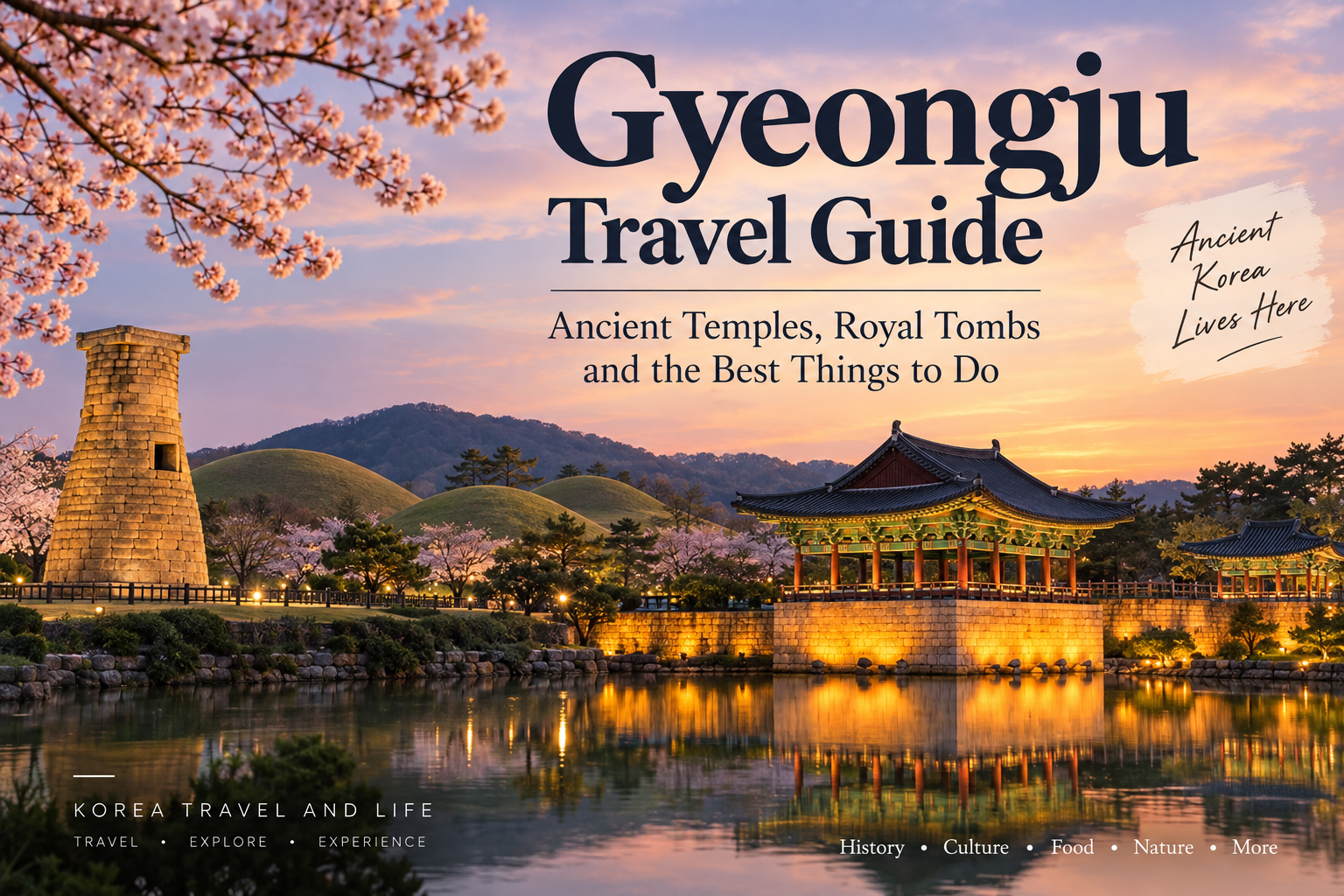
    2. Gyeongju – Travel Back to Ancient Korea

    Gyeongju is one of Korea’s most important historical destinations.

    Once the capital of the ancient Silla Kingdom, the city is filled with royal tombs, archaeological sites, temples, and traditional architecture.

    Daereungwon Tomb Complex, Cheomseongdae, Donggung Palace and Wolji Pond, Bulguksa Temple, and Seokguram Grotto are among its best-known attractions.

    Hwangridan-gil adds a modern element with cafés, restaurants, shops, and renovated traditional buildings.

    Gyeongju is particularly rewarding for travelers who want to understand Korea’s history rather than only see its modern cities.

    3. Daegu – Markets, Food and Urban Culture

    Daegu is one of Korea’s largest cities but receives fewer international tourists than Seoul or Busan.

    That can be part of its appeal.

    The city offers traditional markets, shopping streets, local food, cafés, and easy access to nearby mountains.

    Seomun Market is one of Daegu’s best-known traditional markets and a good place to experience the city’s everyday food culture.

    Travelers interested in city views and outdoor activities can also explore areas around Apsan.

    Daegu provides a useful contrast to Korea’s more heavily visited tourist destinations.

    4. Andong – Traditional Korean Culture

    Andong is one of the best destinations in the region for travelers interested in traditional Korean culture.

    Its most famous attraction is Hahoe Folk Village, where traditional houses and village landscapes preserve an important part of Korea’s cultural heritage.

    The village is associated with Confucian traditions and offers visitors a glimpse of how communities were organized in earlier periods of Korean history.

    Andong is also known for regional foods, including Andong jjimdak, a savory braised chicken dish.

    For travelers interested in history, architecture, and traditional lifestyles, Andong can be one of the most memorable stops in Yeongnam.

    5. Tongyeong – Islands and Coastal Views

    Tongyeong is a beautiful southern coastal city surrounded by islands.

    The city is known for harbor scenery, seafood, hillside neighborhoods, and views across the sea.

    One of the pleasures of visiting Tongyeong is simply exploring the waterfront and experiencing the slower atmosphere of a smaller Korean coastal city.

    The surrounding islands also make the area attractive for travelers who enjoy ferries, walking, and ocean scenery.

    Tongyeong is particularly appealing when combined with other destinations along Korea’s southern coast.

    6. Geoje – Beaches, Islands and Scenic Drives

    Geoje is one of Korea’s largest islands and is connected to the mainland by bridges.

    The island is known for coastal roads, beaches, cliffs, forests, and views of smaller islands scattered across the sea.

    Travelers often combine Geoje with nearby Tongyeong.

    A car can be particularly useful here because attractions are spread around the island.

    Geoje is a good choice for travelers who want to leave the large cities behind and spend more time near nature and the coast.

    7. Ulsan – Industry Meets Nature

    Ulsan is widely known as one of Korea’s major industrial cities, but travelers may be surprised by the amount of nature surrounding it.

    The city and nearby areas offer coastal landscapes, parks, walking trails, and access to mountainous scenery.

    Ulsan can also serve as a useful stop between Busan and Gyeongju.

    It is not usually the first destination international visitors think of when planning a Korea trip, which makes it an interesting option for travelers looking for places beyond the most familiar tourist routes.

    8. Pohang – The East Coast and Local Seafood

    Pohang lies on Korea’s eastern coast and is closely associated with the sea.

    The city is known for seafood, coastal scenery, and sunrise views.

    Travelers interested in local food can explore markets and seafood restaurants, while coastal areas provide a different experience from inland destinations such as Daegu and Andong.

    Pohang can also be combined with Gyeongju because the two cities are relatively close.

    9. Jinju – History Along the Namgang River

    Jinju is known for its riverside scenery and historic fortress.

    Jinjuseong Fortress stands beside the Namgang River and is closely connected with important events in Korean history.

    The riverside setting makes the area pleasant for walking, especially when combined with the city’s historic attractions.

    Jinju offers another opportunity to explore a Korean regional city that many international visitors overlook.

    10. Explore Yeongnam Through Its Food

    One of the best reasons to travel through Yeongnam is food.

    Different cities have developed their own specialties, giving travelers an opportunity to experience Korean cuisine beyond the dishes most commonly found in Seoul.

    Busan is famous for seafood and dishes such as dwaeji gukbap, a pork-and-rice soup.

    Andong is known for Andong jjimdak.

    Coastal cities such as Tongyeong and Pohang offer fresh seafood, while traditional markets throughout the region provide snacks, noodles, local dishes, and seasonal ingredients.

    Instead of searching only for famous restaurants, make time for traditional markets and neighborhood restaurants as well.

    They can provide some of the most memorable meals of a trip.

    11. Traditional Markets Are Worth Exploring

    Traditional markets are an important part of regional travel in Korea.

    They offer much more than food.

    Visitors can see local ingredients, household goods, prepared dishes, snacks, and everyday interactions that are difficult to experience in major tourist attractions.

    Markets in Busan, Daegu, Andong, Pohang, and other Yeongnam cities each have their own atmosphere.

    For travelers interested in Korean food culture, a market visit should be part of the itinerary.

    How Many Days Do You Need in Yeongnam?

    Yeongnam is far too large to explore properly in one short trip.

    If you have only three or four days, it is better to focus on two destinations rather than trying to see the entire region.

    For example:

    Day 1: Seoul → Gyeongju → Daereungwon → Cheomseongdae → Hwangridan-gil

    Day 2: Bulguksa Temple → Busan → Gwangalli Beach

    Day 3: Busan → Jagalchi Market → Gamcheon Culture Village → Haeundae

    Day 4: Additional Busan sightseeing or a day trip nearby

    With five to seven days, you can add destinations such as Daegu, Andong, Tongyeong, Geoje, or Pohang.

    Travelers who enjoy slower travel could easily spend more than a week exploring southeastern Korea.

    How to Get to Yeongnam from Seoul

    Because Yeongnam covers a large part of southeastern Korea, the best transportation method depends on your destination.

    Seoul to Busan

    High-speed rail is one of the easiest ways to travel between Seoul and Busan.

    KTX trains connect the two cities, making Busan one of the most convenient long-distance destinations to reach from the capital.

    Express buses are another option, although the journey generally takes longer.

    Seoul to Daegu

    Daegu is also easily accessible by high-speed rail.

    Travelers can use KTX services to reach the Daegu area and continue by local transportation.

    This makes Daegu practical both as a destination and as part of a longer regional itinerary.

    Seoul to Gyeongju

    Travelers heading to Gyeongju can use high-speed rail to reach Gyeongju Station and then continue into the main sightseeing areas by local bus or taxi.

    Because Gyeongju and Busan are relatively close, the two destinations work particularly well together.

    Seoul to Andong

    Rail and intercity bus services provide options for reaching Andong from the Seoul area.

    The best choice depends on your departure point, schedule, and accommodation location.

    Always check current schedules before traveling.

    Getting Around the Yeongnam Region

    Public transportation works well between many major cities.

    KTX and other rail services are useful for destinations such as Busan, Daegu, and Gyeongju, while intercity buses connect many regional cities and towns.

    Within cities, local buses, subways where available, and taxis can usually handle most sightseeing.

    However, a rental car becomes more useful if you want to explore Geoje, smaller coastal towns, rural areas, mountains, or several destinations in one trip.

    Do not assume transportation will be as frequent as it is in central Seoul. Check routes and return times in advance when visiting smaller destinations.

    When Is the Best Time to Visit Yeongnam?

    Yeongnam can be visited throughout the year, but each season creates a different experience.

    Spring is excellent for walking, sightseeing, and seasonal flowers.

    Summer is popular for Busan and the southern coast, although the weather can be hot and humid.

    Autumn offers comfortable temperatures and beautiful foliage, making it one of the best seasons for regional travel.

    Winter is colder but generally quieter at many outdoor attractions.

    If your trip focuses on beaches and islands, summer may be appealing. For city exploration, historic sites, and walking, spring and autumn are particularly comfortable.

    Yeongnam for First-Time Visitors

    For a first trip to Yeongnam, combining Gyeongju and Busan is one of the easiest introductions to the region.

    The two destinations offer completely different experiences while being relatively close to each other.

    Gyeongju provides ancient history, temples, royal tombs, and traditional scenery.

    Busan provides beaches, seafood, modern city life, markets, and coastal views.

    Travelers with additional time can then choose a third destination based on their interests: Andong for traditional culture, Daegu for urban life and markets, or Tongyeong and Geoje for coastal scenery.

    From Ancient Kingdoms to Coastal Cities

    The appeal of Yeongnam lies in its variety.

    Few regions allow travelers to move so easily between ancient royal capitals, traditional villages, major modern cities, mountain landscapes, fishing communities, and island scenery.

    The region also tells an important part of Korea’s story.

    Gyeongju reveals the legacy of the Silla Kingdom, Andong preserves aspects of Confucian culture, and cities such as Busan, Daegu, and Ulsan show different sides of modern Korea.

    Why Yeongnam Belongs on Your Korea Itinerary

    Traveling beyond Seoul allows visitors to understand how diverse South Korea really is.

    In Yeongnam, you can begin the morning beside an ancient royal tomb, eat a regional specialty at a traditional market, and finish the day watching the sea from a coastal city.

    Whether you are interested in Korean history, local food, beaches, traditional culture, hiking, or simply discovering places that receive fewer international visitors, southeastern Korea has something to offer.

    Start with Gyeongju and Busan, then travel deeper.

    Yeongnam may become one of the most memorable parts of your journey through Korea.


  • Must-Try Korean Snacks and Drinks You Can Find in Korea

    Must-Try Korean Snacks and Drinks You Can Find in Korea

    Korean Snacks and Drinks Are Part of the Travel Experience

    Traveling in South Korea is not only about visiting palaces, temples, mountains, and famous restaurants.

    Sometimes, one of the most memorable parts of a trip can be something as simple as walking into a Korean convenience store and discovering a snack or drink you have never tried before.

    Convenience stores and supermarkets across Korea are filled with colorful drinks, sweet snacks, ice cream, chips, and traditional beverages.

    Many Korean products are now available overseas, but trying them in Korea is still part of the fun.

    Here are some Korean snacks and drinks worth looking for during your trip.

    1. Banana Flavored Milk

    One of the most iconic drinks to try in Korea is Binggrae Banana Flavored Milk.

    First released in 1974, the drink is easily recognized by its small round container inspired by the shape of a traditional Korean moon jar.

    The flavor is sweet, creamy, and gently fruity rather than tasting strongly of fresh banana.

    It has remained a familiar part of Korean convenience-store culture for decades and is easy to find in convenience stores and supermarkets.

    For many international visitors, grabbing a bottle of banana milk from a convenience store has become a small but memorable Korean travel experience.

    Where to find it: Convenience stores and supermarkets
    What it tastes like: Sweet, creamy, and mildly banana-flavored
    Try it if: You enjoy flavored milk or want to try one of Korea’s best-known convenience-store drinks

    2. Melona

    Melona is a popular Korean ice cream bar known for its soft, creamy texture and melon flavor.

    The original melon variety is the classic choice, although other flavors are also available.

    Its refreshing sweetness makes it particularly enjoyable during Korea’s hot and humid summers.

    You can usually find Melona in convenience-store and supermarket freezers.

    Where to find it: Convenience stores and supermarkets
    What it tastes like: Creamy, sweet, and fruity
    Try it if: You want a simple Korean ice cream treat

    3. Pepero

    Pepero is one of Korea’s most recognizable snacks.

    These thin biscuit sticks are coated with chocolate or other flavors and come in many varieties.

    Depending on the store, you may find almond, cookies-and-cream, white chocolate, and other versions alongside the classic chocolate variety.

    Pepero is easy to carry, making it a convenient snack for train rides or sightseeing days.

    It can also be an inexpensive edible souvenir to take home.

    Where to find it: Convenience stores, supermarkets, and souvenir shops
    What it tastes like: Crisp biscuit with a sweet coating
    Try it if: You want an easy snack to share with friends

    4. Choco Pie

    Choco Pie is another classic Korean snack familiar to generations of Koreans.

    It consists of two small cake layers with a soft marshmallow filling, covered in chocolate.

    The combination of cake, chocolate, and marshmallow makes it richer than an ordinary cookie.

    Boxes containing individually wrapped Choco Pies are widely available in supermarkets, which also makes them convenient for sharing.

    Where to find it: Supermarkets and convenience stores
    What it tastes like: Soft, chocolatey, and sweet
    Try it if: You like chocolate-covered cakes

    5. Honey Butter Chips

    Honey Butter Chips became a famous snack trend in Korea thanks to their unusual combination of salty potato chips, honey-like sweetness, and buttery flavor.

    Instead of being purely salty, the chips combine sweet and savory flavors.

    That combination can be surprising at first, but it is exactly what makes the snack interesting.

    Where to find it: Convenience stores and supermarkets
    What it tastes like: Sweet, buttery, salty, and crispy
    Try it if: You enjoy sweet-and-savory snacks

    6. Saewookkang – Korean Shrimp Crackers

    Saewookkang is a long-running Korean savory snack made with shrimp flavor.

    The crackers are light and crunchy with a salty seafood taste.

    They are quite different from Korea’s sweeter snacks and are a good option if chocolate and candy are not your preference.

    Where to find it: Convenience stores and supermarkets
    What it tastes like: Salty, savory, crunchy, and slightly seafood-flavored
    Try it if: You prefer savory snacks

    7. Sikhye

    If you want to try something more traditional, look for sikhye.

    Sikhye is a traditional Korean sweet rice drink made using malt and rice.

    It has a gentle sweetness and may contain small grains of cooked rice at the bottom of the container.

    Traditionally served as a dessert drink, sikhye offers a very different experience from soda or flavored milk.

    Packaged versions are widely available, making it easy for travelers to try.

    Where to find it: Convenience stores, supermarkets, traditional markets, and some Korean restaurants
    What it tastes like: Lightly sweet with a distinctive grain flavor
    Try it if: You want to experience a traditional Korean beverage

    8. Korean Yogurt Drinks

    Small bottles of yogurt drinks are another familiar sight in Korea.

    They are usually sweet, slightly tangy, and easy to drink in just a few sips.

    Korean supermarkets and convenience stores now carry many different yogurt and fermented-milk products, so visitors can choose from both classic and modern varieties.

    Where to find them: Convenience stores and supermarkets
    What they taste like: Sweet, creamy, and slightly tangy
    Try them if: You enjoy yogurt or fermented milk drinks

    9. Korean Seaweed Snacks

    Seaweed is an important part of Korean food culture, but it is not only served with meals.

    Small packages of roasted seaweed can also be eaten as a light snack.

    They are usually thin, crispy, salty, and sometimes seasoned with sesame oil.

    Because the packages are lightweight, seaweed snacks can also be an easy food souvenir.

    Where to find them: Supermarkets, convenience stores, and traditional markets
    What they taste like: Salty, crispy, and savory
    Try them if: You prefer lighter savory snacks

    10. Korean Convenience Store Ramen

    Instant ramen is much more than emergency food in Korea.

    Convenience stores often allow customers to prepare cup noodles using hot water, and some locations provide seating where you can eat immediately.

    There are countless varieties, ranging from mild soups to extremely spicy noodles.

    For travelers, choosing an unfamiliar ramen package and eating it at a Korean convenience store can be an inexpensive and enjoyable experience.

    If you are sensitive to spicy food, check the package carefully before choosing.

    Where to find it: Almost every convenience store and supermarket
    What it tastes like: Depends on the variety, from mild and savory to extremely spicy
    Try it if: You want an inexpensive Korean convenience-store meal

    A Fun Combination: Banana Milk and Coffee

    Banana milk can also be used in a more unusual way.

    Some convenience-store visitors combine banana-flavored milk with an espresso shot over ice to create a simple banana milk latte.

    The result combines the sweetness of banana milk with the bitterness and aroma of coffee.

    It is an easy example of how Korean convenience stores can become part of the travel experience rather than simply places to buy necessities.

    Where Can Travelers Buy Korean Snacks?

    The easiest places to find these foods are convenience stores and supermarkets.

    Convenience stores are particularly useful because they are common throughout Korean cities and often stay open late.

    Larger supermarkets offer a wider selection and can be better if you want to buy several packages to take home.

    Traditional markets are also worth exploring because they offer snacks and drinks alongside freshly prepared Korean food.

    Are Korean Snacks Good Souvenirs?

    Yes, especially packaged products that do not require refrigeration.

    Pepero, Choco Pie, seaweed, crackers, and other individually packaged snacks are easy to share with family, friends, or coworkers.

    However, travelers should check customs and food-import regulations in their destination country before packing food products.

    Fresh, refrigerated, meat-based, and agricultural products may be subject to restrictions.

    Don’t Skip the Korean Convenience Store

    A convenience store may not appear on a traditional sightseeing itinerary, but it can be one of the easiest places to experience everyday Korean food culture.

    Buy a banana-flavored milk, choose an unfamiliar bag of chips, try a Korean ice cream, or prepare a cup of ramen.

    You do not need an expensive restaurant reservation to discover something new.

    Sometimes, a few thousand won and a curious appetite are enough.

    A Small Taste of Everyday Korea

    Korean food is much bigger than barbecue, bibimbap, and kimchi.

    Snacks and drinks reveal another side of the country’s food culture — casual, playful, convenient, and constantly changing.

    From the nostalgic taste of banana-flavored milk to traditional sikhye and convenience-store ramen, these simple foods can become surprisingly memorable parts of a trip.

    So when you travel around Korea, leave a little room in your itinerary — and your stomach — for the convenience store.

    You might discover your favorite Korean snack in the most unexpected place.


  • Gangwon-do Travel Guide: Mountains, Beaches and the Best Places to Visit

    Gangwon-do Travel Guide: Mountains, Beaches and the Best Places to Visit

    Why Visit Gangwon-do?

    Gangwon-do is one of the best destinations in South Korea for travelers who love mountains, beaches, outdoor activities, and beautiful scenery.

    Located east of Seoul, the region stretches from the rugged mountains of the Korean Peninsula to the East Sea. This unique geography makes Gangwon-do a destination that can feel completely different depending on where you travel.

    You can hike through dramatic mountain landscapes in Seoraksan National Park, relax on the beaches of Gangneung and Sokcho, explore traditional markets, enjoy local food, and visit peaceful mountain temples.

    For travelers who want to experience Korea beyond Seoul, Gangwon-do is an excellent place to start.

    1. Explore Seoraksan National Park

    Seoraksan National Park is one of Korea’s most famous mountain destinations.

    Located near Sokcho, the park is known for dramatic granite peaks, forest trails, waterfalls, temples, and spectacular seasonal scenery.

    Autumn is particularly famous, when the mountains turn shades of red, orange, and gold. However, Seoraksan is worth visiting throughout much of the year.

    Visitors can choose from relatively easy walks as well as more challenging hiking routes.

    Even if you are not an experienced hiker, the scenery around the main entrance area makes Seoraksan one of the highlights of a trip to Gangwon-do.

    2. Visit Sokcho

    Sokcho is a coastal city and one of the most convenient bases for visiting Seoraksan.

    The city combines mountains, beaches, markets, and seafood, making it a great destination for travelers who want both nature and local culture.

    One of the most popular places to visit is Sokcho Tourist & Fishery Market, where you can try Korean street food and regional specialties.

    Sokcho Beach is another popular stop, especially during the warmer months.

    Because Seoraksan is nearby, many travelers combine Sokcho and the national park in the same trip.

    3. Discover Gangneung

    Gangneung is one of the most popular coastal destinations on Korea’s east coast.

    The city is known for beaches, coffee culture, historic sites, and relaxed seaside scenery.

    Gyeongpo Beach is one of the best-known beaches in the area, while nearby Anmok Beach has become famous for its seaside cafés and Coffee Street.

    Sitting in a café overlooking the East Sea is one of the simplest and most enjoyable experiences in Gangneung.

    The city is also relatively easy to reach from Seoul by train, making it a popular weekend destination.

    4. Walk Along Anmok Coffee Street

    Coffee has become an important part of Gangneung’s modern travel culture.

    Along Anmok Beach, numerous cafés face the sea, creating an area commonly known as Anmok Coffee Street.

    Visitors can order coffee, find a seat overlooking the water, and spend a relaxing afternoon watching the waves.

    The combination of coffee and ocean views has made this area particularly popular with couples, friends, and independent travelers.

    5. Visit Chuncheon

    Chuncheon is another easy destination to reach from Seoul and is especially famous for food and lakeside scenery.

    The city is surrounded by mountains, rivers, and lakes, giving it a very different atmosphere from central Seoul.

    Chuncheon is particularly associated with dakgalbi, a spicy stir-fried chicken dish that has become famous throughout Korea.

    Visitors can explore the city, walk around its lakeside areas, and enjoy a meal of authentic Chuncheon-style dakgalbi.

    6. Experience Pyeongchang

    Pyeongchang became internationally famous as the host of the 2018 Winter Olympics.

    Surrounded by mountains, the area is one of Korea’s major destinations for winter sports.

    During winter, travelers visit the region for skiing and snowboarding. Outside the winter season, the surrounding countryside offers green landscapes, mountain scenery, and a quieter rural atmosphere.

    Pyeongchang can be a good choice for travelers looking for a different side of Gangwon-do away from the busy coastal cities.

    7. Enjoy Gangwon-do’s Beaches

    Gangwon-do has some of South Korea’s most attractive beaches.

    The coastline along the East Sea is known for clear water, long sandy beaches, and beautiful sunrise views.

    Popular coastal areas include Gangneung, Sokcho, Yangyang, Donghae, and Samcheok.

    Summer attracts the largest number of beach visitors, but the coast is also beautiful during spring and autumn.

    Winter has its own appeal, when the beaches become quieter and travelers can enjoy peaceful ocean views.

    8. Discover Yangyang

    Yangyang has developed a reputation as one of Korea’s popular surfing destinations.

    The area attracts younger travelers with beaches, surf shops, cafés, and a relaxed coastal atmosphere.

    Surfing lessons are available for beginners, while experienced surfers can enjoy several beaches along the coast.

    Yangyang can also be combined with Sokcho because the two areas are relatively close to each other.

    9. Explore Traditional Markets and Local Food

    Food is an important part of traveling through Gangwon-do.

    Each city has its own specialties and traditional markets.

    In Sokcho, travelers can explore the local market and try seafood and popular snacks. Chuncheon is famous for dakgalbi and makguksu, a buckwheat noodle dish.

    Gangneung also offers seafood, local dishes, and cafés that have become part of the city’s travel culture.

    Instead of eating only at familiar chains, visiting a traditional market can be one of the best ways to experience everyday Korean food culture.

    10. Visit Mountain Temples

    Gangwon-do’s mountains are home to several beautiful Buddhist temples.

    These temples often combine Korean religious history with impressive natural surroundings.

    A temple visit can provide a quieter experience compared with busy beaches or city attractions.

    For international visitors, it can also be an opportunity to see traditional Korean architecture and learn more about the role Buddhism has played in Korean history and culture.

    How Many Days Do You Need in Gangwon-do?

    Because Gangwon-do covers a large area, the ideal length of a trip depends on where you want to go.

    For a short trip, two days can work well for one main destination such as Gangneung or Sokcho.

    A three- or four-day trip gives you more time to combine destinations.

    For example:

    Day 1: Seoul → Sokcho → Sokcho Market → Sokcho Beach

    Day 2: Seoraksan National Park → local food → Sokcho

    Day 3: Sokcho → Gangneung → Gyeongpo Beach → Anmok Coffee Street

    Travelers with more time can add Pyeongchang, Yangyang, or other parts of the region.

    How to Get to Gangwon-do from Seoul

    There is no single best way to travel from Seoul to Gangwon-do because Gangwon-do is a large region. The best transportation option depends on your destination.

    Seoul to Gangneung

    Train travel is one of the most convenient choices for Gangneung.

    KTX services connect the Seoul area with Gangneung, making the city an accessible destination for travelers who do not want to rent a car.

    Once you arrive in Gangneung, you can use local buses or taxis to reach beaches and other attractions.

    Seoul to Chuncheon

    Chuncheon is conveniently connected with the Seoul metropolitan area.

    The ITX-Cheongchun train is a popular option for reaching Chuncheon and is useful for travelers planning a day trip or short overnight visit.

    Seoul to Sokcho

    Sokcho does not currently have the same direct KTX access as Gangneung, so intercity or express buses are commonly used by travelers coming from Seoul.

    Buses connect Seoul with Sokcho, and after arriving in the city, local transportation can be used to reach Seoraksan and other attractions.

    Seoul to Pyeongchang

    Rail travel is also useful for reaching parts of Pyeongchang.

    Depending on your exact destination, KTX services and local transportation can be combined to reach the region.

    Always check current train and bus schedules before traveling because routes and departure times can change.

    Should You Rent a Car?

    A rental car is not essential if you are visiting only one major destination such as Gangneung, Chuncheon, or Sokcho.

    However, driving becomes much more useful if you want to explore several beaches, mountain areas, smaller towns, or attractions that are far from train and bus stations.

    For a multi-day road trip through Gangwon-do, renting a car can provide significantly more flexibility.

    Getting Around Gangwon-do

    Transportation within Gangwon-do requires more planning than transportation within Seoul.

    Major cities have local buses and taxis, but attractions can be spread far apart.

    If you are staying mainly in one city, public transportation and taxis may be enough.

    If your itinerary includes several cities, beaches, mountains, and rural destinations, a rental car may save considerable time.

    Before leaving your accommodation each morning, check the route to your next destination rather than assuming transportation will be as frequent as it is in Seoul.

    When Is the Best Time to Visit Gangwon-do?

    Each season offers a different experience.

    Spring brings mild weather and fresh mountain scenery.

    Summer is popular for beaches, surfing, and coastal trips.

    Autumn is one of the most beautiful seasons, particularly in mountain areas such as Seoraksan.

    Winter attracts visitors for snow, skiing, and winter resorts, especially around Pyeongchang and other mountainous areas.

    The best season depends on whether you prefer hiking, beaches, autumn foliage, or winter sports.

    Gangwon-do for First-Time Visitors

    If this is your first trip to Gangwon-do, avoid trying to see the entire region in one or two days.

    Choose one or two main areas and explore them properly.

    For nature and mountains, consider Sokcho and Seoraksan.

    For beaches and cafés, Gangneung is an excellent choice.

    For an easy trip from Seoul with food and lakeside scenery, Chuncheon works well.

    Travelers interested in winter activities can consider Pyeongchang and the surrounding mountain areas.

    Mountains Meet the East Sea

    One of the most memorable things about Gangwon-do is how quickly the landscape changes.

    You can spend the morning walking through mountain forests and later watch the sun set near the coast.

    Small cities, traditional markets, beaches, cafés, temples, and mountain landscapes give travelers many different ways to experience the region.

    Gangwon-do shows that traveling in South Korea is about much more than exploring its largest cities.

    Why Gangwon-do Belongs on Your Korea Itinerary

    Seoul may introduce you to modern Korea, but Gangwon-do introduces you to another side of the country.

    Here, mountains meet the East Sea, coastal cities develop their own food and café cultures, and outdoor experiences become an important part of the journey.

    Whether you want to hike in Seoraksan, drink coffee beside the sea in Gangneung, eat dakgalbi in Chuncheon, surf in Yangyang, or experience winter in Pyeongchang, Gangwon-do offers experiences that are difficult to find anywhere else in Korea.

    For first-time visitors who want to travel beyond Seoul, Gangwon-do deserves a place on the itinerary.


  • Gyeongju Travel Guide: Ancient Temples, Royal Tombs and the Best Things to Do

    Gyeongju Travel Guide: Ancient Temples, Royal Tombs and the Best Things to Do

    If Seoul represents modern Korea and Busan offers a mix of city life and the sea, Gyeongju tells the story of Korea’s ancient past.

    Located in southeastern South Korea, Gyeongju was the capital of the Silla Kingdom for nearly a thousand years. Today, the city is filled with royal tombs, Buddhist temples, ancient observatories, palace ruins, traditional neighborhoods, and archaeological treasures.

    For travelers interested in Korean history and culture, Gyeongju is one of the most rewarding destinations in the country.

    But Gyeongju is not only about ancient ruins.

    You can walk between enormous royal tombs, explore stylish cafés in renovated traditional buildings, watch a historic palace site glow after sunset, enjoy local specialties, and stay in a hanok-style accommodation.

    This guide introduces the essential places to visit and helps first-time travelers plan a memorable trip to Gyeongju.

    Why Visit Gyeongju?

    Gyeongju is often described as a museum without walls.

    That description makes sense once you begin exploring the city. Historical sites are not confined to a single museum district. They appear throughout the landscape.

    Large grassy burial mounds rise beside city streets. Ancient stone structures stand within walking distance of modern cafés. Buddhist temples sit in the mountains outside the center.

    For centuries, Gyeongju served as the political and cultural center of the Silla Kingdom, which eventually unified much of the Korean Peninsula.

    The legacy of that period remains visible throughout the region.

    Several historic areas and monuments in and around Gyeongju are recognized as UNESCO World Heritage sites, making the city especially important for anyone who wants to understand Korea beyond its modern pop culture and big cities.

    1. Explore Daereungwon Tomb Complex

    One of the best places to begin your Gyeongju trip is Daereungwon Tomb Complex.

    The landscape is immediately distinctive.

    Instead of stone monuments or elaborate mausoleums, you will see large green burial mounds rising gently from the ground.

    These tombs belonged to kings, queens, and members of the Silla elite.

    Walking through Daereungwon feels peaceful, but beneath the landscape lies an extraordinary archaeological history.

    One of the most famous tombs is Cheonmachong, or the Heavenly Horse Tomb.

    Unlike many ancient royal tombs, Cheonmachong can be entered by visitors. Inside, displays help explain how Silla royalty were buried and introduce some of the artifacts discovered during excavation.

    Daereungwon is also conveniently located near several other major attractions, making it an excellent starting point for exploring central Gyeongju on foot.

    2. See Cheomseongdae, Korea’s Ancient Observatory

    A short walk from Daereungwon brings you to Cheomseongdae.

    Built during the Silla period, Cheomseongdae is traditionally described as an astronomical observatory and is one of Gyeongju’s most recognizable landmarks.

    The stone structure is relatively small compared with many famous monuments, but its historical significance is considerable.

    It reflects the scientific and astronomical knowledge associated with the Silla court.

    The surrounding area is spacious and pleasant to explore, especially in spring and autumn when seasonal flowers add color to the landscape.

    Because several major historical sites are located nearby, Cheomseongdae fits naturally into a walking route through central Gyeongju.

    3. Visit Donggung Palace and Wolji Pond at Night

    If you stay overnight in Gyeongju, Donggung Palace and Wolji Pond should be high on your list.

    The site was once part of a royal palace complex during the Silla period.

    Today, reconstructed buildings stand beside a pond and create one of the city’s most atmospheric evening scenes.

    After sunset, the buildings are illuminated and reflected across the water.

    The result is dramatically different from visiting during the daytime.

    For many travelers, this is one of the most memorable sights in Gyeongju.

    Try to arrive around late afternoon if possible. You can explore the site before sunset and then watch the atmosphere change as the lights come on.

    4. Discover Bulguksa Temple

    Outside central Gyeongju, Bulguksa Temple is one of Korea’s most important Buddhist sites.

    Originally established during the Silla period, the temple complex is celebrated for its architecture, stonework, pagodas, and historical importance.

    Walking through Bulguksa offers a different experience from central Gyeongju.

    The royal tombs and palace sites tell the story of Silla’s rulers, while Bulguksa reveals the importance of Buddhism in the kingdom’s culture.

    The temple is especially beautiful when surrounded by spring greenery or autumn foliage.

    Allow enough time to explore slowly rather than treating it as a quick photo stop.

    5. Continue to Seokguram Grotto

    Seokguram Grotto is located on the slopes of Tohamsan Mountain and is closely associated with Bulguksa.

    Inside the grotto is a monumental stone Buddha surrounded by Buddhist figures.

    The site is regarded as one of the great achievements of Silla Buddhist art.

    Bulguksa Temple and Seokguram Grotto are jointly recognized by UNESCO, and travelers often visit them on the same trip.

    Because Seokguram is located higher in the mountains, transportation and timing require a little more planning than sightseeing in central Gyeongju.

    But for travelers interested in Korean Buddhist history and art, it is an important destination.

    6. Walk Along Hwangridan-gil

    Gyeongju is ancient, but it is not frozen in the past.

    Hwangridan-gil shows the city’s more contemporary side.

    The neighborhood has become known for cafés, restaurants, small shops, desserts, boutiques, and renovated traditional-style buildings.

    It is particularly popular with younger Korean travelers.

    What makes the area interesting is the contrast.

    You can spend the morning exploring royal tombs and archaeological sites, then walk into a lively street filled with coffee shops and modern Korean food.

    Hwangridan-gil is also a good place to take a break between historical attractions.

    In future guides on Korea Travel and Life, we will explore Gyeongju’s cafés and restaurants in more detail.

    7. Visit Gyochon Traditional Village

    Gyochon Traditional Village provides another opportunity to experience Gyeongju’s cultural heritage.

    The area contains traditional Korean architecture and is associated with the historic Choi family of Gyeongju.

    Visitors can walk through traditional streets, explore cultural spaces, and experience a quieter atmosphere than the busier commercial areas of the city.

    Gyochon can be combined with nearby historical attractions, making it a useful stop during a walking day in central Gyeongju.

    It also provides a natural introduction to Korea’s hanok architecture and traditional residential culture.

    8. Cross Woljeonggyo Bridge

    Near Gyochon Traditional Village stands Woljeonggyo Bridge.

    The reconstructed wooden bridge has become one of Gyeongju’s most photogenic landmarks.

    It is attractive during the day, but evening illumination creates a particularly impressive view.

    The bridge works well as part of a late-afternoon or evening walking route.

    You can explore Gyochon, walk toward Woljeonggyo, and then continue toward other illuminated historical sites.

    Gyeongju is especially rewarding after dark because several landmarks take on a completely different atmosphere when illuminated.

    9. Visit the Gyeongju National Museum

    Seeing ancient sites is fascinating, but understanding what archaeologists discovered there makes the experience much richer.

    That is why the Gyeongju National Museum is worth including in your itinerary.

    Its collections contain important artifacts connected with the Silla Kingdom and the archaeological history of the region.

    After seeing the royal tombs, temples, and palace sites, the museum helps connect those locations with the people who once lived there.

    Travelers with a strong interest in Korean history could easily spend several hours here.

    10. Try Gyeongju’s Local Food

    Gyeongju has several foods associated with the region.

    One of the best-known is Hwangnam-ppang, often called Gyeongju bread.

    These small baked pastries are traditionally filled with sweet red bean paste and are commonly purchased as snacks or gifts.

    Another local specialty is ssambap, a meal in which rice and various side dishes are wrapped in leafy vegetables.

    Around Hwangridan-gil and other tourist areas, you will also find modern restaurants, bakeries, dessert shops, and cafés alongside more traditional Korean food.

    Food deserves more than a short section, so we will cover where to eat in Gyeongju in a separate Korea Travel and Life guide.

    11. Experience a Hanok Stay

    For travelers who want their accommodation to become part of the trip, Gyeongju is a good place to consider a hanok-style stay.

    Hanok refers to traditional Korean architecture.

    Accommodation experiences vary considerably. Some properties emphasize traditional design and floor sleeping, while others combine hanok-inspired architecture with modern beds and bathrooms.

    Staying in a traditional-style neighborhood can make an evening in Gyeongju feel very different from staying in a conventional city hotel.

    It is especially appealing for travelers who want a slower cultural experience rather than simply a place to sleep.

    How Many Days Do You Need in Gyeongju?

    A day trip is possible, but two days and one night is a much better introduction for most first-time visitors.

    With one full day, you can explore many of the central historical attractions.

    Staying overnight allows you to experience illuminated sites such as Donggung Palace and Wolji Pond without rushing back to another city.

    Travelers who want to visit Bulguksa, Seokguram, museums, cafés, and additional historical areas may prefer two nights.

    A simple first trip could look like this:

    Day 1: Daereungwon → Cheomseongdae → Hwangridan-gil → Gyochon → Woljeonggyo → Donggung Palace and Wolji Pond

    Day 2: Bulguksa → Seokguram → Gyeongju National Museum → local food or café

    This gives you a mixture of history, walking, food, and evening scenery.

    How to Get to Gyeongju

    Gyeongju is accessible from several major Korean cities.

    Travelers coming from Seoul can use high-speed rail services to the Gyeongju area and continue into the city by local transportation.

    Bus services are another option from many parts of Korea.

    From Busan, Gyeongju is close enough to work as a day trip, although staying overnight gives you much more time to experience the city.

    When planning your journey, remember that Gyeongju’s attractions are spread across different areas.

    Central historical sites can often be explored on foot, while destinations such as Bulguksa and Seokguram require additional transportation.

    Getting Around Gyeongju

    Central Gyeongju is surprisingly walkable.

    Daereungwon, Cheomseongdae, Hwangridan-gil, Gyochon, and several other attractions can be combined into long walking routes.

    For destinations farther from the center, buses and taxis are useful.

    Travelers should avoid trying to fit every attraction into a single rushed itinerary.

    Part of Gyeongju’s appeal comes from walking slowly through the historical landscape.

    When Is the Best Time to Visit Gyeongju?

    Gyeongju can be visited throughout the year, but spring and autumn are especially popular.

    Spring brings flowers and mild temperatures, while autumn offers colorful foliage around temples and mountain areas.

    Summer can be hot and humid, so travelers planning long walking days should prepare for the weather.

    Winter is colder but can offer quieter sightseeing conditions.

    Each season creates a different atmosphere, particularly around Bulguksa and Gyeongju’s outdoor historical sites.

    Gyeongju for First-Time Visitors

    If this is your first trip to Korea, it can be tempting to spend all your time in Seoul and Busan.

    But adding Gyeongju changes the character of the journey.

    Seoul introduces Korea’s enormous modern capital.

    Busan offers coastal scenery and urban energy.

    Gyeongju provides something different: a direct encounter with the history that existed centuries before modern Korea.

    The city also works particularly well between Seoul and Busan for travelers building a multi-city itinerary.

    Ancient Korea Meets Modern Travel

    Gyeongju’s greatest strength is the way different periods of Korean history exist side by side.

    Royal tombs stand near cafés.

    Ancient stone monuments appear beside modern streets.

    Traditional architecture has been adapted into restaurants and accommodation.

    Buddhist temples remain active cultural spaces while also attracting travelers from around the world.

    This mixture prevents Gyeongju from feeling like a city-sized museum exhibit.

    It is a living place where the past remains unusually visible.

    Why Gyeongju Belongs on Your Korea Itinerary

    Traveling in Korea is not only about seeing more places.

    It is also about understanding how those places tell different parts of the country’s story.

    Gyeongju tells one of the oldest and most important chapters.

    The royal tombs reveal the world of Silla’s rulers.

    Bulguksa and Seokguram demonstrate the artistic and religious achievements of the kingdom.

    Donggung Palace and Wolji Pond evoke the grandeur of royal life.

    And Hwangridan-gil shows how a modern generation has built new experiences beside an ancient landscape.

    For travelers who want to understand Korea beyond skyscrapers, shopping districts, and contemporary entertainment, Gyeongju is one of the most valuable destinations in the country.

    Take your time, walk through the historical areas, stay after sunset, try the local food, and allow the city to reveal its history gradually.

    Gyeongju is not simply a stop between Seoul and Busan.

    It is one of the places that helps explain Korea itself.