Tag: Korea Travel Tips

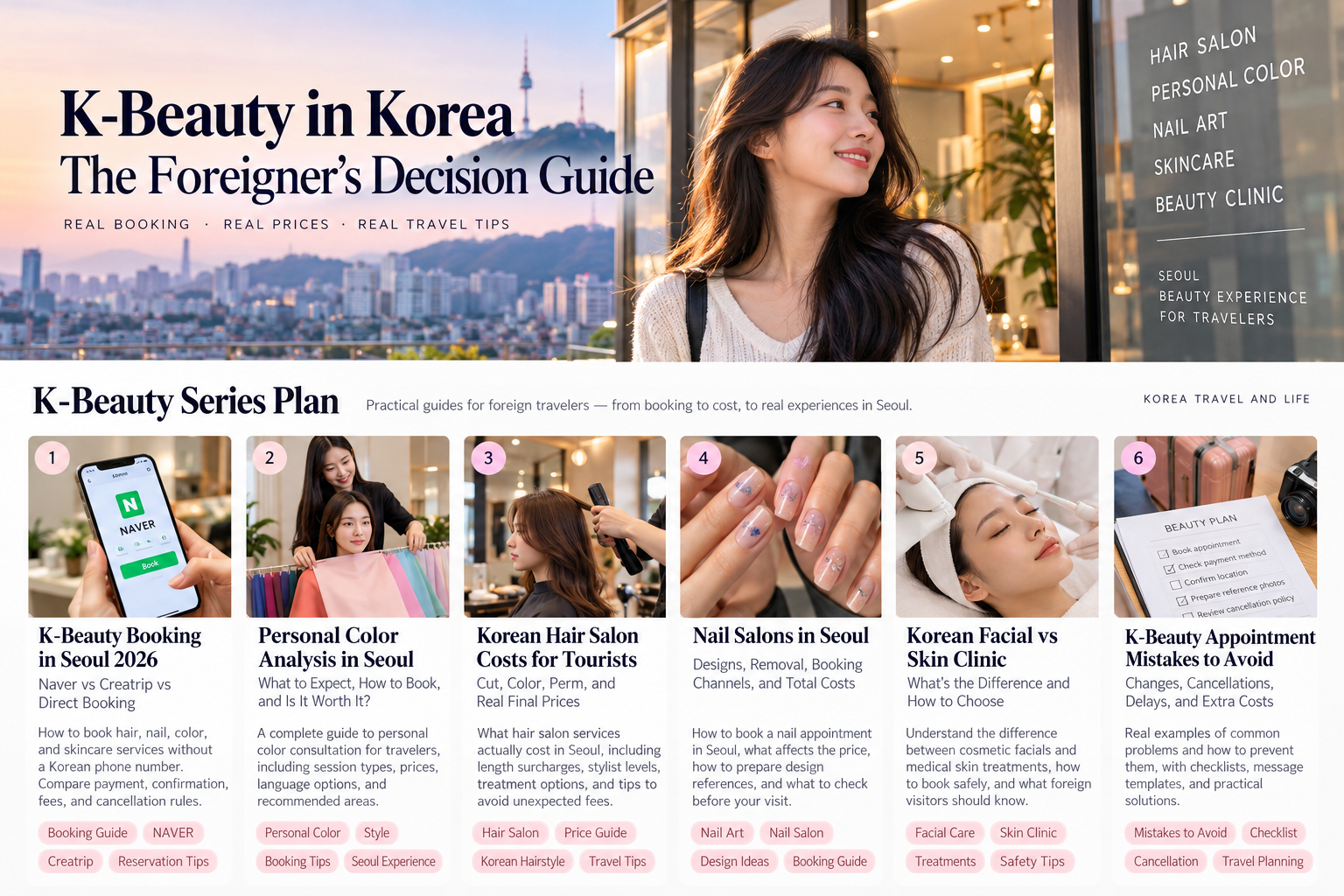
  • K-Beauty Booking in Seoul 2026: Naver vs Creatrip vs Direct Booking Without a Korean Phone Number

    K-Beauty Booking in Seoul 2026: Naver vs Creatrip vs Direct Booking Without a Korean Phone Number

    Updated October 15, 2026

    You have found a Seoul hair salon, nail studio, personal color consultant, or facial treatment that looks perfect for your trip.

    Then the booking process gets complicated.

    The business may direct you to NAVER Booking, ask for a Korean phone number, request a bank-transfer deposit, or offer an English-language booking platform with different cancellation rules.

    The good news is that you do not necessarily need a Korean phone number to book a K-beauty appointment in Seoul in 2026.

    NAVER introduced foreign passport verification in June 2026, making supported reservations more accessible to international visitors. Meanwhile, platforms such as Creatrip and direct booking channels offer alternatives.

    But which method should you actually use?

    This guide compares booking routes based on payment, confirmation, cancellation, language support, and the risk of arriving in Seoul without a confirmed appointment.

    Quick Answer: Which K-Beauty Booking Method Should You Choose?

    Your situationStart withWhat to verify
    The salon has an active NAVER Booking buttonNAVER BookingPassport verification and foreign booking eligibility
    You want an English-language booking interfaceCreatrip or another travel booking platformFinal price, confirmation status, cancellation policy
    You want a specific hairstylistSalon’s official direct channelStylist availability and deposit requirements
    You need to send reference photosOfficial direct messagingWhether your preferred design is available
    You want a personal color sessionSpecialist’s official site or supported platformSession language, duration, and deliverables
    You are considering a medical skin procedureLicensed clinic’s official consultation channelMedical qualifications, consultation, risks, and follow-up care

    The best booking method is not necessarily the cheapest-looking one. It is the route that provides a confirmed appointment, understandable terms, and a clear total price.

    1. The Biggest 2026 Change: NAVER Passport Verification

    Many older Korea travel guides say that foreign tourists cannot use NAVER Booking without a Korean phone number.

    That statement is now too broad.

    On June 4, 2026, NAVER introduced a foreign passport verification process designed to help eligible visitors use supported NAVER Booking, NAVER Order, and payment services.

    NAVER publicly announced the change on June 9.

    According to NAVER, eligible users can complete verification using a passport issued outside South Korea, without needing Korean mobile-phone identity verification.

    What you need for passport verification

    NAVER’s official help page explains that eligible users generally need:

    • A valid passport issued outside South Korea.
    • A NAVER account with a matching name and date of birth.
    • A device with camera access.
    • A live passport photograph and facial verification.

    A passport that has already been used to verify another NAVER ID may not be eligible.

    You should also follow NAVER’s current account and verification instructions, since eligibility and supported services may change.

    Does passport verification guarantee a salon booking?

    No.

    NAVER’s business documentation explains that merchants can control whether they accept foreign reservations.

    A salon may also have no available appointments or may use a separate booking system.

    Therefore, successful passport verification does not guarantee that every beauty business can be booked through NAVER.

    Official references:

    2. NAVER vs Creatrip vs Direct Booking: The Real Differences

    Instead of asking which platform is universally better, compare what happens at each stage of your booking.

    Decision factorNAVER BookingCreatrip or similar platformOfficial direct booking
    Main advantageBooking directly through a participating businessTravel-oriented interface and payment optionsCommunication with the salon or specialist
    Korean phone numberPassport verification may provide an alternativeOften unnecessary for supported listingsDepends on the business
    Foreign paymentSupported where enabledDepends on product and checkoutDepends on the business
    Appointment confirmationFollow NAVER’s booking statusInstant or manual, depending on listingMust be explicitly confirmed
    Custom requestsDepends on booking optionsDepends on productOften easier to discuss directly
    Cancellation rulesBusiness-specificProduct-specificBusiness-specific
    Main riskVerification or merchant eligibilityMisreading voucher conditionsUnclear deposit or confirmation

    These are booking-route characteristics, not guarantees about every listing.

    When NAVER makes sense

    Choose NAVER when the business has an active reservation page, your account is eligible, and the available service matches what you want.

    Check that you have received an actual reservation confirmation, rather than merely submitting a request.

    When Creatrip makes sense

    A travel-oriented booking platform can be convenient when you prefer an English-language product page, a defined service package, and an international payment route.

    However, read the listing carefully.

    Some services require the merchant to confirm your requested appointment after payment. The voucher may represent a deposit or a particular package rather than every service you expect to receive.

    When direct booking makes sense

    Direct booking can be useful when you need to ask detailed questions.

    For example, a hair salon may need to know your current hair length, previous bleaching history, and desired color before confirming a price or appointment length.

    Use the business’s official website, verified social profile, or published contact channel.

    Do not send money to an unrelated personal account merely because someone contacted you through social media.

    3. Choose by Beauty Service, Not Just by Platform

    Different K-beauty experiences have different booking requirements.

    Hair salon

    A basic haircut may be straightforward to reserve, but a perm, bleaching session, or color correction can involve a longer appointment and additional charges.

    Before booking, confirm the exact service, stylist, expected duration, and possible length-based or product-based surcharges.

    Nail studio

    Nail appointments depend on the requested design, existing gel removal, extensions, and available technician time.

    A photograph of your preferred design can help the studio quote the correct service.

    Ask whether removal and nail art are included in the advertised price.

    Personal color analysis

    Check whether the session includes a written result, makeup recommendations, fabric draping, or interpretation in your preferred language.

    A short consultation and an extended one-to-one session are not interchangeable products.

    Facial and spa services

    Confirm the specific treatment included in the package, its duration, and any restrictions or skin-sensitivity considerations.

    A cosmetic facial is not the same as a medical dermatology procedure.

    Medical skin clinic

    For injections, lasers, prescription treatments, or other medical procedures, booking convenience should not outweigh medical qualifications and informed consent.

    Verify that the provider is appropriately licensed, that you understand the risks and aftercare, and that you have a plan for complications or follow-up.

    Avoid selecting medical treatment solely because a promotional package appears inexpensive.

    4. The Hidden-Cost Test: What Will You Actually Pay?

    The displayed booking price may not equal your final expense.

    Consider this illustrative example, not a quote from any particular Seoul business:

    Cost componentExample
    Advertised hair service₩90,000
    Hair-length surcharge₩20,000
    Additional treatment requested₩30,000
    Total before other applicable charges₩140,000

    In this example, the final amount is approximately 56% higher than the advertised starting price.

    The problem is not necessarily an improper surcharge. The problem is failing to understand what the original price includes.

    Five questions to ask before paying

    1. Is the listed amount the full service price or a deposit?
    2. Are there additional charges for hair length, design, stylist level, or treatment options?
    3. Is the deposit deducted from the final bill?
    4. What is the cancellation and refund deadline?
    5. Is the appointment confirmed immediately or only after the business accepts it?

    Also check the currency used at checkout and any foreign transaction fees charged by your card issuer.

    Do not assume that a booking platform always has lower prices than direct booking, or vice versa.

    5. What to Do When Your NAVER Booking Fails

    A failed booking does not automatically mean foreigners are prohibited from using NAVER.

    Use this troubleshooting sequence.

    Problem A: Passport verification fails

    Check that your account details match your passport, that the passport is valid, and that the camera image meets NAVER’s instructions.

    Use NAVER’s official support process rather than creating multiple accounts with inconsistent personal information.

    Problem B: Verification succeeds, but you cannot reserve

    Check whether the particular merchant accepts foreign reservations and whether the requested service has an available time slot.

    Try the business’s official alternative booking channel if one is provided.

    Problem C: The business requires a Korean bank-transfer deposit

    Ask whether international card payment, an official payment link, or another supported method is available.

    If not, consider a different business or an established booking platform.

    Avoid sending money without a written confirmation of the recipient, service, amount, and refund terms.

    Problem D: You paid but received no confirmed time

    Review whether the listing describes a booking request or an instantly confirmed appointment.

    Contact the platform or business through its official support channel.

    Do not assume that payment alone guarantees a specific date and time.

    6. Copy-and-Paste Booking Message for Foreign Visitors

    For a salon, nail studio, or personal color consultant that accepts direct inquiries, you can use this message.

    English version

    Hello! I will be visiting Seoul and would like to book an appointment.

    Service: [haircut / hair color / nail art / personal color analysis]

    Preferred date and time: [date and time]

    Number of people: [number]

    I do not have a Korean phone number. Can I book using email, WhatsApp, or another international contact method?

    Could you also confirm the total price, deposit, cancellation policy, and whether English-language assistance is available?

    Thank you!

    Simple Korean version

    안녕하세요. 서울 여행 중 예약하고 싶습니다.

    희망 서비스: [서비스명]

    희망 날짜와 시간: [날짜 / 시간]

    예약 인원: [인원]

    한국 전화번호가 없는데 이메일이나 다른 방법으로 예약할 수 있을까요?

    총비용, 예약금, 취소 규정, 영어 응대 가능 여부도 알려주시면 감사하겠습니다.

    Both versions ask for the details that matter before you commit to payment.

    7. How Early Should You Book?

    There is no universal advance-booking rule for Seoul beauty services.

    A simple appointment at a business with open availability may be possible on short notice.

    A specific stylist, popular weekend appointment, elaborate nail design, or extended consultation may require more planning.

    A practical approach is to contact the business before your trip if the appointment is an important part of your itinerary.

    If you are considering a medical procedure, allow time for an appropriate consultation and follow-up planning rather than treating the appointment like an ordinary tourist activity.

    Should you book on your arrival or departure day?

    For a nonmedical appointment, consider possible flight delays, hotel check-in timing, and the duration of the service.

    For medical procedures, discuss travel timing, recovery, and follow-up requirements with a qualified clinician.

    An appointment that ends later than expected can disrupt a tightly scheduled airport transfer.

    8. Five Realistic Booking Scenarios

    Scenario 1: A solo traveler wants a haircut in Hongdae

    Start with the salon’s official reservation page.

    If NAVER Booking is available, check passport verification eligibility. If not, use the salon’s official alternative contact method.

    Confirm the stylist and any additional charges before booking.

    Scenario 2: Two friends want personal color analysis in English

    Prioritize language availability, session length, and whether the price is per person.

    Ask if the two appointments are simultaneous or sequential.

    A lower advertised price may not be better value if the consultation is substantially shorter.

    Scenario 3: A traveler wants detailed nail art

    Send a design reference through the studio’s official contact channel.

    Ask for a quote that includes existing gel removal, extensions, and artwork.

    Confirm how much time the design requires.

    Scenario 4: A visitor finds a discounted facial package

    Read the full treatment description.

    Check whether the price includes the consultation, treatment, and any mandatory charges.

    If the service is medical rather than cosmetic, verify the clinician and medical consent process.

    Scenario 5: A traveler has only one free afternoon

    Choose a provider with clear confirmation, manageable travel time, and transparent cancellation terms.

    Do not spend the entire afternoon chasing a marginally cheaper booking that has not been confirmed.

    9. How to Compare Two Offers Without Guessing

    Use this simple decision worksheet.

    QuestionBooking ABooking B
    Exact service included
    Total quoted price
    Deposit required
    Cancellation deadline
    Appointment confirmed?
    Language support
    Travel time from hotel
    Additional charges possible?

    If a business cannot clarify important pricing or cancellation terms before payment, that uncertainty should count against the offer.

    A confirmed ₩110,000 appointment may be preferable to an advertised ₩85,000 appointment with unclear surcharges and refund conditions.

    The correct choice depends on the service, your budget, and your tolerance for uncertainty.

    10. How This Fits Into Your Seoul Trip

    K-beauty experiences can fit naturally into a shopping or neighborhood exploration day.

    For example, a traveler visiting Seongsu may combine a pre-booked beauty consultation with cafes and retail stores, provided the appointment timing is realistic.

    Read our Seongsu-dong Seoul Travel Guide 2026 for neighborhood planning.

    If you are primarily interested in Korean skincare products rather than appointments, our Olive Young Korea Shopping Guide 2026 covers a different part of the K-beauty experience.

    Shopping for cosmetics, booking a salon, and arranging medical treatment should be treated as separate decisions.

    Frequently Asked Questions

    Can foreigners use NAVER Booking without a Korean phone number in 2026?

    Eligible foreign users can use passport verification for supported NAVER services. However, individual merchants may control whether they accept foreign bookings.

    Is Creatrip always cheaper than booking directly?

    No. Compare the exact service, final price, payment terms, and cancellation conditions for the particular listing.

    Can I book a Korean hair salon through Instagram?

    Some salons use official social media messaging for inquiries and reservations. Always verify that you are communicating with the genuine business and obtain explicit confirmation.

    Do I need to pay a deposit?

    It depends on the business and booking route. Never assume that all Seoul beauty providers follow the same deposit policy.

    Can I pay with an international credit card?

    Some NAVER merchants and international booking platforms support foreign-issued cards. Direct-booking payment options vary by business.

    Is a booking request the same as a confirmed appointment?

    No. Check whether the business has actually accepted the requested time.

    Should I choose a beauty clinic based on the lowest advertised price?

    No. For medical services, clinical qualifications, appropriate consultation, informed consent, and aftercare matter more than promotional pricing.

    Planning to book a personal color consultation during your Seoul trip? Read our Personal Color Analysis in Seoul 2026: Is It Worth $100? Real Costs, English Sessions and What You Actually Get guide to compare consultation prices, English-language services, hidden fees, and what you should receive before choosing a studio.

    Final Verdict: Choose the Route That Reduces Uncertainty

    K-beauty booking in Seoul has become more accessible to international visitors, especially following NAVER’s 2026 foreign passport verification update.

    But there is still no universal booking method that works for every hair salon, nail studio, personal color consultant, or skin clinic.

    Start with the business’s official reservation route.

    Use NAVER when the merchant and your account are eligible. Consider a travel booking platform when its terms and payment process are clearer. Choose direct booking when you need a customized consultation or detailed service quote.

    Above all, confirm the appointment, total cost, cancellation conditions, and communication method before paying.

    That is more useful than choosing a platform based on popularity alone.


    Sources and Editorial Notes

    This article is an independent travel-planning guide, not a paid endorsement of any booking platform or beauty provider. Platform features, business policies, prices, and availability may change. Example costs are hypothetical, not verified quotes. Medical procedures require individualized advice from appropriately qualified professionals.

  • Hwadam Forest in Autumn 2026: How Foreign Visitors Can Book Tickets and Choose Between DIY and a Tour

    Hwadam Forest in Autumn 2026: How Foreign Visitors Can Book Tickets and Choose Between DIY and a Tour

    Hwadam Forest is an appealing autumn day trip from Seoul, but the first thing to arrange is admission—not transport.

    For foreign visitors, the practical question is whether you can secure a ticket for your date and entry time, then choose a way to reach the garden that fits your budget and travel style.

    This guide separates garden admission, the monorail and tour transport so you can compare like with like. Prices below are the standard rates displayed on the garden’s official English pages when checked in October 2026. Availability and booking conditions must be checked for your actual visit.

    Where is Hwadam Forest?

    Hwadam Forest, also called Hwadamsup or Hwadam Botanic Garden, is within Konjiam Resort in Gwangju, Gyeonggi Province.

    This is Gwangju near Seoul, not the city of Gwangju in southwestern Korea. Search for the full destination name when planning your route.

    The official address is 278-1 Docheokwit-ro, Docheok-myeon, Gwangju, Gyeonggi Province.

    Book the garden before planning the rest of the day

    Start at the official Hwadamsup website and check its current reservation link, visitor notices and operating calendar.

    The Korea Tourism Organization lists online reservation as required. The garden’s general English FAQ also mentions on-site sales when tickets remain. These statements are not a reason to assume you can arrive during autumn and buy a ticket.

    For a date-sensitive trip, use a confirmed reservation. If you plan to rely on a foreign-visitor exception or walk-in admission, obtain current confirmation from the garden before traveling.

    A practical booking sequence

    1. Choose your visit date and check that the garden is operating.
    2. Follow the reservation link currently provided by the official website.
    3. Select garden admission and the correct visitor category.
    4. Check the entry time and any optional add-ons.
    5. Complete the account and payment requirements shown by that seller.
    6. Confirm that the booking succeeded and that you can open the admission ticket.

    A payment attempt is not the same as a confirmed ticket. Before leaving Seoul, check the date, party size and entry time on the final confirmation.

    What if you do not have a Korean phone number?

    Check the requirements before spending time selecting tickets. Do not assume that a travel SIM or data-only eSIM can complete Korean identity verification.

    If the official booking route requires credentials you cannot provide, contact the garden and ask for the current reservation method for foreign visitors without a Korean phone number.

    The official contact number is +82-31-8026-6666, and the published email address is hwadam@dnocorp.com.

    A useful message is:

    “I am a foreign visitor without a Korean phone number. I would like to visit on [date]. Which booking channel should I use, and what documents or mobile ticket will I need?”

    We have not verified that every foreign card or overseas phone number is accepted by the booking checkout. Confirm your own payment and ticket delivery before making onward arrangements.

    Garden admission, monorail and Hwadamchae are different purchases

    The garden’s official standard admission prices are:

    Visitor categoryGarden admission
    Adult₩11,000
    Senior or teenager₩9,000
    Child₩7,000
    Child under 24 monthsFree

    Check the seller’s age definitions when booking.

    The monorail is charged separately. Hwadamchae is an exhibition experience with its own booking arrangements; access also requires garden admission.

    A product labeled “Hwadam” does not automatically include all three. Read the inclusions before paying.

    Is the monorail worth adding?

    The monorail can be useful if you want to reduce some walking or see the garden from the track. It is optional, and a garden ticket does not guarantee a ride.

    The official English monorail guide displays these prices:

    Route from Platform 1Adult, senior or teenagerChild
    Platform 1 → Platform 2₩5,000₩4,000
    Platform 1 → Platform 3₩7,000₩6,000
    Full loop back to Platform 1₩9,000₩7,000

    For one adult, garden entry plus the full loop is therefore ₩20,000 before transport and other purchases. This is arithmetic based on the listed rates, not a tour-package quote.

    Choose the route according to the walking you want to do afterward. Do not assume that a short ride removes every slope or the need to reach the boarding platform.

    The official guide says reboarding after getting off mid-route is not permitted. Most passengers stand, with priority seating available.

    If the ride is essential for someone in your party, confirm availability before committing to the day trip. If it sells out, decide whether a walking visit still suits that person.

    Getting there independently from Seoul

    The garden’s official public-transport directions list Gonjiam Station on the Gyeonggang Line, followed by a taxi or Gwangju bus 9.

    Plan the complete journey from your accommodation. Your route may require transfers before reaching the Gyeonggang Line, and the garden entrance is not at the station.

    Allow time for the final connection and the approach to the entrance. A reservation time should guide your departure from Seoul, rather than being treated as an approximate arrival target.

    Plan the return journey as well. Check bus information for your travel date or arrange how you will request a taxi; do not assume an immediate vehicle will be waiting when you leave.

    DIY or a tour: which fits your trip?

    Your situationOption to consider
    You have confirmed admission and enjoy independent travelDIY by public transport
    Several people can share a taxi for the final connectionDIY with a shared taxi
    You want a fixed pickup and return arrangementA tour with clearly stated transport
    You cannot complete the direct booking processAsk the garden for an alternative, or compare tours that explicitly include admission
    The monorail is essentialSelect only an option that confirms the required ride
    You want a flexible pace inside the gardenCompare independent travel with the tour’s actual garden time

    A tour can simplify logistics, but its name is not proof that it includes admission, the monorail or enough time to explore.

    Before booking, ask whether garden entry is included and confirmed for your date. Also check the pickup point, return location, minimum-participant rule, cancellation terms and any additional attraction stops.

    A tour may have a different refund policy from a directly purchased garden ticket.

    Compare the total cost, not just the entry price

    Use the same set of inclusions for both options.

    DIY cost per person = garden admission + chosen extras + return public transport + your share of any taxi fares.

    Tour cost per person = package price + excluded entry or rides + transport to the pickup point + other required charges.

    For two adults choosing the full-loop monorail, the listed garden-and-ride subtotal is ₩40,000. Transport and meals are additional.

    Get current fare estimates for your route before comparing that subtotal with a tour price. A higher-priced package may save transfers, while independent travel may give you more control over your pace. The useful comparison is what you receive for the total amount.

    What if tickets are unavailable?

    Check the official booking channel again for legitimate availability changes. Do not assume that an advertised tour still has garden admission simply because its product page remains online.

    If a seller offers your preferred date, confirm the included admission and booking status before paying.

    If you cannot secure the visit, keep a backup plan in Seoul. Our Seoul outdoors guide provides ideas for parks and walks, while our Korea fall foliage guide helps you compare other destinations.

    A backup plan is particularly helpful if your trip dates are fixed. No autumn garden can guarantee peak leaf color on a particular day.

    Before leaving your hotel

    • Open the valid admission ticket and confirm the date and entry time.
    • Check whether any monorail or exhibition booking is separate.
    • Review that day’s operating notice and weather.
    • Confirm your route to the entrance and your return plan.
    • Read the cancellation terms attached to your purchase.
    • Bring suitable walking shoes and the documents required by your seller.

    If you need a stroller or wheelchair, arrange your own: the official FAQ says these are not available for rent.

    The best Hwadam plan begins with a ticket you can actually use. Once that is settled, choose DIY for flexibility or a tour for simpler transport, and compare the full cost of the same experience.


  • How to Buy K-Pop Concert Tickets in Korea as a Foreigner (2026): Presales, ID Checks and Payment Tips

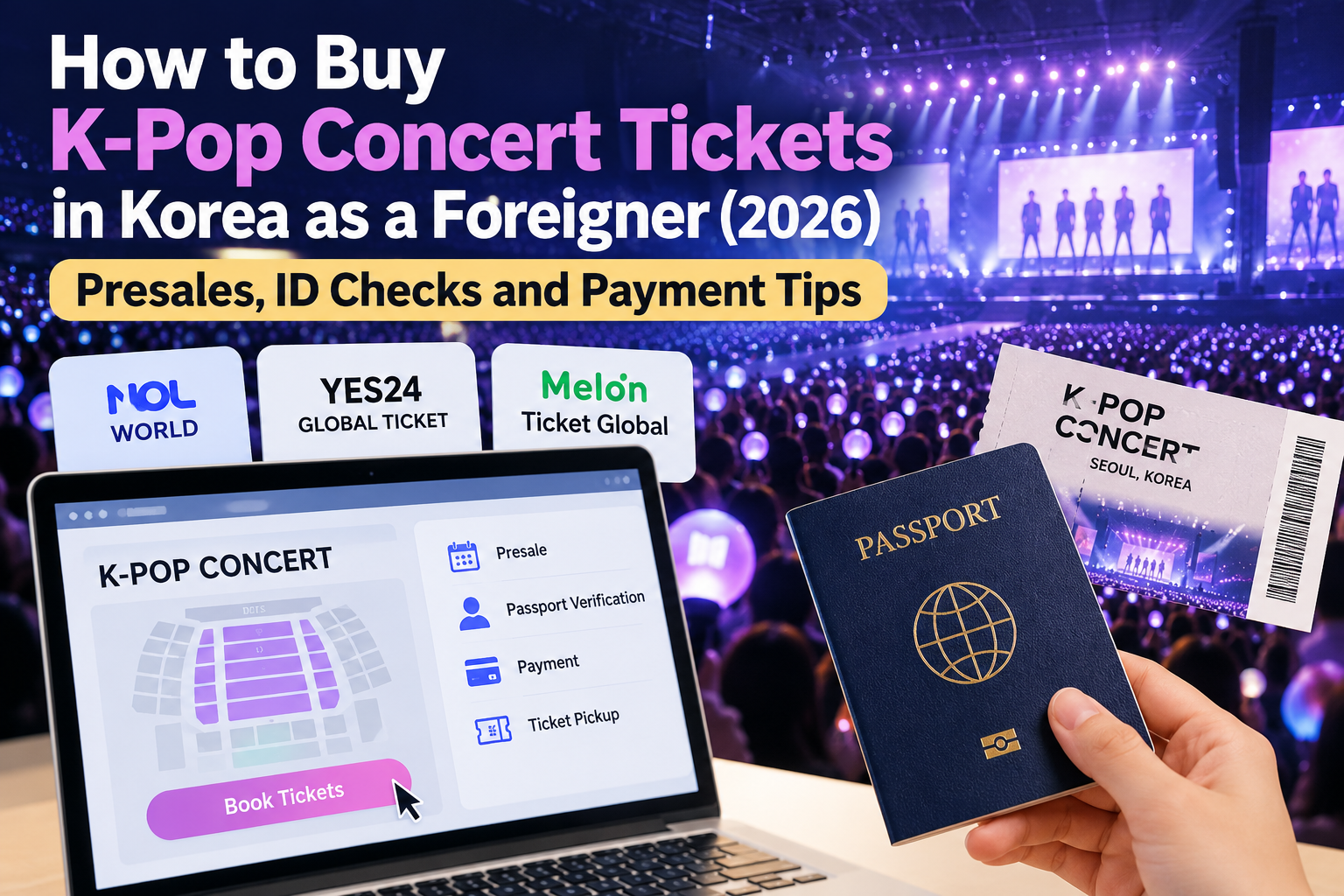
    How to Buy K-Pop Concert Tickets in Korea as a Foreigner (2026): Presales, ID Checks and Payment Tips

    Planning to attend a K-pop concert in South Korea? Buying tickets can be more complicated than choosing a seat and entering your credit card details.

    International fans may need to register on a separate global ticketing website, verify their passports before sales open, complete fanclub presale verification, and present matching identification when collecting tickets.

    The biggest mistake is assuming that every Korean concert follows the same booking rules.

    This guide explains how to prepare for ticket sales, avoid common booking problems, and make sure you can actually enter the venue.

    Quick Answer: Can Foreigners Buy K-Pop Concert Tickets in Korea?

    Yes. International visitors can purchase tickets for many K-pop concerts through official global ticketing platforms.

    However, eligibility depends on the individual concert.

    Before booking, check:

    • Which ticketing website the organizer has selected
    • Whether the concert offers a global booking page
    • Whether passport verification is required
    • Whether fanclub membership is necessary for presale
    • Whether international payment cards are accepted
    • Whether tickets are mobile-only or collected at the venue

    Important: A successful payment does not automatically guarantee admission if your ticket information or identification fails the venue’s requirements.

    1. Where Can Foreigners Buy K-Pop Concert Tickets?

    Three platforms commonly appear in Korean concert announcements.

    PlatformWhat international fans should check
    NOL World / Global InterparkAccount verification, ticket queue rules, mobile ticket requirements
    YES24 Global TicketSeparate global account, identity verification, passport requirements
    Melon Ticket GlobalPassport verification, fanclub presale rules, ticket collection procedures

    Do not assume an artist always uses the same ticketing platform. The organizer may choose a different service for each tour or performance.

    The safest starting point is the artist’s official concert announcement.

    2. Register Before Tickets Go on Sale

    Do not wait until the booking countdown reaches zero to create your account.

    Some global platforms require additional identity verification before users can book selected performances.

    For example, YES24 Global Ticket offers a Verified Member process for certain shows. It involves passport information and facial verification.

    YES24 recommends completing verification at least one or two days before ticket sales.

    Before the sale, prepare:

    1. An account on the correct global ticketing website
    2. Your valid passport
    3. A payment method you can use internationally
    4. Your official fanclub membership details, if applicable
    5. The concert’s exact booking date and time in Korean Standard Time (KST)

    Check your name carefully. Where passport-name matching is required, the ticketing account, reservation and identification must be consistent.

    3. Understand Fanclub Presales

    Some K-pop concerts offer fanclub members an opportunity to purchase tickets before general sales.

    However, buying a fanclub membership does not necessarily complete the presale process.

    There may be separate steps:

    Step 1: Join the eligible fanclub.

    Confirm that your membership type qualifies for the concert.

    Step 2: Complete presale verification.

    The organizer may require you to connect or verify your membership on the ticketing platform during a specified period.

    Step 3: Book during the presale window.

    Presale verification and ticket purchasing can have different deadlines.

    Step 4: Maintain eligibility.

    Some events require fans to retain an active membership through the concert date.

    For example, official 2026 Melon Ticket concert notices have used different domestic and global verification schedules.

    Common mistake: Completing membership verification on the Korean booking page when you intend to purchase through the global page.

    Always read the rules for your specific concert.

    4. Can You Pay With an International Credit Card?

    Payment options vary by ticketing platform and event.

    A card that works for international online purchases is useful, but successful payment is not guaranteed.

    Before the sale:

    • Confirm your card allows overseas online transactions.
    • Check whether additional bank authentication is required.
    • Review any foreign transaction fees.
    • Make sure your available balance covers the ticket price and booking charges.
    • Avoid relying on an unfamiliar payment method for the first time during a high-demand sale.

    If a payment fails, check whether the reservation was created before attempting another purchase.

    Repeated payment attempts can create confusion, particularly during busy sales.

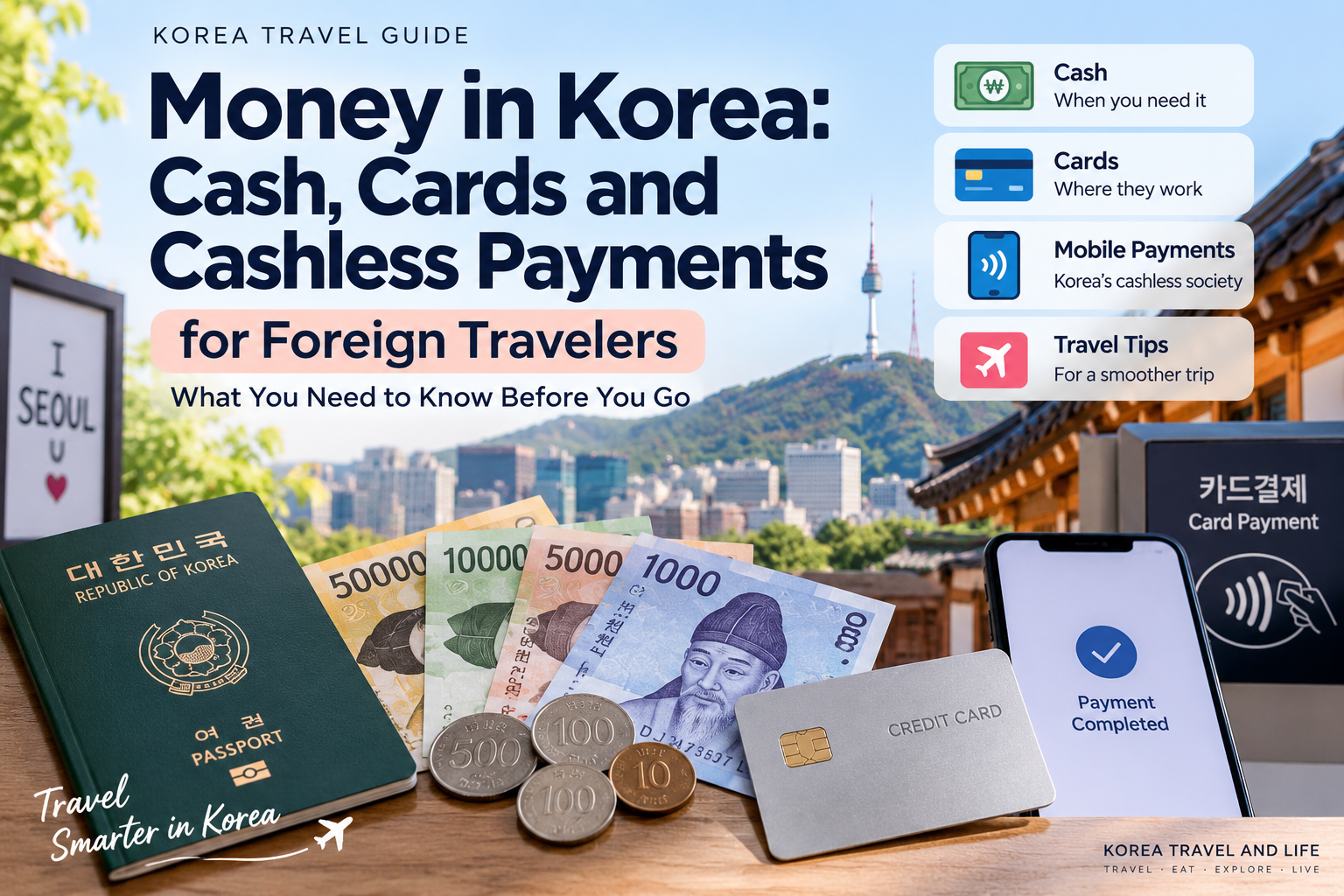
    Need help with payments during your trip? Read our Money in Korea guide to learn about cash, cards, and cashless payments for international visitors.

    5. What Happens When Tickets Sell Out?

    A sold-out booking page does not always mean you have no remaining options.

    Depending on the concert, you may be able to:

    • Check for officially released additional seats
    • Look for canceled tickets returned to the official inventory
    • Monitor organizer announcements about additional performances
    • Review official ticketing notices for any authorized resale or transfer process

    There is no universal cancellation-ticket release schedule.

    Avoid websites or social media accounts promising guaranteed tickets through unofficial transfers.

    Some Korean concerts explicitly prohibit unauthorized ticket transfers and may deny entry even when someone possesses a ticket.

    6. Passport and ID Checks: What You Must Know

    Identity verification is one of the most important differences between purchasing a ticket and attending a concert.

    Some performances require buyers to present a valid physical passport matching the reservation name.

    Depending on the concert, a screenshot, photocopy or another person’s identification may not be accepted.

    Before leaving your hotel, check:

    • Is the original passport required?
    • Does the reservation name match your passport?
    • Do you need a booking confirmation?
    • Will tickets be collected at the venue?
    • Is a mobile ticket required instead?
    • Does the organizer impose additional fanclub verification at entry?

    For example, YES24 Global Ticket’s guidance states that venue ticket pickup generally requires a valid physical passport and booking confirmation, subject to the individual show’s rules.

    Never assume that another concert’s ID policy applies to yours.

    7. Mobile Tickets vs Venue Pickup

    Korean concert tickets are not all delivered in the same way.

    Mobile tickets: Some concerts use app-based tickets rather than printed tickets. Check device compatibility, account access and any activation instructions.

    Venue pickup: Other concerts require buyers to collect their tickets at a designated counter after identity verification.

    Physical delivery: Some events may offer ticket delivery, but international shipping availability depends on the performance.

    Check the official ticket collection instructions before traveling.

    8. Seven Mistakes International Fans Should Avoid

    MistakeBetter approach
    Registering when ticket sales beginCreate and verify your account beforehand
    Using the wrong ticketing websiteFollow the organizer’s official booking link
    Assuming fanclub membership automatically unlocks presaleComplete the required ticket-site verification
    Entering a nickname instead of a passport nameFollow the platform’s legal-name requirements
    Ignoring KSTConvert sale times to your local timezone
    Buying an unofficial transferred ticketCheck authorized ticketing and transfer policies
    Arriving without required identificationRead the concert-specific entry instructions

    9. A Practical Booking Timeline

    One to two weeks before ticket sales

    Find the official announcement, identify the ticketing platform and review eligibility requirements.

    Create your account and check whether verification is available.

    Several days before ticket sales

    Complete required passport or membership verification.

    Review seat categories, ticket limits and payment requirements.

    On ticket-sale day

    Log in early enough to check account access.

    Follow the official queue instructions and avoid using multiple devices if the platform prohibits it.

    Confirm the event date and seat before paying.

    After purchasing

    Save the booking confirmation and read the ticket collection instructions.

    Check for organizer updates before the concert.

    On concert day

    Bring the required identification, allow time for venue procedures and use the ticket format specified by the organizer.

    Traveling to Korea for the concert? Check our Korea e-Arrival Card 2026 guide before your trip to understand the entry requirements.

    Frequently Asked Questions

    Do I need a Korean phone number to buy K-pop concert tickets?

    Not always. Some global platforms offer registration and verification processes for international users. Requirements depend on the platform and performance.

    Do I need a Korean bank account?

    Not necessarily. International payment options may be available, but accepted methods vary.

    Can my friend buy a ticket for me?

    Do not assume so. Some concerts require the purchaser and attendee to be the same person, while transfer policies vary.

    Can I use a photo of my passport?

    For performances requiring physical passport checks, a photo may not be accepted. Check the official requirements.

    Does fanclub membership guarantee a ticket?

    No. Membership may provide presale eligibility, but ticket inventory can still sell out.

    Can I buy tickets after arriving in Korea?

    Possibly, if tickets remain available and the required verification can be completed. Preparing before travel is generally safer.

    Final Checklist Before You Buy

    Before paying for a K-pop concert ticket in Korea, confirm three things:

    First, you are using the correct official booking platform.

    Second, you have completed every required verification step.

    Third, your booking information matches the identification required for entry.

    These checks are more important than memorizing a single ticketing procedure because Korean concert rules differ between organizers and events.

    With proper preparation, international fans can avoid many of the most common ticketing problems and focus on enjoying the concert.

    Last reviewed: October 9, 2026. Ticketing procedures are subject to change. Always follow the official announcement for your specific performance.

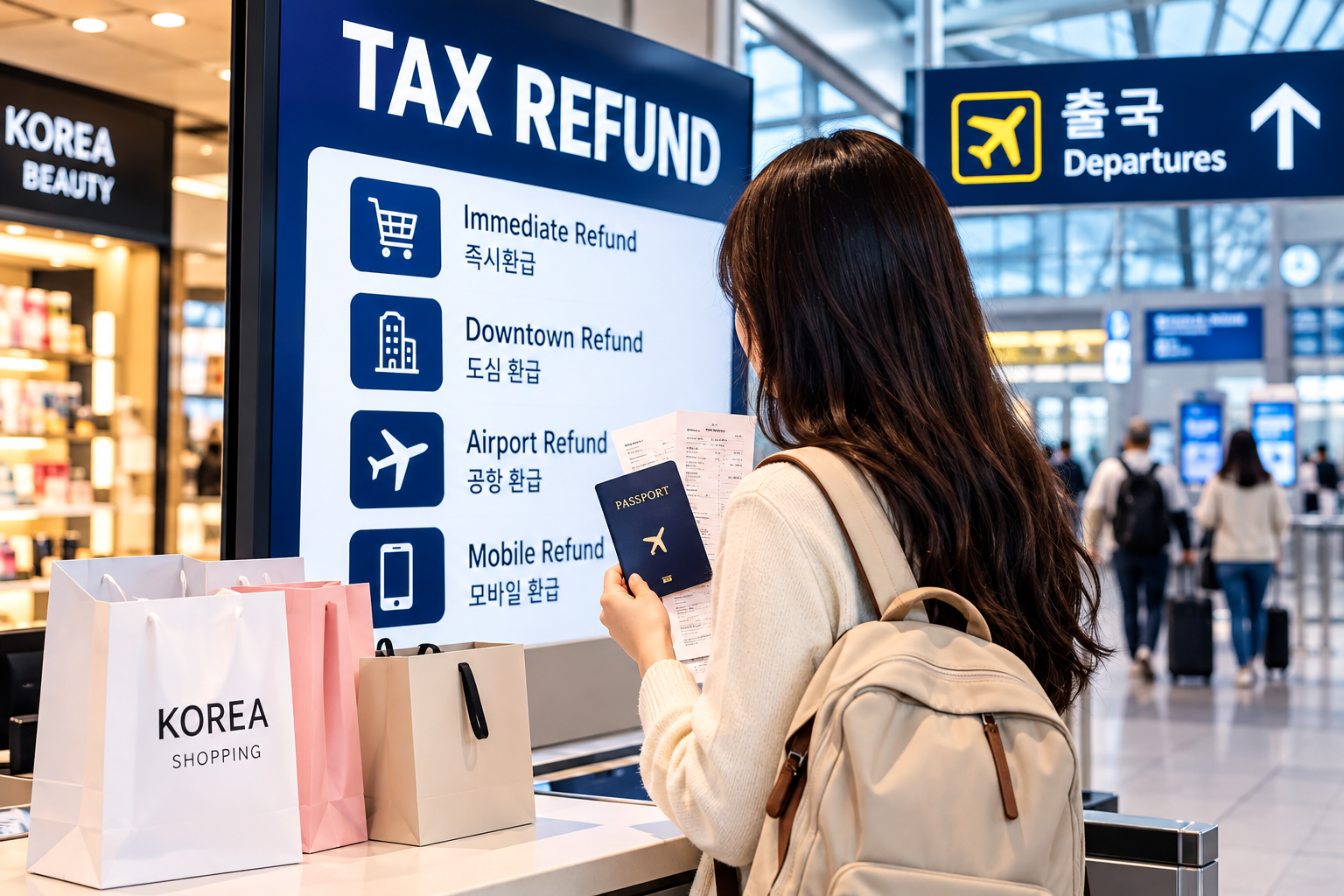
  • Korea Tax Refund 2026: VAT Refund, Immediate Refund and Airport Guide for Foreign Tourists

    Korea Tax Refund 2026: VAT Refund, Immediate Refund and Airport Guide for Foreign Tourists

    Korea Tax Refund in 2026: The Quick Answer

    If you are visiting South Korea and plan to shop for cosmetics, clothes, shoes, bags, electronics or other taxable goods, you may be able to get part of the tax refunded.

    But there is one thing that confuses many first-time visitors:

    You do not always need to wait until the airport to get your tax refund.

    Depending on the store, purchase amount and refund method, you may be able to receive an immediate tax refund at checkout, claim it later at a downtown refund counter, or complete the process when you leave Korea.

    For most tourists, the easiest strategy is simple:

    Ask about an immediate tax refund before paying. If it is available and your purchase qualifies, it is usually the least complicated option.

    If immediate refund is not available, keep your refund documents and purchased goods together and plan how you will complete the refund before departure.

    This guide explains the differences and, more importantly, which method is likely to be easiest for your trip.

    Duty Free and Tax Refund Are Not the Same Thing

    Before shopping, it helps to understand one important distinction.

    A duty-free purchase and a tax-refund purchase are not the same process.

    At a duty-free store, applicable taxes are generally excluded from the price when you purchase the product.

    With the tourist tax-refund system, you normally buy eligible goods from a participating store and receive the applicable refund either immediately or through a later refund procedure.

    So if you see both “Duty Free” and “Tax Refund” during your trip, do not assume they mean exactly the same thing.

    For ordinary shopping in department stores, cosmetics shops, fashion stores and other participating retailers, the tax-refund system is often the one you will encounter.

    Who Can Get a Tax Refund in Korea?

    The system is intended for eligible non-resident visitors.

    Foreign travelers staying in South Korea for less than six months can generally qualify, provided they meet the applicable requirements.

    Eligible overseas Koreans may also qualify under separate residency and length-of-stay conditions.

    For most short-term international tourists, the practical question is not whether Korea has a tax-refund system.

    It is whether:

    • the store participates in the system,
    • the purchase meets the minimum amount,
    • the goods are eligible,
    • and you follow the required procedure before leaving Korea.

    A purchase generally needs to be at least KRW 15,000 to qualify for the tourist tax-refund system.

    That KRW 15,000 figure is important because travelers may still find older guides online showing a higher minimum purchase amount.

    Option 1: Immediate Tax Refund at the Store

    For many tourists, this is the simplest option.

    At participating stores offering immediate tax refunds, your eligibility is checked when you make the purchase, usually using your passport.

    Instead of paying the full tax-inclusive price and recovering the tax later, the applicable tax refund is deducted at the time of purchase.

    In practical terms:

    You shop → show your passport → the store verifies eligibility → you pay the reduced amount.

    There is no separate airport refund claim for that transaction.

    What Are the Immediate Refund Limits?

    For an immediate tax refund in 2026:

    • The purchase must be at least KRW 15,000.
    • A single transaction must be less than KRW 1 million.
    • Total purchases processed through the immediate refund system during your stay must be KRW 5 million or less.

    Not every tax-refund store necessarily offers the immediate-refund option.

    That is why one of the best habits for tourists is to ask before paying:

    “Is immediate tax refund available?”

    It can save you another procedure later.

    When Should You Choose Immediate Tax Refund?

    Immediate refund is particularly convenient if you are making ordinary tourist purchases that fall within the limits.

    For example, imagine you are buying skincare products, clothing or souvenirs and the store offers immediate refund.

    If your transaction qualifies, there is usually little benefit in deliberately postponing the refund until the airport.

    Immediate refund can be especially useful if:

    • you are making several small or medium-sized purchases,
    • you do not want to keep track of multiple refund vouchers,
    • you have a tight airport schedule,
    • or you simply want the refund process finished while you are still in the store.

    But it is not always available.

    That is when the general tax-refund process becomes important.

    Option 2: Get Your Refund Later

    If the store does not offer immediate refund, you may pay the tax-inclusive price first and receive the refund later.

    Depending on the refund provider and your transaction, later refunds may be available through options such as:

    • downtown refund counters or kiosks,
    • airport refund counters or kiosks,
    • mobile refund services,
    • or designated mailbox procedures.

    The exact method available to you can depend on the tax-refund company shown on your refund document.

    So after purchasing, do not throw away the refund voucher just because you have the normal sales receipt.

    Keep the documents until the process is complete.

    Downtown Refund vs Airport Refund: Which Is Better?

    This is where the best choice depends on your travel style.

    Downtown Refund May Be Better If…

    You are still in Seoul, Busan or another major shopping area and would rather deal with the refund before departure.

    This can reduce the amount of refund processing you need to do at the airport.

    For a downtown general tax refund, qualifying purchases start at KRW 15,000, and a single receipt must generally not exceed KRW 6 million.

    However, receiving money downtown does not necessarily mean every departure requirement has disappeared.

    You may still need to complete the required customs/export procedure when leaving Korea.

    Also, downtown refund counters may only process refunds from their own refund company.

    Airport Refund May Be Better If…

    You have only a few refund purchases and prefer to handle everything when you leave Korea.

    Airport refund facilities can be convenient because you are already completing departure procedures.

    They can also be useful when your shopping involved different tax-refund companies.

    The trade-off is time.

    If you have multiple purchases, checked baggage containing refund goods or a transaction that requires customs verification, arriving at the airport with very little spare time is not a good plan.

    Airport refund is convenient only when you leave enough time to complete it.

    The Biggest Airport Mistake: Checking Your Bag Too Early

    This is one of the most practical things to understand before departure.

    For purchases that require customs export confirmation, customs may need to verify the goods you are taking out of Korea.

    If those goods are already inside checked baggage that has disappeared down the baggage belt, the process can become much more difficult.

    At Incheon Airport, the procedure can involve scanning your passport and sales confirmation at the appropriate kiosk and, if your purchase is selected for inspection, presenting the goods to customs.

    For goods that will go into checked baggage, deal with the required customs verification before the bag is finally handed over.

    So if you have tax-refund purchases in your suitcase, do not automatically:

    check in → drop the suitcase → start thinking about tax refund.

    Instead, check whether your purchases require customs confirmation first.

    Do Not Use or Open Refund Goods Too Early

    Another easy mistake is buying a tax-refund item and immediately opening or using it in Korea.

    Tax-refund goods are supposed to be taken out of the country, and goods subject to export verification should remain unused and unopened.

    This matters especially for products travelers naturally want to start using immediately, such as:

    • cosmetics,
    • perfume,
    • electronics,
    • fashion accessories,
    • and other personal purchases.

    If getting the refund matters to you, the safest approach is to keep eligible purchases unused until you have completed the required process.

    The goods also need to be taken out of Korea within the required period, generally within three months of purchase.

    What Should You Keep After Shopping?

    Until your refund is finished, keep:

    • your passport available,
    • the tax-refund voucher or sales confirmation,
    • the purchased goods,
    • and any payment information required by the refund provider.

    Do not assume the ordinary shop receipt alone is always enough for customs processing.

    If you are doing a lot of shopping, one practical trick is to keep all tax-refund documents in one envelope or travel pouch rather than mixing them with restaurant and transportation receipts.

    That can make departure day much easier.

    What Can You Usually Get a Tax Refund On?

    Many taxable retail goods can qualify, including common tourist purchases such as:

    • clothing,
    • shoes,
    • bags and accessories,
    • cosmetics and perfume,
    • home appliances,
    • ginseng and red ginseng products.

    But eligibility is not simply based on whether you spent money in Korea.

    Some purchases and services are not eligible.

    For example, ordinary services that cannot be physically presented for customs verification are treated differently from exportable goods.

    Products that have already been opened or used can also lose eligibility.

    And if you bought an item through a duty-free system where the relevant taxes were already excluded, you cannot claim the same tax again through the tourist tax-refund system.

    Three Shopping Situations: What Should You Do?

    Rather than memorizing every rule, it may be easier to think about your actual shopping situation.

    Situation 1: You Are Buying KRW 100,000 of Cosmetics

    The store participates in immediate tax refund and your purchase qualifies.

    Best first choice: Ask for the immediate refund at checkout.

    There is little reason to create another airport task if the transaction can be completed immediately.

    Situation 2: You Make Several Purchases at Stores Without Immediate Refund

    You receive refund vouchers from the shops.

    Best approach: Keep the documents and goods organized, then check whether downtown, mobile or airport refund is available for your refund provider.

    If airport processing will be necessary, allow extra departure time.

    Situation 3: You Buy an Expensive Item

    The transaction is outside the immediate-refund limit.

    Best approach: Do not assume you have lost the ability to receive a tax refund simply because immediate refund is unavailable.

    Check whether the purchase qualifies for the general tax-refund procedure and carefully follow the export/customs instructions on your refund documents.

    This distinction is important:

    “Not eligible for immediate refund” does not automatically mean “not eligible for any tax refund.”

    A Simple Tax Refund Strategy for First-Time Visitors

    If this is your first trip to Korea, you do not need to make the system more complicated than it is.

    Use this order:

    1. Look for a Tax Refund or Tax Free sign before buying.

    2. Keep your passport accessible while shopping.

    3. Ask whether immediate tax refund is available before payment.

    4. If it is available and your purchase qualifies, complete the refund immediately.

    5. If it is not available, get and keep the proper refund document.

    6. Keep refund goods unused and organized.

    7. Before leaving Korea, check whether customs export confirmation is required.

    8. If the goods are going into checked baggage, handle any required verification before handing over your suitcase.

    This approach prevents most of the confusion travelers experience.

    Is Korea’s Tax Refund Worth the Trouble?

    For a single inexpensive purchase, the amount refunded may not be large enough to justify spending a lot of your vacation time searching for a refund counter.

    But the calculation changes if you plan to buy several eligible products or make larger purchases.

    That is why the best strategy is not necessarily:

    “Claim every possible refund.”

    It is:

    “Use the easiest refund method available for the purchases that are worth processing.”

    If immediate refund is offered at checkout, the inconvenience is minimal.

    If you need a later refund, consider the value of the refund against the time and departure-day complexity involved.

    That is particularly important for travelers with early flights, tight connections or lots of checked baggage.

    Final Takeaway

    Korea’s tourist tax-refund system is easier to use when you decide how you will receive the refund at the time you shop, rather than waiting until you reach the airport.

    For many ordinary purchases, immediate tax refund is the most convenient choice when it is available.

    For purchases that require a later refund, keep the proper documents, keep eligible goods unused and plan the customs and refund steps before departure.

    Most importantly, remember these three numbers:

    KRW 15,000 — the general minimum qualifying purchase amount.

    Under KRW 1 million — the single-transaction limit for immediate tax refund.

    KRW 5 million or less — the total immediate-refund purchase limit during your stay.

    You do not need to memorize every refund procedure before arriving in Korea.

    Just remember to ask before paying, keep your documents and plan before checking your baggage.

    That will make tax-free shopping in Korea much easier.

  • 2026 Chuseok in Seoul: What’s Open, Free Palaces, Transportation, and Things to Do

    2026 Chuseok in Seoul: What’s Open, Free Palaces, Transportation, and Things to Do

    If you are visiting Seoul in late September 2026, you may be wondering whether Chuseok will affect your trip.

    Will restaurants be open? Can you still use the subway? Are Seoul’s palaces open? And where should you go on Chuseok Day?

    The good news is that Seoul does not completely shut down during Chuseok. Public transportation continues to operate, major attractions remain accessible, and the holiday can actually be an interesting time to experience Korean culture.

    However, some restaurants, cafés, shops, and traditional markets may close or operate shorter hours.

    Here is what travelers should know about visiting Seoul during Chuseok 2026.

    When Is Chuseok in 2026?

    Chuseok falls on September 25, 2026.

    The official Chuseok holiday period runs from September 24 to September 26.

    This is one of Korea’s most important traditional holidays. Many Koreans travel to their hometowns to spend time with family, which means transportation between cities can become extremely busy.

    If you are staying in Seoul, however, the city can sometimes feel quieter than usual during parts of the holiday.

    Is Seoul Open During Chuseok?

    Yes, but not everything operates normally.

    Large tourist attractions, department stores, convenience stores, hotel facilities, and many businesses in major tourist areas may remain open.

    Smaller independent restaurants, cafés, neighborhood shops, and traditional businesses are more likely to close for at least part of the holiday.

    Chuseok Day, September 25, is the day when closures are most likely.

    If there is a particular restaurant or attraction you want to visit, check its official website, Naver Map, or Google Maps before making the trip.

    Opening hours can change during the holiday even when a business is normally open.

    Seoul Palaces Are a Great Chuseok Option

    One of the best things to do during Chuseok is visit Seoul’s royal palaces.

    Korea’s major royal heritage sites traditionally offer special access during the holiday period, and official tourism information for Chuseok 2026 includes free admission to major royal palaces and royal heritage sites during the holiday.

    This makes places such as Gyeongbokgung Palace, Changdeokgung Palace, Deoksugung Palace, and Changgyeonggung Palace particularly attractive options.

    You may also find traditional performances or cultural programs around major heritage attractions.

    If you are planning a palace day, you can also read our Jongno Seoul Travel Guide for ideas on combining Seoul’s historic neighborhoods and palaces in one itinerary.

    Special Chuseok Events in Seoul

    Seoul is also holding traditional cultural events during the holiday.

    Namsangol Hanok Village

    Namsangol Hanok Village is one of the easiest places for international visitors to experience traditional Korean culture without leaving central Seoul.

    During the Chuseok period, visitors can find holiday programs and traditional cultural activities.

    The hanok village itself is also worth visiting for its traditional houses and views toward Namsan.

    Seoul Museum of History

    The Seoul Museum of History is another useful option, especially if you want an indoor activity.

    Special holiday programming is scheduled around the Chuseok period, giving visitors an opportunity to learn more about Korean history and traditional culture.

    Unhyeongung Palace

    Unhyeongung is smaller than Seoul’s five major royal palaces, but it can be a pleasant stop during the holiday.

    Traditional activities and cultural programs are scheduled during the Chuseok period.

    Official Seoul tourism information lists holiday events running at several cultural sites between September 24 and 27, although schedules differ by location.

    Does the Seoul Subway Run During Chuseok?

    Yes.

    Seoul’s subway and city buses continue operating during the Chuseok holiday.

    That means travelers staying within Seoul can generally move around the city without major difficulty.

    However, transportation hubs such as Seoul Station, Yongsan Station, Express Bus Terminal, and major intercity bus terminals can become extremely crowded.

    The biggest transportation challenge during Chuseok is usually travel between cities, not getting around central Seoul.

    Be Careful With KTX and Intercity Travel

    If you are planning to travel from Seoul to Busan, Gyeongju, Jeonju, Daegu, or another Korean city during Chuseok, transportation requires much more planning.

    KTX and other intercity train tickets are in extremely high demand because millions of Koreans travel to visit family.

    Do not assume you can arrive at Seoul Station and easily buy a ticket on the day of travel.

    If your Seoul itinerary is flexible, staying in Seoul during the busiest holiday days and making your intercity trip before or after the peak period can be much easier.

    Are Restaurants Open During Chuseok?

    Some are. Some are not.

    This is one of the most important things international visitors should understand.

    Restaurants in major tourist districts such as Myeongdong, Hongdae, Itaewon, and areas around large hotels may be easier to find open than small neighborhood restaurants.

    Convenience stores are also useful during the holiday and many remain open.

    Still, individual businesses set their own holiday schedules.

    For a restaurant you really want to visit, check its latest opening information on the day rather than relying only on normal business hours shown online.

    Where Should You Go on Chuseok Day?

    If you are in Seoul on September 25, a simple itinerary could look like this:

    Morning:
    Visit Gyeongbokgung Palace and explore the historic Jongno area.

    Lunch:
    Eat in a major tourist district where you have several restaurant alternatives in case your first choice is closed.

    Afternoon:
    Visit Namsangol Hanok Village or another cultural attraction offering Chuseok programs.

    Evening:
    Walk along Cheonggyecheon, explore Myeongdong, or enjoy the Han River.

    Keeping your itinerary flexible is more important than trying to reserve every hour of the day.

    Practical Tips for Visiting Seoul During Chuseok

    Before heading out, check the latest opening hours for each attraction or restaurant.

    Avoid unnecessary intercity travel during the busiest holiday period if you do not already have transportation reservations.

    Keep alternative restaurants and cafés saved on your phone.

    Use Seoul’s subway and buses for getting around the city.

    And most importantly, do not assume that Chuseok means there is nothing to do.

    For international travelers, the holiday can actually provide a different view of Seoul—quieter streets in some neighborhoods, traditional cultural events, and opportunities to experience one of Korea’s most important holidays.

    Is Seoul Worth Visiting During Chuseok?

    Yes, as long as you plan around the holiday.

    Chuseok is not a normal travel period in Korea, so some businesses will close and intercity transportation can be difficult.

    But if you stay flexible, Seoul still offers plenty to see and do.

    Royal palaces, cultural events, museums, major tourist neighborhoods, and public transportation make it possible to enjoy the city throughout the holiday.

    For travelers already in Korea during Chuseok 2026, staying in Seoul may actually be one of the easiest ways to enjoy the holiday without dealing with the country’s busiest intercity travel period.

    This guide was updated on September 23, 2026. Holiday schedules can change, so always check the official website or latest local listing before visiting a specific attraction, restaurant, or event.

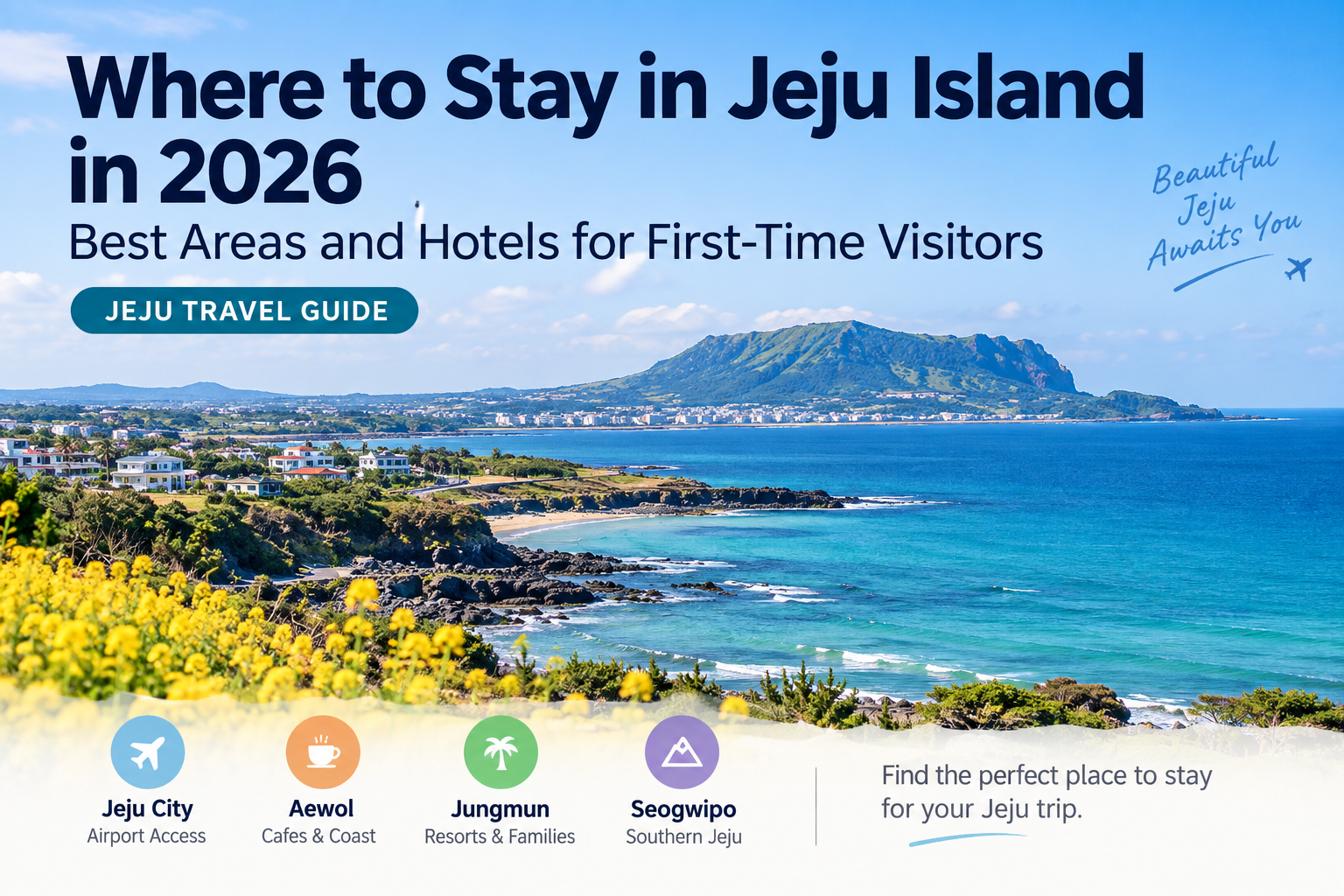
  • Where to Stay in Jeju Island in 2026: Best Areas and Hotels for First-Time Visitors

    Where to Stay in Jeju Island in 2026: Best Areas and Hotels for First-Time Visitors

    Choosing where to stay in Jeju Island can be surprisingly difficult for first-time visitors.

    Jeju is much larger than many travelers expect, and its attractions are spread across the island. Staying in the wrong area can mean spending a large part of your trip driving or sitting on buses, while choosing the right base can make exploring Jeju much easier.

    The best area to stay depends on the kind of trip you are planning. Jeju City is convenient for airport access and short stays, Aewol is popular for coastal scenery and cafes, Jungmun is known for resorts and family-friendly attractions, and Seogwipo is a good base for exploring southern Jeju.

    Travelers looking for something beyond a standard hotel can also explore boutique hotels, distinctive local stays, and other unique places to stay in Jeju Island.

    Transportation matters too. Travelers renting a car have much more flexibility in choosing accommodation, while visitors relying on public transportation should pay close attention to bus routes, travel times, and the location of their hotel.

    For most travelers, there is no single “best” area in Jeju. The right choice depends on your itinerary.

    Here is the simplest way to think about it:

    AreaBest ForMain Advantage
    Jeju CityFirst or last night, short trips, travelers without a carClose to Jeju Airport
    AewolCouples, cafes, coastal sceneryRelaxed west-coast atmosphere
    JungmunFamilies, resorts, luxury staysMajor resort area with nearby attractions
    SeogwipoLonger stays, southern Jeju sightseeingGood base for exploring the south

    If this is your first trip to Jeju, your itinerary should determine your hotel location—not simply which hotel looks the nicest online.

    For a short two- or three-night trip, staying in one well-chosen area may be easiest. For a longer trip, splitting your stay between northern and southern Jeju can reduce unnecessary travel across the island.

    1. Jeju City: Best for Airport Access and Short Stays

    Jeju City is the most practical place to stay for travelers who want easy access to Jeju International Airport.

    Because most visitors arrive and depart through the airport, staying in Jeju City can be especially convenient on the first or last night of a trip. It is also one of the easier areas for travelers who are visiting Jeju without renting a car.

    The city has a wide range of accommodation, from affordable business hotels and guesthouses to upscale hotels. You will also find restaurants, traditional markets, shopping areas, cafes, and transportation connections nearby.

    One of the biggest advantages is convenience. Instead of beginning or ending your trip with a long journey across the island, you can stay relatively close to the airport and use Jeju City as a base for exploring northern Jeju.

    Jeju City Is Best For:

    • Travelers arriving late or departing early
    • First-time visitors who value convenience
    • Short two- or three-night trips
    • Travelers without a rental car
    • Visitors who want restaurants and shopping nearby
    • Travelers planning to explore northern Jeju

    What to Know Before Staying in Jeju City

    The main disadvantage is that Jeju City does not provide the same resort atmosphere or dramatic coastal setting that many travelers imagine when they think of Jeju.

    If your priority is waking up beside the ocean, relaxing at a resort, or exploring waterfalls and attractions in southern Jeju, another area may suit you better.

    However, for convenience and airport access, Jeju City remains one of the easiest choices for a first visit.

    2. Aewol: Best for Cafes, Couples and West-Coast Scenery

    Located west of Jeju City, Aewol has become one of Jeju’s most recognizable coastal areas.

    The area is particularly popular with travelers looking for ocean views, stylish cafes, coastal drives, and a slower atmosphere than central Jeju City. It can work especially well for couples or travelers who want their accommodation to feel like part of the Jeju experience rather than simply a place to sleep.

    Aewol is also convenient for exploring parts of western Jeju, making it a useful base if your itinerary includes beaches, cafes, coastal scenery, and attractions on the western side of the island.

    Aewol Is Best For:

    • Couples
    • Cafe lovers
    • Travelers looking for ocean views
    • West Jeju itineraries
    • Relaxed trips
    • Visitors with a rental car

    What to Know Before Staying in Aewol

    Aewol is spread out, so the exact location of your accommodation matters.

    A hotel or pension described as being “in Aewol” may still be some distance from the cafes, coastline, or attractions you want to visit. Check the map carefully before booking rather than choosing accommodation based only on the area name.

    Travelers relying entirely on public transportation should also plan their routes in advance. A rental car generally makes staying in Aewol much easier, particularly if you want to explore several places around western Jeju.

    3. Jungmun: Best for Resorts, Families and Luxury Stays

    If your idea of a Jeju vacation includes a comfortable resort, ocean views, swimming pools, and easy access to major attractions, Jungmun Tourist Complex is one of the strongest areas to consider.

    Located on Jeju’s southern coast, Jungmun is home to many of the island’s well-known upscale hotels and resorts. The area is particularly convenient for families, couples on a relaxing vacation, and travelers who prefer resort facilities over staying in a busy city center.

    Nearby attractions include Jungmun Saekdal Beach, Cheonjeyeon Falls, and several museums and family-oriented attractions. This makes it possible to combine sightseeing with time at your hotel rather than spending every day traveling long distances around the island.

    Jungmun Is Best For:

    • Families with children
    • Couples looking for a resort stay
    • Luxury travelers
    • Honeymoon-style trips
    • Travelers who want hotel facilities and nearby attractions
    • Visitors exploring southwestern Jeju

    What to Know Before Staying in Jungmun

    Accommodation in Jungmun can be more expensive than in some other parts of Jeju, particularly at major resorts.

    It is therefore worth considering how much time you will actually spend at the property. Paying more for a resort makes greater sense if you plan to enjoy its pools, restaurants, ocean views, spa facilities, or other amenities.

    If you intend to leave early every morning and spend the entire day driving around Jeju, a simpler hotel elsewhere may provide better value.

    4. Seogwipo: Best for Exploring Southern Jeju

    Seogwipo is one of the most useful bases for travelers who want to explore the southern half of Jeju Island.

    The city and surrounding area provide access to waterfalls, coastal scenery, local restaurants, markets, and many of Jeju’s southern attractions. Compared with a resort-focused stay in Jungmun, central Seogwipo can also feel more like a working local city.

    Popular places around the area include Jeongbang Falls, Cheonjiyeon Falls, Seogwipo Maeil Olle Market, and sections of the Jeju Olle Trail.

    Seogwipo can be particularly attractive for travelers staying several nights because it provides a practical base while still offering plenty to do in the evening.

    Seogwipo Is Best For:

    • Travelers spending several days in Jeju
    • Southern Jeju sightseeing
    • Waterfalls and coastal scenery
    • Jeju Olle Trail travelers
    • Visitors who enjoy markets and local restaurants
    • Travelers who want a city base outside Jeju City

    What to Know Before Staying in Seogwipo

    The biggest consideration is its distance from Jeju International Airport.

    Travel time between the airport and Seogwipo can be significant depending on traffic, your exact accommodation, and the transportation method you use. If you have an early flight, staying in Seogwipo on your final night may therefore be less convenient than moving closer to Jeju City.

    On the other hand, if most of your itinerary is concentrated in southern Jeju, staying in Seogwipo can save considerable back-and-forth travel during the rest of your trip.

    Should You Stay in Jeju City or Seogwipo?

    This is one of the most common decisions first-time visitors face.

    Choose Jeju City if airport convenience, public transportation, shopping, restaurants, and northern Jeju are more important to you.

    Choose Seogwipo if your itinerary focuses on waterfalls, coastal scenery, the Olle Trail, and attractions across southern Jeju.

    For a longer trip, you do not necessarily have to choose only one.

    A traveler spending four or five nights on the island could stay part of the trip in Jeju City or western Jeju and then move to Seogwipo or Jungmun. Splitting your stay can reduce repeated travel across the island, although changing hotels also means packing and checking in again.

    For a very short trip, however, one strategically located hotel is usually simpler than changing accommodation.

    Where to Stay in Jeju Without a Rental Car

    Jeju is much easier to explore by car than many first-time visitors expect.

    Public buses connect major areas, but attractions can be widely separated and some journeys require transfers. This makes hotel location particularly important if you are not renting a car.

    For travelers without a rental car, Jeju City is generally the easiest base because of its transportation connections and proximity to the airport.

    Central Seogwipo can also work if most of your itinerary is concentrated in southern Jeju.

    Wherever you stay, check the actual bus stops and routes near your accommodation before booking. A hotel that looks close to an attraction on a map may still require an inconvenient public-transport journey.

    Where to Stay in Jeju With a Rental Car

    Having a rental car gives you much more freedom.

    Aewol, Jungmun, and accommodations outside the main city centers become considerably easier to consider because you are less dependent on bus routes.

    However, do not choose a remote hotel simply because you have a car.

    Before booking, check:

    • Driving time to the attractions on your itinerary
    • Parking availability at the accommodation
    • Distance to restaurants and convenience stores
    • Whether you will want to drive after dinner
    • Driving time back to Jeju Airport on departure day

    A beautiful ocean-view hotel can be worthwhile, but not if you spend several unnecessary hours driving every day.

    Best Area in Jeju for Different Types of Travelers

    First-Time Visitors

    For a short first trip, Jeju City offers the simplest logistics.

    For a longer first visit focused on southern attractions, Seogwipo can be a better base.

    Couples

    Aewol is attractive for couples who enjoy cafes, coastal scenery, and relaxed drives.

    For couples who prefer a more luxurious vacation, Jungmun offers a stronger resort experience.

    Families

    Jungmun is particularly convenient for families who want comfortable resort facilities combined with nearby attractions.

    Families renting a car can also consider larger accommodations elsewhere on the island, depending on their itinerary.

    Luxury Travelers

    For travelers primarily looking for an upscale resort experience, Jungmun is one of the first areas to consider.

    However, luxury properties can also be found in other parts of Jeju, so location should still come before the hotel brand itself.

    Short-Stay Travelers

    If you have only one or two nights in Jeju, staying near Jeju City and the airport can minimize transportation time.

    With such a short visit, spending hours crossing the island can take away a large portion of your available sightseeing time.

    Should You Split Your Stay in Jeju?

    For travelers staying four nights or longer, splitting accommodation between two areas can sometimes make sense.

    For example, you could spend the first part of your trip around Jeju City or Aewol while exploring northern and western Jeju, then move to Seogwipo or Jungmun for the southern part of your itinerary.

    This approach can reduce long cross-island drives and allow you to experience different sides of Jeju.

    However, changing hotels also takes time. You need to pack, check out, move your luggage, and check in again.

    If you prefer a slower trip, choosing one well-located base may be better.

    The important question is not whether other travelers split their stay. It is whether changing accommodation will actually reduce travel time for your itinerary.

    What to Check Before Booking a Hotel in Jeju

    Before choosing your accommodation, check more than the room photos and guest rating.

    1. Actual Location

    Jeju accommodation names often refer to a broad area. Open the map and check exactly where the property is located.

    2. Transportation

    If you are not renting a car, check nearby bus stops and realistic travel routes before paying for the room.

    3. Parking

    If you are renting a car, confirm whether parking is available and whether there are any restrictions.

    4. Airport Travel Time

    Check how long it will take to reach Jeju International Airport, especially for an early departure.

    5. Your Daily Itinerary

    Plot several of your priority attractions on a map. If almost everything you want to visit is on the opposite side of the island from your hotel, reconsider the location.

    6. Hotel Facilities

    A swimming pool, spa, ocean-view room, breakfast, or resort facilities can be valuable if you intend to use them. If your days will be spent sightseeing from morning until night, location may matter more.

    Frequently Asked Questions

    What is the best area to stay in Jeju for first-time visitors?

    There is no single best area for everyone. Jeju City is particularly convenient for airport access and shorter trips, while Seogwipo works well for travelers concentrating on southern Jeju. Jungmun is attractive for resort stays, and Aewol suits travelers interested in western coastal scenery and cafes.

    Is Jeju City or Seogwipo better?

    Jeju City is generally more convenient for the airport and northern Jeju. Seogwipo is better positioned for many attractions in southern Jeju. Your itinerary should determine which is more convenient.

    Where should I stay in Jeju without a car?

    Jeju City is often the easiest option because of its transportation connections and proximity to the airport. Central Seogwipo can also be practical for a southern Jeju itinerary.

    Where should couples stay in Jeju?

    Aewol is popular with travelers looking for coastal scenery, cafes, and a relaxed atmosphere. Jungmun is another strong option for couples who prefer an upscale resort experience.

    Where should families stay in Jeju?

    Jungmun is worth considering because of its concentration of resorts and nearby attractions. Families renting a car have more flexibility to choose accommodation elsewhere based on their itinerary.

    How many nights should I stay in Jeju?

    The answer depends on what you want to see, but Jeju’s size makes very short visits challenging if you want to explore several parts of the island. With more time, you can travel at a slower pace or divide your stay between different areas.

    Final Thoughts

    Choosing where to stay in Jeju Island is ultimately a transportation decision as much as a hotel decision.

    Jeju City offers convenience and airport access. Aewol provides a relaxed west-coast atmosphere. Jungmun is well suited to resort and family vacations, while Seogwipo provides a useful base for exploring southern Jeju.

    Instead of starting with a list of hotels, build a rough itinerary first. Mark the places you most want to visit, decide whether you will rent a car, and then choose the area that minimizes unnecessary travel.

    Once you have chosen the right part of Jeju, selecting the right hotel becomes much easier.

    For a first visit, that simple decision can make the difference between spending your vacation experiencing Jeju and spending too much of it traveling from one side of the island to the other.

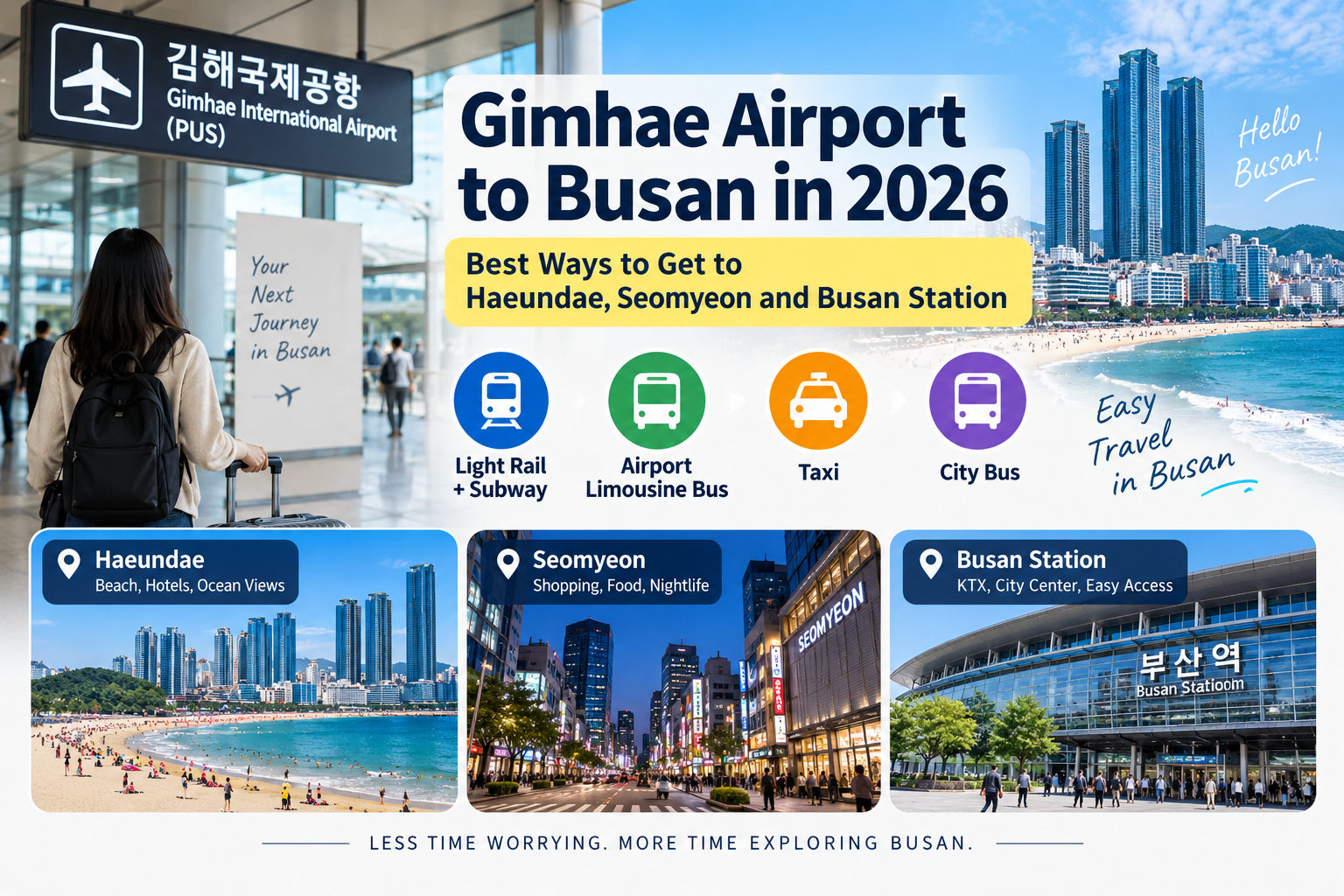
  • Gimhae Airport to Busan in 2026: Best Ways to Get to Haeundae, Seomyeon and Busan Station

    Gimhae Airport to Busan in 2026: Best Ways to Get to Haeundae, Seomyeon and Busan Station

    Getting from Gimhae Airport to Busan

    Gimhae International Airport (PUS) is the main airport serving Busan and one of the most common entry points for international travelers visiting South Korea’s second-largest city.

    But after landing, many first-time visitors face the same question: What is the best way to get from Gimhae Airport to Haeundae, Seomyeon, Busan Station, or other parts of Busan?

    The answer depends on where you are staying, how much luggage you have, what time you arrive, and whether you prefer the cheapest, easiest, or fastest option.

    In 2026, travelers can choose from several transportation options, including the Busan-Gimhae Light Rail Transit (BGL), subway connections, airport limousine buses, regular city buses, and taxis. Busan has also been expanding payment and transportation services for international visitors, making it easier to travel around the city without a car.

    This guide compares the main ways to travel from Gimhae Airport to central Busan and explains which option makes the most sense for popular destinations such as Haeundae, Seomyeon, and Busan Station.

    Quick Comparison: Gimhae Airport to Busan

    Here is the simplest way to think about your options:

    TransportationBest ForMain Advantage
    Light Rail + SubwayBudget travelersAffordable and reliable
    Airport Limousine BusTravelers with luggageFewer transfers
    City BusBudget-conscious travelers on suitable routesLow cost
    TaxiFamilies, groups, late arrivalsDoor-to-door convenience

    For many travelers with light luggage, the light rail and subway are the most economical choices. If you have large suitcases, however, avoiding multiple transfers can be worth paying more for a limousine bus or taxi.

    The best option also changes depending on your destination. Seomyeon is relatively convenient by rail, while Haeundae is farther from the airport and may be more comfortable to reach by a direct or low-transfer option.

    Option 1: Light Rail and Subway — Best for Budget Travelers

    For many visitors, the Busan-Gimhae Light Rail Transit (BGL) is the most practical low-cost way to leave Gimhae International Airport.

    The airport station is connected to the passenger terminals, and the light rail takes you to Sasang Station, where you can transfer to Busan Metro Line 2. From there, you can continue toward major areas including Seomyeon, Gwangan, and Haeundae.

    How It Works

    The basic route is:

    Gimhae International Airport → Sasang Station → Busan Metro

    At Sasang, your next route depends on your destination.

    For Seomyeon, continue on Metro Line 2 toward the city center.

    For Haeundae, stay on Line 2 after transferring at Sasang and continue east toward Haeundae Station.

    For Busan Station, you will need another subway transfer because Busan Station is on Metro Line 1.

    Why Choose the Light Rail and Subway?

    The biggest advantages are predictable travel times and relatively low transportation costs. You also avoid road traffic, which can make bus or taxi travel slower during busy periods.

    This option works particularly well if:

    • you are traveling alone or as a couple;
    • you have a small suitcase or backpack;
    • you arrive while the rail system is operating;
    • saving money is more important than door-to-door convenience.

    The main disadvantage is luggage. Carrying a large suitcase through stations, platforms, elevators, and transfers can become tiring after a long flight.

    Practical Tip for First-Time Visitors

    Before leaving the airport, check your hotel’s nearest subway station, not just the neighborhood name.

    Busan is spread across a large area, and two hotels described as being in the same general district can require very different final transfers or walks.

    A few minutes spent checking the exact station can make the trip from the airport much easier.

    Option 2: Airport Limousine Bus — Best for Travelers with Luggage

    If you are carrying a large suitcase, an airport limousine bus can be more comfortable than transferring between the light rail and subway.

    Busan reorganized its Gimhae Airport limousine services in 2026, with routes connecting the airport to important visitor areas including Seomyeon and Haeundae.

    The biggest advantage is simple: fewer transfers with your luggage.

    Gimhae Airport to Haeundae

    Haeundae is one of Busan’s most popular areas for international visitors, but it is relatively far from Gimhae Airport.

    Using the light rail and subway is possible, but the journey can feel long after an international flight. A limousine bus can therefore be an attractive option for travelers staying around Haeundae, especially when traveling with suitcases.

    Depending on the route and stop, services may also be useful for travelers staying around Centum City, eastern Busan, or nearby coastal areas.

    Gimhae Airport to Seomyeon

    Seomyeon is much more central and is one of the most convenient bases for first-time visitors to Busan.

    Travelers can reach it by light rail and subway, but the airport limousine service provides another option for visitors who would rather reduce transfers.

    This can be particularly useful if your accommodation is reasonably close to a limousine bus stop.

    Check the Current Schedule Before You Travel

    Airport bus routes, stops, fares, and operating schedules can change.

    Before your flight, check the latest information from Gimhae International Airport or the relevant Busan transportation service, especially if you plan to arrive early in the morning or late at night.

    Do not choose a hotel solely because an airport bus currently stops nearby. Transportation services can be adjusted, while the subway network is generally a more permanent part of the city’s infrastructure.

    Option 3: Taxi — Best for Convenience, Families and Late Arrivals

    A taxi is usually the easiest option if you want to travel directly from Gimhae Airport to your hotel without transfers.

    This can make sense for families, small groups, travelers with several suitcases, or passengers arriving after a long flight.

    The main benefit is door-to-door convenience. Instead of navigating stations with luggage, you can leave the airport and travel directly to your accommodation.

    When Is a Taxi Worth It?

    A taxi becomes more attractive when the fare is shared between several people.

    For a solo traveler, public transportation will usually be much cheaper. For three or four travelers, however, the difference per person may be easier to justify, especially when luggage and convenience are considered.

    Travel time and fare will depend on your destination and traffic conditions. Haeundae is considerably farther from the airport than areas such as Seomyeon, so avoid relying on one fixed taxi price when planning your budget.

    It is useful to have your hotel name and address available in Korean as well as English. Showing the exact location on a map can also help avoid confusion.

    Option 4: City Bus — Useful, but Not Always the Easiest First Choice

    Regular city buses can provide inexpensive connections between Gimhae Airport and parts of Busan.

    They may work well when a route happens to stop near your accommodation, but they are not automatically the best choice for every international traveler.

    Compared with the subway, bus routes can be more difficult for a first-time visitor to understand, and traveling with a large suitcase may be inconvenient.

    For most first-time visitors, the decision is therefore simple:

    Use the rail system when you want an inexpensive and predictable trip, choose an airport limousine when its route works well for your hotel, and consider a taxi when convenience matters most.

    City buses become more useful once you know exactly which route serves your destination.

    Best Transportation by Destination

    The easiest airport transfer depends heavily on where you are staying. Here is how to think about three of the most common destinations for international visitors.

    Gimhae Airport to Haeundae

    Haeundae is one of the farthest major tourist areas from Gimhae Airport.

    If you are traveling light and want to save money, take the light rail to Sasang and transfer to Metro Line 2 toward Haeundae.

    If you have large luggage, check whether the current airport limousine route has a convenient stop near your hotel. A taxi is another comfortable choice, particularly for families or groups who can share the fare.

    Best for budget travelers: Light rail + Metro Line 2
    Best for heavy luggage: Airport limousine, when the route suits your hotel
    Best for maximum convenience: Taxi

    Gimhae Airport to Seomyeon

    Seomyeon is one of the easiest areas to reach from the airport and an excellent transportation hub for exploring Busan.

    A practical public-transport route is Gimhae Airport → Sasang → Metro Line 2 → Seomyeon.

    Because Seomyeon is closer to the airport than Haeundae, it is also a more reasonable taxi destination for travelers who prioritize convenience.

    If an airport limousine stop is close to your accommodation, compare that option with the rail route before traveling.

    Best for most budget-conscious visitors: Light rail + Metro Line 2
    Best with several suitcases: Limousine bus or taxi

    Gimhae Airport to Busan Station

    Busan Station is particularly useful for travelers connecting to KTX trains or staying in the older central part of Busan.

    Unlike Seomyeon and Haeundae, Busan Station is on Metro Line 1, so a rail journey from the airport requires an additional subway transfer after entering Busan’s metro network.

    If you have large luggage or need to catch a train, a taxi may be worth considering because it reduces the risk and inconvenience of moving between multiple stations.

    Always leave extra time when connecting to a KTX train. Flight delays, immigration, baggage collection, traffic, and unfamiliar public transportation can all make a tightly planned connection stressful.

    Best for low cost: Light rail + subway
    Best for luggage or a time-sensitive train connection: Taxi

    Paying for Transportation from Gimhae Airport

    Having a payment plan before leaving the airport can make your first journey in Busan much easier.

    For public transportation, travelers commonly use a reloadable transportation card such as T-money or Cashbee. These cards can be useful not only in Busan but also on public transportation in other parts of South Korea.

    If you already purchased a transportation card earlier in your Korea trip, you generally do not need a separate card simply because you have arrived in Busan.

    However, do not assume that every ticket machine, bus, taxi, or transportation service accepts exactly the same foreign card or mobile payment method. Korea continues to expand cashless payment options, but keeping a small amount of Korean won available can still be useful.

    What If You Arrive Late at Night?

    Late arrival changes the decision.

    Rail and bus services do not operate 24 hours a day, so travelers landing late should check the last available public transportation connection for their specific arrival date.

    Remember that your flight’s scheduled landing time is not the time you will leave the terminal. Immigration, baggage claim, customs, and finding your way through an unfamiliar airport all take additional time.

    If your arrival is close to the final public transportation services, a taxi may be the safer and simpler option.

    Traveling with Large Luggage

    Do not choose transportation based only on the cheapest fare.

    A route that looks easy on a map can become much less convenient when you are carrying a large suitcase through transfers, elevators, station exits, and crowded trains.

    Before choosing your airport transfer, consider:

    • how many times you need to transfer;
    • how far your hotel is from the final station or stop;
    • whether you are traveling with children;
    • how many suitcases your group has;
    • and whether you will be traveling during a busy commuting period.

    For travelers with significant luggage, paying more for a lower-transfer option can be one of the most worthwhile transportation decisions of the trip.

    Which Option Should You Choose?

    There is no single best airport transfer for every traveler. Your destination, luggage, arrival time, and group size matter more than choosing the cheapest option.

    Your SituationRecommended Option
    Solo traveler with light luggageLight rail + subway
    Staying in SeomyeonLight rail + Metro Line 2
    Staying in Haeundae with light luggageLight rail + Metro Line 2
    Staying in Haeundae with large luggageAirport limousine or taxi
    Family or small groupTaxi can be worth comparing
    Connecting to KTX at Busan StationRail if you have enough time; taxi for convenience
    Arriving late at nightCheck final transit times; taxi may be necessary
    Hotel near a limousine stopCompare limousine service with the rail route

    Frequently Asked Questions

    What is the cheapest way from Gimhae Airport to Busan?

    For many destinations, combining the Busan-Gimhae Light Rail Transit with the Busan Metro is one of the most economical and predictable options.

    Is there a subway directly from Gimhae Airport to Haeundae?

    Not directly. You can take the light rail from the airport to Sasang Station, transfer to Busan Metro Line 2, and continue toward Haeundae.

    Is Seomyeon easy to reach from Gimhae Airport?

    Yes. Seomyeon is relatively convenient because you can transfer from the airport light rail to Metro Line 2 at Sasang and continue toward Seomyeon.

    Should I take a taxi from Gimhae Airport?

    A taxi is worth considering if you have heavy luggage, are traveling with children or several people, arrive late, or simply want door-to-door transportation. Solo travelers with light luggage will usually save money by using public transportation.

    Can I use T-money in Busan?

    T-money is widely used on public transportation in Busan. If you already have a transportation card from another part of your Korea trip, check its balance before traveling rather than automatically buying another card.

    How early should I leave Gimhae Airport if I need to catch a KTX train?

    Allow a generous buffer. Immigration, baggage collection, transportation transfers, traffic, and finding the correct platform can all take longer than expected. Avoid planning a tight airport-to-KTX connection.

    Final Thoughts

    Getting from Gimhae International Airport to Busan is not difficult once you choose transportation based on your actual destination.

    For travelers with light luggage, the light rail and subway provide an affordable and dependable way into the city. Travelers carrying large suitcases may prefer an airport limousine bus when its route matches their accommodation, while families, groups, and late-night arrivals may find a taxi worth the additional cost.

    Most importantly, check the exact location of your hotel before choosing your transfer. Busan is a large city, and the best route to Haeundae can be very different from the best route to Seomyeon or Busan Station.

    Transportation routes, schedules, and fares can change, so confirm current operating information shortly before your trip.

    With your airport transfer planned in advance, you can spend less time figuring out transportation after landing and more time enjoying Busan.

  • How to Pay in South Korea in 2026: Cash, Cards, ATMs and Cashless Payments for Travelers

    How to Pay in South Korea in 2026: Cash, Cards, ATMs and Cashless Payments for Travelers

    Do You Need Cash in South Korea? Best Ways to Pay as a Traveler

    You do not need to carry large amounts of cash in South Korea because credit and debit cards are widely accepted. However, foreign travelers should still carry some Korean won for places or situations where cards may not work, including some traditional markets, small businesses, transportation-related payments, or when a foreign card is declined.

    In this guide, you’ll learn when to carry cash, which foreign cards are most likely to work, how to use ATMs, whether mobile payments are practical for visitors, and how to avoid common payment problems in Korea.

    South Korea is highly developed in electronic payments, and cards are widely used in everyday life. However, travelers should not assume that they can complete an entire trip without carrying any Korean won.

    The most practical approach is to understand how cash, credit cards, transportation cards, ATMs, and mobile payments work before you travel.

    What Currency Is Used in South Korea?

    The official currency of South Korea is the South Korean won, commonly written as KRW or represented by the symbol ₩.

    Korean banknotes commonly include:

    • ₩1,000
    • ₩5,000
    • ₩10,000
    • ₩50,000

    Coins are also used for smaller amounts.

    Korean prices are usually shown in thousands of won, so seeing ₩10,000 or ₩20,000 on a restaurant menu is completely normal. Exchange rates change daily, so check a current rate shortly before or during your trip rather than relying on an old conversion.

    Is South Korea a Cashless Society?

    South Korea is very card-friendly, but travelers should still carry some cash for small purchases, traditional markets, transportation-related needs, and places where a foreign card may not be accepted.

    Credit cards and other electronic payment methods are widely used at restaurants, cafés, convenience stores, department stores, hotels, and many tourist attractions.

    Korean residents may complete much of their daily spending without using physical cash.

    For foreign travelers, however, the situation can be slightly different.

    Some payment systems are designed primarily for locally issued cards or Korean mobile-payment services. A foreign card may occasionally be declined even when the store normally accepts card payments.

    Do You Need Cash in Korea?

    You probably do not need to carry a large amount of cash, but having some cash available is a good idea.

    Cash may be useful for:

    • traditional markets
    • small food stalls
    • certain ticket machines
    • small independent businesses
    • topping up some transportation cards
    • situations where a foreign card is declined

    In central Seoul, Busan, and other major tourist areas, travelers can often use cards for most purchases.

    But keeping some won in your wallet provides a backup when electronic payment does not work as expected.

    Can Foreign Credit Cards Be Used in Korea?

    International credit and debit cards are widely accepted in many places in South Korea, especially in major cities and tourist areas.

    Hotels, large restaurants, shopping malls, department stores, cafés, convenience stores, and major attractions commonly accept card payments.

    However, acceptance of a card network does not guarantee that every foreign card will work at every terminal.

    Possible problems can include:

    • card issuer security blocks
    • overseas transactions being disabled
    • compatibility issues with a payment terminal
    • online services requiring a Korean-issued card
    • authentication requirements

    Before traveling, check that your card is enabled for international transactions.

    Should You Bring More Than One Card?

    Yes, if possible.

    Depending on a single credit or debit card can create unnecessary problems if the card is lost, damaged, blocked, or unexpectedly declined.

    A practical travel setup might include:

    one primary card + one backup card + some Korean won

    Keep the backup card separately from your main wallet when possible.

    You should also know how to contact your bank or card issuer if you encounter a payment problem abroad.

    Can You Withdraw Korean Won From an ATM?

    Foreign travelers can use many ATMs in South Korea, but not every ATM accepts every international card.

    Look for ATMs that indicate support for global or international cards.

    They are commonly found at airports, banks, convenience stores, transportation hubs, and busy commercial areas.

    Your home bank, the ATM operator, or both may charge fees.

    The exchange rate applied to the withdrawal can also vary.

    For this reason, check your own bank’s international ATM policies before leaving home.

    Should You Exchange Money Before Traveling to Korea?

    You do not necessarily need to exchange all of your travel money before arriving.

    Many travelers combine several methods:

    bringing a small amount of Korean won, exchanging currency after arrival, withdrawing cash from an ATM, and using cards for regular purchases.

    The best choice depends on the fees and exchange rates offered by your bank, card provider, or currency-exchange service.

    Avoid carrying unnecessarily large amounts of cash.

    For most travelers, having enough won for immediate expenses and using cards for many larger purchases can be more convenient.

    Can You Exchange Money at Incheon Airport?

    Currency-exchange services and ATMs are available at major international arrival points such as Incheon International Airport.

    This can be convenient if you arrive without Korean won and need cash immediately.

    After arriving in Seoul, you can also find currency-exchange services in major tourist and commercial areas.

    Convenience and exchange value are not always the same thing, so travelers who plan to exchange a larger amount may want to compare available rates and fees.

    What Is T-money?

    T-money is one of the most useful payment tools for travelers using public transportation in Korea.

    It is a rechargeable transportation card commonly used for buses and subways and can also be used for certain other payments where supported.

    Do You Need Cash to Recharge a Transportation Card?

    This is one reason travelers should keep some Korean won available.

    Depending on the transportation card, recharge location, and payment method, cash may still be required or be the simplest option for topping up.

    Can Foreign Travelers Use Korean Mobile Payments?

    South Korea has an advanced mobile-payment environment, but some domestic payment systems can be difficult for short-term foreign visitors to use.

    Certain services may require a Korean phone number, Korean bank account, local identity verification, or a locally issued card.

    International mobile wallets may work in some situations, but travelers should not assume that every shop or payment terminal will support their preferred service.

    A physical international card remains a useful primary payment method for many visitors.

    What If Your Card Is Declined in Korea?

    Do not immediately assume that the store does not accept foreign travelers’ cards.

    There can be several reasons for a declined transaction.

    Try another card if you have one.

    If the problem continues, contact your bank or card issuer and check whether overseas transactions have been blocked.

    This is also why carrying a small cash reserve is useful.

    Can You Use Cash at Restaurants and Shops?

    Cash is still legal currency and remains usable in many places.

    However, payment practices can vary, and some businesses may strongly prefer electronic payments.

    Use cards where they work conveniently and keep cash available as a backup.

    How Much Cash Should You Carry in Korea?

    There is no single amount that is correct for every traveler.

    It depends on your itinerary, spending habits, accommodation, transportation plans, and whether you will visit traditional markets or areas outside major tourist centers.

    Rather than carrying your entire travel budget in cash, consider keeping enough Korean won for small purchases and unexpected payment problems.

    For larger expenses such as hotels or major shopping purchases, cards are often more convenient when accepted.

    Are Traditional Markets More Cash-Friendly?

    Traditional markets are one place where carrying cash can be particularly useful.

    Many vendors now accept electronic payments, but payment options vary from stall to stall.

    If you plan to explore Korean street food, local markets, or smaller independent vendors, keeping Korean won available can make the experience easier.

    What About Tipping in Korea?

    Tipping is generally not a standard part of everyday Korean restaurant and café culture in the same way it is in some countries.

    Travelers usually pay the amount shown on the bill.

    However, practices can vary in specialized tourism or hospitality situations, so follow any clearly stated service policies.

    For ordinary restaurants, cafés, taxis, and shops, visitors should not assume that a percentage-based tip is expected.

    Should You Choose KRW When a Card Terminal Offers Currency Conversion?

    Some international card transactions may offer the option of paying in your home currency rather than Korean won.

    This is often called dynamic currency conversion (DCC).

    The exchange rate or fees associated with DCC may differ from the rate your own card provider would apply.

    Before accepting the option, check the displayed rate and understand your card’s foreign transaction policy.

    Do not automatically select your home currency simply because the amount looks more familiar.

    A Simple Payment Strategy for First-Time Visitors

    For many foreign travelers, the easiest approach is to avoid relying on only one payment method.

    A simple setup is:

    International card + backup card + small amount of Korean won + transportation card

    This gives you several options if one payment method fails.

    Use your international card for ordinary purchases where it works, keep cash for smaller transactions and backup situations, and use a transportation card for convenient public transit.

    Money in Korea: What Should You Prepare Before Your Trip?

    Before leaving for South Korea, consider doing a few simple things.

    Make sure your bank cards can be used internationally.

    Check your bank’s foreign transaction and ATM fees.

    Know the approximate exchange rate between your currency and the Korean won.

    Prepare more than one payment method.

    And once you arrive, obtain some Korean won rather than assuming your trip will be completely cashless.

    Final Thoughts

    South Korea is easy to navigate with cards, but travelers should still keep some Korean won for small purchases, transportation needs, and unexpected payment problems.

    The most practical setup is simple: use an international card for most purchases, carry a backup card, and keep a modest amount of cash available.

    With those options prepared, you can travel around Korea without worrying too much about how to pay.


  • T-Money vs Climate Card in Seoul 2026: Which Transportation Card Is Best for Tourists?

    T-Money vs Climate Card in Seoul 2026: Which Transportation Card Is Best for Tourists?

    Getting around Seoul is easy once you understand the city’s transportation system. But for first-time visitors, choosing the right transportation card can be surprisingly confusing.

    Two of the most useful options are T-Money and the Climate Card.

    Both can make traveling around Seoul much easier, but they work very differently. T-Money is a rechargeable transportation card that can be used across Korea, while the Climate Card offers unlimited rides within its designated Seoul transportation network for a fixed period.

    So which one should you buy?

    This 2026 guide explains the differences between T-Money and the Climate Card, how much they cost, where you can use them, and which option may make more sense for your Korea itinerary.

    Quick Answer: T-Money or Climate Card?

    For most travelers, the choice depends on where you are traveling.

    Choose T-Money if you:

    • Plan to travel outside Seoul
    • Will visit places such as Busan, Gyeongju, Jeju, or other Korean cities
    • Prefer paying for transportation based on actual usage
    • Want one transportation card that works across much of Korea
    • Expect to use taxis or other transportation outside the Climate Card service area

    Choose the Climate Card if you:

    • Will spend most of your trip inside Seoul
    • Expect to use buses and subways frequently
    • Want unlimited eligible public transportation during your pass period
    • Prefer knowing your transportation cost in advance
    • Are staying in Seoul for between one and seven days

    For many first-time visitors traveling around Korea, T-Money offers greater flexibility.

    For travelers spending several busy sightseeing days almost entirely in Seoul, however, a short-term Climate Card can be very convenient.

    What Is a T-Money Card?

    T-Money is one of Korea’s most widely used prepaid transportation cards.

    Instead of buying an individual ticket every time you ride a subway or bus, you load money onto the card and tap it when entering and leaving the transportation system.

    T-Money can be purchased at many convenience stores, including chains such as CU, GS25, and 7-Eleven, as well as at transportation facilities.

    The standard card generally costs around KRW 3,000–5,000, before adding transportation credit.

    One of T-Money’s biggest advantages for international travelers is its wide coverage.

    It can be used on public transportation across many parts of Korea, making it particularly useful for travelers visiting several cities during one trip.

    Where Can You Use T-Money?

    T-Money can be used on many:

    • Subways
    • City buses
    • Express and intercity buses
    • Taxis
    • Other participating transportation services

    It can also be used at some convenience stores, vending machines, and other participating merchants displaying the T-Money logo.

    This makes T-Money particularly useful for itineraries such as:

    Seoul → Busan → Gyeongju → Seoul

    Instead of buying a new local transportation card in every destination, travelers can continue using the same T-Money card for many local transportation needs.

    What Is the Seoul Climate Card?

    The Climate Card was introduced by the Seoul Metropolitan Government as an unlimited public transportation pass.

    For tourists, the most important products are the short-term Climate Card passes.

    As of 2026, short-term passes are available for:

    • 1 day — KRW 5,000
    • 2 days — KRW 8,000
    • 3 days — KRW 10,000
    • 5 days — KRW 15,000
    • 7 days — KRW 20,000

    A physical Climate Card costs an additional KRW 3,000.

    These passes are particularly attractive for travelers who plan to take public transportation repeatedly while sightseeing around Seoul.

    Important Climate Card Change in 2026

    Visitors may see older online guides discussing the Climate Card’s 30-day prepaid pass.

    This information is changing.

    Seoul announced that recharging the existing 30-day prepaid Climate Card ends after August 31, 2026, as the city transitions toward its newer Climate Pass system.

    However, this does not mean tourists can no longer use the Climate Card.

    The short-term tourist passes for 1, 2, 3, 5, and 7 days continue to be available.

    This distinction is important when reading older travel guides about Seoul transportation.

    Can Foreign Tourists Buy the Climate Card With an International Credit Card?

    Yes, and this became significantly easier in 2026.

    Seoul expanded payment support at hundreds of new subway vending machines, allowing travelers to use internationally issued credit and debit cards such as Visa and Mastercard to purchase Climate Cards and recharge short-term passes.

    International card payments are supported at new vending machines installed across Seoul Metro Lines 1–8.

    An average service fee of approximately 3.7% may apply when using an internationally issued card.

    This is an important improvement for international visitors because transportation card purchases in Korea have traditionally relied heavily on Korean won cash or locally issued cards.

    T-Money vs Climate Card: Main Differences

    Here is the simplest way to understand the two cards.

    T-Money

    Payment system: Pay per ride

    Best for: Flexible travel throughout Korea

    Coverage: Widely usable across Korea

    Main advantage: One card can be used for transportation in many Korean cities

    Best traveler: Someone visiting Seoul plus other destinations

    Climate Card

    Payment system: Unlimited eligible transportation during the pass period

    Best for: Frequent transportation within Seoul

    Coverage: Limited primarily to eligible Seoul transportation services

    Main advantage: Unlimited rides without worrying about individual fares

    Best traveler: Someone sightseeing intensively within Seoul

    Is the Climate Card Really Unlimited?

    Within its eligible transportation network, the Climate Card allows unlimited rides during the validity period.

    However, “unlimited” does not mean that every transportation service in Korea is included.

    The Climate Card has a defined service area and exclusions. Travelers planning trips outside Seoul should therefore check whether their destination is covered before relying exclusively on the card.

    This is one of the biggest differences between the Climate Card and T-Money.

    T-Money does not provide unlimited transportation, but its geographical flexibility is much greater.

    Which Card Is Better for a 3-Day Seoul Trip?

    Consider a traveler spending three full days sightseeing around Seoul.

    The itinerary might include:

    Day 1: Gyeongbokgung Palace → Bukchon Hanok Village → Insadong → Myeongdong

    Day 2: Hongdae → Yeonnam-dong → Han River → Gangnam

    Day 3: Seongsu → Seoul Forest → Dongdaemun → Namsan

    This traveler may take multiple subway and bus rides each day.

    A 3-day Climate Card costs KRW 10,000, plus the KRW 3,000 physical card cost if a card needs to be purchased.

    For a transportation-heavy itinerary like this, the Climate Card can be particularly convenient.

    Which Card Is Better for a 7-Day Korea Trip?

    Now consider this itinerary:

    Days 1–3: Seoul
    Days 4–5: Gyeongju
    Days 6–7: Busan

    In this situation, T-Money is generally more practical because the traveler is moving beyond Seoul.

    The Climate Card’s main value comes from frequent eligible transportation within Seoul, whereas T-Money can continue to be useful in other Korean cities.

    Can You Use Both T-Money and the Climate Card?

    Yes.

    In fact, some travelers may find that carrying both is convenient.

    You could use the Climate Card during several intensive sightseeing days in Seoul and keep a T-Money card for transportation outside the Climate Card coverage area or later trips to other Korean cities.

    You do not necessarily have to choose only one card for your entire Korea trip.

    Where Can Tourists Buy T-Money?

    T-Money cards are widely available.

    Travelers can commonly find them at convenience stores such as:

    • CU
    • GS25
    • 7-Eleven
    • Other participating convenience stores

    They are also available at transportation-related sales locations.

    According to VISITKOREA, a standard T-Money card generally costs approximately KRW 3,000–5,000 before adding transportation credit.

    One detail international travelers should know is that ordinary T-Money purchases and top-ups may still require Korean won cash in many situations, so carrying some cash after arriving in Korea remains useful. Korea Tourism Organization’s 2026 transportation guide specifically notes cash-only purchasing/top-up for standard prepaid T-Money.

    Where Can Tourists Buy a Climate Card?

    Physical Climate Cards are available through designated subway vending machines and participating sales locations in Seoul.

    New transportation-card vending machines across Seoul Metro Lines 1–8 have made purchasing the card considerably easier for international visitors.

    Remember that the physical card itself costs KRW 3,000, and the short-term pass is loaded separately.

    Unlike an ordinary T-Money balance, a short-term Climate Card begins according to the rules associated with the pass, so travelers should check the activation timing before loading it.

    What About Airport Transportation?

    This is where travelers should be careful.

    Not every airport transportation option is included with every Seoul transportation pass.

    For example, the AREX Express Train operates differently from ordinary Seoul subway transportation.

    Travelers arriving at Incheon International Airport should therefore check their airport-to-hotel transportation separately instead of assuming that a Climate Card covers every airport option.

    We will cover this in a separate guide comparing AREX Express, AREX All-Stop Train, airport limousine buses, and taxis from Incheon Airport to Seoul.

    What About WOWPASS?

    WOWPASS is another popular option for international visitors.

    Unlike T-Money, which is primarily a transportation card, WOWPASS combines several traveler-focused functions, including prepaid payments, transportation functionality, and currency-related services.

    That makes it a different type of product.

    For travelers wondering whether WOWPASS or T-Money is better, we will compare those options separately because the decision involves more than transportation alone.

    T-Money vs Climate Card: Which Should First-Time Visitors Choose?

    There is no single card that is ideal for every Korea itinerary.

    For a traveler spending almost the entire trip sightseeing around Seoul and taking public transportation many times each day, the Climate Card can be a simple and convenient choice.

    For travelers visiting multiple Korean cities or wanting maximum transportation flexibility, T-Money is usually easier to use throughout the trip.

    And for some travelers, carrying both can make sense.

    The key is to choose based on your itinerary rather than simply buying whichever transportation card you see first.

    Frequently Asked Questions

    Is T-Money only available in Seoul?

    No. One of T-Money’s biggest advantages is that it can be used on public transportation in many areas throughout Korea.

    Can tourists still use the Climate Card in 2026?

    Yes. Although Seoul is changing its longer-term Climate Card system, short-term tourist passes for 1, 2, 3, 5, and 7 days remain available.

    How much is a 3-day Climate Card?

    The 3-day short-term pass costs KRW 10,000. A physical Climate Card costs an additional KRW 3,000 if you do not already have one.

    Can I buy a Climate Card with a foreign credit card?

    Internationally issued credit and debit cards are accepted at supported new transportation-card vending machines for Climate Card purchases and short-term pass recharging.

    Can I use T-Money in Busan?

    Yes. T-Money is widely usable on public transportation beyond Seoul, including major Korean cities.

    Should I buy T-Money at Incheon Airport?

    For many visitors, getting a transportation card soon after arrival is convenient, especially if they plan to use public transportation frequently during their trip.

    Final Thoughts

    Choosing between T-Money and the Climate Card becomes much easier once you know your itinerary.

    If your trip is focused almost entirely on Seoul and you expect to ride buses and subways frequently, a short-term Climate Card can provide simple, predictable transportation costs.

    If your Korea itinerary includes several cities, T-Money offers greater flexibility and can remain useful throughout your trip.

    Before traveling, always check the latest transportation rules because Seoul’s transit card system continues to evolve.

    For most international travelers, the best strategy is simple:

    Choose the Climate Card for intensive Seoul sightseeing. Choose T-Money for flexibility across Korea.


  • Korea During Chuseok 2026: What Tourists Need to Know About Travel, Transport, Shops, and Attractions

    Korea During Chuseok 2026: What Tourists Need to Know About Travel, Transport, Shops, and Attractions

    Korea During Chuseok 2026: A Guide for International Travelers

    If you are visiting South Korea in late September 2026, your trip may overlap with Chuseok, one of Korea’s most important traditional holidays.

    For travelers, Chuseok can be a fascinating time to experience Korean culture. Families gather, traditional customs become more visible, and major cities can feel noticeably different from an ordinary week.

    However, Chuseok can also affect transportation, opening hours, restaurant availability, and travel times.

    The key is not to avoid Korea during Chuseok—it is to plan differently.

    This guide explains what international visitors should know about traveling in Korea during Chuseok 2026, including transportation, attractions, restaurants, shopping, and practical travel strategies.

    When Is Chuseok in 2026?

    In 2026, Chuseok falls on Friday, September 25.

    The official Chuseok holiday period runs from September 24 to September 26, creating a major holiday period around the weekend.

    Because millions of Koreans travel to visit family during Chuseok, transportation demand can become extremely high before and after the holiday itself.

    If your Korea trip falls around these dates, transportation planning should be one of your highest priorities.

    What Is Chuseok?

    Chuseok is often described as one of Korea’s most important family holidays.

    Traditionally, families gather to honor ancestors, spend time together, prepare special foods, and visit their hometowns.

    One of the foods most strongly associated with the holiday is songpyeon, a small half-moon-shaped rice cake traditionally prepared for Chuseok.

    For international visitors, the holiday provides an opportunity to see a different side of Korean culture beyond shopping districts, cafés, and famous tourist attractions.

    The Biggest Travel Challenge: Transportation

    Transportation is usually the most important issue for tourists during Chuseok.

    Millions of people travel between Seoul and other regions to visit their hometowns or relatives.

    As a result, trains, express buses, highways, and domestic flights can become extremely busy.

    KTX and Train Tickets

    KTX and other intercity trains are among the most convenient ways to travel around Korea.

    During Chuseok, however, popular routes may sell out quickly.

    Routes between Seoul and cities such as Busan, Daegu, Daejeon, Gyeongju, and other regional destinations can experience especially strong demand.

    If you already have confirmed train tickets, keep them.

    If you do not, avoid assuming that you will simply arrive at Seoul Station and find a convenient seat.

    Express Buses

    Express buses are another option, but heavy highway traffic can significantly increase travel times during peak holiday periods.

    A journey that normally takes a few hours may take considerably longer when roads are congested.

    Build extra time into your itinerary.

    Domestic Flights

    Travelers visiting Jeju should also pay close attention to domestic flight availability.

    Jeju is one of Korea’s most popular domestic travel destinations, and holiday periods can create strong demand for flights and accommodation.

    Book early whenever possible.

    Should Tourists Leave Seoul During Chuseok?

    Not necessarily.

    In fact, staying in Seoul can be a smart strategy during the busiest part of Chuseok.

    Many Seoul residents leave the capital to visit their hometowns, while tourists remain.

    Although individual businesses may close, major tourist districts and attractions can still offer plenty to do.

    Instead of trying to cross the country during the busiest travel period, consider using Chuseok itself to explore Seoul and schedule your intercity travel for a less congested day.

    What Can You Do in Seoul During Chuseok?

    Chuseok can be an excellent time to explore Korea’s traditional culture.

    Visit a Royal Palace

    Places such as Gyeongbokgung Palace offer international travelers an accessible introduction to Korean history and architecture.

    Traditional areas around the palaces also pair well with a Chuseok itinerary.

    Explore Bukchon and Insadong

    Bukchon Hanok Village and Insadong are popular areas for travelers interested in traditional architecture, crafts, tea, and Korean culture.

    Opening hours for individual shops and restaurants may vary during the holiday, so check before visiting a specific business.

    Walk Along Cheonggyecheon

    If you want something simple and flexible, Cheonggyecheon Stream is a pleasant place to walk through central Seoul.

    Outdoor attractions are especially useful during holidays because they are less dependent on individual store opening schedules.

    Explore Seoul’s Parks

    Parks, riverside areas, and walking routes can also be good options when some indoor businesses operate on reduced schedules.

    The Han River parks, for example, provide an easy way to enjoy Seoul without relying on reservations.

    Are Tourist Attractions Closed During Chuseok?

    Some attractions remain open, while others may close or operate with adjusted hours.

    There is no single rule that applies to every museum, palace, attraction, restaurant, or shop.

    Therefore, one of the most important Chuseok travel habits is:

    Check official opening information shortly before visiting.

    Do not rely entirely on an old blog post or a schedule from a previous year.

    Holiday operating hours can change.

    Are Restaurants Open During Chuseok?

    Many restaurants remain open, especially in major tourist areas, shopping districts, hotel zones, and neighborhoods with heavy visitor traffic.

    However, smaller independent restaurants may close for part or all of the holiday.

    This can be particularly noticeable in residential neighborhoods.

    If there is a specific restaurant you absolutely want to visit, check its official website or social media account before traveling across the city.

    Hotels can also be useful during the holiday because hotel restaurants and surrounding tourist infrastructure may offer more predictable options.

    Are Convenience Stores Open?

    Convenience stores are one of the most useful resources for travelers in Korea.

    Many convenience stores continue operating during holidays, although individual locations can vary.

    They are useful for drinks, snacks, simple meals, toiletries, and other basic travel needs.

    Still, travelers should avoid assuming that every individual business will follow its normal schedule.

    What About Shopping Malls and Department Stores?

    This is an area where travelers should plan carefully.

    Large department stores, supermarkets, shopping centers, and individual shops may have special Chuseok schedules.

    Some may close on particular days while others remain open.

    Tourist-heavy shopping districts may still have many businesses operating, but opening hours can vary significantly.

    If shopping is one of the main purposes of your trip, check each major destination shortly before your visit.

    Is Myeongdong Open During Chuseok?

    Myeongdong remains one of Seoul’s most tourist-oriented neighborhoods.

    Because it serves large numbers of international visitors, travelers may find more restaurants, beauty stores, cafés, and retail businesses operating there than in quieter residential neighborhoods.

    However, individual stores can still change their hours.

    Treat Myeongdong as a useful option—not a guarantee that every shop will be open.

    Is Public Transportation in Seoul Available?

    Seoul’s subway and bus systems remain essential transportation options during the holiday period.

    Service schedules and special transportation measures can vary, so travelers should check current information when traveling.

    For most international visitors staying within Seoul, using the subway is generally much easier than attempting long-distance highway travel during peak Chuseok traffic.

    Best Strategy for a First-Time Visitor

    If this is your first trip to Korea and you will be there during Chuseok, consider a simple strategy.

    Before Chuseok: Complete any important intercity travel that requires trains or flights.

    During the busiest holiday period: Stay primarily in Seoul or another city where you already have accommodation.

    After Chuseok: Resume longer regional travel once transportation pressure begins to ease.

    This reduces the risk of spending valuable vacation time in traffic or searching for sold-out transportation.

    Where Should You Stay During Chuseok?

    Location becomes even more important during a major holiday.

    In Seoul, staying near a subway station can make sightseeing much easier.

    Areas such as Myeongdong, Jongno, Hongdae, Seoul Station, and Gangnam offer different advantages depending on your itinerary.

    For travelers interested in historical attractions, Jongno can be particularly convenient.

    For airport access and nightlife, Hongdae may be more suitable.

    Myeongdong is convenient for first-time visitors who want central access to shopping and major attractions.

    Choosing accommodation based on transportation—not just hotel price—can save considerable time during a busy holiday.

    Should You Visit Busan During Chuseok?

    Busan is one of Korea’s most popular destinations, but traveling between Seoul and Busan during peak Chuseok movement requires planning.

    If you already have confirmed transportation and accommodation, Busan can still be a great part of your trip.

    If you have not booked transportation, however, avoid building your entire itinerary around the assumption that convenient last-minute train tickets will be available.

    Another strategy is to visit Busan either before or after the busiest holiday travel days.

    What About Gyeongju?

    Gyeongju is particularly attractive in autumn because its historic sites combine well with cooler weather and seasonal scenery.

    However, Chuseok travel demand can affect regional transportation.

    If Gyeongju is part of your itinerary, confirm your intercity transportation first and then plan local sightseeing.

    Historic destinations such as temples, royal tombs, and traditional areas make Gyeongju one of Korea’s most rewarding cultural destinations.

    What Should You Book in Advance?

    During Chuseok, advance planning becomes much more valuable.

    Prioritize:

    Intercity trains and buses
    Domestic flights
    Hotels and accommodation
    Popular tours or activities
    Restaurants that require reservations

    You do not need to schedule every hour of your trip.

    Instead, secure the things that would be difficult to replace if they sell out.

    Five Mistakes to Avoid During Chuseok

    1. Assuming Everything Is Closed

    Korea does not completely shut down during Chuseok.

    Many attractions and businesses continue operating, particularly in tourist areas.

    2. Assuming Everything Is Open

    The opposite assumption is equally risky.

    Individual restaurants, museums, stores, and attractions may change their schedules.

    3. Planning Last-Minute Intercity Travel

    This is one of the biggest risks.

    Holiday transportation demand can make spontaneous long-distance travel difficult.

    4. Underestimating Highway Traffic

    Even if bus tickets are available, road congestion can dramatically increase travel time.

    5. Building an Inflexible Itinerary

    Flexibility is extremely valuable during a national holiday.

    Prepare one or two alternative attractions or restaurants for each day.

    A Simple Chuseok 2026 Travel Checklist

    Before your trip, confirm:

    • Your hotel reservations
    • Intercity train, bus, or flight tickets
    • Opening hours for must-see attractions
    • Restaurant reservations where necessary
    • Airport transportation plans
    • Alternative activities in case a destination is closed

    Save important reservation information on your phone so it remains accessible even if you have connectivity problems.

    Frequently Asked Questions

    Is Korea worth visiting during Chuseok?

    Yes. Chuseok can provide a unique cultural experience, but travelers need to plan transportation and opening hours more carefully than usual.

    Is Seoul empty during Chuseok?

    Some residents leave Seoul to visit family, which can change the atmosphere of the city. However, major tourist districts remain active and there are still many things for visitors to do.

    Can tourists use KTX during Chuseok?

    Yes, but tickets on popular routes can be difficult to obtain because demand is extremely high.

    Are restaurants closed?

    Some close, while many others remain open. Check individual restaurants rather than assuming.

    Should I travel from Seoul to Busan during Chuseok?

    You can if you have confirmed transportation. If you do not, traveling immediately before or during peak holiday movement may be inconvenient.

    Is Chuseok a good time to experience Korean culture?

    Yes. The holiday offers travelers an opportunity to learn more about Korean family traditions, food, history, and seasonal customs.

    Final Thoughts

    Traveling in Korea during Chuseok 2026 does not have to be difficult.

    The most important rule is simple: secure long-distance transportation early and remain flexible with everything else.

    Rather than trying to travel across the country during the busiest days, international visitors may enjoy spending more time exploring Seoul, traditional neighborhoods, palaces, parks, and cultural attractions.

    With a little advance planning, Chuseok can become one of the most memorable parts of a Korea trip rather than an obstacle.