Tag: Korea Travel Tips

  • A First-Time Traveler’s Guide to Korea: What to Know Before You Go

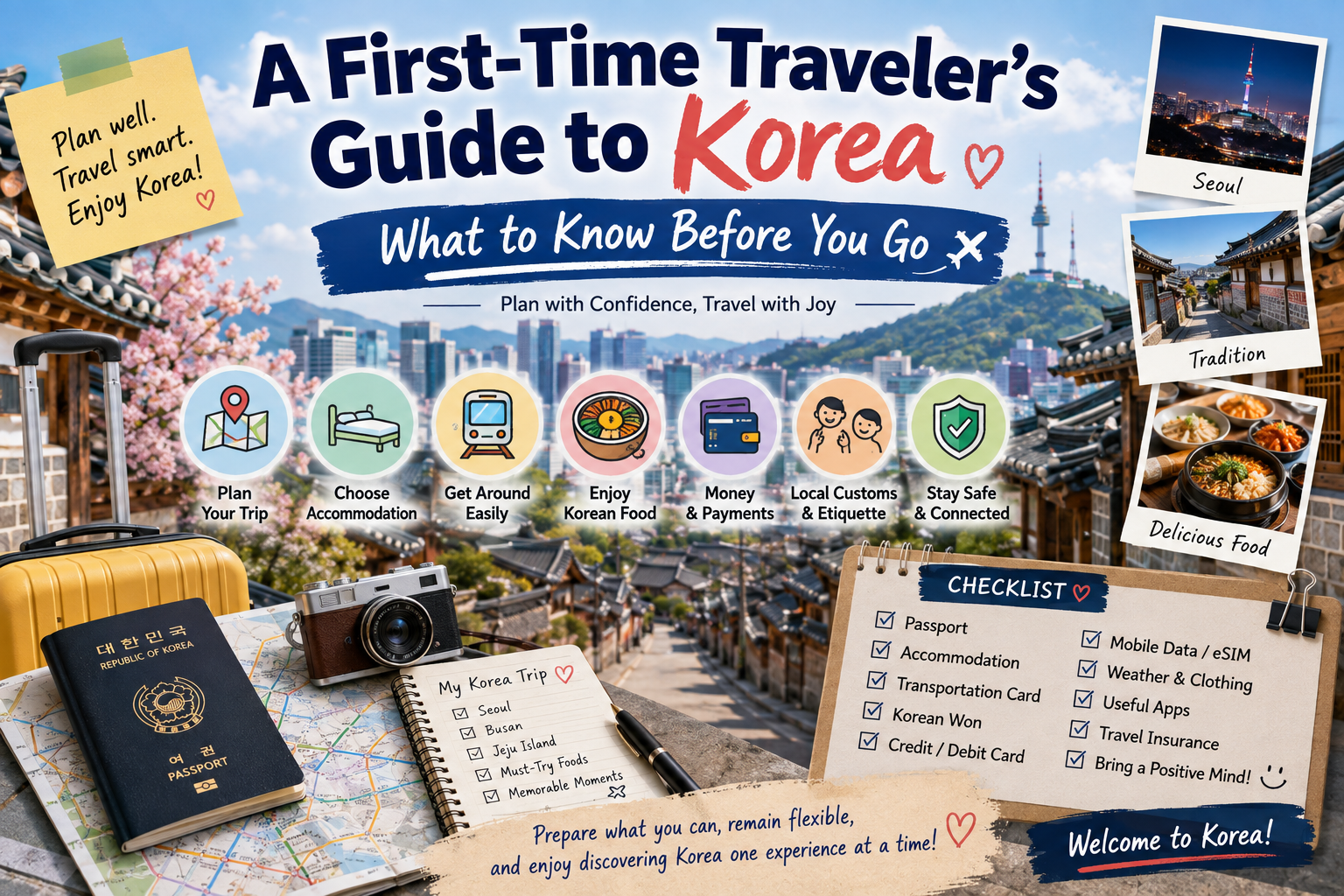
    A First-Time Traveler’s Guide to Korea: What to Know Before You Go

    Planning your first trip to Korea can feel exciting and a little overwhelming.

    There are many things to think about before you leave, including where to stay, how to get around, what to eat, how to pay for things, and what local customs to know.

    The good news is that you do not need to know everything before your trip.

    A little preparation can make your journey much more comfortable and help you spend more time enjoying Korea.

    This guide brings together some of the most useful things first-time travelers should know before visiting Korea.

    1. Decide What Kind of Trip You Want

    Before making detailed plans, think about what you want from your trip.

    Do you want to explore Korean history and traditional culture?

    Would you rather spend your time shopping, enjoying cafes, trying local food, or experiencing nightlife?

    Perhaps you want a mixture of city sightseeing, nature, food, and cultural experiences.

    Knowing your priorities will make it easier to choose where to stay and how to plan your daily activities.

    You do not need to visit every famous attraction.

    A relaxed itinerary can sometimes create better memories than trying to see everything in a short period.

    2. Choose the Right Time to Visit

    Korea has four distinct seasons, and each one offers a different travel experience.

    Spring can be beautiful with flowers and comfortable temperatures.

    Summer is warm and can be a good time for beaches and island trips.

    Autumn offers pleasant weather and colorful scenery.

    Winter is cold but provides opportunities to experience winter landscapes, seasonal food, and indoor cultural activities.

    Think about the activities you enjoy before choosing your travel dates.

    3. Choose Your Accommodation Area Carefully

    Where you stay can have a major effect on your daily travel experience.

    Myeongdong can be convenient for first-time visitors who want shopping and easy access to tourist attractions.

    Hongdae is popular with travelers who enjoy cafes, music, shopping, and nightlife.

    Jongno and Insadong are good choices for travelers interested in history and traditional Korean culture.

    Gangnam offers a modern atmosphere, shopping, restaurants, and business facilities.

    Itaewon is known for its international atmosphere and diverse food options.

    Seoul Station can be particularly useful if you plan to travel to other Korean cities by train.

    Before booking, check the exact location and the distance to public transportation.

    4. Decide What Type of Accommodation You Need

    Your accommodation does not have to be the most expensive option.

    Luxury hotels can offer excellent comfort and service, while mid-range and budget hotels may provide better value for travelers who spend most of their day sightseeing.

    A hanok stay can provide a memorable traditional Korean experience.

    Guesthouses and Airbnb-style accommodations may offer a more local atmosphere or useful facilities for longer stays.

    The important thing is to choose accommodation that matches your travel style, budget, and expectations.

    5. Learn the Basics of Public Transportation

    Korea has a convenient public transportation system, especially in major cities.

    Subways and buses are useful for exploring Seoul, while trains can make it easier to travel between different cities.

    A transportation card such as T-money can be useful if you plan to use buses and subways frequently.

    Before leaving your accommodation, check your route and allow extra time if you need to transfer between subway lines or buses.

    If you are carrying large luggage, a route with fewer transfers may be more comfortable even if it takes slightly longer.

    6. Try Different Korean Foods

    Food is one of the most enjoyable parts of traveling in Korea.

    Popular choices include bibimbap, bulgogi, gimbap, Korean fried chicken, tteokbokki, samgyeopsal, and many different soups and stews.

    Do not feel that you have to eat at expensive restaurants.

    Traditional markets, neighborhood restaurants, cafes, and casual food shops can all provide interesting experiences.

    If you are sensitive to spicy food, ask about the level of spiciness before ordering.

    Trying a small portion of an unfamiliar dish can be an easy way to discover new flavors.

    7. Understand How Payments Work

    The currency used in Korea is the South Korean won, or KRW.

    Credit and debit cards are widely accepted, especially in cities and tourist areas.

    However, carrying some Korean won can still be useful for small businesses, traditional markets, street food, or situations where card payment is unavailable.

    It is also a good idea to have a backup payment method while traveling.

    Before your trip, check whether your bank or card provider charges international transaction or ATM fees.

    8. Learn a Few Local Customs

    You do not need to memorize every Korean custom before your trip.

    A few simple habits can make everyday interactions easier.

    Use polite language when speaking with people, follow local rules at cultural sites, and be considerate on public transportation.

    In some places, such as homes and certain traditional accommodations or restaurants, you may be expected to remove your shoes.

    When taking photographs, be respectful of people’s privacy and follow photography rules at cultural or religious sites.

    A friendly attitude and willingness to learn go a long way.


    9. Prepare for the Weather

    Check the weather forecast before your trip and pack accordingly.

    Korea can have significant seasonal differences, so the clothing you need will depend on when you visit.

    Comfortable walking shoes are especially important because many sightseeing days involve walking between attractions, subway stations, restaurants, and shopping areas.

    An umbrella can also be useful depending on the season.

    10. Stay Connected

    Having reliable internet access can make traveling much easier.

    You may need mobile data for maps, translation apps, transportation information, restaurant searches, and communication.

    Depending on your phone and travel plans, you can consider options such as an international roaming plan, a travel eSIM, or a local SIM.

    Check compatibility and pricing before your trip so you can choose the option that works best for you.

    11. Plan Your Days, But Leave Some Flexibility

    A basic itinerary is helpful, but you do not need to plan every minute.

    Group attractions that are located near each other so you do not spend unnecessary time traveling across the city.

    Leave some free time for unexpected discoveries.

    You may find a small restaurant, traditional market, cafe, park, or neighborhood that was not in your original plan.

    Some of the best travel memories can come from experiences you did not plan in advance.

    12. Be Prepared, But Enjoy the Journey

    A successful trip is not about following a perfect schedule.

    Things can change because of weather, transportation, opening hours, or unexpected circumstances.

    If something does not go according to plan, take a breath and look for another option.

    Korea has many different places to explore, and there is usually more than one way to enjoy a day.

    Final Checklist Before Leaving for Korea

    Before your trip, consider checking these basics:

    • passport and travel documents;
    • accommodation reservations;
    • transportation plans;
    • international payment cards;
    • some Korean won;
    • mobile data or an eSIM;
    • weather and appropriate clothing;
    • useful navigation and translation apps;
    • important addresses saved on your phone;
    • and travel insurance appropriate for your circumstances.

    Final Thoughts

    Your first trip to Korea does not have to be complicated.

    Choose an area that suits your travel plans, find accommodation that fits your needs, learn the basics of public transportation, and prepare a few simple payment and communication options.

    Try Korean food, explore traditional and modern neighborhoods, and take some time to experience everyday life.

    Most importantly, stay curious.

    You do not have to understand everything before you arrive.

    Prepare what you can, remain flexible, and enjoy discovering Korea one experience at a time.

    We hope this guide helps you feel more confident about your first trip to Korea.

    Welcome to Korea, and have a wonderful journey!


  • Korean Culture and Etiquette: 10 Things Travelers Should Know

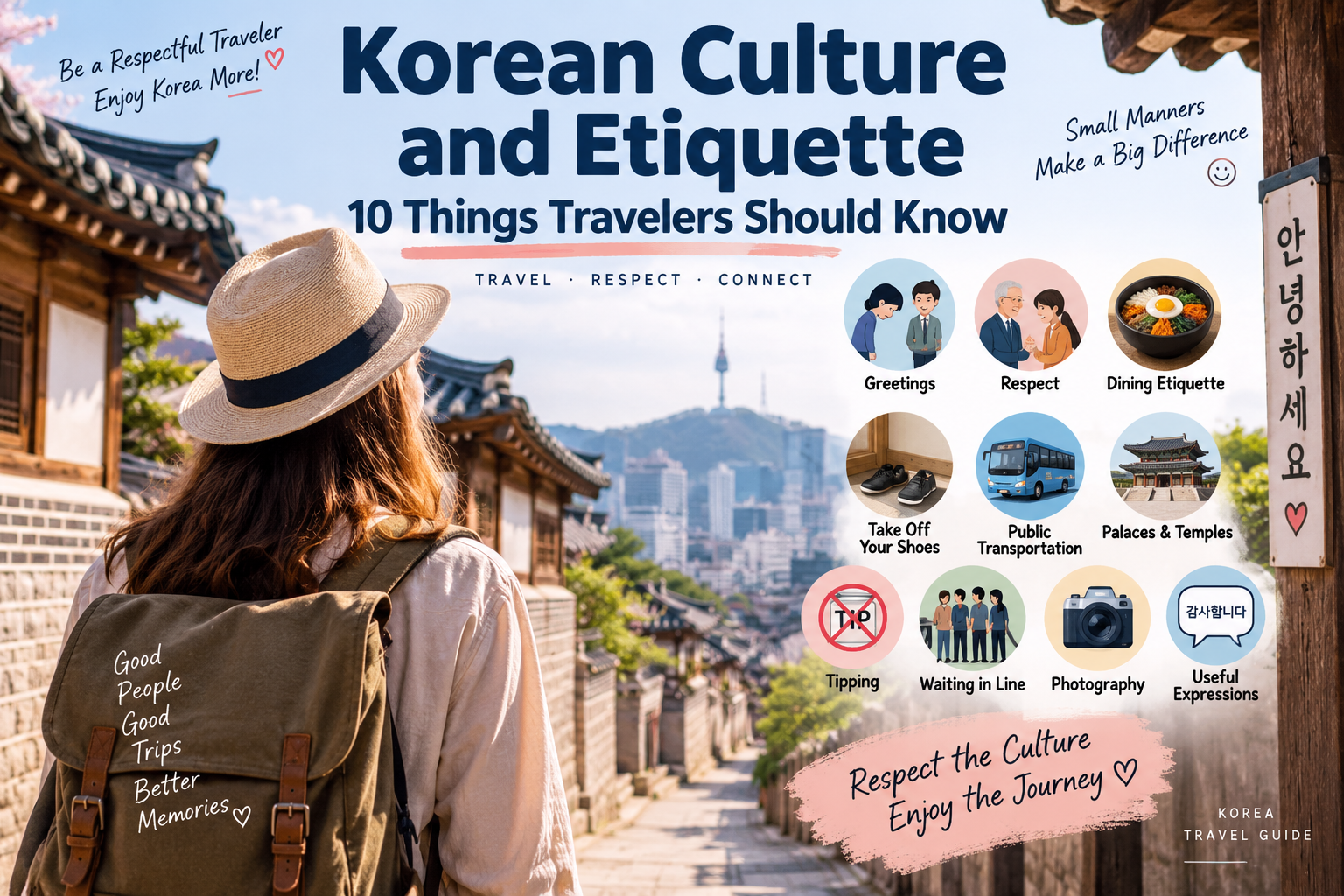
    Korean Culture and Etiquette: 10 Things Travelers Should Know

    When you travel to a new country, learning a few local customs can make your experience more comfortable and enjoyable.

    Korea has a modern lifestyle, but traditional ideas about respect, consideration, and social manners are still important in many situations.

    You do not need to understand every Korean custom before your trip.

    Learning a few basic points can help you communicate more comfortably and show respect for local people and places.

    Here are 10 simple things travelers should know about Korean culture and etiquette.

    1. A Polite Greeting Goes a Long Way

    A simple greeting is an important part of everyday interaction in Korea.

    You may hear “Annyeonghaseyo,” which means “Hello.”

    A small bow or a polite nod can also be used when greeting someone.

    In formal situations, using polite language is generally appreciated.

    You do not need to worry about perfect Korean. A friendly greeting and respectful attitude are usually more important.

    2. Respect for Older People Is Important

    Korean culture traditionally places importance on showing respect to older people.

    You may notice this in family relationships, workplaces, restaurants, and other social situations.

    When interacting with someone older, using polite language and a respectful tone is generally appropriate.

    Travelers do not need to know every rule, but being considerate and observant can help.

    3. Understand Basic Dining Etiquette

    Korean meals are often shared, with several dishes placed in the middle of the table.

    It is common for people to share side dishes and other food.

    When eating with others, wait until everyone is ready before beginning the meal in formal or social situations.

    Try to avoid making excessive noise while eating and be considerate of the people around you.

    If you are unsure about what to do, simply observe the people you are dining with.


    4. Take Your Shoes Off When Required

    In Korea, shoes are usually removed before entering many homes.

    You may also encounter restaurants, guesthouses, traditional accommodations, or other spaces where you are expected to take off your shoes.

    Look for a raised floor, shoe racks, or signs near the entrance.

    If other visitors are removing their shoes, that is usually a good indication that you should do the same.

    Travel tip: Wear clean socks and comfortable shoes that are easy to take off and put back on.

    5. Be Considerate on Public Transportation

    Korean buses and subways can become very busy, especially during commuting hours.

    Give priority seats to people who may need them, such as elderly passengers, pregnant people, or passengers with disabilities.

    Keep your voice at a reasonable level and avoid blocking doors or aisles with large luggage.

    When getting on or off, allow passengers to exit before you enter.

    Small acts of consideration can make public transportation more comfortable for everyone.

    6. Show Respect at Palaces and Temples

    Korea has many historical palaces, temples, museums, and cultural sites.

    When visiting these places, follow signs and instructions from staff.

    Avoid touching objects or entering restricted areas.

    At temples and other religious sites, behave quietly and respectfully.

    Photography may not be permitted in certain areas, so check the rules before taking pictures.

    Travel tip: Take a moment to read information signs. They can help you understand the history and meaning of the place you are visiting.

    7. Understand Tipping Culture

    Tipping is not generally a standard part of everyday dining in Korea in the same way it is in some countries.

    At many restaurants and cafes, you normally pay the listed price without adding a tip.

    Some businesses may have their own policies or optional service charges, so check the bill if you are unsure.

    You do not need to feel uncomfortable if you are not familiar with local practices. Simply follow the information provided by the business.

    8. Be Patient When Waiting in Line

    Queues are common at popular restaurants, cafes, attractions, and transportation facilities.

    When a line has formed, wait your turn rather than moving ahead of other people.

    Some restaurants use a waiting list or electronic system instead of a traditional line.

    Follow the instructions provided by the staff and keep your phone available if you are asked to enter your information.

    A little patience can make busy places much easier to navigate.

    9. Ask Before Taking Photos of People

    Korea is a highly connected and visually interesting country, so you may want to take many photographs during your trip.

    When photographing strangers, however, be considerate.

    Avoid taking close-up photographs of people without permission, especially in situations where they may reasonably expect privacy.

    At cultural sites, restaurants, markets, and events, also follow any photography rules.

    If someone is clearly the main subject of your photograph, asking permission is a polite choice.

    10. A Little Consideration Makes a Big Difference

    You do not need to know every Korean custom to have a wonderful trip.

    Being polite, observing your surroundings, following signs, and showing consideration for other people will take you a long way.

    If you make a small cultural mistake, do not panic.

    A sincere apology and a willingness to follow local customs are usually much more important than being perfect.

    A Few Useful Korean Expressions

    Learning a few simple Korean expressions can make everyday interactions easier.

    Annyeonghaseyo — Hello

    Gamsahamnida — Thank you

    Joesonghamnida — Excuse me / I’m sorry

    Juseyo — Please give me / Please

    You do not need perfect pronunciation. Even a simple attempt can make an interaction friendlier.

    Final Thoughts

    Travel is not only about seeing famous places.

    It is also about understanding and respecting the people, culture, and everyday life of the country you visit.

    Korea is a modern and diverse country, and customs can vary depending on the situation and individual.

    Rather than trying to memorize every rule, focus on being polite, observant, and considerate.

    Respect the culture, stay curious, and enjoy discovering Korea from a local perspective.

    A little cultural awareness can make your journey more comfortable and help create positive experiences with the people you meet.


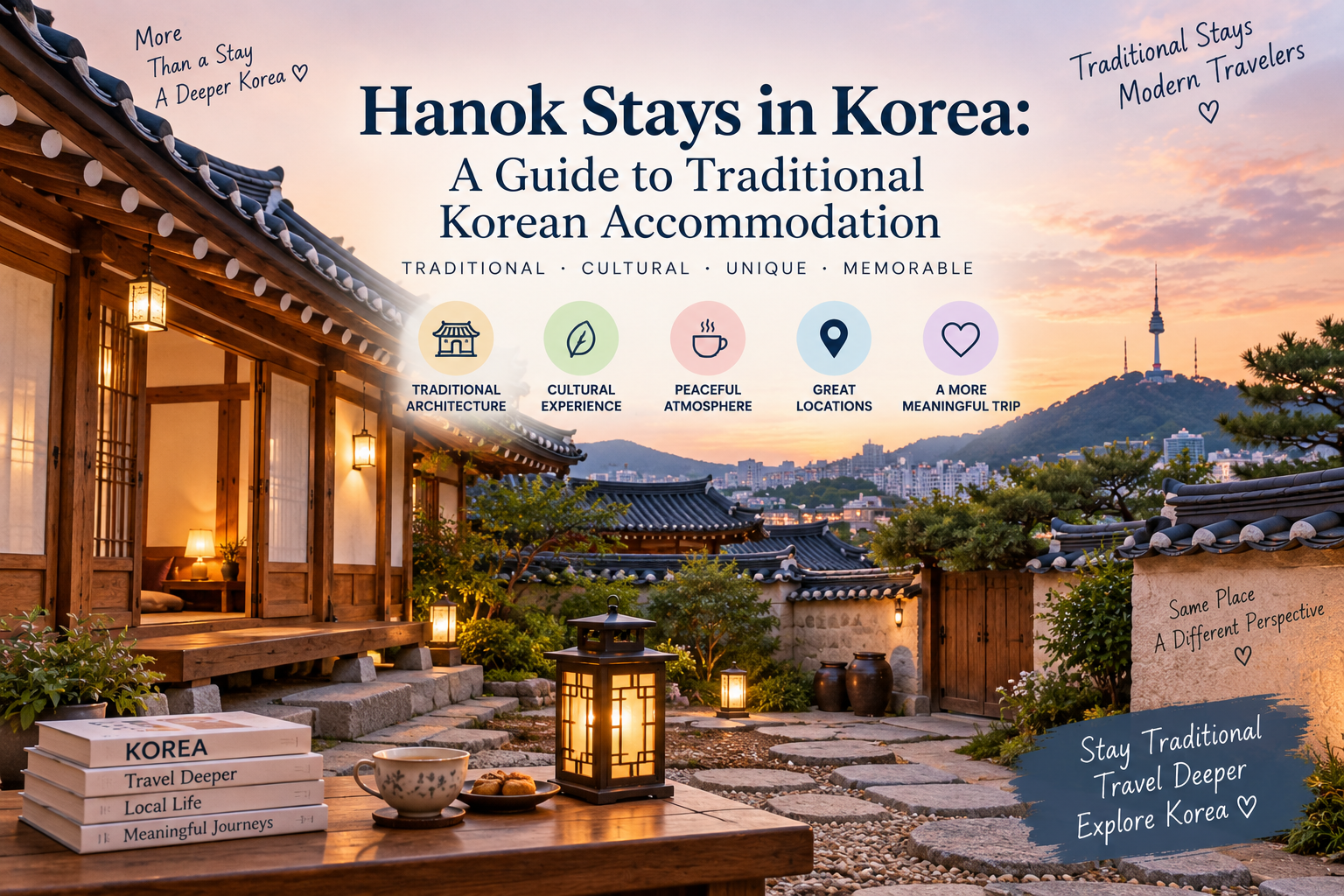
  • Hanok Stays in Korea: A Guide to Traditional Korean Accommodation

    Hanok Stays in Korea: A Guide to Traditional Korean Accommodation

    If you want to experience a different side of Korea, staying in a traditional hanok can be a memorable part of your trip.

    A hanok is a traditional Korean house designed around traditional architecture, natural materials, and a layout suited to the Korean way of life.

    Today, some traditional houses have been renovated and adapted for travelers while preserving important elements of traditional Korean architecture.

    A hanok stay can offer an experience that feels very different from staying in a modern hotel.

    However, it is important to understand what to expect before making a reservation.

    This guide explains what a hanok stay is, what the experience can be like, and what to check before booking.

    1. What Is a Hanok?

    Hanok refers to traditional Korean houses.

    Traditional hanok architecture often includes wooden structures, tiled roofs, courtyards, and spaces designed to connect the interior with the surrounding environment.

    Different regions and periods of Korean history have produced different styles of hanok.

    Some hanok accommodations are historic buildings, while others are newer properties designed in a traditional style.

    For travelers, this means that the experience can vary considerably from one accommodation to another.

    2. What Is a Hanok Stay?

    A hanok stay allows visitors to spend the night in a traditional-style Korean house.

    Some properties offer private rooms, while others may have shared areas.

    Depending on the accommodation, guests may sleep on a traditional-style floor mattress rather than a Western-style bed.

    Some hanok stays also have courtyards, gardens, traditional furniture, or other cultural features.

    The atmosphere is often quieter and more intimate than a large hotel.

    3. Understanding Ondol

    One traditional feature you may encounter is ondol, Korea’s traditional underfloor heating system.

    Instead of heating the room through radiators or vents, traditional ondol warms the floor.

    Modern hanok accommodations may use updated heating systems while maintaining the experience of warm floors.

    If you are used to sleeping on a Western-style bed, sleeping on a floor mattress may feel different at first.

    For many visitors, however, experiencing a traditional-style sleeping arrangement is one of the memorable parts of a hanok stay.

    Travel tip: Check the sleeping arrangement carefully before booking, especially if you have mobility concerns or prefer a standard bed.

    4. A Different Travel Experience

    One of the biggest advantages of a hanok stay is the opportunity to experience a traditional side of Korea.

    Instead of simply visiting a traditional building during the day, you can actually spend time in a traditional-style space.

    You may enjoy a quiet courtyard in the morning, walk through nearby historic neighborhoods, or experience traditional architecture at a slower pace.

    For international visitors, this can make a trip feel more connected to Korean culture and everyday traditions.

    5. A Quiet and Relaxing Atmosphere

    Many hanok accommodations are located in traditional neighborhoods or quieter residential areas.

    The atmosphere can be peaceful, especially in the evening.

    Some properties have small courtyards or gardens where guests can relax.

    However, the level of privacy and quietness varies between properties.

    Read recent guest reviews to understand the actual environment before booking.

    6. Hanok Stays Can Be Different from Hotels

    A hanok stay may not provide the same facilities as a modern hotel.

    Some properties have smaller rooms, traditional bathrooms, limited storage space, or fewer common facilities.

    Some may not have elevators, particularly if the property is a traditional building.

    This does not necessarily mean the accommodation is unsuitable.

    It simply means that the experience is different from staying in a modern hotel.

    Understanding this difference can help you choose a hanok stay that matches your expectations.

    7. Consider Your Comfort

    Traditional accommodation can be beautiful and memorable, but comfort should still be a priority.

    Before booking, check whether the room has air conditioning, heating, a private bathroom, Wi-Fi, and the type of bedding you prefer.

    If you are sensitive to noise, check reviews about sound insulation.

    If you have large luggage, look at the property’s access and storage options.

    Travel tip: A traditional atmosphere is wonderful, but make sure the basic facilities meet your needs.

    8. Check the Location Before Booking

    Location is important when choosing a hanok stay.

    Many traditional neighborhoods are close to historical attractions, but some streets can be narrow or difficult to reach by car.

    Check the walking distance from the nearest subway station or bus stop.

    If you are carrying heavy luggage, consider how easy it will be to reach the accommodation.

    It is also useful to check whether restaurants, convenience stores, and other basic services are nearby.

    9. Who Should Consider a Hanok Stay?

    A hanok stay can be a great choice for travelers who:

    • want to experience traditional Korean architecture;
    • enjoy cultural and historical experiences;
    • prefer a quieter neighborhood;
    • are interested in Korean traditions;
    • want a memorable alternative to a modern hotel.

    It may be less suitable for travelers who strongly prefer large hotel rooms, elevators, extensive facilities, or a standard Western-style bed.

    There is no right or wrong choice.

    The best accommodation is the one that matches your expectations and travel style.

    10. What to Check Before Booking

    Before booking a hanok stay, check:

    • sleeping arrangements;
    • private or shared bathroom;
    • heating and air conditioning;
    • Wi-Fi availability;
    • luggage storage;
    • stairs or elevator access;
    • check-in and check-out times;
    • cancellation policy;
    • recent guest reviews;
    • exact location and access.

    Taking a few minutes to check these details can help you avoid surprises after arrival.

    Final Thoughts

    A hanok stay can be one of the most memorable experiences of a trip to Korea.

    It gives travelers an opportunity to slow down and experience traditional Korean architecture and atmosphere in a more personal way.

    At the same time, a hanok is different from a modern hotel, so it is important to understand the facilities and sleeping arrangements before booking.

    If you choose a property that matches your expectations, a hanok stay can add a special cultural experience to your Korean journey.

    Stay somewhere traditional, slow down, and experience another side of Korea.

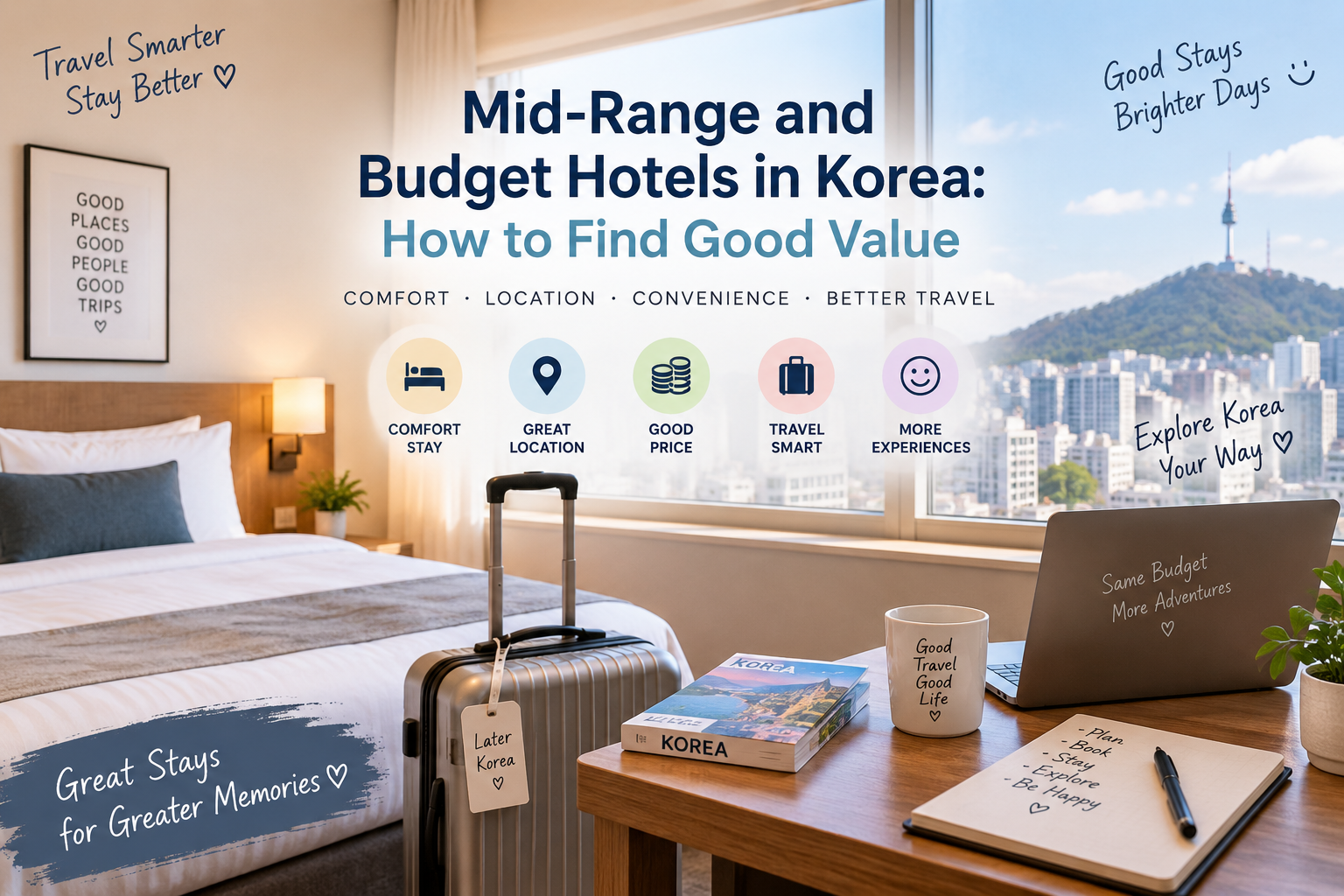
  • Mid-Range and Budget Hotels in Korea: How to Find Good Value

    Mid-Range and Budget Hotels in Korea: How to Find Good Value

    Finding a comfortable place to stay does not always mean choosing the most expensive hotel.

    For many travelers, a mid-range or budget hotel can offer an excellent balance between price, comfort, location, and convenience.

    Korea has a wide range of accommodation options, from simple budget rooms to modern mid-range hotels with useful facilities.

    The key is to understand what you actually need before making a reservation.

    This guide explains how to choose a good-value hotel in Korea and what to check before you book.

    1. What Is a Mid-Range or Budget Hotel?

    Budget hotels generally focus on providing basic accommodation at an affordable price.

    Mid-range hotels may offer additional comfort and facilities while remaining less expensive than luxury hotels.

    The exact standards can vary from one hotel to another, so it is better to compare the actual room, facilities, location, and guest reviews rather than relying only on the hotel’s category.

    A simple hotel can be a great choice if you plan to spend most of your day exploring Korea and mainly need a clean and comfortable place to sleep.

    2. Location Can Be More Important Than Room Size

    A less expensive hotel in a convenient location may provide better value than a larger room far away from the places you want to visit.

    Before booking, check the distance to the nearest subway station or bus stop.

    Also consider how long it will take to reach the attractions, restaurants, shopping areas, and other places on your itinerary.

    Spending less on accommodation but several extra hours traveling every day may not actually save you money or time.

    Travel tip: Open the hotel location on a map and check the actual walking distance to public transportation.

    3. Check What Is Included

    The room price does not always tell the whole story.

    Check whether the rate includes Wi-Fi, breakfast, cleaning, taxes, fees, or other services.

    Some hotels may offer a lower basic rate but charge extra for services that you consider important.

    Compare the total cost rather than only the advertised nightly price.


    4. Check the Room Carefully

    Before booking, look at the room details rather than judging the hotel only by its photographs.

    Check the room size, bed type, bathroom, storage space, window, and available amenities.

    If you are traveling with large luggage, a very small room may feel uncomfortable even if the price is attractive.

    Also check whether the room has air conditioning or heating appropriate for the season of your visit.

    Travel tip: Read recent reviews about cleanliness, noise, and room condition. These details can be more useful than a hotel’s promotional photographs.

    5. Think About Breakfast

    Breakfast can be convenient, but it is not always worth paying extra for.

    If breakfast is included at a reasonable rate and you prefer convenience, it may be a good option.

    On the other hand, Korea has many cafes, bakeries, convenience stores, and local restaurants where you can enjoy breakfast.

    Compare the additional breakfast cost with the options available around your hotel.

    6. Read Recent Guest Reviews

    Guest reviews can help you understand what staying at a hotel is actually like.

    Look for repeated comments about cleanliness, noise, bed comfort, bathroom condition, staff service, and location.

    Pay particular attention to recent reviews because hotel conditions and management can change over time.

    Do not let one negative review make the entire decision for you. Instead, look for patterns across many reviews.

    7. Choose According to Your Travel Style

    Solo travelers may prefer a small, well-located room with easy access to public transportation.

    Couples may value a comfortable room, good location, and a pleasant neighborhood with restaurants and cafes.

    Families may need more space, larger beds, convenient facilities, and easy transportation.

    Longer-stay travelers may want laundry facilities, a refrigerator, or a small kitchen depending on their needs.

    There is no single best hotel for everyone.

    The best choice is the one that fits your travel plans and daily routine.

    8. Compare the Total Price

    When comparing hotels, look beyond the nightly room rate.

    Check whether taxes, service charges, breakfast, parking, or other fees are included.

    A slightly more expensive room can sometimes offer better value if it includes useful services or has a much more convenient location.

    It can also be helpful to compare the total price for your entire stay rather than comparing only one night.

    9. Check the Cancellation Policy

    Travel plans can change, so always check the cancellation and refund policy before making a reservation.

    Some rates may be cheaper but non-refundable.

    Other rates may allow cancellation until a certain date.

    Read the conditions carefully and make sure you understand when cancellation fees may apply.

    10. A Simple Checklist Before Booking

    Before booking a mid-range or budget hotel in Korea, ask yourself:

    Is the location convenient?

    Is the room large enough for my needs?

    Is the room clean and comfortable according to recent reviews?

    Are the important facilities included in the price?

    Is breakfast worth the additional cost?

    Is the cancellation policy suitable for my trip?

    Is the total price reasonable compared with other hotels nearby?

    If the answer to most of these questions is yes, you may have found a good-value accommodation option.

    Final Thoughts

    A good hotel does not have to be expensive.

    For many travelers, a clean room, convenient location, comfortable bed, reliable Wi-Fi, and reasonable price are more important than luxury facilities.

    Take some time to compare hotels and read recent reviews before making your decision.

    The money you save on accommodation can also give you more opportunities to enjoy Korean food, attractions, shopping, and experiences.

    Choose a hotel that gives you the comfort you need at a price that fits your travel budget.

    With a little research, finding good-value accommodation in Korea can be much easier.


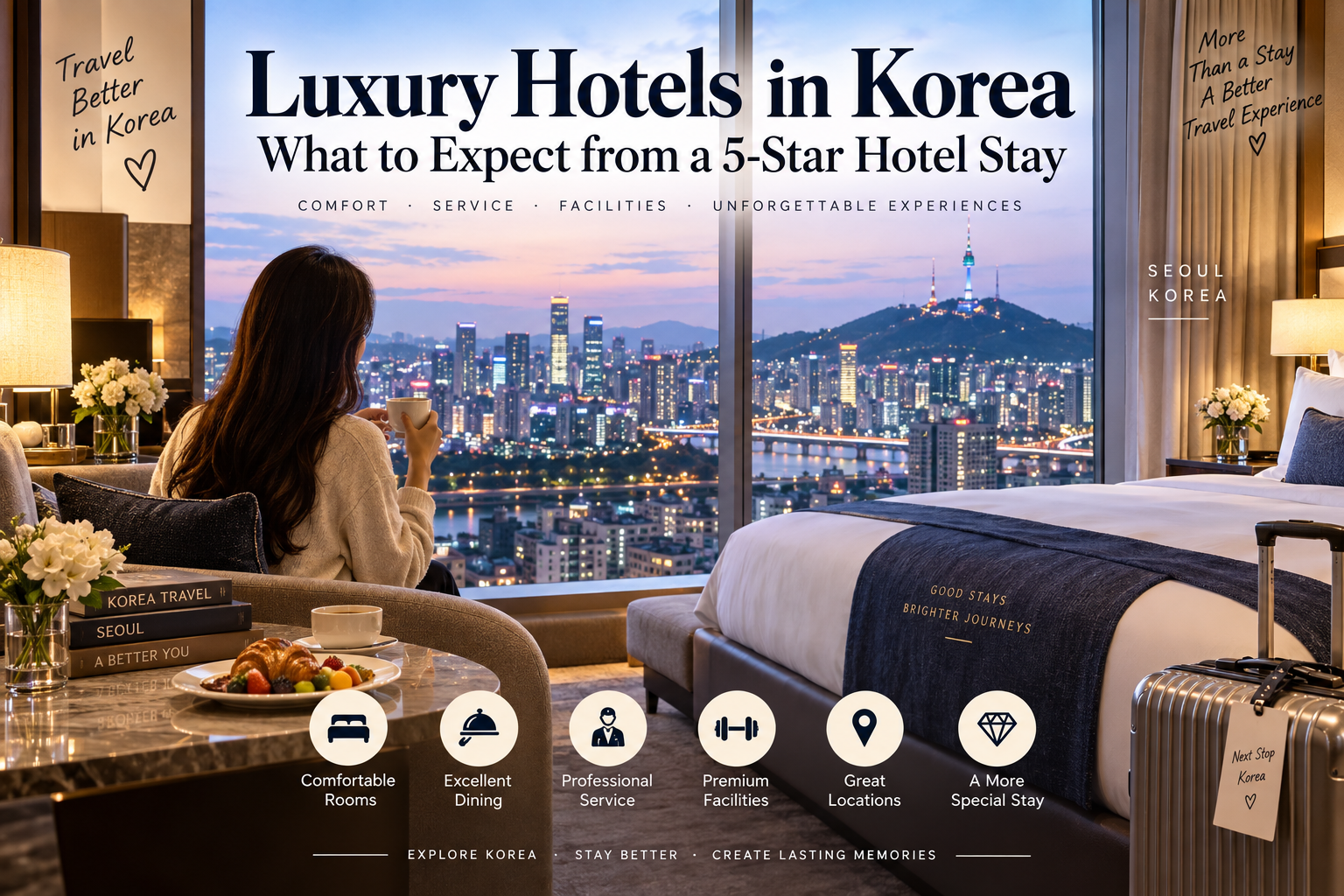
  • Luxury Hotels in Korea: What to Expect from a 5-Star Hotel Stay

    Luxury Hotels in Korea: What to Expect from a 5-Star Hotel Stay

    If you are planning a trip to Korea and considering a luxury hotel, you may be wondering what to expect from a 5-star hotel.

    A 5-star hotel can offer a higher level of comfort, service, facilities, and convenience than many standard hotels.

    However, a higher price does not automatically mean that every hotel will be the right choice for every traveler.

    The best luxury hotel depends on your budget, travel plans, preferred location, and the type of experience you want.

    This guide explains what you can generally expect from a 5-star hotel stay in Korea and what to consider before making a reservation.

    1. What Is a 5-Star Hotel?

    A 5-star hotel generally offers a high level of accommodation, service, facilities, and guest amenities.

    Luxury hotels may provide features such as spacious rooms, restaurants, fitness centers, swimming pools, business facilities, concierge services, and room service.

    However, hotel classifications and standards can vary by country and by hotel.

    For this reason, it is a good idea to check the actual facilities and services offered by a hotel rather than relying only on its star rating.

    2. Comfortable Rooms and Quality Facilities

    One of the main reasons travelers choose a luxury hotel is comfort.

    Rooms at high-end hotels may offer larger spaces, comfortable beds, quality bathrooms, work areas, seating areas, and additional amenities.

    Some hotels also provide beautiful city views or convenient access to restaurants, shopping areas, and major attractions.

    Before booking, check the room size, bed type, view, and included amenities.

    A room that looks attractive in photographs may not necessarily be the best choice for your particular trip.

    3. Hotel Restaurants and Dining

    Many luxury hotels have several dining options, including restaurants, cafes, lounges, and breakfast facilities.

    Some offer Korean cuisine, while others specialize in international dishes.

    A hotel breakfast can be convenient if you want to start your sightseeing day without searching for a restaurant.

    However, staying at a luxury hotel does not mean you need to eat every meal there.

    Exploring local restaurants and traditional markets can provide a different and often more memorable experience of Korean food.

    4. Service and Hospitality

    One of the biggest advantages of a luxury hotel can be the level of service.

    Staff may be available to help with check-in, luggage, restaurant reservations, transportation, and other guest requests.

    Some luxury hotels also offer concierge services that can help guests plan activities or arrange reservations.

    If you have special needs or requests, it is often helpful to contact the hotel before arrival.

    However, service levels can vary between hotels, so reading recent guest reviews can give you a better idea of what to expect.

    5. Location Matters

    Even the most luxurious hotel may not be the best choice if its location does not suit your travel plans.

    Before booking, look at the hotel’s distance from subway stations, major attractions, restaurants, shopping areas, and airports or train stations.

    For a first trip to Seoul, staying in a convenient central area can reduce travel time.

    On the other hand, travelers who prefer a quieter atmosphere may choose a hotel away from the busiest tourist districts.

    Think about where you will spend most of your time before deciding where to stay.

    6. Facilities and Amenities

    Luxury hotels may offer a wide range of facilities.

    Depending on the property, these can include swimming pools, fitness centers, spas, lounges, business centers, restaurants, cafes, and meeting facilities.

    Families may want to check whether the hotel offers suitable facilities for children.

    Business travelers may value a comfortable workspace and business services.

    Leisure travelers may care more about a swimming pool, spa, breakfast, or convenient dining options.

    The most useful facilities are the ones that match your travel needs.

    7. Is a 5-Star Hotel Worth the Price?

    A 5-star hotel can be worth the extra cost if comfort, service, facilities, and convenience are important to you.

    However, a luxury hotel is not always necessary.

    If you plan to spend most of your day sightseeing and only return to your accommodation to sleep, a comfortable mid-range hotel may provide better value.

    Before booking, compare the total cost with the facilities and services you are actually likely to use.

    Think about value, not just the star rating.

    8. What to Check Before Booking

    Before booking a 5-star hotel in Korea, check the details carefully.

    Look at the room size, bed type, breakfast options, cancellation policy, check-in and check-out times, and any additional fees.

    If you are traveling with children, check the hotel’s family policies and available room arrangements.

    If you need an accessible room or have other special requirements, contact the hotel before making your reservation.

    It is also worth checking the hotel’s location on a map rather than relying only on the description.

    9. Read Recent Guest Reviews

    Photos and descriptions can give you a good first impression, but recent guest reviews can provide additional information.

    Look for comments about cleanliness, noise, staff service, room condition, breakfast, and location.

    Try to look for patterns rather than relying on a single review.

    A hotel with many positive reviews about the things that matter to you may be a better choice than a hotel with a higher rating but fewer relevant reviews.

    10. Luxury Does Not Have to Mean Complicated

    Staying at a 5-star hotel can be a memorable part of a trip to Korea.

    You can enjoy comfortable accommodation, professional service, good dining options, and convenient facilities.

    But the most important thing is choosing a hotel that fits your own travel plans.

    If you value comfort and want to enjoy your accommodation as part of the travel experience, a luxury hotel may be a good choice.

    If your main goal is sightseeing and you expect to spend most of your time outside, another type of accommodation may offer better value.

    Final Thoughts

    A 5-star hotel can provide comfort and convenience, but the best hotel is not necessarily the most expensive one.

    Consider your budget, location, travel schedule, and the facilities you are most likely to use.

    Take time to compare the actual room, services, location, policies, and recent guest reviews before making a reservation.

    Choose the hotel that fits your trip—not simply the hotel with the highest price or star rating.

    With the right choice, your accommodation can become a comfortable place to rest and an enjoyable part of your Korean travel experience.


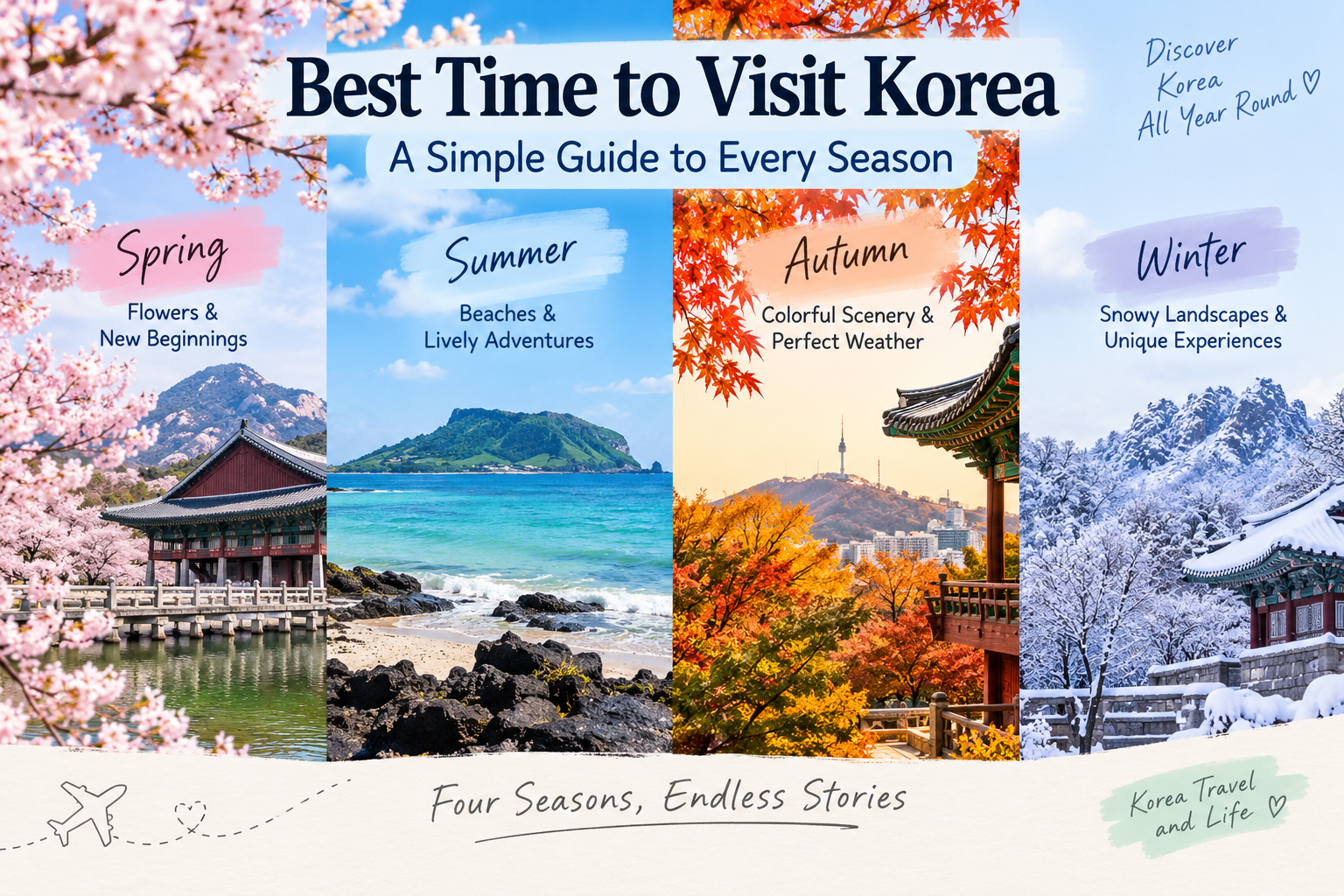
  • Best Time to Visit Korea: A Simple Guide to Every Season

    Best Time to Visit Korea: A Simple Guide to Every Season

    Planning a trip to Korea and wondering when to visit?

    Korea is a great destination throughout the year, but each season offers a different travel experience.

    Spring brings flowers and comfortable weather. Summer is warm and lively. Autumn offers beautiful colors and pleasant temperatures, while winter brings cold weather, seasonal food, and a different side of Korean culture.

    The best time to visit Korea depends on what you want to see and do.

    This simple guide will help you understand what each season is like and choose the travel period that suits you best.

    1. Spring — March to May

    Spring is one of the most popular seasons for traveling in Korea.

    Temperatures gradually become warmer, and flowers begin to bloom across the country.

    Late March and April can be especially beautiful in many areas, although the exact timing of flowers can vary from year to year.

    Spring is a good season for walking around cities, visiting parks, exploring historical sites, and enjoying outdoor activities.

    Seoul’s parks and palace areas can be particularly pleasant when flowers are in bloom.

    If you enjoy photography, spring can be an excellent time to explore Korea’s streets, parks, and traditional neighborhoods.

    What to pack: Light layers, a jacket, comfortable walking shoes, and an umbrella can be useful.

    Best for: Flower viewing, sightseeing, walking tours, photography, and outdoor activities.

    Spring Travel Tip

    Spring weather can change quickly during the day.

    Mornings and evenings may feel cool even when afternoons are warm, so wearing layers can make your trip more comfortable.

    2. Summer — June to August

    Summer in Korea is generally hot and humid, especially in July and August.

    If you enjoy beaches, summer activities, and lively city evenings, this season can still be an enjoyable time to visit.

    Busan and Jeju Island are popular destinations during the warmer months, with beaches and outdoor activities attracting many visitors.

    Summer is also a good time to explore Korea’s many cafes, shopping areas, museums, and indoor attractions when the weather becomes too hot.

    Rain can occur during the summer, so checking the forecast before your daily activities is a good idea.

    What to pack: Light clothing, comfortable shoes, sunscreen, a hat, and an umbrella.

    Best for: Beaches, island trips, evening activities, cafes, shopping, and indoor attractions.

    Summer Travel Tip

    Korean summers can feel hotter than expected because of the combination of heat and humidity.

    Plan outdoor sightseeing for the morning or later afternoon when possible, and take regular breaks to stay comfortable.

    3. Autumn — September to November

    Autumn is another excellent season for traveling in Korea.

    The weather is generally comfortable, and the cooler temperatures make it enjoyable to spend time outdoors.

    October and November can be particularly attractive for travelers who want to experience colorful autumn scenery.

    Mountains, parks, palace grounds, and city streets can all offer beautiful views during the autumn season.

    Autumn is also a wonderful time to explore traditional neighborhoods and take long walking tours without the intense summer heat.

    Food is another reason to enjoy autumn in Korea. Seasonal ingredients and warm Korean dishes can make cool evenings especially enjoyable.

    What to pack: Light layers, a jacket, comfortable walking shoes, and slightly warmer clothing for late autumn.

    Best for: Autumn foliage, hiking, sightseeing, photography, food, and walking tours.

    Autumn Travel Tip

    Autumn is a popular travel season, especially during periods of colorful foliage.

    If you plan to visit well-known attractions, consider traveling on weekdays or visiting earlier in the day to enjoy a more relaxed experience.

    4. Winter — December to February

    Winter in Korea is cold and often dry, but it can be a wonderful season for travelers who enjoy winter scenery and seasonal experiences.

    Seoul and other inland areas can become quite cold, while Jeju Island generally has a milder climate.

    Winter is a good time to explore museums, palaces, cafes, markets, and indoor attractions. If you enjoy winter sports, some mountainous areas offer skiing and snow-related activities.

    Winter also gives visitors a chance to experience seasonal Korean foods such as hot soups, stews, and street foods.

    What to pack: A warm coat, layers, gloves, a scarf, warm socks, and comfortable shoes.

    Best for: Winter scenery, skiing, seasonal food, shopping, cafes, museums, and indoor attractions.

    Winter Travel Tip

    Temperatures can be very low during winter, particularly in the morning and evening.

    Check the weather forecast before going outside and dress in layers. Comfortable shoes are especially important if you plan to walk around sightseeing areas.

    Which Season Is Best for Your Trip?

    There is no single best season for everyone.

    Choose spring if you love flowers, comfortable walks, and outdoor sightseeing.

    Choose summer if you enjoy beaches, island trips, and lively summer activities.

    Choose autumn if you want comfortable weather, colorful scenery, and long walking tours.

    Choose winter if you enjoy cold-weather experiences, seasonal food, shopping, and winter scenery.

    If you have flexibility, spring and autumn are often comfortable choices for travelers who plan to spend a lot of time outdoors.

    However, every season has its own attractions, so the best choice depends on your interests and travel plans.

    A Simple Way to Plan Your Trip

    Before booking your trip, consider three things:

    1. Weather: Check the typical conditions for your travel dates.

    2. Activities: Think about whether you prefer beaches, hiking, sightseeing, shopping, food, or cultural experiences.

    3. Clothing: Pack according to the expected temperature and bring comfortable shoes because many Korean destinations are best explored on foot.

    Final Thoughts

    Korea is a destination that changes with the seasons.

    Spring flowers, summer beaches, autumn colors, and winter scenery each offer a different way to experience the country.

    Instead of worrying too much about choosing the “perfect” season, think about what kind of experience you want from your trip.

    With a little preparation, Korea can be an enjoyable destination at any time of year.

    Choose the season that matches your interests, pack comfortably, and enjoy discovering Korea at your own pace.