
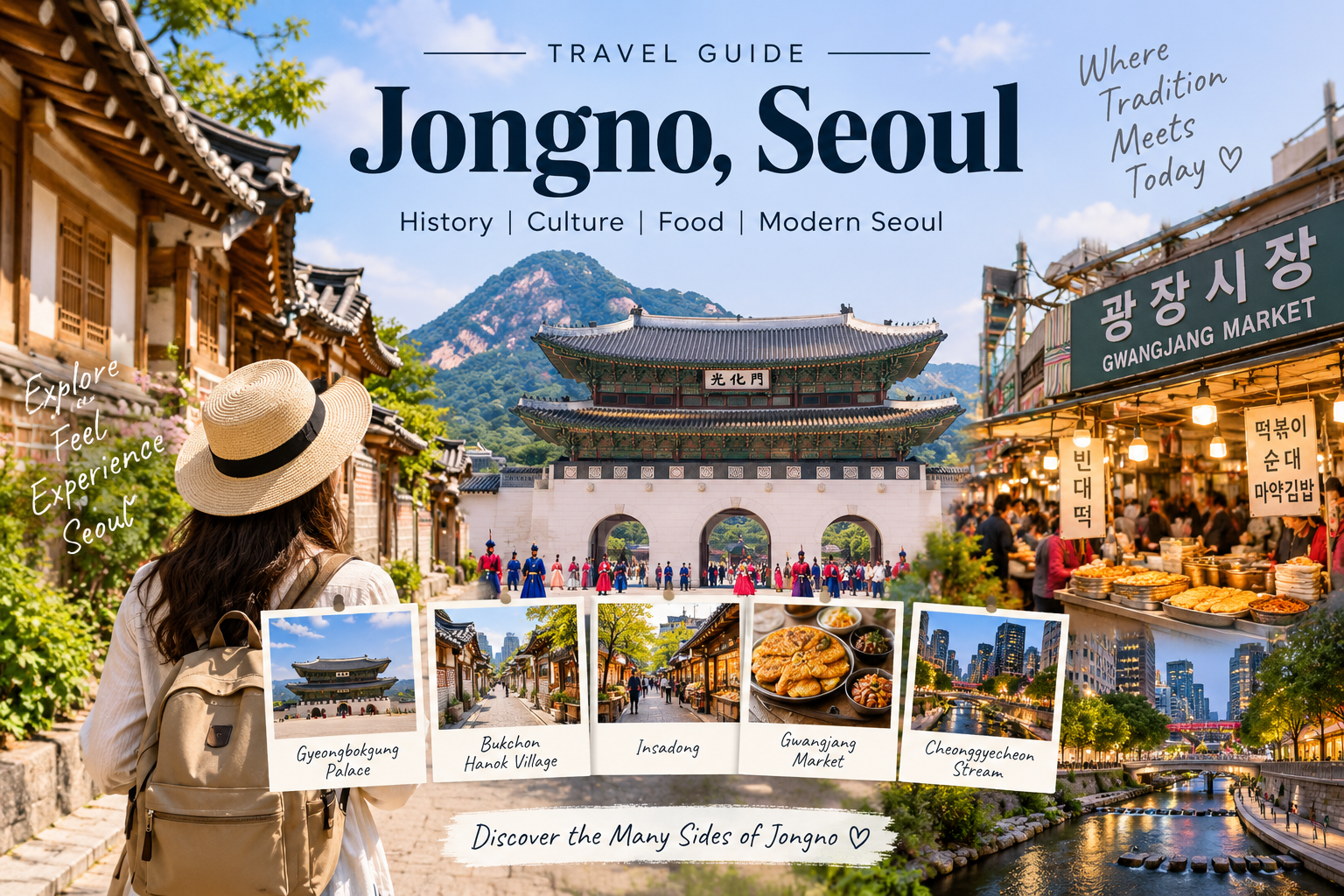
Jongno is one of the best places to experience the history, culture, and traditional atmosphere of Seoul. Located in the heart of the city, this district is home to royal palaces, hanok neighborhoods, traditional markets, museums, cafés, and some of Seoul’s most famous streets.
For first-time visitors to South Korea, Jongno is especially convenient because many major attractions are located close to one another. You can explore a royal palace in the morning, walk through a traditional neighborhood in the afternoon, enjoy Korean food at a local market, and finish the day along the lively streets of central Seoul.
This guide will help you discover the best things to do in Jongno, where to experience traditional Korean culture, what to eat, and how to make the most of your visit.
1. Explore Gyeongbokgung Palace
Gyeongbokgung Palace is one of the most famous landmarks in Jongno and an essential stop for first-time visitors to Seoul. Built during the Joseon Dynasty, it was the main royal palace and remains one of the best places to experience Korea’s architectural and cultural heritage.
Visitors can walk through grand palace gates, courtyards, halls, and gardens while learning about Korea’s royal history. The changing of the guard ceremony is also a popular attraction when scheduled.
Many travelers rent a hanbok, traditional Korean clothing, before visiting the palace. Wearing a hanbok can make the experience especially memorable and provides plenty of opportunities for beautiful photographs around the palace grounds.
2. Walk Through Bukchon Hanok Village
Bukchon Hanok Village is one of the best-known places in Seoul to see traditional Korean houses, known as hanok. The neighborhood sits between Gyeongbokgung Palace and Changdeokgung Palace, making it easy to include in a day of sightseeing around Jongno.
As you walk through the narrow streets, you can see traditional rooftops alongside views of modern Seoul. Small galleries, craft shops, cafés, and cultural spaces can also be found throughout the surrounding area.
Bukchon is a residential neighborhood, not simply a tourist attraction. Visitors should keep their voices low, respect residents’ privacy, and follow any signs or visitor restrictions in the area.
3. Visit Changdeokgung Palace
Changdeokgung Palace is another major royal palace in Jongno and is especially famous for its beautiful architecture and gardens. It was built during the Joseon Dynasty and is recognized as a UNESCO World Heritage Site.
One of the highlights is the palace’s Secret Garden, also known as Huwon. The garden features ponds, pavilions, trees, and traditional buildings arranged in harmony with the natural landscape.
Because access conditions and tour schedules for the Secret Garden can vary, travelers should check the latest visitor information before their visit. Changdeokgung can also be easily combined with nearby Bukchon Hanok Village and Insadong for a full day of exploring traditional Seoul.
4. Discover Insadong
Insadong is one of the best areas in Jongno for experiencing traditional Korean culture in a lively city setting. Its main street and surrounding alleys are filled with craft shops, galleries, tea houses, souvenir stores, restaurants, and small cultural attractions.
It is a particularly good place to shop for Korean gifts such as traditional crafts, stationery, ceramics, and other locally inspired souvenirs. Travelers can also take a break at a traditional tea house and enjoy Korean tea and desserts.
Insadong is within walking distance of several major attractions in Jongno, so it works well as a relaxing stop between palace visits and other sightseeing.
5. Eat Your Way Through Gwangjang Market
Gwangjang Market is one of Seoul’s best-known traditional markets and a popular place to experience Korean street food. The market is especially famous for its busy food alleys, where visitors can watch dishes being prepared right in front of them.
Popular foods include bindaetteok (mung bean pancakes), mayak gimbap (small seaweed rice rolls), tteokbokki (spicy rice cakes), and a variety of other Korean dishes and snacks.
The market can become crowded, especially during popular meal times. Bringing a small amount of Korean won can also be useful, although payment options vary by vendor.
For travelers interested in both Korean food and local atmosphere, Gwangjang Market is an excellent addition to a Jongno itinerary.
6. Walk Along Cheonggyecheon Stream
Cheonggyecheon Stream offers a different side of Jongno. Running through central Seoul, this restored urban stream provides a pleasant walking route surrounded by the energy of the city.
It is a good place to take a break after visiting palaces, markets, and busy shopping streets. In the evening, the stream can feel especially atmospheric as the surrounding city lights come on.
Cheonggyecheon is also close to several attractions in central Seoul, making it easy to include as part of a walking itinerary through Jongno.
7. How to Spend One Day in Jongno
If you have only one day in Jongno, start your morning at Gyeongbokgung Palace. After exploring the palace, continue to Bukchon Hanok Village and then walk toward Insadong for lunch, tea, or souvenir shopping.
In the afternoon, you can visit Changdeokgung Palace or spend more time exploring the traditional streets and cultural attractions around the area.
Later, head toward Gwangjang Market to try Korean street food. If you still have energy, finish your day with an evening walk along Cheonggyecheon Stream.
This route combines royal history, traditional architecture, local food, and modern Seoul in a single day.
8. Practical Tips for Visiting Jongno
Wear comfortable shoes because many of Jongno’s major attractions are best explored on foot. Palaces, traditional neighborhoods, markets, and cultural streets can involve more walking than you might expect.
Check the opening days and hours of palaces and museums before visiting, as schedules can vary. Some attractions may also have special admission rules, guided tours, or seasonal programs.
Public transportation is convenient throughout the area. Subway stations are located near many major attractions, making it easy to combine walking with short subway or bus rides.
Try not to pack too many attractions into one day. Jongno is most enjoyable when you have enough time to walk through its streets, stop at a café or market, and experience the contrast between historic and modern Seoul.
inal Thoughts: Why Visit Jongno?
Jongno is one of the best areas in Seoul for travelers who want to experience both Korea’s history and everyday city life. Royal palaces, hanok neighborhoods, traditional markets, cultural streets, and modern urban spaces are all located within a relatively compact area.
For first-time visitors, Jongno offers an excellent introduction to Seoul. You can learn about the Joseon Dynasty at historic palaces, walk through traditional neighborhoods, discover Korean crafts in Insadong, taste local food at Gwangjang Market, and experience modern Seoul along Cheonggyecheon Stream.
Whether you spend a few hours or an entire day here, Jongno is a place where the past and present of Seoul come together—and it deserves a spot on almost any first trip to South Korea.
Leave a Reply